Blog - Edupreneur Select

Bring to the table win-win survival strategies to ensure proactive domination. At the end of the day, going forward, a new normal that has evolved from generation.
Tech & Tools Desk24 October 2025

z3.jpg

3min18130
The World Robot Olympiad (WRO), one of the largest global robotics competitions, has announced a significant expansion across Africa—growing from five participating countries in 2020 to 14 in 2025, with over 40,000 young participants expected this season. According to the organisers, more than 2,000 teachers across the continent have been trained, supported by global partners such as Google, the United Nations Economic Commission for Africa, and WRO’s extensive network of educators and industry experts. The initiative focuses on equipping African youths with essential skills in coding, engineering, and artificial intelligence to prepare them for the future workforce. Each year, students participating in WRO design and build robots that tackle real-world challenges. The 2025 theme, “The Future of Robots,” has inspired a surge of bootcamps and workshops across several African countries, reaching learners in underserved areas and special needs communities. National champions from each country will advance to represent Africa at the WRO International Final in Singapore this November, joining teams from over 90 nations. In Zimbabwe, Team FutureSight, winners of the National Senior Category, created an AI-powered voice assistant to help visually impaired users navigate daily life — a solution now being adapted into local languages for greater accessibility. In South Africa, the journey of Karabo Rithuri highlights WRO’s long-term impact. She joined the competition at age 13, represented her country at the international finals in Malaysia, and later founded her own robotics club after her school’s programme ended. Now a graduate in Finance and IT, Rithuri serves as a WRO judge and mentors young innovators from township communities. “WRO gave me a voice, and now I want to help make things even better for the next generation,” she shared. WRO Secretary General, Claus Ditlev Christensen, described the growing presence of the competition in Africa as a key milestone in its global mission. “Expanding our footprint across Africa is an important step in inspiring young people through robotics and STEM. We’re proud to see African students developing both technical expertise and real-world solutions that benefit their communities,” he said. With Africa’s rapidly expanding youth population, the World Robot Olympiad continues to serve as a vital platform for building skills, driving innovation, and fostering global collaboration.

James Obasi24 October 2025
z2.webp

4min10960
Zenith General Insurance Limited has donated food items and essential supplies to two Lagos-based orphanages — Heritage Homes and Children Anchor Orphanage Home — as part of its ongoing corporate social responsibility initiatives. According to the company, the gesture underscores its dedication to supporting vulnerable children and improving the well-being of communities across Nigeria. During the visits, senior officials from Zenith General Insurance highlighted the organisation’s commitment to empathy, care, and social impact. Edith Agu, Senior Manager overseeing Head Office Marketing and the South-South branches, explained that the initiative was designed to show the children they are loved and valued. “We want them to know that Zenith Insurance truly cares and prioritises their well-being,” she said. Agu also encouraged companies to maintain their community support efforts despite economic challenges, advising that organisations should “plan and make budgetary provisions for societal improvement through various corporate social responsibility programmes.” Speaking during the visit, the supervisor of Children Anchor Orphanage Home, Olajide Bankole, expressed appreciation for the support, noting that running an orphanage housing over 35 children comes with daily challenges. “We are truly grateful. Many homes exist, yet Zenith chose us, and we deeply appreciate that,” he said. Heritage Home representatives also shared that the orphanage was established to provide a safe haven for abandoned and vulnerable children, helping connect them with prospective caregivers. Team members from Zenith General Insurance shared personal words of encouragement with the children. Deputy Head of IT, Abimbola Sarumi, stated that the visit was meant “to put an extra smile on the faces of our children — our future.” Head of Internal Control and Audit, Muyiwa Aderibigbe, added that the outreach reflects the company’s value of empathy. “This activity speaks to one of our core principles. We want you to know that our business is about restoring hope — joy is coming,” he told the children and caregivers. He also called on other organisations to emulate such acts of kindness, saying, “Even in challenging times, we must remember that business goes beyond profit — it’s about touching lives.” The visits ended on a heartwarming note, with both orphanages expressing gratitude and hope for continued partnership with Zenith General Insurance, a company committed to making a meaningful difference in the lives of the less privileged.

z1.jpg

2min1880
The Africa Finance Corporation (AFC) has announced that its partnership with Lagos Fashion Week 2025 is designed to boost Africa’s apparel and textile export sectors, projected to reach $15 billion by 2030. According to a statement, the collaboration aligns with AFC’s broader goal of promoting industrialisation and job creation through strategic infrastructure investments that drive economic transformation. Celebrating its 15th anniversary, Lagos Fashion Week has become a globally acclaimed showcase of African creativity and design excellence. The 2025 edition will highlight circular fashion, responsible sourcing, and regional value chains—key areas where AFC’s infrastructure projects are bridging the gap between Africa’s creative and industrial potential. AFC President and CEO, Samaila Zubairu, stated, “Africa’s creative industries reflect both our cultural identity and economic potential. Through this partnership, we are deepening our commitment to build measurable impact—empowering youth, strengthening local production, and creating value across the fashion ecosystem. By providing the infrastructure that supports these creative value chains, AFC is positioning African designers and manufacturers to thrive globally.” Founder of Lagos Fashion Week, Omoyemi Akerele, added, “We are delighted to have AFC as a key partner for the 2025 edition. Their dedication to sustainable infrastructure and local manufacturing perfectly aligns with our mission to reinforce Africa’s fashion ecosystem. Together, we aim to ensure that Africa’s creative industries not only inspire but also produce and export value from within the continent.” Through its subsidiary, ARISE Integrated Industrial Platforms, AFC is supporting Africa’s shift from exporting raw materials to producing and exporting finished goods. To date, AFC-backed projects have contributed over $50 billion to GDP and generated seven million jobs across 36 African nations.

10.webp

2min3860
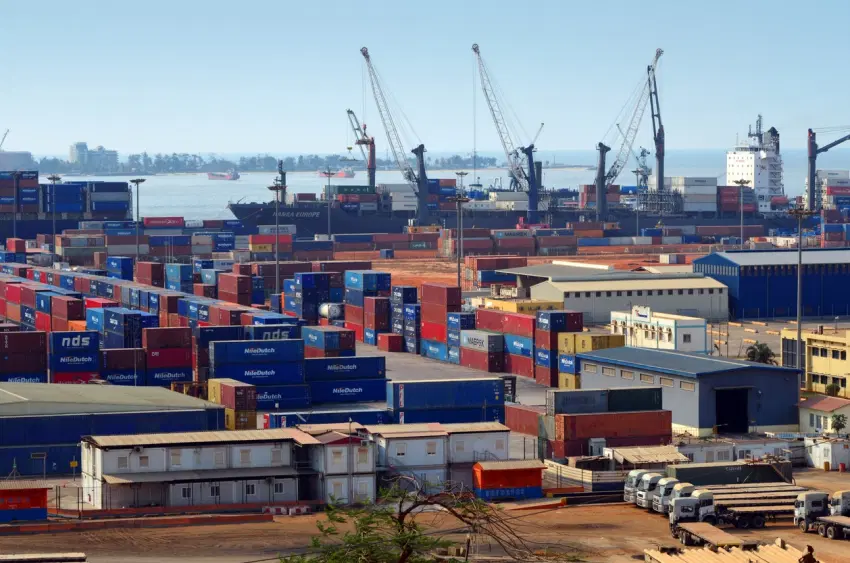
The Federal Government has approved a $1 billion modernization project for Lagos ports and begun the procurement process for upgrading other seaports across the country. Minister of Marine and Blue Economy, Adegboyega Oyetola, announced this during the 2025 Chartered Institute of Logistics and Transport (CILT) Nigeria Conference, themed “Enhancing Logistics and Transport for a Sustainable Blue Economy in Nigeria,” held in Lagos. Represented by the Managing Director of the Nigerian Ports Authority (NPA), Dr. Abubakar Dantsoho, Oyetola said the modernization initiative aims to upgrade infrastructure, enhance cargo handling efficiency, and expand port capacity to meet global standards. “We are collaborating with stakeholders to establish a paperless, technology-driven port system that enhances efficiency, reduces vessel turnaround time, and minimizes corruption,” he stated. The Minister added that the Federal Government’s $1 billion Lagos port modernization project is a landmark initiative that underscores Nigeria’s commitment to strengthening its maritime infrastructure. He also revealed that the procurement process has begun for similar modernization efforts at ports outside Lagos to ensure even development across the country’s maritime gateways. Oyetola emphasized that these initiatives reflect the government’s resolve to enhance logistics performance, strengthen competitiveness, and position Nigeria as a leading hub for maritime trade and investment in Africa. He further highlighted the success of the Deep Blue Project, noting that Nigeria has recorded zero piracy incidents in the last three years — a milestone that underscores the nation’s progress in maritime security and safety.

19.jpg

4min1430
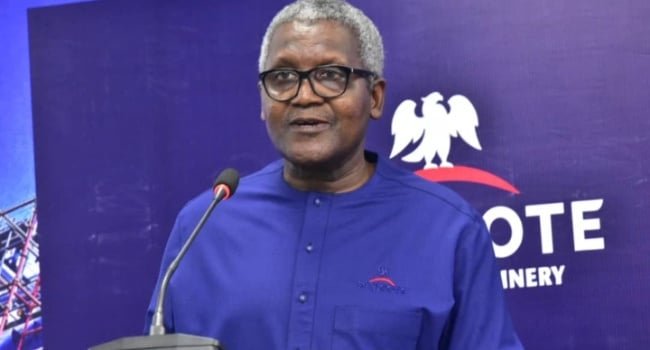
Chairman of Dangote Petroleum Refinery, Aliko Dangote, has announced plans to list between five and 10 percent of the refinery’s shares on the Nigerian Exchange (NGX) within the next year. In an interview with S&P Global, Dangote explained that the move aligns with the company’s strategy of gradually opening up ownership, similar to other subsidiaries such as Dangote Cement and Dangote Sugar Refinery. “We don’t want to keep more than 65 to 70 percent,” he said, noting that the shares would be released in phases based on investor interest and market conditions. Dangote also revealed that the group is in discussions with investors from the Middle East to form strategic partnerships aimed at financing the refinery’s expansion and supporting a new petrochemicals project in China. “Our business model is evolving. Instead of being fully Dangote-owned, we’re now opening up to new partners,” he stated. He further hinted that the Nigerian National Petroleum Company Limited (NNPC) might increase its stake in the refinery in the future. The NNPC had previously reduced its holding to 7.2 percent, but Dangote suggested that discussions could resume once the refinery enters its next phase of development. “I want to demonstrate what this refinery is capable of achieving, then we can have further discussions,” he said. The refinery, which began operations in 2024, currently has a capacity of 650,000 barrels per day (bpd) and plans to boost output to 700,000 bpd by the end of this year. Dangote added that the long-term goal is to reach 1.4 million bpd, surpassing the capacity of the Jamnagar refinery in India, which produces 1.36 million bpd. In addition to refining, the company is expanding its petrochemical operations, with plans to increase polypropylene production from one million to 1.5 million metric tonnes annually and to venture into base oils and linear alkylbenzene production. Commenting on ongoing maintenance, Dangote noted that most technical challenges had been addressed, though a one-month shutdown might still be required for final adjustments. “We’ve resolved most of the issues, and we’re looking for an appropriate window for a one-month shutdown,” he said, assuring that the maintenance would be scheduled to avoid disruptions during peak fuel demand at the end of the year.

18.webp

3min2190
Shell has emphasized the need for stronger collaboration between international oil companies (IOCs) and indigenous energy firms to fast-track gas development and make the resource a key driver of Nigeria’s industrial growth. The company highlighted that consistent policies, infrastructure expansion, and partnership-driven approaches are vital to unlocking Nigeria’s vast gas potential. Speaking at the 3rd Gas Investment Forum in Lagos, Shell Energy Nigeria’s General Manager, Markus Hector — represented by the Head of Portfolio, Regulation and Supply, Chuka Amos-Ejesi — said, “There is a clear strategic case for collaboration. IOCs bring global expertise, significant capital, and robust technical and risk management systems, while indigenous firms contribute local knowledge, agility, and flexibility within the Nigerian environment.” He further stressed that such partnerships should enhance domestic capacity, particularly in engineering, supply chain, operations, and maintenance. Also speaking, the Managing Director of Shell Nigeria Gas, Ralph Gbobo, said the company is investing heavily in gas infrastructure nationwide to boost industrial growth and improve access. “SNG is developing gas hubs in Port Harcourt, Aba, Ota, and recently Yenagoa, with plans to expand to other cities,” Gbobo noted. He described infrastructure as the foundation of Nigeria’s gas industrialisation drive, adding that ongoing projects will improve access, cut costs, and lower emissions, making gas a more competitive and sustainable energy source. Gbobo also underscored the importance of stable policies to attract long-term investment, stating that “policy clarity and consistency are essential for investor confidence, while collaboration remains the catalyst for scale and innovation.” He reaffirmed that gas is central to Nigeria’s energy transition and economic diversification, providing cleaner, more reliable energy, creating jobs, and fostering regional trade. “The success of Nigeria’s gas sector will depend on the synergy between government, investors, and local operators,” he added.

Tech & Tools Desk23 October 2025
17.jpg

4min2090
Nigeria imported about 15.01 billion litres of Premium Motor Spirit (petrol) between August 2024 and early October 2025, accounting for nearly 69 percent of the country’s total petrol supply within that 15-month period — despite the commencement of fuel production by the Dangote Refinery in September 2024. Data from the Nigerian Midstream and Downstream Petroleum Regulatory Authority (NMDPRA) revealed that total petrol supply stood at 21.68 billion litres, with domestic refineries contributing 6.67 billion litres, or 31 percent. The report, titled “Import vs Domestic Supply Performance (PMS Daily Average Supply – August 2024 to October 2025), highlighted a steady decline in imports as local refining increased. According to the breakdown, imported fuel averaged 44.6 million litres daily in August 2024 and peaked at 54.3 million litres daily in September 2024, just as the Dangote Refinery began supplying to the local market. Import volumes then dropped progressively to 24.15 million litres daily in January 2025, 19.26 million litres in September, and 15.11 million litres in the first ten days of October 2025. During this period, domestic output grew from 6.43 million litres daily in September 2024 to 22.66 million litres in January 2025, stabilizing around 20 million litres daily in subsequent months. By October 2025, local refining surpassed imports, producing 18.93 million litres per day. The report also showed a downward trend in total national supply — from 60.73 million litres per day in September 2024 to 34.04 million litres in October 2025 — reflecting both reduced demand and changing supply patterns. This trend follows the Federal Government’s full deregulation of the petrol sector in September 2024, which ended fuel subsidies previously managed by the Nigerian National Petroleum Company Limited (NNPCL). While the Dangote Refinery continues to expand its domestic share, importers have accused the company of undercutting the market through aggressive price reductions. Despite this, Dangote officials insist the refinery has sufficient capacity to meet local demand and export surplus production. The refinery reportedly holds over 310 million litres of petrol in storage, with the Vice President of Dangote Industries, Devakumar Edwin, stating, “Any number of tankers brought for loading will be served. We have more than 310 million litres available, in addition to ongoing production.” In recent months, the refinery has also exported large volumes of petrol, aviation fuel, and diesel to other countries, including the Middle East and the United States. Between June and July 2025, Dangote confirmed the export of about one million tonnes of petrol, marking Nigeria’s emergence as a net exporter of refined products. NMDPRA Chief Executive, Farouk Ahmed, acknowledged the refinery’s impact, stating that the plant currently supplies an average of 20 million litres of petrol daily to the domestic market. The data underscores a transformative shift in Nigeria’s fuel supply chain, with local refining capacity steadily reducing dependence on imports. However, experts note that market competition and pricing dynamics will continue to shape the pace of achieving full self-sufficiency in fuel production.

James Obasi23 October 2025
13-6.jpeg

3min5710
President Bola Tinubu will on Thursday afternoon swear in Prof. Joash Amupitan (SAN) as the new Chairman of the Independent National Electoral Commission (INEC). The ceremony is scheduled for 12:00 noon at the Council Chamber of the Presidential Villa, Abuja, according to officials familiar with the President’s itinerary. Key government officials, members of the National Assembly, legal experts, civil society representatives, and senior INEC officers are expected to attend the event. Following his inauguration, Prof. Amupitan is set to hold his first official meeting with INEC directors at 1:30 p.m. at the commission’s headquarters, as stated in a notice issued by INEC’s Deputy Director of Publicity, Wilfred Ifogah. Members of the INEC Press Corps have been invited to cover the opening session. President Tinubu described Amupitan as a candidate chosen for his integrity, impartiality, and distinguished record of service. He also noted that Amupitan is the first individual from Kogi State, in the North-Central region, to hold the position. Amupitan, a Senior Advocate of Nigeria and Professor of Law at the University of Jos, was confirmed by the Senate on October 16, 2025, after receiving approval from the National Council of State. His appointment follows the exit of Prof. Mahmood Yakubu on October 7. Born on April 25, 1967, in Ayetoro Gbede, Kogi State, Amupitan’s academic career spans over three decades. He earned his LL.B, LL.M, and Ph.D. degrees from the University of Jos, where he joined the Faculty of Law in 1989 and became a full professor in 2008. Throughout his career, he has held several leadership roles, including Head of Department, Dean of Law, Deputy Vice-Chancellor (Administration), and Pro-Chancellor of Joseph Ayo Babalola University, Osun State. Conferred with the rank of Senior Advocate of Nigeria in 2014, Amupitan is widely recognized for his expertise in corporate governance, privatisation law, and the law of evidence. He has authored several legal texts, including Corporate Governance: Models and Principles (2008), Documentary Evidence in Nigeria (2008), and Evidence Law: Theory and Practice in Nigeria (2013). He serves on the boards of multiple institutions, including Integrated Dairies Limited and the Nigerian Institute of Advanced Legal Studies Governing Council. Amupitan is married and blessed with four children.

15.jpg

5min3950
The detained leader of the Indigenous People of Biafra (IPOB), Nnamdi Kanu, is preparing to open his defence in his long-running terrorism trial, naming several prominent politicians and retired military officers as witnesses. In a new motion filed on October 20 and marked FHC/ABJ/CR/383/2015, Kanu listed 23 witnesses, including the Minister of the Federal Capital Territory, Nyesom Wike; Lagos State Governor Babajide Sanwo-Olu; and former Chief of Army Staff, Lt. Gen. Tukur Buratai (retd.) The defence notice, personally signed by Kanu, categorizes his witnesses into two groups — “ordinary but material witnesses” and “vital and compellable witnesses.” Among those listed as “vital and compellable” are former Defence Minister Gen. Theophilus Danjuma (retd.), Imo State Governor Hope Uzodinma, Minister of Works David Umahi, former Abia State Governor Okezie Ikpeazu, and former Attorney-General of the Federation Abubakar Malami (SAN). Also included are former DSS Director-General Yusuf Bichi, former NIA Director-General Ahmed Abubakar, and other unnamed individuals. Kanu stated that he would rely on Section 232 of the Evidence Act, 2011 to compel the appearance of key witnesses and requested a 90-day timeframe to conclude his defence. He pledged to testify personally and provide sworn statements from supporting witnesses. “I will testify on my own behalf, giving a sworn account to deny the allegations and explain the political context of my actions and statements,” Kanu told the court. “It is in the interest of justice that the truth be clearly seen and heard.” The new filing comes shortly after activist Omoyele Sowore led a #FreeNnamdiKanu protest in Abuja, which resulted in the arrest of Kanu’s lawyer, Aloy Ejimakor, his brother Prince Emmanuel Kanu, and 10 others. The 12 detainees were charged with conspiracy, disobedience of a lawful order, and public disturbance, and have been remanded pending further hearing on October 24. Kanu’s defence notice follows Justice James Omotosho’s ruling that a prima facie case had been established against him after rejecting his earlier no-case submission. His legal team’s request for a transfer to the National Hospital for medical treatment was opposed by prosecutors, who maintained that the DSS facility was sufficient. After an independent review by the Nigerian Medical Association (NMA), the court was informed that Kanu was fit to stand trial. Justice Omotosho has scheduled October 23 for the formal commencement of Kanu’s defence. Meanwhile, Kanu’s family in Abia State has rejected the NMA’s medical report, describing it as fabricated. Speaking on behalf of the family, Kanunta Kanu insisted that no medical team ever examined Kanu in detention. “The NMA never visited Nnamdi Kanu for any medical evaluation. Any report presented to the court is false and politically motivated,” Kanunta said. He accused the authorities of orchestrating Kanu’s persecution and warned that continued injustice against him and the Igbo people could deepen national divisions. He also defended Sowore, clarifying that the activist played no role in the arrest of Kanu’s relatives or legal team. “Sowore only exercised his democratic right to protest against injustice. Anyone blaming him for the arrests is being insincere,” he said. The family renewed its call for the immediate release of all those arrested during the protest and demanded Kanu’s unconditional freedom, citing several court rulings that have already ordered his release.

14.jpg

3min2410
The United Kingdom has introduced a major adjustment to its post-study work visa policy, reducing the duration from two years to 18 months for international students, including Nigerians. The new policy, set to take effect in January 2027, was announced by UK Home Secretary Shabana Mahmood on October 14. She explained that the reform is part of a broader initiative to strengthen immigration controls while maintaining the UK’s position as a destination for top global talent. Mahmood also highlighted the need for immigrants to meet A-level English proficiency standards to better integrate into the workforce. According to a statement released on the UK government’s website, the revised post-study period aims to ensure international graduates make meaningful contributions to the British economy. Government data revealed that many graduates were not securing graduate-level employment within the existing two-year timeframe, prompting the policy change. The adjustment forms part of a series of immigration reforms outlined in the government’s flagship immigration white paper and its Plan for Change. Among these is a 32% rise in the Immigration Skills Charge — a levy paid by employers who sponsor skilled foreign workers. This marks the first increase since 2017, with proceeds earmarked for training UK workers to reduce dependence on overseas recruitment. “The period for international students to secure graduate-level jobs after completing their studies will now be 18 months instead of two years. The Immigration Skills Charge, paid by sponsoring employers and reinvested into local workforce training, will increase by 32%,” the government’s statement noted. To further strengthen workforce integration, the UK will introduce stricter English language requirements for international students applying to study, work, or settle in the country. Studying in the UK is also expected to become more expensive. Tuition fees for undergraduate programs will rise by 3.1% in the 2025/26 academic year — from £9,250 to £9,535. This announcement follows other immigration changes introduced earlier in 2024, including restrictions that prevent most international students from bringing dependants, except those enrolled in postgraduate research programs or government-funded scholarships. Recent data shows a decline in the number of international students choosing the UK as a study destination in 2024.