Blog - Edupreneur Select

Bring to the table win-win survival strategies to ensure proactive domination. At the end of the day, going forward, a new normal that has evolved from generation.
aa7.webp

4min1870
The newly elected Chairman of the Chartered Institute of Bankers of Nigeria (CIBN), Lagos State Branch, Akinwunmi Lawal, has assured Nigerians that the recently enacted tax law is not designed to burden the poor but to strengthen government revenue and support economic growth. Lawal gave the assurance on Saturday during the 2025 Annual General Meeting and election of new executive committee members of the Lagos branch, where he was elected as the 18th chairman. Lawal, the immediate past Managing Director and Chief Executive Officer of NPF Microfinance Bank, succeeded Adeyemo Adeoye, the Managing Director/CEO of Chem & Eleos Capital. He and other newly elected executives will steer the affairs of the branch for the next two years. Speaking after his election, Lawal noted that Nigeria’s tax-to-GDP ratio had increased to 13.5 per cent from below 10 per cent and was projected to rise further when the new tax law takes effect in January. “The new tax law is not about placing additional pressure on existing taxpayers,” he explained. “It is about expanding the tax base to fund national development and providing relief to low-income earners.” Delivering his acceptance speech titled ‘Repositioning the Lagos State Branch for Sustainable Growth, Inclusiveness, and Professional Excellence,’ Lawal commended President Bola Tinubu’s ongoing economic reforms, describing them as bold and transformative. “Nigeria’s economy is recovering steadily. The reforms initiated over the past two years are now yielding measurable results,” he said. “The country’s GDP grew by 4.23 per cent in the second quarter of 2025 — the fastest in four years — surpassing the IMF’s projection of 3.4 per cent. Inflation also dropped to 20.12 per cent in August, the lowest in three years.” He outlined key focus areas for his tenure, including membership expansion, financial sustainability, academic–industry partnerships, and health and wellness initiatives. In his valedictory address, the outgoing chairman, Adeoye, reported that the branch’s income rose from ₦27.19 million when he assumed office to ₦54.82 million in 2024 — a 101.65 per cent increase. Cash balances also grew by over 30 per cent during his tenure. “The results recorded in the year under review represent the branch’s strongest performance in more than a decade,” Adeoye stated, expressing optimism that the momentum would continue. Other newly elected officers include Dr. Abosede Yinka-Ogundimu as first vice chairman, Oyelayo Adekanye as second vice chairman, Nze Nnaji as secretary, and Damilola Owoeye as treasurer, among others.
aa6.webp

4min4660
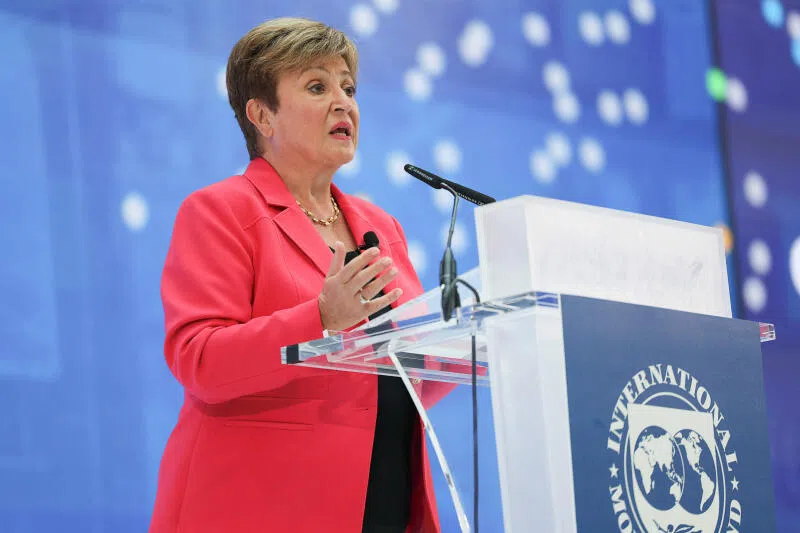
Finance ministers and central bank governors meeting in Washington this week were initially expected to focus on the global economy’s resilience following recent economic shocks. However, the agenda has shifted sharply after U.S. President Donald Trump threatened to impose 100 per cent tariffs on Chinese imports, reigniting trade tensions between the world’s two largest economies. The announcement unsettled financial markets and renewed fears of a wider trade war just as delegates from more than 190 countries gather for the annual meetings of the International Monetary Fund (IMF) and the World Bank. The discussions, which attract over 10,000 participants each year, are now expected to be dominated by concerns about the potential fallout from the escalating U.S.–China dispute. Trump’s threat came in response to China’s recent expansion of export controls on rare earth minerals. The new tariffs and export restrictions, slated to take effect on November 1, could unravel the fragile truce between Washington and Beijing that had helped stabilise global growth forecasts earlier this year. U.S. Treasury Secretary Scott Bessent sought to ease tensions on Monday, saying he remained confident that President Trump and Chinese President Xi Jinping would meet later this month in South Korea. “The 100 per cent tariff does not have to happen,” Bessent said in an interview with Fox Business Network. “The relationship, despite last week’s announcement, remains constructive. Communication channels are open, and staff-level talks will continue during the IMF and World Bank meetings.” His comments helped calm markets after a turbulent end to the previous week. The Nasdaq Composite Index rebounded by more than two per cent in early Monday trading, recovering from a steep sell-off triggered by Trump’s initial remarks. Investor anxiety had been rising amid fears that heightened trade barriers could derail global supply chains and undermine gains driven by artificial intelligence-related investments. Meanwhile, IMF Managing Director Kristalina Georgieva acknowledged that while the global economy had shown “remarkable resilience” in the face of recent shocks, growth remained uneven and vulnerable to renewed trade frictions, tight monetary conditions, and slowing employment in advanced economies. “The outlook is fragile, with downside risks dominating the forecast,” Georgieva cautioned. The IMF is expected to release its latest World Economic Outlook this week, projecting global GDP growth of about 3 per cent for 2025 — only marginally below the pace recorded in 2024.

Tech & Tools Desk14 October 2025
aa2.png

9min1890
Nigeria may be left behind in the ongoing global energy transition if it fails to strategically monetise its vast oil and gas reserves, experts have warned. Former President of the Nigerian Economic Society, Prof. Adeola Adenikinju, gave the warning while delivering a keynote address at the 18th edition of the NAEE/International Association for Energy Economics (IAEE) Annual International Conference in Abuja on Monday. He urged the government to balance investments in renewable and conventional energy sources to expand electricity access to the 87 million Nigerians currently without power. The three-day conference, themed “Emerging Geopolitics of Energy: Navigating Global Shifts and Impact on Emerging Countries,” brought together policymakers, academics, and energy executives to deliberate on the complex and evolving dynamics shaping the global and African energy landscape. Adenikinju described the global energy market as increasingly volatile and shaped by multiple factors such as geopolitical tensions, wars, artificial intelligence, and shifting alliances. “The global energy market is being influenced by rising geopolitical conflicts, the growing energy needs of AI-driven data centres, and the slow pace of energy efficiency improvements,” he said. “These dynamics have wide-reaching implications across regions.” Turning attention to Nigeria, he lamented that despite being a top global producer of oil and gas, millions of Nigerians still live without access to electricity. “Nigeria is one of the world’s largest oil producers but remains the biggest importer of refined petroleum products. That is an unacceptable paradox,” he said. Adenikinju cautioned that unless the country swiftly monetises its oil and gas reserves, it risks having its hydrocarbons stranded as the world transitions toward low-carbon energy sources. “As global demand for oil approaches its peak, Nigeria must act decisively to exploit its resources while investing heavily in renewable options like solar, hydro, and wind,” he noted. He explained that the war in Ukraine and the resulting disruption of Europe-Russia energy ties had reshaped global supply chains and reignited debates about energy security. Before 2022, he said, “the European Union sourced about 40 per cent of its natural gas from Russia. That figure has dropped sharply as nations seek alternative suppliers.” Adenikinju also highlighted the growing strategic competition between the United States and China over renewable energy technology and battery manufacturing, which he said now defines the new geopolitics of energy. “China controls over 80 per cent of global solar panel production and critical mineral processing. This forces developing nations to make difficult strategic choices about their energy partnerships,” he added. He referenced data from the International Energy Agency (IEA) and the IMF’s July 2025 World Economic Outlook, which described the global economy as one of “tenuous resilience amid persistent uncertainty,” saying such instability discourages long-term investments in developing nations. “When uncertainty rises, investors delay or demand higher returns. This threatens the viability of large energy projects in countries like Nigeria,” he warned. The economist urged African governments to move beyond merely exporting raw materials and instead build full value chains for clean energy technologies. “Africa must not limit itself to supplying lithium, cobalt, or copper. We must attract green capital, develop technology, and participate meaningfully in global energy markets,” he advised. Adenikinju commended ongoing reforms under the Petroleum Industry Act, rising rig activity, and private-sector involvement but stressed the need for faster policy execution to strengthen infrastructure, investment confidence, and energy security. “Energy security is back on the national agenda,” he said. “The challenge is to ensure profitability while maintaining sustainability and global competitiveness.” He also called for stronger regional collaboration through the African Union to safeguard critical minerals and build shared industrial capacity for a carbon-neutral future. “In macroeconomic terms, the government is doing well,” he said. “But reforms must also protect vulnerable groups. The market alone will not achieve that.” The professor recommended that the government expand access to affordable electricity through solar energy and remove barriers hindering domestic gas distribution and Liquefied Petroleum Gas (LPG) access. Also speaking, the President of the International Association for Energy Economics, Professor Edmund Lewis, commended Nigeria’s leadership in advancing energy scholarship and policy dialogue across Africa. Representing IAEE, Prof. Wunmi Iledare said Africa’s energy transition should not mirror Europe’s historical model but evolve through “pragmatic prosperity” — a development approach grounded in data, inclusiveness, and collaboration. “Africa’s energy future is not a copy of Europe’s past,” Iledare said. “It must be shaped by pragmatic prosperity and evidence-based policy that reflects Africa’s realities.” He added that the IAEE remains committed to fostering dialogue and inclusive development amid the global shift toward clean energy. Meanwhile, the Secretary-General of the African Petroleum Producers Association (APPO), Omar Faruk, noted that the IEA had, for the first time, acknowledged that fossil fuels cannot be easily phased out. According to him, this reinforces APPO’s long-held stance that while energy transition is vital, Africa’s development depends on a balanced approach that preserves the role of fossil fuels. “If Africa fails to develop the components it needs for renewable or conventional energy systems, it will remain trapped in dependency,” Faruk said. He concluded that Nigeria must first stabilise its existing energy systems and master available technologies before fully transitioning, saying, “We cannot move forward in the dark; we must first master what we already have.”

James Obasi14 October 2025
aa1.jpg

6min1830
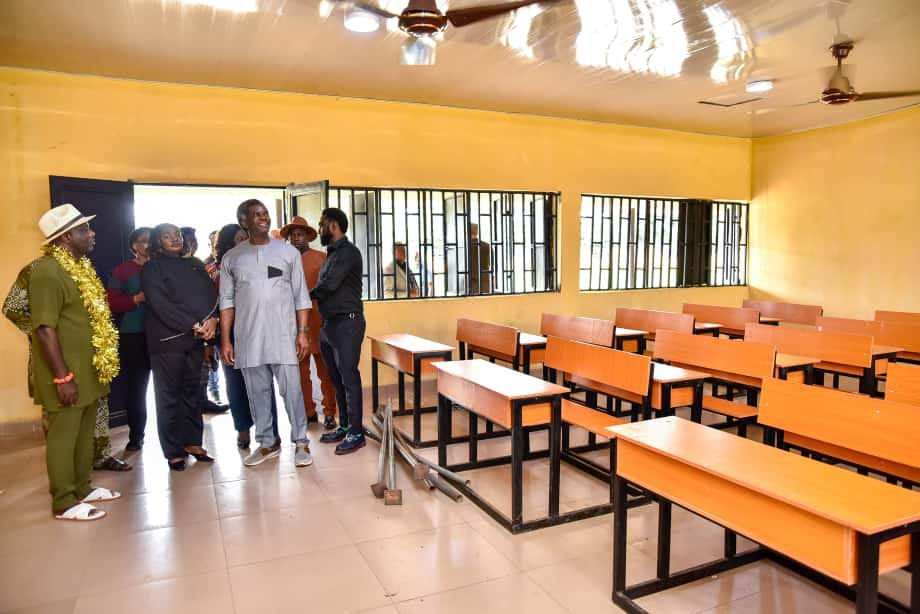
The Nigerian Upstream Petroleum Regulatory Commission (NUPRC) has announced that the Host Community Development Trust (HCDT) fund has reached ₦373 billion as of October 13, 2025, with 536 community development projects currently ongoing across oil-producing regions in Nigeria. In a statement signed by the Commission’s Head of Media and Strategic Communications, Eniola Akinkuotu, on Monday, the fund comprises ₦125 billion and $168.9 million, contributed by oil companies operating under the Petroleum Industry Act (PIA), 2021. Established under Section 235 of the PIA, the HCDT mandates oil companies—referred to as “settlors”—to allocate 3 per cent of their annual operating expenditure from the previous financial year to a trust fund dedicated to developing their host communities. The statement noted that the funds, deposited in banks with at least a BBB credit rating, are used to finance projects in infrastructure, education, healthcare, and environmental protection. Although the Commission does not directly manage the funds, it ensures transparency and compliance through a digital monitoring platform known as HostComply, which tracks project implementation and fund disbursement in real time. Highlighting recent achievements, the NUPRC facilitated the commissioning of over 10 completed projects and the launch of another 10 under the Obagi Host Community Development Trust in Rivers State, operated by TotalEnergies. The projects were inaugurated between September 24 and 25, 2025, in Ogbogu community, Ogba/Egbema/Ndoni Local Government Area. Completed projects include an 18-classroom two-storey school building, the remodelling of Ogbogu Cottage Hospital with a 20-bed capacity and diagnostic centre, and upgrades to the Ogbogu Ultra-Modern Civic Centre. Others comprise road pavements in Oboburu, a bottled and sachet water factory in Amah, and the installation of gas skid plants and school renovations in Erema and Akabuka communities. Speaking at the event, the Commission Chief Executive, Gbenga Komolafe, represented by the Executive Commissioner for Health, Safety, Environment, and Community, John Tonglagha, said the projects were designed to tackle pressing community needs such as education, healthcare, and employment. “These projects are intended to deliver lasting benefits to host communities while strengthening cooperation with the oil industry,” Komolafe said. He also commended President Bola Tinubu for creating a policy environment that continues to attract new upstream investments. Rivers State Deputy Governor, Prof. Ngozi Odu, representing Governor Siminalayi Fubara, praised the transparent management of HCDT funds, noting that the initiative has ensured better accountability and tangible results compared to the past. “In previous years, community funds were not effectively utilised. What we are witnessing now is transparency and real impact,” she said. The Chairman of the Senate Committee on Oil and Gas Host Communities, Senator Benson Agadaga, also lauded the initiative, stating that it has contributed to sustaining peace in the Niger Delta. “The relative peace we see in the region today is largely due to the visible achievements of the PIA. Host communities now experience real development and are more cooperative,” he said. TotalEnergies Upstream Nigeria Managing Director, Matthieu Bouyer, expressed pride in being among the first companies to implement the HCDT framework, revealing that over 500 projects across 60 communities have been identified under its plan. “This initiative has created more than 1,000 jobs and will benefit over 30,000 people,” Bouyer stated, describing the Obagi Trust as “a model of what can be achieved when trust and policy work together.” Chairman of the Obagi HCDT Board of Trustees, High Chief Dike Hopeson Dike, reaffirmed the community’s commitment to collaboration, adding that over 125 solar-powered boreholes have been provided, meeting about 70 per cent of local water needs. “These projects are helping our people move from poverty to prosperity,” Dike said. The Host Community Development Trust remains one of the key provisions of the Petroleum Industry Act, designed to foster inclusion, transparency, and sustainable peace between oil companies and their host communities.

ac.jpg

3min1980
After months of calm in Nigeria’s public university system, the Academic Staff Union of Universities (ASUU) has declared a two-week warning strike, citing the Federal Government’s failure to meet its long-standing demands. ASUU National President, Prof. Chris Piwuna, announced the action in Abuja on Monday, saying the strike, which began at midnight, followed the expiration of a 14-day ultimatum issued to the government. Piwuna said that despite several meetings and assurances, the government failed to make meaningful progress on critical issues, including the renegotiation of the 2009 ASUU-FGN Agreement, payment of withheld salaries, and adequate funding for public universities. According to him, an emergency meeting held on October 10 between both parties yielded “provocative and inconsistent” proposals, which he described as a complete departure from earlier agreements reached under the Nimi Briggs-led committee. He warned that failure to meet the union’s demands after the two-week warning strike would lead to a total and indefinite industrial action. Meanwhile, the Congress of University Academics (CONUA) distanced itself from the strike, saying its members would continue academic activities. CONUA National President, Dr. Niyi Sunmonu, said the union had no dispute with the government, stressing that industrial action would only disrupt academic progress. In a reaction, government officials expressed disappointment over ASUU’s decision, saying efforts had been made to address the lecturers’ concerns. According to sources in the Ministry of Education, the government negotiating team had scheduled follow-up meetings with ASUU before the union announced the strike. The development has sparked fresh anxiety among students and parents, who fear another prolonged disruption to academic activities across the country.

a-d.jpg

2min4330
The Institute of Capital Market Registrars (ICMR) will inaugurate its President-Elect, Catherine Nwosu, alongside other newly elected executives, during its 14th Annual Conference scheduled for November 1. This was disclosed in a statement issued over the weekend in Lagos by the outgoing President and Chairman of Council, Oluseyi Owoturo. According to the statement, the conference, themed “Unlocking Global Value: The Evolving Role of Capital Market Registrars in Trust, Efficiency and Innovation,” will feature the Vice President of Dangote Industries, Alake Olakunle, as keynote speaker. The Founder of Emerging Africa Group, Dr. Toyin Sanni, will also deliver a presentation titled “Strategic Differentiation Through Expertise: Elevating Registrar Services in Cross-Border and Complex Transactions.” Other panelists expected at the event include Abiodun Adebimpe of Rand Merchant Bank, Babatunde Majiyagbe of Stanbic Nominees, Fiona Ahieme of FBNQuest, Haruna Jalo-Waziri of CSCS Plc, and Mubo Olasoko of Meristem Nigeria. Nwosu, the Chief Executive Officer of Africa Prudential Plc, will be sworn in as the fourth President and Chairman of Council, succeeding Owoturo, who also serves as CEO of Coronation Registrars Ltd. The event will be chaired by Abdulsamad Rabiu, Founder and Chairman of BUA Group, with the Director-General of the Securities and Exchange Commission, Dr. Emomotimi Agama, serving as the special guest of honour.  

bbbb.jpg

2min2130
The National Human Rights Commission (NHRC) in Kano State has reported receiving 172 complaints of alleged human rights violations in September. State Coordinator, Alhaji Shehu Abdullahi, revealed this in an interview with the News Agency of Nigeria on Monday in Kano. According to him, 122 of the cases have been resolved, while 50 are still pending. Abdullahi noted that 130 of the complaints involved violations of the rights of women and children. He added that 32 of the reported cases related to family neglect and domestic violence, while 10 involved economic and cultural rights, labour issues, and physical assault. He further explained that the commission has also intervened in several marital disputes, urging couples to exercise patience and handle family responsibilities with humility. Earlier this year, the commission had disclosed that it received 130 complaints of alleged rights abuses in March 2024, of which 111 were resolved and 19 remained pending. Most of those cases, he said, also centred on children’s and women’s rights, with additional reports concerning family neglect, domestic violence, and labour-related grievances. 

Tech & Tools Desk13 October 2025
aabbcc.avif

1min14470
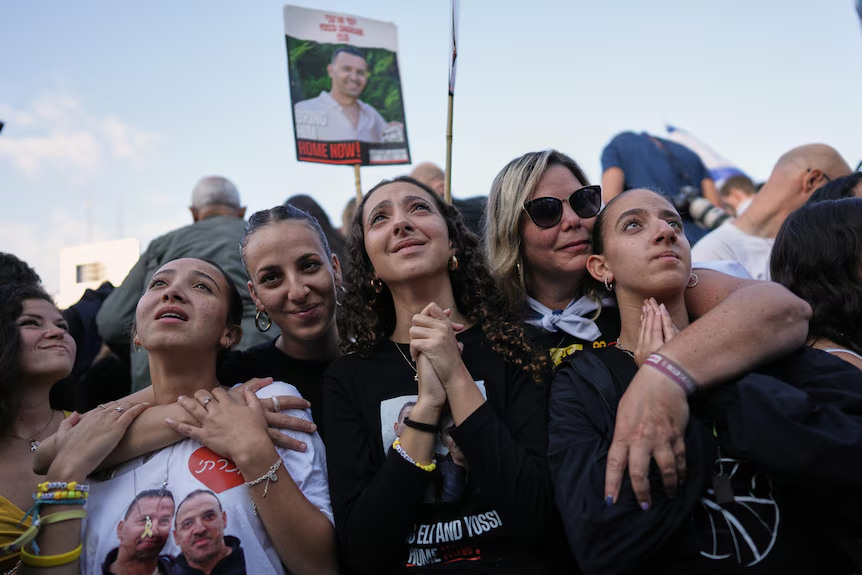
Israel has confirmed that the final group of 20 hostages freed by Hamas on Monday has safely returned to the country. “Welcome home,” the Israeli Foreign Ministry wrote in a post on X, celebrating the return of Matan Angrest, Gali Berman, Ziv Berman, Elkana Bohbot, Rom Braslavski, Nimrod Cohen, David Cunio, Ariel Cunio, Evyatar David, Guy Gilboa Dalal, Maxim Herkin, Eitan Horn, Segev Kalfon, Bar Kuperstein, Omri Miran, Eitan Mor, Yosef Haim Ohana, Alon Ohel, Avinatan Or, and Matan Zangauker.

James Obasi13 October 2025
a1j.jpg

3min2390
The Labour Party’s 2023 presidential candidate, Peter Obi, has criticised the demolition of citizens’ properties and businesses by government authorities without adequate notice. In a statement shared on his verified X (formerly Twitter) account on Monday, Obi described the ongoing demolitions of shops, buildings, and other structures in different parts of the country as “unjustifiable” and “inhumane,” particularly amid worsening economic conditions. He said, “I strongly condemn the deliberate destruction of people’s properties and livelihoods by any government without due notice. The recent demolitions and loss of citizens’ goods and investments remain deeply unacceptable.” The former governor of Anambra State faulted the government’s actions, saying they have pushed millions further into poverty rather than providing relief. “At a time when government should be creating opportunities to lift people out of poverty, it is instead driving them into greater hardship,” he wrote. “These demolitions destroy livelihoods, cripple small businesses, and threaten the economic stability of struggling Nigerians.” Obi noted that many of the affected structures contained goods worth billions of naira — representing years of hard work and investment — and insisted that there is no lawful justification for such actions without due process or prior notification. He further questioned whether the demolitions truly serve public interest or reflect “arbitrary and excessive use of power.” According to him, such actions discourage local and foreign investors by creating uncertainty about property rights and business security. “If we fail to oppose these injustices, we risk eroding the foundations of our economy and social stability,” Obi warned. “Every Nigerian has the right to build a decent life through honest work — a right that must be respected and protected.”

a1h.webp

4min5160
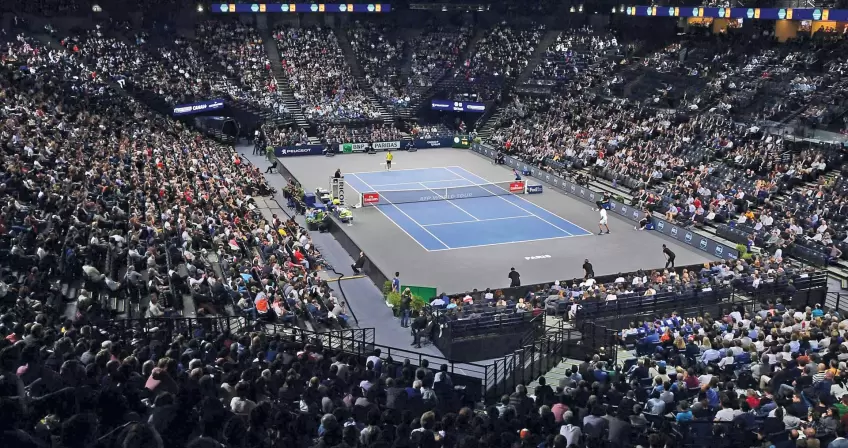
The Paris Masters is set to make its debut at its new home, La Défense Arena, later this month — a venue whose main court will rank as the second largest on the global tennis circuit, just behind the US Open’s Arthur Ashe Stadium. The modern indoor arena, opened in 2017 in Paris’s western suburbs, also serves as the home ground for French rugby club Racing 92. Tournament director Cédric Pioline, speaking ahead of the 2025 edition scheduled for October 27 to November 2, revealed that the centre court will seat around 17,500 spectators. “That makes it the second biggest court in the world for annual tournaments, behind the US Open’s centre court,” the former world number five explained. Additional courts will host about 4,000 fans each, with a smaller third court accommodating a few hundred. Earlier this year, organisers signed a 10-year agreement to host the Masters 1000 event at La Défense Arena, aligning with ATP standards for top-tier tournaments. The move follows long-running concerns that the tournament’s previous home, Bercy Arena — which hosted the event since 1986 — could lead to a downgrade due to space limitations. “Without evolving, we risked losing Masters status within four or five years,” Pioline said. The new venue will offer more space for players and meet updated ATP specifications, including higher ceilings and larger court dimensions. “At Bercy, the outside courts were too tight for today’s level of athleticism, and the ceiling height fell short of the required 12 metres. Overall, it felt restrictive,” he noted. Pioline confirmed that one of the Paris Masters’ signature traditions — the dramatic player walk-ons — will continue, albeit with a refreshed design. “A new venue calls for a new show. It will be more vertical, more dynamic, and use laser-style lighting to create an immersive experience,” he said. The tournament director added that fans could look forward to seeing the sport’s top two players, Carlos Alcaraz and Jannik Sinner, compete for valuable ranking points as the season draws to a close. “The 1,000 ATP points up for grabs could be decisive in the race for the year-end number one,” Pioline said. Both players recently withdrew from tournaments in Asia due to injuries — Alcaraz after his Japan Open win and Sinner during the Shanghai Masters — but are expected to return for the packed late-season schedule, which includes the ATP Finals in Turin and the Davis Cup Finals in Bologna.