Blog - Edupreneur Select

Bring to the table win-win survival strategies to ensure proactive domination. At the end of the day, going forward, a new normal that has evolved from generation.
a-18.jpg

2min3610
At least 17 Super Eagles players, including key forwards Victor Osimhen and Ademola Lookman, have arrived in Polokwane, South Africa, as Nigeria steps up preparations for Friday’s decisive 2026 FIFA World Cup qualifier against Lesotho. The players reported to camp on Tuesday, a day after the arrival of the coaching and backroom staff, officially marking the start of the team’s training programme. Those already in camp include William Troost-Ekong, Wilfred Ndidi, Bruno Onyemaechi, Terem Moffi, Moses Simon, Calvin Bassey, Alex Iwobi, Samuel Chukwueze, Frank Onyeka, and Tolu Arokodare. They are joined by returnee defender Semi Ajayi and goalkeepers Stanley Nwabali, Adebayo Adeleye, and Amas Obasogie, all of whom have linked up with the technical crew ahead of full team training sessions. Nigeria currently sit third in Group C of the CAF World Cup qualifying series, with 11 points from eight matches. The Super Eagles must win their remaining two games and rely on favourable outcomes from South Africa and Benin Republic to keep their qualification chances alive. The three-time African champions will take on Lesotho on Friday in Polokwane in what is widely seen as a must-win encounter.

a-16.png

3min5140
Nigeria’s leading labour union has called on the Federal Government to increase funding for education and improve the welfare of teachers, warning that continued neglect of the sector poses a grave risk to the nation’s future. President of the Nigeria Labour Congress (NLC), Joe Ajaero, made the appeal during the 2025 World Teachers’ Day celebration in Abuja. He lamented that despite their vital role in shaping society, teachers remain among the most underpaid and undervalued professionals. “The paradox is glaring: while society praises teachers, they remain the most neglected and deprived profession. They are celebrated in words but abandoned in reality,” Ajaero stated. He urged the government to meet the United Nations Educational, Scientific and Cultural Organisation (UNESCO) benchmark, which recommends allocating at least six percent of a nation’s Gross Domestic Product (GDP) and 20 percent of public spending to education. Nigeria’s current allocation, he said, falls far short of this standard, worsening the shortage of qualified teachers and inflating the student–teacher ratio. Ajaero also condemned the poor treatment of teachers in private schools, many of whom, he said, are denied fair wages, basic rights, and social protection. He called on the Ministers of Labour and Education to enforce teachers’ rights to unionize in accordance with Nigeria’s Constitution and International Labour Organisation (ILO) Conventions 87 and 98. He warned that failure to address poor working conditions could deepen the ongoing brain drain in the education sector, with teachers leaving for better opportunities abroad or in other industries. “You cannot give what you do not have. Teachers who are not properly trained, motivated, and supported cannot deliver quality education. If this continues, the future of our children—and our nation—is at risk,” Ajaero cautioned. He further called for a national framework to retrain unqualified teachers, strengthen professional development, and reduce Nigeria’s high pupil-to-teacher ratios, which exceed global standards. World Teachers’ Day 2025 was marked under the theme, “The Teachers We Need for the Education We Want: The Global Imperative to Reverse Teacher Shortages,” a message Ajaero described as especially relevant to Nigeria’s current realities.

Tech & Tools Desk8 October 2025
a-14.webp

3min2210
The wife of the Anambra State governor, Nonye Soludo, has emphasized that early detection remains the most effective way to treat and reduce the impact of breast cancer. Soludo, who is the founder of Healthy Living with Nonye Soludo, urged women to regularly perform self-breast examinations and go for routine medical checkups in certified hospitals. She made the call in a statement issued on Tuesday to commemorate Breast Cancer Awareness Month, which is observed every October. According to her, “October is Breast Cancer Awareness Month — a period dedicated to promoting education, awareness, and prevention of this deadly disease. Beyond this annual observance, we must recognize the serious threat breast cancer poses to our generation.” Describing the disease as a “generational threat,” Soludo expressed concern over the high number of women who lose their lives to breast cancer every year. “The statistics are alarming, but we can make a difference. Everyone should learn how to perform self-examinations regularly and visit standard hospitals for screening. Early detection is the key to effective treatment and control,” she said. She further called on all stakeholders to intensify awareness campaigns on breast cancer and other forms of cancer, especially at the community level. “This disease has taken too much from us. Let’s do everything possible to stop it. Spread the message this October and beyond. Living a healthy lifestyle significantly reduces the risk of cancer,” she added. The World Health Organisation (WHO) explains that breast cancer occurs when breast cells grow abnormally and multiply uncontrollably, forming lumps or tumours that can spread to other parts of the body if not treated early. Most cases begin in the milk ducts or lobules, and at the early stage — known as in situ — the disease is not life-threatening and can be managed effectively if detected in time. However, once the cancer spreads to nearby tissues or organs, it becomes much harder to treat and may prove fatal.

James Obasi8 October 2025
a-11.jpg

3min3040
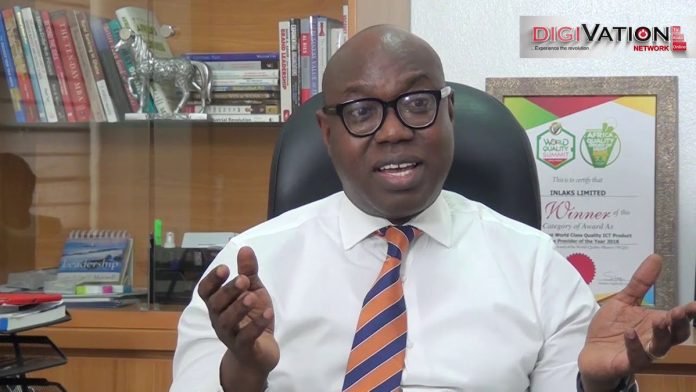
Group Managing Director and Co-Founder of Routelink, Femi Adeoti, has called for urgent and deliberate action by businesses, policymakers, and institutions to make cybersecurity a top national and corporate priority. According to him, this is the only way to secure Nigeria’s digital future. “Cybersecurity is no longer a backroom issue,” Adeoti stated. “It must be a central pillar of national development, economic stability, and business sustainability. A single breach could disrupt supply chains, erode public trust, and cause massive financial losses.” Routelink, established in 2012, is one of Nigeria’s leading cybersecurity and digital solutions companies, providing end-to-end protection for digital assets across industries such as finance, telecommunications, and government. The firm is ranked among the top five cybersecurity providers in the country. Through global partnerships with top technology brands including Qualys, Palo Alto Networks, Acunetix, Portnox, Veracode, Huawei, Check Point, and Imperva, Routelink delivers world-class protection solutions tailored to Nigeria’s unique challenges. Its offerings cover vulnerability management, real-time threat detection, cloud and hybrid security, Zero Trust architectures, and managed security operations. Adeoti highlighted Nigeria’s key cybersecurity challenges—ranging from underfunding and a shortage of skilled professionals to weak enforcement of existing regulations—but noted that these issues can be mitigated through consistent compliance and proactive strategies. He also pointed to emerging opportunities in managed security services, identity governance, and regulatory reforms. “At Routelink Enterprise, we are proud to collaborate with leading global cybersecurity partners to help Nigerian organisations build resilience. A secure Nigeria is a prosperous Nigeria. Cybersecurity is the insurance policy for our digital future,” he said. Routelink reaffirmed its commitment to promoting secure digital transformation in Nigeria and across Africa by combining local expertise, advanced technology, and international best practices to help businesses achieve long-term success.

a-8.jpg

3min5280
The African Democratic Congress (ADC) governorship candidate for the November 8 election in Anambra State, John Nwosu, has pledged to overhaul the state’s revenue collection system and eliminate multiple taxation. Nwosu, speaking during a virtual interactive session with Anambra indigenes in the diaspora under the ASA USA platform, condemned the actions of some revenue agents, describing them as “street terrorists” who inflict hardship on citizens. He vowed to remove all revenue enforcers from the streets immediately upon assuming office. According to him, “Multiple taxation is a major problem in Anambra State, and I will end it. My administration will implement a fully digital E-government system to streamline revenue collection and remove the need for physical enforcement.” He further explained that under his proposed E-transport system, all registered operators would be exempt from any form of harassment. “No one will have the right to stop or intimidate transporters on the road. We will clear them completely from the streets,” he said. Nwosu emphasized that a technology-driven framework would not only stop harassment but also curb corruption and enhance transparency in government operations. On interstate taxation affecting transporters, he proposed a collaborative policy through the South-East Governors Forum. The plan includes introducing a computerized sticker system, similar to one used in the South-West, to prevent multiple levies across the region. “The arrangement will ensure that if a vehicle registers in Anambra, 50 percent of the tariff goes to the state, while the remaining 50 percent is shared among other participating states. Each sticker will carry security features that can be verified using a smartphone,” he explained. An ICT professional by background, Nwosu also reaffirmed his commitment to a modern governance approach and said his administration would partner with experts and consultants from the diaspora to drive transformative reforms.

a-6.png

4min2200
The Senior Staff Association of Nigerian Universities (SSANU) and the Non-Academic Staff Union of Educational and Associated Institutions (NASU) have announced plans to stage a one-day protest on Thursday in response to the Federal Government’s continued delay in addressing their demands. Operating under the Joint Action Committee (JAC), the unions have instructed all branches to hold emergency joint meetings on Wednesday to mobilise members for the demonstration, which will feature campus marches, placard displays, and press briefings. The decision followed a review of government actions during JAC’s meeting on October 6, after multiple expired ultimatums produced no tangible results. Among the unresolved issues are alleged unfair distribution of the N50 billion earned allowances, delays in renegotiating the 2009 FGN/NASU/SSANU agreements, unpaid two-month salary arrears, outstanding 25 and 35 percent wage increments, and non-remittance of third-party deductions for May and June 2022. JAC had earlier issued a seven-day ultimatum to the government on September 15, later extending it by another 14 days, which lapsed on October 6. In a circular dated October 6 and titled “Commencement of Protest Actions,” signed by NASU General Secretary Prince Peters Adeyemi and SSANU National President Comrade Mohammed Ibrahim, the unions ordered full participation from all members. The memo stated that despite two meetings of the Joint Consultative Committee inaugurated by the Minister of Education — held on September 19 and October 6, 2025 — there was minimal progress, as the unions’ key demands remained unresolved. Consequently, the National JAC directed all branch leaders in universities and inter-university centres across the country to convene joint congresses on Wednesday, October 8, to prepare for a nationwide protest on Thursday, October 9. The circular further emphasized that members in both federal and state-owned universities must comply strictly with the directive, underscoring the importance of unity and participation. SSANU President Mohammed Ibrahim recently accused the government of lacking sincerity and cautioned that the unions might resort to an indefinite strike if their grievances persist. “Ours will not be the mother of all strikes; it will be the grandfather of all strikes,” he declared, stressing the impact such an action would have. He also lamented the deteriorating welfare of non-academic university staff, describing them as the most financially, economically, and psychologically distressed group in the education sector. Like their academic counterparts in ASUU, SSANU and NASU have long been in dispute with the Federal Government over issues of welfare and university funding.

a-4.webp

4min8650
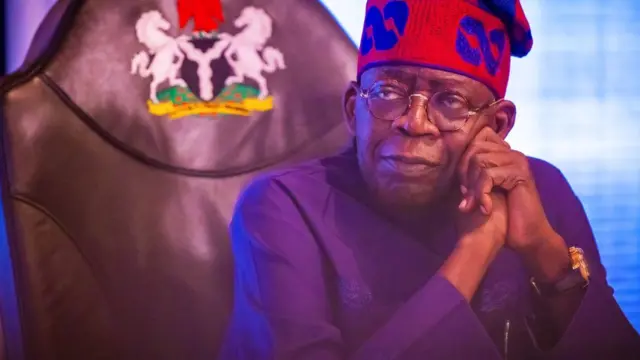
President Bola Tinubu has accepted the resignation of the Minister of Innovation, Science and Technology, Geoffrey Nnaji, following allegations of certificate forgery against him. According to a statement released on Tuesday by the President’s Special Adviser on Information and Strategy, Bayo Onanuga, Nnaji tendered his resignation in a letter expressing gratitude for the opportunity to serve. “He resigned today in a letter thanking the President for allowing him to serve Nigeria,” the statement read, adding that President Tinubu thanked the outgoing minister for his service and wished him success in his future endeavours. Presidency sources confirmed that the President had advised Nnaji to step down honourably rather than face dismissal, with the decision finalised on Tuesday evening at the State House in Abuja after consultations with key advisers. Nnaji’s resignation comes just days after an investigative report alleged that he submitted forged academic and NYSC certificates during his ministerial nomination in 2023. The report claimed that the University of Nigeria, Nsukka (UNN) disowned the degree certificate he presented, stating that while he was admitted in 1981, he did not complete his studies or graduate. A letter from the UNN Vice-Chancellor, Professor Simon Ortuanya, reportedly confirmed that Nnaji was not listed among the university’s graduates, contradicting an earlier 2023 letter from the school’s registrar that had affirmed his graduation. The controversy deepened after Nnaji admitted in a court affidavit that the university never issued him a certificate, though he maintained he completed his studies. In September, Nnaji filed a suit at the Federal High Court against the Minister of Education, the National Universities Commission, UNN, and others, seeking to stop the university from tampering with his academic records. The case, which came up for hearing on Monday, is still ongoing. At a press briefing in Abuja, Nnaji, represented by his spokesperson Dr. Robert Ngwu, described the allegations as politically motivated and denied any wrongdoing. He maintained that he earned a BSc in Microbiology/Biochemistry (Second Class Lower Division) from UNN in 1985 and accused the university of withholding his transcript for political reasons. “It is increasingly clear that this entire episode is not about education or integrity; it is about political desperation disguised as academic inquiry,” he said. He presented what he described as evidence of his graduation, including a 1985 university brochure listing his name, “Nnaji Uchenna G,” alongside other graduates. His spokesperson also dismissed concerns about name discrepancies, explaining that variations in Igbo names are common and interchangeable. Despite his defence, a senior government source described the matter as “an embarrassment” to the administration. Nnaji becomes the eighth minister to leave President Tinubu’s cabinet since its inauguration in August 2023. His resignation follows a series of cabinet changes and suspensions, including that of former Humanitarian Affairs Minister Betta Edu, who was suspended in early 2024 amid an investigation into alleged financial irregularities.

Tech & Tools Desk8 October 2025
a-3.webp

7min2160
President Bola Tinubu has officially accepted the exit of Professor Mahmood Yakubu as Chairman of the Independent National Electoral Commission (INEC), following the completion of his second and final term in office. The President is expected to name Yakubu’s successor after Thursday’s Council of State meeting in Abuja, where he will present a list of nominees for the position. Yakubu, who handed over on Tuesday to May Agbamuche-Mbu — a senior national commissioner and legal expert — will be temporarily replaced by her as acting chairman pending the appointment of a substantive head. In recognition of Yakubu’s decade-long service, President Tinubu conferred on him the national honour of Commander of the Order of the Niger (CON). Former Presidents Olusegun Obasanjo and Goodluck Jonathan, state governors, and other members of the Council of State are expected to advise the President on the choice of the next electoral chief. According to a statement issued by the President’s Special Adviser on Information and Strategy, Bayo Onanuga, Tinubu praised Yakubu for his contributions to strengthening Nigeria’s democracy through credible elections. “President Tinubu thanked Professor Yakubu for his services to the nation and his efforts to sustain Nigeria’s democracy, particularly through the organisation of free and fair elections throughout his two-term tenure. In recognition of his dedicated service, the President has bestowed on him the honour of Commander of the Order of the Niger,” the statement read. The President also directed Yakubu to hand over to Agbamuche-Mbu to oversee the affairs of the Commission until a new chairman is appointed. In a letter dated October 3, 2025, Yakubu expressed appreciation to the President for the opportunity to serve. He highlighted INEC’s progress under his leadership, including the introduction of the Bimodal Voter Accreditation System (BVAS) and the Results Viewing Portal (IReV), which enhanced transparency in Nigeria’s electoral process. Appointed in November 2015 as the 14th INEC chairman, Yakubu was reappointed in 2020, marking the first time in Nigeria’s history that an electoral chief served two consecutive terms. His tenure oversaw the 2019 and 2023 general elections, as well as several off-cycle polls. Yakubu expanded the number of polling units nationwide, implemented continuous voter registration, and introduced measures to accommodate persons with disabilities and internally displaced voters. His tenure, however, faced criticism over glitches during the 2023 general elections and allegations of delayed result transmission. Speaking at a brief handover ceremony at INEC headquarters in Abuja, Yakubu said he stepped down in line with constitutional provisions to allow a smooth transition.He thanked staff, national commissioners, civil society organisations, development partners, and Nigerians for their support, urging continued commitment to electoral reform. “As part of my farewell, I have presented two publications documenting the Commission’s work between 2015 and 2025: Election Management in Nigeria and Innovations in Electoral Technology. I pray that God continues to bless our country and our democracy,” he stated. Agbamuche-Mbu, now acting chairman, is a seasoned lawyer with over 30 years of professional experience in both the public and private sectors. A Delta State indigene born in Kano, she holds law degrees from Obafemi Awolowo University and Queen Mary University of London. She is also a member of the Chartered Institute of Arbitrators. Meanwhile, legal experts have weighed in on the appointment process for the next INEC chairman.Senior Advocate of Nigeria (SAN) Ifedayo Adedipe described the debate over presidential appointment of the INEC chair as a distraction, arguing that credible elections depend more on institutions and citizens than on who occupies the office. “Was it not Jonathan that appointed Professor Jega? Didn’t Jonathan lose the election? The real issue lies in the conduct of politicians and voters, not who appoints the chairman,” Adedipe said. Another SAN, Adedayo Adedeji, affirmed that the President has the constitutional power to appoint an INEC chairman subject to Senate confirmation, while calling for broad consultation and transparency in the selection process.Similarly, Wale Balogun, SAN, stressed the importance of a credible and rigorous screening mechanism to ensure impartiality. During the House of Representatives’ resumption on Tuesday, Speaker Tajudeen Abbas reaffirmed the legislature’s commitment to electoral reform ahead of the 2027 general elections. He said the ongoing amendment of the Electoral Act aims to strengthen transparency, ensure inclusion, and reduce disputes arising from elections. “Our goal is to make elections less contentious, enhance disability access, and ensure party primaries are more democratic and inclusive,” Abbas said. He also emphasised that the parliament would prioritise constitutional amendments, state policing, and economic reforms in the coming months, adding that Nigerians expect deliberate legislative actions that improve their quality of life.


James Obasi8 October 2025
air-peace.png

2min1550
Air Peace Limited has issued a warning over a fake social media post promoting a supposed “30% off Africa flights” deal. In a statement by its spokesperson, Osifo-Whiskey Efe, the airline described the circulating advert as fraudulent and clarified that it is not affiliated with Air Peace in any form. The company urged members of the public to disregard the misleading post and avoid any interaction with its promoters, who it said are attempting to defraud unsuspecting customers. “Our attention has been drawn to a sponsored social media post advertising a purported ‘30% off Africa flights’ promotion and requesting people to sign up to access this offer. We wish to categorically state that Air Peace Limited is not running any 30% discount promotion. The advertisement is fraudulent and not affiliated with Air Peace in any way,” the statement read. The airline also raised alarm over reports of customers attempting to book tickets via airpeace.com, warning that its only official website is www.flyairpeace.com

Ethiopia-3.jpg

3min20170
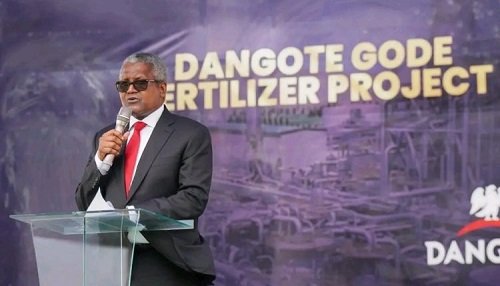
The President and Chief Executive of the Dangote Group, Aliko Dangote, has officially flagged off the construction of a $2.5bn fertiliser plant in Gode, Ethiopia. According to a statement from the company, the facility is being developed in partnership with Ethiopian Investment Holdings and will produce three million metric tonnes of urea annually, making it one of the largest fertiliser complexes in the world. Situated in Ethiopia’s South-East, the plant will utilise natural gas from the Hilal and Calub reserves to drive agricultural growth, create jobs, and strengthen food security across the Horn of Africa. At the groundbreaking ceremony, Prime Minister Abiy Ahmed described the project as a symbol of cooperation, shared responsibility, and peace, stressing that it represents Ethiopia’s determination to rise on the global stage. Dangote commended the Ethiopian government for its reforms and investments in infrastructure, including transport, energy, and the Grand Ethiopian Renaissance Dam, which he noted laid the foundation for industrial growth. He explained that the Gode plant is the first phase of a broader plan to diversify into other fertiliser types, including ammonium nitrate, ammonium sulphate, NPK, and calcium ammonium nitrate, positioning Ethiopia as a regional hub within five years. “This partnership reflects our commitment to industrialising Africa and ensuring food security across the continent,” Dangote said, adding that Africans themselves must lead the transformation of Africa. The project also highlights Dangote’s second major investment in Ethiopia after its cement plant in Mugher, with plans to double capacity through an additional $400m investment. Dangote acknowledged the support of institutions such as Afreximbank, Africa Finance Corporation, Access Bank, First Bank, and Zenith Bank in financing the project. Meanwhile, Somali Region President Mustafa Omar hailed Dangote as “the anchor investor Ethiopia has been looking for,” while the Chairman of the Nigerian Exchange Group, Dr. Umaru Kwairanga, praised Ethiopia’s economic progress and expressed optimism about stronger ties between Nigeria and Ethiopia.