Blog - Edupreneur Select

Bring to the table win-win survival strategies to ensure proactive domination. At the end of the day, going forward, a new normal that has evolved from generation.
PENGASSAN-750x375-1.jpg

4min23440
The Nigeria Labour Congress (NLC) has instructed its affiliate unions to commence immediate mobilisation in preparation for a nationwide strike against the Dangote Group, accusing the conglomerate of entrenched anti-worker practices. This directive follows the strike launched on Monday by the Petroleum and Natural Gas Senior Staff Association of Nigeria (PENGASSAN) against the Dangote Refinery, which disrupted operations at key oil and gas regulators including the Nigerian National Petroleum Company Limited (NNPCL), the Nigerian Upstream Petroleum Regulatory Commission (NUPRC), and the Nigerian Midstream and Downstream Petroleum Regulatory Authority (NMDPRA). On the same day, the National Industrial Court in Abuja issued an interim order restraining PENGASSAN from continuing its strike against Dangote Petroleum Refinery and Petrochemicals FZE, barring any disruption of crude oil and gas supply to the $20bn refinery in Lekki. PENGASSAN, however, said it was unaware of any such injunction, stressing that court processes must be formally served through a bailiff, not via online reports. The conflict stems from the union’s allegations that over 800 workers were dismissed for attempting to unionise, with their roles allegedly filled by expatriates, mainly from India. Dangote Group has denied the claim, stating the restructuring was a safety measure and that over 3,000 Nigerians remain in its employment. The standoff has forced a temporary shutdown at the refinery, a facility central to Nigeria’s push to reduce fuel imports and stabilise the naira. Government representatives met with PENGASSAN and the Dangote Group in Abuja on Monday in a bid to defuse the crisis. NLC President, Joe Ajaero, accused the company of systematic union-busting and disregarding both national and international labour laws. He alleged that Dangote operates “as a state within a state” and insisted that the conglomerate must respect workers’ constitutional rights. “Their facilities have become plantations of exploitation. The time for dialogue is over; the time for decisive collective action has come,” Ajaero declared. The NLC directed affiliate unions to unionise Dangote workers under their jurisdiction, set up Action Mobilisation Committees, and liaise with the national secretariat within 72 hours for coordination. The strike by PENGASSAN has already crippled activities at NNPCL, NUPRC, and NMDPRA offices in Abuja, with full compliance reported by union officials. Despite the court order, PENGASSAN’s leadership urged members to press on with industrial action until official communication is received. Meanwhile, the Association of Senior Civil Servants of Nigeria (ASCSN) has thrown its weight behind PENGASSAN and the Trade Union Congress, condemning what it described as “unjust and anti-labour practices” at the refinery. The Dangote refinery, built at a cost of over $20bn, is widely viewed as a cornerstone of Nigeria’s energy security strategy. Any prolonged shutdown could worsen fuel supply challenges and place additional strain on the economy.

Real-Estate.png

4min5390
Nigeria’s rental market is spiralling, with two-bedroom apartments now averaging ₦2.5m annually in major cities—far above rates recorded just a few years ago. From ₦250,000 flats in Benin to ₦20m luxury units in Lagos, tenants nationwide are feeling the pinch of surging rents that have triggered an affordability crisis. Rising costs nationwideIn Lagos, Ibadan, Port Harcourt, Kano, Abuja, and other cities, rent hikes have become steep and unpredictable. The two-bedroom flat—once considered the “middle ground” for families and professionals—has moved out of reach for many households. In Jos, Plateau State, residents report that rents in standard areas range between ₦1.5m and ₦2.5m, while less developed districts cost between ₦500,000 and ₦800,000. In Abuja, disparities are stark: two-bedroom flats in Kubwa or Karu average ₦1.5m–₦2.5m, but in Maitama and Asokoro, rents soar up to ₦10m annually. Ibadan, long regarded as affordable, has seen rents jump from ₦300,000–₦500,000 in 2022 to ₦800,000–₦1.5m today. In Lagos, the spread is dramatic: Ikorodu flats go for ₦1.5m–₦2m, while Ikoyi and Victoria Island command ₦8m–₦20m. Similar trends are seen in Ogun, Enugu, Uyo, Calabar, and Kano, where location and amenities significantly drive pricing. Hidden costs and frustrationsTenants lament not just rent increases but also hidden costs such as legal fees, agency commissions, and service charges. In Ibadan, inspections have turned into bidding wars, while in Lagos, some tenants report rents tripling within a review cycle. Why rents are climbingExperts trace the surge to multiple factors. Soaring construction costs as inflation has driven up prices of cement, steel, tiles, and labour. Currency instability as naira depreciation has made imported building materials far costlier. Housing deficit as Nigeria faces a shortfall of about 28 million units, keeping demand high. Urban migration as cities like Lagos attract hundreds of thousands of new residents annually. Speculative pricing as landlords target elites and expatriates, sidelining middle-income earners. Calls for solutionsThe Nigerian Institution of Estate Surveyors and Valuers warns that unchecked rent hikes could worsen inequality and urban poverty. Experts recommend mass housing delivery, use of local building materials, rent-to-own schemes, tax incentives for affordable landlords, and stronger rent regulation. Dr. Timilehin Olubiyi of West Midlands Open University added that without urgent action, more families will be forced to choose between rent and basic needs like food, healthcare, and education. OutlookNigeria’s rental crisis is tightening its grip, with middle-income households spending up to 40% of their income on housing—far above global affordability benchmarks. Unless systemic reforms are implemented, experts warn that shelter may remain an elusive dream for millions of Nigerians.

Tech & Tools Desk30 September 2025
clean-naira.webp

4min2900
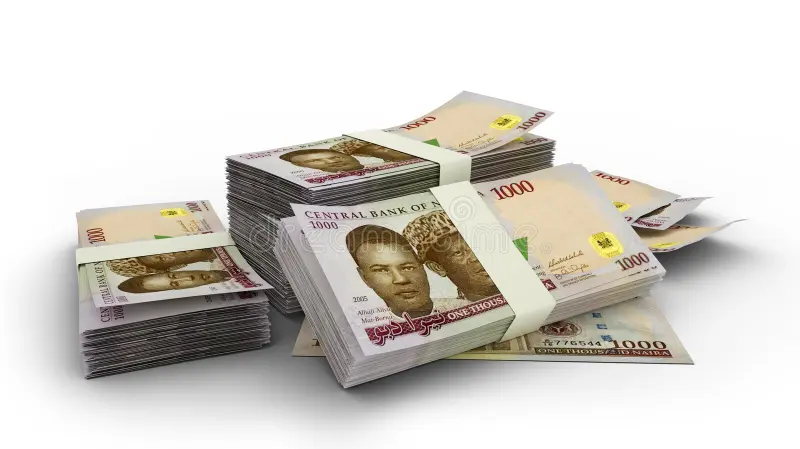
The National Association of Nigerian Travel Agencies (NANTA) has condemned the decision of three international airlines to continue selling tickets exclusively in United States dollars, describing the practice as an affront to Nigeria’s sovereignty and damaging to the naira. NANTA President, Yinka Folarin, criticised what he termed an arrogant stance by a few foreign carriers who have refused to reintroduce the naira into their ticketing platforms despite improvements in Nigeria’s foreign exchange market. According to him, while most airlines have embraced the use of the local currency, a handful are deliberately sidelining it. “It is no longer a general industry problem. Only about three airlines are still selling exclusively in dollars. We are not allowed to name them due to professional ethics and anti-competition rules, but their actions are clear: they are punishing the naira, excluding it from trade within its own country,” Folarin said. He emphasised that the issue goes beyond aviation, describing dollar-only ticketing as a direct challenge to Nigeria’s sovereignty. He added that the airlines’ actions were particularly concerning at a time when the naira is showing signs of stability following monetary reforms. “There is no justifiable reason for this anymore; liquidity has improved, the process is more transparent, and there are no outstanding remittance issues. Over 30 airlines are currently repatriating funds without challenges. If those ones can comply, why are these three still operating otherwise? It’s simply arrogance,” he declared. Folarin commended the Central Bank of Nigeria and other authorities for steps taken to improve transparency in the foreign exchange market, urging all stakeholders to align with the federal government’s economic recovery agenda. “We are not asking for favors, we are asking for fairness. The naira deserves to be respected in its own country,” he insisted. Aviation expert, Group Captain John Ojikutu (retd.), linked the controversy to unresolved concerns about trapped airline funds. He noted that if the government has fully settled the outstanding remittances owed to these carriers, then there is no justification for dollar-only ticketing in Nigeria. “I am not sure if they have gotten their money. But if they have, the government should stop them immediately. I think this is happening because some people may be benefiting from it internally. That cannot stand if we are no longer owing them. It is wrong and must be corrected without delay,” Ojikutu said. He acknowledged that airlines often pay service charges in dollars and may seek to recover costs in the same currency, but stressed that Nigeria must assert its sovereignty. “If a foreign airline continues to take dollars for ticket sales, it should be stopped and investigated,” he added. Industry stakeholders say the continued rejection of the naira is more than a commercial dispute — it undermines Nigeria’s economic stability and independence. With over 30 airlines already transacting in naira, attention now rests on the few holdouts whose actions, they warn, risk reversing the progress made in restoring confidence in the local currency.

James Obasi30 September 2025
independence-day-nigeria-1-750x375-1.jpg

1min2550
The Federal Government has cancelled the Independence Day parade earlier scheduled to mark Nigeria’s 65th anniversary on Wednesday, October 1. The announcement was made in a statement released on Monday night in Abuja by Segun Imohiosen, Director of Information and Public Relations in the Office of the Secretary to the Government of the Federation. Imohiosen stressed that the decision does not diminish the importance of the anniversary, noting that the government remains committed to celebrating Nigeria’s 65th independence with dignity and enthusiasm. He confirmed that all other activities planned for the celebration will go on as scheduled. “The government deeply regrets any inconvenience this decision may cause,” he said, adding that Nigerians, the diplomatic community, and invited guests are appreciated for their understanding and support. He further urged citizens to back the ongoing reforms of President Bola Tinubu aimed at building a stronger and greater nation.

dagote-2222-1.jpg

4min2250
The Federal Government is intensifying efforts to mediate in the ongoing dispute between Dangote Petroleum Refinery and the Petroleum and Natural Gas Senior Staff Association of Nigeria (PENGASSAN) over the alleged mass dismissal of union members and their replacement with expatriates. Minister of Labour and Employment, Muhammad Maigari Dingyadi, has appealed to PENGASSAN to suspend its nationwide strike, which commenced yesterday, stressing that dialogue remains the only path to resolution. The strike has already disrupted operations, with members of the Nigeria Union of Petroleum and Natural Gas Workers (NUPENG) unable to effectively lift products or provide key services. In a swift reaction, the management of Dangote Refinery condemned PENGASSAN’s action, accusing the union of sabotaging Nigeria’s oil and gas sector for decades and prioritising the interests of its leaders over ordinary Nigerians. Government officials confirmed that the Ministry of Labour and Employment has scheduled an emergency conciliation meeting with both parties, urging them to prioritise peace and economic stability. “There is no alternative to dialogue,” a senior ministry source said, adding that the strike poses risks to revenue, energy security, and the wider economy. PENGASSAN has maintained that only the unconditional reinstatement of all affected members will bring the strike to an end. The union further warned against what it described as the replacement of Nigerian workers with foreign nationals. Meanwhile, the Trade Union Congress (TUC) has declared support for PENGASSAN, placing its affiliates on standby for a possible nationwide action if the matter is not resolved. The Nigerian Upstream Petroleum Regulatory Commission (NUPRC) also appealed to both parties to settle their differences amicably, citing the importance of maintaining stability in the energy supply chain. Amidst the tensions, NUPENG distanced itself from individuals parading as “elders” of its Petroleum Tanker Drivers (PTD) branch, describing them as impostors and calling for their arrest. In a separate development, the Concerned Nigerian Consumers Forum criticised PENGASSAN’s industrial action, warning that it could trigger fuel shortages and economic instability. The group urged the government to protect the refinery, describing it as a vital asset for energy independence and job creation. The Dangote Refinery, in its own statement, accused PENGASSAN of reckless behaviour, recalling past opposition by oil unions to refinery reforms and privatisation efforts. The company highlighted its contribution to infrastructure, job creation, and tax revenues, stressing that the strike was an act of “economic sabotage” against over 200 million Nigerians. The refinery called on the government and security agencies to act swiftly to safeguard national energy security and prevent further disruption.

Tech & Tools Desk29 September 2025
MAP.webp

2min2920
Nigeria has marked a major milestone in its digital trade transformation with the international registration of its Tax Identification Number (Tax-ID) and the designation of the Federal Inland Revenue Service (FIRS) as the country’s Peppol Authority. The development, achieved with support from the Standards Organisation of Nigeria (SON), officially registers Nigeria’s Tax-ID under the ISO/IEC 6523 International Coding System. This recognition enables Nigerian individuals and businesses to participate more effectively in cross-border transactions. Peppol, a globally accepted framework for the secure and standardised exchange of electronic documents, is already operational across Europe, Asia, and Australia. With FIRS now serving as Nigeria’s Peppol Authority, local businesses can connect seamlessly to this international network—benefiting from faster payments, lower administrative costs, and improved global competitiveness. According to FIRS, the initiative simplifies taxpayer compliance while boosting investor confidence. “This milestone enables smoother cross-border transactions, reduces compliance challenges, and strengthens Nigeria’s position as a hub for global trade and investment,” the agency stated. Under the new system, Tax-IDs generated from the National Identification Number (NIN) for individuals and the Corporate Affairs Commission (CAC) numbers for businesses will now be internationally referenceable. The framework is also expected to reduce duplication, minimise errors, and ease compliance by harmonising Tax-IDs across federal and state levels. In addition, FIRS has unveiled the Merchant Buyer Solution (MBS) e-invoicing platform. Large taxpayers must adopt the platform by 1 November 2025, with medium and small businesses to follow in phases. Companies are encouraged to validate their Tax-IDs, update accounting systems, and integrate with the platform promptly. “The launch of MBS marks another leap forward in simplifying tax administration, closing compliance gaps, and aligning Nigeria with international standards in taxation and cross-border trade,” FIRS added. 

James Obasi29 September 2025
PENSIONNNN.png

3min4280
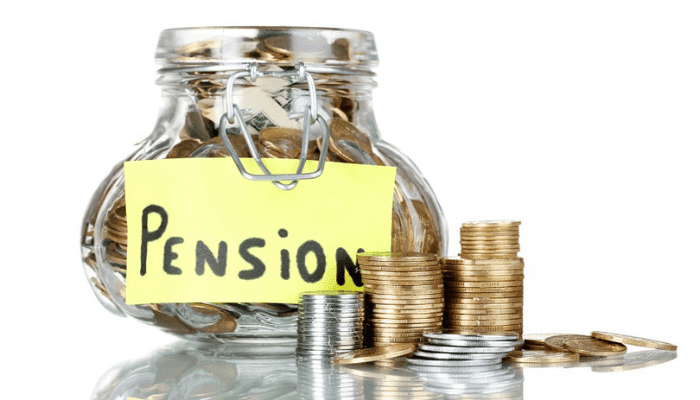
Banks with significant exposure to government deposits may come under increased pressure following the Central Bank of Nigeria’s (CBN) decision to impose a 75 per cent Cash Reserve Ratio (CRR) on non-Treasury Single Account (TSA) public sector funds. The policy was announced by CBN Governor Olayemi Cardoso in the communiqué issued after the two-day Monetary Policy Committee (MPC) meeting. He explained that the measure is aimed at strengthening liquidity management, as the MPC observed a build-up of excess liquidity in the banking system despite slowing inflation. This liquidity, the committee noted, largely stems from fiscal releases tied to improved government revenues. TSA balances, which represent federal revenues warehoused directly with the CBN, remain unaffected. However, non-TSA deposits — comprising state and local government funds typically kept with deposit money banks — have been identified as a major source of liquidity surges, particularly after Federation Account Allocation Committee (FAAC) disbursements. Afrinvest analysts observed that such inflows have historically provided banks with a pool of low-cost deposits but often coincided with periods of naira depreciation. “By sterilising 75 per cent of these balances, banks would need to intensify efforts to mobilise private sector deposits,” the firm stated, warning that lenders with large government exposures may face short-term margin pressures. Tilewa Adebajo, CEO of CFG Advisory, welcomed the policy, describing it as necessary to curb excess liquidity and rein in inflationary pressures. He argued that unchecked fiscal spending has been a key driver of core inflation, adding that the collaboration between the Ministry of Finance and the CBN would help sustain the downward trend. “If Nigeria can bring inflation to around 12 per cent, the economy could grow at eight per cent or more on a sustainable basis,” he said. Adebajo also noted that banks would gain some relief from the adjustment of the general CRR for commercial lenders, which has been reduced to 45 per cent from 50 per cent. In its post-MPC analysis, CardinalStone stated that non-TSA balances accounted for about 1.6 per cent of broad money supply at the end of 2024 and were equivalent to 1.3 times December FAAC allocations to states and local governments. The firm said this adjustment would help moderate foreign exchange pressures, as outflows from these deposits are expected to be gradual and expenditure-linked. Analysts concluded that the MPC’s decisions reflect a careful balancing act — easing slightly to support growth while tightening liquidity conditions around sensitive channels to preserve price stability and sustain confidence in the foreign exchange market.

CBN-3.jpg

3min3600
Banks with significant exposure to government deposits may come under increased pressure following the Central Bank of Nigeria’s (CBN) decision to impose a 75 per cent Cash Reserve Ratio (CRR) on non-Treasury Single Account (TSA) public sector funds. The policy was announced by CBN Governor Olayemi Cardoso in the communiqué issued after the two-day Monetary Policy Committee (MPC) meeting. He explained that the measure is aimed at strengthening liquidity management, as the MPC observed a build-up of excess liquidity in the banking system despite slowing inflation. This liquidity, the committee noted, largely stems from fiscal releases tied to improved government revenues. TSA balances, which represent federal revenues warehoused directly with the CBN, remain unaffected. However, non-TSA deposits — comprising state and local government funds typically kept with deposit money banks — have been identified as a major source of liquidity surges, particularly after Federation Account Allocation Committee (FAAC) disbursements. Afrinvest analysts observed that such inflows have historically provided banks with a pool of low-cost deposits but often coincided with periods of naira depreciation. “By sterilising 75 per cent of these balances, banks would need to intensify efforts to mobilise private sector deposits,” the firm stated, warning that lenders with large government exposures may face short-term margin pressures. Tilewa Adebajo, CEO of CFG Advisory, welcomed the policy, describing it as necessary to curb excess liquidity and rein in inflationary pressures. He argued that unchecked fiscal spending has been a key driver of core inflation, adding that the collaboration between the Ministry of Finance and the CBN would help sustain the downward trend. “If Nigeria can bring inflation to around 12 per cent, the economy could grow at eight per cent or more on a sustainable basis,” he said. Adebajo also noted that banks would gain some relief from the adjustment of the general CRR for commercial lenders, which has been reduced to 45 per cent from 50 per cent. In its post-MPC analysis, CardinalStone stated that non-TSA balances accounted for about 1.6 per cent of broad money supply at the end of 2024 and were equivalent to 1.3 times December FAAC allocations to states and local governments. The firm said this adjustment would help moderate foreign exchange pressures, as outflows from these deposits are expected to be gradual and expenditure-linked. Analysts concluded that the MPC’s decisions reflect a careful balancing act — easing slightly to support growth while tightening liquidity conditions around sensitive channels to preserve price stability and sustain confidence in the foreign exchange market.

Naria.jpg

3min3280
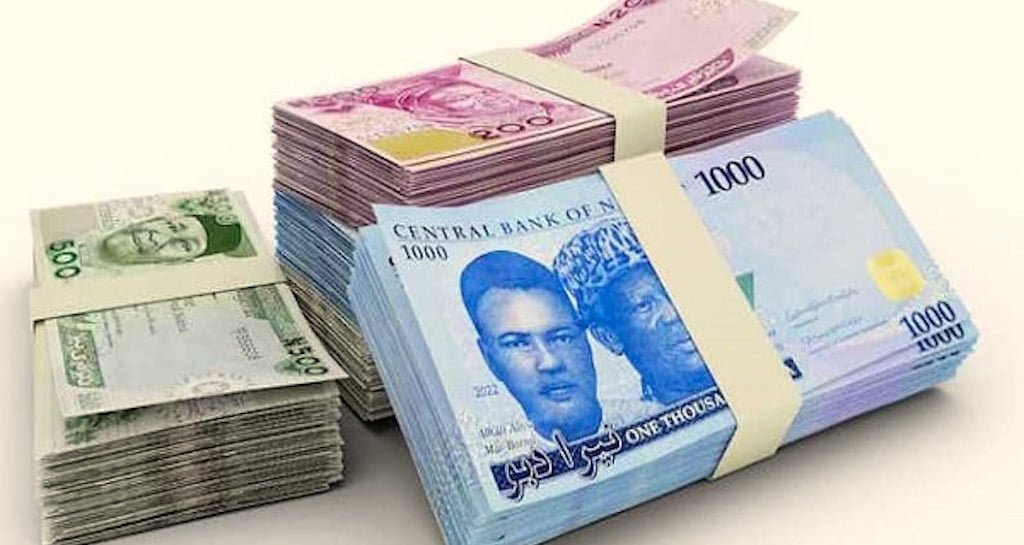
The naira has maintained its strength at the official foreign exchange market, trading below the ₦1,500/$ threshold for 10 consecutive sessions, according to data from the Central Bank of Nigeria (CBN). The local currency first dipped below the ₦1,500/$ mark on September 15, closing at ₦1,497/$ — its strongest level in more than six months. Since then, it has continued to appreciate, ending last Friday’s session at ₦1,480/$. At the parallel market, the naira also posted marginal gains, appreciating by 0.13 per cent to an average of ₦1,510/$. External reserves have provided additional support for the currency, rising to $42.23 billion from $42.03 billion over the past week, a 0.47 per cent increase. Analysts noted that the build-up in reserves has enhanced the CBN’s capacity to stabilise supply-demand imbalances while boosting confidence in near-term exchange rate stability. Reviewing last week’s performance, AIICO Capital attributed the naira’s resilience to improved liquidity from local market participants, oil inflows, and offshore portfolio investments. The firm highlighted that early trading sessions saw balanced supply and demand dynamics, with rates anchored around ₦1,492–₦1,495/$. Midweek pressures briefly pushed the rate to ₦1,498/$ before fresh dollar inflows and modest CBN interventions — estimated at $20 million across sessions — eased market tensions. By the close of the week, foreign portfolio inflows supported favourable liquidity conditions, strengthening the naira further into the ₦1,471–₦1,487/$ range. Overall, the currency appreciated by about 49 basis points week-on-week, closing at ₦1,480.66/$ at the Nigerian Autonomous Foreign Exchange Market (NAFEM). AIICO Capital added that FX market stability is expected to persist in the near term, supported by CBN’s policy adjustments and complementary fiscal measures. Cowry Asset Management Limited expressed similar optimism, projecting relative stability for the naira across markets on the back of stronger FX inflows, rising reserves, and sustained central bank interventions. Meanwhile, financial experts have welcomed the Monetary Policy Committee’s recent decision to cut the policy rate by 50 basis points. They noted that the move could ease borrowing costs for the real sector, reinforce FX stability, and shift investor sentiment towards equities as fixed-income yields moderate in response to the new macroeconomic outlook.

trade-fair-demolition-1200x750-1.jpg

3min3170
A non-profit organisation, Spaces for Change, has condemned the recent demolition of structures at the Lagos International Trade Fair Complex, describing the exercise as a violation of traders’ economic rights. In a statement issued after a visit to the site, the group expressed concern that the demolition, which began on September 25, 2025, targeted plazas, malls, shops, and other business premises without proper consultation or notice to stakeholders. “We demand justice for the unconstitutional destruction of several business premises in the Complex,” the statement read. The organisation argued that the exercise, carried out under the directive of the Lagos State Government, was justified on claims of illegal developments, lack of approvals, and defective structures, but said its findings contradicted those claims. According to Spaces for Change, victims presented building approvals issued by the Lagos International Trade Fair Complex Management Board (LITFCMB) through the Federal Ministry of Works and Housing — approvals which, it noted, call into question the state government’s assertions. The group stressed that under the LITFCMB Act of 1993, the Federal Government has authority to administer the Complex and grant leases to investors. The organisation further alleged that protesters were harassed by security agents and non-state actors mobilised during the exercise, leaving some victims hospitalised and in distress. It described the development as “economic sabotage” and a “brazen act of injustice” against legitimate business owners. The group urged the Lagos State Government to halt the exercise, compensate affected traders, and collaborate with the Federal Board to avoid future conflicts. It insisted that those responsible must be held accountable, warning that failure to act decisively would undermine confidence in the rule of law and discourage investments in the state. Meanwhile, the Lagos State Government confirmed on Thursday that the demolitions were aimed at removing illegal developments, defective structures, and buildings erected on road setbacks and drainage channels. According to the Senior Special Assistant on New Media to the Governor, Jubril Gawat, the operation was carried out jointly by officials from the Ministry of Physical Planning, Lagos State Building Control Agency, Lagos State Urban Renewal Agency, Lagos State Physical Planning Permit Authority, and other relevant agencies, alongside security personnel and lawmakers.