Blog - Edupreneur Select

Bring to the table win-win survival strategies to ensure proactive domination. At the end of the day, going forward, a new normal that has evolved from generation.
kanu.jpeg

1min1840
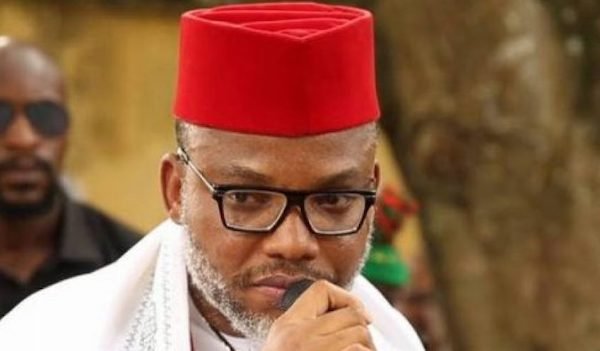
Justice James Omotosho, delivering the ruling on Friday, ordered that the medical team’s findings be submitted to the court within eight days. He explained that the report would guide the court in deciding on Kanu’s application to be transferred to the National Hospital in Abuja for comprehensive medical care. The court instructed the NMA panel to examine the medical facilities at the Department of State Services (DSS) to determine whether they are adequate for Kanu’s treatment. It added that the committee may use any hospital in the country to conduct its evaluation. According to the order, the panel should consist of 8–10 members, including a cardiologist, a neurologist, and the Chief Medical Director of the National Hospital, who must be part of the team.

dagote-2222.jpg

4min2330
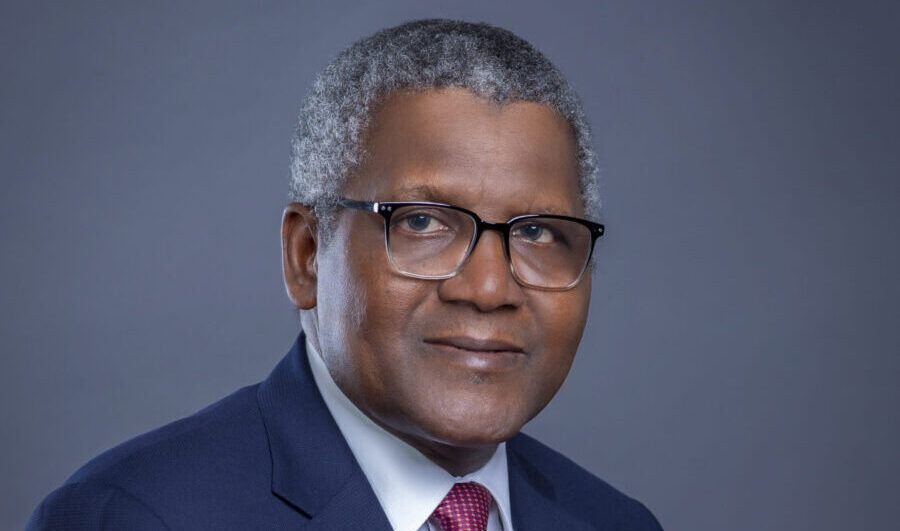
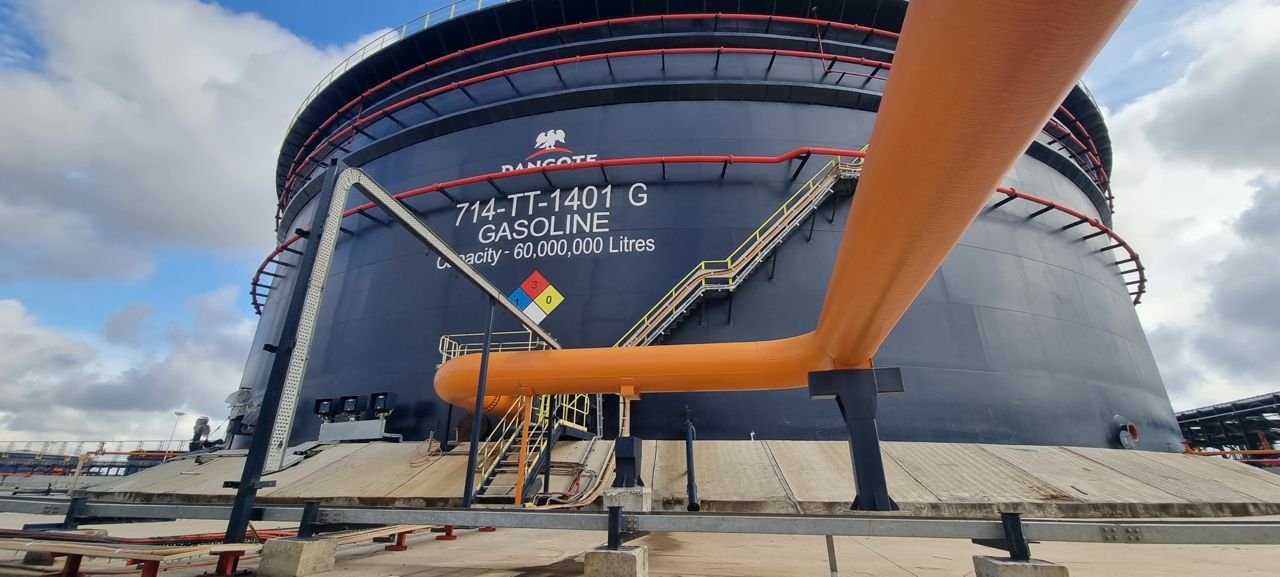
The management of Dangote Petroleum Refinery and Petrochemicals has announced a major reorganisation of its operations and workforce in response to repeated acts of sabotage that threatened the safety of its 650,000-barrels-per-day facility. In a letter dated September 24, 2025, signed by the Chief General Manager of Human Asset Management, Femi Adekunle, the company stated it was “constrained to carry out a total reorganisation of the plant” following “several reported cases of sabotage in different refinery units, leading to serious safety concerns.” Affected staff were instructed to return all company property to their line managers and obtain clearance before receiving their entitlements, which would be processed by the Finance Department in line with existing employment terms. However, a senior official of the refinery clarified that the move should not be interpreted as mass layoffs, stressing it was a targeted reorganisation exercise aimed at addressing sabotage within the facility. “Yes, the letter is authentic, but the interpretation that it represents a mass sack is wrong,” the official said. “This action is about plugging leakages and protecting company assets. Once the issues are resolved, affected staff may be reabsorbed. That is why it cannot be called a sack.” He explained that the sudden implementation of the exercise was necessary to prevent those involved in sabotage from concealing their activities. “Some acts of sabotage have been noticed repeatedly, and the company must protect its operations. You cannot announce such actions in advance, or those responsible would cover their tracks,” he added. The official also confirmed that refinery operations remain active, with both Nigerian and expatriate staff still working on site. “Anyone who has no hand in sabotage has nothing to worry about,” he said. A copy of the internal memo, addressed to staff of Dangote Petroleum Refinery & Petrochemicals FZE and Dangote Industries Free Zone Development Company, stated: “In view of the many recent cases of reported sabotage in different units of the Petroleum Refinery leading to major safety concerns, Management is constrained to carry out a total reorganisation of the plant. As a consequence, we wish to inform you that your services are no longer required with effect from Thursday, September 25, 2025. Please surrender all company properties in your possession to your line manager and obtain an exit clearance. The Finance Department is advised to compute all your benefits and entitlements in line with your terms of employment, subject to completion of clearance.” Despite the restructuring, refinery operations continue, though the plant has recently faced industrial and market disputes. The facility, which began production in 2024 with hopes of reducing Nigeria’s reliance on imported petroleum products, has been engaged in a labour dispute with the Nigeria Union of Petroleum and Natural Gas Workers (NUPENG) over workplace practices and safety issues. It has also clashed with the Depot and Petroleum Products Marketers Association of Nigeria over distribution terms and pricing policies, with marketers accusing the refinery of creating conditions that could distort the downstream oil market.

Artificial-Intelligence-Robot-Thinking-Brain-1280x732.jpg

4min2530
Scholars and scientists have urged African governments to increase funding for Artificial Intelligence (AI) and related innovations to transform agriculture, boost food production, and reduce hunger across the continent. The call was made in a communiqué issued on Friday at the 2025 Humboldt Kolleg Scientific Conference hosted by the Federal University of Agriculture, Abeokuta (FUNAAB). The three-day international conference, themed “AI-Driven Approach to Regenerative Agriculture for Sustainable Food Production, Food Safety, and Environmental Preservation,” brought together researchers, policymakers, and industry stakeholders to discuss ways AI and regenerative practices can reshape food systems, protect the environment, and stimulate Africa’s economic growth. Declaring the conference open, FUNAAB Vice-Chancellor, Prof. Babatunde Kehinde — represented by Deputy Vice-Chancellor (Academic), Prof. Olukayode Akinyemi — described the gathering as timely, stressing that Africa must work collectively to strengthen its food production capacity. He reaffirmed the university’s commitment to advancing research and partnerships that integrate AI into agriculture to enhance productivity, food safety, and environmental sustainability. The University Librarian, Prof. Abayomi Owolabi (represented by Dr. Fauziyah Adenekan), highlighted Africa’s marginal share of global AI investment, noting that while countries like the U.S. and China dominate, the continent receives only 0.3 percent despite its vast potential. “AI is rewriting the rules of the global economy, and Africa risks being sidelined not due to lack of talent but because its role has been overlooked,” he warned. Owolabi emphasized that Africa’s youthful workforce remains a crucial advantage and called on governments to allocate more resources to AI and emerging technologies in agriculture to scale food production. In his keynote address, Prof. Jonathan Atungwu, Provost of the Federal College of Agriculture, Ibadan, appealed for stronger policies and private-sector investment to support farmers through regenerative agricultural systems, training on environmental stewardship, and access to credit. He stressed that safeguarding food security for future generations requires deliberate reforms. Prof. Simeon Cadmus of the University of Ibadan, delivering a paper on climate change, cautioned about the rising risks it poses to human and animal health, urging more proactive research and interventions. The conference also featured panel discussions, goodwill messages, and networking sessions, reinforcing cross-disciplinary collaboration and underlining the importance of AI-driven regenerative agriculture in achieving the Sustainable Development Goals (SDGs). FUNAAB, through this conference, continues to position itself as a leading agricultural think tank and innovation hub for food security solutions in Africa. Despite significant growth in crop production — from 365 million tons in 1990 to over 1 billion tons in 2019, with projections of 1.47 billion tons by 2043 — hunger remains widespread. In 2023, around 282 million Africans faced hunger, while 61% of the population in 2022 experienced moderate to severe food insecurity, more than double the global average. Experts believe that with greater investment in mechanisation and advanced technologies such as AI, the continent can sustainably feed its growing population.


tvt.jpg

3min3580
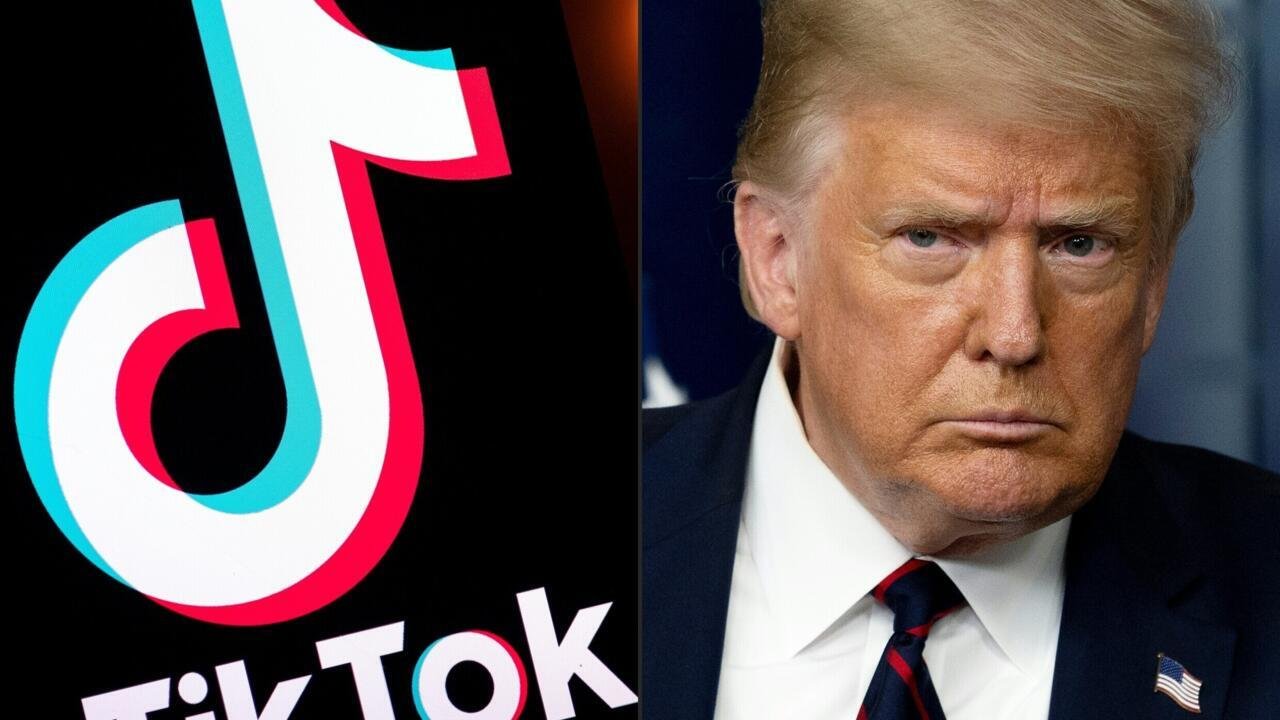
U.S. President Donald Trump on Thursday signed an executive order directing the sale of TikTok’s U.S. operations to American and international investors, in line with national security requirements. According to Reuters, the order mandates that any company bidding for TikTok must meet the security provisions of the 2024 law, which would otherwise ban the app unless its Chinese owners divest. At a White House briefing, Vice President James Vance said the newly created U.S. entity would be valued at around $14 billion. “We actually think this is a good deal for investors, but they will ultimately decide how much to invest and what value to place on it,” he added. The White House also extended the enforcement date of the law to January 20 to allow for the sale process, investor commitments, and negotiations with Chinese authorities. One of the unresolved issues is the handling of TikTok’s key asset — its recommendation algorithm. Trump’s order states that the algorithm will be retrained, monitored by U.S. security partners, and placed under the control of the new joint venture. Vance said there had been “some resistance on the Chinese side” but emphasized that the goal was to keep TikTok operating while ensuring American users’ data privacy. Trump noted that he had spoken with Chinese President Xi Jinping about the matter. “We had a good talk, I told him what we were doing, and he said go ahead with it,” Trump said. Neither the Chinese embassy in Washington nor TikTok immediately commented on the development. TikTok has 170 million U.S. users, and Trump has credited the platform with helping him secure reelection, pointing to his own following of 15 million. The White House also recently launched an official TikTok account. “This is going to be American-operated all the way,” Trump said, adding that investors expected to be involved include Dell Technologies founder Michael Dell, media mogul Rupert Murdoch, and “four or five absolutely world-class investors.”

trade-fair.webp

2min5660
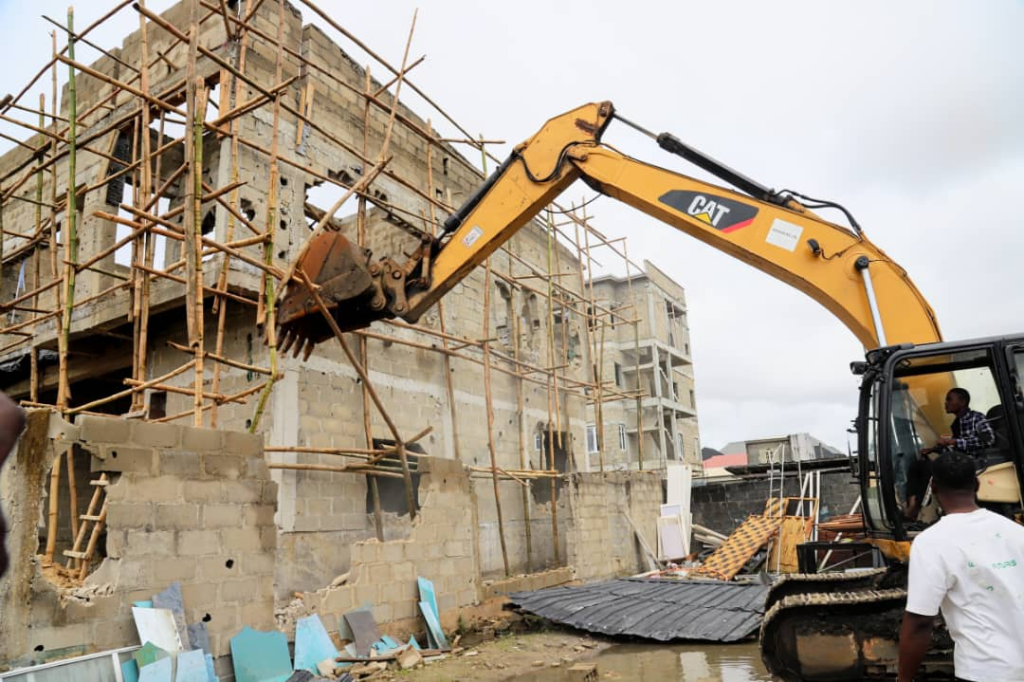
The Lagos State Government on Thursday began demolishing illegal and unsafe structures at the Trade Fair Complex in Ojo as part of its efforts to restore order and enforce physical planning regulations. Senior Special Assistant on New Media to Governor Babajide Sanwo-Olu, Jubril Gawat, confirmed the exercise in a post on X, noting that the operation targeted “illegal developments, structures without statutory approvals, defective buildings, and constructions erected on road setbacks and drainage channels.” He explained that the government could not continue to tolerate unapproved developments that obstruct critical infrastructure and endanger lives. The exercise was carried out jointly by the Ministry of Physical Planning and Urban Development, the Lagos State Building Control Agency (LASBCA), the Lagos State Urban Renewal Agency, and the Lagos State Physical Planning Permit Authority. Representatives from the Office of Infrastructure, members of the State House of Assembly, and security agencies also provided support. Bulldozers were deployed to pull down marked structures, while some traders and shop owners expressed concern about the effect on their businesses. The Sanwo-Olu administration has repeatedly warned against building without approval or blocking drainage systems, stressing that such violations contribute to flooding, traffic congestion, and general urban disorder. Officials described the removal as part of ongoing efforts to protect infrastructure and ensure public safety in a city already grappling with congestion. Past demolition exercises, however, have sparked criticism from affected residents who complained of inadequate notice and loss of property. The government had previously introduced an amnesty programme to allow owners of irregular or unapproved buildings to regularise their properties without penalty. That programme, which was extended several times, has now ended, paving the way for stricter enforcement. LASBCA has since intensified demolitions in areas where illegal structures obstruct drainage channels, encroach on road setbacks, or are deemed unsafe.

dangote-refinery-1-.jpg

3min4470
The National Association of Nigerian Students (NANS) has cautioned that any attempt by the National Union of Petroleum and Natural Gas Workers (NUPENG) to disrupt the operations of the Dangote Refinery will be resisted by Nigerian youths. In a statement issued in Abuja on Friday, NANS National President, Olushola Oladoja, described the refinery as a project tied to the collective destiny of over 200 million citizens. He noted that with its 650,000 barrels-per-day refining capacity, the facility represents a turning point for Nigeria’s economic survival. “With Nigeria’s average daily fuel consumption at about 550,000 barrels per day, this refinery can make the nation self-sufficient and create room for exports, changing the long-standing narrative of fuel importation,” Oladoja said. He urged industry stakeholders — particularly the Depot and Petroleum Products Marketers Association of Nigeria (DAPPMAN) and NUPENG — to prioritise national interest over personal or group considerations. Oladoja warned that students would resist any cartel, group, or institution, whether domestic or foreign, seeking to frustrate the refinery. “This is a battle for the survival of our economy and the dignity of our nation,” he said. The NANS leader praised Aliko Dangote for what he called an act of uncommon patriotism, stressing that his decision to invest massively in Nigeria rather than abroad demonstrated his commitment to the country. According to him, the refinery will create jobs and sustain the economy for generations. “This is not just about a refinery. It is about survival, sovereignty, and the dignity of our nation. NANS is watching, and we will not allow vested interests to mortgage our future,” Oladoja declared. Recent tensions between Dangote and oil workers’ unions have escalated following allegations of breached agreements. On September 9, 2025, Dangote and NUPENG signed a Memorandum of Understanding after government mediation, affirming workers’ constitutional right to unionise. However, within two days, NUPENG accused the Dangote Group of bad faith, claiming truck drivers were ordered to remove union stickers before loading. The company dismissed the allegations as “cheap blackmail.”

trum-1.jpg

3min5540
U.S. President Donald Trump on Thursday announced sweeping new tariffs on pharmaceuticals, heavy-duty trucks, home renovation fixtures, and furniture, intensifying his trade war strategy. The move marks the administration’s most aggressive trade action since last April’s rollout of reciprocal tariffs on nearly all major trading partners. Effective October 1, a 100% tariff will apply to all branded or patented pharmaceutical products unless the manufacturer builds production facilities in the United States, Trump said in a post on Truth Social. In a separate message, he confirmed a 25% tariff on imported heavy trucks to support American manufacturers such as Peterbilt, Kenworth, Freightliner, and Mack Trucks. Foreign competitors affected include Sweden’s Volvo and Germany’s Daimler, both of which saw their shares fall in after-hours European trading. Trump said the truck tariffs were justified on “many reasons, but above all else, for national security.” Earlier this year, his administration launched a Section 232 investigation into truck imports to assess their national security implications — a provision of U.S. trade law that grants broad presidential authority to impose tariffs when imports are deemed a threat. The new measures also target home renovation and furniture imports. Trump announced a 50% tariff on kitchen cabinets, bathroom vanities, and related products, alongside a 30% tariff on upholstered furniture. According to the U.S. International Trade Commission, imports accounted for 60% of all furniture sold in 2022, including 86% of wood furniture and 42% of upholstered items. Shares of U.S. furniture retailers Wayfair and Williams Sonoma, both heavily reliant on imports, fell sharply after the announcement. Analysts warn the tariff escalation could further stoke inflation in the U.S., the world’s largest economy. Trump has repeatedly used tariffs to advance his protectionist agenda, arguing they will strengthen domestic industries and punish countries he accuses of exploiting the United States. His administration has already imposed baseline tariffs of 10% on all countries, with higher rates on those with significant trade surpluses, and has extended duties on Canada, Mexico, and China under emergency powers. It remains unclear how the latest round of tariffs, set to take effect next week, will be integrated with existing trade measures.

Tech & Tools Desk26 September 2025
Untitled-1-Recovered-Recovered-Recovered-Recovered-6.png

3min5590
The Federal Government has filed charges against five retired senior police officers over alleged age falsification and forgery. However, their scheduled arraignment before the Federal Capital Territory High Court in Maitama was stalled for the third time on Thursday due to their absence. The defendants — AIG Idowu Owohunwa (retd.), CP Benneth Igweh (retd.), CP Ukachi Peter Opara (retd.), DCP Obo Ukam Obo (retd.), and ACP Simon A. Lough (SAN) (retd.) — are facing a 14-count charge, marked CR/353/2025, instituted by the Inspector-General of Police. They are accused of conspiring to falsify their ages to extend their service beyond the mandatory retirement period, in violation of the Penal Code and Public Service Rules. The charges also include forgery, fraudulent declarations, and the use of falsified documents in police records and court proceedings. At Thursday’s hearing, prosecution counsel ACP Rimamsomte Ezekiel informed the court that attempts to serve the defendants at their last known addresses had failed, as they had relocated. He added that copies of the charge sent to their WhatsApp numbers also yielded no response. Ezekiel urged the court to issue a bench warrant for their arrest. Defence counsel, Terkaa Aondo (SAN), opposed the request, insisting that criminal charges must be personally served. He argued that the prosecution had the capacity to bring the defendants before the court, stating: “If they could arrest Nnamdi Kanu in Kenya and Omoyele Sowore in Nigeria, why not these defendants?” In his ruling, Justice Yusuf Halilu agreed that personal service is mandatory in criminal cases, describing the request for a bench warrant as premature. He reminded the police of their duty to produce the defendants, noting that they had previously been granted bail on self-recognisance. The case was adjourned to November 17 for arraignment, with the judge directing both the prosecution and defence to ensure the defendants’ presence in court.

James Obasi26 September 2025
italy-flag.jpg

1min4060
Italy’s antitrust authority has fined energy giant Eni and five other oil companies a combined sum of more than €936 million ($1.1 billion) for engaging in practices that restricted competition in the fuel market. According to the regulator, Eni, Esso, Ip, Q8, Saras, and Tamoil coordinated to fix the value of the bio component included in fuel prices, which tripled between 2019 and 2023. An investigation launched after a whistleblower’s report found that the companies carried out parallel price increases — often overlapping — as a result of direct or indirect information exchanges. The cartel, the authority noted, operated from January 1, 2020, until June 30, 2023.

ken-saro-wiwa.jpg

3min2490
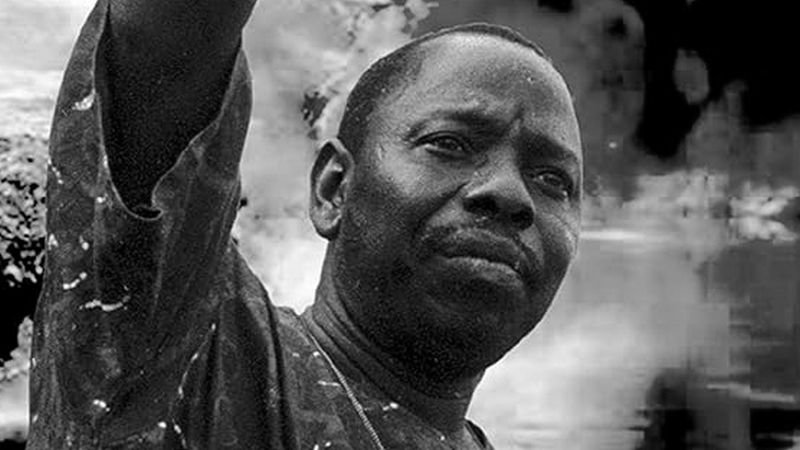
ABUJA – The Ogoni Voice Achievers Foundation (OVAF) has rejected the federal government’s plan to resume oil exploration in Ogoniland, insisting that no drilling should begin until a full environmental cleanup is completed and justice is secured, including the exoneration of the late Ken Saro-Wiwa and other activists. In a statement signed by OVAF’s Founder and Chairman, Hon. Ambassador Gospel Barifii Gokana, the group described the government’s approach as “deeply flawed, unjust, and unacceptable.” It warned that restarting oil operations without addressing decades of pollution and neglect could trigger resentment, unrest, and renewed conflict. Ambassador Gokana faulted the government’s justification of oil restart on economic recovery grounds, noting that genuine consultations with the Ogoni people had not taken place. “Only a select few have been invited into closed-door negotiations. This selective engagement fails the test of free, prior, and informed consent, which is a right under international human rights norms,” he said. The foundation also raised concerns over transparency, citing the absence of clear information on environmental impact assessments, benefit-sharing frameworks, and safety measures. It stressed that the federal government had failed to fully implement the 2011 United Nations Environment Programme (UNEP) report, which revealed widespread oil pollution in Ogoniland. OVAF outlined non-negotiable conditions, including halting new exploration until UNEP’s recommendations are fully executed, reparations are established, and an inclusive stakeholder process involving OVAF, MOSOP, youth, women, and traditional leaders is put in place. The group further called for binding legal instruments to guarantee equitable benefit-sharing and independent oversight of environmental safety. In a symbolic appeal, OVAF demanded the exoneration of Ken Saro-Wiwa and the eight other Ogoni activists executed in 1995, describing it as essential to restoring dignity to the Ogoni people. Ambassador Gokana urged President Bola Tinubu and relevant agencies “to listen to the voices of the Ogoni people and respect our rights, lives, lands, and futures.”