Blog - Edupreneur Select

Bring to the table win-win survival strategies to ensure proactive domination. At the end of the day, going forward, a new normal that has evolved from generation.
Ogoni-cleanup-project.jpg

4min2730
President Bola Tinubu on Wednesday posthumously awarded the national honour of Commander of the Order of the Niger (CON) to four prominent Ogoni leaders — Albert Badey, Edward Kobani, Theophilus Orage, and Samuel Orage — collectively remembered as the “Ogoni Four.” The President made the announcement while receiving the report of the Ogoni Consultations Committee at the State House, Abuja. Calling for reconciliation and unity, Tinubu urged the Ogoni people to move beyond decades of division. “May their memories continue to inspire unity, courage, and purpose among us. I urge the Ogoni people across classes, communities, and generations to close ranks, put this dark chapter behind us, and move forward as a united community with one voice,” he said. The meeting came 16 months after Tinubu had pledged to pursue the Ogoni cleanup programme diligently and to expand empowerment opportunities for the people of the region. He reaffirmed his commitment to unlocking Ogoniland’s human and natural resource potential while ensuring both environmental and economic security. The President also assured stakeholders of his administration’s support in achieving peace, environmental recovery, and economic renewal, as well as facilitating the return of oil exploration in the area. “I am encouraged by the overwhelming consensus of the Ogoni communities to welcome the resumption of oil production. The government will deploy every resource to support your people in this march towards shared prosperity,” he said. Tinubu recalled the transfer of Ogoni oil field operations to the Nigerian National Petroleum Company Limited (NNPCL) and its joint venture partners under the previous administration, vowing to build on that decision. Directing National Security Adviser Nuhu Ribadu to lead fresh engagements with stakeholders, the President stressed the need to avoid further delays. “A dead asset is not valuable to the community, the country, or the people. The longer we procrastinate, the worse it is for everyone,” he added. He also instructed the Minister of Environment to integrate pollution remediation and environmental recovery into ongoing dialogue with the Ogoni people. Presenting the report, Ribadu explained that the consultations covered all four Ogoni zones, with inputs from communities, traditional rulers, and the diaspora. He pledged strict implementation of the President’s directives to restore peace and development in Ogoniland. Committee Chairman Prof. Don Baridam added that the process was inclusive and reflected the collective demands of the Ogoni people, particularly structured participation in oil production, renewed environmental cleanup, and sustainable development initiatives. Oil was first discovered in Oloibiri, Ogoniland, in 1958, but exploration was halted in 1993 after widespread protests against environmental degradation and injustice. The movement to protect Ogoniland culminated in the execution of Ken Saro-Wiwa and nine other leaders in 1995 during the Abacha regime.

Tech & Tools Desk25 September 2025
waec-2.jpeg

2min18350
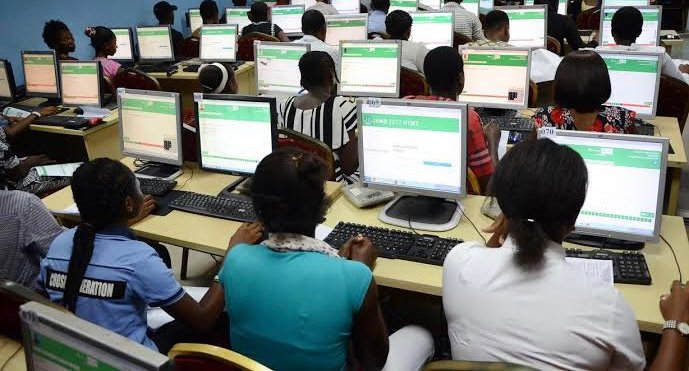
The West African Examinations Council (WAEC) in Anambra has stressed that accurate registration of candidates is fundamental to the successful implementation of Computer-Based Examinations (CBE). WAEC Branch Controller, Mr. Tunde Ajibade, made this known in Awka during a strategic meeting with the Ministry of Education and other key stakeholders. The session focused on preparations for the Federal Government’s planned adoption of CBE for the 2025/2026 examinations and was attended by school principals, teachers, private school owners, cybercafé operators, and education leaders. Ajibade cautioned that errors during registration could have lasting consequences, including loss of admission opportunities. He highlighted the importance of properly capturing candidates’ photographs since entry into examination halls would require facial verification. “A single mistake, such as uploading the wrong image, can make a candidate ineligible. While some errors may be corrected, others are irreversible. A successful examination begins with accurate registration,” he said. He also raised concern over the increasing number of amendment requests caused by registration errors and called for more training and sensitisation of registration officials. On CBE centres, Ajibade explained that schools with WAEC-accredited facilities would serve as examination centres, while schools lacking adequate infrastructure would be merged with nearby accredited institutions. On provisions for candidates with special needs, Anambra Head of Examinations, Mr. Olanrewaju Fadehan, urged schools to go beyond simply ticking disability options during registration. He noted that schools were required to complete a proforma form to ensure candidates received appropriate accommodations, adding that WAEC must be notified in advance for adequate preparation. In her remarks, the Anambra State Commissioner for Education, Prof. Ngozi Chuma-Udeh, commended WAEC for engaging stakeholders ahead of the examinations, describing the initiative as a proactive step toward credible and transparent assessments. She reaffirmed the state government’s commitment to supporting examination processes that uphold quality education.

James Obasi25 September 2025
Naira-Dollar.webp

1min4320
The naira yesterday strengthened to ₦1,515 per dollar in the parallel market, improving from ₦1,518 per dollar recorded on Tuesday. In the Nigerian Foreign Exchange Market (NFEM), the currency also appreciated, trading at ₦1,486.8 per dollar. According to data released by the Central Bank of Nigeria (CBN), the official exchange rate improved from ₦1,493.2 per dollar on Tuesday to ₦1,486.8 per dollar, reflecting a gain of ₦6.4 for the naira.

atiku-1280x720.jpg

2min2890
Former Vice President Atiku Abubakar has assured that Yoruba interests will remain a priority in his administration’s policies if he is elected president in 2027. Addressing concerns about ethnic domination, Atiku dismissed suggestions that his leadership would favour Hausa/Fulani interests over those of the Yoruba or other groups. He stressed that his personal and family ties to the South-West made such fears misplaced. “The Yoruba people are my extended family and in-laws,” Atiku said in a statement released on Thursday in Abuja by his media consultant, Kola Johnson. He recalled his marriage to his first wife, Titi, an Ijesha-born Yoruba woman, in the 1970s, noting that they share four children together. “She is now over 75 years old, and we are still together. My children with Titi sometimes call me ‘Baba Rere’, meaning good father,” he added. Atiku described his wife as his “Jewel of Inestimable Value” and emphasised that the Yoruba had always been central to his personal life, political alliances, and friendships. “It is for this reason that the interests of the Yoruba will always occupy a topmost place in my policymaking and governance, if, by the special grace of Allah, I am elected president in 2027,” he declared. He maintained that he has always related with people across ethnic and religious lines without prejudice. “Anyone who knows me will attest that I am naturally detribalised. Long before politics, I related easily with people of diverse tribes, religions, and backgrounds,” Atiku said. The former vice president, a long-time presidential aspirant, is preparing to contest against President Bola Tinubu in the 2027 elections.

bua-1280x853.jpeg

3min2240
Abdul Samad Rabiu, Chairman of BUA Group, has forecast that the naira will appreciate to between ₦1,300 and ₦1,400 to the dollar before the end of the year. Rabiu made this prediction while speaking with journalists after a meeting with President Bola Tinubu at the Presidential Villa in Abuja on Wednesday. He commended the President’s “bold and decisive” economic reforms, saying they are beginning to yield tangible results for both businesses and the national currency. “I expect that the exchange rate is going to strengthen even further. I expect that the rate should come down to maybe ₦1,300, ₦1,400 before the end of the year. And this is something we should all celebrate,” he said. The BUA chief explained that companies now have more flexibility in sourcing foreign exchange, as many can access funds through credit cards and international banking channels without depending solely on the Central Bank of Nigeria. He credited the government’s policy direction with laying the foundation for a stronger economy and more stable currency. On inflation, Rabiu observed that the cost of key food items has declined compared to last year, encouraging Nigerians to be patient as the reforms continue to take effect. “If you look at the prices of food items last year and what we have today, you’ll see that there is a significant reduction in all the commodities. So, I think we just need to be a bit more patient. Clearly, things are getting better, and we must continue to support the government,” he said. Since assuming office in 2023, President Tinubu has implemented reforms including the unification and liberalisation of the foreign exchange market, merging multiple FX windows into a single rate and allowing the naira to float. In July, Rabiu had also highlighted that these changes removed the need for companies to lobby for forex access, contrasting it with the previous system that created distortions and restricted access. “I was making a joke a few weeks ago that I’ve only seen the current CBN Governor maybe twice since his appointment. That’s because I don’t need him. Before now, I used to visit the CBN every two weeks to lobby for FX. That was the only way to survive,” he remarked.

Nigerian-President-Bola-Ahmed-Tinubu-addresses-the-78th-United-Nations-General-Assembly-at-UN-headquarters-in-New-York-City-1.jpg

3min3920
Vice President Kashim Shettima, on behalf of President Bola Ahmed Tinubu, on Wednesday delivered Nigeria’s national statement at the ongoing 80th Session of the United Nations General Assembly in New York. Speaking during the general debate themed “Better Together: 80 Years and More for Peace, Development, and Human Rights,” Shettima outlined Nigeria’s position on global issues and renewed the country’s call for reforms within the United Nations system. Among other key points, President Tinubu demanded that Nigeria be included as a permanent member of the UN Security Council, stressing that the institution must reflect today’s global realities rather than the structure of 1945. He argued that Nigeria’s population size, regional influence, and contributions to global peacekeeping operations make its case for inclusion compelling. Tinubu also emphasized the need for countries rich in strategic minerals to benefit fairly from them through investment, local processing, and job creation, pointing to Africa’s potential to power the technologies of the future if managed equitably. The national statement further highlighted four central priorities for Nigeria at the Assembly: Securing a permanent seat for Nigeria at the UN Security Council as part of wider institutional reforms. Urgent action on sovereign debt relief, fair access to trade, and financing for developing nations. Ensuring that countries hosting strategic minerals derive equitable benefits from them. Closing the global digital divide by ensuring developing regions, particularly Africa, are included in the technological revolution. On peace and security, Tinubu reaffirmed Nigeria’s commitment to multilateralism and regional cooperation, noting the country’s long-standing role in peacekeeping operations and its resolve against insurgency and violent extremism. He called for values of tolerance and shared humanity to triumph over hate and division. Tinubu also addressed pressing global concerns such as climate change, irregular migration, and the protracted Israeli-Palestinian conflict. He reiterated Nigeria’s support for a two-state solution as the most dignified path to peace for the people of Palestine. He urged the UN to act decisively in addressing conflicts and inequalities, warning that the slow pace of reforms risks eroding confidence in multilateralism. The Vice President concluded Nigeria’s statement by reaffirming the country’s commitment to peace, unity, development, multilateral cooperation, and the defense of human rights, stressing that “none of us is safe until all of us are safe.”

Tech & Tools Desk25 September 2025
federal-govt.jpg

5min2440
The Federal Government has announced the commencement of a nationwide enforcement of the National Policy for the Nigerian Education Repository and Databank (NERD) on academic credential verification. The enforcement is set to begin on October 6, 2025. In a circular issued by the Secretary to the Government of the Federation, Senator George Akume, on August 8 and released in Abuja on Wednesday, all Ministries, Departments, Agencies (MDAs), and higher institutions across Nigeria were directed to adopt a structured verification system for the academic credentials of both current and prospective staff. The process will be carried out through the National Credential Verification Service (NCVS) under the NERD programme. Akume emphasized that no appointment will be confirmed without NCVS clearance, which affirms the authenticity of academic qualifications presented. “Effective from October 6, 2025, all Ministries, Departments and Agencies as well as all higher institutions in Nigeria, whether civilian, military, private, or public, are to commence the implementation of an intensive yet structured verification of the academic credentials of all staff and intending staff through the National Credential Verification Service of the NERD programme, and thereafter ensure compliance for each new recruitment by obtaining instant NCVS clearance. This clearance affirms the authenticity of each academic credential presented anywhere within the Federal Republic of Nigeria before confirming appointment,” Akume stated. Each clearance will include a National Credential Number and unique security codes for record-keeping. The reform requires that every certificate, diploma, or award presented in Nigeria be issued by an accredited institution and remain traceable, verifiable, and validated instantly. The initiative eliminates the previous reliance on institutions for credential verification, embedding a national quality assurance framework insulated from compromise. The policy derives its mandate from Section 10(1) of the Education (National Minimum Standards and Establishment of Institutions) Act, 1985, with NERD designated as the enforcement authority. NERD was initially proposed by the National Universities Commission (NUC) in May 2023. Minister of Education, Dr. Tunji Alausa, who introduced the NCVS in March after Federal Executive Council approval, described the scheme as a systemic quality assurance measure to curb academic fraud, fake degrees, and unearned honours. Haula Galadima, Executive Director of Communication and Cybersecurity for NERD, confirmed that the agency is ready for nationwide rollout. She urged MDAs, post-secondary institutions, tertiary institutions, and private sector organisations to register their NERD Focal Persons and Digitisation Officers via the agency’s website. “NERD is a federation initiative and the federal standard for higher education digitisation, designed to protect national security and prestige, ensure education integrity, and digitally enhance the economic value of Nigeria’s education for global competitiveness,” Galadima said. She added that NERD’s responsibilities also cover administration of the National School Number (NSN), National Credential Number (NCN), and National Document Number, alongside maintaining a National Database of Resource Persons for instant verification of genuine honours. “The Federal Government has created the nation’s official one-stop shop for data consistency. Each system remains autonomous; NERD facilitates organic cooperation and coordination of decentralised systems in the national interest,” she explained. Galadima further disclosed that the NERD Governing Council, chaired by the Minister of Education, comprises the leadership of the NUC, NBTE, NCCE, National Library, Nigeria Data Protection Commission, as well as committees of vice chancellors, rectors, and provosts nationwide.

James Obasi25 September 2025
World-Bank.webp

4min2820
The World Bank has announced that seventeen African governments have pledged to implement reforms and actionable plans aimed at expanding electricity access under Mission 300, an ambitious partnership led by the Bank and the African Development Bank Group to connect 300 million Africans to power by 2030. In a statement on Wednesday, the Bank said governments from Benin, Botswana, Burundi, Cameroon, Comoros, the Republic of the Congo, Ethiopia, Gambia, Ghana, Guinea, Kenya, Lesotho, Mozambique, Namibia, São Tomé and Príncipe, Sierra Leone, and Togo endorsed National Energy Compacts during the Bloomberg Philanthropies Global Forum. The compacts, described as policy blueprints, are designed to guide public spending, drive reforms, and attract private investment, while also serving as a model for other regions. Nigeria was not part of this group, having joined earlier in the year alongside Chad, Côte d’Ivoire, Democratic Republic of Congo, Liberia, Madagascar, Malawi, Mauritania, Niger, Senegal, Tanzania, and Zambia. Collectively, those countries pledged over 400 policy actions to strengthen utilities, reduce investor risk, and eliminate bottlenecks. “Electricity is the bedrock of jobs, opportunity, and economic growth. That’s why Mission 300 is more than a target; it is forging enduring reforms that slash costs, strengthen utilities, and draw in private investment,” World Bank Group President Ajay Banga said. Since the initiative was launched, 30 million people have gained access to power, with another 100 million connections in progress. African Development Bank Group President Dr. Sidi Ould Tah emphasized the impact of reliable electricity, noting that it drives small and medium businesses, agro-processing, digital work, and industrial development. “Give a young entrepreneur power, and you’ve given them a paycheck,” he said. National Energy Compacts are at the heart of Mission 300. Developed and endorsed by participating governments with technical support from development partners, they integrate three key tracks: infrastructure, financing, and policy. The World Bank and the African Development Bank Group are working alongside the Rockefeller Foundation, Global Energy Alliance for People and Planet, Sustainable Energy for All, and the Bank’s Energy Sector Management Assistance Program trust fund, among others, to align efforts in support of powering Africa. Many development finance institutions are also contributing through co-financing and technical support. Leaders from the newly committed countries underscored the importance of the initiative. Botswana’s President, Duma Boko, described the compact as a pledge to provide accessible, reliable, and affordable energy to transform the economy and create jobs. Cameroon’s President, Paul Biya, reaffirmed commitment to renewable energy, inclusive access, and a low-carbon future. Comoros President, Azali Assoumani, said the compact represents a call to action for universal access to electricity by 2030. Ethiopian President, Taye Atske Selassie, highlighted Ethiopia’s resolve to leverage renewable resources and regional interconnections to foster inclusive growth and end energy poverty.

hh.jpg

1min2320
An Ibom Air flight en route from Abuja to Lagos was forced to return shortly after takeoff on Monday due to a medical emergency involving a female passenger. The incident occurred aboard Flight 561, which had departed from Nnamdi Azikiwe International Airport. According to the airline, the passenger identified as a Person with Reduced Mobility (PRM) was traveling with her family when her condition suddenly worsened mid-flight. With no medical professionals responding to a public call onboard, the cabin crew initiated emergency procedures. They administered oxygen, performed CPR, and followed the DRABCDE emergency protocol (Danger, Response, Airway, Breathing, Circulation, Disability, Exposure) in accordance with international aviation safety standards. The crew moved the unresponsive passenger to the galley area and took turns administering CPR. As her condition deteriorated further, the captain opted to return to Abuja. Upon landing, the passenger had been successfully resuscitated and was handed over to the airport’s emergency medical team in stable condition. Ibom Air later resumed the flight to Lagos after the passenger was evacuated for further treatment. The airline praised the professionalism of its crew and the swift response of the airport’s medical personnel.

gg.webp

2min2180
The Airtel Africa Foundation, in partnership with UNICEF, has launched an ambitious initiative to positively impact over 10 million Africans by 2030 through programs focused on education, digital inclusion, environmental sustainability, and financial literacy. At the foundation’s official launch in Lagos, Airtel Nigeria CEO Dinesh Balsingh emphasized the organization’s mission to transform Africa’s socio-economic landscape. “This foundation scales up our social impact efforts, with a clearer focus and broader reach,” he stated, noting that the initiative is already active in schools, healthcare facilities, and rural communities across 14 African countries. Airtel Africa CEO Sunil Taldar described the initiative as both a strategic priority and a social responsibility. So far, Airtel has impacted over one million students, visited more than 1,200 schools, and trained 17,000 teachers in digital education. He confirmed a significant portion of the foundation’s funding will be directed to Nigeria. Foundation Chairman Dr. Segun Ogunsanya said the goal is to leave a lasting legacy by investing in future generations. Efforts include providing free access to online educational content, donating digital devices, refurbishing schools, and supporting underprivileged students through scholarships. Highlights of the initiative include: Smart classrooms with IT tools and smart TVs. Rebuilding six schools across Nigeria, with a goal to reach 10. Launch of the Airtel Africa Fellowship, offering full scholarships in STEM, mentorship, internships, and international exchange programs. Plans to build a major tech hub in Nigeria. Sponsorship of Nigerian students to study abroad, with 100 new scholarships announced. Over 1,100 Airtel staff have volunteered for mentorship and community support roles, reinforcing the foundation’s grassroots engagement across the continent.