Blog - Edupreneur Select

Bring to the table win-win survival strategies to ensure proactive domination. At the end of the day, going forward, a new normal that has evolved from generation.
Women-drug-addiction.jpg

3min5740
A U.S.-based Nigerian prevention scientist, Dr. Olanrewaju Lawal, has urged the Federal Government to adopt a prevention-driven approach to address the growing challenge of substance abuse among Nigerian youths. Lawal, a researcher in Youth Development and Family Science, said the country’s current response to drug use remains largely reactive, relying on rehabilitation and law enforcement while neglecting proactive, community-level strategies that could prevent substance use before it begins. Speaking ahead of his presentation at the 2025 National Council on Family Relations Annual Conference in Baltimore, Maryland, USA, Lawal called on policymakers to make prevention science a core element of national public health policy. “Globally, prevention is most effective when interventions reach young people across all settings — at the individual, family, school, and community levels,” he said. “Nigeria has one of the world’s fastest-growing youth populations, yet the nation’s prevention infrastructure is almost nonexistent. We need a paradigm shift — from punishment to prevention, and from isolated programmes to multi-level, evidence-based strategies.” Lawal explained that his research identifies protective factors that help adolescents resist substance-use disorders, such as open family communication, parental monitoring, supportive peer relationships, and strong community ties. He noted that these models could be adapted to the Nigerian context using digital health tools, mobile platforms, and artificial intelligence systems capable of detecting at-risk youths and delivering culturally relevant interventions. “Every naira invested in prevention saves the country many times over in treatment, crime reduction, and productivity gains,” he said. “Prevention should be seen as a foundation of national public health strategy, not an afterthought.” The scientist also called for investment in capacity building across schools, community organisations, and local health agencies to strengthen preventive efforts. He emphasised that integrating prevention science into Nigeria’s long-term development plans would not only curb drug abuse but also promote the overall well-being, productivity, and resilience of young people.

trump_with_airplanes.jpg

4min4030
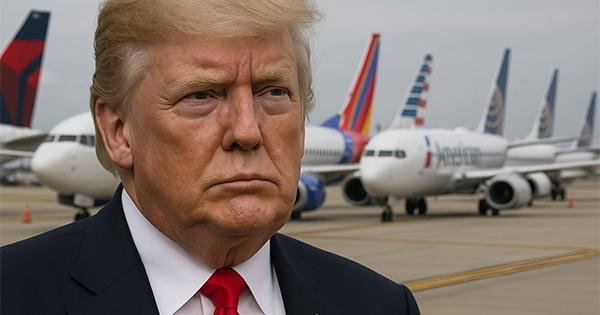
Travellers across the United States faced growing uncertainty on Friday as a federal directive ordering airlines to scale back flights at dozens of major airports took effect. The measure, introduced to address air traffic safety risks caused by staff shortages during the record-length government shutdown, mandates a gradual reduction in flights beginning with a 4% cut on Friday, rising to 10% next week. The Trump administration’s directive affects operations at 40 airports nationwide, including major hubs in Atlanta, Newark, Denver, Chicago, Houston, and Los Angeles. “This decision is driven purely by safety concerns, not politics,” said U.S. Transportation Secretary Sean Duffy, rejecting claims that the move was intended to pressure Democrats to end the shutdown. Now in its sixth week, the shutdown—already the longest in U.S. history—has left tens of thousands of federal workers, including air traffic controllers and security officers, without pay. According to FlightAware, more than 800 flights scheduled for Friday were cancelled. American Airlines confirmed that it had cut about 220 flights per day, while Delta Airlines scrapped 170 and Southwest Airlines cancelled roughly 100 flights. Thursday’s operations had already seen widespread disruption, with over 6,800 delays and more than 200 cancellations nationwide. Passengers at airports in Boston and Newark reported delays exceeding two hours, while those at Chicago O’Hare and Washington Reagan National faced wait times of over an hour. Federal Aviation Administration (FAA) Administrator Bryan Bedford said the reductions were necessary to prevent accidents. “We can’t wait for a safety incident before acting,” Bedford stated. “Early indicators show we need to intervene now to prevent further deterioration.” The timing of the directive adds to travel concerns as the Thanksgiving holiday approaches—one of the busiest travel periods of the year. Despite the disruptions, officials assured the public that air travel remains safe. “It’s safe to fly today, tomorrow, and the day after,” Secretary Duffy posted on social media, emphasizing that the measures were proactive and precautionary. Airlines acknowledged the challenges of implementing the order on short notice. United Airlines and Delta said they were complying but noted that international and hub-to-hub routes would be largely unaffected, meaning cancellations would mostly impact regional flights. The ongoing shutdown began on October 1 after Congress failed to reach a funding agreement, forcing 1.4 million federal workers either into unpaid leave or to work without pay. Many aviation personnel have reportedly begun calling in sick or seeking second jobs to cope financially. “This is unprecedented in modern aviation,” FAA Administrator Bedford said. “We’ve never seen conditions like this in my 35 years in the industry—but then again, we’re in uncharted territory when it comes to shutdowns.”

Court-gavel-1-750x422-1.webp

6min2880
The Gauteng Division of the High Court in Johannesburg has issued an order restraining the anti-migrant organisation Operation Dudula and its leaders, Zandile Dabula and Dan Radebe, from intimidating, harassing, or assaulting foreign nationals in South Africa. Delivering the judgment, Justice Leicester Adams ruled that the group’s actions against migrants were unlawful and unconstitutional. The court further prohibited Operation Dudula and its members from demanding that private individuals produce passports or identity documents to prove their right to reside in the country. The ruling, delivered electronically and circulated to the parties’ representatives via email, also bars the group from disrupting access to healthcare services, interfering with school operations, or harassing learners, teachers, and parents. Justice Adams directed relevant government bodies to enforce the decision, affirming the constitutionally protected rights of migrants. The verdict followed an application filed by Kopanang Africa Against Xenophobia (KAAX) and several other groups seeking to restrain Operation Dudula and the South African government from unlawful and discriminatory actions. The applicants argued that only immigration and police officers are legally authorised to request identification documents from individuals. Applicants in the case included KAAX, the South African Informal Traders Forum, the Inner City Federation, and the Abahlali Basemjondolo Movement SA. Respondents comprised Operation Dudula, the Government of the Republic of South Africa, and 11 others. The applicants also asked the court to bar the group from engaging in hate speech, unlawful conduct, or acts that amount to taking the law into its own hands. The court consequently forbade Operation Dudula from making public statements that promote hate speech based on nationality, ethnicity, or social origin—whether at gatherings, on social media, or through other platforms. The group was also restrained from unlawfully evicting foreign nationals, removing them from trading spaces, or interfering with their employment in shops and businesses. Additionally, the order prevents them from encouraging or inciting others to engage in similar prohibited acts. Respondents named in the case include the Government of South Africa, the Ministers of Police, Home Affairs, Justice and Correctional Services, Health, and Basic Education, as well as the National Commissioner of Police, the Gauteng MECs for Health and Education, Zandile Dabula, Dan Radebe, and the South African Human Rights Commission. The judgment, delivered in November, further directed the South African government to implement the National Action Plan to Combat Racism, Racial Discrimination, Xenophobia and Related Intolerance. It also called for the establishment of an early warning and rapid response mechanism to address xenophobic hate speech and hate crimes. Authorities were instructed to gather and publish data on incidents of xenophobic hate speech and hate crimes, including prosecutions and convictions. Justice Adams reaffirmed that only immigration and police officials are empowered to request identification documents and that such actions must occur only in public spaces, not in private homes, workplaces, or schools. Officers, he added, must have reasonable suspicion before making such requests. The court further cautioned that children under 18 should not be interrogated, arrested, or detained except as a last resort, in accordance with Section 28(1)(g) of the Constitution. Meanwhile, the Nigerian Union South Africa (NUSA) has welcomed the ruling, describing it as a significant victory for migrant rights. In a statement signed by NUSA National President, Mr. Smart Nwobi, and Publicity Secretary, Mr. Akindele Olunloyo, the union said the decision was “a monumental step forward in protecting the rights of Nigerians and other migrants in South Africa.” According to the statement, the judgment affirms that vigilante groups cannot take the law into their own hands or deny foreigners access to essential services. NUSA commended KAAX and its partners for their advocacy and urged the South African government to fully implement the National Action Plan and uphold its constitutional responsibility to protect all residents, regardless of nationality or origin.

Tech & Tools Desk7 November 2025
trump-2.jpg

4min2660
The Chairman of the Southern Kaduna Christian Leaders Association (SKCLA), Apostle Dr. Emmanuel Kure, has welcomed the recent designation of Nigeria as a “Country of Concern” by former U.S. President Donald J. Trump, describing it as “a long-overdue call to conscience.” In a statement on Tuesday, Apostle Kure said the move had drawn global attention to what he termed “the persistent suffering and neglect of Christians in Northern Nigeria.” He lamented that successive administrations in Nigeria had ignored years of marginalisation and persecution, stating, “At last, someone has taken notice of the plight of Christians in Northern Nigeria — a reality our own government has refused to acknowledge, let alone address.” Kure accused both Muslim and Christian political elites in the North of showing indifference to justice and peaceful coexistence, saying their silence had allowed discriminatory practices against minority Christian communities to persist. He alleged that in several northern institutions, such as Bayero University and Sokoto University, Christians are denied the right to build churches, while mosques are freely permitted — a situation he said fosters inequality and intolerance. “The protection of extremist groups, forced marriages that destroy Christian families, and denial of equal opportunities are all part of a calculated pattern of persecution,” he added. The SKCLA chairman, who once served as National Secretary of the Pentecostal Fellowship of Nigeria, urged the Federal Government to set up an independent and credible panel of inquiry made up of courageous Nigerians to investigate alleged targeted killings and discrimination in Benue, Plateau, and Southern Kaduna. According to him, the recurring attacks in Benue and Plateau, often without evidence of theft or banditry, suggest a deliberate “scorched-earth campaign” against Christian populations. He criticised what he called the government’s “half-hearted” response to insecurity across the North, citing the continued killing of pastors and the neglect of unsafe roads in Southern Kaduna as proof of official indifference. While commending the Kaduna State Government for initial steps toward peace and reform, Kure urged the administration to show deeper commitment to fairness and equality. “The church must rise to speak truth to power, calling on government to ensure freedom and justice for all faiths,” he said. “Leaders must also be willing to listen to sincere counsel, particularly from Christians within the system.” Describing Trump’s remarks as “a divine correction,” Kure said the statement should provoke self-reflection among African leaders, adding that Britain also shares historical responsibility for Nigeria’s enduring religious and ethnic divisions. “Whether one sees it as interference or not, there must be something strong enough to challenge the irresponsibility of African leaders who mortgage their people’s future. Time is running out — the moment of reckoning is here,” he declared.

James Obasi7 November 2025
alcoholic-drinks-750x375-1.jpg

4min5510
The Senate, on Thursday, directed the National Agency for Food and Drug Administration and Control (NAFDAC) not to extend the December 31, 2025 deadline for banning the production and sale of alcoholic beverages in sachets and small PET bottles. The resolution followed a motion of urgent national importance sponsored by Senator Asuquo Ekpenyong (Cross River South) during Tuesday’s plenary session. While presenting the motion, Ekpenyong said the enforcement timeline aligns with global regulatory standards designed to reduce alcohol-related harm among Nigerians. He noted that in 2018, the Federal Ministry of Health, NAFDAC, the Federal Competition and Consumer Protection Commission, and industry stakeholders — including the Association of Food, Beverage and Tobacco Employers — signed a five-year Memorandum of Understanding to phase out sachet and mini-bottle alcoholic drinks. The goal, he explained, was to curb the increasing misuse of cheap, high-strength alcohol among young people. Ekpenyong added that the Federal Government had already provided a one-year grace period in 2024 to allow manufacturers to deplete existing stock and transition to compliant packaging. However, some producers, he warned, are now lobbying for another extension. “As the December 2025 deadline approaches, certain manufacturers are pushing for more time, undermining regulation and threatening public health,” he said. He emphasized that the continuous sale of high-content alcoholic drinks in sachets contributes to addiction, impaired cognitive growth, school dropouts, domestic violence, and rising road accidents — particularly among commercial drivers and teenagers. Ekpenyong further cautioned that companies that have complied are being unfairly disadvantaged compared to those still flouting the directive. Other senators supported the motion, calling for strict enforcement and sustained awareness campaigns. Senator Anthony Ani (Ebonyi South) described the situation as a growing public health crisis, urging prompt action to safeguard the younger generation. Senate President Godswill Akpabio endorsed the resolution, calling it a vital step to protect public safety and youth welfare. He stressed that NAFDAC must enforce the policy without compromise. “This is a matter of urgency,” Akpabio stated. “The agency must act decisively to shield Nigerians, especially the youth, from the dangers of unregulated alcohol consumption.” NAFDAC began implementing the phase-out policy in January 2024, sealing noncompliant factories and seizing illegal products. The agency, led by Director-General Prof. Mojisola Adeyeye, has maintained that sachet alcoholic drinks are deliberately marketed to young consumers due to their affordability and ease of concealment. Despite opposition from parts of the manufacturing sector, NAFDAC has remained firm on the ban, linking it to efforts aimed at curbing substance abuse, underage drinking, and addiction nationwide.

Charles-Soludo-and-Donald-Trump.webp

2min2880
Anambra State Governor, Charles Chukwuma Soludo, has dismissed claims of a religious genocide against Christians in Nigeria’s South-East, calling such allegations inaccurate and misleading. Speaking during a live interview on Channels Television, Soludo clarified that the region’s unrest stems from social, political, and economic factors rather than religious persecution. His remarks followed recent accusations by U.S. President Donald Trump, who alleged that Christians in Nigeria were being targeted and threatened possible military intervention. “There is a deeper issue behind what is happening,” Soludo explained. “In the South-East, this is not about religion. Christians are killing fellow Christians. The people hiding in the bushes — Emmanuel, Peter, John — all have Christian names. They have destroyed lives and communities, but it’s not a religious conflict.” The former Central Bank governor stressed that the South-East is predominantly Christian, with both perpetrators and victims sharing the same faith. “In this region, about 95 percent of the population are Christians,” he said. “The people behind the killings bear Christian names. It’s beyond a Christian-versus-Muslim narrative. Nigeria will heal, and dialogue will prevail.” He added that while the United States has the right to express its views, any action it takes must respect international law.

amed.png

3min2160
A former presidential adviser, Hakeem Baba-Ahmed, has urged President Bola Tinubu to personally address Nigerians following the recent military threat issued by U.S. President Donald Trump. In a statement on Thursday, Baba-Ahmed voiced concern over the President’s silence since Trump accused Nigeria of allowing the alleged killing of Christians and warned of a possible American response. He noted that Tinubu’s quietness could be seen as weakness at a time when the nation needs decisive leadership and clear communication. “If President Tinubu truly has competent advisers and understands the weight of his office, he should have spoken to Nigerians by now,” Baba-Ahmed stated. He stressed that this is not the time for aides or ministers to release statements, insisting that the President himself should reassure citizens, clarify Nigeria’s position, and outline the government’s next steps. Baba-Ahmed also cautioned Tinubu against travelling to the U.S. to meet with Trump, saying such a move would be inappropriate and damaging to the nation’s image. “At this critical time, Tinubu should not even consider going to America to meet Trump. It would only make Nigeria appear weak—like smiling after being slapped,” he said. He further urged the President to take swift action to rebuild public trust. “If Tinubu truly listens to those who care about this country, he must act immediately—appoint ambassadors, strengthen Nigeria’s diplomatic presence, and address the nation directly.” Trump recently threatened possible military action, alleging there was genocide against Christians in Nigeria—a claim the Federal Government has strongly refuted. Meanwhile, China has voiced support for Nigeria, emphasizing its opposition to any form of foreign interference based on religion or human rights. The Federal Government reiterated that the country’s security challenges stem from terrorism affecting both Christians and Muslims, not religious persecution.

China-and-Nigerian-flag.jpg

4min2350
The Federal Government has wrapped up high-level talks in China, securing a landmark discounted diagnostics agreement and attracting renewed investor commitments to Nigeria’s pharmaceutical and medical manufacturing industries. The Ministry of Health and Social Welfare announced this on Wednesday via its official X handle, noting that the developments mark visible progress in the country’s ongoing health sector reform agenda. During a visit to PlusLife Diagnostics’ corporate headquarters and manufacturing facilities in Guangzhou, the Coordinating Minister of Health and Social Welfare, Prof. Muhammad Pate, finalised deals for the mass procurement of heavily discounted Point-of-Care diagnostic equipment for tuberculosis and other non-communicable diseases through the UN StopTB Global Drug Facility. According to the ministry, the agreement aligns with the Nigeria Health Sector Renewal Investment Initiative, designed to expand access to affordable testing, reduce catastrophic out-of-pocket costs, and strengthen the healthcare value chain for long-term resilience. In addition, PlusLife pledged to establish a local manufacturing plant in Nigeria between 2026 and 2028 — a move seen as a vote of confidence in the country’s reform-driven business environment under President Bola Tinubu’s Renewed Hope Agenda. Pate described the outcomes as “a transformational milestone” in Nigeria’s push to decentralise diagnostics and expand access to essential testing through the primary healthcare network. “With the cost efficiency of PlusLife technology, we can test more people and save more lives using the same resources,” he said. He further credited the investment surge to President Tinubu’s Executive Order that removed taxes and import duties on pharmaceutical raw materials, diagnostic equipment, vaccines, and related health manufacturing inputs. “This order is already delivering results,” Pate added. “Global partners now see Nigeria as a viable hub for innovation, production, and growth in the healthcare value chain.” Speaking at the Sino-Africa Healthcare Cooperation Forum 2025 in Beijing — organised by the Nigerian Embassy in partnership with CEIBS, AFKMED, and VCBeat — Pate emphasised that macroeconomic and health reforms were now working hand in hand to align industrial policy with public health goals. He said Nigeria was steadily emerging as Africa’s leading centre for diagnostic innovation, pharmaceutical manufacturing, and health technology expansion — boosting national preparedness, improving access to quality care, and positioning the health sector as a key driver of economic growth.

Tech & Tools Desk6 November 2025
ondo.webp

2min4850
The Ondo State Government announced on Wednesday that it has entered into a $50 billion investment partnership with a consortium of international companies under the Sunshine Infrastructure Joint Venture to establish a large-scale refinery and free trade zone in the state. According to a statement by the Chief Press Secretary to Governor Lucky Aiyedatiwa, Ebenezer Adeniyan, the consortium comprises Backbone Infrastructure, MJ Care Investment Finance, China Harbour, and Honeywell OUP. Governor Aiyedatiwa, who received the investors on Tuesday, described the agreement as a major milestone toward achieving sustainable industrialisation and long-term economic growth. “This investment marks a new dawn for Ondo State. It will accelerate industrial development, attract investors, and create employment opportunities for our people,” Aiyedatiwa said. He reaffirmed his administration’s commitment to maintaining a transparent and investor-friendly environment while ensuring the protection of all investments. The Managing Director of Sunshine Infrastructure JV, Henry Owonka, said the initiative had evolved from its initial conception through continuous collaboration with the Ondo State Investment Promotion Agency. He explained that the project’s initial valuation of $30 billion was increased to $50 billion to include expanded infrastructure and community-based development programmes. “The Sunshine JV is not just an investment; it’s a transformative framework that will empower communities, boost industries, and improve livelihoods,” Owonka noted. He added that the refinery would cater to both local and international petroleum demands, while the consortium’s Corporate Social Responsibility efforts would focus on education, employment, and infrastructure development in surrounding communities.

James Obasi6 November 2025
asuu-strike.jpg

5min3160
The Academic Staff Union of Universities (ASUU) has denied receiving the ₦50 billion revitalisation fund the Federal Government recently claimed to have disbursed, stressing that none of its key demands have been met ahead of its National Executive Council (NEC) meeting scheduled for November 8 and 9, 2025. In a statement issued on Wednesday, the union’s spokesperson, Prof. Jurbe Molwus, said ASUU suspended its two-week warning strike in good faith, based on assurances from senior government officials that concrete actions would follow. “As ASUU prepares for its NEC meeting on November 8 and 9, we expected that some of the outstanding entitlements — including 3.5 months of withheld salaries, 25/35% wage award arrears, promotion arrears, and unpaid salaries — would have been settled by now. Unfortunately, what we keep seeing are press statements from the Minister of Education instead of actual payments. What we need are credit alerts, not empty promises,” Molwus said. He expressed concern that the ₦50 billion revitalisation fund announced by the government had not reached universities. “It’s unfortunate that the ₦50 billion revitalisation fund reportedly released weeks ago has yet to get to the universities. We wonder why the Minister of Education is holding onto it,” he said. Molwus also dismissed claims by Education Minister Dr. Tunji Alausa that ₦2.3 billion had been released to clear salary and promotion arrears. “University workers have not received any such payments. The minister’s statement about clearing backlogs appears to be a fiction. He also spoke about improving academic staff welfare — we ask, how exactly?” He argued that the ₦2.3 billion mentioned was grossly inadequate. “That amount can barely cover the arrears of three major universities. It’s embarrassing, to say the least. The minister must clarify what portion of entitlements the ₦2.3 billion is meant to cover and for whom,” he added. ASUU urged Nigerians to hold the Federal Government accountable, warning that it may resume its suspended strike if its demands remain unmet by November 21, 2025 — the end of its four-week ultimatum. “We call on the media, students, parents, and the general public to prevail on the government to act responsibly so that ASUU isn’t blamed if we resume our strike in two weeks. For clarity, the strike was only suspended out of goodwill. Our members are losing patience while waiting for their rightful payments,” the statement read. ASUU had declared a two-week “total and comprehensive” strike on October 12 after giving the government a 14-day ultimatum on September 28. The union cited the government’s failure to address issues of staff welfare, infrastructure funding, implementation of the 2009 ASUU-FG agreement, and unpaid salaries. The Federal Government condemned the strike and enforced a “No Work, No Pay” directive, ordering universities to conduct roll calls and headcounts of staff on duty. In response, the Senate intervened, pledging to reopen talks among ASUU, the Ministry of Education, and the National Universities Commission. The Chairman of the Senate Committee on Tertiary Institutions and TETFund, Senator Aliyu Dandutse, also said the committee would meet with FCT Minister Nyesom Wike to resolve the lingering University of Abuja land dispute.