Blog - Edupreneur Select

Bring to the table win-win survival strategies to ensure proactive domination. At the end of the day, going forward, a new normal that has evolved from generation.
kanu-2.jpeg

3min1800
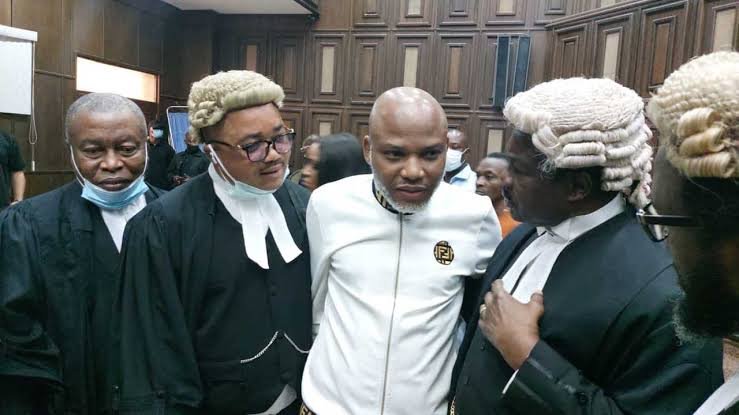
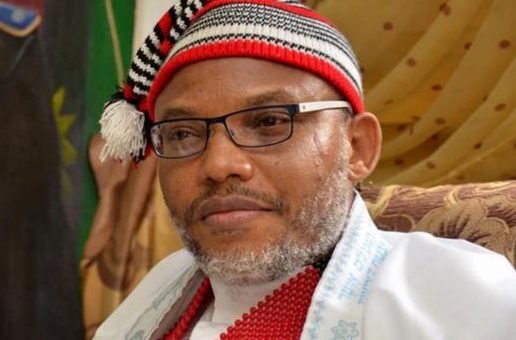
The detained leader of the Indigenous People of Biafra, Nnamdi Kanu, on Wednesday agreed to consult with his legal advisers before opening his defence in the terrorism case brought against him by the Federal Government. Justice James Omotosho of the Federal High Court in Abuja once again advised Kanu to seek proper legal counsel after he repeatedly argued that the seven-count charge against him was invalid. Although he had earlier declined to proceed with his defence, Kanu eventually informed the court that he would consult with his legal team, naming Nnaemeka Ejiofor, Aloy Ejimakor, Maxwell Okpara, and Mandela Umegborogu as his lawyers. The court then adjourned the matter to November 7 — marking the fourth time Kanu has been given the opportunity to either begin his defence or waive the right to do so. Kanu had in October dismissed his legal team, led by former Attorney General of the Federation, Kanu Agabi (SAN), choosing instead to represent himself. Initially, he listed 23 witnesses, including Lagos State Governor Babajide Sanwo-Olu and FCT Minister Nyesom Wike, but later withdrew the list, arguing that the charges against him had no legal basis. At Wednesday’s proceedings, Kanu maintained that the terrorism charges were invalid, claiming the law under which he was being tried had been repealed and that the prosecution failed to amend the charge as directed by the Supreme Court. “The Terrorism Prevention and Prohibition Act has been repealed. I cannot defend myself under a repealed law,” he told the court. The prosecution had closed its case on June 19, 2025, after presenting five witnesses. The court ruled on September 26 that a prima facie case had been established against Kanu. However, he has twice failed to open his defence since then, citing the unavailability of documents from his former lawyers. During the hearing, Federal Government’s counsel, Adegboyega Awomolo (SAN), urged the court to enforce its order for Kanu to either present his defence or waive the right. Justice Omotosho, however, said the court would once again “bend backward” in the interest of justice to allow Kanu consult lawyers experienced in criminal law.

cop30-1280x853.jpg

3min7710
Ahead of the official opening of the United Nations Climate Change Conference, world leaders are gathering on Thursday and Friday in Belém, Brazil, to discuss urgent actions to tackle global warming. European leaders attending include German Chancellor Friedrich Merz, French President Emmanuel Macron, and British Prime Minister Keir Starmer, alongside top officials from the European Union and the United Nations. The host nation, Brazil, hopes the meeting will set the stage for the two-week COP30 summit, which officially begins on Monday and is expected to attract tens of thousands of participants from about 200 countries. President Luiz Inácio Lula da Silva, who has described it as the “COP of Truth,” emphasized that the conference must deliver real and measurable progress. However, the global political landscape remains complex, with conflicts, economic instability, and uncertain fiscal outlooks overshadowing the climate agenda. The United States, under President Donald Trump, continues to advance its fossil fuel policies and has announced that it will not send a high-level delegation to COP30. On Thursday, leaders are expected to launch a new multibillion-dollar fund to protect tropical forests — often referred to as the planet’s “green lungs.” Despite past pledges, progress has been slow. Although 140 countries committed in 2019 to end deforestation by 2030, the World Wide Fund for Nature (WWF) reports that nearly seven million hectares of primary forest were lost in 2024 alone. The summit will also present a joint call to improve international forest fire management and support Brazil’s sustainable fuel initiative, which seeks to quadruple production and usage by 2035. A declaration addressing hunger, poverty, and climate protection is also expected to be released during the meeting.

trump-ad-tinubu-2.webp

4min7800
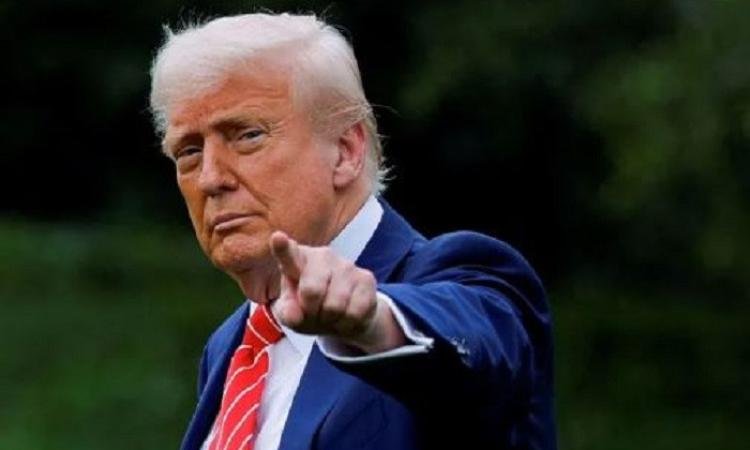
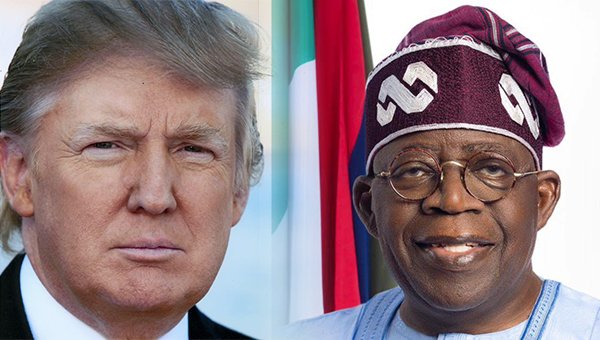
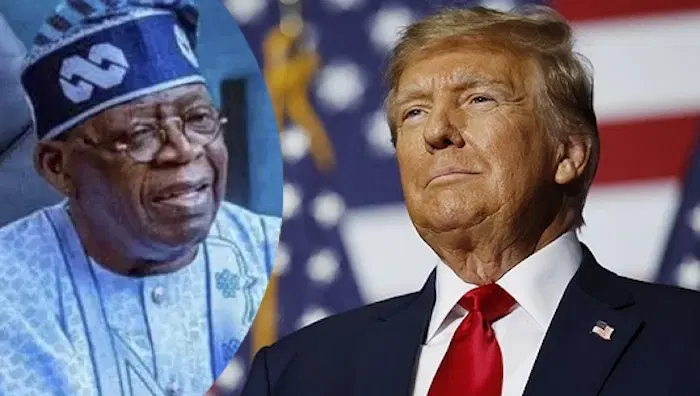
United States President Donald Trump has once again claimed that Christians in Nigeria are facing widespread killings, describing the alleged attacks as a serious threat to the survival of Christianity in the country. In a video released by the White House on X (formerly Twitter) on Wednesday, Trump alleged that “thousands and thousands” of Christians were being killed by what he termed “radical Islamists,” calling the situation a “mass slaughter.” “Christianity is facing an existential threat in Nigeria. Thousands and thousands of Christians are being killed. Radical Islamists are responsible for this mass slaughter,” Trump said. In the same clip, he announced that Nigeria was being classified as a “country of particular concern,” a designation he said carried legal implications. “I am hereby making Nigeria a country of particular concern. That’s a legal definition,” he stated. “When Christians or any group is being slaughtered like what is happening in Nigeria—3,100 compared to 4,476 worldwide—it is unacceptable,” he added. Describing the statistics as “horrific,” Trump called for urgent congressional intervention. “What terrible numbers. Something must be done. I am asking Congressman Riley Moore, along with Chairman Tom Cole and the House Appropriations Committee, to immediately investigate and report back to me—right away,” he said. Trump further stated that the United States would not remain passive while Christians were being targeted in Nigeria and other nations. “The United States cannot stand by while such atrocities are happening in Nigeria and in several other countries. We stand ready, willing, and able to defend our great Christian population around the world. The killing of Christians will not continue,” he declared. Earlier, Trump had warned that he might authorize U.S. military intervention if the alleged persecution of Christians in Nigeria was not addressed. The “country of particular concern” classification, under U.S. law, is typically issued by the Secretary of State for nations accused of engaging in severe violations of religious freedom or human rights. Meanwhile, the Nigerian government has repeatedly rejected the allegations, affirming that the country upholds freedom of religion and equal rights for all citizens. In a statement issued by President Bola Tinubu on November 1, the government reiterated that Nigeria remains a constitutional democracy committed to protecting religious liberty. The President emphasized that the nation’s diversity has always been a source of strength, not division, and that religious tolerance “remains a core value of our collective identity.”

Tech & Tools Desk6 November 2025
typhoon.jpg

4min5880
Typhoon Kalmaegi has killed at least 140 people and left 127 others missing after causing massive flooding across the central Philippines, according to official figures released on Thursday, as the storm moves toward Vietnam. Disaster database EM-DAT identified Kalmaegi as the world’s deadliest storm so far in 2025. Last year, Typhoon Trami also struck the Philippines, claiming 191 lives. Unprecedented floodwaters swept through towns and cities in Cebu province this week, destroying homes, vehicles, and even large shipping containers. The national civil defence agency confirmed 114 deaths, while Cebu authorities reported an additional 28 fatalities. In Liloan, a town near Cebu City, residents described scenes of devastation — cars stacked on top of one another, rooftops ripped off, and families digging through mud to recover belongings. One resident, Christine Aton, recounted how floodwaters trapped her sister, Michelle, who had a disability, in her room as the water level rapidly rose. “We tried to break the door open, but it wouldn’t budge. Then everything started to float,” she said tearfully. Another survivor, Chyros Roa, credited his family’s survival to their dog’s barking, which alerted them just in time to escape to the roof. “The current was too strong. We called for help, but rescuers couldn’t reach us — some were swept away,” he said. President Ferdinand Marcos has declared a state of national calamity, allowing emergency funds to be released and price controls imposed on essential goods. Meteorologist Benison Estareja said the rainfall along the typhoon’s path was about 1.5 times the average for a typical November in Cebu — an event that happens “once every 20 years.” He added that the region’s dense urbanisation worsened the disaster’s impact. Residents cleaning up on Wednesday said they had never witnessed flooding of such magnitude. “The water came so fast and strong that you couldn’t step outside,” said shop owner Reynaldo Vergara in Mandaue. “Everything was gone in minutes.” Provincial Governor Pamela Baricuatro described the situation as “unprecedented.” Scientists have long warned that climate change is making tropical storms more powerful, with warmer oceans fueling rapid intensification and heavier rainfall. As Kalmaegi strengthens while moving toward Vietnam, concerns are rising that it could worsen existing flood damage that has already killed 47 people there. Vietnam’s Deputy Prime Minister Tran Hong Ha described the storm as “urgent and dangerous,” ordering mass evacuations from coastal areas. Forecasts show Kalmaegi could bring waves up to eight meters high and dangerous storm surges upon landfall. Authorities in Quy Nhon City were seen going door-to-door, urging residents to flee to safety. Kalmaegi is the 13th tropical storm to hit Vietnam in 2025, exceeding the country’s annual average. The Philippines has also reached its typical total of 20 storms this year, with meteorologists warning that up to five more could still develop before the year ends. Another system, Tropical Storm Fung-wong, is already forming east of Luzon and could reach super typhoon status before landfall on Monday.  

James Obasi6 November 2025
millitary-2.jpg

5min8560
The United States military has reportedly developed contingency plans for possible airstrikes in Nigeria after President Donald Trump directed the Pentagon to “prepare to intervene” in response to terrorist attacks on Christians, according to The New York Times. The report, published Wednesday, revealed that the U.S. Africa Command had submitted several operational strategies to the Department of War following a request from Secretary Pete Hegseth to design plans in line with Trump’s order. Sources familiar with the discussions disclosed that the proposals — labeled as “heavy,” “medium,” and “light” — represent different levels of engagement in Nigeria. Under the “heavy option,” Washington would deploy an aircraft carrier strike group to the Gulf of Guinea, supported by fighter jets or long-range bombers to target militant bases in northern Nigeria. The “medium option” focuses on using MQ-9 Reaper and MQ-1 Predator drones for precision strikes on insurgent camps, convoys, and vehicles, guided by U.S. intelligence for accuracy. The “light option” prioritizes intelligence sharing, logistical assistance, and joint operations with Nigerian forces against Boko Haram and other Islamist militants responsible for widespread violence and church attacks. However, senior Pentagon officials reportedly admitted that limited airstrikes or drone missions would have minimal impact on Nigeria’s prolonged insurgency unless the U.S. were to commit to a full-scale operation similar to those in Iraq or Afghanistan — a move not currently under consideration in Washington. Earlier this week, Trump had warned that the U.S. might deploy its military to Nigeria if what he called the “genocide against Christians” was not stopped — a claim Nigeria’s government has firmly denied. In response, China reaffirmed its backing for Nigeria, saying it opposes any external interference under the guise of religion or human rights. “As Nigeria’s comprehensive strategic partner, China firmly rejects any country using religion and human rights as excuses to meddle in internal affairs or threaten other nations with sanctions and force,” said Chinese Foreign Ministry spokesperson Mao Ning during a press briefing in Beijing. Meanwhile, the Nigerian government on Wednesday rejected its inclusion on the U.S. list of countries accused of violating religious freedom, describing the designation as “misleading and based on inaccurate data.” Minister of Information and National Orientation, Mohammed Idris, clarified that Nigeria’s challenge is terrorism, not religious persecution, emphasizing that both Christians and Muslims have suffered from extremist attacks. “The government rejects any claims of religious persecution. Since 2023, the Tinubu administration has neutralized over 13,500 militants and rescued more than 11,000 hostages. Nigeria remains open to collaboration with the U.S. on counterterrorism while upholding respect for national sovereignty,” he said. Idris added that the government remains committed to protecting all citizens, regardless of faith. Later on Wednesday, Trump doubled down on his earlier remarks, declaring that the U.S. “will not stand by” if the alleged persecution of Christians in Nigeria continues. He said, “Christianity is under threat in Nigeria. The United States cannot remain silent while these atrocities persist. We are ready, willing, and able to protect Christians around the world.” The developments have sparked rising diplomatic tension between Washington and Abuja and reignited debate in the U.S. over whether military involvement is an appropriate response to religious or humanitarian crises abroad.

china-nigeria-us-1280x791.webp

6min2540
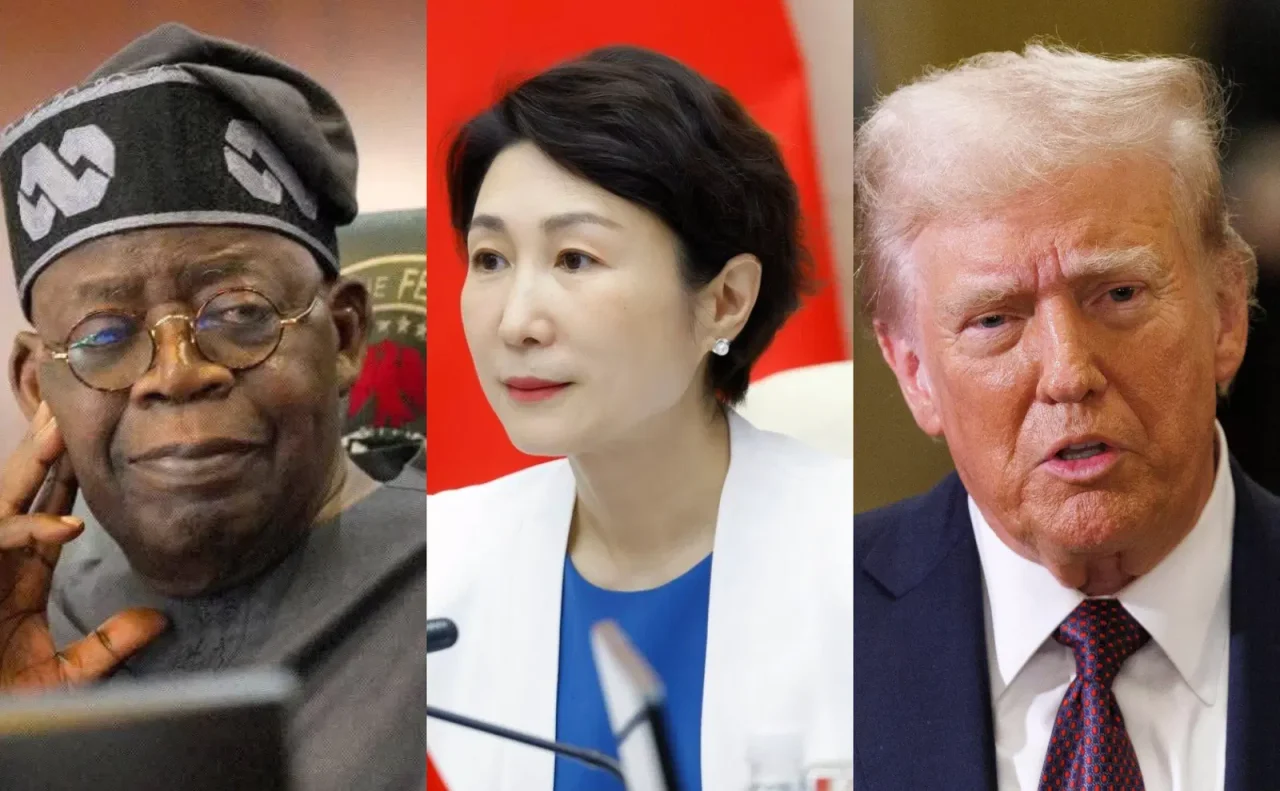
ABUJA — China has firmly rejected the United States’ recent threat of military action against Nigeria, stressing its opposition to any form of external interference in the country’s internal affairs. This follows U.S. President Donald Trump’s warning over alleged persecution of Christians in Nigeria — a claim the Nigerian government has dismissed, describing it as a narrative driven by religious extremists seeking to divide the nation. Chinese Foreign Ministry spokesperson Mao Ning, in a statement posted on the ministry’s website, said China stands with Nigeria as a “comprehensive strategic partner” and supports its right to choose its own development path. He said, “China strongly supports the Nigerian government in leading its people on a development path that suits its national realities. We oppose any country’s interference in another nation’s internal affairs under the pretext of religion or human rights. We also reject threats of sanctions or use of force.” Meanwhile, Nigeria’s Senate President, Godswill Akpabio, stated that the Senate will discuss Trump’s remarks with the executive arm, emphasizing the need for a coordinated national response since the issue concerns foreign policy and diplomacy. Akpabio noted that Trump’s position appeared to be based on outdated reports that failed to capture the country’s current security realities, adding that both Christians and Muslims have been victims of terrorism and banditry across Nigeria. Similarly, the Federal Government reiterated that there is no genocide against Christians in the country. Minister of Information and National Orientation, Mohammed Idris, said after a meeting with President Bola Tinubu that the President remains calm and focused, engaging international partners to clarify Nigeria’s efforts in tackling insecurity. He added that President Tinubu’s administration is addressing the situation through reforms, including the appointment of new service chiefs, and urged Nigerians not to fall for extremist propaganda aimed at dividing the nation. Also reacting, two members of the U.S. Congress — Gregory Meeks and Sara Jacobs — criticised President Trump’s comments, describing them as “reckless and irresponsible.” The lawmakers said the situation in Nigeria is complex, driven by resource conflicts rather than religious persecution, and warned that military threats would worsen instability. In its response, ECOWAS also dismissed allegations of Christian genocide in Nigeria, describing them as false claims meant to incite division and weaken regional stability. The regional bloc reaffirmed that terrorist violence in West Africa affects people of all faiths and called for continued international cooperation against extremism. Former Chief of Army Staff and ex-Minister of Interior, Lt. Gen. Abdulrahman Dambazau (rtd), also criticised Trump’s position, arguing that the U.S. was acting out of self-interest and might be seeking to establish a new military base in Nigeria. The Christian Association of Nigeria (CAN) in the 19 northern states, through its chairman, Rev. John Hayab, urged both Christians and Muslims to use Trump’s comments as a call for unity and cooperation to end violence rather than a reason for division. Similarly, the Southern and Middle Belt Leaders Forum (SMBLF) rejected Trump’s threat, calling instead for Nigerians to stand together and urging the government to intensify efforts to curb killings, disarm armed groups, and restore peace. The Nigerian Christian Pilgrim Commission (NCPC) also cautioned that Nigeria needs partnership and intelligence sharing, not threats of invasion. Its Executive Secretary, Bishop Stephen Adegbite, said insecurity affects all faiths and urged for greater international collaboration to build a safer, more peaceful nation. In his view, former Deputy Ambassador to the U.S., Ambassador Hassan Mohammed, said Trump’s military threat was unlawful under the U.S. International Freedom of Religion Act, explaining that the act allows for diplomatic pressure — not military intervention — in matters related to religious freedom. He added that Nigeria had previously resolved similar designations through dialogue, stressing that fairness and cooperation remain the best path forward.

kanu-case.webp

5min2020
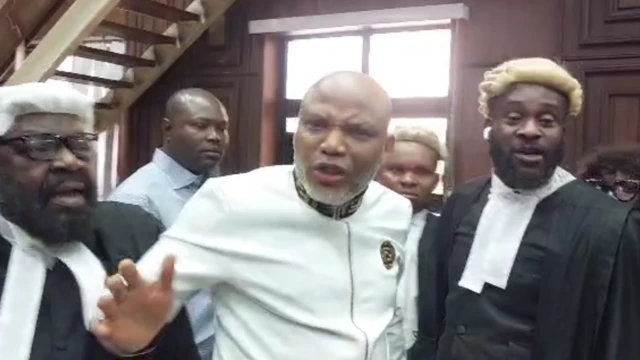
ABUJA — The detained leader of the Indigenous People of Biafra (IPOB), Nnamdi Kanu, on Monday, again refused to open his defence in the seven-count terrorism charge filed against him by the Federal Government, insisting he has no case to answer. At the resumed hearing, Kanu, who dismissed his legal team and is representing himself, maintained that there was no valid charge before the court, arguing that it lacked the legal basis to compel him to present a defence or exchange final written addresses with the prosecution. He urged the judge to take judicial notice of his motion and supporting affidavit challenging the court’s jurisdiction to try him for what he described as an offence unknown to Nigerian law. Kanu demanded his immediate release from the custody of the Department of State Services (DSS), where he has been held since 2021, saying:“You cannot ask me to begin my defence when the charge has no legal foundation. There’s no law backing these charges. I request to be released.” Citing Section 36(12) of the 1999 Constitution, Kanu argued that the terrorism charge against him has no legal basis, further accusing the court of ignoring a Supreme Court ruling that condemned his alleged extraordinary rendition from Kenya. When reminded that the apex court had ordered a fresh trial, Kanu maintained his stance, stating that he could not be tried under a repealed law. “There’s no valid charge against me. I will not return to detention unless I’m shown a lawful charge. Prosecuting me under a repealed law violates my fundamental rights,” he said. Prosecution counsel, Chief Adegboyega Awomolo (SAN), however, challenged the competence of Kanu’s filed documents, describing them as lacking evidential value and urging the court not to indulge him further. He prayed the court to treat the documents as Kanu’s final written address to allow judgment to proceed. In a brief ruling, Justice James Omotosho dismissed the prosecution’s objection, ruling that Kanu’s documents would be considered in the final judgment. The judge acknowledged that Kanu is not a lawyer and granted him additional time to consult legal counsel, warning that failure to present a defence within the allotted time would result in forfeiture of that right. The case was adjourned to Wednesday for continuation. It will be recalled that on October 24, the court directed Kanu to open his defence. Although he had earlier listed several prominent individuals, including governors, ministers, and security chiefs, as witnesses, he later withdrew his plan to call them. Kanu had previously requested 90 days to secure their testimony but later backtracked. The court had earlier rejected his no-case submission, ruling that the prosecution’s evidence was sufficient to warrant a defence. The Federal Government accuses Kanu of leading a separatist movement seeking the secession of Nigeria’s South-East region and of inciting violence through his broadcasts. Kanu maintains his innocence.

t-t.jpg

3min7590
Afenifere has described U.S. President Donald Trump’s recent threat to invade Nigeria under the guise of fighting terrorism as a cover for his displeasure with President Bola Tinubu’s independent stance on key national issues. In a statement issued by its National Publicity Secretary, Jare Ajayi, the pan-Yoruba socio-political group dismissed Trump’s claim that the Nigerian government is complicit in attacks on Christians, calling it a baseless attempt to tarnish the country’s image. Afenifere argued that Trump’s position is driven by economic interests, suggesting that his harsh tone is a strategy to pressure President Tinubu into granting the U.S. more access to Nigeria’s economy and boosting American exports, particularly weapons. The group also noted that Nigeria’s growing relationship with China might not sit well with Washington. Ajayi emphasized Nigeria’s sovereignty, noting that security challenges are being addressed by the government, though more effort is needed. He pointed out that bandits and terrorists target the nation’s economy rather than specific religious groups, as their sponsors aim to exploit mineral-rich areas once residents are displaced. He cautioned Nigerians against making statements that could justify external interference, urging them to remain patriotic and avoid actions that could destabilize the country. Meanwhile, Lagos State Governor Babajide Sanwo-Olu, represented by Deputy Governor Dr. Obafemi Hamzat, called on citizens to stand firm in defending the nation against any external threat. Speaking during the flag-off of the APC e-registration initiative at Lagos House, Marina, Sanwo-Olu stressed the importance of safeguarding national investments such as the Dangote Refinery, highlighting President Tinubu’s ongoing efforts to strengthen Nigeria’s economic and political stability.

Tech & Tools Desk5 November 2025
boader.jpg

4min4660
The South-East Business and Investment Summit (SEBIS) has urged collaboration among key stakeholders and investors to address the socio-economic challenges facing the South-East and restore the region to its former economic strength. Speaking at a road show and town hall meeting held at the All Saints Cathedral, Onitsha, on Monday, the Executive Secretary and CEO of SEBIS, Dr. Ifedi Okwenna, noted that the South-East, once a thriving economic force, lost its momentum due to the absence of structured and coordinated leadership. Okwenna recalled that before 1978, the South-East recorded a 9.2 percent annual development growth rate and could have become an economic powerhouse if effective leadership had sustained the progress. Speaking on the event’s theme, “Remaking South-East as an Economic Powerhouse,” he stressed the need for stakeholders in the region to take decisive action to rebuild, re-energize, and reposition the South-East for sustainable growth. He explained that the summit aims to tackle the region’s pressing socio-economic and infrastructural issues through a collaborative dialogue between the public and private sectors. According to him, similar engagements will take place across the five states in the region, serving as a platform for knowledge sharing, strategic partnerships, and agenda-setting to redefine the South-East business and investment landscape. Okwenna also called for stronger collaboration between the region and the Federal Government, while advocating for the reopening of the Ikom-Cameroon border to boost cross-border trade. He emphasized the importance of partnerships between businesses, the middle class, and investors to drive regional development, noting that the focus is no longer solely on government intervention but on joint efforts for progress. He highlighted agriculture, information technology, energy, the creative industry, MSMEs, and sports as key sectors through which the South-East can rebuild its economy. In his keynote address titled “Unlocking South-East Potential: The Critical Role of Infrastructure in Rebuilding the Economy,” former Minister of Power and current Vice-Chancellor of the University of the Niger, Prof. Chinedu Nebo, underscored the vital role of the private sector in driving regional growth. Nebo emphasized that energy remains central to sustainable development and must be effectively harnessed for the South-East to realize its economic goals. He added that the summit would focus on practical strategies to promote stability, economic growth, and inclusivity across the region.

James Obasi5 November 2025
Nnamdi-Kanu-516x340-1.jpg

3min8940
A socio-political group in the South-East, the Igbo Political Network (IPN), has joined growing calls for the release of the detained leader of the Indigenous People of Biafra (IPOB), Nnamdi Kanu. The group also declared that it had invoked traditional deities to seek justice against those allegedly responsible for Kanu’s continued detention, describing his prolonged incarceration as an act of injustice and wickedness. President of the Igbo Political Network, Chief Okemiri, made the remarks on Monday in Abakaliki, the capital of Ebonyi State. He said, “The truth is that the time to release Mazi Nnamdi Kanu has come. It is unjust and inhumane to continue holding him despite court orders granting his release. We are no longer pleading; he must be set free.” Okemiri argued that Kanu’s continued detention, despite legal rulings, reflects a systemic bias and portrays the Igbo people as second-class citizens. “Across Nigeria and beyond, this ongoing detention is seen as a deliberate attempt to suppress his fundamental rights. If individuals such as terrorists, drug traffickers, and murderers can be released, why is Nnamdi Kanu still behind bars?” he questioned. He further alleged that some Igbo political figures may be complicit in Kanu’s continued detention. “We have come to the conclusion that his ordeal is being sustained by selfish Igbo leaders and politicians. There are strong indications that some of them are collaborating with external forces. As the saying goes, it’s the rat inside the house that tells the one outside where the food is. These leaders are acting against Kanu’s release for personal gain,” he said. Commenting on reports of Kanu’s deteriorating health, Okemiri criticized the silence of some Igbo leaders, accusing them of indifference. “At this stage, when his health condition in DSS custody is said to be worsening, we expected Igbo leaders to speak out strongly for his freedom. Unfortunately, they have remained silent, driven by selfish interests,” he added.