
Category: Home Office & Tech

Ifeanyi Enukorah18 January 2026
47.png

5min11320
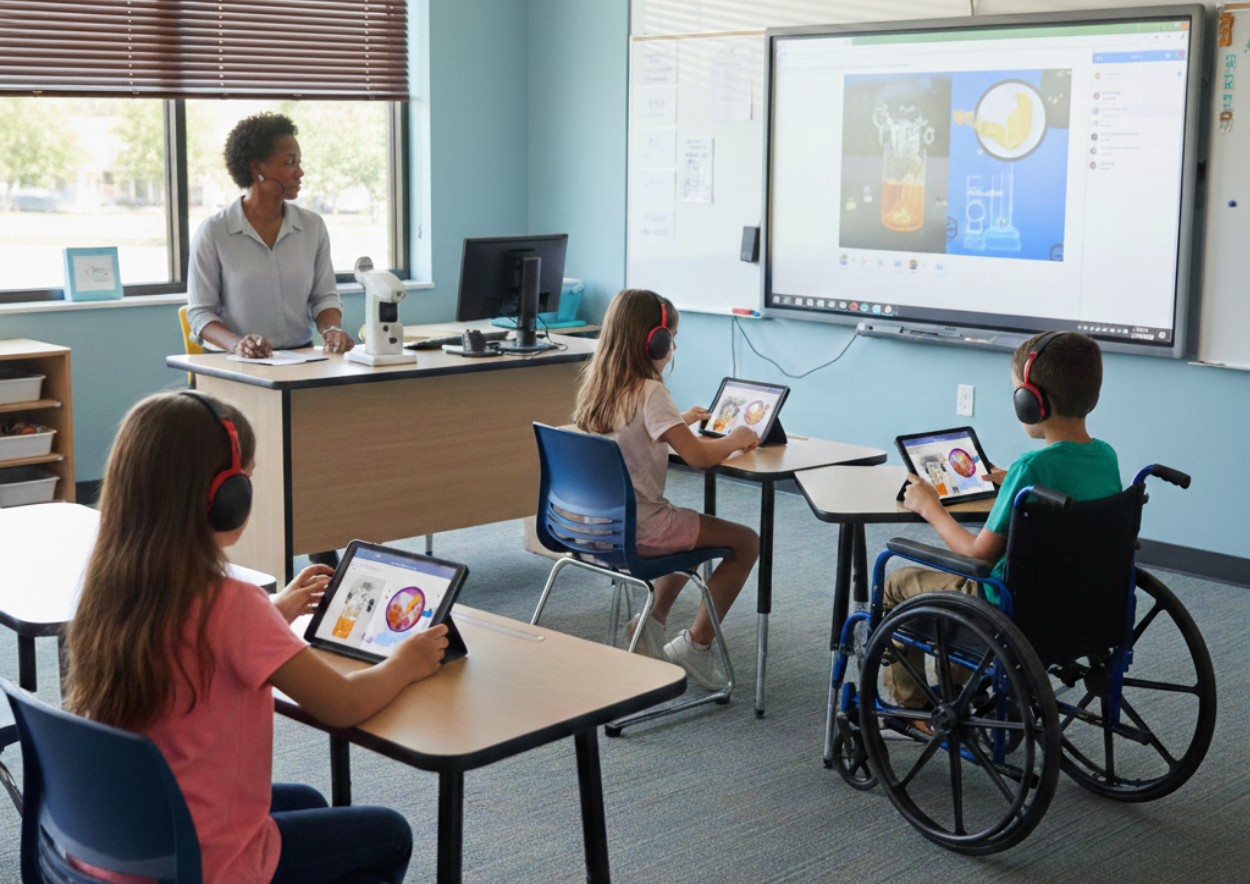
As an Amazon Associate, I earn from qualifying purchases. Education leadership is not just about the “big picture”; it is about the granular details of the learning environment. In my role as a facilitator, I often discuss how the physical and digital setup of a classroom can either act as a barrier or a bridge to student success. To build a truly “Connected Classroom” in 2026, you must prioritize tools that enhance visibility, auditory clarity, and focused engagement. Here are the hardware essentials that belong in every modern learning space. The Vision: Ultra-HD Document Cameras The days of students crowding around a single desk to see a science experiment or a math proof are over. Visibility is a prerequisite for equity in the classroom. Top Recommendation: IPEVO V4K PRO Ultra HD. Why it works for you: These devices feature an 8MP sensor that can project tiny details—like the grain of a leaf or the circuitry of a motherboard—onto a large screen with 4K clarity. Facilitator Insight: I recommend the DO-CAM for mobile educators. It folds completely flat, fitting into a laptop bag, making it perfect for “roving” facilitators who need to set up a high-quality demonstration in seconds. Check on Amazon (As an Amazon Associate, I earn from qualifying purchases): IPEVO V4K PRO – https://amzn.to/461EsuD   The Audio: Teacher Voice Amplification Systems One of the most overlooked causes of teacher burnout is “vocal strain”. Furthermore, if a student at the back of the room cannot hear clearly, they will naturally disengage. Top Recommendation: AVer AmpliWave. Why it works for you: These systems use wearable, lightweight microphones to amplify your natural speaking voice evenly across the entire room (up to 1,500 sq ft). Facilitator Insight: In my leadership sessions, we call this “Auditory Equity.” When you use a SoundField system, you don’t have to shout to be authoritative. You can maintain a calm, conversational tone that reduces classroom anxiety while ensuring every instruction is heard. Check on Amazon9As an Amazon Associate, I earn from qualifying purchases): AmpliWave Classroom Audio System – https://amzn.to/4r0G686    The Focus: Noise-Canceling Language Learning Headsets For language acquisition and focused digital work, the “soundscape” of the classroom is critical. Students need to hear the subtle inflections of a new language without the distraction of background chatter. Top Recommendation: TWT Audio REVO Series. Why it works for you: These headsets offer Active Noise Cancellation (ANC) and boom microphones that isolate the student’s voice, which is essential for accurate pronunciation feedback in language apps. Facilitator Insight: We see a massive boost in student confidence when they use high-quality headsets. It creates a “personal learning bubble” that allows even the most soft-spoken students to practice their speech without feeling self-conscious. Check on Amazon (As an Amazon Associate, I earn from qualifying purchases): Language Learning Headsets – https://amzn.to/4bCzLuS

Ifeanyi Enukorah18 January 2026
46.png

4min7820
As an Amazon Associate, I earn from qualifying purchases. In my experience as a Principal Facilitator and Director of Learning and Development, I’ve observed a consistent challenge: “Decision Fatigue.” Modern school administrators are often overwhelmed by a mountain of data, scheduling conflicts, and staff coordination tasks that divert them from their primary mission: instructional leadership. To move from being “busy” to being “strategic,” your physical workspace must evolve. Below are the essential tools I recommend for retrofitting your office into a high-efficiency command center. The Hub: The High-Performance Professional Tablet For the modern “Edupreneur,” the desk is no longer the anchor. You need a device that transitions seamlessly from a budget meeting to a classroom walkthrough. Top Recommendation: Apple iPad Pro M4 (13-inch) or Samsung Galaxy Tab S11 Ultra. Why it works for you: These devices feature advanced AI engines (like Apple Intelligence and Google Gemini) that can instantly summarize long meeting transcripts, automate scheduling, and even help with “Sketch-to-Image” visualization for your next staff presentation. Facilitator Insight: I use my tablet for “Walking Leadership.” With a tablet and a stylus, I can record observations during a classroom visit and have them synced to the teacher’s professional development file before I even leave the room. Check on Amazon (As an Amazon Associate, I earn from qualifying purchases): Apple iPad Pro M4 – https://amzn.to/49JNOw6 Samsung Galaxy Tab S11 Ultra – https://amzn.to/4b2e3jT   The Support: Ergonomic Workstation Essentials Leadership is a marathon, not a sprint. If your physical environment causes strain, your mental performance will eventually decline. Top Recommendation: Adjustable Laptop/Tablet Risers and Standing Desk Converters. Why it works for you: Elevating your screen to eye level prevents the “neck tilt” that causes headaches during long administrative sessions. A standing desk converter allows you to switch between sitting and standing, keeping your energy levels high during the school day. Facilitator Insight: In our workshops on organizational excellence, we discuss the “90-degree rule”—your elbows should always be at a 90-degree angle when typing to avoid long-term wrist strain. Check on Amazon (As an Amazon Associate, I earn from qualifying purchases): Ergonomic Laptop Stand – https://amzn.to/4pLEHBc Sit-Stand Desk Converters – https://amzn.to/3NsR8V0   The Automation: Smart Speakers for the Front Office While often seen as home gadgets, smart assistants like the Amazon Echo (Alexa) or Google Nest are powerful administrative partners. The Impact: Use them for hands-free timers during staff meetings, setting reminders for student pick-up transitions, or playing focus-enhancing background audio in the reception area. Check on Amazon (As an Amazon Associate, I earn from qualifying purchases): Alexa-Enabled Smart Speaker – https://amzn.to/4b6Px18  

Tech & Tools Desk9 December 2025
aa-4.jpg

10min6000
In 1975, a young engineer working inside Kodak took a photograph that would quietly change the world. That picture captured not on film but on a homemade electronic device marked the birth of the handheld digital camera and set photography on a path it could never return from. When Steve Sasson joined Eastman Kodak in 1973, the company stood as a towering symbol of American industrial innovation. Founded in the 1870s by George Eastman, Kodak had become practically synonymous with photography itself. People bought Kodak film, placed it inside Kodak cameras, developed the negatives using Kodak chemicals, and viewed the results on Kodak photographic paper. The company had even captured this seamless process in a famous slogan: “You press the button, we do the rest.” But Sasson, a newly hired electrical engineer, felt different from most of the people around him. He wasn’t trained as a chemist designing better films, and he wasn’t a mechanical expert crafting new camera bodies. He was fascinated by electronics and to him, the traditional photographic process felt slow, messy, and outdated. “When you started at Kodak, you were required to take photography lessons,” Sasson, now 75, recalled during a video interview from his home office in the US. “You had to learn how to expose film, develop it, and handle chemicals. Honestly, I found it very frustrating. You’d take a picture and then wait forever to see it.” Growing up watching Star Trek, Sasson imagined something better. “I kept thinking why not do everything electronically? Why not capture and store the image without any film at all?” Although no one had set out to invent a digital camera, the underlying technology had been evolving for years. Scientists already knew that certain metals could generate tiny electrical currents when exposed to light. This principle had been used in early light meters, including selenium-based cells. NASA’s Landsat satellites were already capturing crude digital images from space, and astronomers were using large, expensive computers to convert telescope data into pictures. The missing link arrived in 1969 when Bell Labs created the charge-coupled device (CCD), a special integrated circuit capable of storing and transferring electrical charges. While its inventors suspected it might one day help with imaging, they had not yet figured out how. By 1974, Fairchild Semiconductors had built the first commercial CCD a tiny, 100-by-100-pixel sensor. Still, no one had tried to use it to actually take and display a photograph. That changed when Sasson’s supervisor, Gareth Lloyd, casually handed the project to him. “I vividly remember him leaning on my filing cabinet and telling me, ‘I’ve got two small filler projects for you,’” Sasson said. One was related to modelling exposure systems for a movie camera. The second was simple: “Take a look at this new thing called a CCD.” Sasson was immediately hooked. His academic background included experiments with light-sensitive semiconductors, and he believed he now had enough pieces to create something entirely new. “I thought, all I need is a way to store a charge pattern from light an optical image,” he said. “It felt clean, elegant, and modern.” With no official budget and no formal approval, Sasson began building in secret. He scavenged parts from around Kodak’s labs, including a lens assembly he found in a used-parts bin. He sourced an analogue-to-digital converter from a cheap digital voltmeter instead of an expensive specialist component. “I basically stole everything,” he admitted. “Nobody had told me to build a camera.” The early CCD chips were extremely difficult to work with, requiring as many as 12 different voltage supplies. The slightest mistake meant no output at all. Even when it worked, the chip had a major flaw: the image degraded almost immediately due to a phenomenon called “dark current,” now known as electronic noise. Still, Sasson pushed on. He linked the sensor to a lens, created a system to convert light into digital data, and then faced a new challenge storage. With no modern memory options available, he used an audio cassette tape to store the raw digital information. But capturing the image was only half the battle. He also had to show it. So he built a separate playback system that converted the stored digital data into a signal a television could display. To do this, he needed a microprocessor technology that was still brand new and extremely expensive. He cleverly wrote a proposal asking for one under the pretext of “research.” To his surprise, it was approved. Together with colleague Jim Schueckler, Sasson spent over a year assembling the ever-growing device. By the end of 1975, the machine was ready. The camera was anything but elegant. It weighed about 8 pounds (3.6kg), was the size of a small appliance, and resembled a cobbled-together toaster more than a consumer product. But it worked. Sasson carried it into a nearby office and asked coworker Joy Marshall if he could take her photograph. She agreed, somewhat amused by what she viewed as an eccentric experiment from “the weird guys down the hall.” He pressed the shutter. The image was captured in 1/20th of a second, but took 23 seconds to record onto the cassette tape. Back in the lab, he loaded the tape into the playback unit and connected it to a television. Slowly, a crude image formed on the screen. Her head and hair were visible. Her shoulders appeared. But her face was badly distorted. Despite the flaws, Sasson and Schueckler were ecstatic. The structure of the image was there. It worked. Joy Marshall, standing in the doorway watching, simply said, “Needs work,” and walked away. After adjusting the circuit which at the time meant physically reversing wires instead of rewriting software the image improved. A real, recognizable picture had been taken and displayed without a single piece of film. This was the first handheld digital photograph in history. Word soon reached Kodak management, and Sasson began demonstrating his invention to executives across the company. Each time, he repeated the same routine: photographing people

Ifeanyi Enukorah17 August 2025
Teachers.png

2min35150
Artificial intelligence (AI) is rapidly changing industries across Africa, but its role in education is still emerging. For many schools, the big question is: how do we prepare teachers to use AI meaningfully in the classroom? A recent international study suggests an answer that may surprise many: the best way for teachers to learn AI is not just to be trained on it—but to design the tools themselves. From California to African Classrooms In California, over 80 teachers across 18 schools were given hands-on training to build and test AI tools that directly addressed classroom challenges. Instead of passively learning, they designed apps that differentiated lessons, encouraged teamwork, and even helped manage student behavior. One school created a chatbot to strengthen teacher collaboration, while another designed an app that automatically generates restorative discipline activities, complete with reading passages and parent letters. These tools saved time, supported student growth, and improved teacher confidence with AI. Lessons for Africa For Africa, where teachers face large class sizes, multilingual learners, and limited resources, the takeaway is powerful: teachers are not just end-users—they should be innovators. Imagine African teachers designing AI tools that: Translate lessons into local languages. Generate quick remedial activities for struggling learners. Provide culturally relevant teaching examples. Support overworked teachers with ready-to-use lesson adjustments. But while AI can lighten workloads, it cannot replace relationships. As teachers in the study warned, trust and human connection remain the foundation of learning. AI should strengthen—not weaken—that bond. The Way Forward If Africa is to harness AI in education, policymakers and EdTech investors must go beyond importing technology. They must empower teachers to co-create AI solutions that fit African realities. When teachers lead innovation, AI becomes more than a buzzword. It becomes a partner in solving the continent’s most pressing education challenges.

Ifeanyi Enukorah10 August 2025
Gemini_Generated_Image_v39achv39achv39a-1280x1280.png

11min14590
In the dynamic and competitive landscape of private education, a school’s success is often measured by its academic results and the caliber of its teaching staff. However, behind every great school is a dedicated team of non-teaching staff, the administrative, finance, maintenance, security, and support personnel, who form the operational backbone of the institution. These individuals ensure the school runs smoothly, safely, and efficiently. A well-managed and motivated non-teaching team doesn’t just support the teachers; they are a critical component of the school’s overall performance, student experience, and reputation. Why Non-Teaching Staff Management Matters The performance of your non-teaching staff directly impacts the entire school ecosystem. A disgruntled or inefficient receptionist can create a poor first impression for prospective parents. A slow or disorganized admissions team can lead to missed enrollment opportunities. Maintenance staff who are not engaged can result in a poorly kept campus, affecting morale and even safety. In contrast, an engaged and well-managed team of non-teaching staff can transform the school environment, enhance operational efficiency, and significantly contribute to a positive school culture. Their work ensures that teachers can focus on their core duty—teaching—and that students have a supportive and conducive learning environment.1 Key Strategies for Managing Non-Teaching Staff Effective management of this vital group requires a structured and deliberate approach. School leaders must move beyond a reactive management style and adopt a proactive, strategic perspective. Clear Job Descriptions and Expectations One of the most common issues is a lack of clarity regarding roles and responsibilities. To counter this, every non-teaching staff member should have a clear, well-defined job description outlining their key duties, reporting lines, and performance metrics. These descriptions shouldn’t just be static documents; they should be reviewed and discussed regularly. During the hiring process and at the start of each academic year, leaders should have one-on-one meetings to set clear expectations and discuss how each role contributes to the school’s mission. Effective Supervision and Feedback Mechanisms Supervision should be constructive and continuous, not just corrective. Leaders should establish a consistent feedback mechanism that includes regular check-ins, performance reviews, and informal conversations. Feedback should be specific, timely, and focused on both strengths and areas for improvement. For instance, a finance officer could receive feedback not just on their budget reports but also on their communication with parents regarding tuition payments. A well-structured performance management system can help, but the key is to foster a culture of open communication where staff feel comfortable seeking guidance and clarification without fear of reprisal. Providing Necessary Resources and Training A school can’t expect high performance from its staff without equipping them with the right tools and skills. This includes providing necessary resources, such as up-to-date software for administrative staff, proper equipment for maintenance crews, and a secure and efficient communication system. Furthermore, continuous training and professional development are crucial. A receptionist could benefit from a workshop on customer service and communication skills, while an accountant might need training on the latest accounting software. Investing in their growth shows that the school values their contribution and is committed to their success. Communication and Inclusion in School Culture Non-teaching staff often feel like a separate entity from the teaching staff, which can lead to a “them versus us” mentality. This is a significant barrier to a cohesive school culture. To overcome this, school leaders must actively include non-teaching staff in school life. This means inviting them to school-wide meetings, celebrating their birthdays and work anniversaries, and including their updates in school newsletters. A simple act, such as the principal personally greeting the security guards each morning, can go a long way in fostering a sense of belonging and mutual respect. Motivation Techniques that Work in Private Schools Motivating non-teaching staff goes beyond just paying their salaries. It involves creating an environment where they feel valued, respected, and essential to the school’s success. Recognition and Appreciation Everyone wants to feel seen and appreciated for their hard work. Recognition can be formal or informal. Formal recognition could include “Employee of the Month” awards, shout-outs in staff meetings, or a bonus for exceptional performance. Informal gestures, like a simple “thank you” or a note of appreciation from a school leader, can be equally powerful. For example, a principal could send a handwritten note to the head of maintenance after a successful campus event, acknowledging the team’s hard work in keeping the grounds pristine. Career Growth and Training Opportunities In private schools, non-teaching roles are not always seen as having a clear career path. However, leaders can create opportunities for growth. This could involve cross-training, where a junior administrator learns a new skill from the finance department, or creating a pathway for a security officer to become a supervisor. Offering to sponsor training or certifications in their field shows a commitment to their long-term development. This not only motivates the individual but also builds a more skilled and versatile workforce. Creating a Supportive and Respectful Work Environment A school’s culture is a major motivator. Leaders must model and enforce a culture of respect, fairness, and support. This means addressing conflicts promptly, ensuring fair treatment of all staff regardless of their role, and creating a safe space where individuals can voice concerns without fear of retaliation. A supportive environment is one where staff feel comfortable taking a personal day when needed and where their well-being is considered. This culture of care is particularly important in private schools, where staff often work long hours and are deeply invested in the school’s mission. Fair Compensation and Incentives While motivation isn’t solely about money, fair compensation is a foundational element. Private schools must ensure their salaries for non-teaching staff are competitive with the local market. Offering performance-based incentives or year-end bonuses tied to the school’s overall performance or specific operational goals (e.g., successful accreditation, hitting enrollment targets) can also be a powerful motivator. Regular salary reviews and transparent compensation policies build trust and reduce turnover. Challenges School Leaders Face & How to Overcome Them Managing non-teaching staff is

Zara Lianne31 July 2025
friends.jpg

4min15100
Somewhere between navigating your career, building a home, maybe raising kids, or chasing personal goals, your friendships can begin to feel… hard. Not toxic. Not dramatic. Just distant. If you’ve ever stared at a WhatsApp message for days, thinking, “I’ll reply later,” or felt drained at the idea of planning a hangout, you’re not alone. Friendship burnout is real, and many people in their 30s are quietly battling it. What Is Friendship Burnout? Friendship burnout is that emotional fatigue that comes from trying and sometimes failing to maintain the same kind of closeness you had in your 20s. It’s when every group chat becomes muted, invitations feel like obligations, and even checking in feels like a chore. It’s not about not loving your friends. It’s about life getting in the way.   Why It Happens in Your 30s By your 30s, priorities shift. People move cities or countries. Careers demand more. Some friends get married, others have kids, and some are still figuring life out. Your once-easy social rhythms start to clash. Suddenly, everyone is busy, tired, or overwhelmed and the emotional bandwidth to maintain every friendship simply isn’t there.   How to Keep the Connections That Matter Still, the friendships that matter can survive, if you give them the right kind of attention. Redefine What “Showing Up” Means In your 30s, showing up doesn’t always mean being physically present. It could be sending a voice note instead of a long call. It could be tagging them in a meme that reminds you of them. Small gestures still build emotional closeness. Prioritize the Friends Who Prioritize You You can’t keep every friendship alive. And that’s okay. Focus on those who still make room for you, even in small ways. Relationships should be mutual, not one-sided. Be Honest About Your Capacity Sometimes, friendship burnout comes from overextending yourself. It’s okay to say: “Hey, I love you, but I’m mentally drained right now.” Real friends will understand, and honesty prevents resentment from building. Plan Low-Energy, Low-Pressure Catchups Instead of big outings that take hours to plan, try simpler hangouts like a picnic, a joint grocery run, or watching a series together virtually. Connection doesn’t need to be grand to be meaningful. Embrace Evolving Friendships Some friendships will grow deeper. Others will naturally fade. That’s part of life. Don’t guilt yourself for not being as close to someone as you once were. Let go with love if a connection has run its course.   You’re Not a Bad Friend — You’re Human Friendship burnout doesn’t make you a bad friend. It makes you human. The good news is, the friendships that are rooted in honesty, mutual respect, and a willingness to adapt can evolve beautifully with time. So don’t stress over being the perfect friend. Just be a real one. In your own way, at your own pace. Because at the end of the day, it’s not how often you show up, it’s that when you do, you show up with heart.

Zara Lianne22 July 2025
article-grade.jpg

5min6030
Introduction Imagine a student who excels at asking the right questions, leads group projects, and has a deep curiosity about the world but consistently gets average grades. Now imagine another who memorizes facts perfectly, aces tests, but rarely collaborates or shows creativity. In most traditional classrooms, the second student would be celebrated while the first might be overlooked. This isn’t just unfair, it’s deeply flawed. The problem? Our education system still relies heavily on grading methods that measure memory, not mastery. The Disconnect Between Grades and Learning For decades, education has been boxed into numerical averages: 90 is “excellent,” 70 is “okay,” and anything below is “concerning.” But what do those numbers really capture? Grades often reward compliance, not critical thinking; Students are praised for following rules, completing assignments, and regurgitating facts not for questioning the norm or thinking creatively. Test-based assessment favors certain learning styles; Visual learners, kinesthetic learners, or neurodivergent students often struggle in environments built for traditional learners. Failure is stigmatized; In a world that celebrates innovation and entrepreneurship, why do schools punish mistakes rather than treating them as learning opportunities? In short, the grading system often punishes diversity of thought and learning pace, and creates anxiety rather than curiosity. Why It Matters This outdated model of success leads to: Burnout and disengagement; Students lose motivation when effort doesn’t align with grades. Limited preparation for real life; Life doesn’t give you an “A” for solving a problem, it rewards collaboration, communication, resilience, and adaptability. A widening equity gap; Grading often disproportionately affects students from under-resourced communities or those with learning differences. We need a system that values growth over perfection.  What Can We Do Differently? Adopt Mastery-Based Learning Students advance after demonstrating understanding not after a set time period. It honors different learning speeds and encourages deep comprehension. Instead of “You failed the test, let’s continue with the next topic,” we say, “Let’s go over what you didn’t understand then try again.” 2. Implement Portfolio-Based Assessment Instead of just using tests, have students collect their work like essays, class projects, and personal reflections in a folder or binder. This helps show how much they’ve learned and improved over time. It also gives credit for creativity, effort, and how their thinking has developed. Teach and Assess “Soft Skills” Explicitly Focus more on Communication, collaboration, adaptability, critical thinking. Use peer assessments, teacher observations, and self-reflections. 4.     Give Helpful Feedback, Not Just a Grade Instead of only writing a grade like “B”, also explain why the student got that grade. For example, instead of just writing “B”, say: “Your main idea is clear and strong, but try using a few different sources to support it better.” Feedback helps students learn and improve. Grades just tell them how they did but feedback shows them how to do better next time. Embrace Technology to Help Each Student Learn Better Use educational tools that adjust to each student’s level as they learn. For example, websites like Duolingo, can give extra help or challenges based on how well a student is doing. These tools also show progress, not just test scores, so teachers can better understand what students need. Conclusion It’s time to redefine what success in education looks like. Instead of a narrow grading scale, we need systems that recognize growth, encourage curiosity, and prepare students for a complex, dynamic world. When we shift the focus from “What grade did you get?” to “What did you learn and how did you grow?”, we open the door to deeper learning, more inclusive classrooms, and a generation of learners who are ready not just for exams, but for life.    

Zara Lianne19 May 2025
website-images-3-1280x744.jpg

7min8620
Teaching is one of the most challenging and rewarding professions, yet it is often accompanied by moments of frustration, disappointment, and perceived failure. Maybe a lesson did not engage your students, a new teaching strategy flopped, or classroom management felt out of control. But what if those failures were not signs of defeat, but crucial steps toward becoming a better teacher? This is the idea behind “failing forward” — turning every setback into a step toward mastery. What Does “Failing Forward” Mean? The phrase “failing forward” was popularized by leadership expert John C. Maxwell, who encourages us to “fail early, fail often, but always fail forward.” In essence, failing forward means viewing failure not as an endpoint but as feedback — a chance to learn, reflect, and improve. In teaching, this mindset is especially powerful because no two classrooms or students are the same. Each lesson that doesn’t go as planned provides valuable clues about how students learn, engage, and respond. Instead of shying away from failure, teachers who fail forward use it to fuel their growth. The Science Behind Failing Forward Growth Mindset in Action Psychologist Carol Dweck’s research on growth mindset shows that people who believe intelligence and abilities can grow through effort are more resilient when facing challenges. When teachers model this mindset — openly acknowledging their struggles and persistence — students are more motivated to take risks and learn from mistakes themselves. Reflective Practice: Learning from Experience Donald Schön, an influential thinker on professional learning, highlighted the importance of reflection-in-action (thinking on your feet during teaching) and reflection-on-action (reviewing your lesson afterward). These reflections help teachers move beyond “just doing” to continuously improving their craft. Real Stories of Failing Forward The Rookie Teacher’s Classroom Chaos A first-year teacher tried a group project but was overwhelmed by noise and off-task behavior. Instead of giving up, she videotaped the session and used quick exit tickets to gather student feedback. She discovered unclear roles caused confusion. The next week, she introduced role cards for each group member, which boosted participation and focus — a clear example of how failure guided effective change. The Veteran’s Tech Tool Setback An experienced teacher experimented with a new polling app, only to have it crash during class. Instead of abandoning the idea, he organized a peer “failure forum” where teachers shared tech mishaps and solutions. Together, they developed backup plans, and subsequent lessons ran smoothly. This collaboration turned one failure into collective success. The Innovator’s Project-Based Learning Flop A seasoned educator tried a cross-subject project-based learning unit, but students produced shallow work. Reflecting carefully, she realized students lacked research skills. By adding mini-lessons on evaluating sources and organizing information, the quality of student projects greatly improved. This shows how iterative reflection refines teaching. Tools to Help You Fail Forward You don’t have to figure this out alone. Here’s a simple toolkit to help turn teaching setbacks into growth opportunities: Reflect with PurposeAsk yourself after each lesson: What went well? What didn’t go as planned? Why? What will I try next time?Keeping a “Lesson Post-mortem” journal can make this reflection easier and more focused. Gather Quick FeedbackUse exit tickets — short, informal questions at the end of class — to find out what students understood or struggled with. This data gives clues on what to adjust. Record and ReviewIf possible, video parts of your lessons. Watching yourself teach can reveal things you missed in the moment. Build Supportive NetworksJoin or start “Failure Forums” with other teachers where sharing challenges is safe and solutions are crowd-sourced. Use an Iterative CyclePlan a lesson, teach it, observe what happens, reflect, revise your approach, then try again. Why It Matters Failing forward is not just about improving teaching skills, it models resilience and lifelong learning for students. When teachers show that setbacks are normal and valuable, students feel safe to take risks, ask questions, and deepen their understanding. Take the Next Step Every failure you encounter in teaching is a stepping stone, not a stumbling block. Embrace these moments as part of your journey to mastery. Start today by reflecting on a recent lesson that didn’t go as planned; what can you learn from it? Try using exit tickets or recording a class next week. Share your experiences with colleagues or join online groups where you can exchange ideas and support.

Zara Lianne12 May 2025
learn-1280x744.png

8min7090
Every teacher and parent dreams of one thing: children who genuinely love to learn. Not just to pass exams or make grades, but because they find joy in discovery, growth, and curiosity. In today’s world, where distractions are many and attention spans are short, helping students fall in love with learning may seem difficult, but it is absolutely possible. Whether you are a teacher, school leader, or parent, these strategies (backed by solid educational research) can transform how children see learning. 1. Spark Their Curiosity Curiosity is the gateway to learning. Research shows that when students are curious, they are more motivated, more focused, and actually retain information better. One study even found that curiosity activates the brain’s reward system also making learning feel as good as winning a prize. How to do it: Start lessons with a mystery, a big question, or an intriguing problem. Allow students to ask their own questions and build lessons around them. Celebrate “I wonder…” moments in your classroom. When students feel like they are on a learning adventure, they will naturally want to know more. 2. Give Them a Voice and Choice Students thrive when they feel in control of their learning. According to multiple studies, even small choices like; picking a book to read or deciding how to present a project can significantly boost motivation. How to do it: Let students choose from a range of assignments or topics. Allow them to set personal learning goals. Offer flexible formats for expressing what they have learned (videos, posters, presentations, etc.). Giving students autonomy builds ownership, and ownership builds love. 3. Make Learning Relevant If students do not see the point of what they are learning, they switch off. But when content connects to their real lives, interests, or future goals, they tune in and engage. How to do it: Relate topics to current events, pop culture, or student hobbies. Use real-world problems and scenarios in lessons. Link school subjects to everyday life like math in sports, science in cooking, history in family stories. The more students understand the “why,” the more they will care about the “what.” 4. Create a Safe and Supportive Environment Students can not love learning if they fear being wrong. A classroom where mistakes are welcome and effort is celebrated helps students take academic risks without shame. How to do it: Praise effort and progress, not just correct answers. Normalize mistakes as part of learning. Build strong relationships and get to know each child and show them you care. Research confirms that students do better when they feel respected, valued, and safe. 5. Incorporate Play and Creativity Learning does not have to be serious all the time. Play, even in older grades can make learning joyful and memorable. Creative tasks help students engage deeply and express themselves. How to do it: Use games, simulations, or storytelling in your lessons. Let students build, draw, or act out concepts. Encourage imaginative thinking and open-ended projects. Play and creativity are not just fun; they are powerful learning tools backed by science. 6. Promote a Growth Mindset Many students believe they’re “just not good at” certain subjects. But when they learn that intelligence and ability can grow with effort, they begin to embrace challenges rather than fear them. How to do it: Teach students that the brain grows when they learn. Praise strategies, persistence, and progress. Use phrases like “Not yet” instead of “You’re wrong.” A growth mindset fosters resilience, confidence, and long-term academic success. Final Thoughts Loving learning isn’t just about the content, it’s about the experience. When students feel seen, heard, challenged, and supported, learning becomes something they crave, not something they avoid. The good news? You do not need fancy tools or perfect conditions. Just curiosity, compassion, and a commitment to creating moments that matter. Because when students love learning, they don’t just succeed in school but also thrive for life.

Zara Lianne6 May 2025
website-images-5-1280x744.png

6min12000
In the world of education, decisions happen every second: from how to handle a disruptive student to which teaching method works best for a struggling learner. The question is: are those decisions smart, fair, and informed? For too long, many educators have relied on instinct or urgency. But now, there’s a smarter way — decision-making frameworks. What Exactly Is a Decision-Making Framework? Think of it as a roadmap for thinking clearly. A decision-making framework is a structured approach that helps you weigh options, consider consequences, and make choices that are ethical, practical, and student-centered. It takes the guesswork out of the process, giving educators a reliable tool to stand by their decisions, even under pressure. Why Educators Need This Now More Than Ever Teachers and school leaders are under more scrutiny and stress than ever before. Every choice, from classroom discipline to assessment methods has consequences. A wrong move could harm a child’s confidence or damage a school’s reputation. Frameworks offer: Clarity in chaos Consistency across the team Fairness that students and parents can trust Confidence that you are doing the right thing Popular Frameworks That Actually Work Here are a few educator-friendly frameworks you can start using right away: Ethical Frameworks These help you make morally sound decisions. It is guided by values like fairness, respect, and doing no harm. Use it when: Handling bullying cases, grading dilemmas, or discipline issues. Data-Informed Decision-Making Let the data speak. This approach uses evidence like test scores, observations, and feedback to guide decisions. Use it when: Reviewing student progress, changing teaching strategies, or setting school goals. Collaborative Frameworks Not all decisions should be made alone. This model brings teachers, parents, and even students into the decision-making process. Use it when: Planning school events, designing IEPs, or improving school culture. Instructional Frameworks These help teachers decide what to teach, how to teach it, and how to adapt for different learners. Example: The Danielson Framework is widely used. How to Make Better Decisions in 6 Simple Steps Identify the issue clearly Gather all the facts Weigh your options and who’s affected Consult your framework (ethics, data, collaboration) Decide and act Reflect and adjust if needed Conclusively, Great educators do not always have all the answers, but they ask better questions and make better choices. With decision-making frameworks, you move from reacting to responding. From pressure to purpose. In a world where every decision counts, it is time to count on the tools that work.