
Category: Refined Living

zz-8-1280x720.webp

4min4880
President Bola Ahmed Tinubu has restated Nigeria’s support for the rapid implementation of the revitalised peace agreement in South Sudan, calling for the immediate and unconditional release of the country’s First Vice President, Riek Machar, along with other detained opposition leaders. This position was conveyed in a statement issued on Monday by Stanley Nkwocha, Senior Special Assistant to the President on Media and Communications (Office of the Vice President). According to the statement, Tinubu’s message was delivered by Vice President Kashim Shettima at the African Union High-Level Ad Hoc Committee on South Sudan, also known as the C-5 Plus Summit, held in Addis Ababa, Ethiopia, on the sidelines of the 39th Assembly of Heads of State and Government of the African Union. The meeting was chaired by South African President Cyril Ramaphosa. Tinubu urged the South Sudanese authorities to free Machar and other opposition figures without conditions and called for the convening of an inclusive national dialogue and reconciliation forum. He appealed to all parties to engage constructively in mediation efforts without preconditions. He said Nigeria aligns with other African countries in acknowledging the South Sudanese people’s aspirations for peace, sustainable development, and a swift end to the conflict. The President reaffirmed Nigeria’s commitment to supporting South Sudan’s Transitional Government of National Unity and its citizens in achieving lasting peace and development. He emphasised that national unity and consensus among political leaders are essential for progress, stressing that inclusive, peaceful, and transparent elections are critical to building trust in the country’s future leadership. Tinubu also highlighted Nigeria’s involvement in the Regional Partnership for Democracy and warned that ongoing insecurity and political tensions continue to undermine South Sudan’s transitional processes, including security sector reforms and constitution drafting. In his remarks, President Ramaphosa praised African leaders for their resolve to resolve the crisis, noting that implementation of the revitalised peace agreement remains slow, eight years after its adoption. He described the C-5 Plus Summit as a clear demonstration of collective commitment to securing a lasting solution for South Sudan. Similarly, Djibouti’s President and Chairman of IGAD, Ismail Omar Guelleh, reaffirmed the regional bloc’s dedication to peace in South Sudan and proposed the appointment of a lead mediator to oversee implementation and address emerging challenges. Other participants at the summit included the Chairperson of the AU Commission, Mahmoud Ali Youssouf; the Prime Minister of Ethiopia, Abiy Ahmed Ali; the President of Algeria, Abdelmadjid Tebboune; as well as representatives from Chad, Rwanda, and other countries. In a related development, Nigeria pledged comprehensive infrastructural and operational support for the Combined Maritime Task Force in the Gulf of Guinea. Tinubu said Nigeria would provide office facilities, vessels, helicopters, and temporary personnel to strengthen the task force’s capacity to combat transnational organised crime and improve maritime security in the region.
zz-7.webp

2min9600
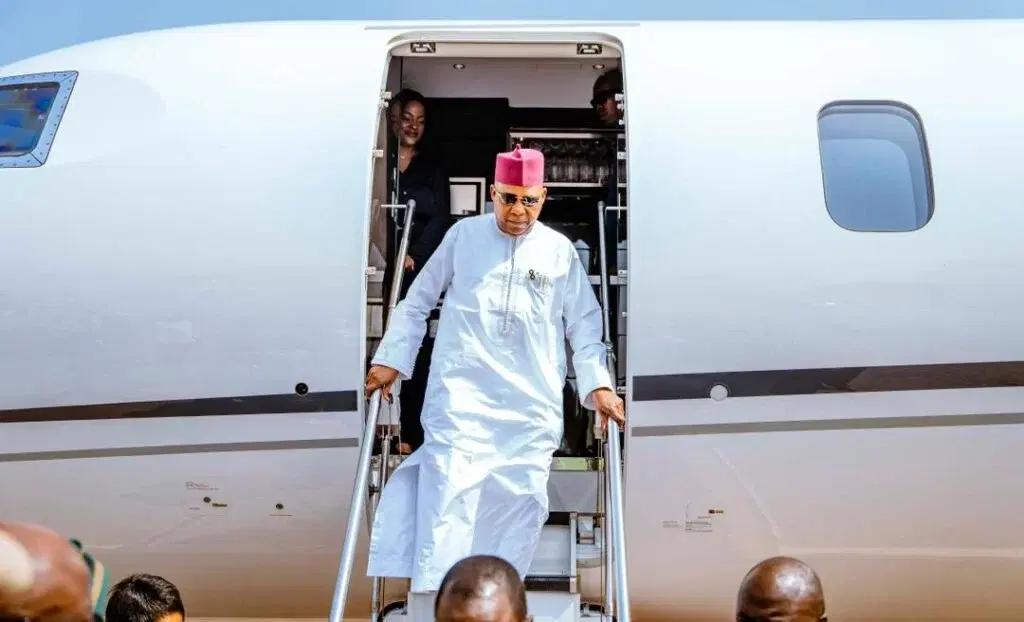
Vice President Kashim Shettima has returned to Abuja after representing President Bola Tinubu at the 39th Ordinary Session of the Assembly of Heads of State and Government of the African Union, alongside the 30th AU General Assembly held in Addis Ababa, Ethiopia. The Vice President’s Senior Special Assistant on Media and Communications, Stanley Nkwocha, confirmed this in a statement issued on Sunday night. The summit, held on Friday and Saturday, focused on the theme “Assuring Sustainable Water Availability and Safe Sanitation Systems to Achieve the Goals of Agenda 2063,” bringing together African leaders to deepen commitments to sustainable water management, improved sanitation, and the continent’s long-term development blueprint under Agenda 2063. During the summit, Shettima took part in high-level side events and bilateral meetings with political and business leaders, aimed at enhancing Nigeria’s diplomatic, economic, and strategic relations across Africa. He also met with António Guterres, the Secretary-General of the United Nations, who encouraged Nigeria to play a leading role in Africa’s push for a restructured global order, noting the country’s strategic position on the continent. At a side event titled “Building Africa’s Health Security Sovereignty,” the Vice President called for African countries to reduce dependence on foreign aid and develop self-reliant health systems. He stressed the need to protect the health of Africans from the uncertainties of distant supply chains and shifting global crisis priorities. Records show that Shettima has spent a total of 73 days outside the country, visiting 16 nations across 22 trips. He has travelled more than 43,000 nautical miles, equivalent to about 79,000 kilometres, and logged over 93 flight hours. His foreign visits have included trips to Italy, Russia, South Africa, Cuba, China, the United States, Switzerland, Ivory Coast, Kenya, Sweden, Azerbaijan, Liberia, Ethiopia, and Guinea.

zz-6.webp

2min7470
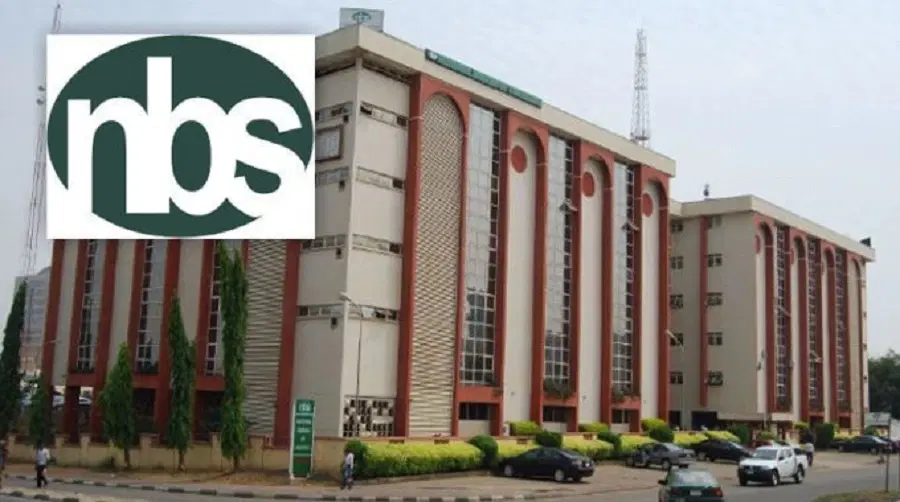
The United Kingdom was the leading source of capital inflows into Nigeria in the third quarter of 2025, according to data released by the National Bureau of Statistics. Figures from the NBS capital importation reports for the second and third quarters of 2025, shared on its official X platform on Monday, indicate that inflows from the United Kingdom amounted to $2.94bn, accounting for 48.80 per cent of total capital imported during the period. The United States ranked second with $950.47m, representing 15.80 per cent, while the South Africa contributed $773.95m, or 12.87 per cent. Other major sources included Mauritius with $451.46m and the Netherlands with $282.90m. The NBS noted that the data, obtained from the Central Bank of Nigeria, reflect fresh capital inflows through commercial banks and exclude other elements of foreign direct investment, such as reinvested earnings. The rebound in capital importation during the third quarter points to renewed interest from foreign investors, driven largely by short-term portfolio investments in money market instruments and government bonds. Analysts, however, caution that the relatively small share of foreign direct investment indicates that long-term, productive capital inflows remain limited compared with short-term funds. Overall, the trend underscores Nigeria’s increasing attractiveness to portfolio investors while highlighting the need for policies that encourage more stable, long-term investments to support sustainable economic growth.

Tech & Tools Desk16 February 2026
zz-5.webp

3min7360
The Federal Government has instructed all Ministries, Departments and Agencies (MDAs) to strictly apply the eight-year tenure limit for directors and permanent secretaries, in line with a renewed directive from the Office of the Head of the Civil Service of the Federation. The directive follows the revision of the Public Service Rules (PSR), which was announced in July 2023 by the former Head of the Civil Service of the Federation, Folasade Yemi-Esan. She stated at a lecture marking the 2023 Civil Service Week at the State House, Abuja, that the revised rules took effect from July 27, 2023. A circular issued by the Head of Service and addressed to permanent secretaries, the Accountant-General of the Federation, the Auditor-General for the Federation and heads of extra-ministerial departments formally communicated the revised rules. According to the circular, the revised PSR—approved by the Federal Executive Council on September 27, 2021, and unveiled during the 2023 Civil Service Week lecture became operational from July 27, 2023. Section 020909 of the revised PSR provides that permanent secretaries are to serve a four-year tenure, renewable only once subject to satisfactory performance. It also stipulates that directors on Grade Level 17 or equivalent must compulsorily retire after spending eight years in that rank. While some MDAs, including the Federal Ministry of Finance, implemented the policy promptly, others reportedly failed to comply. In August 2025, the Association of Senior Civil Servants of Nigeria raised concerns over alleged attempts to extend the tenure of some directors and permanent secretaries, warning that such moves would contravene civil service regulations. However, in a memo dated February 10, 2026, and signed by the current Head of the Civil Service, Didi Walson-Jack, MDAs were accused of uneven and inconsistent enforcement of the tenure policy. The memo reaffirmed that the eight-year tenure rule for directors remains valid and must be fully implemented across the Federal Public Service. It noted that the reminder was necessary following observations that compliance had been irregular, in violation of the Public Service Rules. The circular directed permanent secretaries, directors-general and chief executive officers of government agencies to submit annual reports on the status of implementation of the policy by February 28 each year, as well as monthly nominal rolls for monitoring and record-keeping purposes. It warned that failure to comply with the directive would attract appropriate administrative sanctions and urged MDAs to ensure that the contents of the circular are brought to the attention of all relevant officials for strict adherence.

Zara Lianne16 February 2026
zz-12.jpeg

2min3720
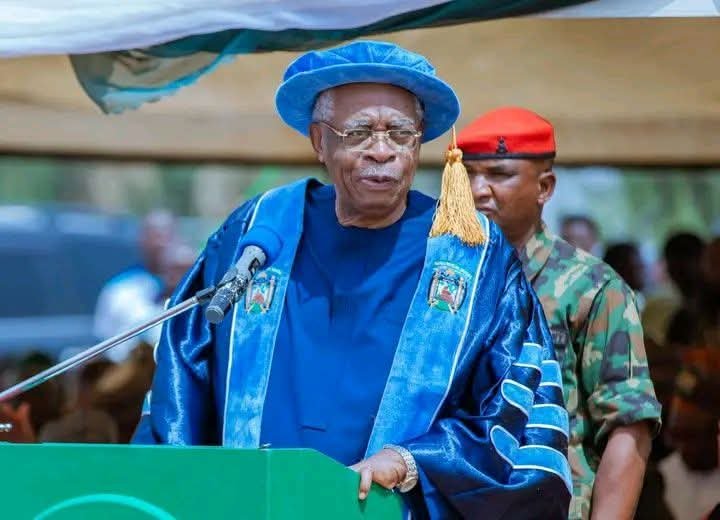
Former Minister of Defence, Lt Gen Theophilus Danjuma (retd), has commended United States President Donald Trump for bringing global attention to the security situation in Nigeria’s Middle Belt. Danjuma spoke on Saturday at the joint 8th and 9th convocation ceremony of Plateau State University in Bokkos Local Government Area, where he said Trump’s remarks had pushed the term “Middle Belt” into international conversations. He noted that global media outlets reacted with curiosity and surprise, but the discussion continued, leading to increased awareness of the region’s challenges. “Today, the world is paying closer attention to the realities of our region. For that awareness, we are thankful,” he said. Danjuma called on Nigerians to invest in mentoring and supporting young leaders, urging them to rely on local capacity rather than waiting for help from outside the country. He also expressed gratitude for the honour bestowed on him, describing it as especially significant because it came from his own people. He further described Aboyeji as a fitting choice for recognition and a strong representation of Nigeria’s youthful entrepreneurial promise. During the ceremony, the university awarded honorary degrees to Danjuma and Aboyeji in recognition of their contributions to national development, entrepreneurship, and ethical leadership. In his address, Governor Caleb Mutfwang reaffirmed his government’s commitment to transforming education, noting that nearly N1bn had been invested to secure programme accreditation and expand academic faculties. He urged the graduating students to move forward with confidence, solve problems, create opportunities, and push beyond limitations, reminding them that the university’s name should open doors for them across Nigeria and beyond.

aa-9.webp

2min6170
Former US President Barack Obama has sparked renewed global conversation about extraterrestrial life after a resurfaced interview clip went viral on X on Saturday. In the widely shared video, Obama acknowledged the possibility of alien life, while making clear he has never personally encountered any extraterrestrials. “They’re real, but I haven’t seen them,” Obama said. “They’re not being kept at Area 51. There’s no underground facility, unless there’s this enormous conspiracy and they hid it from the President of the United States.” The comments align with Obama’s longstanding public stance on the subject. During and after his two terms in office, he has maintained that although he did not come across evidence of alien spacecraft or beings while in the White House, the vastness of the universe makes the existence of life beyond Earth statistically plausible.

Kadoso_CBN.jpg

3min3630
The Socio-Economic Rights and Accountability Project (SERAP) has instituted legal action against the Central Bank of Nigeria (CBN) over its alleged failure to account for about N3 trillion in public funds, including over N629 billion reportedly paid to “unknown beneficiaries” under the Anchor Borrowers’ Programme. In a statement issued on Sunday by its Deputy Director, Kolawole Oluwadare, SERAP said the suit was prompted by findings contained in the 2025 annual report of the Auditor-General of the Federation, published on September 9, 2025. The case, filed last week at the Federal High Court in Abuja and marked FHC/ABJ/CS/250/2026, seeks an order of mandamus compelling the CBN to explain the whereabouts of the alleged missing or diverted funds and provide detailed accounts of how the money was spent. According to the suit, filed by lawyers Oluwakemi Agunbiade and Valentina Adegoke on behalf of SERAP, the Auditor-General reported that the CBN failed in 2022 to remit over N1.44 trillion in operating surplus due to the Federal Government into the Consolidated Revenue Fund, raising concerns that the funds may have been diverted. The report also alleged that more than N629 billion disbursed under the Anchor Borrowers’ Programme—an initiative designed to support farmers and boost food production—was paid to beneficiaries whose identities remain unknown. The Auditor-General warned that the failure to recover the funds may have worsened food security challenges in the country. SERAP further cited other alleged irregular expenditures by the apex bank, including N125 billion on intervention projects said to lack National Assembly approval, N1.79 billion used to procure 43 vehicles for the Nigeria Immigration Service without proper documentation, and contract awards worth over N189 billion with variations exceeding N9 billion. It also referenced the alleged failure of the CBN’s Katsina branch to recover more than N90 million in COVID-19 intervention loans granted to small and medium enterprises. The organisation argued that the allegations point to serious breaches of public trust and contraventions of the 1999 Constitution (as amended), the CBN Act, and anti-corruption regulations. It relied on provisions of the Financial Regulations 2009 and the Fiscal Responsibility Act, which empower citizens to seek judicial enforcement of accountability measures. SERAP maintained that Nigerians are entitled to know how public funds are managed and urged the court to grant its application in the interest of transparency, restitution, and prevention of future violations. No date has been scheduled for the hearing of the suit.

US-embassy-in-Nigeria-closes-indefinitely-lailasnews-3-scaled-1-1280x639.webp

1min4700
The United States Embassy in Abuja and the Consulate General in Lagos will close operations on Monday, February 16, 2026, in observance of Presidents’ Day. The diplomatic mission disclosed this in a notice posted on its official X account on Sunday, informing the public of the temporary closure. Presidents’ Day, a federal holiday in the United States, is marked annually on the third Monday of February. The embassy explained that the holiday was initially created to commemorate the birthday of George Washington but has since grown to honour all American presidents and their contributions to the nation’s history. The mission added that the day also recognises the broader impact of U.S. presidents on global affairs. In a related message, the embassy noted that Washington established the first “Badge of Military Merit,” which later evolved into the Purple Heart medal an award that still features his likeness.

Tech & Tools Desk15 February 2026
ab-2.jpg

3min4920
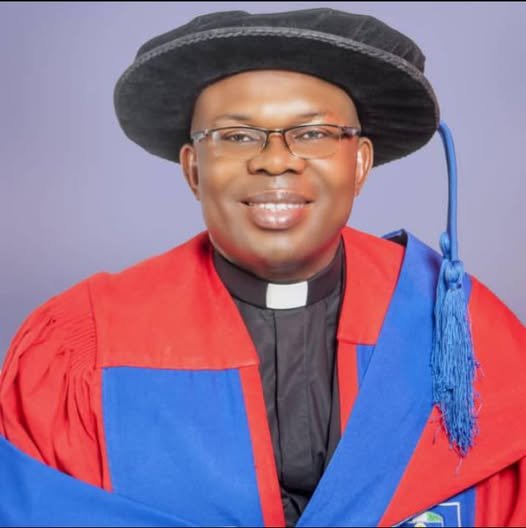
A Catholic priest and university scholar, Innocent Uwah, has called on the Independent National Electoral Commission (INEC) to leverage artificial intelligence to improve the electronic transmission of election results ahead of the 2027 general elections. Uwah, the Acting Vice-Chancellor of Nigerian British University (NBU), said the effective deployment of AI-driven technologies would enhance operational capacity, strengthen credibility, and address recurring challenges associated with transmitting poll results electronically. He made the call while speaking with journalists during the institution’s third matriculation ceremony on Saturday. According to him, AI has already been successfully integrated into sectors such as education and medicine, and there is no justification for excluding it from Nigeria’s electoral system. “The Nigerian British University is committed to advancing knowledge, and we emphasise AI as a strategic tool for national development. As a technology-driven institution, we aim to become a leading hub for artificial intelligence research,” he said. Uwah argued that AI-enabled automation would make the electoral process more transparent and dependable. “If Nigeria fully embraces AI in its electoral operations, results declared at the end of voting will be clearer and less prone to disputes. AI has transformed medicine, education, and research. It can do the same for politics,” he stated. He appealed to the INEC chairman to adopt modern technologies capable of delivering more reliable election outcomes. “We are in the digital age. Once these technological innovations are embraced, election results will be more dependable and public confidence will improve. We cannot continue to cite lack of capacity to transmit results electronically in the 21st century,” he added. Drawing a comparison with the banking sector, Uwah noted that financial institutions rely on advanced technology to securely transmit funds and questioned why similar systems could not be applied to electoral processes. Speaking on the university’s growth, the acting vice-chancellor revealed that the institution currently runs five faculties and two schools, with 257 students matriculating this academic session. Licensed in May 2022, the university commenced operations in February 2023 with three faculties Management and Social Sciences, Law, and Computing and Information Technology offering 16 programmes. Two additional faculties were approved in June 2024 by the university Senate and the National Universities Commission. He urged the newly admitted students to remain focused and disciplined, advising them to work hard, avoid negative peer influence, and strive for excellence throughout their academic journey.

Zara Lianne15 February 2026
aa-6.webp

2min7240
The Nigerian Education Loan Fund (NELFUND) has disbursed ₦392,876,550 in student loans to Delta State University, Abraka (DELSU), providing financial support to 1,854 students. In a statement shared on its official X account on Sunday, NELFUND said the funds are aimed at easing financial burdens and enabling beneficiaries to focus fully on their academic programmes. According to the agency, “Delta State University has received a students’ loan disbursement from the Nigerian Education Loan Fund (NELFUND) totalling ₦392,876,550.00. Number of beneficiaries: 1,854 students. This will alleviate financial challenges and support students’ academic pursuits.” In an acknowledgement letter dated January 13, 2026, and addressed to the Managing Director/CEO of NELFUND, DELSU Registrar, Mrs Rufina Ofio, expressed appreciation for the intervention on behalf of the Vice-Chancellor, Prof. Samuel O. Asagba. She confirmed receipt of the ₦392.8 million disbursement, noting that it would significantly reduce the financial strain on the affected students and allow them to concentrate on their studies. The university also commended NELFUND for its commitment to expanding access to education and fostering academic development across Nigeria. The latest disbursement underscores NELFUND’s continued efforts to support higher education students nationwide and ensure that financial constraints do not stand in the way of academic success.