
Category: Refined Living

zz-1-1280x640.avif

3min4560
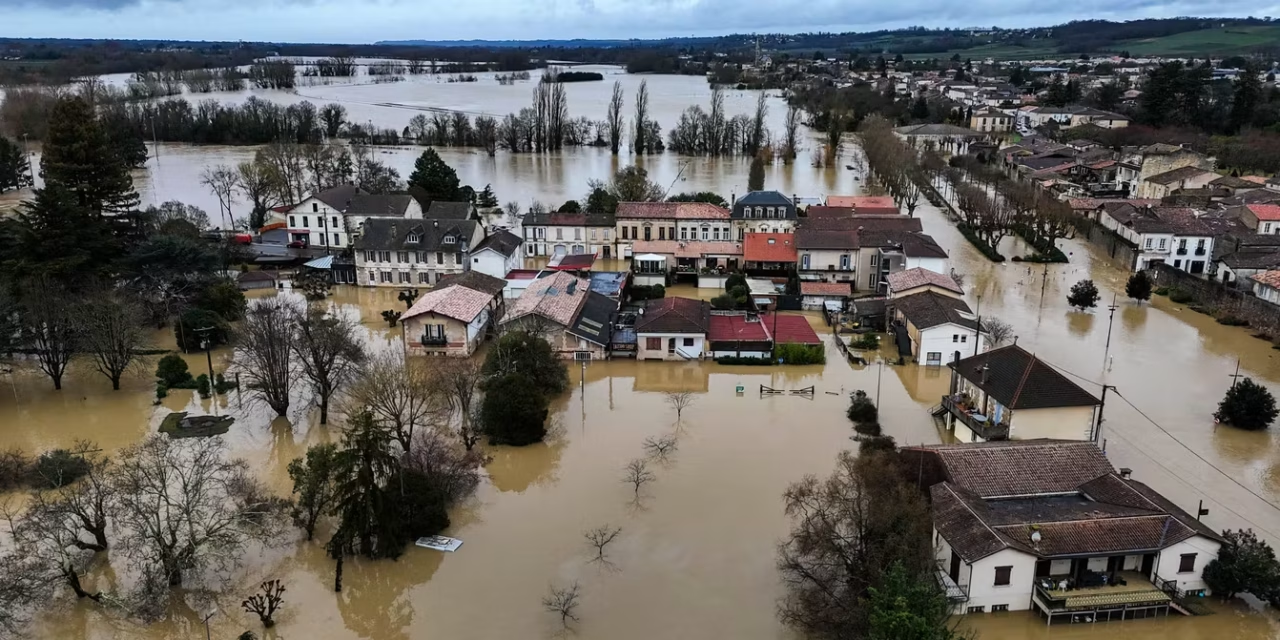
Several cities across France are bracing for renewed flooding following days of intense storms that have battered large parts of the country. French authorities have placed multiple regions on the highest flood alert, warning that rising water levels could continue to cause serious damage in the coming days. Meteorological services say heavy flooding is likely between Wednesday and Thursday as another storm system moves through the country. Latest updates from the national flood monitoring agency show that about 70 departments remain on flood watch, with three under red alert and 15 on orange alert. Maine-et-Loire in western France has now been added to the highest-risk category, alongside Gironde and Lot-et-Garonne in the south-west. Officials warned that Angers, in the Loire Valley, could face major flooding from the River Maine on Tuesday and Wednesday. Further south, the River Garonne, which had already overflowed between Agen and Bordeaux, was expected to rise again after a brief lull. The severe weather has already claimed at least one life, after a lorry driver was killed when a tree fell during the storm in western France. Nearly 900,000 homes were left without electricity at the height of the disruption. Powerful winds, with gusts reaching up to 162km/h near the south-west coast, forced the closure of Alpine ski resorts due to a high avalanche risk, while trees were uprooted and roads submerged. Electricity providers earlier reported that hundreds of thousands of households, particularly in southern France, were without power as crews worked to restore supply. The storm system also caused widespread disruption beyond France, affecting parts of northern Spain and Portugal. Flights, trains, and ferry services were cancelled, major roads were blocked, dozens of people were injured in Spain, and a viaduct in Portugal partially collapsed due to flooding. Forecasters have described the storm as unusually powerful, noting that the succession of heavy rainfall has left soils extremely saturated. Hydrologists warned that even modest additional rainfall could trigger further flooding. Red flood alerts are expected to remain in place in Gironde, Lot-et-Garonne, and Maine-et-Loire, although officials say the number of areas under orange alert may slightly decline. France’s Minister for the Ecological Transition said a state of emergency would be declared once floodwaters recede, allowing insurance claims to be fast-tracked. She noted that climate experts had long warned such extreme events would become more frequent, adding that those predictions were now becoming reality. The head of the national flood monitoring service also described the series of rainstorms as exceptional, stressing that with ground conditions already at record saturation levels, as little as 20–30mm of additional rainfall could lead to new flooding.

Tech & Tools Desk18 February 2026
zz-12.webp

3min6640
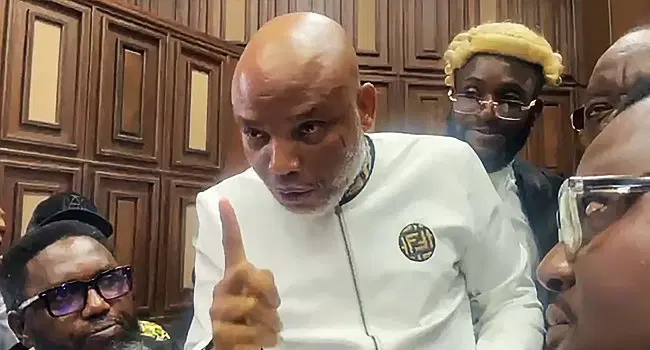
The family of detained Indigenous People of Biafra (IPOB) leader Nnamdi Kanu has said that more than eight years ago, he foretold that his detention in Sokoto would signal the beginning of his eventual freedom. They also insisted that those responsible for Kanu’s continued incarceration would find no peace. Kanu’s parents, the late HRM Eze Israel Okwu Kanu and his wife, Ugoeze Kanu, were laid to rest on February 14, 2020, after passing away in October 2017. Their deaths followed the invasion of the family home in Afaraukwu by soldiers during Operation Python Dance, an incident the family says left them traumatised. Speaking during a memorial ceremony held on February 14 at the family compound to mark the burial anniversary of the late parents, Kanu’s younger brother and family spokesperson, Prince Emma Kanu, said his brother had long predicted that reaching Sokoto would mark a turning point in the Biafra struggle. According to him, Kanu maintained that once he arrived in Sokoto, it would signify that the quest for Biafra had reached a decisive stage. He described his brother as a peaceful man who could not be intimidated, adding that if the actualisation of Biafra became the final option, then so be it. Prince Emma said the family remained committed to the cause their parents stood for, stressing that they would not betray their sacrifices. He added that Kanu believes strongly in dialogue rather than violence and maintained that the family would not rest until he regains his freedom. At the graveside of their parents, family members offered prayers, calling on divine forces and the land to act against those they accused of conspiring against Kanu and the Biafra cause. They declared that anyone who had worked against the family or sought to profit from Kanu’s ordeal would face consequences. Pouring libation, Prince Emma told his late mother that her death was not in vain and urged her to rise against all those opposing the family, Kanu, and the Biafra struggle. He also expressed confidence that Kanu would emerge victorious, describing him as a symbol and light of Biafra. Several speakers, including representatives of Biafran veterans and supporters from different parts of the country, said the gathering was meant to honour the dead and renew commitment to the struggle. They urged supporters not to lose faith and called on the Federal Government to release Kanu without conditions. A cleric, Evangelist Nnamdi Obike of the Jehovah Elohim Evangelical Ministry, also said Kanu had earlier predicted that the struggle would culminate in Sokoto, noting that events had so far aligned with his words. He added that Kanu would soon regain his freedom and emerge with renewed purpose.

Zara Lianne18 February 2026
zz-11-1280x493.webp

2min8540
Britain’s annual inflation rate slowed in January, matching market expectations, according to official figures released on Wednesday, strengthening the case for a possible interest rate cut by the Bank of England next month. Data from the Office for National Statistics showed that the Consumer Prices Index dropped to 3.0 per cent in January, down from 3.4 per cent in December. The ONS said inflation fell to its lowest annual level since March last year, partly due to lower petrol prices. The latest figures support the central bank’s view that inflation is likely to continue easing towards its two per cent target in the months ahead, as declining energy costs help balance out higher water charges and other persistent expenses. Earlier this month, the Bank of England kept its benchmark interest rate unchanged at 3.75 per cent but indicated that further reductions were likely. Although wage growth has moderated in the private sector, it remains relatively high in the public sector. Official data also show unemployment rising to a five-year high of 5.2 per cent. Since winning the general election in July 2024, Prime Minister Keir Starmer’s Labour government has faced challenges in stimulating economic growth, following tax increases introduced in its two budgets. Finance Minister Rachel Reeves said the government’s budgetary decisions were helping to bring inflation down, responding to the latest data. Recent figures also revealed that economic growth in the final quarter of 2025 fell short of expectations, prompting the central bank to revise down its growth forecasts for this year and next. The Bank of England now projects gross domestic product growth of 0.9 per cent this year and 1.5 per cent in 2027, compared with earlier forecasts of 1.25 per cent for 2026 and 1.6 per cent for 2027. Analysts say the combination of weak economic momentum, a cooling labour market, and easing wage pressures could make the central bank more comfortable with cutting interest rates as 2026 unfolds.

Zara Lianne17 February 2026
zz-18.jpeg

3min7370
The Nigeria Centre for Disease Control on Monday sounded the alarm over a rising number of Lassa fever cases among health workers. The agency reported that 15 health care workers have been confirmed infected, with two deaths recorded, amid Nigeria’s ongoing outbreak of the viral disease. In an advisory, the NCDC expressed sympathy to affected personnel and highlighted the risk factors driving transmission. “Recent surveillance data show a concerning increase in Lassa fever infections among healthcare workers, with 15 confirmed cases and two deaths as of Epidemiological Week 7. Infections have been reported across several states, including high-burden areas such as Ondo, Edo, Bauchi, Taraba, Ebonyi, and Benue, with specific hotspots identified at the local government level. “As part of its mandate, NCDC investigates every healthcare worker infection to determine transmission drivers and prevent further cases. Findings point to gaps in infection prevention and control (IPC) practices, and overlooked exposure risks in certain departments, resulting in IPC measures that are misaligned with actual risk, sometimes with fatal outcomes,” the advisory stated. In Benue State, Commissioner for Health and Human Services Dr Paul Ogwuche confirmed that at least four health workers have died, with over 60 suspected cases reported. Of the 11 confirmed cases, four health workers died and three patients remain hospitalized. Efforts in collaboration with the NCDC are underway to contain the outbreak through public awareness and enhanced support measures. Lassa fever is a zoonotic viral illness primarily transmitted by the Mastomys rat. It is endemic in Nigeria and several other West African countries. The World Health Organization describes it as an acute viral haemorrhagic illness caused by the Lassa virus, a member of the arenavirus family. Humans are usually infected through exposure to food or household items contaminated with urine or faeces of infected rats. Person-to-person transmission and laboratory-acquired infections can also occur, particularly in healthcare settings lacking adequate infection prevention and control measures. The disease is endemic in Benin, Ghana, Guinea, Liberia, Mali, Sierra Leone, Togo, and Nigeria, and likely exists in other parts of West Africa.

zz-17.jpeg

3min7600
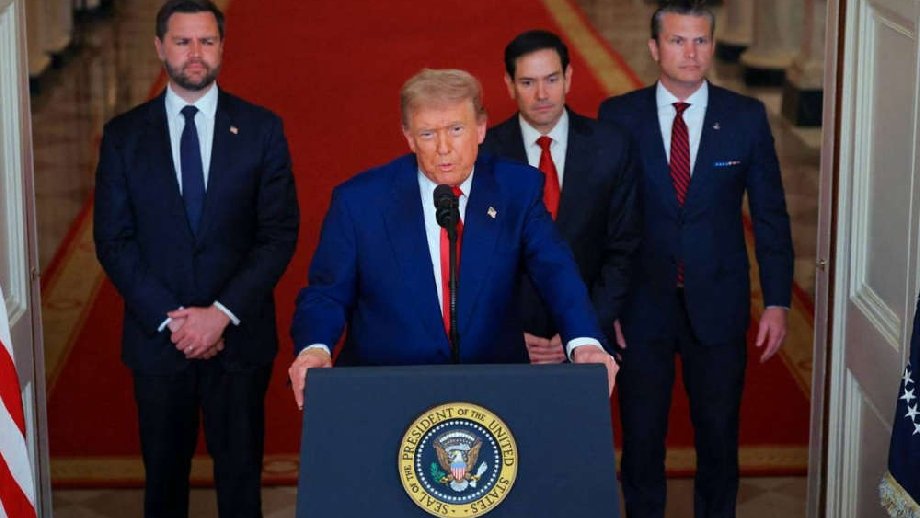
The United States has frozen the assets and property of eight Nigerians accused of links to Boko Haram and the Islamic State of Iraq and the Levant (ISIL). The announcement appeared in a 3,000-page document from the US Treasury Office of Foreign Assets Control, dated February 10, 2026, and obtained on February 16, 2026. The document also listed individuals sanctioned for cybercrime and other security threats. Those named include Salih Yusuf Adamu, Babestan Oluwole Ademulero, Abu Abdullah ibn Umar Al-Barnawi, Abu Musab Al-Barnawi, Khaled (or Khalid) Al-Barnawi, Abu Bakr ibn Muhammad ibn Ali Al-Mainuki, Ibrahim Ali Alhassan, and Nnamdi Orson Benson. The sanctions follow recommendations from the US Congress for visa restrictions and asset freezes on individuals and groups accused of violating religious freedoms and persecuting Christians in Nigeria. Former Kano State Governor Dr. Rabiu Kwankwaso, along with the Miyetti Allah Cattle Breeders Association of Nigeria and its Kautal Hore faction, were also among entities recommended for similar sanctions. The OFAC document, titled Specifically Designated Nationals and Blocked Persons List, provides notice of actions against individuals and entities whose property is blocked under US counter-terrorism measures. Salih Yusuf Adamu, also known as Salihu Yusuf, born August 23, 1990, in Nigeria, was identified for ties to Boko Haram. He was among six Nigerians convicted in 2022 in the UAE for setting up a Boko Haram cell to raise funds for insurgents in Nigeria, attempting to transfer $782,000 from Dubai. Abu Abdullah ibn Umar Al-Barnawi, known as Ba Idrisa, was flagged under terrorism-related sanctions. Abu Musab Al-Barnawi, also called Habib Yusuf, and Khaled (or Khalid) Al-Barnawi, born in 1976 in Maiduguri, were similarly listed for Boko Haram links. Abu Bakr ibn Muhammad ibn Ali Al-Mainuki, also known as Abu-Bilal Al-Minuki, was identified as having ties to ISIL. Nnamdi Orson Benson was listed under cybercrime-related sanctions. The sanctions block all property and interests of the named individuals within US jurisdiction, and US persons are generally prohibited from engaging in transactions with them. These measures are applied under Executive Order 13224, which targets individuals and groups involved in terrorism financing. Boko Haram has been designated a foreign terrorist organization by the US since 2013 and is responsible for numerous deadly attacks across northern Nigeria and the Lake Chad Basin. Washington’s sanctions reflect continued efforts to counter terrorism financing, cyber threats, and support for global security. In October 2025, Donald Trump announced that Nigeria would be added to the US State Department’s list of “Countries of Particular Concern” over alleged religious persecution against Christians, marking the country’s second designation under this watchlist. Nigeria had first been designated in 2020 under Trump and later removed by former President Joe Biden.

zz-16.jpeg

2min6900
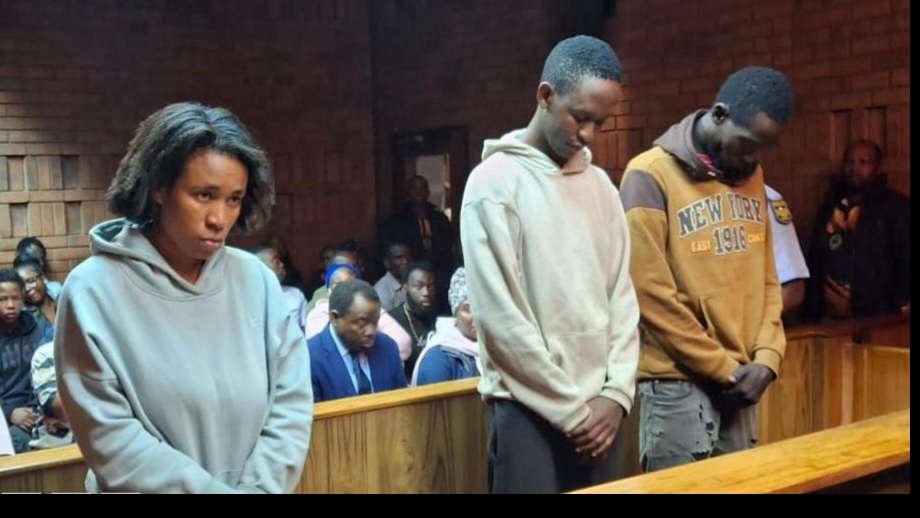
The Pretoria Magistrate’s Court has ordered the continued detention of three suspects in connection with the killing of a Nigerian student and e-hailing driver, Isaac Satlat. Local broadcaster eNCA reported that the suspects Dikeledi Mphela (25), Gotseone Machidi (26) and McClaren Mushwana (30) appeared in court on Monday and were remanded in custody until February 23 while investigations continue. They are facing charges of murder and carjacking. Satlat, a 22-year-old mobile engineering student, was allegedly killed on February 11 after responding to an e-hailing request. Video footage said to be from his vehicle’s dashboard camera, which has circulated on social media, reportedly shows passengers strangling him. According to eNCA, Mphela turned herself in to police on Friday, while Machidi and Mushwana were arrested over the weekend. None of the suspects applied for bail. A fourth suspect later surrendered to police in Atteridgeville on Monday and is expected to appear before the same court on Tuesday on similar charges. Outside the court, members of e-hailing associations and civil society groups staged a protest, calling for justice and describing Satlat as a gentle and well-regarded member of the community. Reacting to the case, the Nigerians in Diaspora Commission praised the show of solidarity by South Africans and said it was closely following the proceedings to ensure transparency and justice for Satlat’s family and the Nigerian community.

zz-10.webp

4min3790
Former Kaduna State Governor Nasir El-Rufai has been taken into custody by the Economic and Financial Crimes Commission in connection with an alleged ₦432 billion corruption investigation, with operatives of the Department of State Services reportedly placed on standby. At the same time, uncertainty surrounds Nigeria’s bid to return to the 2026 FIFA World Cup, as FIFA is yet to issue a decision on the country’s protest against DR Congo. Elsewhere, police have arrested a suspect following the deaths of two Nollywood crew members on a Lagos film set, the National Assembly is weighing a proposal to shift the date of the 2027 presidential election, and a court has ordered the remand of suspects accused of killing a Nigerian student based in South Africa. El-Rufai detained The anti-graft agency confirmed that El-Rufai honoured an invitation to its Abuja headquarters on Monday and was questioned over allegations linked to a 2024 report by the Kaduna State House of Assembly. The report accused his administration of mismanaging loans, breaching due process in contract awards, and pushing the state into significant debt between 2015 and 2023. He remained in custody as of late Monday, with officials declining to comment on possible charges. Investigators said the probe follows recommendations by the state assembly, which alleged that hundreds of billions of naira were misappropriated during El-Rufai’s tenure. The former governor has repeatedly rejected the claims, describing them as politically motivated and insisting that all borrowed funds were properly applied to development projects. Fresh criminal charges In a related development, the Federal Government has filed criminal charges against El-Rufai at the Federal High Court in Abuja over the alleged unlawful interception of communications belonging to the National Security Adviser, Nuhu Ribadu. The charges stem from remarks El-Rufai made during a televised interview in which he claimed to have knowledge of intercepted calls. No date has yet been fixed for his arraignment. Dadiyata case revisited Separately, the DSS has reopened investigations into the 2019 disappearance of Abubakar Idris, popularly known as Dadiyata, a government critic who vanished in Kaduna. Security sources said El-Rufai and his sons are being investigated in connection with the case, while his passport was reportedly seized to prevent foreign travel. El-Rufai has denied any involvement, maintaining that he neither knew Dadiyata nor had reason to target him. Protests and reactions The developments sparked protests in Abuja and Kaduna, with demonstrators both demanding accountability and expressing support for the former governor. Civil society groups called for the judicial process to be allowed to run its course, while EFCC officials said the agency would act strictly within the law. Human rights advocates also renewed calls for accountability over alleged abuses during El-Rufai’s eight years in office, urging thorough investigations and justice for victims. As multiple probes unfold ranging from alleged financial misconduct to cybercrime and a reopened disappearance case El-Rufai faces one of the most serious legal challenges confronting a former governor in recent years. His political future now hinges on the outcome of investigations and court proceedings, as the country edges closer to another election cycle.

Tech & Tools Desk17 February 2026
zz-15.jpeg

3min6970
Oil markets drew attention on Tuesday after Donald Trump stepped up warnings against Iran, unsettling trading during a holiday-thinned session across Asia and the United States. West Texas Intermediate pared earlier gains after climbing more than one per cent to trade near $64 per barrel, while Brent crude slipped slightly to just below $69. Trump cautioned Tehran about the “consequences of not making a deal” ahead of scheduled talks between Washington and Iran in Geneva. The US president has previously threatened military action against the Islamic Republic, initially over its violent response to anti-government protests and more recently over concerns surrounding its nuclear programme. The remarks rippled through largely quiet markets as several Asian financial centres including Shanghai, Hong Kong, Taipei, Seoul and Singapore — remained shut for the extended Lunar New Year holiday. US markets were due to reopen later on Tuesday following the Presidents’ Day break. Gold prices fell below $5,000 an ounce, while silver dropped three per cent. In Japan, stocks closed 0.4 per cent lower after data showed the world’s fourth-largest economy recorded weak growth in the final quarter of last year. Brokerage firm Monex said the absence of US market activity was likely to keep Japanese trading subdued, adding that a softer yen with the dollar trading in the mid-153 range could lend support to export-focused stocks. Australian shares edged up 0.2 per cent after mining giant BHP posted an increase in half-year net profit, driven by strong demand for copper amid global electrification efforts. Bangkok rose 0.5 per cent, brushing off weak growth data and extending gains after the Bhumjaithai Party’s surprise election victory earlier in the month. Markets in Mumbai and Manila also advanced, while Wellington slipped 0.5 per cent. Investors are also watching developments in artificial intelligence, as technology executives and world leaders gather at the AI Impact Summit in New Delhi. The five-day event, billed as its largest yet, aims to outline a shared global roadmap for AI governance and cooperation. US Federal Reserve officials Michael Barr and Mary Daly are expected to speak on AI later on Tuesday, according to Bloomberg News. While booming demand for generative AI has lifted tech-sector profits, concerns continue to mount over its broader social and environmental implications.

Zara Lianne17 February 2026
zz-14.jpeg

1min9280
The Nigerian Electricity Regulatory Commission has set out a three-step procedure for electricity consumers seeking redress over power supply, billing, and metering issues. In a public advisory shared on its official X account on Tuesday, the commission advised customers affected by prolonged outages, estimated billing, faulty meters, or voltage fluctuations to first report such complaints to their respective electricity Distribution Companies. NERC stated that DisCos serve as the primary contact point for all electricity-related complaints and are required to resolve both technical and commercial issues within approved timelines. Consumers were also encouraged to request a complaint reference number and keep records of all correspondence to aid follow-up. The advisory explained the process as follows: Consumers should begin by contacting their DisCo’s customer care unit for any technical or billing concerns. If the issue remains unresolved and the customer resides in a state that has transitioned to a State Electricity Regulator, the complaint should be escalated to that authority. For consumers in other states, or where further intervention is needed, the commission advised contacting the NERC Call Centre to ensure the complaint is properly reviewed and addressed.

Zara Lianne16 February 2026
zz-9.webp

6min4660
Downtown Munich, typically known for its high-end boutiques and luxury cars, is now showcasing posters promoting next-generation drones. “Europe’s security under construction” reads the slogan on striking black-and-white images displayed on scaffolding surrounding a prominent church along one of the city’s busiest pedestrian streets. A public show of military capability like this would have been unthinkable just a few years ago, but global developments are rapidly reshaping Germany and the continent. Bavaria has emerged as Germany’s leading hub for defence technology, with a focus on artificial intelligence, drones, and aerospace. Residents, like many Europeans, report feeling increasingly exposed caught between an assertive Russia and an economically ambitious China to the east, and an unpredictable United States to the west. A recent Eurobarometer survey found that 68% of Europeans feel their country is under threat. This autumn, Germany’s Federal Office of Civil Protection and Disaster Assistance warned for the first time since the Cold War that war can no longer be considered “unlikely.” While assuring the country remains generally safe, the agency recommended that citizens maintain three to ten days of food supplies at home. Germany has become the largest European contributor of military and other aid to Ukraine following a pause in direct US assistance. Opinion polls indicate that citizens also want stronger protection at home. The challenge for Europe is whether traditional alliances with the US, NATO, and the EU are sufficient, or whether ad hoc coalitions with like-minded nations such as Australia, South Korea, and Japan are also necessary. By 2029, Germany’s defence budget is projected to exceed the combined budgets of the UK and France. NATO Secretary General Mark Rutte called the €150 billion planned expenditure “staggering” and noted that the United States has recognized and welcomed the move. While past US presidents have urged Europe to take more responsibility for its own security, Donald Trump’s approach has been notably more transactional and assertive. This year’s Munich Security Conference (MSC)—the world’s largest annual defence meeting focused heavily on the strained transatlantic relationship. Leaders, security experts, and defence industry representatives gathered, with informal side meetings providing opportunities for behind-the-scenes discussions. The most closely watched address came from US Secretary of State Marco Rubio, representing the Trump administration. European leaders were attentive, aware that transatlantic ties are at their most fragile since World War II. Tensions have been fueled by actions such as Trump’s threats over Greenland, temporary intelligence-sharing pauses with Ukraine, and repeated pressure on European allies to increase defence spending. European powers perceive his administration as highly transactional, leveraging security and economic ties to achieve US objectives. In Munich, Rubio sought to reassure Europe while reinforcing key Trump-era positions: skepticism toward multilateralism, globalisation, and climate action, alongside a vision for a renewed Western civilisation. He emphasized that partnership with the US would be conditional on shared values, prompting mixed reactions among European diplomats. The MSC highlighted Europe’s strategic dilemma: while Nordic and Baltic nations, along with Germany and the Netherlands, are preparing for stronger defence, southern European countries such as Spain remain resistant to significant increases in military spending. France and the UK are committed in principle but face domestic political and economic constraints. US officials, including Undersecretary of Defence Elbridge Colby, stressed that the Indo-Pacific is now Washington’s top strategic priority, signaling a reduced US presence in Europe. Europe must become a proactive partner rather than a dependent, prompting discussions of a “NATO 3.0.” In contrast, UK Prime Minister Sir Keir Starmer advocated closer defence integration with Europe to reduce costs while maintaining a strong transatlantic relationship. Experts suggest Europe’s leaders are increasingly forming flexible coalitions outside traditional institutions like NATO and the EU, working alongside countries such as Canada, Turkey, New Zealand, Japan, and South Korea to address shared security challenges. These collaborations extend beyond defence, covering energy security, supply chains, and technological independence. Efforts to develop European strategic autonomy, such as France and Germany’s joint Future Combat Air System, illustrate both the ambition and the challenges of pursuing independence from the US. Despite the push for European self-reliance, the continent remains heavily dependent on US support, from nuclear deterrence to intelligence sharing and technological innovation. Yet the pace of global power shifts is forcing even traditionally cautious Europe to adapt quickly to a new strategic reality. Europe is moving toward a future shaped by big power politics, and even its slowest-moving institutions are now being compelled to respond.