

 Zara Lianne
Trump’s vision of a new world order is now unfolding, and Europe is being forced to adapt quickly.
Downtown Munich, typically known for its high-end boutiques and luxury cars, is now showcasing posters promoting next-generation drones.
“Europe’s security under construction” reads the slogan on striking black-and-white images displayed on scaffolding surrounding a prominent church along one of the city’s busiest pedestrian streets.
A public show of military capability like this would have been unthinkable just a few years ago, but global developments are rapidly reshaping Germany and the continent.
Bavaria has emerged as Germany’s leading hub for defence technology, with a focus on artificial intelligence, drones, and aerospace. Residents, like many Europeans, report feeling increasingly exposed caught between an assertive Russia and an economically ambitious China to the east, and an unpredictable United States to the west.
A recent Eurobarometer survey found that 68% of Europeans feel their country is under threat. This autumn, Germany’s Federal Office of Civil Protection and Disaster Assistance warned for the first time since the Cold War that war can no longer be considered “unlikely.” While assuring the country remains generally safe, the agency recommended that citizens maintain three to ten days of food supplies at home.
Germany has become the largest European contributor of military and other aid to Ukraine following a pause in direct US assistance. Opinion polls indicate that citizens also want stronger protection at home. The challenge for Europe is whether traditional alliances with the US, NATO, and the EU are sufficient, or whether ad hoc coalitions with like-minded nations such as Australia, South Korea, and Japan are also necessary.
By 2029, Germany’s defence budget is projected to exceed the combined budgets of the UK and France. NATO Secretary General Mark Rutte called the €150 billion planned expenditure “staggering” and noted that the United States has recognized and welcomed the move.
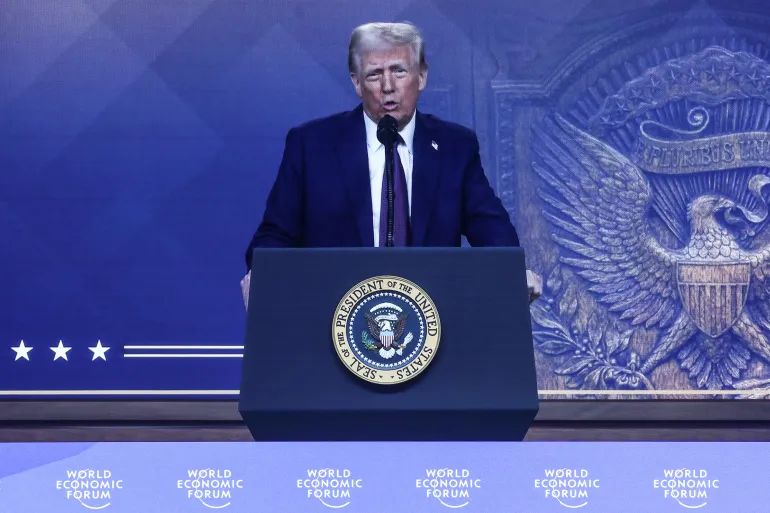
While past US presidents have urged Europe to take more responsibility for its own security, Donald Trump’s approach has been notably more transactional and assertive.
This year’s Munich Security Conference (MSC)—the world’s largest annual defence meeting focused heavily on the strained transatlantic relationship. Leaders, security experts, and defence industry representatives gathered, with informal side meetings providing opportunities for behind-the-scenes discussions.
The most closely watched address came from US Secretary of State Marco Rubio, representing the Trump administration. European leaders were attentive, aware that transatlantic ties are at their most fragile since World War II.
Tensions have been fueled by actions such as Trump’s threats over Greenland, temporary intelligence-sharing pauses with Ukraine, and repeated pressure on European allies to increase defence spending. European powers perceive his administration as highly transactional, leveraging security and economic ties to achieve US objectives.
In Munich, Rubio sought to reassure Europe while reinforcing key Trump-era positions: skepticism toward multilateralism, globalisation, and climate action, alongside a vision for a renewed Western civilisation. He emphasized that partnership with the US would be conditional on shared values, prompting mixed reactions among European diplomats.
The MSC highlighted Europe’s strategic dilemma: while Nordic and Baltic nations, along with Germany and the Netherlands, are preparing for stronger defence, southern European countries such as Spain remain resistant to significant increases in military spending. France and the UK are committed in principle but face domestic political and economic constraints.
US officials, including Undersecretary of Defence Elbridge Colby, stressed that the Indo-Pacific is now Washington’s top strategic priority, signaling a reduced US presence in Europe. Europe must become a proactive partner rather than a dependent, prompting discussions of a “NATO 3.0.”
In contrast, UK Prime Minister Sir Keir Starmer advocated closer defence integration with Europe to reduce costs while maintaining a strong transatlantic relationship. Experts suggest Europe’s leaders are increasingly forming flexible coalitions outside traditional institutions like NATO and the EU, working alongside countries such as Canada, Turkey, New Zealand, Japan, and South Korea to address shared security challenges.
These collaborations extend beyond defence, covering energy security, supply chains, and technological independence. Efforts to develop European strategic autonomy, such as France and Germany’s joint Future Combat Air System, illustrate both the ambition and the challenges of pursuing independence from the US.
Despite the push for European self-reliance, the continent remains heavily dependent on US support, from nuclear deterrence to intelligence sharing and technological innovation. Yet the pace of global power shifts is forcing even traditionally cautious Europe to adapt quickly to a new strategic reality.
Europe is moving toward a future shaped by big power politics, and even its slowest-moving institutions are now being compelled to respond.

