Category: Refined Living

TRAIN.avif

3min5560
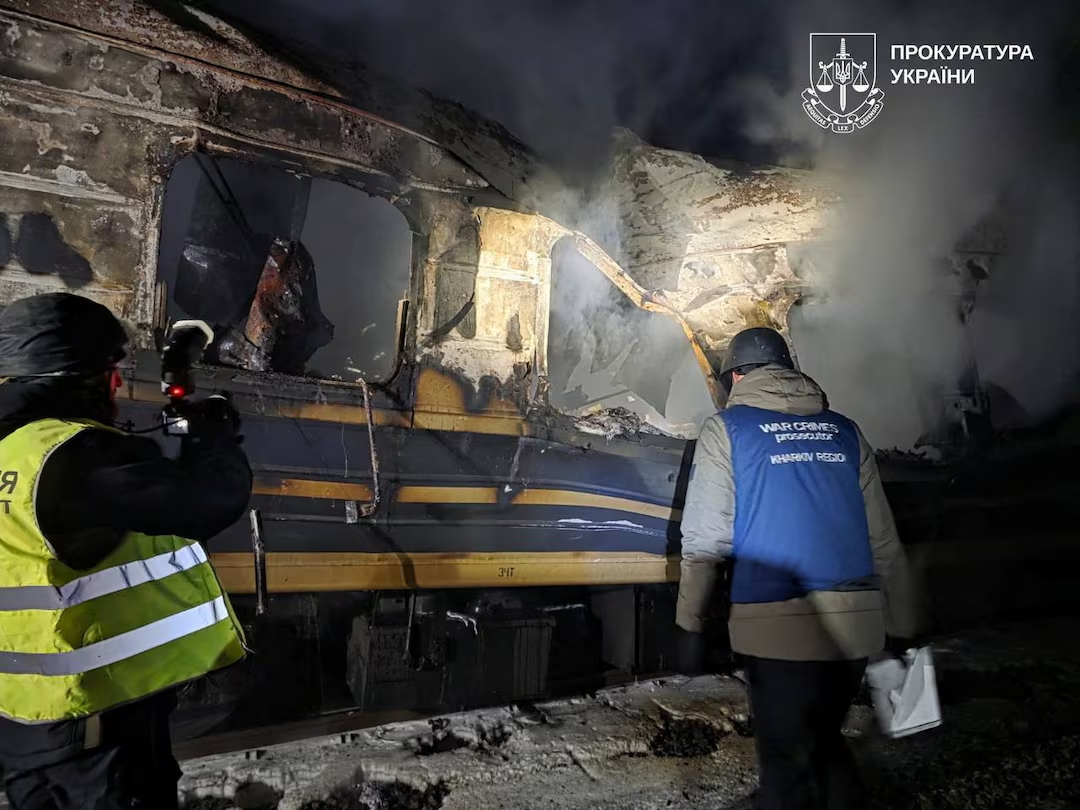
Ukrainian President Volodymyr Zelensky has denounced a Russian drone attack on a crowded passenger train in Kharkiv’s north-eastern region, calling it an act of “terrorism.” Local authorities reported that at least five people were killed and several others injured in the strike. Officials said more than 200 passengers were on the train when one carriage was hit by a drone, while two other drones exploded nearby on Tuesday. Zelensky noted that 18 people were inside the targeted carriage and stressed there was no “military justification” for attacking civilians. Russia has not commented on the incident but has escalated drone and missile attacks on Ukraine’s energy and transport infrastructure amid one of the harshest winters in years. In the southern port city of Odesa, dozens of drones struck overnight, killing three people and injuring many more. Energy facilities suffered significant damage, and city officials said attacks continued into Wednesday. In the Kyiv region, a couple were killed and their four-year-old child injured when a residential building near the capital was hit, according to police. Millions of Ukrainians have been left without heating, electricity, and water due to ongoing Russian strikes. Since launching a full-scale invasion in February 2022, Moscow now controls roughly 20% of Ukrainian territory. Zelensky, in a social media post on Tuesday, said: “In any country, a drone strike on a civilian train would be considered in exactly the same way—purely as terrorism.” Images and video released by Ukraine’s emergency services show at least one heavily damaged carriage still burning after the attack. Kharkiv’s regional prosecutor’s office said the train was struck near Yazykove village. The train had been traveling from the western border town of Chop to Barvinkove via Kharkiv, a route used by local residents and soldiers, along with their family members. In Odesa, authorities reported that Russia launched more than 50 drones overnight. After several floors of a residential building collapsed, three bodies were recovered, and multiple nearby buildings sustained damage. Russian aerial assaults continue despite the latest round of Ukraine-Russia peace talks, held last week in the United Arab Emirates with US mediators. While the discussions were described as constructive, major territorial disputes remain unresolved, and further meetings are planned for the weekend.

SOUTH-KOOREA.avif

3min4320
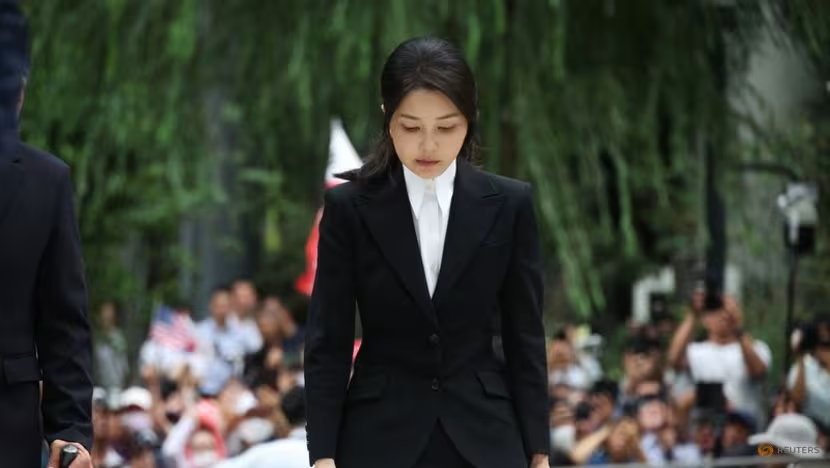
The wife of South Korea’s ousted former president has been sentenced to 20 months in prison for accepting bribes from the Unification Church. However, 52-year-old Kim Keon-hee was cleared of charges relating to stock price manipulation and receiving free opinion polls from a political broker ahead of the 2022 presidential election, which her husband, Yoon Suk Yeol, won. Yoon himself has been sentenced to five years in prison for abusing power and obstructing justice connected to his unsuccessful martial law attempt in 2024. This is the first time in South Korea’s history that a former presidential couple have been convicted simultaneously. On Wednesday, Judge Woo In-sung of the Seoul Central District Court said Kim “misused her position as a means of pursuing personal gain.” “The higher one’s position, the more consciously one must guard against such conduct… The defendant failed to reject solicitations and was preoccupied with self-adornment,” the judge added. A special counsel team investigating the case stated that Kim received 80 million won (approximately $56,000) in gifts—including a Graff diamond necklace and several Chanel handbags—from the Unification Church between April and July 2022, in exchange for political and business favors. The prosecution had requested a 15-year prison term and a fine of 2 billion won covering all three charges, but Kim was convicted of only one charge. The court noted she neither demanded nor solicited the bribes and had no significant criminal record. She was ordered to return 12.85 million won in cash, and the diamond necklace was also confiscated. Kim faces additional charges related to allegedly recruiting Unification Church followers to the conservative People Power Party and accepting gifts in return for government job appointments, which have yet to be heard in court. The former first lady denied all allegations, calling them “deeply unjust,” though she admitted to receiving the Chanel bags, which she claimed were later returned unused. She publicly apologized in August, stating, “I am truly sorry that a nobody like me has caused concern to the people.” Investigations into Kim’s ties to the Unification Church also led to the arrest of church leader Han Hak-ja. Beyond the criminal case, Kim has faced other controversies. Last year, Sookmyung Women’s University revoked an art education degree she earned in 1999 after an ethics panel determined she had plagiarized her master’s thesis.

trump-1.jpg

4min5770
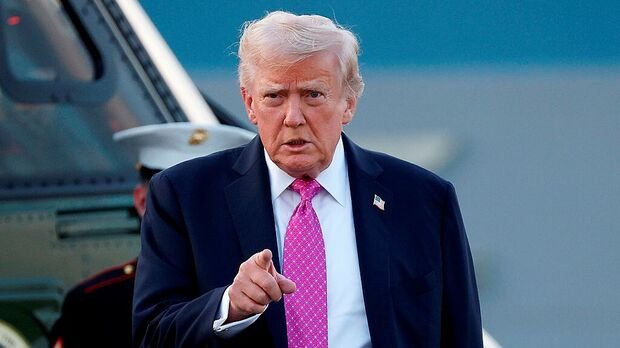
President Donald Trump said his administration plans to “de-escalate a little bit” in Minnesota following the second fatal shooting of a U.S. citizen by federal immigration officers in the state. “Bottom line, it was terrible. Both of them were terrible,” Trump said in a Fox News interview on Tuesday. In early January, Renee Good was fatally shot by an immigration officer. Over the past weekend, Alex Pretti, an intensive care nurse at a veterans’ hospital, was also killed during a stop by border agents. Pretti’s death sparked renewed protests locally and widespread public criticism, including from lawmakers across party lines. Trump’s comments indicate the administration is scaling back some of its operations in Minnesota. Speaking to reporters ahead of a rally in Iowa, he described Pretti’s death as “a very unfortunate incident.” When asked about reports labeling Pretti a “domestic terrorist,” Trump said, “I haven’t heard that,” while adding, “He shouldn’t have been carrying a gun.” Homeland Security Secretary Kristi Noem previously stated that Pretti “wasn’t there to peacefully protest” and accused him of “domestic terrorism,” claiming he was shot while brandishing a firearm. However, eyewitnesses and local officials have disputed that account, saying Pretti had a phone in his hand, not a weapon. Authorities also noted that the gun was legally registered and that Pretti was shot after the firearm was removed. A preliminary Customs and Border Protection report also appears to contradict the DHS account, stating only that two agents fired their weapons, without mentioning that Pretti reached for a firearm. Following the shooting, DHS removed the leader of the Minnesota mission, Border Patrol official Gregory Bovino, and deployed White House border tsar Tom Homan to oversee operations. Homan met with Minnesota Governor Tim Walz, Minneapolis Mayor Jacob Frey, and local law enforcement officials. Pretti’s death, coming two weeks after Renee Good was shot, reignited local anger and led to calls from state and city officials for the Trump administration to withdraw the 3,000 immigration agents stationed in the region. In the Fox News interview, Trump defended the Minnesota operation, saying it had removed “thousands of hardened criminals” and that crime numbers were improving. He added, “That’s all working out, we have Tom Homan there now,” before reiterating that the administration would “de-escalate.” White House aide Stephen Miller told CNN that DHS personnel deployed for Minnesota were instructed to focus on fugitive operations and maintain a buffer between arrest teams and protesters. Miller said the administration is reviewing why the Customs and Border Patrol team may not have fully followed the protocol. Several Republican leaders, including Vermont Governor Phil Scott and Senator Pete Ricketts of Nebraska, have called for an investigation into Pretti’s death. A federal judge has blocked DHS from destroying or altering evidence related to the incident. At his Iowa rally, Trump did not address Minnesota in detail but highlighted his broader immigration crackdown, citing a December Harvard Harris poll indicating that 80% of Americans support efforts to deport undocumented immigrants with criminal records.

Tech & Tools Desk28 January 2026
kanu-case.webp

4min6240
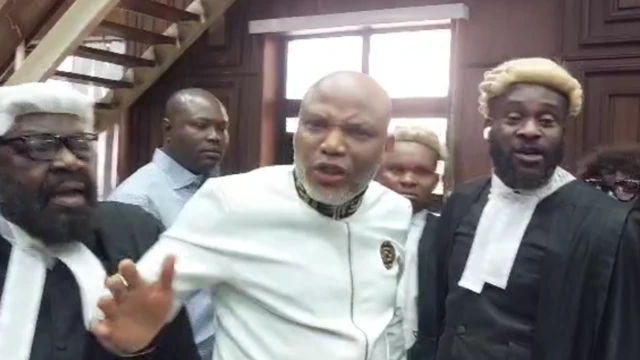
The Legal Aid Council on Tuesday formally withdrew from representing Nnamdi Kanu, leader of the Indigenous People of Biafra (IPOB), citing attempts by him to dictate the handling of his case. Following the withdrawal, the Federal High Court in Abuja struck out an ex parte motion filed by Kanu, in which he sought to be transferred from the Sokoto Correctional Centre to a facility closer to the Federal Capital Territory. Justice James Omotosho dismissed the application after Demdoo Asan, counsel from the Legal Aid Council, requested to withdraw from the case due to irreconcilable differences with Kanu. Speaking in court, Asan explained that repeated attempts to engage Kanu’s relatives in support of the motion had failed. “Since the last adjourned date, I have maintained constant phone communication with the applicant’s relatives. However, they did not come to our office to depose to the application, despite promises and calls,” he said. The lawyer further accused Kanu of attempting to control the proceedings, including dictating what counsel should say in court. “The applicant wants to direct the matter, even trying to write down what I would say. As an officer of the court, I cannot, in good conscience, accept that,” Demdoo added. After consulting with the Legal Aid Council leadership, a unanimous decision was made to withdraw, emphasizing that a client cannot control legal proceedings from detention. Kanu was convicted of terrorism-related offences on November 20, 2025, and sentenced to life imprisonment—a judgment his family has vowed to appeal. Following the conviction, he was moved to the Sokoto Correctional Centre after the court deemed the Kuje Custodial Centre in Abuja unsuitable. On December 8, 2025, Kanu filed a motion seeking transfer to a facility closer to Abuja, suggesting either the Suleja Correctional Centre in Niger State or a centre in Keffi, Nasarawa State. In his ruling, Justice Omotosho commended the Legal Aid Council for upholding the integrity of the court and granted the withdrawal. “Having listened to counsel from the Legal Aid Council, I will grant leave for them to withdraw from representing the defendant convict,” the judge said. On the transfer request, the judge ruled the motion incompetent and struck it out. “The motion itself was incompetent. In the interest of justice, the court directed that other parties be served with notice, but from December 8, 2025, until today, there is no proof of service before the court,” he added. Earlier in the trial, Kanu had dismissed his legal team led by former Attorney General Kanu Agabi (SAN) and opted to represent himself. During proceedings, he frequently clashed with the judge, challenging the court’s jurisdiction and at times being removed from the courtroom. He was noted to have shouted at the judge, “You don’t know the law,” while holding his case files. The judge repeatedly urged him to engage qualified legal counsel, stressing, “This is not economics; this is criminal prosecution. Consult experts properly. Criminal cases are not like other cases.”

Ifunanya Okafor28 January 2026
Tax-illustration-1.webp

7min5070
From January 1, 2026, Nigeria’s new tax laws will take effect, offering a wide range of exemptions and reliefs aimed at easing the burden on low-income earners, average taxpayers, and small businesses. These measures are designed to improve welfare and promote the growth of small-scale enterprises. Personal Income Tax (PAYE) Individuals earning the national minimum wage or less are fully exempt. Annual gross income up to ₦1,200,000 (approx. ₦800,000 taxable) is exempt. Reduced PAYE for earners with annual gross income up to ₦20 million. Gifts are tax-exempt. Allowable Deductions & Reliefs for Individuals Pension contributions to PFA National Health Insurance Scheme contributions National Housing Fund contributions Interest on loans for owner-occupied housing Life insurance or annuity premiums Rent relief: 20% of annual rent (up to ₦500,000) Pensions & Gratuities – Exempt Pension funds and assets under the Pension Reform Act (PRA) Retirement benefits, gratuities, or compensation under the PRA Compensation for loss of employment up to ₦50 million Capital Gains Tax (CGT) – Exempt Sale of owner-occupied homes Personal effects worth up to ₦5 million Sale of up to two private vehicles per year Gains on shares below ₦150 million or gains up to ₦10 million Gains above the exemption threshold if reinvested Pension funds, charities, and religious institutions (non-commercial) Companies Income Tax (CIT) – Exemptions & Reliefs Small companies (turnover ≤ ₦100 million; fixed assets ≤ ₦250 million) pay 0% tax Eligible startups exempt 50% additional deduction for salary increases, wage awards, or transport subsidies for low-income employees 50% deduction for new employees retained for at least three years Five-year tax holiday for agricultural businesses (crop production, livestock, dairy, etc.) Gains from investment in eligible startups by venture capital, private equity, or incubators Development Levy – Exempt Small companies are exempt from the 4% levy Withholding Tax – Exempt Small businesses, manufacturers, and agricultural firms exempt from withholding tax on income Small companies exempt from deductions on supplier payments Value Added Tax (VAT) – 0% or Exempt Basic food items, education services/materials, health and medical services, pharmaceuticals Rent Small companies (turnover ≤ ₦100 million) exempt from charging VAT Diesel, petrol, solar power equipment – VAT suspended or exempt Refunds on VAT for assets or overheads used to produce VATable or 0% VAT goods/services Agricultural inputs: fertilizers, seeds, seedlings, feeds, live animals Equipment for agricultural use Disability aids: hearing aids, wheelchairs, braille materials Shared passenger road transport (non-charter) Electric vehicles and parts Humanitarian supplies Baby products Sanitary products Land and building Stamp Duties – Exempt Electronic transfers below ₦10,000 Salary payments Intra-bank transfers Transfers of government securities or shares All documents, stocks, and share-related transactions

Benin-Asaba-road-1280x731.webp

2min6210
The Benin–Asaba Highway Rehabilitation Project is a major infrastructure initiative designed to enhance road connectivity between Edo and Delta states and improve links to other parts of the country. The project was formally inaugurated by President Bola Tinubu in March 2025. The highway spans approximately 125 kilometres, beginning at the Onitsha Head Bridge and running through key locations including Asaba—covering deteriorated sections such as Ezenei Junction—Alifekede in Ika South Local Government Area at the Delta–Edo boundary, and terminating in Benin. The project is estimated to cost about ₦200 billion and is being financed through a concession arrangement awarded to the Benin–Asaba Expressway Concession Company Limited, led by the Africa Plus Partners (Nigeria) Limited Consortium, which is also serving as the project contractor. Construction is scheduled to last 30 months, commencing in March 2025 and expected to be completed by September 2027. Upon completion, the road will feature a 10-lane dual carriageway—five lanes on each side—stretching from King Square to the Benin Bypass, a design intended to significantly improve traffic flow, safety and travel efficiency along the corridor.

Lagos-State-Governor-Babajide-Sanwo-Olu-e1649172355892.jpg

8min4530
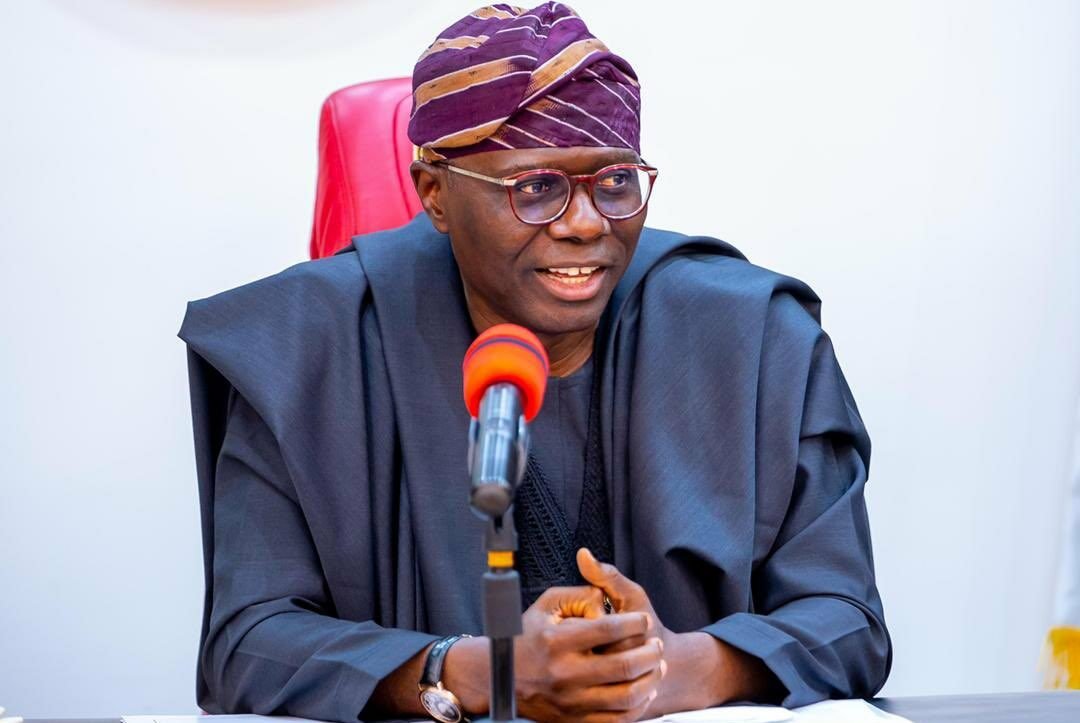
Lagos State Governor Babajide Sanwo-Olu, alongside Chief Wole Olanipekun (SAN) and Prof. Abiola Sanni (SAN), has attributed public resistance to the implementation of Nigeria’s new tax laws to a deep-seated trust deficit between government and citizens, as well as concerns over transparency, accountability, and fiscal centralisation. The views were expressed on Tuesday at the 2026 Lagos State Professorial Chair in Tax and Fiscal Matters Public Lecture held at the University of Lagos, Akoka. The event brought together policymakers, legal practitioners and academics to deliberate on the theme, “Navigating Nigeria’s Tax Reform: Implications for Fiscal Federalism and State Autonomy.” Despite calls in some quarters for a delay, President Bola Tinubu has fixed January 1, 2026, for the commencement of the new tax regime, which includes the Nigeria Tax Act 2025, Nigeria Tax Administration Act 2025, Nigeria Revenue Service (Establishment) Act 2025, and the Joint Revenue Board (Establishment) Act 2025. Governor Sanwo-Olu, speaking at the event, noted that while the tax reforms were necessary to reposition the nation’s economy, their effectiveness would largely depend on restoring public confidence and addressing fears surrounding the management and utilisation of tax revenues. He stressed that without transparency and visible public benefit, compliance would remain low regardless of how technically sound the reforms appeared. According to him, successful implementation would require strong collaboration among federal, state and local governments, as well as investment in technology, public education on tax obligations and rights, and openness that allows citizens to see the tangible impact of the taxes they pay. He emphasised that an effective tax system must be simple, fair and inclusive, ensuring that everyone—ranging from large corporations to individual entrepreneurs—contributes their fair share. Represented by the Chairman of the Lagos Inland Revenue Service, Mr Subair Ayodele, the governor said Nigeria had reached a critical economic crossroads after decades of reliance on oil revenue and borrowing, making comprehensive tax reform inevitable. He observed that Nigeria’s existing tax system had long been complex, narrow and poorly understood, leading to low compliance and overburdening those already within the tax net. This, he said, had constrained government revenue and limited investment in development. Sanwo-Olu explained that the new tax laws were designed to modernise and simplify the tax framework, eliminate redundant levies, and broaden the tax base to capture digital economy activities and emerging income streams. He stressed that taxation should be seen not as punishment but as a partnership between government and citizens. He added that Lagos State was supporting the reforms by strengthening tax administration, deploying digital tools, expanding its internally generated revenue base and committing to the prudent and transparent use of public funds. Chairing the event, the Pro-Chancellor and Chairman of the Governing Council of UNILAG, Chief Wole Olanipekun (SAN), warned that the tax reforms would struggle to gain public acceptance if they were perceived as opaque, unfair or overly centralised. He noted that history had shown that resistance often followed fiscal policies that lacked legitimacy and fairness, citing the 1929 Aba Women’s protest as an example of public backlash against insensitive taxation. Olanipekun described taxation as central to governance, arguing that no nation could resolve insecurity, rebuild infrastructure or restore public confidence without a stable, fair and credible tax system. He warned that allegations of post-legislative alterations to the tax laws, expanded enforcement powers for the Nigeria Revenue Service, and fears of weakened state fiscal authority had intensified public anxiety. He cautioned that efficiency must not override consent, questioning whether concentrating fiscal authority at the centre without recalibrating state autonomy could strengthen Nigeria’s federal structure. He called for citizen-focused governance that ensures every naira collected translates into visible improvements in quality of life. Delivering the public lecture, the Dean of the Faculty of Law, UNILAG, Prof. Abiola Sanni (SAN), said the main challenge facing the tax reforms was not their legality but their credibility. He noted that the disconnect between government and citizens had fuelled fears that tax proceeds might not result in tangible public benefits, particularly at the grassroots level. Sanni argued that the reforms were heavily focused on federal taxation and called for state-led tax reforms to address multiple taxation and inefficiencies. He pointed out that states currently lacked sufficient authority over key taxes such as personal income tax, stamp duties and capital gains tax, creating a mismatch between responsibility and control. He also warned that informal taxation by non-state actors in markets and motor parks would persist unless accountability and trust improved. According to him, state-level tax reform was both constitutionally and economically necessary, adding that reforms should prioritise efficient property taxation, estate tax frameworks and a review of consumption taxes. Sanni criticised the practice of government paying value-added tax on its own contracts, describing it as inefficient and potentially provocative. He further cautioned that provisions allowing deductions from states’ allocations in cases of tax default could trigger conflict if not carefully managed. While raising concerns, Sanni defended the timing of the reforms, noting that the laws largely protected low-income earners and small businesses. He argued that resistance was mainly coming from higher-income groups, though he acknowledged that charges such as stamp duties on electronic transfers still affected ordinary citizens and required further review. On education funding, the Lagos State Commissioner for Tertiary Education, Mr Tolani Sule, expressed optimism that the reforms would boost revenue and improve funding for the sector if properly implemented. He said increased revenue, combined with fiscal discipline, would enhance infrastructure, staffing and learning outcomes in tertiary institutions. The event, hosted by the Vice-Chancellor of UNILAG, Prof. Folasade Ogunsola, concluded with calls for stronger collaboration among the National Assembly, the Federal Ministry of Finance, the Nigeria Revenue Service and state revenue agencies. Participants agreed that transparency, accountability and visible public value must be prioritised, warning that distrust and fear would remain the greatest obstacles to the success of Nigeria’s tax reform agenda. Plaques were also presented to Sanwo-Olu, Olanipekun and Prof. Sanni at the event.


house-of-rep.png

4min3830
The Federal Government has announced plans to enhance security in schools located within border and riverine communities through the Safe Schools Transition Plan for 2026–2030, a nationwide initiative aimed at ensuring safer learning environments. The newly approved strategy is designed to strengthen cooperation among security agencies, state governments, and host communities, while also expanding psychosocial support services and improving emergency preparedness for students and educators. According to officials familiar with the programme, the transition plan will place special emphasis on vulnerable areas, particularly border and riverine regions, to ensure the deployment of security infrastructure and the delivery of targeted training. One senior official involved in the initiative explained that the focus of the 2026–2030 plan would be on extending security training and capacity-building to high-risk communities, adding that the objective is to fully integrate local areas into the national security framework. Another official noted that the plan also seeks to improve the overall security resilience of host communities. The Safe Schools Project was established in 2014 following the abduction of schoolgirls in Chibok, Borno State. The initiative was introduced under the leadership of the UN Special Envoy for Global Education, Gordon Brown, in collaboration with the Nigerian Global Business Coalition for Education and private-sector partners. It is coordinated in conjunction with the Office of the National Security Adviser and aims to provide a secure and supportive environment for teaching and learning. In December 2022, the Federal Government launched the National Plan on Financing Safe Schools for 2023–2026, with an estimated investment of ₦144.8 billion. Key measures under the plan included the formation of the School Protection Squad, the nationwide deployment of command and control officers, and the establishment of the National Safe School Response Coordination Centre to enable rapid response to security threats. Safe Schools Coordinators and Desk Officers were also appointed across all 36 states and the 774 local government areas. Despite these interventions, school security challenges persist. In December 2025, the Senate initiated an investigation into the Safe Schools Project, citing continued exposure of schools to attacks, mass abductions, and violent incidents. Figures from the National Safe Schools Response and Coordination Centre indicate a significant increase in school enrolment under the programme, rising from 11,550 registered schools in November 2025 to 14,685 by December. This increase followed several high-profile attacks, including the November 17, 2025 assault on Government Girls Comprehensive Secondary School in Maga, Kebbi State, where 24 students were abducted and the vice-principal was killed, as well as the attack on St. Mary’s Catholic School in Papiri, Niger State, four days later, during which 303 students and 12 teachers were abducted. Officials have noted that many states are yet to fully implement the Safe Schools Project, underscoring the need for sustained commitment and coordinated action to safeguard students and educators across the country.

Tech & Tools Desk28 January 2026
BANDICT-3.webp

5min5470
Ten days after armed assailants abducted worshippers from Kurmin Wali village in Kajuru Local Government Area of Kaduna State, at least 166 victims are still being held captive, heightening fear and distress among families, religious groups, and community leaders. The abduction occurred when bandits invaded three churches during worship services, firing shots indiscriminately, injuring several individuals, and forcing dozens of residents into the surrounding forest. Reacting to the incident, the Arewa Consultative Forum (ACF) expressed deep concern over the prolonged detention of the worshippers and called on security agencies to intensify efforts toward securing their immediate release. The ACF’s National Publicity Secretary, Prof. Tukur Muhammad-Baba, described the incident as a troubling reflection of Nigeria’s worsening security situation and warned of its broader implications for national stability. He said the group was profoundly saddened by the development, stressing that it underscored the urgent need for more decisive action against insecurity. Muhammad-Baba emphasized that rescuing the abducted worshippers should be treated as an absolute priority, noting that the victims were likely enduring severe hardship in captivity. He described the continued detention as unacceptable and raised serious humanitarian concerns, warning that authorities must not underestimate the scale of the security challenges confronting the country. He further called for uncompromising action against criminal and terrorist groups, insisting that those responsible must be decisively neutralized. While expressing confidence in the capabilities of the security forces, he stressed the need for adequate support, empowerment, and accountability, alongside stronger collaboration with local communities. “This is a national emergency that must be addressed without delay or compromise,” he said. The Northern chapter of the Christian Association of Nigeria (CAN) also reacted, with its chairman, Rev. Joseph Hayab, urging families of the abducted worshippers to remain calm and hopeful while assuring them that efforts were ongoing to secure their release. Hayab acknowledged that the period had been emotionally draining for families, especially amid initial denials and conflicting accounts of the incident. He noted that assurances were later received from the government that all necessary steps would be taken to rescue the victims. According to him, after reporting the incident to security agencies and committing the situation to prayer, discreet and strategic measures were now being pursued to ensure the safe return of those abducted. He added that behind-the-scenes engagements were ongoing and called for collective support to hasten a positive outcome. Meanwhile, the Senator representing Kaduna Central Senatorial District, Lawal Adamu Usman, visited injured victims receiving treatment at Barau Dikko Teaching Hospital in Kaduna, where he described the attack as reprehensible and unacceptable. The senator sympathised with the injured worshippers and assured them and their families that efforts were being made to ensure the safe return of their abducted loved ones. He disclosed that he was in constant contact with security agencies and other stakeholders, adding that the National Assembly would explore all legitimate avenues to support the rescue operation. Usman reaffirmed lawmakers’ commitment to strengthening security through legislative action and advocacy, particularly in vulnerable communities across Kaduna State. Following his hospital visit, the senator proceeded to Kurmin Wali community to meet with relatives of the abducted worshippers, encouraging them to remain hopeful and cooperate with security agencies by providing credible information. He also paid a courtesy visit to the traditional ruler of Agom Kufana Chiefdom, Chief Titus Dauda, who thanked him for the visit and appealed to both federal and state governments to increase security presence in Kajuru and surrounding areas. The monarch stressed the importance of sustained patrols and proactive intelligence gathering to restore public confidence, assuring continued community cooperation with security agencies while praying for the safe and speedy return of all abducted worshippers.

Ifunanya Okafor28 January 2026
Tinubu-Restricts-UNGA-Attendance-to-Authorised-Officials-1-1024x576-1.jpg

3min5740
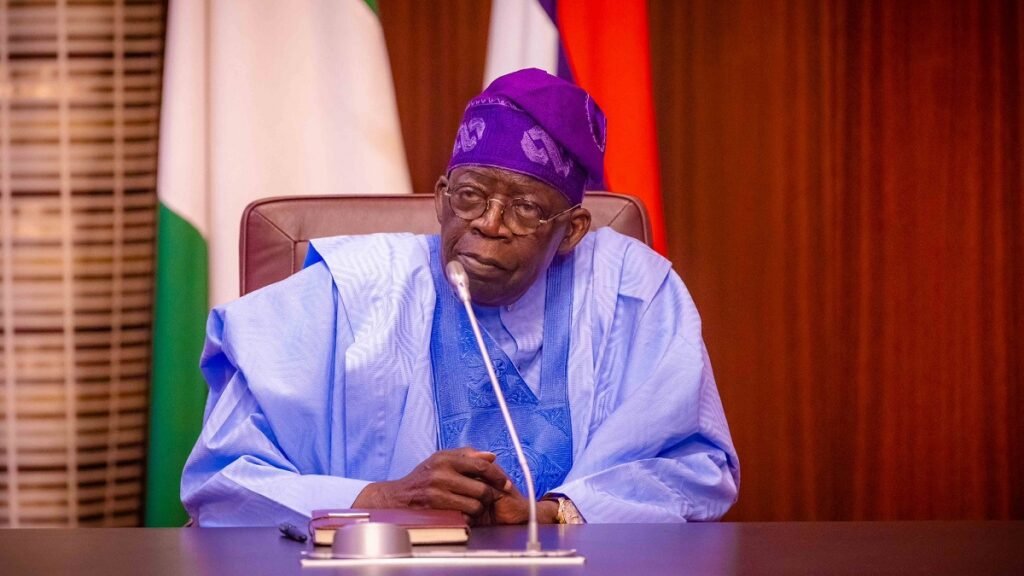
The Senate has received 24 health sector bills transmitted by President Bola Tinubu for legislative consideration, in accordance with Section 58(2) of the Constitution of the Federal Republic of Nigeria. The proposed legislations were conveyed in a letter to the Senate and formally read during plenary by the Senate President, Senator Godswill Akpabio. President Tinubu stated that the bills emerged from a comprehensive review of existing health sector laws conducted by the Attorney-General of the Federation and Minister of Justice, in collaboration with the Minister of Health and Social Welfare. The review was subsequently approved by the Federal Executive Council. According to the President, the proposed amendments are designed to streamline governance structures within health institutions by reducing excessively large board memberships, with the aim of enhancing efficiency, effectiveness, and overall service delivery across the sector. He explained that the bills cover a broad range of health institutions and regulatory bodies, including tertiary and teaching hospitals, specialty hospitals, professional councils, and regulatory agencies. The amendment bills relate to institutions such as the National Hospital for Women and Children, Federal Medical Centres, National Specialty Hospitals Management Board, Orthopaedic Hospitals Management Board, National Eye Centre, National Ear Care Centre, Nursing and Midwifery Council of Nigeria, Medical Laboratory Science Council of Nigeria, the National Agency for Food and Drug Administration and Control (NAFDAC), and the National Blood Service Agency, among others. The President also highlighted additional legislative proposals, including the Records Officers Registration and Digital Health Bill 2025 and the Federal College of Complementary and Alternative Medicine Bill 2025. Tinubu expressed confidence that the Senate would give the bills thorough and judicious consideration in the interest of strengthening Nigeria’s health sector. Following their presentation at plenary, the Senate President referred all 24 bills to the Senate Committee on Rules and Business for further legislative action.