
Category: Refined Living

James Obasi22 January 2026
ddrrug.webp

3min7130
Mexican authorities have extradited 37 inmates allegedly linked to major drug cartels to the United States to face trial, following President Trump’s earlier suggestions of potential US land strikes against organised criminal gangs in Mexico. This marks the third round of extraditions from Mexico to the US in the past year, amid accusations that President Claudia Sheinbaum’s government is appeasing Washington. Mexico’s Secretary of Security, Omar García Harfuch, said on X that the transferred detainees posed a “threat to the country’s security.” The US Justice Department welcomed the move, describing it as part of a broader strategy to dismantle the cartels. “These 37 cartel members will now face justice on American soil for their crimes against the US,” said Attorney General Pam Bondi. García Harfuch confirmed that US prosecutors agreed not to seek the death penalty and that the detainees were transported under “National Security Law and bilateral cooperation mechanisms, with full respect for Mexico’s sovereignty.” The inmates were flown on seven armed Mexican aircraft to Washington, New York, Houston, Pennsylvania, San Diego, and San Antonio. Mexico previously extradited 26 key cartel operatives last August and a similar group in February, bringing the total sent to the US under Trump’s second administration to 92. President Sheinbaum’s administration has been pursuing a strong crackdown on drug trafficking and cited a 50% drop in fentanyl seizures at the US southern border in its defence. Earlier in January, Trump stated that after targeting drug trafficking by sea, “we are going to start now hitting land,” adding that “the cartels are running Mexico.” Last week, Sheinbaum reiterated that US troop deployment on the southern border was “not on the table.” Since the removal of former Venezuelan President Nicolás Maduro from Caracas, Trump has issued threats against other regional countries, including Mexico, Cuba, and Colombia.

united-kingdom.webp

4min8270
Foreign Secretary Yvette Cooper has announced that the UK will not immediately sign onto US President Donald Trump’s proposed Board of Peace, citing concerns about Russian President Vladimir Putin’s potential participation. Speaking to the BBC from Davos, Cooper said the UK had received an invitation to join the board but “won’t be one of the signatories today” during the planned ceremony at the World Economic Forum. She described the initiative as “a legal treaty that raises much broader issues” than its initial focus on ending the Israel-Hamas conflict in Gaza. The board’s founding charter, proposed by the White House, does not mention Gaza specifically and appears designed to take on functions that overlap with the United Nations. Countries such as Saudi Arabia, Turkey, Egypt, and Israel have already agreed to participate. President Trump claimed at Davos that Putin had accepted an invitation, though the Russian leader has not confirmed this and previously stated that Russia was still reviewing the proposal. Cooper said the UK supports Trump’s 20-point plan to end the Gaza conflict and intends to engage in “phase two” of the peace process. However, she stressed that London will hold off signing the charter due to its broader implications and concerns over Putin’s involvement in a peace initiative while Russia continues its war in Ukraine. She added: “Putin has shown no willingness to come and make that agreement, and that’s where the pressure needs to be now. But we will continue international discussions, including with our allies.” The announcement comes as US-UK relations face tensions following Trump’s previous threats to impose tariffs on European nations over Greenland. Trump has since stepped back, exploring a potential deal with NATO on the island and dropping plans for tariffs and military action. Cooper welcomed this apparent de-escalation, noting that the UK and European partners had presented “positive, constructive proposals” on Arctic security. The Board of Peace, originally unveiled as part of a plan to rebuild Gaza, has a founding charter that extends beyond the territory, outlining an international organisation tasked with promoting stability, governance, and peace in conflict-affected areas. The charter will come into force once three states formally agree, with renewable three-year terms and permanent seats available to those contributing $1 billion. Trump is listed as chairman and US representative, with authority to appoint executive board members and create subsidiary bodies. The White House has already named seven founding Executive Board members, including US Secretary of State Marco Rubio, Middle East envoy Steve Witkoff, Trump’s son-in-law Jared Kushner, and former UK Prime Minister Tony Blair. Additional countries joining include Pakistan, Turkey, Egypt, Saudi Arabia, and Qatar, while the Vatican has reportedly received an invitation.

trump-1.jpg

5min5450
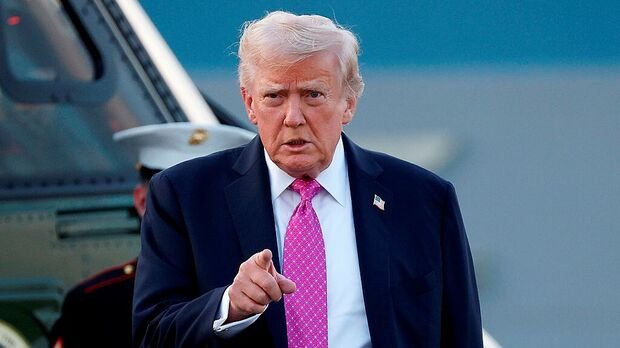
President Donald Trump said the United States is exploring a potential agreement regarding Greenland following discussions with NATO, as he backed away from threatened tariffs on European allies that opposed his plans to acquire the island. On social media, Trump offered limited details about the talks, which both he and NATO described as “very productive.” After weeks of tense rhetoric, the US president said the meeting had produced the “framework” of a potential deal. However, there was no indication of any arrangement granting the US ownership of Greenland, a goal Trump reiterated at the World Economic Forum in Switzerland while ruling out military action. On Truth Social on Wednesday, he stated: “We have formed the framework of a future deal with respect to Greenland and, in fact, the entire Arctic Region. This solution, if consummated, will be a great one for the United States of America, and all NATO nations.” Diplomatic sources told CBS that no agreement had been reached for US control over the autonomous Danish territory. Trump said Secretary of State Marco Rubio and Special Envoy Steve Witkoff would “report directly” to him as negotiations continue. Danish Foreign Minister Lars Løkke Rasmussen welcomed the talks, saying: “The day is ending on a better note than it began. Now, let’s sit down and find out how we can address American security concerns in the Arctic while respecting Denmark’s red lines.” Following his meeting with NATO Secretary-General Mark Rutte in Switzerland, Trump indicated the possible deal could involve mineral rights, while European allies might participate in his proposed Golden Dome defense system to protect the US from long-range missile threats. Greenland’s strategic location and untapped rare earth mineral reserves—critical for technologies such as mobile phones and electric vehicles—remain central to US interest. Trump described the arrangement as a “long-term deal” beneficial for security and mineral resources. NATO Secretary-General Rutte said Danish sovereignty over Greenland was not discussed in his talks with Trump. Meanwhile, Trump had previously dismissed leasing Greenland, saying, “You defend ownership. You don’t defend leases.” NATO spokeswoman Allison Hart added that negotiations involving Denmark, Greenland, and the US aim to prevent Russia and China from gaining economic or military footholds on the island. Some Greenlandic lawmakers, however, questioned NATO’s role in discussions over the island’s mineral wealth. Aaja Chenmitz said: “NATO has no right to negotiate anything without Greenland. Nothing about us without us.” Reports suggested the plan could allow the US to expand its military presence on Greenland, similar to the British sovereign bases in Cyprus, though Danish Prime Minister Mette Frederiksen stated that Denmark cannot negotiate away its sovereignty. Currently, the US already maintains more than 100 military personnel at Pituffik base in northwest Greenland. Trump had threatened tariffs of 10% starting February 1 on goods from several European NATO members, increasing to 25% from June, until a Greenland deal was reached—but he abandoned the trade war threat after meeting Rutte. In Davos, Trump reiterated that the US is seeking negotiations to acquire Greenland but emphasized that it would not be taken by force. “We probably won’t get anything unless I decide to use excessive force. We’d be unstoppable, but we won’t do that. I don’t want to use force,” he said. Trump also challenged world leaders to approve US control of Greenland voluntarily, saying: “You can say yes and we will be very appreciative. Or you can say no and we will remember.” French President Emmanuel Macron criticized Trump’s prior threat of tariffs, calling an “endless accumulation of new tariffs” unacceptable, while Trump responded by accusing France and Canadian Prime Minister Mark Carney of being ungrateful to the US.

tinubu-1280x631.jpg

4min10830
Major opposition parties have criticised President Bola Tinubu for awarding billionaire businessman and longtime associate Gilbert Chagoury the Grand Commander of the Order of the Niger (GCON), describing the move as an example of cronyism and a decline in national values. The criticism came amid concerns over the timing, optics, and justification for conferring Nigeria’s second-highest national honour on Chagoury. Ladipo Johnson, National Publicity Secretary of the New Nigeria People’s Party, said the decision reflects what he sees as Tinubu’s governing style, noting the President often ignores public opinion. He stated, “There is no need to be surprised. For the past two years, Tinubu has spent much of his time abroad. The Chagourys received contracts for the Lagos-Calabar Coastal Highway and also built Eko Atlantic. The President will act as he pleases, regardless of public opinion. His priorities have been clear—he was absent on Nigerian Armed Forces Day and Remembrance Day.” Mallam Bolaji Abdullahi, National Publicity Secretary of the African Democratic Congress, said while the President has the legal power to confer national honours, the award highlights the politicisation of the system. “National honours should reflect genuine service to the country, but this decision reduces them to personal favours,” he said. “It is unprecedented to see the second-highest national honour given to a business associate of the President.” Senator Nenadi Usman, acting National Chairman of the Labour Party, also questioned whether Chagoury’s contributions merit such a prestigious award. Speaking through her Special Adviser, Ken Asogwa, she said: “Receiving the second-highest national honour should be based on clear contributions to the nation. People like Aliko Dangote and Mike Adenuga earned theirs through job creation and significant impact. Awarding a close ally or business partner simply because of friendship is the highest form of cronyism.” President Tinubu recently conferred the GCON on Chagoury in recognition of his contributions to national development. In a letter dated January 8, the President cited Chagoury’s services to the country and conferred the honour under the powers granted by the National Honours Act. The award received public praise from billionaire Femi Otedola, who described it as well deserved, highlighting Chagoury’s role in major real estate and infrastructure projects, including Banana Island and Eko Atlantic, and their impact on job creation and urban development. Chagoury, a Lebanese-Nigerian born in Lagos, co-founded the Chagoury Group in 1971. The conglomerate has interests in construction, real estate, manufacturing, insurance, hospitality, telecommunications, IT, catering, and international financing. The award comes amid controversy surrounding the $11 billion Lagos-Calabar Coastal Highway project awarded to Chagoury’s company, Hitech, in 2024, which drew scrutiny due to the lack of a public bidding process and Tinubu’s long-standing ties with the businessman.

Tech & Tools Desk22 January 2026
abia-govt.jpg

2min4710
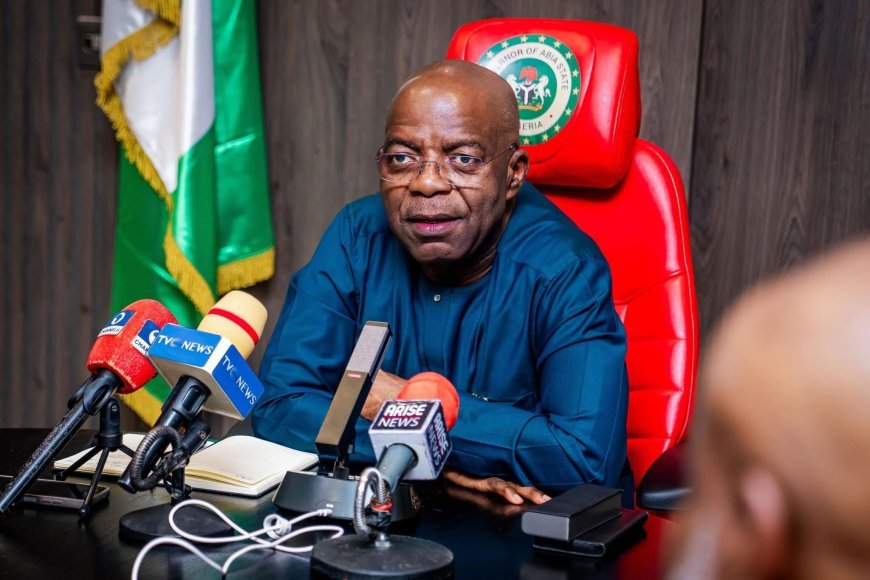
Ikwuano stakeholders in Abia State on Wednesday voiced strong approval of Governor Alex Otti’s administration, declaring that opposition efforts to unseat him in the 2027 governorship election would fail. The meeting was called in response to statements from three immediate past governors—Orji Uzor Kalu, Theodore Ahamefule Orji, and Okezie Ikpeazu—who had reportedly endorsed a campaign against Otti. Key attendees included Adolphus Okebugwu, Friday Eluwa, Okezie Chukwuemeka, Emetu Chikezie, Mercy Alamba, Innocent Elogu, Iroabuchi Chukwuemeka, and Christopher Elogu. Speaking at the gathering, Ikwuano LGA Mayor Anthony Nwaubani praised the state’s transformation under Otti, criticizing the opposition for failing to present viable alternatives. “There is no vacancy in Government House in 2027. We must defeat the opposition,” Nwaubani said. “Criticism should be factual, but when it distorts reality, it becomes a disservice to the public. The strides in infrastructure and other sectors under Otti are visible to all.” He added, “If you want to appreciate light, you must first experience darkness. Abia people know what it was like before Otti—businesses left, infrastructure decayed, and many considered relocating. Today, we see a state transformed. Abians who had moved away are returning, proud to identify with their state.” Deputy Mayor Lucky Awuwa led a motion in which stakeholders passed a vote of confidence in Otti’s second-term bid. “We are not influenced; Otti is a man of vision, determined and effective. Ikwuano will stand firmly behind him,” Awuwa said, urging residents to secure their Permanent Voters’ Cards ahead of the election.

James Obasi22 January 2026
Lagos-State-Governor-Babajide-Sanwo-Olu-e1649172355892.jpg

5min5980
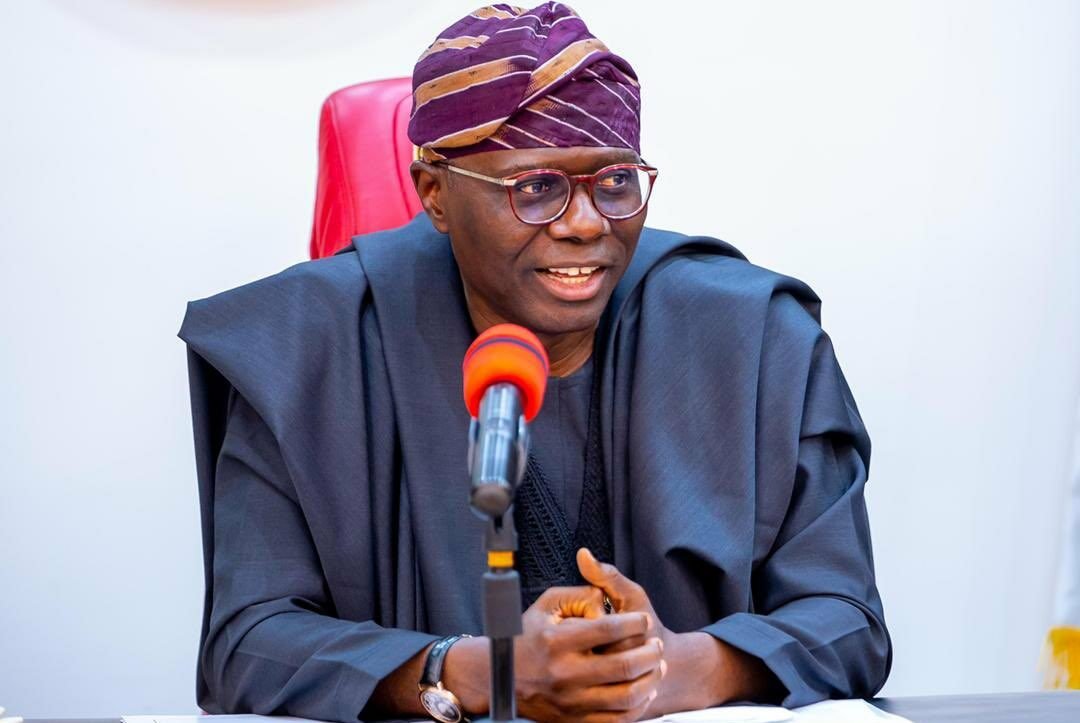
The African Union and the International Executive Committee of the All Africa Music Awards (AFRIMA) have commended Lagos State Governor Babajide Sanwo-Olu, sponsors, partners, and media organisations for their roles in the successful hosting of the 9th AFRIMA awards. Held in Lagos from January 7 to 11, the event brought together artistes, delegates, and stakeholders from over 48 African countries. In a statement on Wednesday, Angela Martins, Head of Culture at the African Union Commission, highlighted the awards’ success as a reflection of African music’s growing influence and the effective collaboration between public and private institutions. “AFRIMA continues to showcase Africa’s musical and cultural excellence to the world. The support from Lagos State Government, sponsors, partners, and media ensured a seamless and memorable celebration of African music,” Martins said. “The awards have evolved beyond a ceremony to become a platform for African unity and cultural expression. Through music, we tell Africa’s stories in our own voice, demonstrating our creativity. Each edition strengthens bonds among African countries and highlights culture as a key tool for integration and development.” She also praised Lagos for its capability to host major international events, describing the state as a hub for Africa’s creative economy. AFRIMA President and Executive Producer Mike Dada also expressed gratitude to the Lagos State Government, partners, and sponsors. “We sincerely thank all our partners and sponsors who supported AFRIMA’s vision throughout the planning and execution of the 9th edition,” Dada said. “Their backing reflects a shared belief in African music as a driver of unity, cultural pride, and economic growth. Special thanks go to Governor Babajide Sanwo-Olu and the Lagos State Government for their strong support, cooperation, and enabling environment. From logistics to security and hospitality, Lagos once again proved to be a welcoming home for Africa’s creative industry.” The five-day event began with a Welcome Soiree on January 7 at the residence of the Deputy British High Commissioner, followed by the Africa Music Business Summit at the Eko Convention Centre, Eko Hotels and Suites, which brought together music professionals to discuss the future of African music. On January 9, the AFRIMA Music Village at Ikeja City Mall hosted performances by over 25 top artists for more than 30,000 fans. The grand finale took place at the Eko Convention Centre, where artistes, producers, and directors received the 23.9-carat gold-plated AFRIMA trophy. Key sponsors and partners included First Bank of Nigeria, Lagos State Internal Revenue Service, The Address Homes, Guinness Nigeria, Utilita, and Gobet247, with cultural exchange support from the UK in Nigeria (British High Commission) and the Embassy of Sweden. Additional partners included Glenfiddich, Jägermeister, Super Travels Limited, Pan-Atlantic Travels, Wakanow, Dorf Travels & Tours, Vaniti Lagos, Lagos State Signage and Advertisement Agency, and Mainland Block Party Lagos. AFRIMA also acknowledged its Official Media Partners, including DSTV/Multichoice, Television Continental, African Union of Broadcasters, Silverbrid Group, Kennis FM, Afro Music Pop, Hip TV, Base FM, Beat FM, Classic FM, Hot FM, Lagos Talks Inspiration FM, Lasgidi FM, Legit.ng, Max FM, Nigeria Info, Nigezie, The Culture Newspapers (TCN), QED, and Yanga FM. Out-of-home visibility was supported by Motomedia, Yartview Ltd, Optimus Exposure, Plural Media, Folham Nigeria Limited, and Nimbus Media. Dada noted that the strong support from sponsors and media partners demonstrates growing confidence in AFRIMA and the African music industry.

obaseenjo.jpeg

3min4950
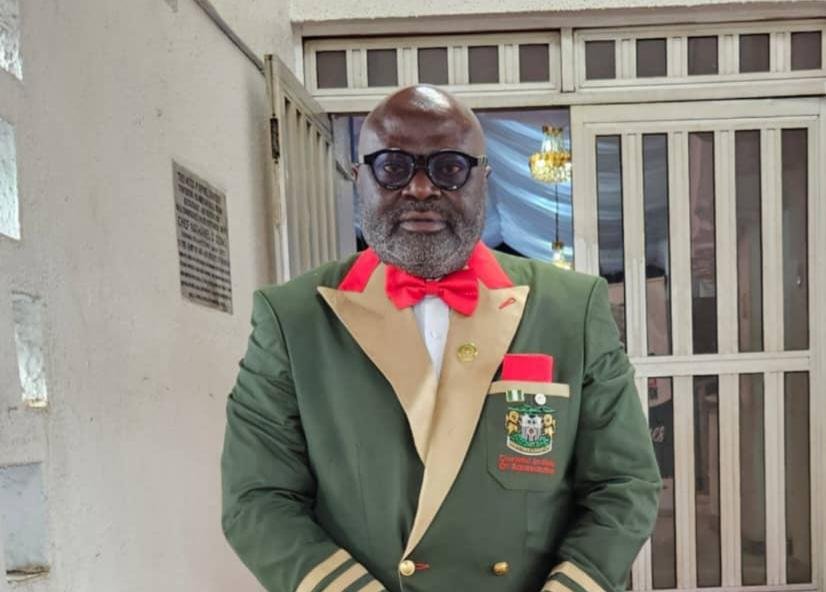
The Olusegun Obasanjo Leadership Institute has congratulated Deji Bolusemihi on his appointment as Chairman of the College of Fellows of the Chartered Institute of Administration of Nigeria (CIA). Bolusemihi was recently named Chairman of the College of Fellows by the CIA Governing Council. In its appointment letter, the council said he was selected to provide strong leadership for the College of Fellows and to ensure the effective management of its affairs and resources in line with its constitution. In a statement issued on Wednesday and signed by Elvis Otobo, Media Consultant to the Deputy Chief Executive Officer, Professor Samuel Daramola, the institute commended Bolusemihi on the appointment, describing it as well deserved. “Congratulations on your appointment. This honour reflects your integrity, leadership qualities, and years of dedicated service. The council acknowledges your longstanding commitment to professional excellence and expresses confidence in your ability to lead with distinction,” the statement said. The institute noted that the appointment is intended to provide the strategic direction required to guide the College of Fellows and ensure efficient administration in accordance with its governing framework. It also expressed confidence in Bolusemihi’s capacity to succeed in the role, wishing him wisdom and strength as he assumes the responsibility. The institute highlighted that, as an alumnus of the Olusegun Obasanjo Leadership Institute, Bolusemihi embodies its mission of developing transformational leaders who contribute meaningfully to national development and global leadership practice. According to the statement, his emergence as Chairman reflects his professional depth, ethical standards, and sustained commitment to excellence in administration. The institute added that it looks forward to his continued contributions within the Institute, the CIA, and the wider leadership community. Bolusemihi brings extensive experience spanning accounting, insurance, oil and gas, and diplomacy, which is expected to enhance his leadership of the College of Fellows. He is a fellow of several professional organisations, including the Chartered Institute of Insurance of Nigeria, the Chartered Institute of Arbitration (UK), the Chartered Risk Management Institute, the Chartered Institute of Directors of Nigeria, the Chartered Institute of Marketing (UK), and the Certified Management Consultants. He also holds fellowships with bodies such as the Africa Business School, the Commonwealth Academy of Leadership and Management (UK), the Africa Institute of Information Management, the Institute of Fraud Examiners, the Nigerian Institute of Management, the Chartered Institute of Peace and Governance, and the Chartered Institute of Administration.

cbnn.webp

2min6650
The Central Bank of Nigeria (CBN) has issued Finlogic an International Money Transfer Operator (IMTO) licence, authorising the cross-border payments company to process inward remittances directly into Nigeria as part of efforts to strengthen foreign exchange inflows. The approval enables Finlogic to receive international money transfers into the country without relying on additional intermediaries, bringing such transactions fully under the formal financial system regulated by the CBN. In a statement on Wednesday, the company said the licence aligns with the apex bank’s objective of increasing monthly diaspora remittances to about $1 billion by 2026, a target viewed as key to improving foreign exchange liquidity and supporting macroeconomic stability. With the IMTO licence, Finlogic can now settle inbound transfers directly within Nigeria’s financial system. The firm said this structure would result in faster transaction processing, better pricing for senders and recipients, and stronger partnerships with local banks. Founder and Chief Executive Officer of Finlogic, Joseph Afolabi, said the approval positions the company to better serve the diaspora while contributing to national economic stability. He noted that Finlogic’s operations are anchored on strict regulatory compliance and technology-driven efficiency. According to Afolabi, the company was established to address complex settlement challenges and is now leveraging its technology platform to simplify inward remittances and support the CBN’s drive for a more resilient foreign exchange market. He added that Finlogic also holds a money services business licence in Canada, providing a compliant remittance channel for inflows from North America into Nigeria. Nigeria remains one of Africa’s largest recipients of diaspora remittances, with regulators increasingly promoting policies that channel such funds through official platforms as part of broader foreign exchange reforms.

EFCC-2-768x432-1.jpeg

4min6910
The Economic and Financial Crimes Commission (EFCC) on Wednesday returned N1.28 billion recovered from Sujimoto Luxury Construction Limited to the Enugu State Government following the collapse of a contract for the construction of 22 Smart Green Schools across the state. The refund followed investigations into alleged fraud, contract violations and diversion of public funds linked to the abandoned school project. In a statement issued by the EFCC’s Head of Media and Publicity, Dele Oyewale, the recovery stemmed from a petition dated February 11, 2025, which accused Sujimoto Luxury Construction Limited of receiving public funds without executing the agreed scope of work. According to the petition, the Enugu State Government paid N2.29 billion as advance payment for the construction of the 22 schools, but the January 2, 2025 completion deadline passed with little or no progress. The company’s Group Managing Director, Olasijibomi Ogundele, was named in the petition and held jointly responsible for refunding the funds over alleged persistent non-performance and diversion of project resources. Following the complaint, operatives of the EFCC’s Special Task Fraud Section at the Enugu Zonal Directorate launched investigations, which resulted in the recovery of the funds on behalf of the state government. While presenting the recovered cheques and bank drafts at the EFCC Enugu Zonal Office, the Zonal Director, Daniel Isei, who represented the Commission’s Chairman, Ola Olukoyede, said the action was in line with the EFCC’s mandate to trace, recover and return public funds lost to economic and financial crimes. He disclosed that drafts totaling N1,234,350,000, alongside an additional N50 million, were recovered, bringing the total sum to N1,284,350,000 for the benefit of Enugu State. Isei reiterated the Commission’s commitment to accountability in public finance management, warning contractors handling government projects to strictly comply with the Public Procurement Act. He stressed that investigations were ongoing and that the recovery of funds did not mark the conclusion of the case, noting that prosecution would follow where criminal responsibility is established. Receiving the funds on behalf of the Enugu State Government, the Secretary to the State Government, Prof. Chidiebere Onyia, praised the EFCC for its professionalism and persistence despite public controversy surrounding the matter. Describing the recovery as a strong example of intergovernmental collaboration, transparency and accountability, Onyia said the administration of Governor Peter Mbah remained committed to prudent use of public resources. He assured that the recovered funds would be redirected to critical infrastructure projects aimed at improving residents’ welfare. He added that the state government turned to the EFCC after identifying gaps between project expectations and actual delivery, reaffirming its resolve to hold defaulting contractors accountable. The EFCC had earlier declared Ogundele wanted on September 5, 2025, over alleged fund diversion and money laundering, calling on the public to provide information on his whereabouts. On the same day, Ogundele released a video on social media, stating his intention to present himself to the Commission.

Tech & Tools Desk22 January 2026
Federal-High-Court.jpg

4min5440
The Federal High Court in Abuja on Wednesday directed the Bauchi State Commissioner for Finance, Yakubu Adamu, and three other defendants to report weekly to the Department of State Services as part of the conditions for their bail in an ongoing terrorism financing trial. Justice Mohammed Umar issued the order while granting the defendants bail in the sum of N100 million each. The judge said the applicants had placed sufficient material before the court to justify the exercise of its discretion in their favour. As additional bail conditions, Justice Umar ordered each defendant to provide two sureties who must be a permanent secretary and a director within the civil service. He also directed them to surrender their international passports to the court registry. The matter was adjourned to February 26 for the commencement of trial. The Economic and Financial Crimes Commission is prosecuting Adamu alongside Balarabe Ilelah, Aminu Bose and Kabiru Mohammed on a 10-count charge bordering on terrorism financing and money laundering. The co-defendants are described as senior civil servants in Bauchi State. The defendants were previously denied bail in December by Justice Emeka Nwite, who held that the allegations were too serious to warrant their release. Following the reassignment of the case, they were re-arraigned before Justice Umar on January 16 and pleaded not guilty to all charges. Arguments on their bail application were heard and the ruling was delivered on January 21. In support of the bail request, defence counsel, Chief Chris Uche (SAN), told the court that fresh facts had emerged since the earlier refusal of bail. He argued that Bello Bodejo, President of Miyetti Allah Kautal Hore and a figure referenced in nine of the counts, had never been convicted of any terrorism-related offence. He added that although Bodejo was previously charged by the Federal Government in a separate case, the matter was withdrawn and dismissed on May 29, 2024. Uche also contended that there was no proscription order in the Federal Government’s Official Gazette designating Bodejo or his organisation as a terrorist entity, citing Section 48(1) of the Terrorism (Prevention and Prohibition) Act, 2022. He said this absence weakened the prosecution’s case and supported the grant of bail. The defence further relied on provisions of the Administration of Criminal Justice Act, 2015, urging the court to exercise its discretion in favour of the defendants. Adamu, a former branch manager of Polaris Bank Plc in Bauchi State, and the other accused were first arraigned on December 31, 2025. On January 5, 2026, Justice Nwite ordered their remand at the Kuje Correctional Centre, citing concerns over national security and public safety, before the case was later reassigned after the court vacation. The charge, marked FHC/ABJ/CR/705/2025, was filed on December 30, 2025 by EFCC counsel, Samuel Chime. One of the counts alleges that the defendants, along with two others said to be at large, conspired between January and May 2024 to provide $2.3 million in cash for the benefit of Bello Bodejo and his associates. The funds were alleged to have been approved by the Bauchi State Government and used wholly or partly to finance a terrorist group, an offence said to be contrary to Section 26(1) and punishable under Section 21(2)(a) of the Terrorism (Prevention and Prohibition) Act, 2022.