Category: Refined Living

zz-5.avif

1min3930
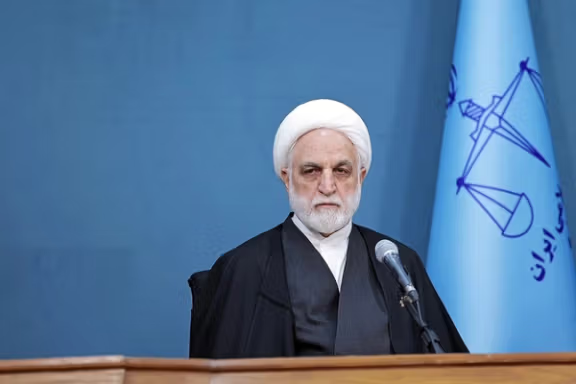
Iran’s judiciary chief said on Monday that there should be no leniency or delays in delivering verdicts against individuals accused of having links with Israel and the United States. Speaking through remarks reported by the Tasnim news agency, Gholam Hossein Mohseni Ejei said authorities must act decisively against those who allegedly committed crimes during periods of conflict and unrest while cooperating with what he described as hostile forces. He stated that the judiciary should move quickly to enforce final rulings against suspects connected to the two countries. Ejei also stressed the need to speed up the handling of cases involving individuals accused of posing threats to public security. In recent weeks, Iranian authorities have conducted widespread raids across the country, with local media reporting that hundreds of people suspected of collaborating with Israel and the United States have been arrested in recent days. On February 28, Israel and the United States carried out strikes on Iran that killed its supreme leader, Ayatollah Ali Khamenei, and sparked a conflict that quickly spread across the Middle East. Iran later responded by launching attacks targeting Israeli and American interests across the region.

zz-23.webp

7min9550
The United States government has begun a trade investigation into Nigeria and 59 other economies over allegations that they have not done enough to prevent the importation of goods produced with forced labour. In a notice issued by the Office of the United States Trade Representative (USTR), the US said the probe was initiated under Section 301 of the Trade Act of 1974 to assess whether the trade practices of the listed economies are “unreasonable or discriminatory” and whether they negatively affect American commerce. The notice, signed by the General Counsel at the USTR, Jennifer Thornton, stated that the investigation commenced on March 12, 2026. It will examine whether Nigeria and the other economies have failed to establish or effectively enforce bans on the importation of goods made with forced labour. According to the notice, the investigation will focus on policies and practices related to the failure to impose and enforce restrictions on goods produced through forced labour. Nigeria is among 60 economies included in the review, alongside China, India, Brazil, South Africa, the United Kingdom, Canada, and the European Union. The USTR explained that the investigation aims to determine whether the absence of effective import restrictions on forced-labour goods in these economies creates unfair trade conditions that place American businesses at a disadvantage. The agency noted that although many countries prohibit forced labour within their borders, weak controls on imports can allow companies to continue sourcing products made under exploitative conditions through global supply chains. US law has prohibited the importation of goods produced wholly or partly with forced labour for nearly a century, a policy rooted in humanitarian, foreign policy, and national security concerns. According to the USTR, forced labour gives producers an unfair cost advantage, enabling them to sell goods at lower prices and distort competition in global markets. Estimates from the International Labour Organisation show that forced labour remains widespread globally. The ILO reported that about 28 million people were trapped in forced labour as of 2021, representing roughly 3.5 out of every 1,000 people worldwide. The organisation also noted that the number of people subjected to forced labour increased by about 2.7 million between 2016 and 2021, largely driven by exploitation in the private sector. Profits generated from forced labour in the global private economy were estimated at about $63.9bn annually in 2024. The USTR added that forced labour affects entire global supply chains. Products linked to the practice include agricultural goods, textiles, minerals, fish products, and palm oil derivatives used in food and biofuel production. The US government warned that such goods can re-enter global markets even after being denied entry into the United States, creating unfair competition for American firms. As part of the process, the USTR will engage with governments of the economies under review and gather input from stakeholders. Businesses, labour organisations, and other interested groups have been invited to submit written comments on whether the countries involved have implemented or are developing laws to prohibit the importation of goods produced with forced labour. The agency is also seeking information on whether the absence of such policies has resulted in reduced US exports, lower economic output, or wage pressure on American workers. Public hearings on the investigation are scheduled to begin on April 28, 2026, at the US International Trade Commission in Washington, DC, and may continue until May 1. Stakeholders who wish to participate in the hearings or submit written comments must do so through the USTR’s electronic portal by April 15, 2026. After the hearings and consultations, the Trade Representative will decide whether the practices of the economies under investigation violate Section 301 of the Trade Act. If the investigation finds evidence of unfair trade practices, the United States may impose trade measures such as additional duties or import restrictions on goods from the affected economies. Meanwhile, recent data from the National Bureau of Statistics showed that Nigeria’s merchandise trade surplus declined sharply to N1.71tn in the fourth quarter of 2025, compared with N3.42tn recorded in the same period of 2024, as falling crude oil exports and rising imports narrowed the country’s positive trade balance. Although Nigeria maintained a trade surplus during the quarter, the balance weakened significantly on a year-on-year basis, largely due to a decline in crude oil exports. Total trade in the quarter stood at N36.21tn, slightly lower than the N36.60tn recorded in the corresponding period of 2024, representing a 1.07 per cent decline year-on-year. Exports remained higher than imports but dropped significantly compared with the previous year. Total exports fell to N18.96tn in the fourth quarter of 2025, a 5.25 per cent decline from N20.01tn recorded in the same period of 2024 and a 16.88 per cent drop compared with the previous quarter. Exports accounted for 52.36 per cent of total trade during the quarter. Crude oil continued to dominate Nigeria’s export earnings, contributing N9.70tn or 51.17 per cent of total exports, although revenue from crude oil declined sharply. Imports, however, continued to increase. Total imports rose to N17.25tn in the fourth quarter of 2025, representing a 3.98 per cent increase from N16.59tn recorded in the same period of 2024. Imports accounted for 47.64 per cent of total trade. Further analysis showed that Nigeria remained heavily dependent on imported manufactured goods and fuel products. Machinery and transport equipment were the largest import category, valued at N5.13tn and accounting for 29.75 per cent of total imports. This was followed by mineral fuels valued at N4.52tn, representing 26.19 per cent, and chemicals and related products worth N2.70tn, accounting for 15.68 per cent. Regionally, most imports came from Asia, valued at N8.08tn and representing 46.83 per cent of total imports. Europe followed with N5.75tn or 33.31 per cent, while imports from Africa stood at N696.13bn, accounting for 4.04 per cent. China remained Nigeria’s largest import partner with N5.39tn, representing 31.22 per cent of total imports, followed by the United States, the Netherlands, India, and Brazil.


aa.webp

6min4230
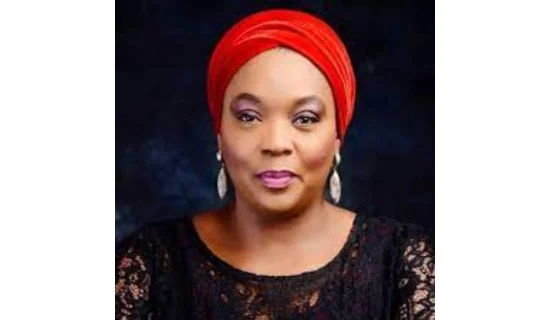
The Chair of the Board of Directors of Women Radio WFM 91.7, Toun Sonaiya, has said many Nigerian women particularly those living in rural communities face major barriers that prevent them from contributing fully to the country’s development. Sonaiya made the remarks during the second edition of Nigerian Women’s Day, organised on the sidelines of the 70th session of the United Nations Commission on the Status of Women in New York City on Thursday. The event, themed “31 Years of Progress, Resilience, Impact and Renewed Hope,” was organised by the Federal Ministry of Women Affairs and Social Development under the leadership of the Minister, Imaan Sulaiman‑Ibrahim. It brought together members of the Nigerian diaspora, diplomats, gender advocates and global leaders, including the United Nations Deputy Secretary-General, Amina Mohammed. Speaking at the gathering, Sonaiya highlighted the difficulties faced by women, children and vulnerable groups across Nigeria, particularly in rural areas. “Nigerian women, children, families and vulnerable people, especially in rural communities across the 774 local government areas, face significant challenges that limit their ability to contribute to national growth,” she said. She identified key obstacles such as poor electricity supply, limited access to finance and internet services, inadequate healthcare, restricted educational opportunities and the low representation of women in leadership positions. Sonaiya urged Nigerians both at home and abroad, as well as development partners, to support initiatives designed to empower women and strengthen communities. She noted that the ministry had launched several programmes under the Renewed Hope Social Impact Interventions 774 framework to support women and vulnerable populations nationwide. Among the initiatives is PowerHer774, which aims to expand access to clean energy for one million women and their households across Nigeria’s 774 local government areas. Another programme, Women Agro Value Expansion, is designed to support three million women involved in agriculture. Additional interventions focus on digital literacy for women and girls, child development programmes and projects aimed at improving women’s health and economic opportunities. “Your positive contribution is like a piece of a jigsaw. Bit by bit, we will build a bigger and more positive Nigeria,” Sonaiya said while calling for collaboration between stakeholders and the government. In her address, Minister Sulaiman-Ibrahim stressed the need for stronger global and domestic investments to advance women’s empowerment. “Transforming women’s lives at scale requires sustained investment, strong partnerships and coordinated action,” she said. “There is an urgent need for greater investment in women and girls, both domestically and globally. Women’s empowerment is not just a social programme it is an economic strategy, a security strategy and a development imperative.” The event also featured a fireside discussion between the minister and Mohammed on Nigeria’s gender equality objectives and the global agenda for women’s empowerment. Participants examined the challenges and opportunities facing women and girls across Africa and other regions. Panel sessions addressed topics such as Global Leadership, Peace and Security for Social Impact; Women, Institutions and the Economy; and Positive Masculinity. Speakers included the Minister of State for Labour and Productivity, Nkeiruka Onyejeocha; Chairman of the National Population Commission, Aminu Yusuf; Executive Secretary of the National Human Rights Commission, Tony Ojukwu; and Country Director of ActionAid Nigeria, Andrew Mamedu. The programme also featured cultural performances and presentations highlighting the growing role of women in leadership, innovation and social development.

zz-19.webp

2min6590
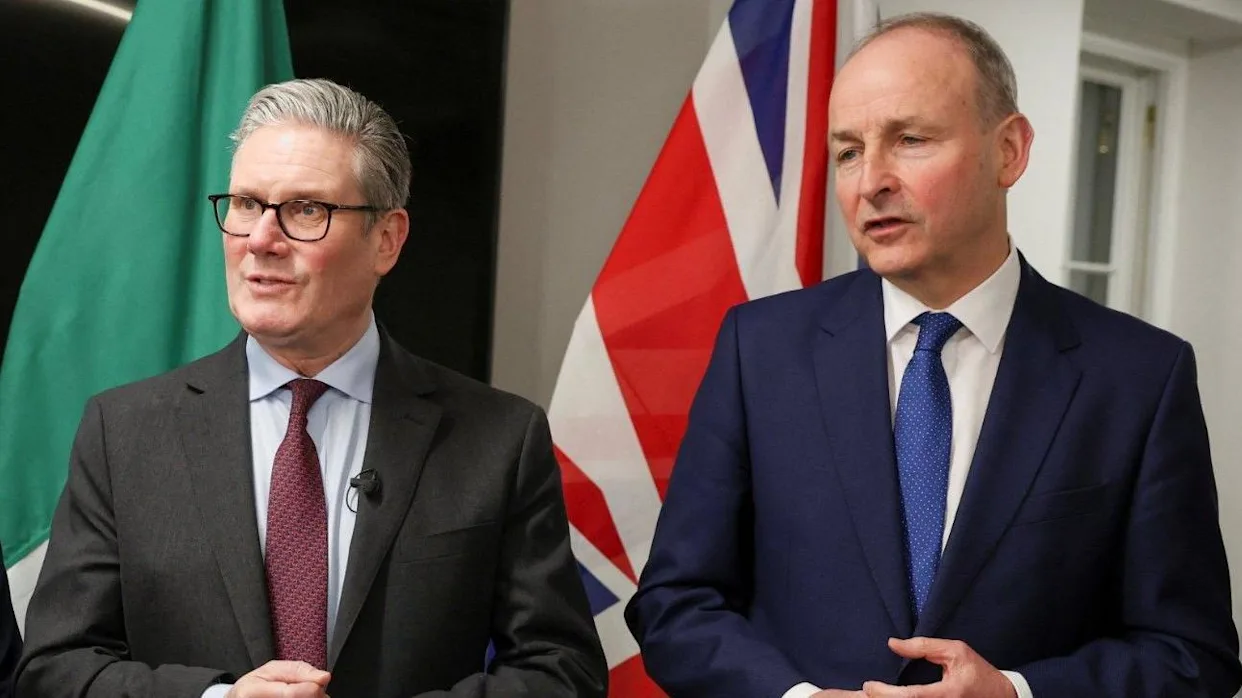
UK Prime Minister Sir Keir Starmer and Irish Taoiseach Micheál Martin are set to attend the second UK-Ireland summit in Cork on Friday, accompanied by delegations of government ministers from both countries. Key topics on the agenda include cooperation on cost-of-living pressures, domestic security, and crisis management. The summit follows Sir Keir’s announcement of £937m in Irish investment into the UK, expected to create around 850 new jobs. This includes an energy connector project between Northern Ireland and Ireland aimed at lowering electricity costs on both sides of the border. Another planned connector between Wales and Ireland is projected to provide power for 570,000 homes. “The UK’s close partnership with Ireland continues to grow, and I am pleased that we are advancing collaboration on growth, energy, security, and more,” Sir Keir said. “This new Irish investment is part of a broader picture of strong cultural, commercial, and security ties.” The first annual UK-Ireland summit was held last year in Liverpool, following an agreement to hold yearly meetings as part of a “reset” in relations between the two nations after Sir Keir became prime minister. The summit will also explore joint plans for cooperation through 2030. Ahead of traveling to Cork, Sir Keir met Northern Ireland political leaders in Belfast on Thursday to discuss the prompt allocation of funds from the Autumn Budget to assist with electricity costs. Later, he met business leaders alongside Martin, Irish Foreign Affairs Minister Helen McEntee, and UK Secretary of State for Business and Trade Peter Kyle. He also engaged with young people from the Ireland-UK youth forum advisory group to hear their perspectives. The day concluded with a cultural event at Cork City Hall, where protests were held featuring Iran and Palestinian flags.

zz-42.jpg

3min9070
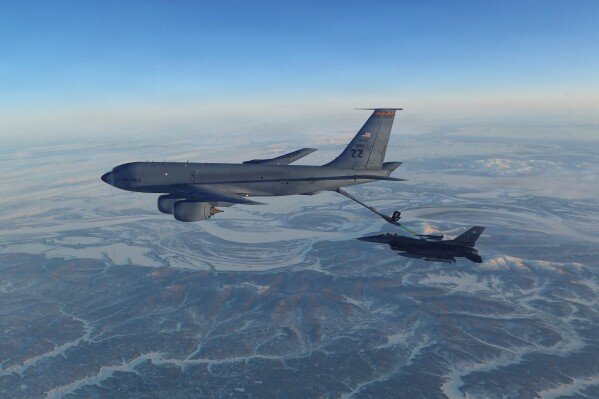
Rescue operations are ongoing after a US military refuelling aircraft crashed in western Iraq, according to US Central Command (Centcom). Centcom said the KC-135 aircraft went down over western Iraq and noted that neither hostile fire nor friendly fire was involved in the incident. The tanker had been supporting ongoing US operations linked to the conflict with Iran and was flying alongside another aircraft at the time. The second aircraft landed safely. The KC-135, manufactured by Boeing, is designed to refuel other aircraft midair and plays a key role in US military missions. The aircraft was widely used during the first Gulf War to extend the range of fighter jets and bombers. Typically, the KC-135 operates with a crew that includes a pilot, co-pilot and a boom operator responsible for managing the refuelling system. However, reports indicate that six service members were on board the aircraft that crashed. The condition of the crew members has not yet been confirmed. Centcom said the crash occurred in friendly airspace, though the region of Iraq where it happened is known to host pro-Iranian militia groups. Iran’s military claimed on state television that an allied group had targeted the aircraft with a missile. US Congressman Jim Himes, a member of the group of lawmakers regularly briefed on sensitive military operations, said it was too early to determine the exact cause of the crash. He noted that the KC-135 is commonly used for aerial refuelling and usually carries a small crew, expressing hope that those on board were safe. Himes added that such incidents can occur during conflicts, even for well-equipped militaries. Since the start of the war involving the United States, Israel and Iran, seven US soldiers have been confirmed killed. The latest crash brings the number of US aircraft lost during the conflict to at least four. Earlier this month, three F-15 fighter jets were shot down in what officials described as an apparent friendly fire incident over Kuwait. All six crew members on those aircraft were able to eject safely. The KC-135 Stratotanker was built for the US military in the 1950s and early 1960s and has remained a key part of the country’s aerial refuelling fleet, enabling combat aircraft to carry out extended missions without landing.

zz-18.webp

5min12070
The Global Vaccine Alliance and UNICEF on Thursday formally transferred the Primary Health Care Solarisation Project to the Federal Government of Nigeria. The initiative, coordinated by the National Primary Health Care Development Agency, includes 371 solar-powered primary health centres across 17 states. Speaking at the handover ceremony in Abuja, the Coordinating Minister of Health and Social Welfare, Prof. Ali Pate, said the project would expand access to essential services in off-grid communities, strengthen vaccine cold-chain systems, and ensure uninterrupted healthcare delivery at primary health centres nationwide. He noted that the foundation of a resilient health system was being reinforced through domestic funding from the Federal Government and states, supported by development partners. Pate said collaborations between the government and global health organisations had contributed to improved immunisation coverage and better primary healthcare services, with more than 47 million visits recorded at primary health centres. He added that Nigeria recently carried out one of the largest integrated vaccination campaigns in Africa, targeting over 100 million children with measles, rubella and other vaccines, with support exceeding $100m from Gavi. On the Human Papillomavirus vaccine supply, the minister said a new shipment was expected to address shortages reported in some states, noting that such supply gaps reflect the global demand for the vaccine rather than a Nigeria-specific issue. He commended the ministry’s leadership for fulfilling Nigeria’s vaccine co-financing commitments in 2024, which enabled the procurement of life-saving vaccines. Pate also highlighted improvements in coverage of the DTP3 vaccine since 2001 but said more efforts were needed to ensure that every child receives essential immunisation. He stressed that maintaining progress in the health sector would require greater investment by governments at all levels, as well as support from households. “Healthcare is not cheap; it is an investment. When governments invest and partners support those investments, the system becomes sustainable,” he said. The minister also praised development partners, including UNICEF and the World Health Organisation, for their continued support, noting that such partnerships remain crucial while domestic resources are limited. He expressed confidence that ongoing reforms would enable Nigeria to eventually take full responsibility for financing its health programmes. He said the handover of the solar-powered primary health centres would enhance service delivery in underserved communities and strengthen vaccine cold-chain management, contributing to a more resilient and self-sustaining healthcare system. The Executive Director and Chief Executive Officer of the NPHCDA, Dr Muyi Aina, said the collaboration with partners remained vital to efforts aimed at strengthening primary healthcare and delivering essential services to citizens. He explained that through the partnership with Gavi and UNICEF, 371 primary health centres across 17 states, including the Federal Capital Territory, had been equipped with solar power systems. According to him, the project focused on zero-dose communities, where many children have missed routine vaccinations. Aina said the development is helping the facilities reach what is known as level two status, which requires adequate infrastructure such as reliable power supply, water, sanitation services, and sufficient manpower. He added that the provision of equipment and commodities aligns with the Health Sector Renewal Investment Initiative launched by President Bola Ahmed Tinubu about two years ago. Also speaking at the event, the Mandate Secretary for Health at the Federal Capital Territory Administration, Dr Dolapo Fasawe, commended Gavi, UNICEF, the Foreign, Commonwealth and Development Office, the NPHCDA and other partners on behalf of the beneficiary states. She said the project represents not only the installation of solar systems but also stronger health systems, improved immunisation services, and renewed hope for communities that rely on primary health centres as their first point of care. The solar-powered facilities are expected to strengthen healthcare delivery, particularly in areas with unreliable electricity, while also supporting routine immunisation programmes. The project targets Nigeria’s 100 zero-dose local government areas, where many children remain unvaccinated and lack access to essential healthcare services.

zz-41.jpg

4min13740
A coalition of professionals under the Ajiyya Solidarity Forum has rejected claims that about N210tn is missing from the accounts of the Nigerian National Petroleum Company Limited. Speaking with journalists on Thursday, the forum’s National Coordinator, Usman Hamza, described the allegation as “mathematically impossible” and politically driven. The group was reacting to a recent statement by the Chairman of the Senate Public Accounts Committee, Ahmed Wadada, who said the NNPC Limited could not account for approximately N210tn. Hamza argued that the figure was misleading and unrealistic. “Senator Wadada’s claim of N210tn ‘unaccounted for’ funds is a mathematical impossibility designed to alarm the public,” Hamza said. He noted that the claim contradicts Nigeria’s fiscal realities, pointing out that the country’s entire 2024 national budget is about N28.7tn. “To suggest that a single entity ‘lost’ nearly eight times the national budget is an insult to the intelligence of Nigerians,” he added. The forum also criticised threats of arrest warrants against former NNPCL officials, including former Chief Financial Officer Umar Ajiya, describing the move as part of a coordinated campaign of political intimidation. According to the group, the Senate committee may have misread financial figures by combining accrued expenses with receivables in a way that falsely suggests missing funds. “We believe the committee may have mistakenly ‘netted’ N103tn in accrued expenses, largely joint venture liabilities, with N107tn in receivables owed to NNPCL. Describing money owed to a company as ‘missing funds’ is a serious professional error,” Hamza said. During its ongoing review of NNPCL’s financial records, the Senate Public Accounts Committee had raised concerns about discrepancies running into trillions of naira. However, the forum maintained that the allegations overlook the broader financial and structural reforms undertaken by the national oil company in recent years. Hamza also noted that Ajiya’s tenure coincided with the transition of the national oil company into a commercial entity under the Petroleum Industry Act, a reform that ended decades of opaque financial reporting. He said the period saw the publication of the company’s first audited financial statements in 43 years. The forum also defended the N5.9bn spent during the transition of NNPC to NNPC Limited, stating that the cost covered complex legal and structural processes required to transform the former state corporation into a limited liability company. It warned that politicising the Senate’s oversight responsibilities could harm Nigeria’s credibility with international investors. “Using the Senate’s platform to pursue personal vendettas could damage Nigeria’s reputation among international investors,” Hamza said. The group further called on the Senate leadership to launch an independent ethics investigation into an alleged demand for bribes linked to the ongoing oversight exercise. “We urge the Senate leadership and its Ethics Committee to investigate the reported bribe demand connected to this oversight process,” he said. Hamza also urged lawmakers to halt what he described as the harassment of officials who have already provided several technical responses to the committee. “Public accountability should be pursued through careful forensic examination of facts, not through sensational allegations and exaggerated figures,” he added.

Tech & Tools Desk13 March 2026
zz-40.jpg

2min5640
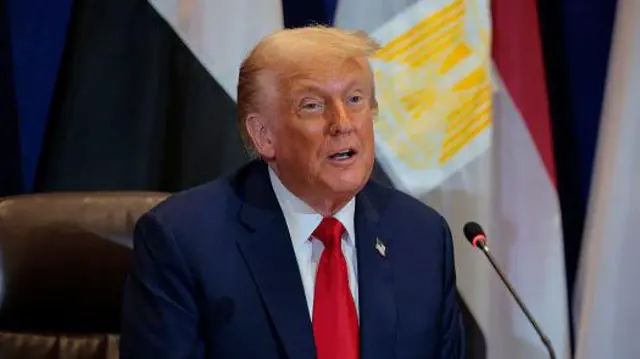
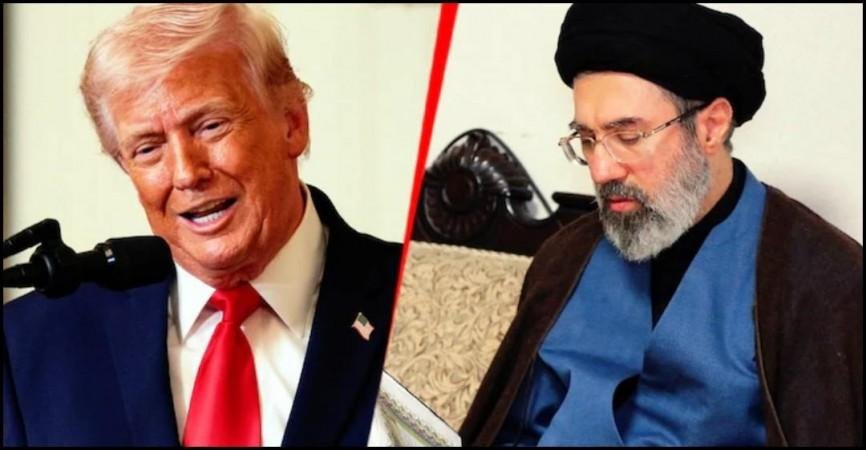
President Donald Trump has said he believes Iran’s new Supreme Leader, Mojtaba Khamenei, is still alive but may have been injured. Khamenei, whose father and former supreme leader was killed on the first day of the war between the United States, Israel and Iran, has not appeared publicly since he was chosen by a clerical assembly on Sunday. His first remarks were delivered by a television presenter on Thursday. In an interview on Fox News’ “The Brian Kilmeade Show,” Trump said he believes Khamenei is likely alive but may have been harmed. “I think he probably is (alive). I think he is damaged, but I think he’s probably alive in some form,” Trump said during the interview, which was published late Thursday. In his first remarks since assuming the role, Khamenei pledged to keep the Strait of Hormuz closed and urged neighbouring countries to shut down US military bases on their territory or risk being targeted by Iran. The United States and Israel launched attacks on Iran on February 28, prompting Iran to respond with strikes on Israel and Gulf nations hosting US bases. As the conflict nears the two-week mark, it has resulted in thousands of deaths and rattled global financial markets, while the leaders of Iran, Israel and the United States have all signalled their determination to continue the fight.

Ifeanyi Enukorah13 March 2026
zz-39.jpg

2min5780
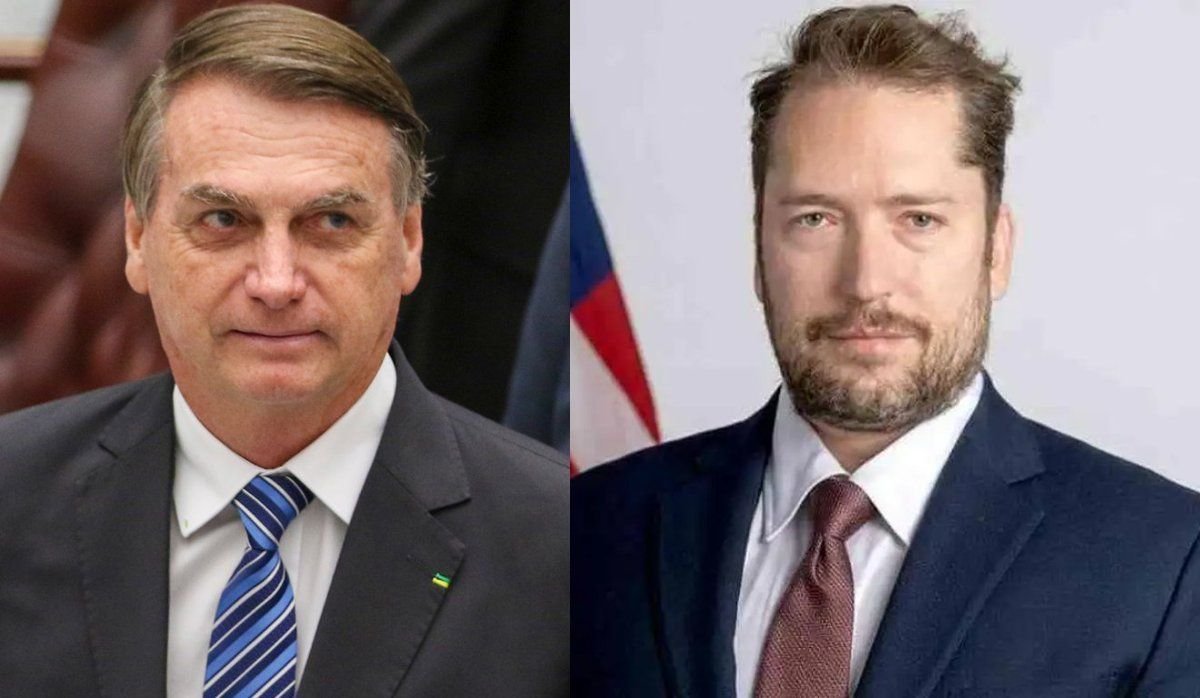
A Brazilian Supreme Court justice on Thursday reversed an earlier decision permitting an adviser to US President Donald Trump to visit former president Jair Bolsonaro in prison, following concerns raised by the Brazilian government about possible foreign interference. Bolsonaro, who was sentenced last year to 27 years in prison for his role in a failed coup attempt after losing the 2022 election, had been a close ally of Trump, who previously described the prosecution of the far-right leader as a “witch hunt.” Earlier this week, Bolsonaro’s lawyers requested permission for Darren Beattie, the US State Department’s new adviser on Brazil, to meet with the former president in prison on March 18. However, Supreme Court Justice Alexandre de Moraes withdrew the authorisation on Thursday after the Brazilian government warned against the meeting. Brazil’s foreign ministry stated that Beattie’s visa was issued solely for him to attend a forum on critical minerals and hold official meetings with government officials. According to court documents, the ministry said a visit by a foreign public official to a former president during an election year “could constitute undue interference” in Brazil’s internal affairs. Brazil is scheduled to hold its next presidential election in October, and despite being in prison, Bolsonaro remains an influential figure in the country’s political landscape. The former president has endorsed his eldest son, Senator Flavio Bolsonaro, as the right-wing candidate expected to challenge the incumbent leftist president, Luiz Inacio Lula da Silva.

Tech & Tools Desk12 March 2026
zz-17.webp

2min7980
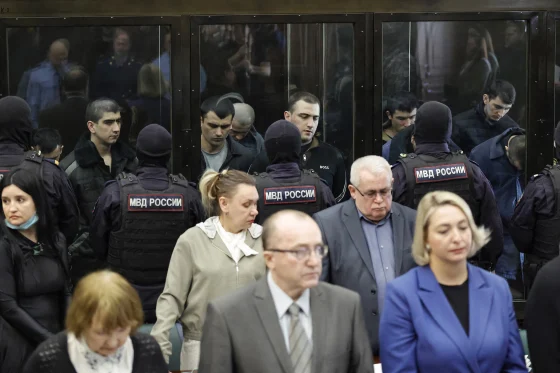
Nineteen individuals have been sentenced over a deadly attack at a concert hall near Moscow, which killed more than 100 people and is Russia’s deadliest mass shooting in 20 years. A Russian military court handed life sentences to four gunmen and 11 accomplices, while four others received prison terms ranging from 19 to 22 years, according to state media. The attack occurred on 22 March 2024 at Crocus City Concert Hall on the outskirts of Moscow. Gunmen opened fire and set the venue ablaze, killing 149 people and injuring over 500. An affiliate of the Islamic State claimed responsibility and released video footage of the attack. Russian authorities have repeatedly alleged Ukrainian involvement, which Kyiv has strongly denied. About 6,000 people were attending a rock concert in Krasnogorsk when the attackers stormed the hall, firing indiscriminately. They then set fires that caused the roof to collapse. Many victims died from gunshot wounds, while others succumbed to smoke inhalation. The four gunmen convicted of carrying out the shooting are reportedly citizens of Tajikistan, according to Russia’s Tass news agency. It remains unclear how the defendants pleaded or whether they will appeal their sentences. The trial was held behind closed doors, and there are reports suggesting some confessions may have been made under duress. Observers noted that when the men first appeared in court two years ago, they showed signs of having been beaten, with one brought in on a wheelchair. The group responsible, IS-K, is an ISIS offshoot that seeks to establish a caliphate across parts of Central and South Asia, including Afghanistan, Pakistan, Turkmenistan, Tajikistan, Uzbekistan, and Iran. Graphic video footage verified by independent sources shows attackers firing on the concertgoers. Russian officials continue to assert a Ukrainian connection to the attack, though no evidence has been presented, and Ukrainian authorities strongly deny involvement. President Volodymyr Zelensky previously described Russia’s claims as “absolutely predictable.”