Category: Refined Living

James Obasi13 January 2026
NGX12.webp

4min9330
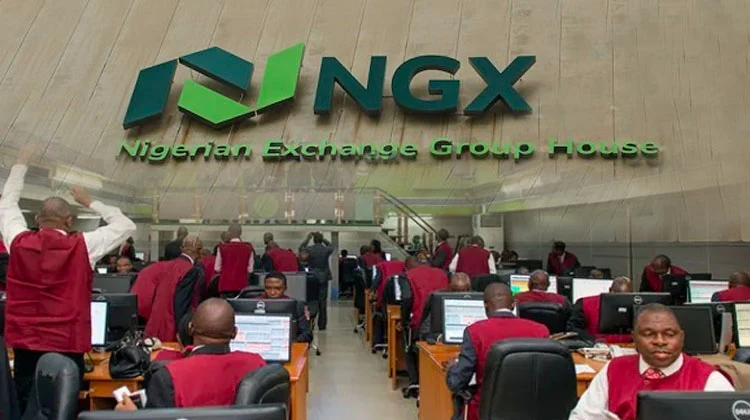
The Nigerian Exchange Limited kicked off the new trading week on a positive footing on Monday, as strong demand for key stocks pushed total market capitalisation up by N745bn, signalling improved investor confidence in the equities market. At the close of the session, market capitalisation rose to N104.52tn from N103.78tn in the previous trading day. The All-Share Index also gained 946.61 points, representing a 0.58 per cent increase, to settle at 163,244.69 points, up from 162,298.08 points. Trading activity showed notable improvement, with investors exchanging 1.15 billion shares valued at N19.21bn across 59,326 deals. This reflected an 84 per cent jump in trading volume, a four per cent increase in turnover, and a 35 per cent rise in deal count compared with the preceding session. Market breadth was largely positive, as 128 listed equities were active during the session. Forty-nine stocks recorded gains, while twenty closed lower, indicating a broadly bullish market sentiment. E-Tranzact International led the gainers, rising by 10 per cent to close at N16.50. Red Star Express also appreciated by 10 per cent to N11.55, while McNichols climbed 10 per cent to N6.05. UPDC advanced by 10 per cent to N5.50, RT Briscoe gained 10 per cent to close at N3.96, and Deap Capital Management and Trust added 10 per cent to end the day at N3.30 per share. On the losing side, Champion Breweries posted the steepest decline, shedding 8.51 per cent to close at N15.05. Eunisell Interlinked followed with an 8.01 per cent drop to N156.20, while Ikeja Hotel fell by eight per cent to N36.80. Guinea Insurance declined by 7.30 per cent to N1.27, Omatek Ventures slipped by 3.12 per cent to N1.24, and Lasaco Assurance eased by 2.99 per cent to close at N2.60 per share. In terms of volume, Sovereign Trust Insurance led trading activity with over 307 million shares exchanged. Fidelity Bank followed with about 158 million shares, while Linkage Assurance and Mutual Benefits Assurance also ranked among the most actively traded stocks. By value, Fidelity Bank topped the chart with trades worth N3.14bn. Aradel Holdings, Zenith Bank, Eunisell Interlinked and Sovereign Trust Insurance also recorded substantial value transactions, boosting overall market liquidity. Market analysts attributed the positive performance to renewed bargain hunting in select equities, particularly within the banking and insurance sectors, alongside stronger investor confidence driven by the market’s sustained position above the N100tn capitalisation level. They added that continued buying interest, supported by expectations of full-year corporate earnings and ongoing portfolio adjustments by investors, could sustain the upward trend in the near term, although periods of profit-taking may still occur. The strong opening to the week further underscores the NGX’s resilience, with market capitalisation firmly above N104tn, highlighting sustained strength in Nigeria’s equities market despite ongoing macroeconomic pressures.

oil02.jpg

4min4040
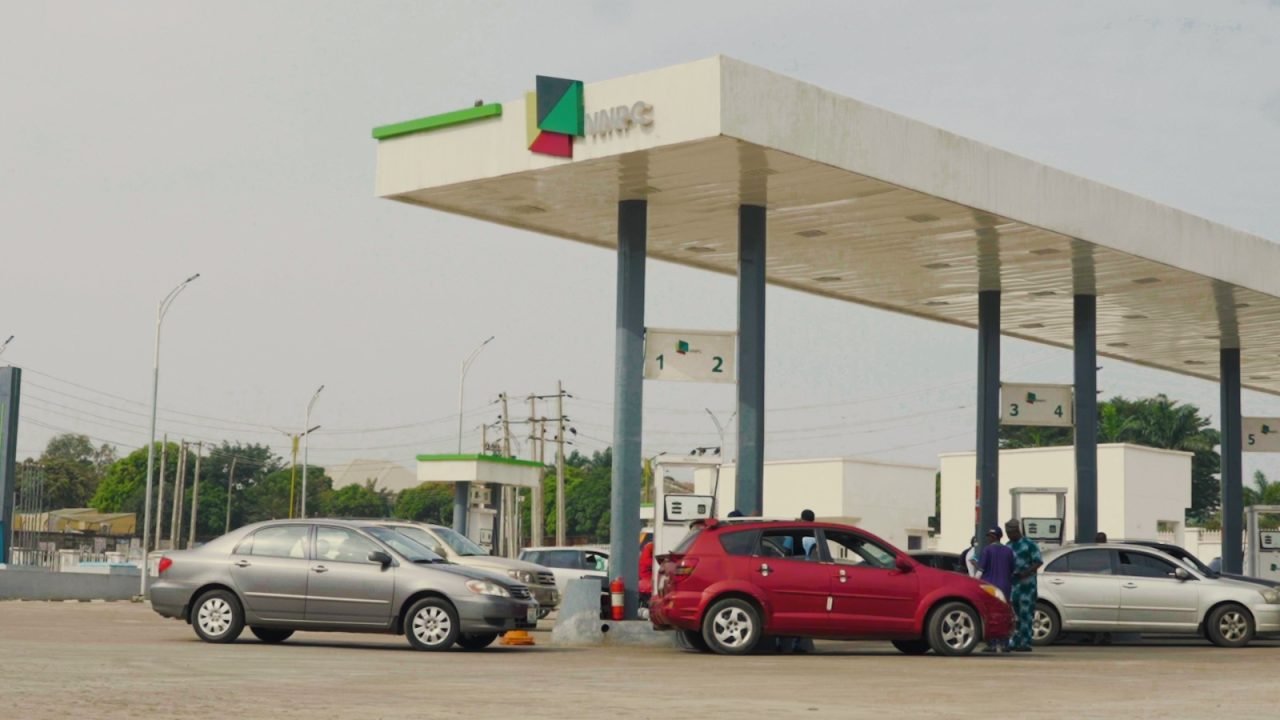
The competition in Nigeria’s petroleum sector has intensified, with some retail outlets now selling Premium Motor Spirit (PMS) below the N739 per litre recommended by Dangote Petroleum Refinery. Since the Dangote refinery reduced petrol pump prices from around N900 to N739 in December, many importers and depot owners have reported losses. To remain competitive, several operators have had to sell petrol at rates below their landing costs. A weekend survey showed that some filling stations now offer PMS at lower prices than MRS Oil, the primary partner supporting the Dangote price cut. NIPCO sold PMS at N738 per litre, SAO stations at N735, and Akiavic at N737, while an AP station in Mowe, Ogun State, dropped prices to N736 per litre. Filling stations in the same area closely monitor competitors’ pricing to avoid losing customers. Motorists are flocking to the outlets offering the cheapest rates, leaving higher-priced stations struggling. According to the Major Energies Marketers Association of Nigeria, the average landing cost of petrol is N762.38 per litre, while Dangote’s ex-gantry price is N699. Despite this, importers adjusted pump prices to remain competitive with Dangote-backed MRS. Operators stressed that the price reductions are a market strategy to maintain market share, not a reflection of whether imported petrol is cheaper. “This is about strategy, not a war against any marketer or refinery,” an operator said on condition of anonymity. The Dangote refinery shocked depot owners in December by cutting the gantry price from N828 to N699 per litre. The Group President, Aliko Dangote, had warned marketers against maintaining higher pump prices and directed MRS stations to sell at N739 per litre. The Independent Petroleum Marketers Association of Nigeria (IPMAN) noted that competition is now driven by pricing. Marketers who fail to adjust risk losing customers, while those keeping up with competitive pricing protect their capital from mounting bank interest. Many filling stations are now selling petrol below N800 per litre as the price war continues. Dangote Refinery stated that it began supplying PMS to marketers in October 2025 with an offtake volume of 600 million litres, which rose to 900 million litres in November and 1.5 billion litres in December. The refinery reduced minimum purchase volumes and introduced a 10-day credit facility to enhance liquidity, support small and medium operators, and boost domestic product usage. The refinery also clarified that the spike in petrol imports in November was due to import licensing approvals exceeding domestic demand and not related to its production capacity. It reaffirmed its commitment to reliable supply, competitive pricing, and collaboration with regulators to strengthen Nigeria’s downstream petroleum market.

Tech & Tools Desk12 January 2026
crude-oil.jpeg

4min6860
Oil prices have surged past $63 per barrel as markets reacted to rising geopolitical tensions in the Middle East, according to oilprice.com data on Sunday. The increase follows early gains on Friday as widespread protests in Iran raised concerns that output from one of the region’s major oil producers could be disrupted. The rebound comes after two days of decline, as investors weighed developments in Venezuela alongside supply concerns from Iran, Russia, and Iraq. Both benchmarks, Brent and West Texas Intermediate (WTI), traded higher on Sunday. WTI futures stood at $59.12 per barrel, while Brent climbed to $63.34, after previously rising above $62.42 on Friday. Crude prices jumped more than 3% on Thursday amid heightened geopolitical risks spanning from Venezuela to Iran. Friday’s gains were further supported by escalating protests in Iran and remarks by former US President Donald Trump, who claimed that Iran’s Supreme Leader, Ayatollah Ali Khamenei, was considering fleeing the country. In response to the unrest, Iran reportedly shut down internet access on Friday, a tactic often used during domestic instability. The demonstrations, which began nearly two weeks ago, have resulted in approximately 40 fatalities and around 2,000 arrests. Khamenei condemned the protests, accusing participants of acting under foreign influence, and vowed that the regime would not yield. Ole Hansen, Head of Commodity Strategy at Saxo Bank, said the market is now focused on Iran, where the risk of near-term supply disruption outweighs potential long-term supply recovery should the regime face further instability. Earlier in the week, oil prices dipped as markets anticipated a potential supply boost from Venezuela. Reports indicated that the US and Venezuelan authorities reached an agreement under which 30–50 million barrels of Venezuelan crude, valued at roughly $2 billion, would be exported to the US. This agreement aimed to increase supplies of heavy crude to Gulf Coast refineries while limiting illicit shipments to other markets. Political developments in Venezuela also contributed to market volatility. President Nicolás Maduro was captured by US authorities and transferred to the US to face federal charges, including narcotics and terrorism-related offenses, which he denies. Following his detention, Vice President Delcy Rodríguez assumed the role of Acting President to maintain institutional continuity. Despite the midweek dip—Brent fell to $59.99 and WTI to $56.10 on Wednesday—oil prices have since recovered, with Brent climbing to $63.34 and WTI reaching $59.12 per barrel, reflecting heightened geopolitical risks and concerns over potential supply disruptions.

James Obasi12 January 2026
NNPCCC-1280x720.jpg

3min9160
The Nigerian National Petroleum Company Limited (NNPC) is confronting significant legal exposure, with pending lawsuits against the state-owned energy firm estimated at around N2.27tn for the financial year ending 2024, according to an analysis of its 2024 Annual Report. The report revealed that while NNPC recognised N474.8bn as contingent liabilities in its financial statements, additional unresolved lawsuits valued at about N1.8tn remain across various courts, with no provisions made for them. This total represents a sharp increase of N1.63tn, or roughly 256 per cent, from the N638.38bn recorded in 2023. Contingent liabilities alone surged from N18.14bn in 2023 to N474.8bn in 2024—a rise of over 2,500 per cent. Similarly, unresolved lawsuits without provisions increased from N620.24bn in 2023 to N1.8tn in 2024, a jump of about 190 per cent. NNPC explained that the recognised contingent liabilities relate to cases where the likelihood of loss is deemed probable, based on advice from the company’s external legal counsel. “A provision has been made in the Financial Statements for contingent liabilities for lawsuits against the Group estimated at N474.8bn,” the report stated. For the additional N1.8tn in claims, legal advisers consider an adverse outcome only possible, not probable, which is why no provision was made in the financial statements in line with accounting standards governing contingent liabilities. “No provision has been made in the financial statements for contingent liabilities in respect of these lawsuits,” the report added. The growing legal exposure stems from NNPC’s long history of disputes inherited from its former status as the Nigerian National Petroleum Corporation, prior to its conversion into a limited liability company under the Petroleum Industry Act. Litigation includes joint venture cash-call disputes, crude oil supply contracts, pipeline construction and maintenance claims, debt recovery suits, arbitration awards, and disagreements with marketers and service providers. Some cases date back more than a decade and involve both domestic and international claimants. While contingent liabilities do not immediately require cash outlay, the scale of unresolved lawsuits poses potential risks to NNPC’s balance sheet, cash flow, and investment plans, particularly as the company navigates crude-backed loans, production challenges, and funding pressures. The disclosures highlight the legal and financial legacy challenges facing NNPC as it aims to operate commercially, enhance transparency, and restore investor confidence in Nigeria’s oil and gas sector.

NGX12.webp

1min3830
The Chartered Institute of Stockbrokers (CIS) and the Association of Securities Dealing Houses of Nigeria (ASHON) have congratulated the Nigerian Exchange Group Plc and Nigerian Exchange Limited on the landmark achievement of the capital market surpassing N100tn in market capitalisation. In a joint statement, ASHON Chairman Samuel Adenagbe and CIS President Oluropo Dada described the milestone as a testament to the resilience, depth, and growing sophistication of Nigeria’s capital market, highlighting that it reflects renewed investor confidence in the country’s economy. They praised the Board, management, and staff of NGX for their visionary leadership and strategic direction, specifically recognising the efforts of Umaru Kwairanga, Popoola, Jude Chiemeka, and Femi Sobanjo for implementing reforms that enhanced market integrity and efficiency. The statement added, “This milestone would not have been possible without the professionalism and dedication of NGX leadership and the continued commitment of dealing member firms and stockbrokers, who serve as the backbone of the market by ensuring liquidity, transparency, and investor protection.”

wema.jpg

3min5540
Wema Bank, Nigeria’s leading innovator and pioneer of Africa’s first fully digital bank, ALAT, has unveiled the upgraded version of its flagship digital banking platform, ALAT by Wema. Dubbed ALAT: The Evolution, the enhanced platform offers a smarter, faster, and more intuitive banking experience, further cementing Wema Bank’s leadership in technology-driven financial services. The upgrade introduces intelligent features designed to simplify banking, including voice banking (SAW), enabling customers to perform transactions using natural voice commands for greater convenience and accessibility. It also adds Tap and Pay for fast, secure, contactless payments and uptime prediction, which improves transparency and confidence in service availability. These innovations aim to anticipate customer needs in real time, making everyday banking more seamless while reinforcing trust and efficiency. Commenting on the launch, Wema Bank’s Managing Director/CEO, Mr. Moruf Oseni, said, “ALAT: The Evolution is more than an upgrade; it is a commitment to redefining digital banking in Africa. By listening to our customers and anticipating the future of banking, we have created a platform that is intelligent, reliable, and user-friendly, transforming how people live, work, and transact.” Existing customers can easily update their ALAT app via the Google Play Store or Apple App Store and retain all account information and transaction history, while new customers can onboard seamlessly by downloading the app and following the Get Started process. Chief Digital Officer, Mr. Olusegun Adeniyi, explained, “With ALAT: The Evolution, we are enhancing both functionality and the overall banking experience. Integrating voice banking, contactless payments, and predictive service reliability creates a platform that responds intelligently to customer needs, reflecting our long-term vision for a digital bank that is adaptive, intuitive, and consistently available.” Built on speed, intelligence, and user-centric design, ALAT: The Evolution empowers individuals and businesses to bank with confidence, offering voice-enabled transactions, contactless payments, and real-time service predictions. The upgraded platform reinforces Wema Bank’s position as a digital-first institution, delivering innovative solutions that meet the evolving demands of an increasingly digital economy.

HERITAGE.webp

3min4230
The Nigeria Deposit Insurance Corporation (NDIC) has recovered an additional N24.3bn from the assets of the defunct Heritage Bank Limited to repay depositors with balances above N5m at the time the bank’s licence was revoked. The disclosure was made in a statement issued on Sunday by NDIC’s Head of Communication & Public Affairs, Hawwau Gambo. Heritage Bank’s operating licence was revoked by the Central Bank of Nigeria on 3 June 2024, after which the NDIC was appointed as liquidator under Section 12(2) of the Banks and Other Financial Institutions Act 2020 and Sections 55(1 & 2) of the NDIC Act 2023. According to the NDIC, the recovered funds were sourced from debt collection, sale of physical assets, and realisation of investments. These will be applied to pay uninsured deposits exceeding the N5m insured limit. “The second liquidation dividend will be paid at 5.2 kobo per N1.00 on outstanding balances, bringing the cumulative liquidation dividend to 14.4 kobo per N1.00. Payments will be made using depositors’ information already on record with the NDIC,” the statement said. Eligible depositors who previously received the insured sum and the first liquidation dividend will have their alternative bank accounts automatically credited via their Bank Verification Numbers (BVNs). Depositors are advised to check their accounts for confirmation. Those without BVNs or alternative accounts, or who have not yet claimed their insured sum or first dividend, should visit the nearest NDIC office or complete the e-claim form on the NDIC website for prompt processing. NDIC had previously paid the first liquidation dividend of N46.6bn in April 2025, at a rate of 9.2 kobo per N1.00, to depositors whose balances exceeded the N5m insured limit at the time of closure. The NDIC clarified that liquidation dividends are payments made to depositors of closed banks whose balances exceed the insured limit, using proceeds from asset sales, investments, and debt recovery. Payments to other creditors and shareholders are made only after depositors are fully reimbursed, subject to available funds. The Corporation assured the public that this is only the second liquidation dividend, with further payments expected as additional assets are realised and outstanding debts collected. “The NDIC remains committed to recovering all outstanding obligations and promptly reimbursing depositors,” the statement added.

Tech & Tools Desk12 January 2026
SCURITY.webp

3min4650
Coronation Insurance Plc has highlighted the transformative impact of the Nigerian Insurance Industry Reform Act (NIIRA) 2025, describing the legislation as a significant step toward boosting consumer protection, enhancing safety standards, and expanding insurance coverage nationwide. In its latest thought leadership release, Coronation Insurance noted that NIIRA, signed into law in July 2025, has been widely welcomed by industry players, many of whom contributed to its development. The law has also prompted a sector-wide recapitalisation exercise. According to the company, the reform elevates insurance from a largely optional service to an essential element of economic and social life. “The Act replaces outdated regulations with a modern framework that integrates insurance into daily activities, including construction, healthcare, aviation, lending, and public buildings. By reinforcing mandatory insurance classes and introducing stronger enforcement mechanisms, NIIRA 2025 makes insurance both a legal and operational necessity,” Coronation Insurance said. Under the new law, key compulsory insurance classes have been clearly defined, including builders’ liability, occupiers’ liability for public buildings, group life, credit life, petroleum station insurance, healthcare professional indemnity, and aviation liabilities. The Act also introduces stricter enforcement measures. Insurers are now required to remit 0.25 per cent of certain net premiums quarterly to the Fire Services Maintenance Fund, while regulators have the authority to seal buildings lacking the required insurance coverage. Significant fines and prison terms have been instituted for non-compliance. Coronation Insurance emphasised that NIIRA 2025 directly addresses ongoing national challenges, such as building collapses and fire incidents. By mandating insurance for properties under construction and commercial buildings, the law encourages a stronger safety culture. “This reform positions insurance as a core component of business management rather than an afterthought. Building owners and facility managers now carry defined responsibilities toward occupants and third parties, while insurers must expand digital capabilities to serve a growing market,” the company added.  

James Obasi12 January 2026
WOODEN-BOATS.jpg

4min8810
The Minister of Marine and Blue Economy, Adegboyega Oyetola, has called on state governments nationwide to invest in modern fibre and aluminium boats to enhance safety and reduce accidents on Nigeria’s waterways. Oyetola renewed his appeal for an urgent ban on wooden boats for commercial water transport, highlighting the dangers posed by outdated and unsafe vessels. His statement, issued on Sunday by his Special Adviser, Dr Bolaji Akinola, came in the wake of recent boat accidents that claimed several lives, prompting condolences to the families of the victims. The minister urged waterway users to take personal responsibility for their safety by adhering to basic precautions. He stressed that replacing wooden boats with fibre-reinforced plastic and aluminium vessels would greatly improve safety. “Fibre and aluminium boats are more durable, stable, and resistant to corrosion, making them ideal for commercial operations. They offer better balance and buoyancy, reduce the risk of sudden breakage, and can be equipped with essential safety tools,” Oyetola said. He also cautioned against night travel due to poor visibility and increased risks and encouraged passengers to always wear approved life jackets. The former Osun State Governor reiterated that no journey is worth taking on overloaded or rickety boats. “Avoid night travel, wear life jackets, and prioritise safety above all else,” he stated, adding that the recurring tragedies highlight the urgent need to address the root causes of waterway accidents in Nigeria. Oyetola noted that many accidents result from poorly constructed, poorly maintained boats, especially when overloaded or exposed to harsh conditions. “Wooden boats deteriorate quickly in water, leading to cracks, leaks, and eventual collapse. They are unstable, easily capsized, often lack safety features, and are frequently operated without proper regulation, putting passengers at serious risk,” he said. Reaffirming the Federal Government’s commitment to waterway safety, the minister highlighted ongoing interventions, including the distribution of 35,000 life jackets to riverine states in 2025 to improve safety awareness. He urged state governments to complement these federal efforts by investing in modern, safe boats and ensuring passengers have access to standard life jackets. Oyetola emphasised that safeguarding Nigeria’s waterways requires collective action and political commitment at all levels. “Water transport is a key part of our blue economy,” he said. “It must be safe, regulated, and sustainable. Together, we can prevent these avoidable tragedies and protect lives.” Recent incidents underscore the urgency of the call. In December, six passengers died and four were rescued following a boat accident along the Nigerdock axis of the Igbologun Water Channel in Lagos.

NBS.jpg

5min3710
The National Bureau of Statistics (NBS) is preparing to hold a stakeholder engagement ahead of the release of Nigeria’s December inflation data. The meeting is scheduled for Monday, coming amid widespread projections that the recent disinflationary trend may pause temporarily in December due to year-end spending pressures and diminishing base-year effects. Several analysts have forecast a short-term rise in inflation at the close of the year. CardinalStone, for instance, projected headline inflation at 32.07 per cent, noting that the increase is expected to be temporary and likely to reverse in January 2026. Similarly, Coronation Asset Management anticipates a break in the current disinflationary trend in December, largely attributing the expected rise to base-year effects. In its macroeconomic update, Coronation explained that inflation is projected to rise sharply at year-end, mainly due to statistical base effects. On a month-on-month basis, the firm expects headline inflation to edge higher, driven by festive-season demand, increased transport activity linked to holiday travel, and continued cost pass-through from logistics and service-sector prices. It also noted that food prices are likely to face upward pressure due to tighter supplies, insecurity in key food-producing regions, and increased consumption during the festive period. AIICO Capital, in a separate macroeconomic update released ahead of the inflation data, also projected that the combination of base-year effects and festive spending would interrupt the disinflationary trend in December. The firm expects headline inflation to fall within the range of 31.4 to 32.4 per cent year-on-year. According to AIICO Capital, its outlook is based on the impact of base-year effects on headline, core, and food inflation, alongside seasonal spending patterns. The firm projected that core inflation would ease slightly on a month-on-month basis to between 1.0 and 1.2 per cent, while rising sharply year-on-year to between 32.50 and 32.60 per cent. The expected month-on-month moderation is linked to the appreciation of the naira and a decline in petrol prices during December. The naira strengthened at the official market, while average petrol prices fell significantly following a reduction in gantry prices by Dangote Refinery. In a call for stakeholder participation, the Nigerian Economic Summit Group (NESG) noted that inflation remains one of the most closely watched macroeconomic indicators globally. It observed that following the rebasing of the Consumer Price Index (CPI) in 2025, inflation moderated to 14 per cent in November 2025. However, it acknowledged growing expectations that the December inflation figure could record an apparent spike due to base effects associated with inflation calculations. The NESG emphasised that such a spike would not necessarily indicate a deterioration in underlying economic conditions but would instead reflect methodological factors. It warned that misunderstanding these dynamics could increase uncertainty, undermine confidence in official statistics, and complicate policy and business decisions. The group stressed that, as the custodian of Nigeria’s official inflation data, the NBS has a critical role in promoting transparency, methodological clarity, and confidence in CPI figures. It therefore underscored the importance of engaging stakeholders ahead of the December 2025 inflation release to discuss inflation trends, data interpretation, and expectations, as well as to clearly communicate how the results should be understood. Earlier in 2025, the NBS rebased the Consumer Price Index, updating the price reference period to 2024 from 2019. The bureau explained that the rebasing was necessary to better reflect current price dynamics and provide a more accurate picture of economic trends in Nigeria.