Category: Refined Living

Tech & Tools Desk6 January 2026
Federal-High-Court.jpg

5min2300
The Federal High Court in Abuja on Monday directed the Minister of State for Petroleum Resources (Oil), Heineken Lokpobiri, and other parties in a suit concerning four oil fields to maintain the status quo pending the hearing and determination of the case. Justice Emeka Nwite issued the order after counsel to the plaintiffs, Ambrose Unaeze, moved an application requesting that the defendants be restrained from taking any steps that could affect the subject matter of the suit. The plaintiffs, Hi-Rev Oil Limited and Hi-Rev Exploration and Production Ltd, filed the suit marked FHC/ABJ/CS/2678/2025 against the Minister of State for Petroleum Resources, the Attorney-General of the Federation, and the Nigerian Upstream Petroleum Regulatory Commission. Earlier, on December 22, 2025, the court had directed the defendants to show cause why the reliefs sought in the plaintiffs’ ex parte motion should not be granted. The plaintiffs are seeking an interim injunction to restrain the defendants from selling, assigning or allocating Yorla South (PPL 2A32 – OML 11) in Rivers State; Akiapiri (PPL 2A48 – OML 25) and Diebu Creek East (OML 32) in Bayelsa State; as well as Idiok (PPL 2A41 – OML 67) in Akwa Ibom State. The companies argued that the four oil fields were designated as replacements for the Utapate Oil Field, formerly part of OML 13, and OPL 2002, which were initially allocated to them but later withdrawn by the Federal Government. Unaeze told the court that the plaintiffs had entered into a settlement agreement with the government for the replacement of the Utapate Oil Field, which was accepted and adopted as a consent judgment. He said the companies had taken significant steps and provided consideration towards obtaining oil prospecting licences and establishing a petroleum refinery. When the matter was called, Unaeze informed the court that the first and third defendants had just served him with their memorandum of conditional appearance, counter-affidavit and preliminary objection, and requested time to respond. He also urged the court to compel the defendants to undertake not to take any action that could affect the subject matter of the suit pending its resolution. Counsel to the Attorney-General of the Federation, Oyinlade Koleoso, said the AGF’s office had filed a counter-affidavit and preliminary objection but was yet to serve the processes, adding that the AGF did not have the authority to allocate oil blocks. However, counsel to the Nigerian Upstream Petroleum Regulatory Commission, J.A. Olugbade, opposed the application, while B.J. Tabaya, representing the petroleum minister, said he had no instruction to provide the undertaking sought by the plaintiffs. Justice Nwite queried the position, asking what parties were expected to do when a matter was before the court. In response, Tabaya said parties would maintain the status quo. The judge then directed counsel to convey the court’s position to their clients. In his ruling, Justice Nwite granted the application and ordered all parties to maintain the status quo pending the hearing and determination of the suit. The matter was adjourned to January 26 for hearing.

James Obasi6 January 2026
dangote-refinery-1-.jpg

4min2830
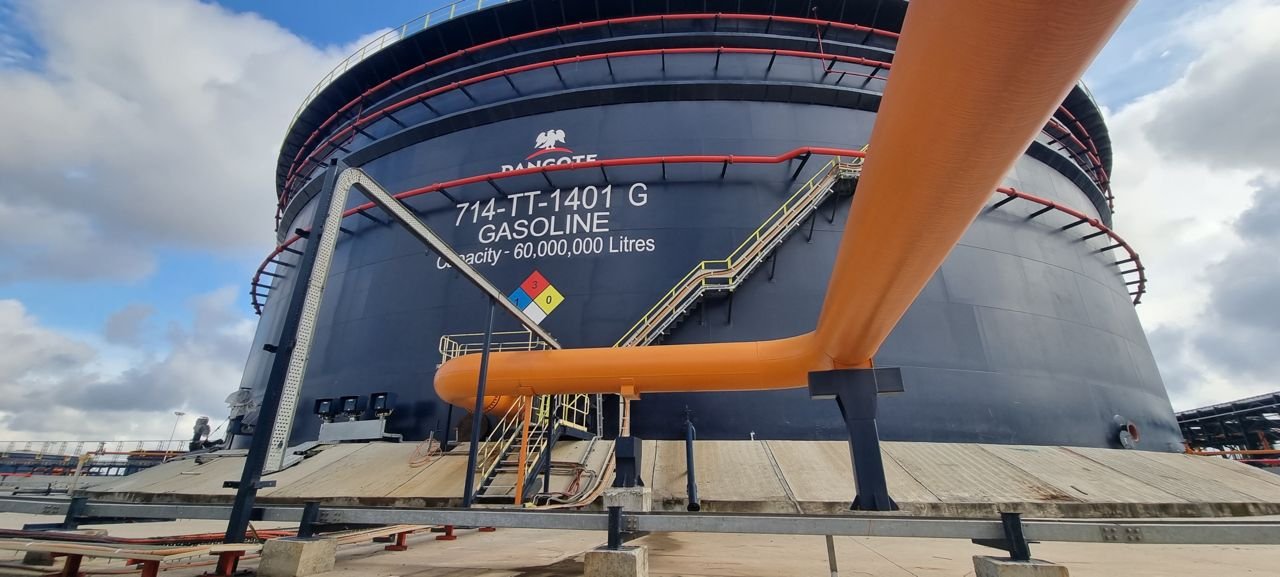
Dangote Petroleum Refinery has cautioned that petrol pump prices could surge to as high as ₦1,400 per litre if Nigeria depends entirely on imported fuel, underscoring the role of large-scale local refining as a key stabiliser in the downstream petroleum sector. The refinery issued the warning on Monday while refuting claims that it was shutting down for maintenance, describing the reports as false, misleading and deliberately circulated to justify fresh increases in pump prices. In a statement, the company said recent price movements revealed a troubling reality, noting that without the operations of the Dangote Petroleum Refinery, fuel importers would operate unchecked, potentially driving petrol prices to ₦1,400 per litre in a post-subsidy environment. It added that its refinery has become a critical force in moderating volatility in the downstream market. The company alleged that reports of a shutdown were being pushed by fuel importers whose commercial interests were threatened by domestic refining, accusing them of spreading misinformation to exploit Nigerians and rationalise unjustified price hikes. According to the refinery, production remains steady, ongoing and uninterrupted. It said it currently has the capacity to supply between 40 million and 50 million litres of Premium Motor Spirit (PMS) daily, depending on market demand, through January and February. It disclosed that on January 4, the refinery produced 50 million litres of PMS and evacuated 48 million litres via its gantry, adding that existing stock levels were sufficient to cover more than 20 days of national consumption, effectively dispelling concerns over supply shortages. Clarifying issues around maintenance, the refinery explained that routine work on specific processing units does not affect overall output due to the integrated design of its facilities. It said that while maintenance may occur on units such as the Crude Distillation Unit and Residual Fluid Catalytic Cracking unit, other critical units remain fully operational. The refinery noted that it continues to produce PMS, Automotive Gas Oil and Jet A-1 through operational units including the Naphtha Hydrotreater, CCR Reformer and Hydrocracker. It further stated that since mid-December, it has maintained consistent PMS supply to the Nigerian market, with daily loading volumes ranging between 31 million and 48 million litres, figures that it said are verifiable through depot records maintained by the Nigerian Midstream and Downstream Petroleum Regulatory Authority. The company also reaffirmed its ex-gantry price of ₦699 per litre for PMS, stressing that the price is available to all marketers and bulk consumers without discrimination. It urged filling station operators, large-scale users and institutional consumers to prioritise locally refined products, arguing that domestic sourcing would help stabilise prices, conserve foreign exchange and support Nigeria’s economic recovery and energy security. Reiterating its commitment, the refinery advised the public to disregard false reports and remain alert to price manipulation, adding that it would continue to operate in the national interest by ensuring steady supply of high-quality, locally refined petroleum products while supporting economic stability, energy independence and industrial growth.

aso-rockk.webp

5min7480
The Chartered Institute of Taxation of Nigeria (CITN) has warned about the risks the country faces due to alleged discrepancies between the tax laws passed by the National Assembly and the versions later gazetted. Observers have advised President Tinubu to heed the guidance of the CITN rather than relying solely on government-appointed officials, some of whom may lack the courage to provide candid advice. Mr. Taiwo Oyedele, Chairman of the Presidential Committee on Fiscal Policy and Tax Reforms, has been criticized for endorsing the implementation of the gazetted version, despite its deviation from the law passed by the National Assembly. Experts argue that only the law as passed by the legislature can be legitimately enforced, and implementing the gazetted version could create significant legal and economic challenges. In contrast, Mr. Innocent Ohagwa, the 17th President and Chairman of the CITN Council, emphasized that “the integrity of the legislative process is fundamental to the rule of law” and highlighted that tax legislation requires the highest standards of accuracy, transparency, and procedural fidelity due to its broad implications for government revenue, businesses, professionals, and citizens. CITN, established on February 1, 1982, under President Shehu Shagari’s administration, was created to provide professional, objective, and independent advice on taxation. The institute has historically avoided political entanglement, focusing instead on ensuring the nation’s tax system operates fairly and transparently. The origin and purpose of taxation As Benjamin Franklin famously stated, “In this world, nothing can be said to be certain, except death and taxes.” Historically, taxes were imposed by rulers to fund wars and maintain their own comfort. The rise of democracy shifted the power to tax from monarchs to legislatures, granting citizens oversight and control. Oliver Wendell Holmes, Jr. summarized this principle, stating, “Taxes are what we pay for civilized society.” Despite democratic oversight, taxes remain subject to political influence, and transparency does not always guarantee fairness. Alexis de Tocqueville noted that in democracies, those who vote for taxes may avoid paying them. This remains relevant in Nigeria, where the incomes of high-ranking officials are often not captured in the tax net, while private citizens bear the full burden. As US President Calvin Coolidge once warned, “The power to tax is the power to destroy… A government which imposes taxes not required by urgent public necessity and sound policy becomes an instrument of tyranny.” Nigeria’s current predicament Justice Holmes also remarked in a 1928 case that “The power to tax is not the power to destroy while this court sits,” highlighting the importance of checks and balances. In Nigeria, any attempt to enforce a tax law that bypasses the National Assembly threatens to create an imbalance between the executive and legislative branches. It is in President Tinubu’s interest to distance himself from any amended tax law that undermines legislative authority. History provides clear warnings: executive overreach has, in the past, led to political and legal repercussions for leaders once power shifted. Multinational companies and investors are likely to hesitate in countries where the legitimacy of tax laws is questionable. Advisers recommend that if any changes were made to the Tax Law after its passage by the National Assembly, implementation should be delayed. President Tinubu should also publicly distance himself from those promoting the amendments to safeguard the nation’s legal and economic integrity.

importation-1280x640.png

3min4580
Licensed customs agents in Nigeria are threatening to protest against planned increases in shipping fees, citing poor timing and limited business activity. Agents told reporters on Sunday that raising charges so early in the year is inappropriate, as many businesses have yet to resume full operations. According to updated Mediterranean Shipping Company tariffs, import documentation fees for 20ft containers are set to rise from N45,000 to N58,500, while 40ft container fees would increase from N72,000 to N93,600. Port additional charges are also set to climb, with 20ft containers moving from N50,000 to N80,000 and 40ft containers from N100,000 to N160, effective January 1, 2026. National Protocols Officer of the Association of Nigerian Licensed Customs Agents (ANLCA), Riwane Amuni, warned that any unilateral implementation would trigger protests. He emphasized that demonstrations could extend to other shipping companies and terminals if the increases go ahead without consultation. Similarly, Abayomi Duyile, Apapa Chapter Chairman of the National Council of Managing Directors of Licensed Customs Agents, confirmed that the Nigerian Shippers Council (NSC) has been informed of the planned hike and has instructed the shipping company to engage stakeholders. He said any increase implemented without proper dialogue could lead to protests and office shutdowns once agents resume normal operations after the festive period. Duyile stressed that any fare adjustments must be justified and transparent, warning that unjustified hikes could worsen inflation. He noted that shipping companies should issue prior notices of at least one to three weeks before implementing new charges. Femi Anifowose, Coordinator of ANLCA’s Western Zone, described the planned fare increase as arbitrary, ill-timed, and unjustifiable, urging President Bola Tinubu to direct regulatory authorities, including the NSC and the Ministry of Marine and Blue Economy, to halt the increment. He added that key cost indicators cited by shipping lines, such as diesel, fuel, and foreign exchange, have largely stabilized over the past 18 months. Attempts to reach the shipping company for comment were unsuccessful as calls and emails went unanswered.

Dangote-Refinery.jpg

3min3740
Shareholders have praised the Dangote Petroleum Refinery for strengthening Nigeria’s economic stability and alleviating fuel shortages, highlighting that the $20bn facility has delivered significant benefits to the nation and citizens’ welfare. In a statement on Sunday, they said the refinery’s operations marked a milestone for Nigeria’s downstream petroleum sector, noting that the country experienced year-end festivities without the usual fuel scarcity or price surges for the first time in recent memory. Faruk Umar, President of the Association for the Advancement of Rights of Nigerian Shareholders, noted that the refinery’s activities are already helping to ease inflationary pressures, particularly through lower transport and energy costs. He added that the reduction in retail petrol prices following the start of local refining has contributed to a sustained disinflationary trend. Describing the refinery as a major national achievement, Umar said it has positioned Nigeria globally as home to the world’s largest single-train refinery while boosting the domestic economic environment. He highlighted the recent partnership between Dangote Group and Honeywell International Inc. to expand the refinery’s daily processing capacity to 1.4 million barrels per day as evidence of Aliko Dangote’s long-term commitment to the country despite operational challenges. Shareholders also pointed to planned expansions in polypropylene production to 2.4 million metric tonnes annually and urea output from three million to nine million metric tonnes per year, noting the potential positive impact on Nigeria’s manufacturing and agricultural sectors. They emphasised that Dangote’s investment strategy is notable at a time when many wealthy individuals prefer overseas assets, describing him as the largest indigenous investor in the Nigerian economy. Umar encouraged Dangote to expedite the listing of the refinery on the Nigerian Exchange to provide ordinary Nigerians with wealth-creation opportunities and deepen the capital market. He said shareholding would empower citizens, referencing the strong track record of capital gains and dividends from other Dangote Group listed companies, including Dangote Cement Plc, Dangote Sugar Refinery Plc, and NASCON Allied Industries Plc. The shareholders also applauded Dangote’s philanthropic efforts, particularly the launch of the N1tn Dangote Education Trust by the Aliko Dangote Foundation, calling it a significant investment in Nigeria’s future human capital. They urged other wealthy Nigerians to follow Dangote’s example by prioritising local investments that generate jobs, strengthen industrial capacity, and drive broad-based economic growth.  

Tech & Tools Desk5 January 2026
First-BankSSSS.jpg

1min10220
In a statement, the bank said the Nigeria Economic Outlook 2026 will hold on Tuesday under the theme: “The Great Calibration: Mastering Resilience in an Era of Asynchronous Growth.” The event is an annual session aimed at giving customers insights into current economic trends and guiding them on navigating the economy at the start of the year. Ahead of the event, Olayinka Ijabiyi, Acting Group Head of Marketing and Corporate Communications at FirstBank, noted that the initiative is designed to help customers make informed financial decisions using expert analysis. The session will feature leading economic analysts and industry experts, with the keynote address delivered by Yemi Kale, Group Chief Economist and Managing Director, Research and Trade Intelligence at Afreximbank. FirstBank emphasized its commitment to supporting Nigerians in achieving their financial goals while contributing to broader economic growth.

James Obasi5 January 2026
itel.webp

2min4710
Itel, the global tech empowerment brand, has teamed up with Pantone, the authority on colour standards, to launch a limited-edition collection inspired by PANTONE 11-4201 Cloud Dancer, the Colour of the Year 2026. According to Simeon Shagba, PR Supervisor at itel Nigeria, the collaboration brings this bright, airy white shade—symbolising freshness and vitality—into Nigeria’s tech market. Already a global trendsetter in fashion and design, Cloud Dancer now features on itel’s stylish accessories: the itel Buds 5 earbuds, MagSnap 10C power bank, and Classic 2 Pro Hair Clipper. The products combine Cloud Dancer’s clean, luminous look with advanced functionality designed for young Nigerians. The itel Buds 5 offer 32dB active noise cancellation, punchy bass, and up to 32 hours of playback for uninterrupted audio on commutes or workouts. The MagSnap 10C Power Bank provides magnetic snap-on charging in a sleek, portable form. The Classic 2 Pro Hair Clipper delivers precise, professional grooming with ease. Shagba said, “The collection merges global trends with local flair, letting Nigerians add runway-inspired style to their everyday routines.” As the world’s leading smartphone brand under $75 and the top feature phone brand in over 80 emerging markets, itel reaffirmed its commitment to affordable, expressive tech for youth. “Cloud Dancer isn’t just a colour—it’s a vibe,” the statement said. “This launch blends technology, fashion, and Nigerian energy, marking a fresh start to 2026.”

cash.jpg

9min5910
The Central Bank of Nigeria has stepped up efforts to strengthen operational discipline across the financial system, placing renewed emphasis on ensuring consistent access to cash nationwide. The initiative, aimed at restoring confidence and reliability in cash availability, is beginning to deliver visible improvements for millions of Nigerians who rely on physical currency for daily transactions and business activities. A key milestone in this process was the creation of a special committee tasked with addressing Nigeria’s long-standing cash scarcity challenges. Chaired by CBN Governor Olayemi Cardoso, the committee was mandated to conduct a comprehensive review of the entire cash ecosystem and propose practical, system-wide solutions. Its recommendations have since translated into noticeable improvements across the country. For the first time in several years, Nigerians went through the Christmas and New Year festivities without widespread reports of cash shortages. Unlike previous seasons characterised by frustration and uncertainty, customers were largely able to access cash seamlessly through bank branches, automated teller machines, and other channels. The absence of the usual anxiety highlighted a significant shift in cash management outcomes. Traditionally, the festive period in Nigeria has been associated with severe naira shortages, often spilling over into the new year and disrupting economic activities. During such times, customers struggled to withdraw funds from ATMs, endured long queues in banking halls, and faced frequent difficulties at point-of-sale terminals. That pattern now appears to be changing. Following the committee’s review, the CBN introduced targeted measures to address structural bottlenecks in cash circulation. Many Nigerians report that these interventions have led to a clear improvement in cash access nationwide. In markets across Lagos, Abuja, Kano, Calabar, and other major cities, traders and small business owners have welcomed what they describe as lasting solutions to a persistent problem. Many said the improved cash situation has enabled smoother transactions and better planning. Visits to several commercial bank branches supported these claims, as customers were generally able to withdraw cash over the counter without extended delays. Banks also ensured that ATMs were adequately funded, providing multiple withdrawal options with minimal stress. In key banking districts such as Ibeju-Lekki, Victoria Island, and Ikoyi in Lagos, the long queues typically associated with the festive season were largely absent. Customers moved through banking halls more quickly, a change widely attributed to improved cash availability and more efficient branch operations. One customer, Mrs Nkiru Onyema, described her experience as a sharp contrast to previous years. She said she spent about 10 minutes at a new-generation bank to withdraw N20,000 over the counter. According to her, the consistent loading of ATMs played a major role in easing pressure on banking halls, particularly benefiting customers who depend on machines outside regular banking hours. Another customer, Stephen Abiodun, said he was able to withdraw cash from an ATM without difficulty in about 15 minutes, noting that reduced congestion in banking halls allowed people to focus on other productive activities. Similar observations were made at bank branches in areas such as Garki in Abuja, Broad Street in Lagos, and the Ikeja axis, where ATMs were fully functional and dispensing cash, contributing to a calmer environment compared with previous years. The President of the Bank Customers Association of Nigeria, Dr Uju Ogubunka, said the improvements provided significant relief to customers nationwide. He stressed that sustaining the gains would depend largely on financial institutions proactively requesting sufficient cash from the CBN, especially during periods of high demand. Explaining the strategy behind the progress, Governor Cardoso said the apex bank carried out a comprehensive review of the entire cash lifecycle, from production and transportation to distribution and end-user access. This approach, he noted, made it possible to tackle root causes rather than relying on short-term fixes. As part of the reforms, the CBN recalibrated cash-printing models, issued guidelines on optimal ATM-to-card ratios, strengthened approval requirements for ATM and branch closures, enforced sanctions on banks whose ATMs failed to dispense cash, and intensified oversight of payment agents and PoS operators nationwide. Beyond cash management, Nigeria’s digital finance transformation also gained momentum in 2025, reflecting the CBN’s commitment to innovation and system stability. The apex bank extended its Payment System Vision roadmap to 2028, reinforcing efforts to modernise infrastructure and strengthen cybersecurity. According to the CBN, more than 12 million contactless payment cards are now in circulation, while the regulatory sandbox has expanded to support over 40 fintech innovators. Revised agent-banking guidelines have strengthened anti-money-laundering controls and consumer protection, while improved integration among switching companies has advanced domestic interoperability. Nigeria is now regarded as one of Africa’s most advanced digital payments markets, with its fintech ecosystem producing eight of the continent’s nine unicorns. By mid-2025, leading fintech applications had surpassed 10 million downloads each, reflecting strong consumer adoption. In a related move, the CBN directed banks and other financial institutions to ensure uninterrupted use of foreign-issued payment cards across ATMs, PoS terminals, and online platforms nationwide. The directive is intended to improve access, security, and convenience for tourists and Nigerians returning from the diaspora. The apex bank also introduced additional safeguards, including multi-factor authentication thresholds, clearer disclosure of exchange rates and charges, stronger fraud monitoring, and enhanced know-your-customer controls. Institutions were warned that unresolved customer complaints escalated to the regulator would attract sanctions. To reinforce compliance, the CBN sanctioned deposit money banks that failed to make cash available through ATMs during the festive season, fining each defaulting institution N150m after spot checks. The apex bank said investigations would continue to address cash hoarding, illegal cash sales, and violations of withdrawal limits. Governor Cardoso reiterated that banks must comply strictly with cash distribution guidelines or face stiff penalties, stressing the CBN’s commitment to maintaining adequate cash buffers nationwide. He said the bank’s focus remains on fostering trust, ensuring stability, and guaranteeing seamless cash circulation across Nigeria’s financial system.


opeccc.jpg

6min4810
The Organisation of Petroleum Exporting Countries and its allies, known as OPEC+, have agreed to suspend planned increases in oil production through the first quarter of 2026, choosing instead to keep output at current levels amid a growing global supply surplus and uncertainty over future production from Venezuela. The decision was reached during a brief meeting on Sunday led by the group’s key producers, Saudi Arabia and Russia, according to a report by Bloomberg. Sources familiar with the discussions said members considered it too early to adjust supply policy in response to recent political developments in Venezuela, following reports that the country’s leader, Nicolás Maduro, had been captured by United States forces. According to the report, OPEC+ maintained its plan to hold production steady through the first quarter as oil markets contend with oversupply and await clarity on whether the developments in Venezuela will affect output. Delegates, who requested anonymity as the decision has not been formally announced, said collective production levels would remain unchanged until at least the end of March 2026. The virtual meeting reportedly lasted less than 10 minutes and did not involve in-depth discussions on Venezuela, as members agreed that any immediate supply response would be premature. The decision reflects a cautious approach as oil markets face weakening price momentum and excess supply. Global crude markets have been under pressure from oversupply, with oil futures falling by about 18 per cent last year, marking their steepest annual decline since the COVID-19-driven slump in 2020. Projections for 2026 suggest the surplus could widen further, as output growth from both OPEC+ and non-OPEC producers continues to exceed demand growth. Venezuela, home to the world’s largest proven oil reserves, currently produces around 800,000 barrels per day, accounting for less than one per cent of global supply and far below its historical production levels. While a sustained recovery in Venezuelan output could eventually add significant volumes to the market, analysts note that such a turnaround would likely take years, even with renewed foreign investment. US President Donald Trump has said American oil companies could invest billions of dollars to help rebuild Venezuela’s ageing energy infrastructure following the military operation that led to Maduro’s capture. However, sources cited by Bloomberg said major oil facilities were not damaged during the operation. The latest decision follows a strategic shift by OPEC+ in April 2025, when the group began accelerating the restoration of production cuts introduced in 2023. That move was widely interpreted as an effort to regain market share lost to competitors, including US shale producers, despite already ample global supply. Prior to Sunday’s meeting, OPEC+ had agreed to restore roughly two-thirds of the 3.85 million barrels per day previously cut, leaving about 1.2 million barrels per day yet to be brought back. Actual output increases, however, have lagged planned levels due to capacity constraints in some countries and efforts by others to offset earlier overproduction. The decision to pause further supply increases carries important implications for oil-dependent economies such as Nigeria. As Africa’s largest crude producer and an OPEC member, Nigeria’s fiscal health remains closely linked to global oil prices and export volumes. By holding output steady in an already oversupplied market, OPEC+ is likely to keep crude prices relatively stable but subdued in the near term, limiting revenue upside for oil exporters. Oil receipts account for a large share of Nigeria’s foreign exchange earnings and government revenue, making OPEC+ production decisions crucial for budget planning, debt servicing, and exchange rate stability. Nigeria has also faced challenges in meeting its OPEC production quota in recent years due to oil theft, pipeline vandalism, and prolonged underinvestment, reducing its ability to fully benefit even when production limits are eased. Extended periods of weak oil prices could further strain public finances, widen budget deficits, and increase pressure on the naira. In response, the Federal Government has continued to pursue reforms aimed at boosting crude output, expanding domestic refining capacity, and accelerating economic diversification through non-oil exports and improved domestic revenue mobilisation. OPEC+, which brings together the 13-member OPEC group and allied producers such as Russia, controls a significant share of global oil supply, giving its output decisions substantial influence over oil prices and the economic outlook of oil-producing countries, including Nigeria.

clean-naira.webp

5min2990
Over the past week, the naira traded around the N1,440 per dollar level at the official market, maintaining relative stability supported by improved foreign exchange supply, Central Bank interventions, and the cushioning effect of Nigeria’s external reserves. Within the week, the currency appreciated by N12.53 per dollar, representing an 86 basis point gain week-on-week. It moved within a band of N1,427.00 to N1,445.68 per dollar, recording gains in three out of four trading sessions. Analysts noted that the exchange rate has remained broadly stable when compared with the sharp volatility experienced in the previous year. Meristem Securities observed that although the average exchange rate in 2025 stood at N1,519.63 per dollar, slightly weaker than N1,486.03 per dollar in 2024, volatility eased markedly to 0.53 per cent from 4.58 per cent. This trend was attributed to improved FX liquidity and stronger external buffers. At the official Nigerian Foreign Exchange Market, the naira last traded below the N1,430 per dollar mark on 31 October 2025, when it closed at N1,421.73 per dollar. Analysts attributed the recent stability largely to reforms driven by the Central Bank, including the introduction of the Electronic Foreign Exchange Matching System in December 2024 and the FX Code, both of which enhanced market transparency, improved pricing efficiency, and reduced speculative activity. Nigeria’s external reserves also recorded strong growth in 2025, rising by 10.60 per cent year-to-date to $45.21 billion from $40.9 billion at the end of 2024. Although reserve accumulation was initially weighed down by foreign debt servicing and FX market interventions in the first half of the year, it recovered in the second half on the back of stronger FX inflows from higher trade receipts, increased capital importation, and Eurobond proceeds. Looking ahead, analysts at Meristem projected that the naira would trade within a range of N1,350.00 to N1,528.57 per dollar in 2026. They noted that the official exchange rate is expected to remain largely stable, supported by sustained foreign inflows and a resilient external reserve position. Planned foreign currency-denominated issuances by the Federal Government, as outlined in the Medium-Term Expenditure Framework, are also expected to boost reserves. While oil revenues may remain subdued, inflows from gas and non-oil exports are expected to support reserve levels. In addition, strong foreign portfolio investment inflows, driven by rising investor confidence and potential capital shifts from developed markets, should further strengthen FX liquidity. According to the analysts, these factors should preserve the Central Bank’s capacity to intervene in the FX market and sustain adequate liquidity, thereby supporting naira stability. They added that the parallel market is also expected to remain relatively stable in 2026, reflecting the impact of ongoing FX reforms aimed at improving transparency and curbing speculative activity. The recent issuance of Bureau de Change licences was cited as a further step in strengthening regulatory oversight of the informal market and limiting excessive volatility. Coronation Research shared a similar outlook, projecting that the naira would trade within the N1,400 to N1,500 per dollar range in 2026. The firm attributed this outlook to higher oil production, reduced reliance on imported refined fuel, and improved FX liquidity from stronger export earnings. It cautioned, however, that sustained stability would depend on consistent policy implementation, enhanced investor confidence, fiscal discipline, and continued improvements in capital inflows through a transparent, market-driven FX framework. AIICO Capital also echoed these views in its weekly report, noting that, in the absence of any major shift in FX supply, the naira is expected to trade around current levels. In its outlook for 2026, the Central Bank reaffirmed its commitment to balancing price stability with support for economic growth, stating that appropriate policy tools would be deployed to attract foreign investment and consolidate stability in the foreign exchange market.