

 Lifestyle & Wellness Desk
Expert Urges U.S. Lawmakers to Push Nigeria Toward Ending Sharia Law and Dissolving the Hisbah Corps
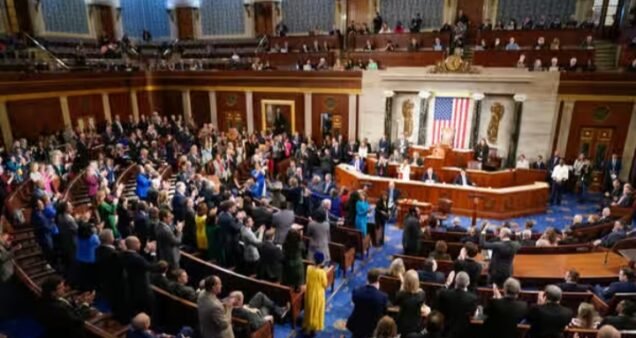
United States lawmakers were on Tuesday urged to pressure the Nigerian government to abolish Sharia law in the 12 northern states where it is currently practised and to dismantle the Hisbah religious-enforcement bodies, amid concerns that both systems are fuelling rising persecution against Christians.
At a joint congressional briefing hosted by the House Appropriations Committee and the House Foreign Affairs Committee, Dr. Ebenezer Obadare, Senior Fellow for Africa Studies at the Council on Foreign Relations, warned that extremist groups are exploiting religious structures to expand violence and impunity. He told lawmakers that Boko Haram, the Islamic State West Africa Province (ISWAP), and radicalised Fulani militias “weaponise Sharia-based institutions and Hisbah operatives to advance extremist ideology, enforce forced conversions, and operate unchecked in many communities.”
According to a statement from the Appropriations Committee, Obadare outlined a two-step policy direction: “First, work with the Nigerian military to neutralise Boko Haram. Second, the United States should encourage President Tinubu to make Sharia law unconstitutional in the twelve northern states where it has been in force since 2000 and to disband the various Hisbah groups attempting to impose Islamic law on all citizens regardless of their faith.”
Obadare noted that the Nigerian government has shown some responsiveness to international pressure, citing recent air strikes on Boko Haram camps, the recruitment of 30,000 additional police officers, and President Bola Tinubu’s declaration of a national security emergency.
“As recent events have shown, the Nigerian authorities are not impervious to incentives,” he said, emphasising that “Washington must keep up the pressure.”
The bipartisan hearing, chaired by Appropriations Vice Chair Mario Díaz-Balart (R-FL), included testimony alleging state involvement in what some lawmakers described as “religious cleansing” in northern Nigeria and the Middle Belt.
Witnesses highlighted recent incidents such as the November kidnapping of pupils and teachers from St. Mary’s Catholic School in Niger State, along with ongoing blasphemy prosecutions and widespread attacks.
Stressing the core of the crisis, Obadare argued that “the deadliest and most serious threat confronting the Nigerian state today is jihadist terror,” insisting that any meaningful solution must centre on dismantling Boko Haram’s operational strength.
“Every proposal to solve the Nigerian crisis that does not take seriously the need to radically degrade and ultimately eliminate Boko Haram as a fighting force is a non-starter,” he said.

