

 Lifestyle & Wellness Desk
Government Warns of Sanctions Over Delays on Lokoja-Abuja Road
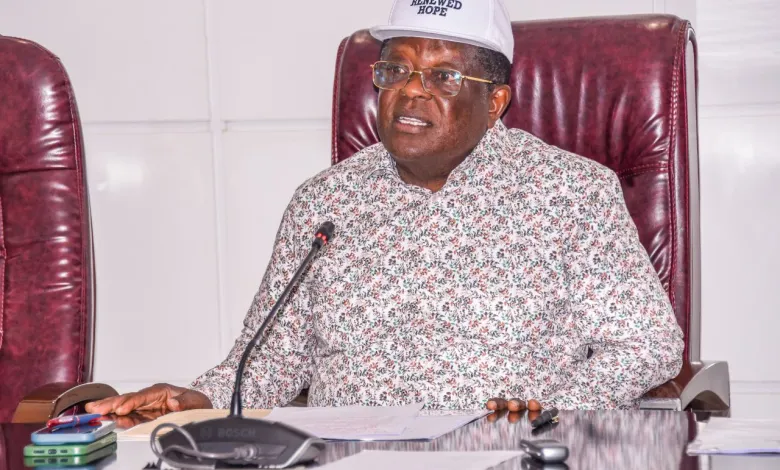
The Federal Government has expressed concern over the slow progress of work on the Lokoja–Abuja highway, warning contractors handling sections of the route to improve performance immediately or face sanctions. Abiodun Essiet, the Presidency’s Senior Special Assistant on Community Engagement for the North Central region, made the warning during an inspection of federal road projects in Kogi State, describing progress on key parts of the highway as far below expectations. In a statement released by the Ministry of Works on Tuesday, Essiet said she was disappointed with the level of work completed, months after contractors were instructed to ramp up activity and accelerate construction. She recalled that the Minister of Works, Senator David Umahi, had terminated four road contracts in Kogi State last year due to poor performance and warned that similar measures could be taken if current timelines were not met. During the visit, two of the contractors were found to be behind schedule and had not deployed additional equipment as previously directed. Project managers acknowledged delays and challenges in meeting project milestones. Essiet stressed that the situation was unacceptable, noting that only a few months remain for project completion. She called on the Ministry of Works to intensify supervision and enforcement to ensure timely delivery. “This is a very busy road, and expectations are high. Nigerians expect tangible results. Contractors must deploy more equipment and collaborate where necessary to complete this project on time. The current progress is not encouraging,” she said. The Lokoja–Abuja highway is a major corridor linking the Federal Capital Territory to the North Central region and parts of the South. It has long suffered from traffic congestion, accidents, and insecurity due to poor road conditions and slow rehabilitation work. Regarding the dualisation of the Lokoja–Benin Road managed by CGC Nigeria Ltd, project engineer Abubakar Yaba attributed delays to funding constraints. He reported the project was about 38 per cent complete despite roughly 90 per cent of the project timeline having passed. He added that N59bn had been certified for the project, with only N54bn paid, leaving over N4bn outstanding. Delays in budgetary provision for 2025 and unsettled payments were said to have hampered progress. Essiet rejected the funding explanation, emphasizing that contractors were awarded projects based on proven financial capacity and that the Federal Government’s Renewed Hope intervention funds would be used to meet obligations. “If financial capacity was lacking, the contract would not have been awarded. Contractors must demonstrate capacity and deliver,” she said, urging them to explore all lawful funding options to sustain work on site, noting the road’s importance for safety, mobility, and economic activity. Kogi State Controller of Works, Patiko Musa, said contractor concerns had been forwarded to the ministry in Abuja and assured that requests regarding extensions and outstanding payments were being processed. During the visit, Essiet also commissioned a special intervention project addressing flood-related washouts along the Itobe–Ayingba axis. Musa said the 1.6-kilometre embankment rehabilitation at Utolu in Baruvi was completed at a cost of N972m as part of 260 nationwide emergency road interventions targeting critically failed sections. Representing the President, Essiet described the completed project as proof of the Federal Government’s commitment to restoring vital road infrastructure. Community leaders and professional bodies, including the Nigerian Society of Engineers, praised the intervention for improving safety and reducing accidents.

