

 Lifestyle & Wellness Desk
How Nail Biting Can Transmit Infections to the Stomach
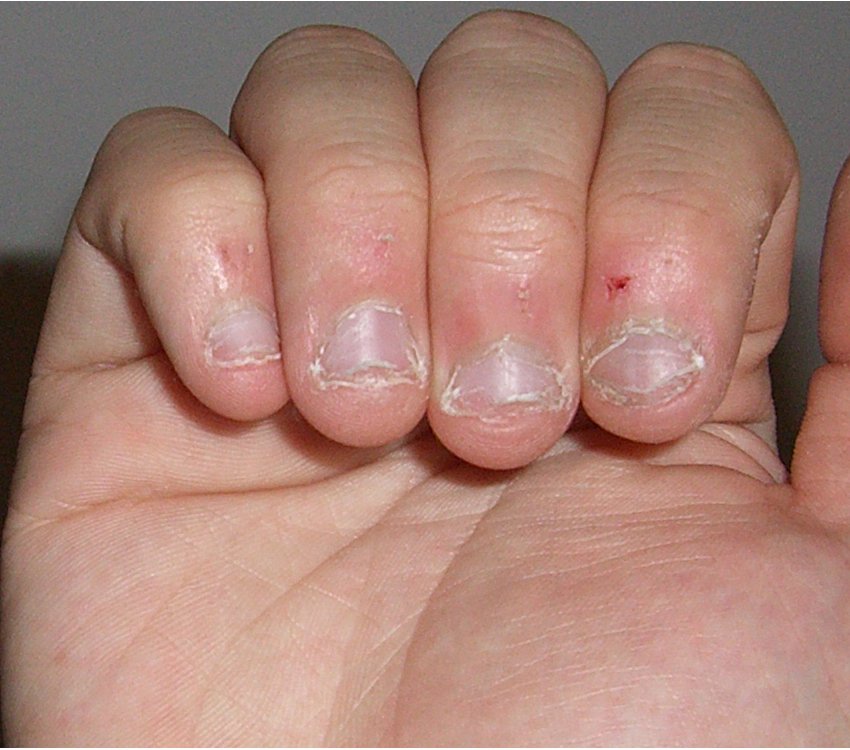
Health experts have cautioned that people who habitually bite their fingernails face a higher risk of stomach and gut infections, dental problems, and permanent damage to their nails.
According to medical professionals, the habit—known clinically as onychophagia—creates a direct route for bacteria, viruses, and parasites to enter the body. Fingernails often trap germs that routine handwashing may not completely remove, making nail biting a significant health risk.
The experts explained that persistent nail biting can lead to long-term complications, including damage to tooth enamel, jaw disorders, gum disease, and irreversible nail deformities. They advised individuals who struggle with the habit to consider behavioural modification techniques.
Research shows that nail biting and nail trimming with the teeth are common behaviours among both children and adults, often done unconsciously without awareness of the associated health dangers. The American Academy of Dermatology Association notes that nail biting typically begins in childhood and can persist into adulthood if deliberate efforts are not made to stop.
The association also warns that repeated nail biting can damage the nail growth tissue, resulting in abnormal nail appearance, while facilitating the transfer of harmful microbes from the fingers to the mouth and back again.
Medical findings indicate that fingernails can harbour numerous strains of bacteria and parasites, increasing the risk of infections, diarrhoea, and food contamination—especially among individuals who keep long nails or eat with their hands. Health professionals have also warned parents against using their teeth to trim infants’ fingernails, describing the practice as unhygienic and capable of exposing babies to infections.
Speaking on the issue, public health physician Dr Tuyi Mebawondu explained that nail biting is more than a bad habit, noting that it is classified as a Body-Focused Repetitive Behaviour and affects up to 30 per cent of the population. He said the behaviour often begins in early childhood and may persist into adulthood.
Dr Mebawondu noted that while stress is a common trigger, studies suggest nail biting can also occur during boredom or intense concentration. Because the hands constantly interact with the environment, he explained that nail biting acts as a direct pathway for germs to enter the body through the hand-to-mouth route.
He warned that nails trap dirt, bacteria, and viruses that may escape routine handwashing, and biting them transfers these germs directly into the digestive system. As a result, habitual nail biters are more likely to ingest harmful bacteria such as E. coli and Salmonella, which can cause diarrhoea, vomiting, and stomach infections. In some cases, parasites like pinworms may also be swallowed.
The physician further identified paronychia—a bacterial or fungal infection of the skin around the nail—as a common complication, often causing redness, swelling, pain, and pus that may require medical treatment. He also warned that nail biting can spread viral infections, such as transferring warts caused by the human papillomavirus to the mouth, or spreading the herpes virus between the mouth and fingers, leading to painful conditions like herpetic whitlow.
Beyond infections, Dr Mebawondu explained that chronic nail biting can cause lasting damage to teeth and nails. The repeated grinding of teeth against hard nails can chip enamel, misalign teeth, and strain the jaw joint, potentially resulting in temporomandibular joint dysfunction marked by pain and clicking sounds. Sharp nail fragments can also injure the gums, leading to inflammation or infection.
He added that severe nail biting can damage the nail matrix—the root where the nail grows—causing permanent nail abnormalities such as ridges, bumps, shortening, or deformity.
On the psychological aspect, the physician noted that while nail biting may simply be a boredom-related habit for some people, it can also be linked to emotional regulation and attention control. He said there is a strong association between nail biting and Attention Deficit Hyperactivity Disorder, as the behaviour may provide sensory stimulation that aids concentration. It is also recognised as a coping mechanism for anxiety or social stress, and in some cases, has links to conditions such as separation anxiety, oppositional defiant disorder, or, rarely, obsessive-compulsive disorder.
Dr Mebawondu advised against punishing or shaming individuals who bite their nails, stating that such approaches are usually ineffective. Instead, he recommended identifying personal triggers by keeping a simple log of when and why the behaviour occurs.
He suggested Habit Reversal Training, where individuals replace nail biting with a competing action such as clenching fists, squeezing a stress ball, or sitting on their hands when the urge arises. Other strategies include using bitter-tasting nail polish, wearing gloves or bandages during high-risk periods, and keeping nails neatly trimmed to reduce temptation.
He emphasised that effective management should involve healthcare professionals, parental support where applicable, and a supportive environment.
In a related view, public health expert Dr Michael Olugbile warned that keeping long nails increases the likelihood of harbouring harmful microbes, which can easily contaminate food and lead to infections—especially in people with weakened immune systems. He stressed the importance of proper hand hygiene and good nail care as simple but effective measures to reduce exposure to disease-causing organisms.

