

 Lifestyle & Wellness Desk
Israel introduces tactical pause amid Gaza hunger crisis
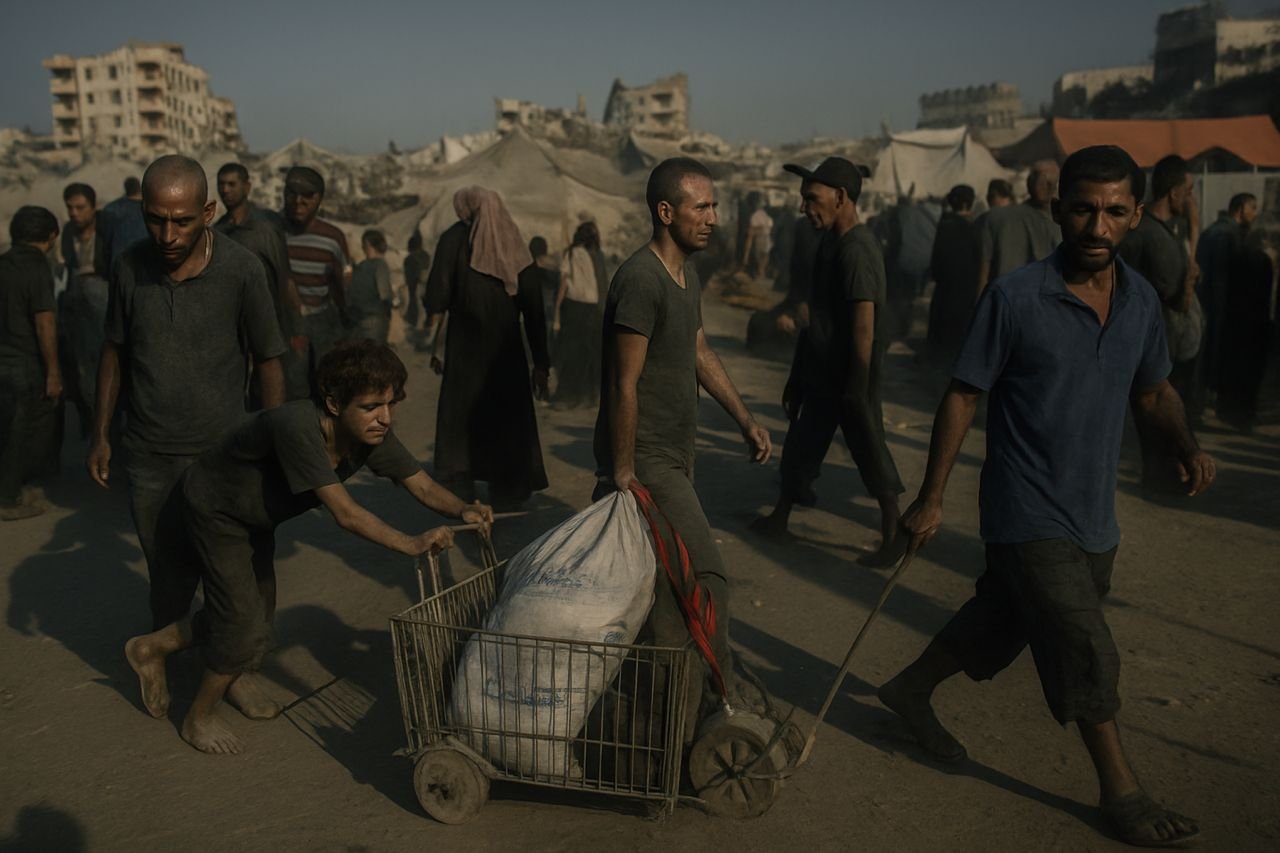
Israel announced on Sunday that it is temporarily pausing military operations in parts of the Gaza Strip to allow humanitarian aid deliveries, following growing international concern over rising deaths from malnutrition and widespread hunger linked to restrictions on aid access.
According to the Israel Defense Forces (IDF), “humanitarian corridors” will be established to allow safe movement for aid trucks, particularly those operated by the United Nations. These “humanitarian pauses” will take place daily from 10 a.m. to 8 p.m. in specific areas where the military is not currently active, including Al-Mawasi, Deir al-Balah, and Gaza City. The pauses will remain in effect until further notice.
In addition, the IDF said secure routes would be available from 6 a.m. to 11 p.m. to facilitate the flow of humanitarian convoys, and that they are ready to increase the scale of these operations if needed. Aid trucks began entering Gaza from Egypt shortly after the announcement, with over 100 trucks reportedly carrying more than 1,200 tons of food.
Despite the temporary pause, reports from Gaza indicated that at least 25 people were killed by Israeli military fire on Sunday morning, including 11 individuals who were reportedly trying to access aid in central Gaza. Airstrikes were also said to be ongoing in other parts of the territory.
The World Food Programme welcomed the humanitarian corridors, noting that it has enough supplies in the region or en route to feed the entire population of Gaza for three months. The agency estimates Gaza requires more than 62,000 tons of food aid each month.
Israel also confirmed that it had conducted seven aid airdrops into Gaza and has invited other countries to do the same. However, several aid organizations have criticized airdrops as ineffective, arguing that they divert attention from the core issue: overland access remains the only way to deliver food and supplies at the scale required.
One aid official described the airdrops as a “grotesque distraction,” emphasizing that they cannot meet the volume, regularity, or quality of assistance that is urgently needed on the ground.
According to Gaza’s health authorities, an additional six people have died from malnutrition in the past 24 hours, bringing the total number of reported starvation-related deaths to at least 133, 87 of them children. Humanitarian groups warn that the broader population of 2.2 million faces the risk of mass starvation, pointing to severe obstacles in the aid delivery system, including delays, red tape, and inconsistent permissions.
Thousands of aid trucks remain stalled outside Gaza’s borders, awaiting clearance. While Israeli authorities say aid distribution inside Gaza is the responsibility of U.N. agencies, humanitarian organizations say Israeli restrictions are so complex that only a small fraction of aid makes it through.
The IDF has urged aid agencies to improve the efficiency of aid distribution and to ensure that assistance does not reach armed groups. Israel has maintained that its controls are aimed at preventing Hamas from diverting supplies. However, independent reviews, including one from within the U.S. government, have found no evidence of widespread theft by Hamas in recent months. The United Nations and the World Food Programme have also reported no confirmed cases of systematic diversion of aid.
In May, Israel lifted a near three-month blockade on aid, allowing a limited number of relief organizations to operate. Israeli officials continue to insist that claims of widespread hunger are exaggerated, stating that there is no starvation in Gaza and labeling such reports as misinformation.
Nonetheless, humanitarian agencies, hospitals, and medical groups have consistently reported worsening food insecurity and hunger throughout the region. One senior international aid official described the crisis as a humanitarian catastrophe, warning that even those providing care are not receiving enough food to stay healthy themselves.

