

 Tech & Tools Desk
Japan’s birth rate declines for the 10th consecutive year
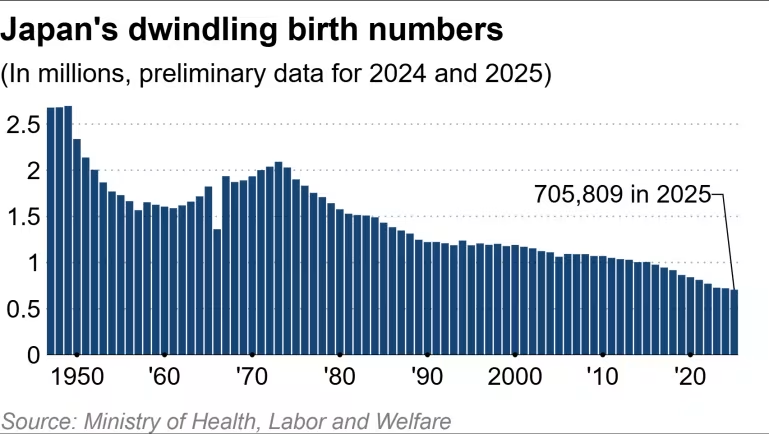
Japan recorded a decline in births for the 10th consecutive year in 2025, according to official data released on Thursday, underscoring the demographic challenges confronting Prime Minister Sanae Takaichi.
Preliminary figures from the health ministry showed that 705,809 babies were born during the year, representing a 2.1 per cent drop from 2024. The data covers births to Japanese citizens within the country, children born in Japan to foreign nationals, and babies born overseas to Japanese parents.
Marriage numbers, however, showed a modest rise, with 505,656 couples tying the knot in 2025—an increase of 1.1 per cent. Divorces declined by 3.7 per cent to 182,969 cases. Deaths also fell slightly, down 0.8 per cent, or 13,030, to 1,605,654.
Meanwhile, the internal affairs ministry estimated Japan’s population at 122.86 million as of February, a decrease of 580,000 people, or 0.47 per cent, compared with the previous year.
As the world’s fourth-largest economy, Japan continues to grapple with one of the lowest birth rates globally, alongside a rapidly ageing and shrinking population. The trend has contributed to labour shortages, rising social security costs, and a shrinking tax base, further straining public finances. Japan already carries the highest debt-to-GDP ratio among major economies.
Recent figures indicate that nearly 100,000 people in the country are aged 100 or older, with women accounting for almost 90 per cent of that group. Rural areas have been particularly hard hit, with an estimated four million homes now abandoned. Studies suggest that more than 40 per cent of municipalities face the risk of disappearing altogether.
Successive administrations, including that of Takaichi—the nation’s first female prime minister have pledged to boost birth rates, but results have been limited. In an unconventional effort, Tokyo’s metropolitan government introduced a dating app that requires users to provide proof they are single and to sign a declaration expressing intent to marry.
“The declining birth rate and shrinking population are a quiet state of emergency that will gradually erode our country’s vitality,” Takaichi told parliament last week.
Her ruling Liberal Democratic Party secured a two-thirds majority in snap elections held on February 8.
While analysts note that higher immigration could help offset population decline and ease labour market pressures, Takaichi has promised stricter immigration policies amid pressure from the “Japanese first” Sanseito party.
The government said on Thursday that it is working to strengthen the economy and ease the financial burden of childcare on working families. Deputy Chief Cabinet Secretary Masanao Ozaki acknowledged some progress but admitted that the downward trend in births has yet to be reversed, stressing that economic strength remains a key factor in addressing the issue.

