

 Lifestyle & Wellness Desk
Lagos Set to Deploy 78 Electric-Powered Ferries.
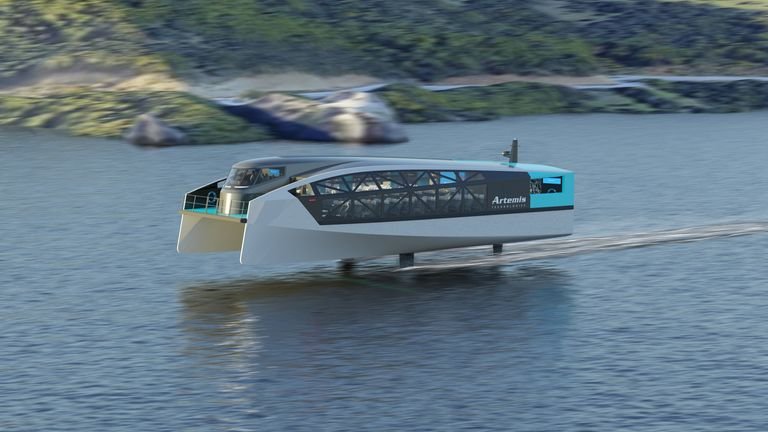
The Lagos State Government has reaffirmed its dedication to making the state’s waterways safer as it moves forward with plans to introduce 78 electric ferries under the Omi Eko Project.
The state also revealed plans to install modern concrete floating pontoons at various jetties to enhance passenger safety during boarding.
The announcement was made in a statement by the Commissioner for Waterfront Infrastructure Development, Dayo Bush Alebiosu.
Alebiosu explained that the project, set to run from 2024 to 2030, will deliver 78 high-capacity electric ferries, dredge and open up 15 waterways routes, upgrade 25 terminals, and deploy digital ticketing to improve travel efficiency. “This goes beyond building infrastructure; it represents a complete transformation of how Lagos residents travel, work, and stay connected,” he said. “Our goal is to create a safe, sustainable, and globally competitive water transport system that complements our roads and rail network.”
He noted that the new concrete floating pontoons — designed to act as stable and adaptable docking platforms — are already being installed at Agboyi Ketu in Kosofe LGA, Ijegun Egba in Amuwo Odofin, and Bayeku/Ikorodu in Ikorodu LGA.
More installations are planned for Ebute Ero (Lagos Island), Ijede (Ikorodu), Apa (Badagry), Mile 2 (Amuwo Odofin), Mowo (Ojo LGA), and several other key locations. “These pontoons are built from solid concrete units that float while resisting wave pressure, offering far greater stability,” he explained.
According to him, the innovation will help eliminate the fear many passengers experience when boarding boats on unstable platforms. “The pontoons provide a firm, level surface that feels almost like stepping onto solid land,” he added.
Alebiosu further stated that the modular nature of the pontoons makes them useful as temporary bridges during periods of flooding or erosion.
He also confirmed that the pontoon upgrades form part of the €410 million Omi Eko Project launched to modernise Lagos’ water transport system.
The initiative aims to reduce traffic congestion, boost commuter safety, cut carbon emissions through electric ferries, and strengthen the state’s resilience against rising sea levels.
Funding for the project comes from the French Development Agency, the European Investment Bank, and the European Union.

