

 Lifestyle & Wellness Desk
Nigeria’s Gas Policy Faces Setback as Flaring Intensifies
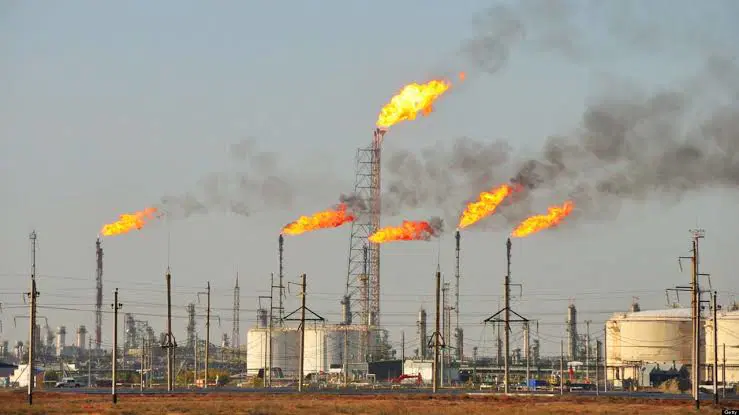
Nigeria’s plan to power homes and industries using its vast gas reserves is facing serious challenges as gas flaring rises amid worsening electricity shortages.
Recent data from the Nigerian Upstream Petroleum Regulatory Commission (NUPRC) revealed that gas flaring rose by 10 percent in September 2025, reaching 16.679 million standard cubic feet (mmscf), compared to 15.057 mmscf in August. This represents 8.72 percent of the country’s total gas output for the month, up from 6.87 percent in the previous month.
On a yearly basis, gas flaring increased by 7 percent, with a nine-month cumulative total of 150,028.86 mmscf—valued at about $451 million—enough to generate 10–50 megawatts of power.
The situation highlights the widening gap between gas supply and power generation. Despite producing over 190,000 mmscf of gas monthly, much of it is wasted due to poor infrastructure, inadequate processing facilities, and disruptions in crude oil production. Falling crude output has further reduced the supply of associated gas, worsening the problem.
Oil production dropped from 1.71 million barrels per day (bpd) in July to 1.63 million and 1.58 million bpd in August and September 2025, respectively.
Power generation companies (GenCos) have stated they can produce up to 8,000MW if gas is adequately supplied, but the transmission grid struggles to transmit more than 5,000MW due to limited gas availability.
“We are not a priority. With consistent payment and regular gas supply, we can easily increase generation to 8,000MW,” said Dr. Joy Ogali, CEO of the Association of Power Generation Companies (APGC).
Many industries, faced with unreliable power supply, have resorted to self-generation using private gas plants. Major firms such as Dangote Group, NNPC Limited, Chevron, TotalEnergies, Guinness Nigeria, and MTN now rely on independent power sources, a move analysts say increases production costs and undermines competitiveness.
The Lagos Chamber of Commerce and Industry (LCCI) warned that the decline in gas output poses economic risks. Its Director-General, Dr. Chinyere Almona, linked the drop to vandalism, equipment downtime, and supply disruptions, adding that “Nigeria’s transition to cleaner, gas-based energy is being threatened.” She urged the government to strengthen investment in pipelines, processing plants, and pricing frameworks to attract investors.
Despite these challenges, the federal government has maintained its commitment to the “Decade of Gas” initiative, launched in 2021 to turn Nigeria into a gas-driven economy by 2030. The plan targets large-scale investments in pipelines, LNG facilities, and processing plants to reduce flaring and expand gas-to-power projects.
NUPRC reported that since the Petroleum Industry Act (PIA) took effect, more than 25 non-associated gas field development plans have attracted over $4.9 billion in investments, unlocking about 9,790 billion standard cubic feet (bscf) in reserves.
However, gas flaring remains high, suggesting that new investments have yet to yield significant improvements in utilisation.
The Commission highlighted that past petroleum contracts prioritised oil over gas, discouraging investment in gas development. New agreements—such as the revised Production Sharing Contract (PSC) between NNPC Limited and TotalEnergies—now include improved profit-sharing and cost recovery terms aimed at promoting gas monetisation for domestic power generation, industrial use, and exports.
According to the NUPRC, these new PSCs represent a shift in Nigeria’s energy policy, designed to make gas development commercially attractive and to support the nation’s long-term energy security and industrial growth.

