

 Zara Lianne
The Role of Mindfulness in Education: Simple Practices for Students and Teachers
In today’s fast-paced world, students and teachers are juggling stress, distractions, and pressure to perform. One powerful tool gaining ground in classrooms around the world is mindfulness: the practice of paying attention to the present moment without judgment.
But how does something as simple as breathing and noticing thoughts actually help in schools?
What Is Mindfulness?
Mindfulness means focusing on what’s happening right now (your thoughts, body, breath, and surroundings) without reacting or overthinking. It’s being fully present.
It is not about zoning out or thinking positively. It is about noticing what’s going on inside and around you, calmly and clearly.
Why It Matters for Students
Research shows that when students practice mindfulness, even for just a few minutes a day, it can lead to real, measurable benefits:
- Less Stress and Anxiety: Breathing exercises and meditation help calm the nervous system. Studies have found mindfulness can reduce anxiety and even symptoms of depression in children and teens.
- Better Focus: Mindfulness trains the brain to concentrate. One study found that just a few minutes of daily breathing exercises helped students perform better in math.
- Improved Behavior: Practicing mindfulness boosts self-control and emotional regulation. Students are more likely to pause before reacting, solve problems peacefully, and get along better with peers.
- Academic Gains: Indirectly, these improvements help students stay on task, learn more effectively, and do better in school.
Teachers Benefit Too
Teaching is one of the most stressful jobs. But when educators practice mindfulness, the benefits are huge:
🌿 Lower Stress and Burnout: Teachers who take mindfulness training report feeling calmer, more energized, and less emotionally drained.
🌿 Stronger Classroom Presence: Mindful teachers are more patient, focused, and responsive. Their classrooms tend to be more positive and productive.
🌿 Better Relationships: Mindfulness helps teachers connect with students, build empathy, and respond thoughtfully to challenges.
Easy Mindfulness Practices for the Classroom
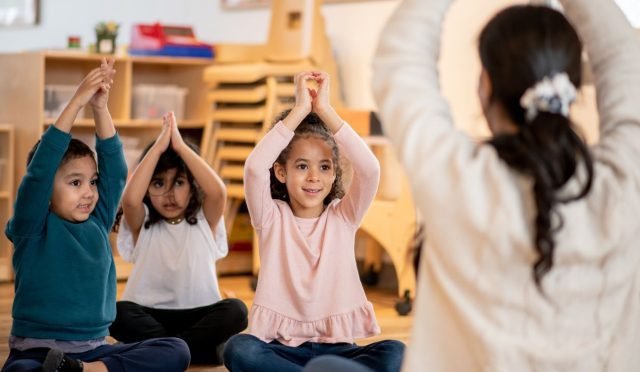
You do not need incense or hour-long meditations. Just a few minutes a day makes a difference. Here are quick practices teachers and students can try:
-
Breathing Breaks: 2–5 minutes of slow, deep breaths. Focus on the rise and fall of the belly.
-
Body Scan: Gently bring awareness to different parts of the body, noticing sensations.
-
Mindful Listening: Listen silently to a sound (like a bell) until it fades completely.
-
Guided Visualization: Imagine a calm, peaceful place. Picture every detail.
-
Mindful Movement: Slow stretches or yoga-inspired poses that combine breath and movement.
These can be done at the start of the day, between lessons, or whenever stress levels rise.
Real Results
A growing number of studies support the use of mindfulness in schools:
-
Students show improved attention, self-regulation, and academic performance.
-
Teachers report less stress and better classroom management.
-
Programs like MindUP and Inner Explorer have been adopted in thousands of schools globally.
Still, success depends on how it is introduced. Quick fixes don’t work. For the best results, schools should train teachers, integrate practices into daily routines, and make mindfulness part of the school culture.
A Word of Caution
Mindfulness isn’t magic. Some studies (like the UK’s MYRIAD trial) found limited results when mindfulness was taught poorly or practiced inconsistently. It works best when it is voluntary, engaging, and adapted to each age group.
Also, mindfulness should complement other support systems and not replace them. It is a valuable tool, not a cure-all.
Final Thought
In a noisy world, teaching kids and teachers how to pause, breathe, and focus might just be one of the most powerful lessons of all.

