Author: James Obasi

James Obasi25 November 2025
aa-16.jpeg

3min2000
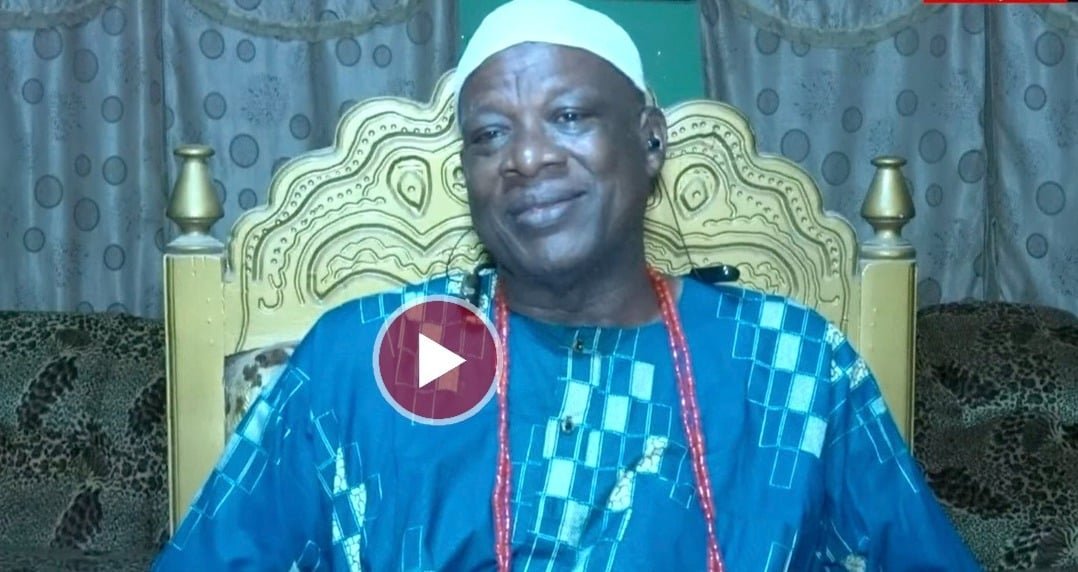
The Owa of Eruku, Oba Olanrewaju Busari, has raised fresh concerns over the vulnerability of his community in the Ekiti Local Government Area of Kwara State to recurring bandit attacks. Speaking on ARISE News Night on Monday following the rescue of 38 abducted residents the monarch said the dense forests surrounding Eruku and linking it to neighbouring states continue to provide easy passage for criminal groups. According to him, signs of impending trouble had appeared before the latest incident. “We remain exposed because large forests connect our community to neighboring states and local governments. This allows bandits to move freely. We’ve heard gunshots along the roads, and farmers have been harassed and driven from their farms. Our vigilantes have tried, but the scale of Tuesday’s attack was unprecedented,” he said. Oba Busari added that the terrain is difficult to police as attackers often blend in with herders. “They strike and disappear. Local hunters pursue them, but they slip away and return later. They also mix with herders, making it tough to distinguish who is genuine and who is a kidnapper,” he noted. The monarch thanked federal and state authorities for their swift intervention but stressed the need for a permanent security presence. “I appreciate President Ahmed Tinubu for deploying soldiers and police, and I thank the Kwara State Government for responding quickly. The Commissioner of Police and the DSS also rose to the occasion,” he said. He called for long-term measures, including establishing a dedicated military or mobile police base in the area. “Our community borders Kwara, Ekiti, and Kogi States, making identification difficult. Permanent security personnel can monitor and disrupt these hideouts,” he added. Oba Busari confirmed he has communicated these needs to Governor AbdulRahman AbdulRazaq, who visited the community and pledged to set up a permanent Forward Operating Base. He further urged residents to stay alert and report suspicious activity. “People should be courageous and report unfamiliar movements so authorities can act quickly,” he advised. On the condition of the rescued victims, he said: “Their spirits are high. Some may still feel weak, but they will recover. I’m grateful the government has taken them to the hospital for proper care.”
James Obasi24 November 2025
Okirika.jpg

4min4800
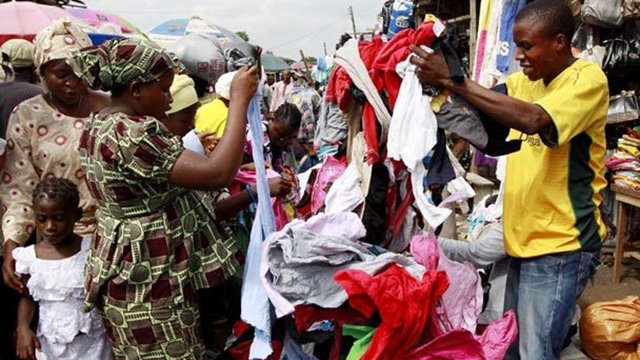
Until the late 2000s, okrika sellers—commonly known as bend-down boutiques—mainly served those who couldn’t afford brand-new clothes. Back then, used clothes imported from abroad were cheap and considered the choice of the poor. Over time, however, people realised that these clothes often lasted longer than new ones. Gradually, wealthier buyers took over the market, pushing prices up and sidelining the poor. But with the ongoing economic downturn, both rich and poor have returned to the same market—though now, even seeing the clothes isn’t guaranteed. Importers struggle to bring them in, and clearing goods at the ports has become extremely costly. Foreign used clothes are generally treated as contraband in Nigeria and are often seized by customs. To bypass this, many sellers resort to smuggling via roads or waterways, often at night, paying heavily for the risk. Previously, such methods had a 90% success rate, but tighter scrutiny has made them less effective, forcing sellers to spend even more to bring in okrika. Currently, a bale of high-grade okrika costs between N500,000 and N600,000, a sharp rise from N50,000 just a few years ago. Lower-grade bales go for N200,000 to N300,000. As a result, most bend-down boutiques now mainly sell Nigerian used clothes. Maxwell Okechukwu, an okrika seller, explained that bales often contain mixed sizes, making it challenging to sell adult clothes if smaller sizes dominate a bale. “A bale might have office wears in small sizes, which is difficult if you specialize in evening or club wears. Selling okrika is risky, and without enough capital to buy bales, it’s better to select items carefully or avoid the business entirely,” he advised. Mrs. Helen Akugbe, another seller, said she now sources used clothes locally and markets them as London-used clothes. “I used to sell bales from the UK, US, and China, but due to rising costs, I now rely on Nigerian used wears. I buy gowns, tops, skirts, and other items at low rates and resell them. Most of my customers prefer African prints and lace for church and events.” Mrs. Saidat Akinsola, a boutique owner, said she was surprised to see Nigerian used clothes being sold as okrika. “I recently bought neat children’s clothes, pyjamas, and Ankara prints marketed as okrika. The seller explained that well-to-do people often bring their children’s used clothes to sell, many hardly worn. The Ankara gowns were beautiful, and I bought a few items for my son. “Growing up, receiving used clothes from neighbours was a cherished moment. That tradition is fading because everything is monetized. People now sell almost anything for survival. May God save us,” she lamented.

James Obasi24 November 2025
oby-Ezekwesili.webp

3min1690
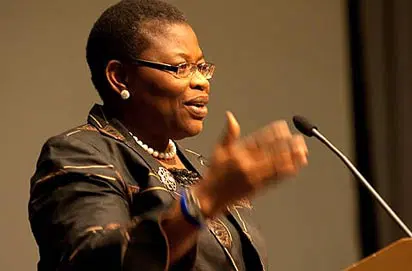
A former Minister of Education and co-convener of the Bring Back Our Girls Movement, Oby Ezekwesili, has blamed Nigeria’s worsening insecurity and the repeated mass abductions of schoolchildren on what she called “cancerous, systemic corruption” that has weakened national institutions. In a post on her X handle on Monday, she said corruption had eroded the country’s core values to the point where crucial institutions, including the military and judiciary, had become “deeply compromised and unable to carry out their responsibilities.” According to her, “Endemic corruption gradually ate up the very values on which they were founded and rendered them the impotent institutions we now know.” She warned that the country is now facing the full consequences of years of neglecting good governance. Citing data from UNICEF and Save the Children, she noted that more than 1,680 students were abducted in 70 attacks between 2014 and 2022, and another 816 students in 22 attacks from 2023 to November 2025. Reflecting on over a decade of advocacy following the Chibok schoolgirls’ abduction, Ezekwesili said public outrage “no longer feels adequate,” stressing that the recurring kidnappings reflect state failure, not isolated incidents. She described the persistent attacks as “proof of state collapse in its most basic duty — protecting our children.” She argued that ten years after the Chibok tragedy, the Federal Government could no longer claim ignorance or inexperience. “What we have is deliberate negligence, and deliberate negligence is a crime,” she stated. Ezekwesili added that any government that fails to rescue abducted students or properly secure schools “admits it is governing without legitimacy.” “Enough said,” she concluded.

James Obasi23 November 2025
aa-14.jpeg

2min2580
Presiding Bishop of the Living Faith Church Worldwide, David Oyedepo, has renewed a warning he first issued 15 years ago over Nigeria’s rising insecurity, following recent church attacks that left several worshippers dead and others abducted. Speaking during the 4th Pre-Shiloh Encounter Service on Sunday, as monitored by Vanguard, Oyedepo expressed deep alarm over the country’s security situation. “Developments in the past two weeks, particularly in Nigeria, are extremely worrisome,” he said. “There is an urgent need for prayer to stop these killings once and for all. Innocent blood is crying out for justice… and all perpetrators will answer for their actions.” Reaffirming his connection to the nation, he added: “No one is more Nigerian than I am. We all have ancestral roots, but no power exceeds the power of God.” Calling for intensified intercessory prayers, Oyedepo urged church members to hold midnight prayer sessions, saying: “Every member must be awake for at least one hour before violence descends into anarchy. A church was invaded during worship, people were killed and abducted yet nothing happened? The God of justice is rising.” He referenced scripture to underscore his message, noting that Nigeria’s destiny is spiritually anchored: “When God steps in, human pride collapses. Nigeria will not descend into chaos. These are hard truths coming from the burning spirit of a prophet.” Citing Psalm 85:8, he added: “When God speaks, His word brings peace. I’ve been shouting this for 15 years, and God has prompted me to speak again.” Condemning the surge in killings, kidnappings, and terrorism, Oyedepo said the church will continue praying for justice. He encouraged members to “raid the camp of the wicked” through midnight prayers, anoint their homes, and stand against attacks on churches. “Don’t politicise human life; it is immoral,” he said. “Let’s unite our hearts and pray from 12am to 1am. Every assault on the church will be met with divine justice.”

James Obasi22 November 2025
asuu-strike.jpg

3min3510
The Nigeria Labour Congress has announced that its leadership will meet to determine the next steps as the ultimatum it issued to the Federal Government over the looming industrial action in public tertiary institutions expires today. The acting Secretary-General of the NLC, Benson Upah, confirmed this during an interview in Abuja on Friday. The NLC, after meeting with unions in the tertiary education sector, had given the Federal Government a one-month deadline to resolve the persistent issues affecting universities, polytechnics and colleges of education. NLC President, Joe Ajaero, explained after the meeting that the government was given four weeks to conclude all negotiations across the sector, noting that the challenges extended beyond ASUU alone. He stressed that the era of signing agreements without implementation was over. With the ultimatum now expired, Upah reaffirmed the Congress’ commitment to maintaining stability in tertiary institutions, stating that relevant organs of the NLC would meet and decide on the next line of action. Meanwhile, the National Association of Nigerian Students has called on the Federal Government to take urgent and lasting steps to prevent an interruption of academic activities in public universities. The Assistant Secretary-General of NANS, Adejuwon Olatunji-Emmanuel, urged the government to address the concerns raised by ASUU, warning that any strike would negatively affect millions of students. He noted that since the start of the current administration, students had enjoyed a stable academic calendar a level of consistency not experienced since 1999 and said this progress must be protected. Olatunji-Emmanuel further appealed for constructive dialogue and swift resolutions to ensure campuses remain open. ASUU had suspended its two-week warning strike on October 22 and issued a one-month deadline for the Federal Government to meet its demands. The deadline expired on Friday. The union’s demands include a review of the 2009 ASUU–Federal Government agreement, payment of outstanding salaries and earned allowances, and release of the university revitalisation fund. ASUU warned it would resume strike action without notice if meaningful progress was not made. However, Minister of Education, Tunji Alausa, recently insisted that the government had met the union’s demands, adding that the President had directed that no strike should occur in public universities. He noted that negotiations were ongoing and that efforts were being made to ensure students remain in school.

James Obasi21 November 2025
aa-7.jpg

4min1930
The Nigerian Association of Resident Doctors (NARD) has rejected claims by the Federal Ministry of Labour and Employment that the Federal Government has resolved 19 of the 20 issues raised in its ongoing strike. In a statement released on Thursday, NARD described the ministry’s remarks as “inaccurate,” “misleading,” and an attempt to distort the true status of negotiations with the striking doctors. While the ministry previously reported progress on the doctors’ demands—including a 25–35 per cent upward review of the Consolidated Medical Salary Structure (CONMESS) and payment of 2024 accoutrement allowances—resident doctors insist that none of the 19 core demands have been “fully or verifiably met.” “What the ministry presents as progress are, in reality, unfulfilled promises, uncommenced payments, and newly formed committees—a familiar cycle of delay and deception that prompted this strike,” the statement read. It was signed by NARD President Dr. Mohammad Suleiman, Secretary-General Dr. Shuaibu Ibrahim, and Publicity and Social Secretary Dr. Abdulmajid Yahya Ibrahim. NARD further stressed that no member has received the reviewed CONMESS payments or the 2024 accoutrement allowances that the government claimed to have disbursed. “An announcement of intent is not a substitute for a credited salary,” the association warned. The association also criticised the ministry for still compiling lists of outstanding salaries and allowances in federal hospitals, including the Federal Teaching Hospital, Lokoja; Federal Medical Centre, Owo; and University of Ilorin Teaching Hospital. “After years of dialogue, the fact that the government is still compiling lists confirms our central grievance: a crippling lack of urgency and implementation,” NARD said. Additionally, NARD condemned the government’s move to set up committees to address manpower shortages, alleged casualisation, and the disengagement of doctors at FTH Lokoja, calling it a bureaucratic delay tactic. “Constituting a committee is not a resolution. Our demand is for the immediate reinstatement of our colleagues in Lokoja and full implementation of a one-for-one replacement policy to curb burnout,” the statement added. Responding to the government’s claim that NARD refused to sign a Memorandum of Understanding, the association said it would not endorse any agreement “built on unfulfilled promises and lacking clear, binding, and time-bound deliverables.” “The strike will continue until our minimum demands, which represent the bare minimum for dignified and sustainable medical practice in Nigeria, are fully met,” NARD declared. Key demands include the reinstatement of the five disengaged doctors at FTH Lokoja with full compensation; immediate payment of corrected professional allowances and outstanding arrears; full implementation of the one-for-one replacement policy; and the resolution of all pending welfare issues. The association also accused the government of violating labour laws and urged it to focus on concrete actions rather than issuing misleading statements. “The health of our nation is at stake, and the responsibility to restore stability rests squarely with the government,” NARD concluded.    

James Obasi21 November 2025
ndlea-1.jpg

4min3450
Operatives of the National Drug Law Enforcement Agency have intercepted a Brazil-bound vessel, MV Nord Bosporus (IMO 9760110), with 20 kilogrammes of cocaine at the Apapa seaport in Lagos. The drug consignment was discovered on Sunday, November 16, 2025, hidden beneath the ship’s cargo. In a statement released on Friday, the agency’s spokesman, Femi Babafemi, confirmed that the NDLEA detained the vessel’s Master, Captain Quino Eugene Corpus, along with 19 crew members, all of whom are Filipinos. Babafemi added that, following the arrests, the agency obtained a court order to hold the vessel and its crew for further investigation. According to him, Justice Musa Kakaki of the Federal High Court in Lagos granted an initial 14-day detention order in suit number FHC/L/MISC/1306/25 on Thursday, November 20, 2025. Preliminary findings revealed that the MV Nord Bosporus was visiting Nigeria and the African continent for the first time. Investigators also noted that the ship mainly transports coal between Colombia and Brazil, and that Captain Corpus had been in charge for just about three months. This development comes six months after 10 Thai sailors aboard the MV Chayanee Naree were convicted for attempting to smuggle 32.9 kilogrammes of cocaine from Brazil into Nigeria through the same port. On May 15, 2025, the Federal High Court in Lagos imposed a $4.3 million fine on both the sailors and the vessel. The NDLEA Chairman, Brigadier General Buba Marwa (retd.), applauded the Apapa Command and the Directorate of Seaport Operations for the successful seizure, describing it as further proof of the agency’s strengthened operations and resolve to secure Nigeria’s entry points. He stressed that international drug cartels and their local collaborators would continue to meet stiff resistance. According to him, Nigeria will not serve as a route or base for illicit drug trafficking, regardless of the method or point of entry. Marwa also warned Nigerians involved with foreign drug syndicates that they would face severe criminal consequences. Earlier data from the NDLEA showed that the agency seized 207,976 kilogrammes of hard drugs across various seaports in the country between January 2023 and March 2024. The agency also recorded the arrest of 14 suspects with 16.69kg of cocaine and 11,622.229kg of cannabis sativa in the first quarter of 2024, while 167 persons were apprehended with 196,336.99kg of assorted drugs between January and October 2023.  

James Obasi20 November 2025
aa-11.jpeg

2min7850
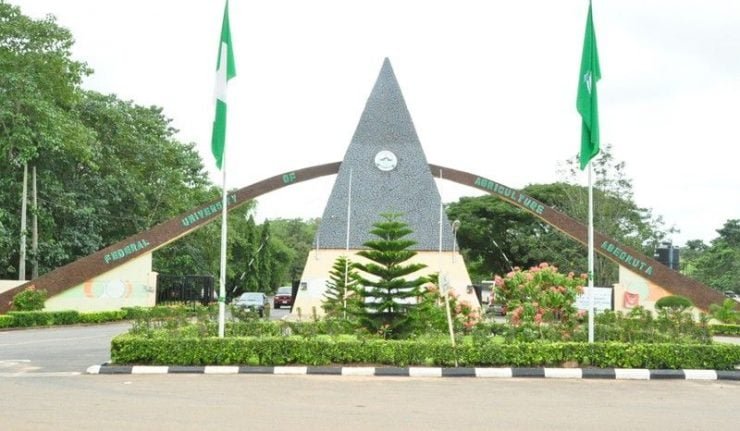
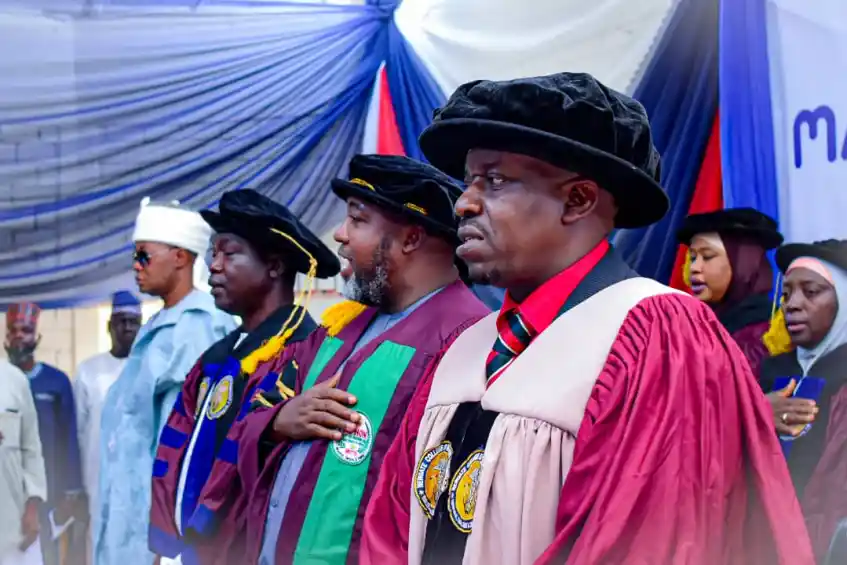
The Federal University of Agriculture, Abeokuta, has enrolled 6,356 new students for the 2025/2026 academic session the highest intake recorded in the institution’s 38-year history. This was disclosed in a statement by the acting Head of the Directorate of Public Relations, Olasunkanmi Olajide, on Thursday. The matriculation ceremony was held alongside the university’s 13th Commencement Lecture at the Professor Oluwafemi Balogun Ceremonial Building. Addressing the fresh students, Vice-Chancellor Prof. Babatunde Kehinde described the record admission as a significant milestone for FUNAAB. He urged the new entrants to uphold discipline, maintain at least 70% class attendance, dress decently, and comply strictly with university regulations. “FUNAAB remains a training ground for future leaders. Students must dress decently, uphold discipline, record a minimum of 70% class attendance, and adhere strictly to the university’s laid-down rules,” Prof. Kehinde said, reiterating the institution’s zero tolerance for misconduct. He noted that student union activities on campus would continue to be guided by dialogue and responsible leadership, assuring students that their rights remain protected. Delivering the commencement lecture titled “Future Leaders of Character in Agriculture: Building Capacity Today for National and Global Impact Tomorrow,” Prof. Subuola Fasoyiro of the Institute of Agricultural Research and Training, Obafemi Awolowo University, charged the students to cultivate character, competence, and capacity as the bedrock of leadership. She highlighted vision, strategic thinking, courage, emotional intelligence, integrity, teamwork, and resilience as key leadership traits, adding that clarity, commitment, capacity, character, consistency, and contribution are essential for national development. “The future is predictable, and as students, you must position yourselves through discipline and continuous learning. When you take care of your character, it will help you take care of your reputation,” she added.

James Obasi19 November 2025
newgate-university-minna-matriculation-NUM.webp

4min5820
The Vice-Chancellor of the Federal University of Medicine and Medical Sciences, Abeokuta, Prof. Fatiu Arogundade, has appealed to well-meaning individuals and corporate bodies to support the growth of the newly established institution, which began operations only five months ago. Arogundade noted that running a university requires enormous funding and cannot be left solely to the government. He commended President Bola Tinubu for creating specialised medical universities across the six geopolitical zones, saying the initiative will help boost the country’s healthcare workforce and reduce the impact of the Japa trend by producing more qualified health professionals annually. He made the appeal during a briefing to announce the university’s first matriculation ceremony scheduled for Thursday. The VC explained that the school was approved to admit 1,000 students after resource verification, and that over 850 pioneer students admitted through JAMB will participate in the ceremony. The institution currently offers programmes in Nursing Science, Medicine, Biology, Microbiology, Biochemistry, Pharmacy and Medical Laboratory Science, among others. While the university operates temporarily within the Federal University of Agriculture, Abeokuta campus, preparations are underway to relocate to its permanent 170-hectare site at Ajibayo town, which is still under construction. Arogundade also revealed that regulatory bodies — including the National Universities Commission, Medical and Dental Council of Nigeria, Nursing and Midwifery Council of Nigeria, and the Pharmacy Council of Nigeria — have mandated that the permanent site must reach a reasonable level of development in the coming months for the institution to secure accreditation for its eight faculties within the next two years. He acknowledged the support received so far from the federal and state governments, as well as prominent indigenes, but stressed that much more is required to ensure rapid development. According to him, “The Federal Government cannot shoulder the full cost of providing all the facilities needed for a specialised university. We welcome endowments, donations and equipment, which may be named after donors if desired.” He added that hostel development will be carried out through a public-private partnership to be advertised soon. Arogundade reiterated the university’s commitment to producing healthcare professionals who combine knowledge, empathy and innovation, and emphasised that every programme and partnership aligns with the institution’s mission to provide transformative medical education. He expressed gratitude to President Tinubu, the Ogun State Government, the Vice-Chancellor of FUNAAB, Prof. Olusola Kehinde, and the Alake of Egbaland, Oba Adedotun Gbadebo, for their support, while urging continued collaboration from all stakeholders to help the university achieve its vision. He also highlighted the wider challenges facing government-owned universities, including chronic underfunding, inadequate facilities and high student-to-lecturer ratios, which often trigger industrial actions as unions push for improved investment in tertiary education.

James Obasi19 November 2025
UNICEF_ForEveryChild_White_Vertical_RGB_ENG-e1527338866957.jpg

3min3080
UNICEF has called on the Federal Government to secure the immediate release of the 25 schoolgirls abducted in Kebbi State and to fully enforce the Safe Schools Declaration, which Nigeria endorsed in 2015. The appeal follows Monday’s attack on a Government Girls School in the Maga community of Danko-Wasagu Local Government Area, where armed men killed the vice-principal and kidnapped several students, heightening concerns over continued assaults on educational institutions in the Northwest. In a statement issued by UNICEF Nigeria’s Communication Specialist, Sussan Akila, the agency denounced the attack. “UNICEF strongly condemns the reported assault on a Government Girls School in the Maga community of Kebbi State, which led to the tragic death of the vice-principal and the abduction of 25 students. This heartbreaking incident underscores the urgent need to protect children, schools, and the educators who support their learning,” Akila said. She expressed sympathy for those affected. “We stand with the community during this painful moment. Our heartfelt condolences go to the families who lost loved ones, and we wish those injured a full recovery.” UNICEF also renewed its call for the swift and safe return of the abducted children and emphasised the importance of safeguarding learning environments. According to Akila, “Students, education facilities, and school personnel must be protected from all forms of attack under international law, and those responsible must face justice under both national and international standards.” She reminded authorities of Nigeria’s commitment under the Safe Schools Declaration, which outlines measures to keep schools safe and maintain their civilian nature even in conflict situations. UNICEF noted that it continues to work with government officials and communities to strengthen protection systems and ensure secure learning spaces. “These structures must be reinforced to prevent future tragedies. No child should ever be endangered while trying to get an education,” the statement added. The Safe Schools Declaration is a global commitment endorsed by 121 countries to protect students, teachers, and educational institutions from the impacts of armed conflict. Nigeria has been a signatory since May 2015. In 2021, the House of Representatives announced plans to review concerns over the implementation of the Safe School Initiative, including funds allocated for key projects such as the rehabilitation of Government Secondary School, Chibok, where more than 200 students were abducted by Boko Haram. That same year, the then Senate President, Ahmad Lawan, remarked that the Federal Government’s Safe School Initiative had been poorly executed.