

 James Obasi
High Import Duties: Nigerian Used Clothes Flood Bend-Down Boutiques.
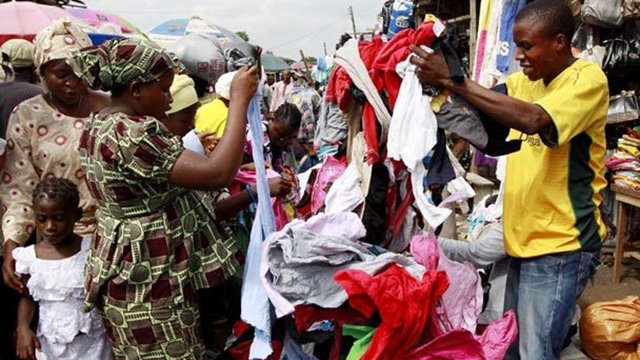
Until the late 2000s, okrika sellers—commonly known as bend-down boutiques—mainly served those who couldn’t afford brand-new clothes. Back then, used clothes imported from abroad were cheap and considered the choice of the poor.
Over time, however, people realised that these clothes often lasted longer than new ones. Gradually, wealthier buyers took over the market, pushing prices up and sidelining the poor. But with the ongoing economic downturn, both rich and poor have returned to the same market—though now, even seeing the clothes isn’t guaranteed. Importers struggle to bring them in, and clearing goods at the ports has become extremely costly.
Foreign used clothes are generally treated as contraband in Nigeria and are often seized by customs. To bypass this, many sellers resort to smuggling via roads or waterways, often at night, paying heavily for the risk. Previously, such methods had a 90% success rate, but tighter scrutiny has made them less effective, forcing sellers to spend even more to bring in okrika.
Currently, a bale of high-grade okrika costs between N500,000 and N600,000, a sharp rise from N50,000 just a few years ago. Lower-grade bales go for N200,000 to N300,000. As a result, most bend-down boutiques now mainly sell Nigerian used clothes.
Maxwell Okechukwu, an okrika seller, explained that bales often contain mixed sizes, making it challenging to sell adult clothes if smaller sizes dominate a bale. “A bale might have office wears in small sizes, which is difficult if you specialize in evening or club wears. Selling okrika is risky, and without enough capital to buy bales, it’s better to select items carefully or avoid the business entirely,” he advised.
Mrs. Helen Akugbe, another seller, said she now sources used clothes locally and markets them as London-used clothes. “I used to sell bales from the UK, US, and China, but due to rising costs, I now rely on Nigerian used wears. I buy gowns, tops, skirts, and other items at low rates and resell them. Most of my customers prefer African prints and lace for church and events.”
Mrs. Saidat Akinsola, a boutique owner, said she was surprised to see Nigerian used clothes being sold as okrika. “I recently bought neat children’s clothes, pyjamas, and Ankara prints marketed as okrika. The seller explained that well-to-do people often bring their children’s used clothes to sell, many hardly worn. The Ankara gowns were beautiful, and I bought a few items for my son.
“Growing up, receiving used clothes from neighbours was a cherished moment. That tradition is fading because everything is monetized. People now sell almost anything for survival. May God save us,” she lamented.

