Author: James Obasi

James Obasi18 November 2025
aa-9.jpg

2min2120
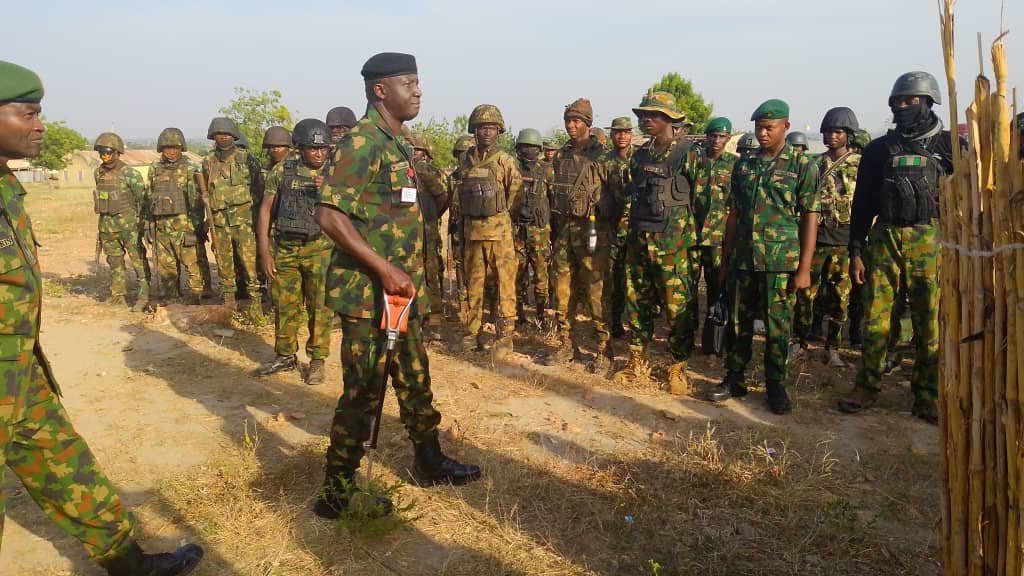
The Chief of Army Staff, Maj. Gen. Waidi Shaibu, has directed troops under Operation FANSAN YANMA to ramp up search-and-rescue efforts for the schoolgirls abducted in Kebbi State. Bandits had attacked Government Girls Comprehensive Senior Secondary School, Maga, on Monday, killing the vice principal, Hassan Yakubu Makuku, and kidnapping 25 students. According to counter-insurgency expert Zagazola Makama, the army chief arrived in Kebbi on Monday alongside senior officers from the Army Headquarters. Shaibu met with frontline commanders, ordering sustained, round-the-clock operations until every abducted student is found. He stressed that determination and intelligence-driven missions were key to defeating the criminals. “You must continue day and night. We must find these children,” he told the troops, urging commanders to act decisively on intelligence and maintain full commitment to the mission. Shaibu also held separate meetings with local vigilantes and hunters assisting security forces. He underscored the need for stronger collaboration, citing their deep knowledge of the terrain. “If we have people like you working with us, your intelligence will guide us. Your hunters should move through every part of these forests soldiers will join you,” he said, assuring them of military support and vowing that bandits would not be allowed to scare children away from school. Earlier, the army chief visited the traditional ruler of Danko, Abubakar Allaje, and the school’s principal, Rabi Magaji, to offer condolences. Shaibu reaffirmed the military’s commitment to rescuing the abducted girls unharmed. “We are fully committed. The safety of these children is a national priority, and every resource is being deployed to bring them home safely,” he said.

James Obasi17 November 2025
pope3.jpg

2min3060
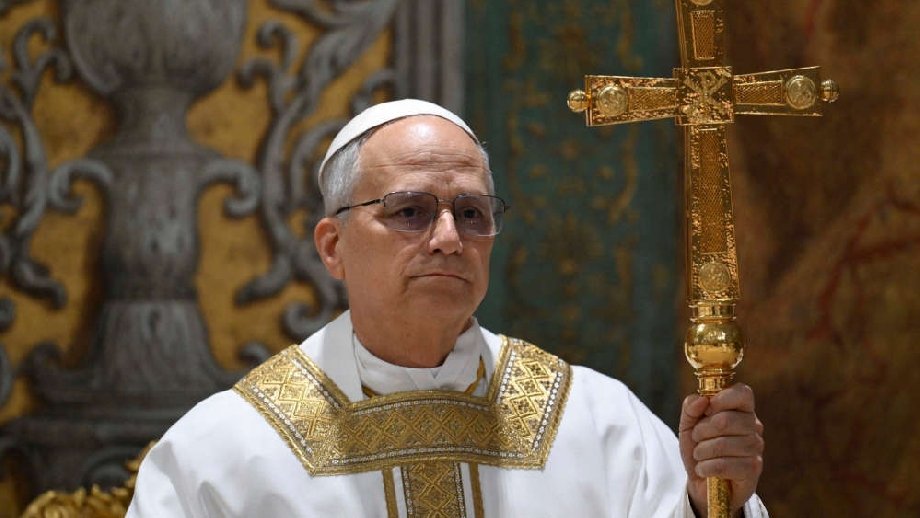
The head of the Catholic Church and Sovereign of Vatican City, Pope Leo XIV, has listed Nigeria among countries where Christians frequently face attacks, alongside Bangladesh, Mozambique, and Sudan. On Sunday, the pontiff used his official X account to express concern over recurring assaults on Christian communities and places of worship worldwide, calling for prayers for peace and unity among all believers. “In various parts of the world, Christians suffer discrimination and persecution. I think especially of Bangladesh, Nigeria, Mozambique, Sudan, and other countries from which we frequently hear of attacks on communities and places of worship. God is a merciful Father who desires peace among all His children,” he wrote. The Pope also asked for prayers for the families in Kivu, Democratic Republic of the Congo, where recent massacres have claimed civilian lives. “Let us pray that all violence may cease and that believers may work together for the common good,” he added. The statement comes amid growing international attention on Nigeria after US President Donald Trump, on October 31, designated the country as a “Country of Particular Concern” over alleged attacks on Christians, warning that the Nigerian government must act to stop the killings or face possible US military intervention against jihadist groups. The Federal Government has repeatedly rejected claims of a systematic “Christian genocide,” describing them as false, misleading, and a misrepresentation of the country’s security challenges. Adding to the debate, US Congressman Riley Moore criticized President Bola Tinubu’s assertion that Nigeria does not promote religious persecution, claiming that conditions on the ground contradict the President’s public statements.

James Obasi17 November 2025
lion.jpg

3min2440
The Nigeria Customs Service, Seme Area Command, has announced the interception of endangered wildlife species that were being smuggled toward the Benin Republic. The animals, which include a cub and two patas monkeys, were seized at Gbaji along the Badagry–Seme Road. In a statement issued on Monday, the command’s Public Relations Officer, Isah Sulaiman, said the interception took place on Sunday during a routine stop-and-search operation. According to him, the operation reflects the command’s firm commitment to safeguarding Nigeria’s biodiversity and fulfilling the country’s obligations under the Convention on International Trade in Endangered Species of Wild Fauna and Flora (CITES). Sulaiman explained that on Sunday, 16 November 2025, at about 02:19 a.m., Customs operatives stopped a blue Mazda vehicle with registration number MUS 743 HA. Upon inspection, officers discovered a cub and two patas monkeys hidden inside, which is a clear breach of both national and international wildlife protection regulations. Two suspects — Mr. Mathew Kofi, a Beninese national, and Mr. Nasiru Usman Gwandu, a Nigerian — claimed ownership of the animals. They admitted to purchasing the wildlife in Kano and planning to transport them to the Benin Republic. Sulaiman added that, in line with global wildlife protection standards and Nigeria’s commitments under CITES, the animals were immediately confiscated and documented, while the suspects were detained for further investigation into their roles in the illegal trade. For proper handling and welfare, the animals were formally transferred to the Greenfingers Wildlife Initiative. The Customs Area Controller, Wale Adenuga, represented by Deputy Comptroller A.Y. Mohammed during the handover, reaffirmed the command’s dedication to enforcing wildlife protection laws, enhancing environmental conservation, and strengthening border security. He emphasized that the command will continue collaborating with relevant agencies to curb the illegal trade of endangered species. Nigeria has been a signatory to CITES since 1974 and plays a vital role in regulating cross-border movement of threatened wildlife. The country also works closely with international partners, including China, to combat illegal trafficking and protect vulnerable species.

James Obasi16 November 2025
aa-3.webp

2min2760
International students in the United Kingdom including thousands of Nigerians will soon be able to switch directly to the Innovator Founder visa from within the country, following major reforms to the UK’s immigration rules. The new policy, which takes effect on November 25, 2025, marks a significant departure from the previous system that required students to return to their home countries before applying for the business-focused visa. Under the updated rules, students holding a valid Study visa can transition to the Innovator Founder route without leaving the UK, enabling them to begin building their businesses while their applications are processed. This added flexibility removes a key obstacle for foreign students looking to launch innovative ventures in the country. The Innovator Founder visa allows eligible graduates to establish and run an innovative business offering products or services not currently available in the market. To qualify, applicants must present a viable business proposal endorsed by an approved Innovator Founder endorsing body and meet all other eligibility criteria. The changes follow recommendations in the 2025 UK White Paper, which called for a review of the Innovator Founder route to ensure entrepreneurial talent already studying in the UK can transition smoothly into business creation and long-term careers. With the Start-up visa now discontinued, the Innovator Founder visa becomes the primary pathway for foreign nationals seeking to establish new businesses in the UK. However, students must meet specific conditions before engaging in business activities. A student can be self-employed under the Innovator Founder route only if: They have applied for permission under the visa, Their application includes an endorsement from an approved body, and The application was submitted while they still held valid Student visa status. The policy shift is expected to stimulate entrepreneurship among international students particularly Nigerians, who make up one of the largest foreign student groups in the UK.

James Obasi15 November 2025
President-Bola-Ahmed-Tinubu-768x512-1.jpg

5min7570
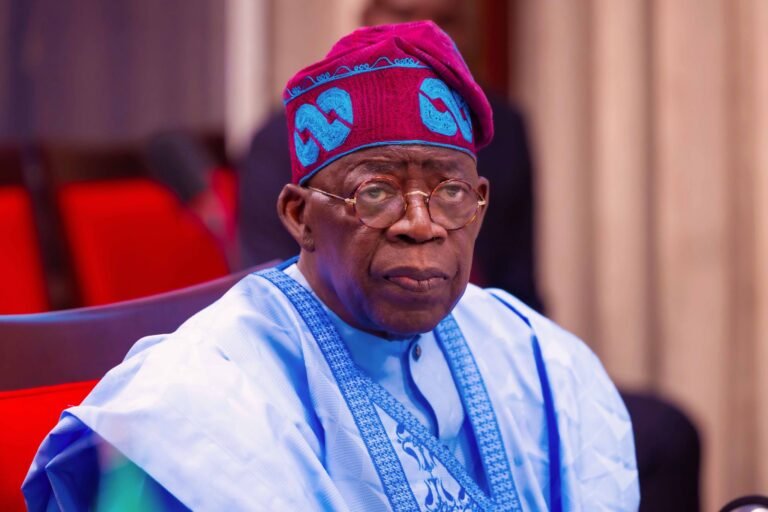
What began as a routine inspection quickly escalated into high drama on the streets of Abuja, as residents gathered with phones raised uncertain whether they were witnessing lawful enforcement or an impending inter-agency showdown. FCT Minister Nyesom Wike arrived at the contested site with a heavy security entourage, insisting he was there to inspect an ongoing construction project on land originally designated for park and recreation use. The property had been allocated to Santos Estate Limited but was allegedly converted for residential purposes without due approval. Wike said he also came to support Development Control officials who had earlier been “obstructed by military personnel” and to “prevent lawlessness and enforce land-use regulations.” Lieutenant Yerima: Calm at the Flashpoint At the center of the standoff stood Lt. A.M. Yerima calm, composed and unshaken. As tempers rose between soldiers and the Minister’s security aides, Yerima repeatedly ordered: “Ajuwaya!” calling his troops to stand down. His restraint prevented a clash that could have become a national embarrassment. But the standoff persisted. Wike pushed for access, citing FCTA authority, while Yerima maintained the property was properly documented and that he was acting under orders. When Wike snapped at him, calling him a “fool,” Yerima’s measured response captured on video spread nationwide within minutes: “I’m an officer. I have my integrity. I am not a fool; you can’t shut me up.” The Land at the Heart of the Storm The dispute centers on two parcels: Park No. 161, Cadastral Zone A03, Garki II Green Area Plot 1946 (A, B, C), Cadastral Zone B13, Gaduwa FCTA documents showed both had been legally allocated. A July 7, 2025 letter nullified previous approvals on Park 161, while a May 17, 2022 correspondence detailed lawful subdivisions of the Gaduwa land. Later reports that some approvals may have been revoked further ignited public debate. Nation Divided The confrontation triggered nationwide arguments about power, respect, uniforms, and the limits of civilian authority. Anonymous military sources described the incident as avoidable. Human rights activists praised Yerima for resisting intimidation. Retired service chiefs, including Lt. Gen. Tukur Buratai and Gen. Lucky Irabor, criticized the Minister’s language, warning that public disparagement of officers undermines national security. Veterans’ groups threatened protests if Yerima faced sanctions, while political figures like Osita Chidoka said Wike should have followed proper institutional channels. Analyst Farooq Kperogi called the standoff a clash between “an unstoppable force and an immovable object,” praising Yerima’s composure. Not all views favored the officer APC chieftain Joe Igbokwe condemned Yerima’s conduct, alleging entrenched interests opposed to Wike’s reforms. Admiral Gambo’s Shadow Observers linked Yerima’s composure to the discipline instilled under former Chief of Naval Staff, Vice Admiral Awwal Zubairu Gambo. His tenure saw major reforms, including Nigeria’s removal from the global piracy-prone list and the commissioning of new naval vessels. Wike Responds Addressing the media, Wike maintained he had “no problem with the military” and that his comments were misunderstood. “No officer should carry out an illegal order,” he said, urging journalists to avoid sensational reporting and stressing he was simply enforcing the law. Tinubu Intervenes, Bulldozer Withdraws President Bola Ahmed Tinubu received widespread commendation for his quick, behind-the-scenes intervention that helped defuse the tension. By Thursday, the bulldozer stationed at the disputed Gaduwa site finally withdrew prompting applause from residents who lined the streets. The moment symbolized a public yearning for fairness, order, and decision-making rooted in due process rather than personal power.


James Obasi14 November 2025
aa-2.webp

3min7810
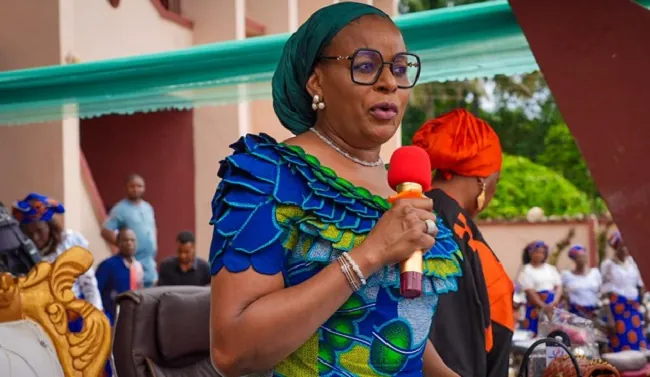
The wife of the Anambra State Governor, Dr. Nonye Soludo, has urged Nigerians to take collective and decisive action against the growing diabetes burden in communities across the country. In a statement released on Friday to mark World Diabetes Day, Dr. Soludo warned that diabetes remains a major public health challenge, noting that “official data shows that more than three million Nigerians are currently living with the disease.” She emphasized the critical role of lifestyle choices in preventing and managing the condition. “Tackling the diabetes epidemic requires joint effort,” she said. “Routine medical checks are vital, but the most important step is paying closer attention to how we live. Lifestyle choices can either save or destroy.” Highlighting the impact of diet, she lamented the increasing consumption of unhealthy foods. “Much of what we eat today is harming our bodies. We must be more intentional about what we consume food, drinks, everything. Healthy Living begins with what we put on our plates,” she said. Dr. Soludo added that the rising cases of diabetes are tied to the preference for processed and unhealthy foods over natural options, urging families to “rethink their choices” in order to curb the disease. Her comments come weeks after she led a ‘Healthy Living Walk’ across various communities in Anambra State to promote fitness, healthy eating, and disease prevention. The walk, which kicked off in Aroma, Awka, drew government officials, health workers, students, and residents. She reiterated that physical activity remains a powerful tool for preventing illnesses, stressing the importance of good nutrition for both children and adults. “Part of our Healthy Living initiative is sustained advocacy for physically fit, safe, and healthy communities. I begin my day with a walk, and this culture is spreading across Anambra,” she said. According to her, the ‘Healthy Living With Nonye Soludo’ initiative now sees local governments and communities organizing regular morning exercises. “I’m pleased that our people are embracing it because health is the greatest wealth,” she added. Dr. Soludo concluded by encouraging residents to prioritise their wellbeing. “Whatever you do in life, your health should come first. I’m happy to see Anambra people taking ownership of their health. We do this every Saturday, and many communities now do the same.”

James Obasi13 November 2025
Nnamdi-Kanu-1nk-e1761209319678.jpg

4min2430
The detained leader of the banned Indigenous People of Biafra (IPOB), Nnamdi Kanu, has filed an appeal at the Abuja Division of the Court of Appeal, seeking to prevent the Federal High Court from delivering judgment in his ongoing terrorism trial. Justice James Omotosho of the Federal High Court had scheduled November 20 for judgment in the case, which has been ongoing since 2015. The date was set on November 7 after Kanu was given multiple opportunities to enter his defence. Earlier, Kanu dismissed his legal team and opted for self-representation, arguing that the charges against him were invalid. In a no-case submission, he claimed that the Terrorism Prevention and Prohibition Act under which he was charged had been repealed, and he sought his release. However, Justice Omotosho dismissed his submission and repeatedly allowed him chances to defend himself before fixing November 20 for judgment. Kanu’s request to adjourn the judgment indefinitely on Tuesday was denied. Following this, Kanu approached the Court of Appeal on Wednesday, requesting that the lower court be restrained from proceeding with the scheduled judgment. He noted that he had filed a notice of appeal against the September 26 ruling dismissing his no-case submission and ordering him to defend against the terrorism charges. In the appeal, with the Federal Government as the respondent, Kanu contended that the lower court erred in dismissing his no-case submission without addressing the legal and jurisdictional validity of the charges. He argued that the Terrorism Prevention and Prohibition Act had been repealed, rendering the charges invalid. He also claimed that the judge failed to consider constitutional questions regarding jurisdiction. Kanu further alleged that Justice Omotosho did not properly assess the prosecution witnesses’ evidence or cross-examinations to determine whether it had been discredited. He stated that his right to call 23 witnesses was denied, as the court ruled this could only be done in the final judgment, effectively limiting his ability to defend himself. He warned that if the Court of Appeal does not halt the judgment, he risks being unlawfully convicted, making his appeal “a mere academic exercise.” In a 13-paragraph affidavit, Kanu also raised issues of non-compliance with a Supreme Court ruling on the invalidity of count seven of the charges and the failure to apply the mandatory test under Section 303 of the Administration of Criminal Justice Act (ACJA) 2015. He noted that the Supreme Court had clarified that count seven is no longer an offence in Nigeria. Kanu emphasised that his appeal raises significant constitutional issues, highlighting that counts one to six are based on a repealed statute, meaning no valid charges exist. He argued that granting the application would cause no prejudice to the Federal Government, while refusing it would deny him his constitutional right of appeal. No hearing date has yet been set by the Court of Appeal for Kanu’s motion.

James Obasi13 November 2025
custom-2.jpg

4min3200
In a renewed move to strengthen regional cooperation and improve border management, the Nigeria Customs Service (NCS), Kebbi Area Command, has reinforced its partnership with the Benin Republic Customs Service along the Tsamiya/Sebgana border corridor. The engagement took place on Wednesday when a Nigerian delegation, led by the Customs Area Controller, Comptroller Mahmoud Ibrahim, and the Commanding Officer of 1 Battalion, Nigerian Army, Major Shola Moses, paid a working visit to their Beninese counterparts at Sebgana. Upon arrival, the team was received by Comptroller Arouna Dramane, Head of the Wara Border Command, Republic of Benin, alongside Beninese Customs officers, Kebbi Command personnel, and other key border stakeholders. In a statement issued on Thursday by the command’s spokesperson, Mustapha Mubarak, Comptroller Ibrahim highlighted the importance of collaboration between both nations’ security agencies to curb cross-border crimes and safeguard shared boundaries. “Security is a collective responsibility. Our visit aims to strengthen cooperation, enhance intelligence sharing, and foster operational synergy for the safety of our officers, government assets, and border communities,” he stated. He reaffirmed the NCS’s commitment to promoting peaceful coexistence and ensuring that legitimate trade between both countries thrives in a secure and well-coordinated environment. In his remarks, Comptroller Dramane praised the Kebbi Area Command for the initiative, describing it as a welcome development that would enhance mutual understanding and operational efficiency. “This visit marks a positive step towards deepening the friendship between our two services. We remain committed to sustaining this collaboration for improved border security and economic cooperation,” Dramane noted. The Beninese Customs chief later conducted the visiting delegation on a tour of their facilities as part of a familiarisation exercise. The meeting concluded with goodwill exchanges and a renewed pledge from both sides to uphold peace, security, and continuous cooperation along the Nigeria–Benin border corridor. It will be recalled that in March 2024, the NCS reopened the international border in Kamba town, Dandi Local Government Area of Kebbi State, to facilitate the resumption of cross-border trade between Nigeria and neighbouring Niger and Benin Republics. The decision followed the Federal Government’s directive to reopen the nation’s borders with Benin Republic after a seven-month closure and the subsequent lifting of sanctions on Niger Republic by ECOWAS.

James Obasi12 November 2025
FB_IMG_1762879142762.jpg

4min2670
The Nigerian Navy has yet to issue a statement following a tense altercation between some of its officers and the Minister of the Federal Capital Territory, Nyesom Wike, over an alleged land dispute in Abuja’s Gaduwa District. When contacted on Tuesday, Navy spokesperson A. Adams-Aliyu declined to comment, stating only, “No reply for now.” The confrontation reportedly took place during Wike’s visit to the site, where he accused the military of illegally occupying the land. In a video circulating online, the visibly angered minister questioned why the Navy would claim ownership of the property allegedly linked to a former Chief of Naval Staff. “Because you’re an officer? Nobody does that. The man took land because he was the Chief of Naval Staff?” Wike said. An officer in military uniform interrupted, insisting the acquisition followed due process. “I am an officer with integrity. Everything was acquired legally,” he replied. Wike, visibly upset by the response, ordered him to remain silent. When the officer refused, Wike shot back, “You are a very big fool. As at the time I graduated, you were still in primary school.” The officer maintained that his presence at the site was based on official deployment, to which Wike responded, “You will see if you will not leave here. Go and develop there and let me see.” In a statement released by the Assistant Director of Press in the Office of the Minister, Rabi Umar, Wike condemned the incident, describing it as an act of lawlessness. “I instructed them (FCTA officials) to ensure that no construction takes place without proper approval or legal acquisition documents. When they came earlier, the military reportedly chased them away. Today, I came to confirm it myself,” he said. Umar further noted that Wike questioned the involvement of military personnel in protecting what he described as illegal developments and vowed that the FCTA would not tolerate such actions. “It’s unfortunate. You heard what the officer said — that he was sent by the former Chief of Naval Staff. I don’t understand why someone who once held such a position couldn’t simply contact my office to clarify the issue. Perhaps he feels his status as a military man gives him the right to intimidate others. I’m not one of those who will bow to such pressure,” Wike added.

James Obasi11 November 2025
alcoholic-drinks-750x375-1.jpg

3min2710
The National Agency for Food and Drug Administration and Control (NAFDAC) has announced that the production and sale of alcoholic beverages in sachets and bottles smaller than 200 millilitres will be prohibited starting December 2025. The agency’s Director General, Mojisola Adeyeye, made the announcement during a press briefing in Abuja on Tuesday, explaining that the move aims to curb the misuse of cheap alcoholic drinks among youths and commercial drivers. “The widespread availability of high-alcohol-content beverages in sachets and small bottles has made them easily accessible, affordable, and easy to conceal, leading to misuse and addiction among minors and drivers. This public health challenge has been linked to increased domestic violence, road accidents, school dropouts, and other social vices,” Adeyeye said. The directive follows a Senate resolution issued on Thursday mandating NAFDAC to enforce the total ban by December 2025, with no further extensions permitted. The resolution came after extensive debate on a motion sponsored by Senator Asuquo Ekpenyong (Cross River South), who expressed concern over NAFDAC’s repeated postponements despite rising public health and social concerns. Ekpenyong noted that previous deadlines set by the agency for 2023 and 2024 had been extended, which he said encouraged manufacturers to lobby for more time. He warned that further delays would undermine public trust and Nigeria’s commitment to international health and safety standards. Adeyeye explained that NAFDAC had previously agreed on a phased withdrawal of sachet and small-bottle alcoholic drinks through a Memorandum of Understanding with stakeholders, but earlier deadlines had been postponed from 2023 to 2025. She stressed that the Senate’s latest resolution is final and warned manufacturers, distributors, and retailers to prepare for full compliance ahead of the enforcement date. She emphasized that the ban is a protective public health measure, not punitive. “This ban is aimed at safeguarding the health and future of our children and youth. It is based on scientific evidence and public health considerations. We cannot continue to compromise the well-being of Nigerians for short-term economic gain. The health of a nation is its true wealth,” Adeyeye stated.