Author: James Obasi

James Obasi11 November 2025
nnpc.jpg

3min3290
The Presidency is set to restructure asset ownership within the Nigerian National Petroleum Company Limited (NNPC) amid concerns over the company’s declining oil output. This was disclosed by the Special Adviser to the President on Energy, Olu Verheijen, on Monday at the ongoing Nigerian Association of Petroleum Explorationists (NAPE) Conference in Lagos. Verheijen presented a comprehensive plan to revitalise Nigeria’s oil and gas industry while promoting energy security and sustainable growth. She noted that achieving the target of producing three million barrels of oil per day will require performance-based management and questioned NNPC’s capacity to deliver significant output growth. According to her, NNPC Exploration and Production Limited currently produces only about 220,000 barrels daily — less than 10 per cent of Nigeria’s total production. She expressed concern over the firm’s ability to finance and execute major drilling campaigns, pointing out that unlike the era when international oil companies operated onshore, joint venture partners can no longer shoulder NNPC’s financial burden. Verheijen emphasised the need for courage to restructure asset ownership and bring in operators with proven technical expertise, financial strength, and strong governance practices. She stated that meaningful progress requires performance-based leadership, not sentiment. Highlighting what she called the “four R’s” framework — reserves, revenues, reliability, and responsibility — Verheijen explained that Nigeria must rebuild investor confidence by ensuring transparency and competitiveness. She noted that since 2023, under President Bola Tinubu’s leadership, efforts have been made to restore clarity in the sector and attract investments. She urged Nigeria to move quickly to secure exploration and production investments, stressing that global competition for capital is intense. Verheijen added that the Tinubu administration has already unlocked over $8 billion in final investment decisions through projects such as Ubeta, Bonga North, and HI, with another $20 billion in view. She further stated that the government’s revenue strategy goes beyond exports, focusing also on domestic value creation through gas-to-power projects, LPG and CNG expansion, petrochemicals, fertiliser production, and refining to reduce fuel imports. Meanwhile, the Chairman of NNPC Limited, Ahmadu Kida, said the company’s goal is to become Africa’s leading energy brand within five years. He noted that the NNPC aims to earn the trust and pride of Nigerians, symbolising national strength and achievement.

James Obasi10 November 2025
Petrol-Pump.webp

4min2050
The member representing Ipokia/Idiroko constituency in the Ogun State House of Assembly, Bisi Oyedele, has called on President Bola Tinubu to lift the ban on supplying petroleum products to communities within 20 kilometres of Nigeria’s borders. Oyedele, popularly known as Citiside, made the appeal in a statement on Sunday, highlighting the hardships the policy has caused residents in border areas. He described the restriction as “outdated, unjust, and counterproductive to the economic survival of residents in Ogun West senatorial district.” The lawmaker also renewed calls for the revival of the Ogun State Polytechnic, Ipokia, a project initiated in the later years of former Governor Ibikunle Amosun’s administration but left unfinished. He made the remarks during the inauguration of several constituency projects across Ipokia Local Government, which was attended by the Speaker of the Ogun State House of Assembly, Oludaisi Elemide, other lawmakers, political leaders, royal fathers, and community stakeholders. The inaugurated projects included the renovated Primary Health Centre, Iporan; a three-classroom block at IPLG Primary Schools in Ijofin and Ojuroko, Idiroko; and four motorised boreholes in Ihunbo, Vatipa, Ibatefin, and Oniro-Agude. Speaking at the event, Oyedele noted that the restriction, introduced more than five years ago to curb smuggling, had become a source of suffering for law-abiding residents. He recalled that in November 2019, the Federal Government, through the Nigeria Customs Service, directed that fuel should not be supplied to stations within 20 km of the borders to safeguard the economy. “This 20 km petroleum restriction has lost its purpose. Instead of stopping smuggling, it has punished residents who can no longer access fuel for their vehicles, businesses, and homes. I am appealing to the Federal Government to lift this outdated policy and provide relief to our people,” Oyedele said. He described Ipokia Local Government as a region with significant economic potential, especially as a gateway linking Ogun State to the West African corridor, but lamented its neglect in infrastructure and connectivity. Oyedele also urged the federal and state governments to fast-track the Ipokia–Badagry Link Bridge, calling it “an economic lifeline that will boost commerce between Ogun, Lagos, and neighbouring West African nations.” He reiterated the need for the immediate take-off of Ogun State Polytechnic, Ipokia, calling it “a beacon of hope for our youth” and expressed confidence that Governor Dapo Abiodun would ensure the project becomes part of his enduring legacy. Oyedele praised Abiodun for his people-oriented leadership and enabling environment that allows lawmakers to deliver meaningful projects, and also commended Senator Solomon Adeola (Yayi) for his ongoing support for Ogun West, describing him as “a visionary leader with far-reaching impact across all sectors.” In their goodwill messages, royal fathers and community leaders lauded Oyedele’s accessibility, humility, and commitment to development, noting that his tenure has restored public confidence in political representation.

James Obasi10 November 2025
foodstuff-in-Nigeria.jpg

7min2360
The great Indian leader and freedom advocate made that statement before his assassination in 1948, at a time when his country—now split into at least three nations—was facing a food crisis far worse than what Nigeria is going through today. It can equally be said that millions of Nigerians are so hungry now that even God would have to appear to them as a loaf of bread or a bowl of rice to be recognized. I was only four years old in 1948, so I had to speak with older people and consult historical records to understand what the food situation was like then. Surprisingly, Nigeria was a net exporter of food during that period, even though about 99% of Nigerians were illiterate and the University of Ibadan had just opened its doors. Back then, the total number of Nigerian university graduates was barely 1,000. Today, UI alone produces over 5,000 graduates annually, and our universities collectively add more than 120,000 to the labour market each year. But what is the value of this “educated manpower” if we cannot feed ourselves? India, during the same period, produced even more graduates than Nigeria. Yet, while India transformed from a food-deficit nation to a major food exporter, Nigeria moved in the opposite direction—from a food exporter to a food-dependent nation. We already know part of the reason: Nigeria found oil, India did not. But there’s a deeper truth—Indian leaders and their educated citizens applied intelligence to development; Nigerians did not. “Food is national security, food is economy; it is employment, energy, history. Food is everything,” said Chef José Andrés, founder of World Central Kitchen. Many people don’t realize that food is essentially stored energy, and no matter how powerful or wealthy one is, no one can live without eating. My understanding of food security deepened during Buhari’s first tenure as Military Head of State in 1984–85. Like most city dwellers, I once thought farming was only for villagers—until Buhari compelled food and beverage companies to start producing their own raw materials. Suddenly, firms like Guinness and Nestlé had to take farming seriously, and people like me were drawn into the reality of agriculture. From growing sorghum for breweries, it wasn’t long before the focus shifted to feeding the nation. A personal tragedy—the passing of my eldest brother—brought me back to Lagos, where I realized that the future of Nigeria’s food security depends on educated young people who can quickly learn and apply new agricultural methods. But to make that happen, we must first return to the land. My visit to India in 1983 for a poverty-alleviation conference proved invaluable. That was where I first heard about urban farming, which seemed laughable at the time, given the vast farmlands available. Few predicted that population growth and development would drastically shrink farmland. Today, India has over 30 million urban and suburban farmers cultivating food on rooftops, balconies, and even twenty-storey buildings. Vegetables like tomatoes, lettuce, and cucumbers now grow alongside flowers on balconies, and sunflower seeds are pressed into vegetable oil. So, what stops Nigerians from doing the same? As Alexander Pope said, “Pride, the never-failing vice of fools.” Sadly, many Nigerians, especially in the South, are too proud to farm. I once lived with a friend in Kano who had half an acre of unused land behind his official residence. For years, he never thought to grow anything. When I began planting tomatoes, lettuce, and peppers in that yard, friends mocked me. They called me “Baba Agbe”—the old farmer. But six months later, the laughter stopped when our backyard overflowed with vegetables and chickens. Even then, those with bigger spaces refused to follow suit. Their excuse was, “Food is cheap in the North.” Today, food is no longer cheap, yet their backyards remain bare. Habits, indeed, are more powerful than logic. Now, rural farmlands are unsafe due to insecurity, and millions of farmers have fled. Still, people with available land in cities refuse to grow food, waiting instead for the government to act—as if politicians are the ones going hungry. The harsh truth is that even if a bag of rice costs ₦1 million, those in power will still eat; it’s the rest of us who will starve. The only logical solution is to grow what we can—wherever we can. Urban farming isn’t just possible; it’s necessary. Once you start, you’ll never want to stop, because it teaches self-reliance and resilience. So, what can governments do?First, lead by example.Second, seek expert guidance to launch urban agriculture programs. With the right plan, every state, local government, and ward can begin to see real impact within six months. Gradually, the number of participants can grow to one million urban farmers within a year. At over 80, I may not live to see that vision fully realized—but if we act now, Nigeria can still reach the promised land of food security and self-sufficiency.

James Obasi9 November 2025
aa-1.webp

4min2090
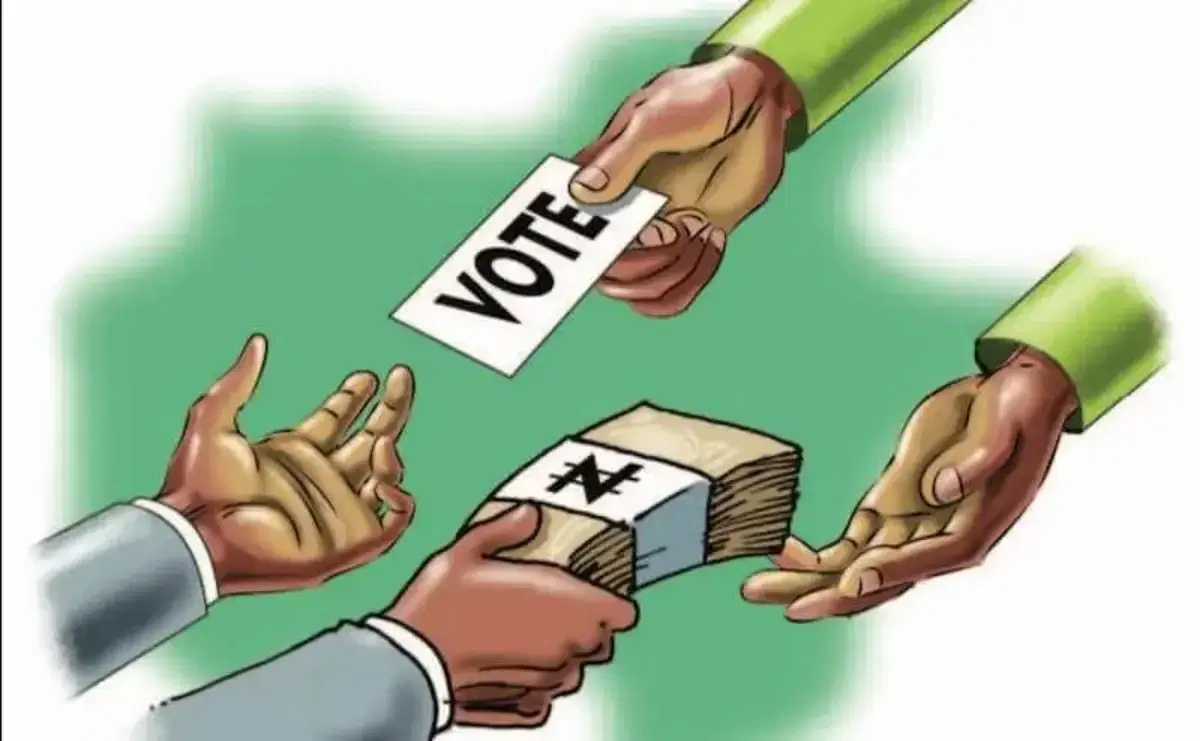
Awka, Anambra State — Allegations of large-scale vote-buying and minor logistical hitches trailed Saturday’s governorship election in Anambra State, which was otherwise peaceful and witnessed impressive voter turnout across most local government areas. Reports from Vanguard correspondents indicated that voters, including the elderly and physically challenged, arrived early at polling stations to cast their ballots. Governor Chukwuma Soludo of the All Progressives Grand Alliance (APGA), who voted at his Ofeiyi Ward 19, Polling Unit 002, Isuofia, Aguata LGA, expressed confidence in securing a landslide victory despite reports of vote-buying in parts of Nnewi South LGA. “The exercise has been largely peaceful, though there were hitches with BVAS in a few areas. We’ve received reports of massive vote-buying in Nnewi South, with voters allegedly paid ₦15,000. Even if they share ₦100,000, I’m confident the people’s votes will prevail,” Soludo said. Moghalu: Worst Vote-Buying in Nigeria’s History Labour Party governorship candidate Dr. George Moghalu condemned what he described as “the highest level of vote-buying ever witnessed in Nigeria.” Speaking from his residence in Nnewi alongside the Obidient Movement’s National Coordinator, Dr. Yunusa Tanko, Moghalu said he would announce his next steps after receiving reports from his agents in all 320 wards. Obi: Democracy Deteriorating Former governor and 2023 Labour Party presidential candidate, Mr. Peter Obi, decried the scale of voter inducement, alleging that sums ranging from ₦20,000 to ₦30,000 were offered to voters. “Democracy is deteriorating in Nigeria. Those who suffer most from bad governance are the ones fueling it through vote-selling,” Obi said after voting in Agulu, Anaocha LGA. “By selling your vote, you are selling away schools, hospitals, and your future,” he added, urging journalists to help expose the trend. Security Agents Accused of Turning Blind Eye At polling units in Nkpor (Units 009–013), observers reported that party agents openly paid voters ₦5,000 to vote for a particular party, while security operatives allegedly looked the other way. Bianca Ojukwu, Chidoka Brothers, Others Praise INEC Minister of State for Foreign Affairs, Ambassador Bianca Odumegwu-Ojukwu, commended the Independent National Electoral Commission (INEC) for the smooth conduct of the exercise after casting her vote in Nnewi North LGA. Similar commendations came from former Aviation Minister Chief Osita Chidoka and his brother Hon. Obinna Chidoka, who described the process in Obosi Ward 1 as peaceful and well-organized. Ezeokenwa, Orji, Egbeji Hail Peaceful Process APGA National Chairman Mr. Sly Ezeokenwa lauded INEC for the orderly process in Onitsha South, despite minor BVAS glitches and initial delays in the arrival of result sheets. The Mayor of Onitsha South, Hon. Emeka Orji, and businessman Chief Promise Egbeji similarly described the election as free, fair, and credible. Early Results Show Soludo in Clear Lead Preliminary results from several LGAs — including Aguata, Njikoka, Awka North and South, Idemili North and South, and Onitsha North showed Governor Soludo maintaining a comfortable lead. Tragedy and Isolated Incidents A senior APGA chieftain in Orumba South LGA was feared dead during the election, while a NYSC member serving as a presiding officer in Ihiala was reportedly assaulted by aggrieved voters over alleged manipulation. Despite minor logistical setbacks in areas such as Ogbaru, Njikoka, and Awka North, and reports of vote-buying in several LGAs, the poll remained largely peaceful across the state. As collation continues, observers and stakeholders are urging political actors to respect the outcome and ensure the will of Ndi Anambra prevails.

James Obasi8 November 2025
Doctors.jpg-6-12-22-1062x598-1.jpg

2min1840
The National Association of Resident Doctors (NARD) has appealed to the Federal Government to urgently review and upgrade the remuneration of medical doctors across Nigeria, describing their current pay as grossly inadequate. Speaking with the News Agency of Nigeria (NAN) on Saturday in Calabar, Dr. Emmanuel Idoko, Chairman of the NARD chapter at the University of Calabar Teaching Hospital (UCTH), made the call while commenting on the association’s ongoing indefinite strike, which began on November 1. Idoko said the strike was necessitated by poor welfare conditions, low salaries, and the government’s failure to meet several long-standing demands. He urged the Federal Government to implement the 19 unresolved points contained in NARD’s collective bargaining agreement with the government. According to him, the agreement originally signed in 2009 and reviewed in 2014 and 2019 has yet to be fully executed. The NARD chairman also called for the recruitment of more doctors to reduce the increasing workload, a review of the salary structure, shorter call hours, and improved hospital infrastructure. He added that the doctors are also seeking recognition and certification for those who have successfully passed their part-one specialist examinations. “The ongoing industrial action is to press for the implementation of our 19-point demands. Once we see realistic timelines from the government, our National Executive Council will reconvene to review the situation,” Idoko said. (NAN)

James Obasi7 November 2025
Nigerian-surgeon-at-work.png

3min2640
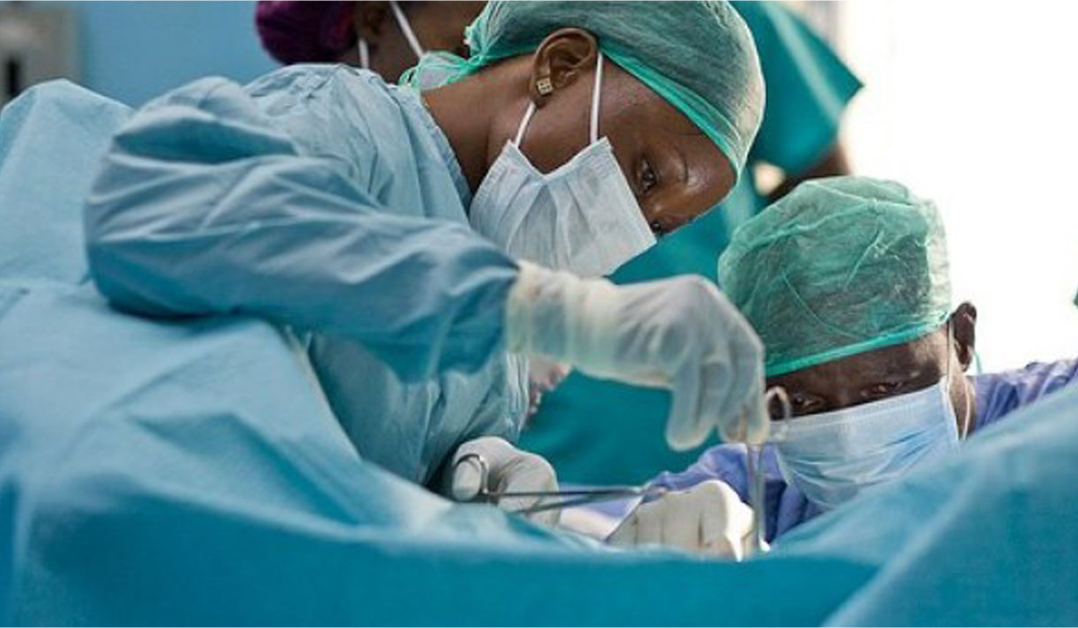
The Federal Medical Centre (FMC), Keffi, Nasarawa State, has successfully carried out at least 18 open-heart surgeries on children with different heart conditions within the past two years. The Chief Medical Director, Dr. Yahaya Baba-Adamu, made this known in Lafia on Thursday while addressing journalists shortly after the 2025 Annual Lecture and Award Series organised by The Eyewitness Newspapers. Dr. Baba-Adamu, who was honoured with the Icon of Public Service Award, praised the dedication and teamwork of paediatric surgeons, nurses, and other specialists, noting that their combined efforts led to the successful recovery of all 18 children. He explained that the hospital’s improved medical equipment made the complex surgeries possible, allowing them to handle cases that previously had to be referred to Abuja. “Because we have upgraded our facilities, we successfully performed open-heart surgeries on no fewer than 18 children, and they are all doing well,” he said. According to him, FMC Keffi now attracts patients from Benue and neighbouring states, thanks to its expanded capacity and enhanced services. The CMD also revealed that the hospital has strengthened its kidney care unit, ensuring that dialysis patients no longer need to travel outside the state. In addition, a new Multi-Specialty Clinic has been established to cater to patients with ear, nose, throat, eye, and dental issues. He added that accident victims along major highways are now receiving prompt treatment at the hospital, reducing the need for transfers to Abuja. At the ceremony, Governor Abdullahi Sule commended the role of the media in promoting transparency and accountability. Represented by the Commissioner for Information, Culture, and Tourism, Dr. Ibrahim Tanko, the governor reaffirmed his administration’s commitment to creating a supportive environment for journalists. Guest Speaker and former Secretary to the State Government, Timothy Anjide, in his keynote address, highlighted the administration’s focus on education reform, youth empowerment, and technical skills development to prepare citizens for a modern economy. Other honourees at the event included the Emir of Lafia, Justice Sidi Bage (rtd.); former Customs Comptroller, John Attah; and Vice Chancellor of Nasarawa State University, Keffi, Prof. Sa’adatu Liman, among others.

James Obasi7 November 2025
alcoholic-drinks-750x375-1.jpg

4min5340
The Senate, on Thursday, directed the National Agency for Food and Drug Administration and Control (NAFDAC) not to extend the December 31, 2025 deadline for banning the production and sale of alcoholic beverages in sachets and small PET bottles. The resolution followed a motion of urgent national importance sponsored by Senator Asuquo Ekpenyong (Cross River South) during Tuesday’s plenary session. While presenting the motion, Ekpenyong said the enforcement timeline aligns with global regulatory standards designed to reduce alcohol-related harm among Nigerians. He noted that in 2018, the Federal Ministry of Health, NAFDAC, the Federal Competition and Consumer Protection Commission, and industry stakeholders — including the Association of Food, Beverage and Tobacco Employers — signed a five-year Memorandum of Understanding to phase out sachet and mini-bottle alcoholic drinks. The goal, he explained, was to curb the increasing misuse of cheap, high-strength alcohol among young people. Ekpenyong added that the Federal Government had already provided a one-year grace period in 2024 to allow manufacturers to deplete existing stock and transition to compliant packaging. However, some producers, he warned, are now lobbying for another extension. “As the December 2025 deadline approaches, certain manufacturers are pushing for more time, undermining regulation and threatening public health,” he said. He emphasized that the continuous sale of high-content alcoholic drinks in sachets contributes to addiction, impaired cognitive growth, school dropouts, domestic violence, and rising road accidents — particularly among commercial drivers and teenagers. Ekpenyong further cautioned that companies that have complied are being unfairly disadvantaged compared to those still flouting the directive. Other senators supported the motion, calling for strict enforcement and sustained awareness campaigns. Senator Anthony Ani (Ebonyi South) described the situation as a growing public health crisis, urging prompt action to safeguard the younger generation. Senate President Godswill Akpabio endorsed the resolution, calling it a vital step to protect public safety and youth welfare. He stressed that NAFDAC must enforce the policy without compromise. “This is a matter of urgency,” Akpabio stated. “The agency must act decisively to shield Nigerians, especially the youth, from the dangers of unregulated alcohol consumption.” NAFDAC began implementing the phase-out policy in January 2024, sealing noncompliant factories and seizing illegal products. The agency, led by Director-General Prof. Mojisola Adeyeye, has maintained that sachet alcoholic drinks are deliberately marketed to young consumers due to their affordability and ease of concealment. Despite opposition from parts of the manufacturing sector, NAFDAC has remained firm on the ban, linking it to efforts aimed at curbing substance abuse, underage drinking, and addiction nationwide.

James Obasi6 November 2025
asuu-strike.jpg

5min2990
The Academic Staff Union of Universities (ASUU) has denied receiving the ₦50 billion revitalisation fund the Federal Government recently claimed to have disbursed, stressing that none of its key demands have been met ahead of its National Executive Council (NEC) meeting scheduled for November 8 and 9, 2025. In a statement issued on Wednesday, the union’s spokesperson, Prof. Jurbe Molwus, said ASUU suspended its two-week warning strike in good faith, based on assurances from senior government officials that concrete actions would follow. “As ASUU prepares for its NEC meeting on November 8 and 9, we expected that some of the outstanding entitlements — including 3.5 months of withheld salaries, 25/35% wage award arrears, promotion arrears, and unpaid salaries — would have been settled by now. Unfortunately, what we keep seeing are press statements from the Minister of Education instead of actual payments. What we need are credit alerts, not empty promises,” Molwus said. He expressed concern that the ₦50 billion revitalisation fund announced by the government had not reached universities. “It’s unfortunate that the ₦50 billion revitalisation fund reportedly released weeks ago has yet to get to the universities. We wonder why the Minister of Education is holding onto it,” he said. Molwus also dismissed claims by Education Minister Dr. Tunji Alausa that ₦2.3 billion had been released to clear salary and promotion arrears. “University workers have not received any such payments. The minister’s statement about clearing backlogs appears to be a fiction. He also spoke about improving academic staff welfare — we ask, how exactly?” He argued that the ₦2.3 billion mentioned was grossly inadequate. “That amount can barely cover the arrears of three major universities. It’s embarrassing, to say the least. The minister must clarify what portion of entitlements the ₦2.3 billion is meant to cover and for whom,” he added. ASUU urged Nigerians to hold the Federal Government accountable, warning that it may resume its suspended strike if its demands remain unmet by November 21, 2025 — the end of its four-week ultimatum. “We call on the media, students, parents, and the general public to prevail on the government to act responsibly so that ASUU isn’t blamed if we resume our strike in two weeks. For clarity, the strike was only suspended out of goodwill. Our members are losing patience while waiting for their rightful payments,” the statement read. ASUU had declared a two-week “total and comprehensive” strike on October 12 after giving the government a 14-day ultimatum on September 28. The union cited the government’s failure to address issues of staff welfare, infrastructure funding, implementation of the 2009 ASUU-FG agreement, and unpaid salaries. The Federal Government condemned the strike and enforced a “No Work, No Pay” directive, ordering universities to conduct roll calls and headcounts of staff on duty. In response, the Senate intervened, pledging to reopen talks among ASUU, the Ministry of Education, and the National Universities Commission. The Chairman of the Senate Committee on Tertiary Institutions and TETFund, Senator Aliyu Dandutse, also said the committee would meet with FCT Minister Nyesom Wike to resolve the lingering University of Abuja land dispute.

James Obasi6 November 2025
millitary-2.jpg

5min8410
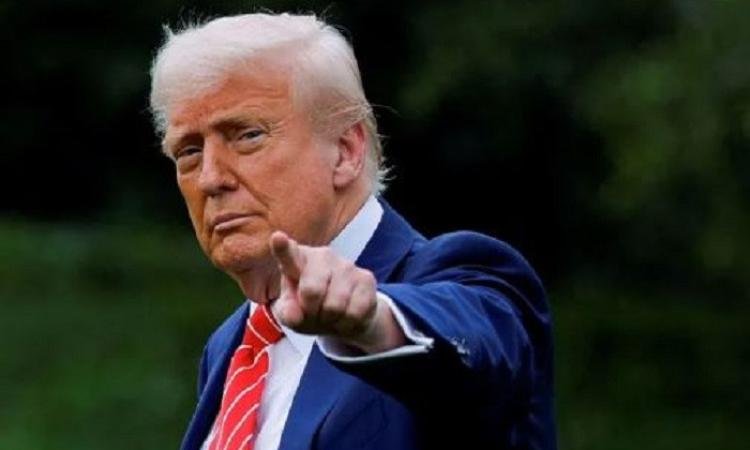
The United States military has reportedly developed contingency plans for possible airstrikes in Nigeria after President Donald Trump directed the Pentagon to “prepare to intervene” in response to terrorist attacks on Christians, according to The New York Times. The report, published Wednesday, revealed that the U.S. Africa Command had submitted several operational strategies to the Department of War following a request from Secretary Pete Hegseth to design plans in line with Trump’s order. Sources familiar with the discussions disclosed that the proposals — labeled as “heavy,” “medium,” and “light” — represent different levels of engagement in Nigeria. Under the “heavy option,” Washington would deploy an aircraft carrier strike group to the Gulf of Guinea, supported by fighter jets or long-range bombers to target militant bases in northern Nigeria. The “medium option” focuses on using MQ-9 Reaper and MQ-1 Predator drones for precision strikes on insurgent camps, convoys, and vehicles, guided by U.S. intelligence for accuracy. The “light option” prioritizes intelligence sharing, logistical assistance, and joint operations with Nigerian forces against Boko Haram and other Islamist militants responsible for widespread violence and church attacks. However, senior Pentagon officials reportedly admitted that limited airstrikes or drone missions would have minimal impact on Nigeria’s prolonged insurgency unless the U.S. were to commit to a full-scale operation similar to those in Iraq or Afghanistan — a move not currently under consideration in Washington. Earlier this week, Trump had warned that the U.S. might deploy its military to Nigeria if what he called the “genocide against Christians” was not stopped — a claim Nigeria’s government has firmly denied. In response, China reaffirmed its backing for Nigeria, saying it opposes any external interference under the guise of religion or human rights. “As Nigeria’s comprehensive strategic partner, China firmly rejects any country using religion and human rights as excuses to meddle in internal affairs or threaten other nations with sanctions and force,” said Chinese Foreign Ministry spokesperson Mao Ning during a press briefing in Beijing. Meanwhile, the Nigerian government on Wednesday rejected its inclusion on the U.S. list of countries accused of violating religious freedom, describing the designation as “misleading and based on inaccurate data.” Minister of Information and National Orientation, Mohammed Idris, clarified that Nigeria’s challenge is terrorism, not religious persecution, emphasizing that both Christians and Muslims have suffered from extremist attacks. “The government rejects any claims of religious persecution. Since 2023, the Tinubu administration has neutralized over 13,500 militants and rescued more than 11,000 hostages. Nigeria remains open to collaboration with the U.S. on counterterrorism while upholding respect for national sovereignty,” he said. Idris added that the government remains committed to protecting all citizens, regardless of faith. Later on Wednesday, Trump doubled down on his earlier remarks, declaring that the U.S. “will not stand by” if the alleged persecution of Christians in Nigeria continues. He said, “Christianity is under threat in Nigeria. The United States cannot remain silent while these atrocities persist. We are ready, willing, and able to protect Christians around the world.” The developments have sparked rising diplomatic tension between Washington and Abuja and reignited debate in the U.S. over whether military involvement is an appropriate response to religious or humanitarian crises abroad.

James Obasi5 November 2025
Nnamdi-Kanu-516x340-1.jpg

3min8760
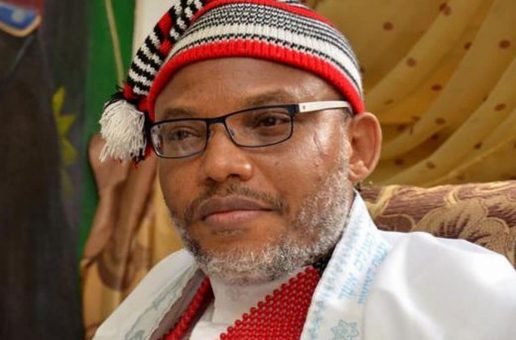
A socio-political group in the South-East, the Igbo Political Network (IPN), has joined growing calls for the release of the detained leader of the Indigenous People of Biafra (IPOB), Nnamdi Kanu. The group also declared that it had invoked traditional deities to seek justice against those allegedly responsible for Kanu’s continued detention, describing his prolonged incarceration as an act of injustice and wickedness. President of the Igbo Political Network, Chief Okemiri, made the remarks on Monday in Abakaliki, the capital of Ebonyi State. He said, “The truth is that the time to release Mazi Nnamdi Kanu has come. It is unjust and inhumane to continue holding him despite court orders granting his release. We are no longer pleading; he must be set free.” Okemiri argued that Kanu’s continued detention, despite legal rulings, reflects a systemic bias and portrays the Igbo people as second-class citizens. “Across Nigeria and beyond, this ongoing detention is seen as a deliberate attempt to suppress his fundamental rights. If individuals such as terrorists, drug traffickers, and murderers can be released, why is Nnamdi Kanu still behind bars?” he questioned. He further alleged that some Igbo political figures may be complicit in Kanu’s continued detention. “We have come to the conclusion that his ordeal is being sustained by selfish Igbo leaders and politicians. There are strong indications that some of them are collaborating with external forces. As the saying goes, it’s the rat inside the house that tells the one outside where the food is. These leaders are acting against Kanu’s release for personal gain,” he said. Commenting on reports of Kanu’s deteriorating health, Okemiri criticized the silence of some Igbo leaders, accusing them of indifference. “At this stage, when his health condition in DSS custody is said to be worsening, we expected Igbo leaders to speak out strongly for his freedom. Unfortunately, they have remained silent, driven by selfish interests,” he added.