
Author: James Obasi

James Obasi5 November 2025
Doctors.jpg-6-12-22-1062x598-1.jpg

3min2600
The Association of Resident Doctors under the Federal Capital Territory Administration (ARD-FCTA) has confirmed the partial payment of salary arrears and the Medical Residency Training Fund (MRTF) by the FCT Administration but says its indefinite strike will continue until all pending demands are fully addressed. In a statement signed by its President, Dr. George Ebong, the association described the payment as a positive first step toward meeting its demands but noted that several doctors were still excluded from the latest disbursements. According to the statement, 28 doctors who had been owed salary arrears for periods ranging from one month to one year received payment two nights ago. However, it explained that the MRTF was not paid to all affected doctors, leaving 47 still awaiting their entitlements. Salaries for October were also paid on Tuesday. ARD-FCTA, which represents doctors in 14 district and general hospitals as well as the Department of Public Health under the FCTA, began its indefinite strike on Saturday. The action aligns with the nationwide strike declared by the Nigerian Association of Resident Doctors (NARD) to demand better working conditions, improved welfare, and fair remuneration. Providing further details, the association stated, “Two nights ago, 28 doctors owed salary arrears for up to one year were paid. Some doctors also received their MRTF, but out of 150 owed, only 103 were settled, leaving 47 unpaid. Salaries for October were also released on Tuesday.” While expressing appreciation to the FCT Minister, Nyesom Wike, for initiating responses to their concerns, the doctors insisted the strike would not be suspended until every outstanding issue is resolved. “Our demands include the immediate payment of the remaining 47 doctors owed MRTF, settlement of external resident doctors owed six to seven months’ salaries, payment of skipping and promotion arrears, Post-Part 2 conversion arrears, implementation of the 25–35% CONMESS adjustment already applied in federal institutions, payment of wage awards and 13-month hazard allowance arrears since 2021, as well as improved working conditions and employment of more staff,” the statement read. The association emphasized that the government should not wait for strikes before responding to workers’ grievances. “We appreciate the efforts of the FCT Minister and the ongoing dialogues with the National Assembly and FCTA management. However, the indefinite strike continues until all outstanding demands are met,” the doctors stated.

James Obasi4 November 2025
aa-1280x720.jpg

4min1630
The Christian Association of Nigeria (CAN) in the 19 Northern states and the Federal Capital Territory has called on Christians and Muslims to embrace peace and unity in response to former U.S. President Donald Trump’s recent remarks on alleged persecution of Christians in Nigeria. Rev. John Hayab, Chairman of the association, stated in an interview with the News Agency of Nigeria (NAN) on Tuesday that Trump’s statement should not be viewed as divisive but rather as an appeal for Nigerians to work together to end killings and religious intolerance nationwide. Trump had recently alleged that Christians in Nigeria were being persecuted and urged the international community to pay attention to the issue — a comment that has since stirred debate both within and outside the country. According to Hayab, the remarks should be seen as a wake-up call for citizens of all faiths to demand concrete action from the government to safeguard the lives and rights of every Nigerian, regardless of religion or ethnicity. “Trump’s statement about alleged Christian genocide in Nigeria should inspire peace-loving Christians and Muslims to unite and press the government to stop the killing of anyone based on religion or identity,” Hayab said. He noted that a fair interpretation of Trump’s words shows concern rather than criticism, describing them as the voice of an outsider urging Nigerians to promote harmony. “If you read President Trump’s statement with an open mind, you’ll see the voice of someone who genuinely cares and wants Nigerians to take meaningful steps toward lasting peace and unity,” he added. The cleric warned against individuals or groups attempting to twist the message for political or religious gain, stressing that such actions only deepen national division. “We must ignore those who manipulate or misinterpret his words to set us against one another,” Hayab cautioned. He further clarified that Trump’s warning targeted terrorists, not Nigerians, and questioned why anyone would take offense unless they identified with the perpetrators. Hayab emphasized that what Nigerians need most is the freedom to practice their beliefs without fear or discrimination. “All we desire is freedom for everyone — Christians, Muslims, or free thinkers — to practice their faith without intimidation,” he stated. He concluded by urging religious leaders, public officials, and citizens to prioritize peacebuilding, unity, and true national reconciliation.

James Obasi4 November 2025
Nigerian-Ports-Authority-NPA-797x598-1.jpeg

2min1780
The Nigerian Ports Authority (NPA) has announced that a total of 17 vessels are expected to arrive at the Apapa and Tin-Can Island ports in Lagos between November 3 and 7. According to the NPA’s daily publication, Shipping Position, 13 of these vessels are carrying petroleum products, including crude oil, diesel, aviation fuel, gasoline, gas oil, and petrol. The remaining four are laden with various containerized goods. The report also indicated that six vessels have already arrived at the ports and are awaiting berthing to discharge general cargo, petrol, containers, and bulk urea. Meanwhile, 16 vessels are currently at the ports unloading general cargo, bulk wheat, fresh fish, bulk gas, containers, and petrol. Similarly, 14 ships are expected to berth at the Lekki Port within the same period, bringing in crude oil, aviation fuel, diesel, gas oil, petrol, and containers. The NPA added that nine ships are already at Lekki Port, waiting to discharge crude oil, gasoline, bulk urea, petrol, and gas oil

James Obasi3 November 2025
baby-food.jpg

4min2040
In the early and late 1960s, many Nigerian mothers proudly nourished their babies with locally made cereals, often after a year of exclusive breastfeeding. However, with the rise of modernisation and Western influence—particularly through television—feeding habits began to change. Gradually, nursing mothers turned to processed, factory-made baby foods. By the early 2000s, the trend had worsened, as many working mothers abandoned breastfeeding altogether. Despite continuous warnings from medical experts and the World Health Organization, the dependence on commercial baby food persisted. But with the current economic hardship, many families are being forced to return to traditional feeding practices. The soaring prices of baby food—now ranging between ₦20,000 and ₦50,000 per tin depending on the brand—have made such products unaffordable for most low- and middle-income households. Investigations reveal that many mothers are now embracing homemade baby meals such as mashed potatoes, rice, bananas, pap (corn meal), purees, semolina, and even soft versions of local dishes like amala and ewedu. Mrs. Doris Erabor, a factory worker and nursing mother, shared her experience: “I started making semolina paste with milk and salt for my four-month-old baby. Baby food became too expensive, and I couldn’t risk switching to unfamiliar brands. At first, I tried pap, but it didn’t satisfy him. A friend suggested semovita and milk—it worked perfectly, and my baby is now seven months old.” For many families, the cost of raising a baby in Nigeria has become overwhelming. Delivery bills, baby clothing, diapers, and food expenses have all skyrocketed, erasing the once-promoted six months of exclusive breastfeeding. Many mothers now juggle multiple jobs or side businesses just to stay afloat. Mrs. Grace Osunde, a teacher and mother of twins, also recounted her struggle: “My breast milk didn’t flow at all, so we started with baby milk from day one. In one week, the twins finished two cans, and the cost became unbearable. I began mashing rice with milk and banana to make a puree. I also tried a mix of guinea corn, soybeans, and crayfish, but the babies didn’t like it. Now, I plan to introduce ewedu and amala gradually.” For some, even finding an affordable local alternative has been challenging.Mrs. Ramat Yusuf, a trader, said: “My baby is four months old, and I can’t afford baby food. I tried several options, but she rejected most of them. I now make semolina paste with banana. I breastfeed her when I’m home, but I often have to leave her with a friend so I can hawk my goods. It’s tough, but we’re surviving.” As economic conditions worsen, more Nigerian mothers are returning to traditional, home-prepared baby foods—reconnecting with age-old feeding practices out of both necessity and resilience.

James Obasi3 November 2025
trump.jpg

4min2240
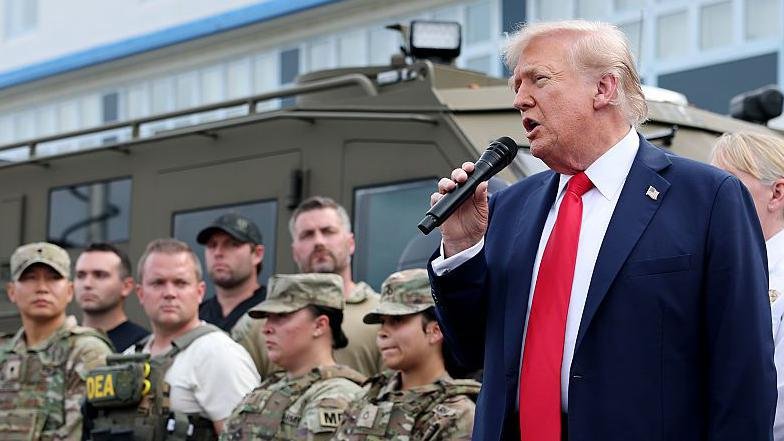
Senior Advocates of Nigeria have condemned the threat by United States President Donald Trump to deploy American troops to Nigeria over alleged killings of Christians, describing such a move as a violation of Nigeria’s sovereignty and international law. Trump had on Friday designated Nigeria a “Country of Particular Concern” over alleged Christian genocide, warning that the U.S. might send troops to eliminate Islamic extremists responsible for the attacks. “If the Nigerian Government continues to allow the killing of Christians, the U.S.A. will immediately stop all aid and assistance to Nigeria and may very well go into that now disgraced country, ‘guns-a-blazing,’ to completely wipe out the Islamic terrorists who are committing these horrible atrocities,” Trump said on Saturday, November 1. Reacting to the development, constitutional lawyer Prof. Itse Sagay (SAN) stated that any foreign military intervention without Nigeria’s consent would be an act of aggression. “They can only intervene with our government’s approval. Otherwise, it will constitute a serious breach of international law,” he said. Another senior advocate, Adedayo Adedeji (SAN), affirmed that under international law, every nation retains full independence and territorial integrity. “Each state has the right to exercise full authority within its borders, free from foreign interference,” he explained. He added that while cooperation in fighting terrorism was acceptable, any unilateral military action by the U.S. would be unlawful. “The United States cannot simply invade Nigeria to address alleged cases of Christian genocide. Counterterrorism should be pursued through legitimate collaboration, not force,” Adedeji said. Adedeji also dismissed reports of a “Christian genocide,” noting, “Contrary to the circulating claims, I don’t believe there’s any Christian genocide in Nigeria.” Chief Mike Ahamba (SAN) described the killings as worrisome and called on the Federal Government to act swiftly to prevent external interference. “If the government fails to address it, stronger nations may take advantage of the situation. However, any foreign involvement must be by invitation; otherwise, it would be considered an invasion,” he warned. In his remarks, Lagos-based lawyer Jiti Ogunye described Trump’s statement as hypocritical and inconsistent with his “America First” policy. “Here’s a president who wants to isolate America from global affairs, yet suddenly takes interest in Nigeria. What exactly is his motive?” Ogunye asked. He suggested that the move could be driven by economic and strategic interests rather than humanitarian reasons. “It wouldn’t be surprising if such an intervention ended up targeting Nigeria’s oil, lithium, and gold as payment for ‘protection,’” he noted. Ogunye urged the Tinubu administration to prioritize internal security reforms, particularly in conflict-prone areas like Benue and Plateau States. “The government must tackle these crises head-on. The era of open grazing and territorial encroachment should be over,” he said, emphasizing that respect for state boundaries and the adoption of ranching would help resolve persistent conflicts.

James Obasi2 November 2025
aa.webp

5min1840
As Lagos continues to grapple with environmental challenges linked to its rapid urbanisation, residents across the state have voiced growing concern over worsening air quality caused by indiscriminate waste burning, vehicular emissions, and poor sanitation practices. In interviews with the News Agency of Nigeria (NAN) on Sunday, residents from Ikorodu, Shasha, Oshodi, Alagbado, and other parts of the metropolis lamented the choking fumes that now hang over many communities, posing serious threats to public health and the environment. Mrs. Itunu Dada, a civil servant in Ikorodu, attributed the poor air quality in her area to rampant waste burning. “Instead of engaging PSP operators, many residents prefer to burn their refuse. The smoke causes cough and chest irritation. Around the markets, refuse piles emit offensive odours it’s terrible,” she said. She urged the Lagos State Government to shut down unsanitary markets and strengthen waste collection systems. “Those evacuating waste from drains often leave it for weeks before removal. When it rains, the waste flows back into the gutters. The government should set up a task force to monitor illegal dumping and burning,” she added. In Shasha, Alimosho Local Government Area, a teacher, Mrs. Stella Lawrence, said air pollution has become a daily struggle for residents. “Many commercial vehicles are not roadworthy and emit thick fumes. Frequent power outages also force people to rely on generators. The government should phase out unfit vehicles, ensure regular waste evacuation, and improve power supply to reduce pollution,” she said. Similarly, Miss Chioma Ndukwe, a communications professional living in Okota, described Oshodi as one of the worst-hit areas. “When you walk through Oshodi Market, it’s difficult to breathe. Industrial emissions, traffic fumes, and waste burning create a choking environment,” she said, urging authorities to provide public toilets, enforce vehicle emission tests, and regulate industrial discharges. In Lekki, businessman Mr. Bruno Ajede noted that while parts of the area remain relatively clean, congestion in Ajah and nearby markets still fuels pollution. “Vehicle fumes are the major problem. Air pollution can trigger asthma and other respiratory illnesses,” he said. Mr. Ajibola Ajayi, a marketer in Alagbado, blamed the situation on weak regulation. “Many vehicles here emit heavy smoke because there’s little or no enforcement,” he said. Speaking on the issue, Mr. Friday Oku, President of the Association of Wastepickers of Lagos, said Nigeria’s dependence on fossil fuels is worsening environmental and health hazards. “Fossil fuel use is damaging both our health and the planet. That’s why we advocate renewable energy and cleaner alternatives,” he said. Oku criticised inconsistent government policies, citing the recent ban on waste pickers using carts known locally as “cart pushers” as counterproductive. “Banning cart pushers while replacing them with more polluting tricycles shows a lack of policy direction,” he argued. He added that private groups are promoting renewable energy and Compressed Natural Gas (CNG), but government actions often contradict climate goals. “We need to move away from fossil fuels. The solution lies in renewable energy and behavioural change,” he stressed. Experts warn that prolonged exposure to polluted air increases the risk of respiratory infections, heart disease, and lung cancer. Meanwhile, the Lagos State Government says it remains committed to improving air quality through its Blue and Green Economy Initiative and Air Quality Monitoring Network, which deploys mobile sensors across the city to track emissions and enforce compliance. Despite these efforts, residents and environmental advocates insist that Lagos will not achieve clean air until waste burning stops and environmental laws are effectively enforced. (NAN)

James Obasi1 November 2025
aa-1280x855.jpeg

4min1500
Former Vice President, Prof. Yemi Osinbajo, has called on policymakers and human resource professionals to ensure that technology and data are deployed to empower people rather than control them. He emphasized the need for ethical responsibility in managing the rapid transformation of today’s workplace. Osinbajo made the call at the closing ceremony of the 57th International Conference and Exhibition of the Chartered Institute of Personnel Management of Nigeria (CIPM) held in Abuja. The statement was issued on Saturday by the President and Chairman of CIPM’s Governing Council, Ahmed Gobir. “Data should serve as a tool of empowerment, not control,” Osinbajo said. “Artificial intelligence has transformed every aspect of our world. The future of work is already here, shaped by digital innovation and our youthful population. We must continue to reskill and upskill to seize the opportunities ahead.” Commending CIPM for its role in regulating people management in Nigeria, the former vice president noted that the institute had become a vital voice in promoting both innovation and ethics in the workplace. His remarks come amid a global debate on the ethical implications of artificial intelligence, automation, and data-driven management. While digital tools boost efficiency, experts warn that they could also lead to job losses, privacy violations, and workplace surveillance if misused. Osinbajo urged HR leaders to champion ethical standards and establish clear policies guiding the responsible use of AI and data. “The ethical and responsible use of technology is critical. HR must take the lead in creating guidelines to regulate AI,” he said, also advocating for labour laws that reflect modern work realities. Highlighting the human side of business, he called on employers to prioritise mental health, empathy, and inclusion as key drivers of productivity. “Employee well-being and mental health must be a priority. A culture of empathy and inclusion sustains productivity,” he noted. “The future of work will not be defined by technology alone, but by how we integrate human values into its use. People, not technology, will shape the new world of work,” Osinbajo concluded. He added, “Nigeria’s future will not be written by technology, but by people empowered to use it with wisdom, empathy, and vision.” CIPM President Ahmed Gobir, in his remarks, urged participants to apply the lessons from the conference in their workplaces. “Translate the insights you’ve gained into tangible results,” he said, adding that the theme, ‘Reimagining the New World of Work’, underscored the need for HR professionals to remain agile and forward-thinking in an evolving digital landscape. Founded in 1968, the Chartered Institute of Personnel Management of Nigeria is the country’s foremost professional body for human resource management. Its annual conference is the largest gathering of HR practitioners in West Africa, bringing together experts from the public and private sectors to explore trends in leadership, workforce development, and technology-driven transformation.

James Obasi31 October 2025
Unicef.png

3min4710
The United Nations Children’s Fund (UNICEF), in partnership with the Federal Ministry of Information and National Orientation, has called on journalists to uphold ethical standards when reporting issues related to children, emphasizing the need to protect their rights, dignity, and well-being. The reminder came during a two-day capacity-building workshop on ethical journalism and child rights reporting, organised by the Child Rights Information Bureau of the ministry in collaboration with UNICEF. The training, held at Kakanfo Hotel in Ibadan, Oyo State, brought together over 30 journalists, editors, and correspondents from across the country to strengthen advocacy for child protection and the full implementation of the Child Rights Act. Stakeholders cautioned against publishing stories that could expose children to harm, stigma, or exploitation, particularly in light of the growing challenges of insecurity, violence, hunger, malnutrition, child labour, and abuse in Nigeria. They noted that any report that portrays a child negatively or as a victim could cause more damage than protection. UNICEF Lagos Field Office Chief, Celine Lafoucriere, in her keynote address titled “Why Ethical Reporting of Children Matters in Nigeria,” highlighted that children’s vulnerability makes ethical reporting an urgent priority. She noted, “Children are not miniature adults. Ethical reporting is not just a professional standard; it is a moral responsibility. It ensures that every child is seen, heard, and protected with dignity.” Lafoucriere urged journalists to become champions of responsible storytelling, adding that the media’s role goes beyond informing — it also shapes perceptions and influences how society treats its most vulnerable members. In his welcome remarks, the Permanent Secretary of the Federal Ministry of Information and National Orientation, Ogbodo Nnam, represented by Temitoye Falayi, Head of the Child Rights Information Bureau, said the training aims to foster a media culture that protects children’s identities, amplifies their voices responsibly, and prioritizes their best interests. “The media holds great power — the power to inform, inspire, and hold leaders accountable. But with that power comes an equally great responsibility: to report with sensitivity, integrity, and respect for human dignity,” Nnam said. Experts including Dr. Jide Johnson of the Nigerian Institute of Journalism, communication specialists Dr. Lekan Sote and Dr. Geoffrey Njoku, and Prof. Charles Obot of the University of Uyo, emphasized that journalists must understand both national and international child protection laws. They stressed that every report involving children must uphold the principle of “do no harm” and promote their safety, growth, and rights above all else.  

James Obasi31 October 2025
1.6.jpeg

6min7810
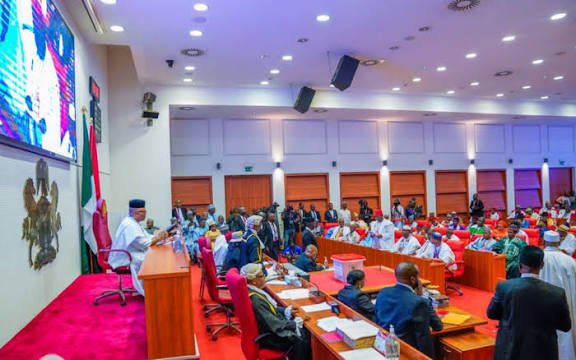
The House of Representatives has set up an ad-hoc committee to investigate mounting complaints over excessive tax deductions from the earnings of civil and public servants, alongside multiple and unclear charges imposed by commercial banks on customers. The committee, chaired by Hon. Kelechi Nwogu from Rivers State, was inaugurated in Abuja on Thursday by Speaker Tajudeen Abbas. Across the country, Nigerians have continued to express frustration over unexplained deductions from their salaries and bank accounts. Civil and public servants, in particular, lament being subjected to overlapping taxes, levies, and charges that further strain their limited incomes. Experts have linked the issue to Nigeria’s complicated tax system, where overlapping deductions by federal, state, and local agencies often result in double taxation and poor accountability. In addition, some workers allege that deducted funds—such as pensions and housing contributions—are not fully remitted to the relevant authorities. Meanwhile, commercial banks have faced backlash for a variety of service charges, including stamp duty, VAT, card maintenance, and transfer fees, often applied simultaneously on the same transaction. Responding to these widespread concerns, the House inaugurated the Nwogu-led committee to look into the allegations and ensure transparency in both public and private financial dealings. The investigation will seek clarifications from the Central Bank of Nigeria, the Federal Inland Revenue Service, and commercial banks, with the goal of promoting fairness, consumer protection, and trust in Nigeria’s financial system. In his remarks, Hon. Nwogu said the committee’s creation was a response to the growing outcry from Nigerians over persistent, unexplained deductions by government bodies and financial institutions. He described the probe as a vital step in reinforcing the National Assembly’s dedication to fairness, transparency, and accountability. “It is with great honour and responsibility that I address you as Chairman of this ad-hoc Committee,” Nwogu said. “Our goal is to ensure that financial operations in both public and private institutions align with principles of equity and justice.” He explained that the committee would review the nature, legality, and implementation of taxes, levies, and deductions affecting public workers, while also examining potential cases of non-remittance. Additionally, the committee will scrutinize various bank charges and VAT applications on service fees to guarantee fairness and transparency in financial transactions. “Our objective is to identify irregularities, propose reforms, and protect the rights of all Nigerians,” Nwogu emphasized. “We are committed to making far-reaching recommendations—no matter whose interests are affected.” He called for cooperation from government agencies, banks, regulatory institutions, and civil society organizations, stressing that the committee’s work would go beyond identifying problems to delivering practical solutions that restore public confidence in the financial system. Also speaking, the Speaker, Tajudeen Abbas—represented by Chief Whip Bello Kumo—reaffirmed the commitment of the 10th National Assembly to safeguarding citizens from exploitative financial practices. He noted that the establishment of the committee reflects the legislature’s responsiveness to citizens’ complaints about arbitrary deductions from salaries and accounts. “Public servants who diligently serve this nation should not be burdened by unfair financial practices that reduce their already strained earnings,” Abbas said. He expressed concern over the growing problem of multiple and unclear bank charges, warning that such actions erode public trust and worsen the economic difficulties faced by Nigerians. “The persistence of multiple bank charges undermines confidence in our financial institutions and imposes an unnecessary strain on citizens,” he said. “Demands for transparency and fairness in banking must be treated with urgency.” The Speaker urged committee members to carry out their assignment with integrity and diligence, engaging all relevant stakeholders to ensure a thorough, solution-driven investigation. “This is an opportunity to rebuild public trust and reinforce financial justice in Nigeria,” Abbas concluded.

James Obasi30 October 2025
6.webp

3min2290
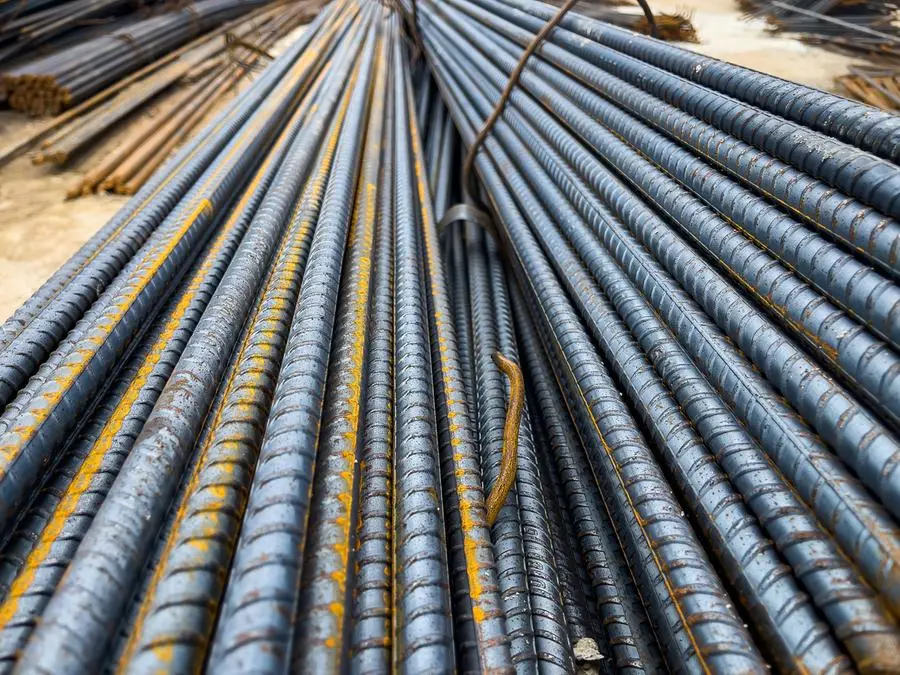
In a move to boost and modernize Nigeria’s steel production, the Federal Ministry of Steel Development has signed a $400 million Joint Strategic Cooperation Declaration with Stellar Steel Company Limited for the construction of a state-of-the-art steel plant in Ewekoro, Ogun State. The Ministry, in a statement, explained that the project will be executed in three phases, with the first phase expected to commence production by 2026. The Minister of Steel Development, Prince Shuaibu Abubakar Audu, signed the agreement during a meeting with Mr. Li, President of Inner Galaxy Group, and other executives of Stellar Steel Company Limited at the Ministry’s headquarters in Abuja. According to the Minister, the partnership supports the Federal Government’s target of producing 10 million tonnes of crude steel annually by 2030 — a milestone toward achieving industrial self-sufficiency and diversifying the nation’s economy. He noted that the Ministry will provide policy and infrastructure support, including integrating Stellar Steel’s logistics projects into the National Infrastructure Plan and ensuring access to available fiscal incentives. Key highlights of the collaboration include the development of a local iron ore supply chain to reduce import dependence and save over $1 billion in foreign exchange yearly, the creation of over 2,000 direct and 20,000 indirect jobs, the promotion of green steel production through energy-efficient technologies, and the strengthening of Nigeria’s position as West Africa’s steel manufacturing hub. Audu added that Stellar Steel will prioritize local employment and capacity building by partnering with Nigerian universities to develop technical and managerial expertise in the steel industry. He described the partnership as a significant milestone that signals a new era for Nigeria’s steel sector and reaffirms the government’s commitment to sustainable industrialization and economic growth. In his remarks, Mr. Li assured that Stellar Steel Company Limited would uphold all terms of the agreement, ensure timely project completion, and adhere to the highest safety and operational standards.