Author: Lifestyle & Wellness Desk

NGX12.webp

1min3860
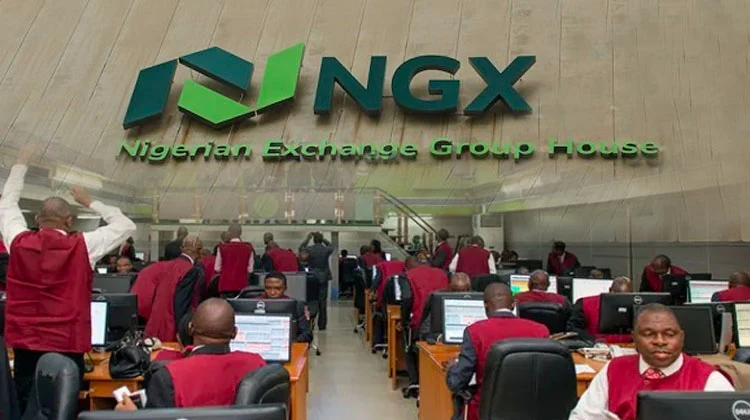
The Chartered Institute of Stockbrokers (CIS) and the Association of Securities Dealing Houses of Nigeria (ASHON) have congratulated the Nigerian Exchange Group Plc and Nigerian Exchange Limited on the landmark achievement of the capital market surpassing N100tn in market capitalisation. In a joint statement, ASHON Chairman Samuel Adenagbe and CIS President Oluropo Dada described the milestone as a testament to the resilience, depth, and growing sophistication of Nigeria’s capital market, highlighting that it reflects renewed investor confidence in the country’s economy. They praised the Board, management, and staff of NGX for their visionary leadership and strategic direction, specifically recognising the efforts of Umaru Kwairanga, Popoola, Jude Chiemeka, and Femi Sobanjo for implementing reforms that enhanced market integrity and efficiency. The statement added, “This milestone would not have been possible without the professionalism and dedication of NGX leadership and the continued commitment of dealing member firms and stockbrokers, who serve as the backbone of the market by ensuring liquidity, transparency, and investor protection.”

wema.jpg

3min5560
Wema Bank, Nigeria’s leading innovator and pioneer of Africa’s first fully digital bank, ALAT, has unveiled the upgraded version of its flagship digital banking platform, ALAT by Wema. Dubbed ALAT: The Evolution, the enhanced platform offers a smarter, faster, and more intuitive banking experience, further cementing Wema Bank’s leadership in technology-driven financial services. The upgrade introduces intelligent features designed to simplify banking, including voice banking (SAW), enabling customers to perform transactions using natural voice commands for greater convenience and accessibility. It also adds Tap and Pay for fast, secure, contactless payments and uptime prediction, which improves transparency and confidence in service availability. These innovations aim to anticipate customer needs in real time, making everyday banking more seamless while reinforcing trust and efficiency. Commenting on the launch, Wema Bank’s Managing Director/CEO, Mr. Moruf Oseni, said, “ALAT: The Evolution is more than an upgrade; it is a commitment to redefining digital banking in Africa. By listening to our customers and anticipating the future of banking, we have created a platform that is intelligent, reliable, and user-friendly, transforming how people live, work, and transact.” Existing customers can easily update their ALAT app via the Google Play Store or Apple App Store and retain all account information and transaction history, while new customers can onboard seamlessly by downloading the app and following the Get Started process. Chief Digital Officer, Mr. Olusegun Adeniyi, explained, “With ALAT: The Evolution, we are enhancing both functionality and the overall banking experience. Integrating voice banking, contactless payments, and predictive service reliability creates a platform that responds intelligently to customer needs, reflecting our long-term vision for a digital bank that is adaptive, intuitive, and consistently available.” Built on speed, intelligence, and user-centric design, ALAT: The Evolution empowers individuals and businesses to bank with confidence, offering voice-enabled transactions, contactless payments, and real-time service predictions. The upgraded platform reinforces Wema Bank’s position as a digital-first institution, delivering innovative solutions that meet the evolving demands of an increasingly digital economy.

HERITAGE.webp

3min4260
The Nigeria Deposit Insurance Corporation (NDIC) has recovered an additional N24.3bn from the assets of the defunct Heritage Bank Limited to repay depositors with balances above N5m at the time the bank’s licence was revoked. The disclosure was made in a statement issued on Sunday by NDIC’s Head of Communication & Public Affairs, Hawwau Gambo. Heritage Bank’s operating licence was revoked by the Central Bank of Nigeria on 3 June 2024, after which the NDIC was appointed as liquidator under Section 12(2) of the Banks and Other Financial Institutions Act 2020 and Sections 55(1 & 2) of the NDIC Act 2023. According to the NDIC, the recovered funds were sourced from debt collection, sale of physical assets, and realisation of investments. These will be applied to pay uninsured deposits exceeding the N5m insured limit. “The second liquidation dividend will be paid at 5.2 kobo per N1.00 on outstanding balances, bringing the cumulative liquidation dividend to 14.4 kobo per N1.00. Payments will be made using depositors’ information already on record with the NDIC,” the statement said. Eligible depositors who previously received the insured sum and the first liquidation dividend will have their alternative bank accounts automatically credited via their Bank Verification Numbers (BVNs). Depositors are advised to check their accounts for confirmation. Those without BVNs or alternative accounts, or who have not yet claimed their insured sum or first dividend, should visit the nearest NDIC office or complete the e-claim form on the NDIC website for prompt processing. NDIC had previously paid the first liquidation dividend of N46.6bn in April 2025, at a rate of 9.2 kobo per N1.00, to depositors whose balances exceeded the N5m insured limit at the time of closure. The NDIC clarified that liquidation dividends are payments made to depositors of closed banks whose balances exceed the insured limit, using proceeds from asset sales, investments, and debt recovery. Payments to other creditors and shareholders are made only after depositors are fully reimbursed, subject to available funds. The Corporation assured the public that this is only the second liquidation dividend, with further payments expected as additional assets are realised and outstanding debts collected. “The NDIC remains committed to recovering all outstanding obligations and promptly reimbursing depositors,” the statement added.

NBS.jpg

5min3730
The National Bureau of Statistics (NBS) is preparing to hold a stakeholder engagement ahead of the release of Nigeria’s December inflation data. The meeting is scheduled for Monday, coming amid widespread projections that the recent disinflationary trend may pause temporarily in December due to year-end spending pressures and diminishing base-year effects. Several analysts have forecast a short-term rise in inflation at the close of the year. CardinalStone, for instance, projected headline inflation at 32.07 per cent, noting that the increase is expected to be temporary and likely to reverse in January 2026. Similarly, Coronation Asset Management anticipates a break in the current disinflationary trend in December, largely attributing the expected rise to base-year effects. In its macroeconomic update, Coronation explained that inflation is projected to rise sharply at year-end, mainly due to statistical base effects. On a month-on-month basis, the firm expects headline inflation to edge higher, driven by festive-season demand, increased transport activity linked to holiday travel, and continued cost pass-through from logistics and service-sector prices. It also noted that food prices are likely to face upward pressure due to tighter supplies, insecurity in key food-producing regions, and increased consumption during the festive period. AIICO Capital, in a separate macroeconomic update released ahead of the inflation data, also projected that the combination of base-year effects and festive spending would interrupt the disinflationary trend in December. The firm expects headline inflation to fall within the range of 31.4 to 32.4 per cent year-on-year. According to AIICO Capital, its outlook is based on the impact of base-year effects on headline, core, and food inflation, alongside seasonal spending patterns. The firm projected that core inflation would ease slightly on a month-on-month basis to between 1.0 and 1.2 per cent, while rising sharply year-on-year to between 32.50 and 32.60 per cent. The expected month-on-month moderation is linked to the appreciation of the naira and a decline in petrol prices during December. The naira strengthened at the official market, while average petrol prices fell significantly following a reduction in gantry prices by Dangote Refinery. In a call for stakeholder participation, the Nigerian Economic Summit Group (NESG) noted that inflation remains one of the most closely watched macroeconomic indicators globally. It observed that following the rebasing of the Consumer Price Index (CPI) in 2025, inflation moderated to 14 per cent in November 2025. However, it acknowledged growing expectations that the December inflation figure could record an apparent spike due to base effects associated with inflation calculations. The NESG emphasised that such a spike would not necessarily indicate a deterioration in underlying economic conditions but would instead reflect methodological factors. It warned that misunderstanding these dynamics could increase uncertainty, undermine confidence in official statistics, and complicate policy and business decisions. The group stressed that, as the custodian of Nigeria’s official inflation data, the NBS has a critical role in promoting transparency, methodological clarity, and confidence in CPI figures. It therefore underscored the importance of engaging stakeholders ahead of the December 2025 inflation release to discuss inflation trends, data interpretation, and expectations, as well as to clearly communicate how the results should be understood. Earlier in 2025, the NBS rebased the Consumer Price Index, updating the price reference period to 2024 from 2019. The bureau explained that the rebasing was necessary to better reflect current price dynamics and provide a more accurate picture of economic trends in Nigeria.  

Geregu-Power-1280x853.jpg

7min7080
Minority investors and capital market operators have expressed strong optimism over MA’AM Energy Limited’s acquisition of a majority stake in Geregu Power Plc, describing the transaction as a significant boost for Nigeria’s power sector. Stakeholders who spoke separately said the takeover of Geregu Power—one of only two power generation companies listed on the Nigerian Exchange Limited—could signal the start of a new phase for the country’s electricity industry. According to disclosures filed on the NGX, Geregu Power’s majority shareholder, Amperion Power Distribution Company Limited, previously owned by billionaire businessman Femi Otedola, underwent a restructuring following a share sale and acquisition concluded on 29 December 2025. Under the transaction, MA’AM Energy Limited acquired a 95 per cent equity stake in Amperion Power Distribution Company, resulting in the transfer of indirect controlling interest in Geregu Power from Calvados Global Services Limited and Otedola to MA’AM Energy. Although there was no direct sale of Geregu Power shares, the ownership change at the holding company level led to a shift in the ultimate beneficial ownership of 77 per cent of Geregu Power’s issued share capital. The deal was valued at about $750m and financed by a consortium of Nigerian banks, with Blackbirch Capital acting as financial adviser. Commenting on the transaction, the Managing Director of GTI Capital, Kehinde Hassan, said the deal set a new benchmark for the valuation of power generation companies in Nigeria. He noted that the acquisition could influence future mergers and acquisitions, stimulate private equity participation, and reshape asset pricing across the power sector. According to him, a $750m investment in a sector often viewed as high-risk sends a strong signal about the long-term potential of Nigeria’s electricity market. He added that the deal could encourage further acquisitions among generation and distribution companies, attract renewed interest from domestic institutional investors, and support recapitalisation across the value chain. Hassan also observed that the timing of the transaction aligns with the Federal Government’s plans for a ₦4tn power-sector liquidity fund, further positioning the industry as increasingly attractive to private equity investors. However, he cautioned that the market may adopt a wait-and-see approach as investors look for clarity on the new owners’ strategic direction, including whether Geregu Power’s dividend culture, operational efficiency, and expansion plans—such as the proposed Geregu II and III projects—will be sustained. Similarly, the Managing Director of HighCap Securities, David Adonri, said stakeholders are keenly awaiting the strategic roadmap of the new board, with minority shareholders particularly focused on stronger value creation. The National Coordinator of the Independent Shareholders Association of Nigeria, Moses Igbrude, projected that the $750m deal could spark similar transactions within the sector. He urged the new owners to operate with transparency and strong corporate governance in a manner that benefits all stakeholders. Also reacting, the President of the Association for the Advancement of Rights of Nigerian Shareholders, Faruk Umar, described the scale and nature of the transaction as symbolic for the Nigerian economy, the power sector, and the capital market. He commended the investment as a positive response to efforts aimed at deepening domestic private participation in infrastructure development, noting that such commitments help reinforce confidence in the long-term outlook of the economy. He further called on the new owners to adopt inclusive stakeholder engagement practices. MA’AM Energy is an Abuja-based integrated energy company. Following the change in beneficial ownership, the Otedola-led board resigned with immediate effect, allowing MA’AM Energy to appoint a new board of directors. The new board is chaired by Senator Abdul-Aziz Yari, former Governor of Zamfara State and current Senator representing Zamfara West. Other non-executive directors include Abdulkadeer Njiddah, Principal Partner at Abdulkadeer & Co.; Usman Mohammed, a chartered accountant with a PhD in Finance; Mohammed Jaafaru, Chief Operations Officer at Advance Link Petroleum Limited; banker Neka Adogu; and Mahmud Magaji, a Senior Advocate of Nigeria. The outgoing Chief Executive Officer, Akin Akinfemiwa, and Deputy Chief Executive Officer, Julius Omodayo-Owotuga, were retained to ensure a smooth management transition in collaboration with the new board. Meanwhile, Geregu Power’s third-quarter 2025 financial results showed total revenue of N131.47bn, with profit before tax of N37.46bn and profit after tax of N25.09bn. Total assets stood at N273.15bn as of September 2025, up from N243.47bn recorded in December 2024. For the first quarter ending 31 March 2026, the company projected total revenue of N57.12bn. Gross profit was estimated at N22.88bn, while operating profit, profit before tax, and profit after tax were forecast at N18.12bn, N17.06bn, and N12.03bn, respectively.


housing.jpg

5min7770
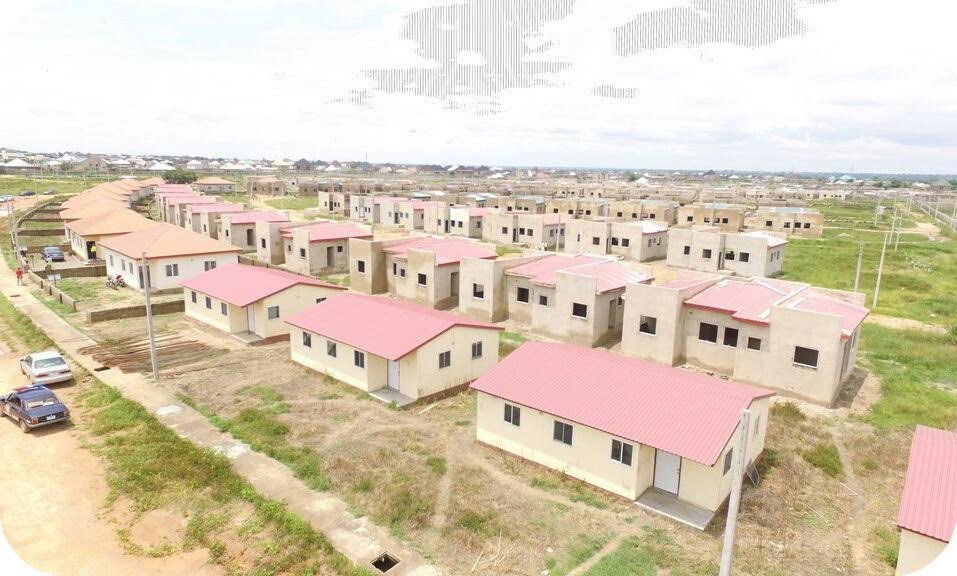
A 2025 report by Knight Frank indicates that short-term rentals and studio apartments are reshaping Nigeria’s housing landscape, driven by rising demand for compact, flexible living options in urban centres. The report noted that in a bid to accelerate housing delivery, the Lagos State Government is leveraging public-private partnerships across multiple levels, ranging from enabling private developers to jointly delivering specific housing projects. This approach spans new town developments such as the Ikoyi–Ibeju corridor, neighbourhood initiatives, and estate-level schemes, including Megamound’s 378-unit development and LBIC’s 64-unit maisonettes. It added that another PPP-based housing project has recently been launched in the Ibeju-Lekki corridor. Despite these interventions, the housing deficit remains wide, increasing pressure on tenants to explore alternative living arrangements. Rising rental demands by landlords have led to more rent defaults, prompting many residents to seek more affordable accommodation. As a result, there has been a growing shift toward suburban and developing areas such as Ikorodu and Ibeju-Lekki, where rental costs are significantly lower than in prime urban locations. This movement reflects a change in tenant priorities, with affordability increasingly taking precedence over proximity to city centres. The report highlighted that short lets and studio apartments are playing an increasingly important role in the Lagos property market. Demand for these housing types has been fuelled by the expansion of hybrid and remote work, allowing young professionals greater flexibility in choosing lower-cost accommodation. In addition, increased local and international tourism has boosted demand for short-term rental properties, further strengthening their presence in the residential market. Beyond housing, the report observed that Lagos’s retail real estate sector is adjusting to economic pressures and reduced consumer purchasing power by aligning more closely with changing shopping habits. Consumers are increasingly favouring convenience and proximity, driving demand for smaller, neighbourhood-based retail outlets rather than large regional malls. This shift has created opportunities for agile local retailers, who are outperforming international brands in meeting hyper-local needs. Examples include Bokku! Mart, which expanded from its launch in 2022 to nearly 150 outlets across Lagos, alongside similar growth by brands such as Addide and Primemart. On the office market, the report noted signs of recovery following several challenging years. Occupancy levels in Grade A office buildings have risen from 65 per cent to 73 per cent, indicating stronger absorption of premium office space. However, average rents for Grade A offices in Ikoyi declined by 3.5 per cent year-on-year, falling from $57 to $55 per square metre per month, highlighting a tenant-favourable market where landlords prioritise occupancy over rent increases. Office activity is also gaining momentum in key commercial hubs such as Eko Atlantic City, supported by modern infrastructure, reliable utilities, advanced telecommunications, and a live-work-play design concept. These advantages have attracted major corporate tenants, with MTN Nigeria and First Bank relocating their headquarters to the area. MTN has secured a large parcel of land, while First Bank has commenced construction of its planned 43-storey headquarters. The presence of the United States Embassy’s diplomatic facility in the city is also contributing to its growing commercial profile. Meanwhile, the wider office market continues to evolve as landlords respond to oversupply and shifting demand. Strategies include converting vacant office buildings into residential, retail, or hospitality uses, as well as developing mixed-use projects that integrate offices with amenities such as shops, gyms, and leisure spaces. This model allows developers to diversify income sources while meeting the growing preference for integrated work-life environments.

NGX12.webp

3min12950
Nigerian equities ended Thursday’s trading session on a positive note, with the total market capitalisation of the Nigerian Exchange Limited rising by N138bn, reflecting modest investor optimism despite mixed sectoral performance. At the close, total market capitalisation increased to N102.82tn from N102.68tn in the previous session, marking a gain of N138bn. The All-Share Index added 214.80 points, or 0.13 per cent, to close at 160,806.56 points, up from 160,591.76 points recorded on Wednesday. Market activity showed moderation, with 645.02 million shares valued at N16.42bn traded across 44,380 deals. This represented a 19 per cent decline in turnover and a 10 per cent drop in the number of deals compared with the prior session, signalling cautious participation by investors. Market breadth was negative, as 41 stocks fell against 32 gainers, indicating profit-taking in several counters despite the slight improvement in headline indices. Among the top gainers, Neimeth International Pharmaceuticals led with a 10.00 per cent increase to close at N7.70 per share, followed by May & Baker Nigeria, up 9.85 per cent to N26.20; E-Tranzact International, up 9.64 per cent to N13.65; and Multiverse Mining and Exploration, which rose 9.51 per cent to N21.30. On the losers’ chart, International Energy Insurance fell 9.90 per cent to N2.73 per share, Associated Bus Company dropped 9.88 per cent to N4.47, Austin Laz & Company lost 9.84 per cent to close at N4.58, while Conoil declined 9.72 per cent to N169.00. In terms of trading volume, Chams recorded the highest activity with 60.46 million shares exchanged, followed by Linkage Assurance with 54.11 million shares, Tantalizers with 44.96 million shares, and Access Holdings with 35.52 million shares. Zenith Bank led by value, with N1.51bn worth of shares traded, followed by Seplat Energy at N1.20bn, Unilever Nigeria at N1.20bn, and Guaranty Trust Holding Company at N1.01bn. Analysts noted that the modest gain in market capitalisation reflects selective bargain hunting, as investors remain cautious ahead of corporate earnings reports and in light of evolving macroeconomic conditions.

crude-oil.jpeg

2min7390
Oil prices rebounded on Thursday, rising around 2 per cent after two days of losses, as investors weighed developments in Venezuela and concerns over supplies from Russia, Iraq, and Iran. Brent crude climbed $1.21, or 2 per cent, to $61.17 per barrel, while U.S. West Texas Intermediate gained $1.02, or 1.8 per cent, to $57.01 per barrel. The recent drop in prices came amid expectations of increased supply after U.S. President Donald Trump indicated that Venezuela would provide up to 50 million barrels of crude to the United States. Under the arrangement, Venezuelan authorities agreed to export oil valued at approximately $2 billion to the U.S., which briefly pushed Brent below $60 per barrel. Tensions have escalated as the U.S. seized two Venezuela-linked oil tankers in the Atlantic, one flying the Russian flag, in a move aimed at controlling oil flows in the Americas. Analysts note that oil prices are now recovering toward levels last seen before these disruptions. Meanwhile, the U.S. Senate began voting on a resolution to restrict further military action in Venezuela without congressional approval. Energy officials have also highlighted the need to balance commercial interests between the U.S. and China in Venezuela, while U.S. oil companies such as Chevron, ConocoPhillips, and ExxonMobil are expected to expand operations in the country. Additionally, a Russia-bound oil tanker in the Black Sea was reportedly targeted by a drone attack, forcing it to seek assistance from the Turkish Coast Guard and alter its course. No injuries or environmental damage were reported.

air.webp

4min3770
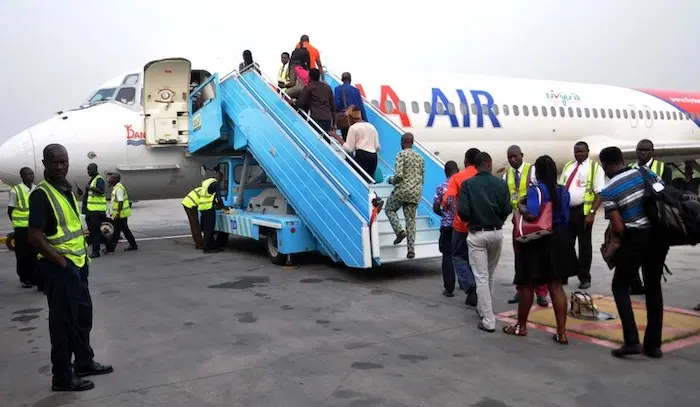
The Nigerian Civil Aviation Authority (NCAA) has announced plans to impose stricter sanctions on domestic airlines over recurrent flight delays and poor passenger handling, warning that persistent inefficiencies in the sector will no longer be tolerated. The announcement came on Thursday via the official X handle of the NCAA’s Director of Public Affairs and Consumer Protection, Michael Achimugu, who said: “We will be pushing for stiffer penalties against domestic airlines for chronic delays. We have protected operators, supported them, and explained their positions because it is the right thing to do. While most disruptions are not caused by the airlines, recent events justify heavier consequences where inefficiencies are repeated.” Achimugu highlighted that the level of support provided by the current administration and aviation authorities should lead to improved service delivery. “When an industry is supported as it has been by President Bola Tinubu, the Minister of Aviation, Festus Keyamo, SAN, the DGCA, Capt. Chris Najomo, and our Consumer Protection Department, the least expectation is that significant improvements will be reflected in flight operations and related areas,” he said. Acknowledging the challenges in the operating environment, Achimugu stressed that certain lapses can no longer be excused. “We understand the difficult environment airlines navigate, but some failures are inexcusable,” he said, citing persistent communication gaps with passengers during delays and cancellations as a key concern. “These lapses have escalated tensions at airports. Failure to manage passenger information effectively and poor handling have caused the majority of conflicts at our terminals,” he added, pointing to international examples, including a recent $2 million fine imposed on JetBlue in the United States for repeated delays. He also indicated that regulations may be updated to address emerging challenges. “Regulations will evolve as new issues emerge to ensure the industry continues to operate effectively,” Achimugu said. Reassuring both passengers and operators, he affirmed that the NCAA remains committed to fairness and accountability. “The NCAA is dedicated to protecting the rights of all stakeholders. Reviews are underway to strengthen the Authority’s ability to enforce compliance for both passengers and operators.” The announcement comes amid growing complaints from air travellers over flight disruptions. Between July and September 2025, domestic airlines operated 17,731 flights, up from 15,989 in the same period in 2024, while total cancellations fell to 80 from 251 a year earlier. However, operational challenges persisted. In April 2025, Air Peace temporarily suspended operations after a strike by Nigeria Meteorological Agency staff, stranding passengers at major airports. In May, Max Air faced complaints over multiple delays in Kaduna and Kano, with flights rescheduled late into the night and passengers left without clear updates. In June, United Nigeria Airlines drew backlash after a Lagos-to-Abuja flight was delayed for more than 10 hours, with many passengers reporting a lack of communication from the airline.

UBA-United-Bank-for-Africa.jpg

4min6000
The United Bank for Africa (UBA) has become the latest Nigerian lender to meet the Central Bank of Nigeria’s (CBN) new minimum capital requirement for banks with international authorisation, as its share capital surpasses N500 billion. The milestone was reached following the conclusion of UBA’s N157.83 billion rights issue, announced on Wednesday. According to UBA’s Interim Unaudited Consolidated Financial Statements for the period ended 30 September 2025, filed with the Nigerian Exchange Limited (NGX), the bank’s share capital of N20.52 billion combined with a share premium of N329.56 billion brought total equity to N350.08 billion. The proceeds from the rights issue lifted UBA comfortably above the regulatory minimum. The CBN had earlier set the minimum capital base for commercial banks with international authorisation at N500 billion, while banks with national authorisation require N200 billion and regional banks N50 billion. Merchant banks are required to maintain N50 billion, and non-interest banks with national and regional authorisation must hold N20 billion and N10 billion, respectively. UBA’s rights offer, which opened in July 2025 and closed in September, recorded a subscription rate of 113 per cent, according to Vetiva Advisory Services (Lead Issuing House) and joint issuing houses United Capital and CardinalStone. The bank offered 3,156,869,665 ordinary shares of 50 kobo each at N50 per share. The rights issue raised N157.84 billion through the allotment of all offered shares. Initial applications totaled 4,134,747,690 shares worth N206.74 billion from 6,404 acceptances, but strategic adjustments and scale-downs by major shareholders brought the final allotment to full subscription. Of the applicants, 6,293 shareholders accepted their full allotments, while 106 opted for partial acceptance. A single large-scale application accounted for N123.85 billion, or 78.46 per cent of the total raised. Invalid applications during processing amounted to about N28.43 billion. The Securities and Exchange Commission (SEC) has approved the basis of allotment. Under the guidance of the issuing houses, PAC Registrars and Investor Services Limited will return surplus subscription funds to investors by Tuesday, 13 January 2026, while allotted shares will be credited to the Central Securities Clearing System (CSCS) accounts of successful applicants by Friday, 16 January 2026. The rights issue was structured on a ratio of one new share for every 13 existing shares held as of the qualification date of 16 July 2025. Since the recapitalisation process began in April 2024, the CBN governor, Olayemi Cardoso, disclosed that 16 banks have met the new minimum capital requirement, while 27 banks have tapped the market for additional funds as of November 2025. The apex bank outlined three options for banks to strengthen their capital base: injection of fresh equity through private placements, rights issues, or public offers; mergers and acquisitions; or upgrades/downgrades of licence authorisation. The CBN clarified that only paid-up capital and share premium will count toward meeting the new requirement, with Additional Tier 1 Capital ineligible for this purpose.