Author: Lifestyle & Wellness Desk

Bola-Ahmed-Tinubu-e1653653706419.jpg

5min5160
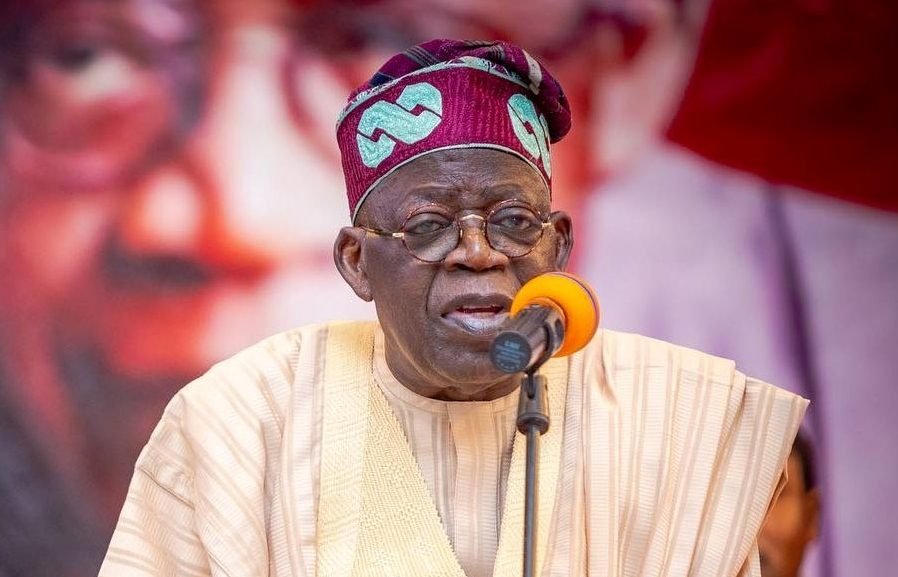
President Bola Tinubu has commended corporate organisations, investors, and stakeholders in Nigeria’s capital market for their roles in pushing the Nigerian Exchange (NGX) beyond the historic N100 trillion market capitalisation mark, describing the milestone as evidence of a “new economic reality” for the country. In a statement issued by his Special Adviser on Information and Strategy, Bayo Onanuga, the President said the achievement should inspire greater participation in Nigeria’s money and capital markets, urging citizens to channel more investments into the domestic economy. According to Tinubu, the crossing of the N100 trillion threshold signals renewed confidence and economic rejuvenation, positioning Nigeria as an increasingly attractive investment destination. He highlighted the strong performance of the NGX in 2025, noting that the All-Share Index recorded a 51.19 per cent return, significantly higher than the 37.65 per cent gain in 2024. The President said the performance ranked among the best globally, outperforming major indices such as the S&P 500, FTSE 100, and several emerging-market benchmarks within the BRICS+ group. The President stated that Nigeria has moved beyond being a marginal frontier market, describing the stock exchange as a reflection of the broader economy and a key indicator of investor confidence and economic health. He also drew attention to the performance of listed companies across multiple sectors, including industrial manufacturing, banking, and technology. Tinubu said firms that have strengthened local supply chains and embraced innovation are demonstrating Nigeria’s capacity to generate sustainable investment returns. According to the President, the NGX milestone forms part of a wider economic recovery driven by reforms introduced by his administration. He said these measures have improved monetary stability, curbed inflationary pressures, and strengthened the naira. Tinubu noted that inflation has been on a steady decline following earlier reform-related challenges, attributing the trend to monetary tightening, the elimination of distortionary financing practices, and increased investment in agriculture. He said inflation has fallen from a 24-month high of 34.8 per cent in December 2024 to 14.45 per cent in November 2025, with projections pointing to single-digit inflation before the end of the year. The President also cited improvements in Nigeria’s external position, stating that the country recorded a $16 billion current account surplus in 2024, with projections showing a rise to $18.81 billion in 2026. He added that foreign reserves have surpassed $45 billion, strengthening the Central Bank’s capacity to support currency stability and reduce volatility in the foreign exchange market. Beyond the capital market, Tinubu highlighted progress in infrastructure, healthcare, and education, including the expansion of rail networks, completion of major road projects, port revitalisation, improved medical facilities, reduced medical tourism costs, and increased access to education financing through the Nigeria Education Loan Fund. He concluded by calling on Nigerians to take an active role in the country’s economic transformation, stressing that nation-building requires collective effort, discipline, and long-term commitment. The President reaffirmed his administration’s resolve to sustain reforms and deepen transparency, equity, and growth, noting that the N100 trillion market capitalisation milestone sends a strong signal of Nigeria’s economic resilience and productivity to the global investment community.

cbnn.webp

5min2660
The Central Bank of Nigeria (CBN) has projected that petrol pump prices will hover around N950 per litre in 2026, according to its 2026 Macroeconomic Outlook for Nigeria. In outlining its baseline projections for the domestic economy, the apex bank said its forecast is based on several key assumptions, including an average crude oil price of $60 per barrel in the fourth quarter of 2025 and $55 per barrel in 2026. The outlook also assumes an average exchange rate of N1,451.63 per dollar in Q4 2025 and N1,400 per dollar in 2026, supported by improvements in the foreign exchange market, higher capital inflows, a current account surplus, and broader economic recovery. The CBN further assumed that Nigeria’s domestic crude oil production would average about 1.5 million barrels per day throughout the forecast period. Based on these conditions, the price of premium motor spirit is expected to remain around N950 per litre, a level higher than current pump prices. According to the bank, government spending is projected to align with the 2025–2027 Medium-Term Expenditure Framework and Fiscal Strategy Paper, reflecting an expansionary fiscal stance aimed at supporting the government’s $1 trillion economy target. Monetary policy assumptions include a Monetary Policy Rate of 27 per cent and a Cash Reserve Ratio of 45 per cent, alongside improving business confidence and stronger investor sentiment. Recent developments in the downstream sector have influenced current fuel prices. Petrol previously sold at around N900 per litre or higher before the Dangote Petroleum Refinery reduced its gantry price from N828 to N699 per litre in December. Following the adjustment, partner outlets began retailing petrol at N739 per litre, prompting wider price reductions across the market. Since commencing operations in 2024, the Dangote refinery has consistently lowered petrol prices, a move that industry observers say has come at significant cost to both refiners and fuel importers. Earlier this week, the refinery warned that petrol prices could climb as high as N1,400 per litre if Nigeria were to depend solely on imports. The company said large-scale domestic refining has played a critical role in stabilising fuel prices in the post-subsidy environment, cautioning that unchecked importation could drive prices sharply higher. In its outlook, the CBN noted that increased private-sector investment, particularly in domestic refining, is expected to strengthen economic growth in 2026. The bank said higher crude oil production, supported by improved security around oil assets and expanded refining capacity, alongside stable energy prices, would further boost growth prospects. Despite projecting petrol prices at around N950 per litre, the CBN expressed optimism that increased competition among midstream operators would help moderate prices over time. The bank also forecast that headline inflation would ease to 12.94 per cent in 2026, down from an estimated 21.26 per cent in 2025. The expected decline in inflation, the CBN said, would be driven largely by lower food and petrol prices, as competition intensifies within the petroleum value chain. Globally, the apex bank projected a moderation in commodity prices in 2026, with overall prices expected to decline by 5.52 per cent due to weaker demand and improved supply. Energy prices are forecast to fall by 6.99 per cent, as Brent crude is projected to average about $61 per barrel. In addition, metal prices (excluding precious metals) are expected to decline by 3.29 per cent, while agricultural commodity prices are projected to fall by 3.18 per cent, reflecting easing supply pressures and subdued global demand.

custom-2.jpg

4min3180
The Comptroller-General of the Nigeria Customs Service (NCS), Adewale Adeniyi, has urged officers of the Customs Intelligence Unit to make intelligence the foundation of their professional practice, stressing that effective security and revenue operations depend on timely and credible intelligence. He noted that no modern enforcement or revenue system can function successfully without intelligence that is properly gathered, analysed, and applied. This charge was delivered during the opening ceremony of a training programme at the Nigeria Customs Command and Staff College (NCCSC), Gwagwalada, Abuja, according to a statement issued on Wednesday by the Service’s National Public Relations Officer, Abdullahi Maiwada, a Deputy Comptroller of Customs. Adeniyi described the programme as the first formal engagement of the Service in the new year and a significant platform capable of shaping the professional outlook of participating officers. He encouraged attendees to view the new year as an opportunity to make meaningful contributions to the Customs Service and national development. Drawing from recent global and domestic security developments, the Comptroller-General referenced various military and security operations, including those within Nigeria that resulted in the interception of arms and ammunition. He emphasised that intelligence was the common factor behind the success of such operations. According to him, intelligence must be appreciated as a practical tool rather than a theoretical concept, urging officers to carefully review earlier papers presented during the programme, which he said already contained actionable guidance for field operations. Earlier in his remarks, the Commandant of the NCCSC, Dow Gaura, an Assistant Comptroller-General of Customs, described intelligence as a subtle but decisive driver of institutional effectiveness. He said the ability to collect, interpret, and deploy intelligence has become essential in responding to evolving security and economic challenges. Gaura noted that the NCS has continued to invest in intelligence-driven training as part of its broader capacity-building efforts, describing the programme as a critical stage in the professional growth of participants. He added that intelligence plays a central role in risk management, revenue protection, disrupting smuggling networks, and safeguarding the national economy. Urging officers to approach the training with commitment, Gaura said the Service had provided experienced facilitators, relevant instructional materials, and a structured learning environment to ensure meaningful outcomes. While acknowledging that the training conditions might differ from participants’ usual comfort levels, he explained that the objective was to promote discipline, focus, and professional excellence.

HEALTHHH-1.jpeg

3min7730
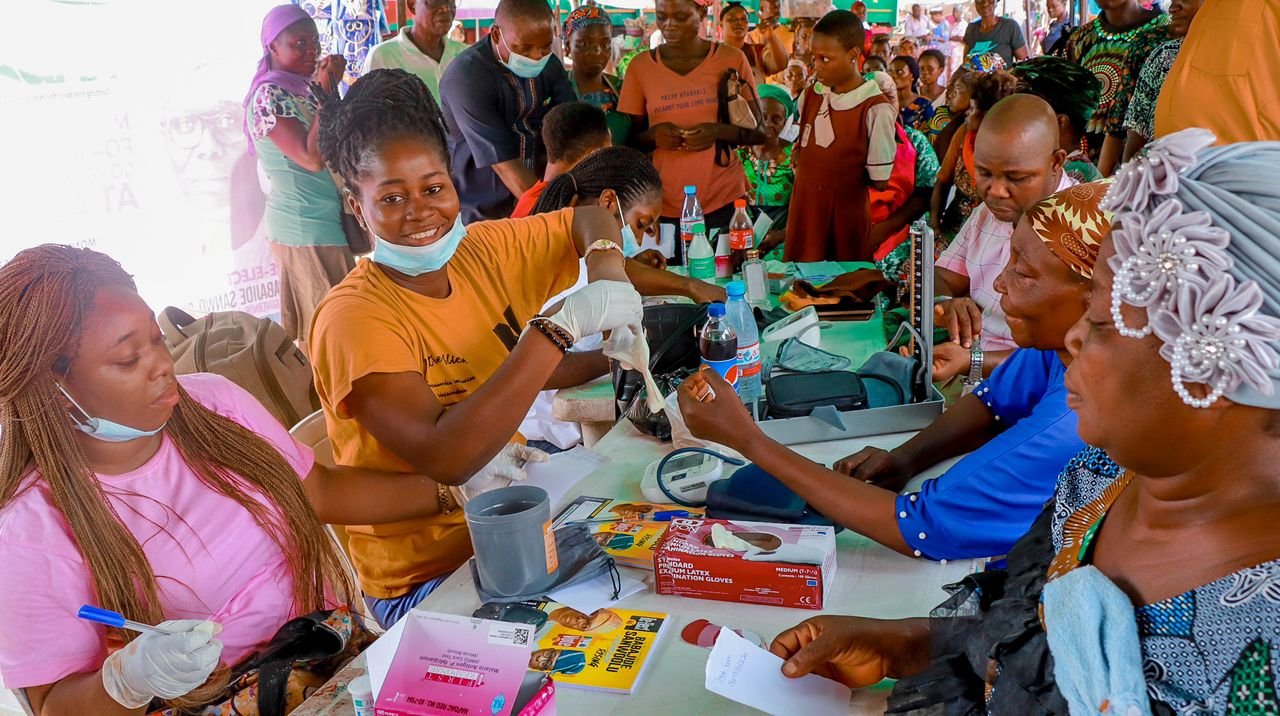
The Special Adviser to the Lagos State Governor on Health, Dr. Oluwakemi Ogunyemi, has officially launched an eight-day free healthcare outreach sponsored by Chief Razak Okoya, Chairman of Eleganza Group of Companies, in celebration of his 86th birthday. The initiative, which provides medical services to hundreds of residents daily, is being carried out with technical support and coordination from Lagos State Health District III, ensuring that all interventions meet approved clinical standards and align with the state’s people-centred healthcare objectives. At the flag-off ceremony, Ogunyemi highlighted Okoya’s commitment to philanthropy, noting how his support demonstrates the power of aligning private sector initiatives with government programmes to achieve tangible health outcomes. She reaffirmed the state’s dedication to fostering public–private partnerships that improve access to quality healthcare and promote early detection of diseases. Dr. Monsurat Adeleke, Permanent Secretary of Lagos State Health District III, praised the industrialist’s contribution, describing it as a timely intervention that complements government efforts. “This initiative goes beyond celebration; it shows how private sector involvement can strengthen public healthcare and save lives,” she said. The outreach provides comprehensive medical screening and treatment, starting with blood pressure and blood sugar checks, Hepatitis B testing, and urinalysis, followed by consultations with doctors and referrals as needed. Key services also include HIV testing and counselling in collaboration with the Lagos State AIDS Control Agency, dental care, eye examinations with free corrective glasses, breast and cervical cancer screening, general medical consultations, health education, and follow-up referrals within government health facilities. Adeleke further commended Okoya for providing ₦10,000 in cash support to beneficiaries of the programme, reinforcing the impact of private sector participation in improving community health.

Leadway-Assurance-1280x720.webp

3min6780
Leadway Assurance Company has announced the start of a thorough verification exercise for all African Alliance annuitants following its successful acquisition of the African Alliance Insurance annuity portfolio. In a statement released on Monday, the company said the validation process marks the first stage of the transition, aimed at accurately identifying all current annuitants and updating their records. The acquisition of the annuity portfolio came after the National Insurance Commission (NAICOM) intervened and appointed an interim management team to address outstanding annuity payments. Leadway noted that the takeover not only secures the immediate welfare of annuitants but also strengthens Nigeria’s insurance ecosystem. The verification exercise is intended to protect retirees’ benefits and ensure they are paid efficiently and on time. It also aligns with regulatory measures introduced by NAICOM to safeguard policyholders and boost confidence in the sector. Through this exercise, retirees under the African Alliance portfolio can transition smoothly to Leadway, guaranteeing continuity of payments without disruption. Olufunmilayo Amanwa, Executive Director of Technical & Operations at Leadway Assurance, said, “The verification of annuitants is more than just a procedural step; it reflects our commitment to retirees. We aim to ensure that their contributions are honoured with financial security and dignity. This exercise lays the groundwork for timely benefit payments and reinforces the trust placed in us.” African Alliance annuitants are encouraged to use Leadway’s customer support lines, email, or offices to complete their verification promptly and seamlessly. Leadway Assurance is among Nigeria’s leading insurance firms, offering a wide array of financial protection services, including life insurance, general insurance, and other financial solutions.

t-and-oillll.jpg

3min1930
Oil prices fell on Wednesday as markets anticipated a rise in crude supply following U.S. President Donald Trump’s announcement that Venezuela would deliver up to 50 million barrels of oil to the United States. Venezuela and the U.S. reportedly reached an agreement for the South American nation to export crude valued at approximately $2 billion to the U.S. market. Brent crude fell below $60 per barrel by Wednesday evening after Trump stated that “interim authorities” in Venezuela would provide between 30 million and 50 million barrels of high-quality oil at market prices, valued near $2 billion. The deal is expected to increase heavy crude deliveries to Gulf Coast refineries in the U.S. and may further limit illicit Venezuelan oil shipments to China. Shipping data shows that Venezuela’s state oil company, PDVSA, has been unable to move cargoes to Asia for nearly a week due to ongoing U.S. sanctions. Chevron remains the only Western company authorised by the U.S. Treasury to operate in Venezuela, shipping crude to the Gulf Coast. Meanwhile, shipments to China, Venezuela’s top oil customer, have slowed, with Chinese buyers reducing imports as the discount on Venezuela’s flagship Merey crude narrowed from $15 per barrel last month to $13 per barrel. The price increase follows a U.S. naval blockade that has disrupted tanker traffic to and from Venezuela. Trump has indicated that the U.S. would gain access to Venezuelan crude, potentially from floating storage built up since the blockade began in December. He also insisted that interim President Delcy Rodríguez provide full access to the Venezuelan oil industry for the U.S. and private companies. Venezuela entered 2026 amid uncertainty after U.S. forces captured President Nicolás Maduro and his wife, Cilia Flores, transferring them to the U.S. to face federal charges. Maduro has denied longstanding allegations, including narco-terrorism and cocaine trafficking. Following Maduro’s detention, Venezuela’s Supreme Court appointed Vice President Delcy Rodríguez as Acting President to maintain institutional continuity, placing renewed focus on the country’s oil-dependent economy. By Wednesday evening, Brent traded around $59.99 per barrel, while West Texas Intermediate dropped to $56.10. Analysts predict that prices may fall further as additional Venezuelan crude enters the U.S. market.  

custom-2.jpg

5min4980
The Nigeria Customs Service’s Apapa Area Command reported total revenue of N2.93 trillion in 2025, marking an increase of N573.2 billion, or 24.3 per cent, compared to N2.35 trillion collected in 2024. The command’s Public Relations Officer, Isah Sulaiman, confirmed the figures in a statement released on Wednesday. “The command recorded a total of N2.93 trillion in revenue in 2025, an increase of N573.2 billion over the previous year, reflecting a 24.32 per cent growth. This performance reinforces Apapa Command’s position as Nigeria’s top revenue-generating hub,” the statement said. Customs Area Controller Emmanuel Oshoba credited the achievement to strong leadership, disciplined personnel, and strategic deployment of technology under the guidance of Comptroller-General of Customs, Adewale Adeniyi. He also acknowledged the contribution of compliant stakeholders whose lawful trading practices significantly supported revenue growth. “A key factor in this success was the implementation of the Unified Customs Management System, also known as B’Odogwu, which improved transparency, efficiency, and accountability in cargo clearance. Regular performance reviews and timely revenue recovery also strengthened collections,” Oshoba explained. He added that trade facilitation was enhanced through intensified stakeholder engagement, the rollout of the Authorised Economic Operator (AEO) Programme, and expansion of the One-Stop Shop initiative, which ensured faster processing and release of compliant cargo. Efforts are also ongoing to deploy the FS6000 cargo scanning system, a non-intrusive technology capable of scanning up to 200 containers per hour. Oshoba highlighted enforcement achievements, including the interception of 53 containers carrying illicit drugs and prohibited items, such as cocaine, Canadian loud, tramadol, and expired pharmaceuticals, with a duty-paid value of N12.6 billion. Some seizures were handed over to relevant agencies, including the National Drug Law Enforcement Agency and the National Agency for Food and Drug Administration and Control, for further investigation and prosecution. Looking ahead, Oshoba expressed confidence that the command would reach higher revenue milestones in 2026, driven by deeper implementation of B’Odogwu, AEO, and OSS, enhanced intelligence-led enforcement, and stronger collaboration with other agencies. He also promised continued engagement with terminal operators, shipping companies, licensed customs agents, freight forwarders, haulage operators, and the media to ensure transparent and efficient trade operations. Meanwhile, the Nigeria Customs Service’s Seme Area Command reported revenue of N15.5 billion from January to December 2025, a 117 per cent increase over the N7.1 billion collected in 2024. The command’s Public Relations Officer, Tunde Ayagbalo, noted that the year marked unprecedented revenue performance, with December 2025 alone generating a record N3.6 billion—the highest monthly collection in the command’s history. Ayagbalo attributed the growth to the effective rollout of the One-Stop Shop initiative, which improved coordination and trade facilitation, and robust anti-smuggling operations. In December, the command intercepted 685 parcels of cannabis sativa, 495 packs of tramadol, and 2,000 packs of high-dosage sexual enhancement drugs, through intelligence-led operations, risk profiling, enhanced patrols, and inter-agency collaboration. The Customs Area Controller of Seme Command, Wale Adenuga, praised the reduction of checkpoints along the Lagos–Abidjan corridor to just the two locations approved by the Federal Government, a move that eased legitimate trade, reduced delays, and contributed to the command’s revenue growth. He also issued a stern warning to smugglers, stating that the Seme borders are no longer safe for illegal activities. “With advanced intelligence, technology, and constant vigilance, our officers will continue to intercept and prosecute offenders,” Adenuga affirmed.

oil02.jpg

3min4950
The Petroleum Products Retail Outlets Owners Association of Nigeria (PETROAN) has called on the Federal Government and regulators to ensure consistent crude supply to domestic refineries and maintain stable pricing mechanisms to help reduce fuel prices in 2026. In its 2026 outlook, signed by National President Billy Gillis-Harry and spokesman Joseph Obele, PETROAN said irregular crude allocation, pipeline disruptions, and fluctuating prices have continued to challenge retail operators, creating market uncertainty and squeezing profit margins. “Providing a steady and adequate crude supply to domestic refineries is crucial for production and for reducing dependence on imports. Without this, pump prices will remain high, and retail operators will continue to incur losses,” the association stated. PETROAN noted that the naira-for-crude policy—which allows refineries to pay for crude in naira instead of dollars—has strategic potential but faced implementation gaps last year. “Delays, pricing disputes, and inconsistent allocations limited the policy’s effectiveness. Strengthening transparency and timely crude allocation will be critical to maximise its benefits in 2026,” the association added. The group also highlighted the intense competition between petroleum importers and local refiners in 2025, describing it as a price war that eroded profits for retail operators and created market uncertainty. “The downstream sector saw fierce price competition between importers and local refineries, resulting in frequent pump price changes that caused billions of naira in losses, reduced margins for operators, and weakened investment confidence,” PETROAN said. On domestic refining, the association welcomed the approval of more than 30 private refineries, including 23 under construction, which together could add over 850,000 barrels per day to Nigeria’s refining capacity. “These projects, combined with the Dangote Petroleum Refinery, will significantly reduce import dependence and strengthen domestic production,” PETROAN said. The association emphasised that improving crude supply, securing pipelines, and promoting fair competition are key to stabilising pump prices and boosting investor confidence. “Stable crude allocation, predictable pricing, and robust regulatory oversight are essential for protecting consumers and ensuring long-term sector growth,” it added. Looking ahead, PETROAN urged policymakers to maintain import flexibility to ensure uninterrupted supply, support alternative energy sources such as CNG, LPG, and solar, and foster continuous engagement with regulators, refiners, and retail operators. The association concluded that affordable and sustainable fuel prices in 2026 will require a balanced approach combining domestic refining, fair pricing, and reliable supply.

trump1-1280x853.avif

6min5050
The African Energy Chamber (AEC) has expressed support for Venezuela’s oil recovery efforts following the detention of President Nicolás Maduro by United States authorities, emphasising that political and institutional stability is vital to restoring investor confidence and promoting sustainable growth in the country’s energy sector. The announcement comes as former U.S. President Donald Trump stated on Tuesday that Venezuela would transfer between 30 million and 50 million barrels of oil to the United States, to be sold at prevailing market prices, with proceeds managed by the U.S. government. Trump said the revenue would be used “to benefit the people of Venezuela and the United States.” Venezuela entered 2026 amid heightened uncertainty after U.S. forces detained Maduro and his wife, Cilia Flores, transferring them to the United States to face federal charges. Maduro appeared before a U.S. court, where longstanding allegations—including narco-terrorism conspiracy and cocaine trafficking—were revived. He has denied the charges. Following his detention, Venezuela’s Supreme Court confirmed that Vice President Delcy Rodríguez had assumed office as Acting President to ensure institutional continuity. These developments have intensified attention on the future of Venezuela’s economy and its oil-dependent energy sector, even as the U.S. assumed operational control of the transferred oil. In response, the AEC highlighted stability as the most crucial factor for the country’s development. The chamber noted that Venezuela possesses the largest proven oil reserves in the world—a resource capable of transforming the nation’s economy, rebuilding infrastructure, and restoring energy security. Achieving this potential, the AEC stated, depends on predictable governance, responsible management of resources, and the creation of investment-friendly frameworks. The AEC urged the energy industry and international partners to provide support to Acting President Rodríguez, calling for unity, continuity, and a development agenda led by Venezuela. “This is the time to continue encouraging investment in Venezuela. We call on African states, leaders, and the Global South to support the acting president and Venezuelan citizens as they determine their future and exercise sovereignty,” said NJ Ayuk, Executive Chairman of the AEC. The chamber noted its ongoing working relationship with Rodríguez, who also serves as the country’s oil minister, highlighting her commitment to fostering Africa’s use of energy resources to drive socio-economic development. Under her leadership, Venezuela’s state-owned oil company, Petróleos de Venezuela S.A. (PDVSA), has developed strong ties with African nations, ensuring the Global South benefits from multilateral energy engagement. Venezuela remains a key player in global energy discussions. As a founding member of OPEC, the country has historically supported the inclusion of African producers in the organisation and serves as an honorary member of the African Petroleum Producers’ Organisation. Oil continues to underpin Venezuela’s economy, accounting for nearly 90 per cent of export revenues, over half of government income, and 17–20 per cent of GDP. With around 303 billion barrels of proven oil reserves—approximately 17 per cent of global reserves—the AEC noted that stable governance, regulatory clarity, and sustained investment of roughly $10 billion annually could enable production to reach 2.5 million barrels per day over the next decade. “Production realities show both the challenges and opportunities ahead,” the AEC said. “After falling to around 300,000 bpd in 2020, output has recovered to 900,000–1.1 million bpd in early 2026. While still below the historical peak of 3.4 million bpd in the late 1990s, this demonstrates that Venezuela’s oil industry is not irreparably damaged. Achieving peak production will require cumulative investment of $80–100 billion.” The chamber emphasised the strategic importance of the Orinoco Heavy Oil Belt, which spans approximately 55,000 km² and contains nearly 90 per cent of Venezuela’s reserves. Key blocks such as Petropiar, Ayacucho, and the Zuata Complex drive current output, though the extra-heavy crude demands access to diluents, upgraded processing facilities, and modern technology. Ayuk concluded, “Venezuela sits atop extraordinary natural wealth. Experience from Africa shows that when stability is prioritised and the energy sector operates responsibly, hydrocarbons can be a catalyst for recovery, unity, and long-term development.”

NLC-13-.jpg

4min4340
The Nigeria Labour Congress (NLC) has urged the Federal Government to urgently review workers’ wages and reassess tax policies, warning that delays and uneven compliance could worsen economic hardship for millions of Nigerians. The call was made on Wednesday by the NLC President, Joe Ajaero, at the 85th birthday celebration and book launch of the union’s founding president, Hassan Summonu, OON, held at the Shehu Musa Yar’Adua Auditorium in Abuja. Addressing an audience that included family members, government representatives and other stakeholders, Ajaero described Summonu as a towering figure in Nigeria’s labour movement whose legacy continues to inspire generations of workers. He said the theme of Summonu’s memoir, Organise, Don’t Agonise, remains a guiding principle for organised labour. According to Ajaero, the book’s message reflects the belief that collective organisation is the most effective response to exploitation and poor governance. He recalled the inauguration of the Hassan Summonu Centre for Leadership and Governance in Lagos last year, noting that it symbolised labour’s commitment to preserving the founding president’s ideals and the broader struggle of the Nigerian working class. Ajaero also raised concerns over the implementation of the new National Minimum Wage, which was signed into law in July 2024 and increased the minimum monthly pay from N30,000 to N70,000. He said compliance has been inconsistent, with many state governments, private employers and public institutions citing financial pressures and inflation as reasons for delay. He stressed that despite the law being clear, many workers are still paid below the approved minimum. He therefore called on the Federal Government to intervene urgently, ahead of the next statutory wage negotiations, warning that continued delays threaten workers’ welfare amid rising living costs. He added that the NLC is monitoring violations and is prepared to pursue enforcement measures and legal action where necessary. The NLC president also criticised recent tax policies, describing them as regressive and disproportionately harmful to workers and low-income earners. He argued that the reforms were developed without meaningful input from organised labour and the wider public, despite workers constituting a large portion of the tax base. In addition, Ajaero called for the immediate constitution of the PENCOM Board, warning that prolonged delays weaken governance structures and undermine the rule of law. He urged the government to engage more constructively with organised labour in policy formulation, stressing that decisions on wages, taxation, fuel pricing and social services must reflect the realities faced by workers. The event also celebrated Hassan Summonu’s enduring contributions to labour activism, with speakers highlighting the lasting influence of his philosophy on today’s union leadership. Ajaero concluded by reaffirming labour’s commitment to collective action and advocacy, calling for a governance approach that prioritises economic justice and improved living standards for Nigerian workers.