Author: Lifestyle & Wellness Desk

bbbb.jpeg

4min8720
The Federal Government incurred N1.98tn in electricity subsidy obligations between October 2024 and September 2025, as it continued to struggle with over N4tn in debt owed to power generation companies, according to quarterly reports by the Nigerian Electricity Regulatory Commission (NERC). The fourth-quarter 2024 subsidy stood at N471.69bn, rising to N536.4bn in Q1 2025 and N514.35bn in Q2 2025. The latest NERC report showed that in Q3 2025, the government’s electricity subsidy burden amounted to N458.75bn, bringing the 12-month total to N1.98tn. The subsidy remains necessary as electricity tariffs are still below cost-reflective levels. NERC explained that, in the absence of cost-reflective tariffs, the government covers the gap between actual generation costs and approved tariffs through subsidy payments. Subsidy payments are applied at source via the DisCos’ payment obligations to the Nigerian Bulk Electricity Trading Plc (NBET), under the DisCo Remittance Obligation (DRO) framework introduced in January 2024 to replace the Minimum Remittance Obligation regime. This framework ensures DisCos meet generation cost obligations while the Federal Government directly settles the subsidy portion. In Q3 2025, DisCos achieved a 95.23 per cent remittance rate to NBET, slightly down from 95.77 per cent in Q2. While most DisCos met 100 per cent of their obligations, Kano, Benin, Jos, and Kaduna fell short, with Kaduna performing the weakest at 40.16 per cent. On payments to the Market Operator, DisCos recorded 95.13 per cent remittance in Q3, slightly up from 95.07 per cent in the previous quarter. Despite marginal improvements in billing and collections, DisCos recorded combined billing losses of N315.17bn between Q2 and Q3, primarily due to energy theft, poor metering, and weak commercial controls. Energy offtake for Q3 was valued at N854.53bn, but only N706.61bn was billed, yielding a billing efficiency of 82.69 per cent. Revenue collection was N570.25bn, giving a collection efficiency of 80.70 per cent, an improvement from 76.07 per cent in Q2. The weighted aggregate technical, commercial, and collection loss remained high at 33.27 per cent, exceeding the 2025 MYTO target of 20.54 per cent. Only Eko and Ikeja DisCos met the target, while Kaduna recorded the highest loss at 71.10 per cent. Experts argue that the electricity subsidy is no longer sustainable. Adetayo Adegbemle, convener of PowerUp Nigeria, said the subsidy affects the entire value chain, as the government has failed to meet its obligations, and urged the development of alternative support mechanisms such as the Power Consumer Assistance Fund. Consumers’ advocates also criticized the service-based tariff policy. Uket Obonga, National Secretary of the Nigeria Electricity Consumers Advocacy Network (NECAN), described the Band A tariff regime as ineffective, noting that revenue collected by DisCos is now nearly equal to government subsidy payments. He further raised concerns about poor electricity supply, high tariffs, and limited industrial customer participation, arguing these factors have undermined the original objective of the tariff structure. Obonga also questioned the impact of the Federal Government’s N4tn electricity bond, issued to address legacy debts, noting a lack of transparency and clarity on its effectiveness in stabilizing the sector.      
aso-rockk.webp

4min5240
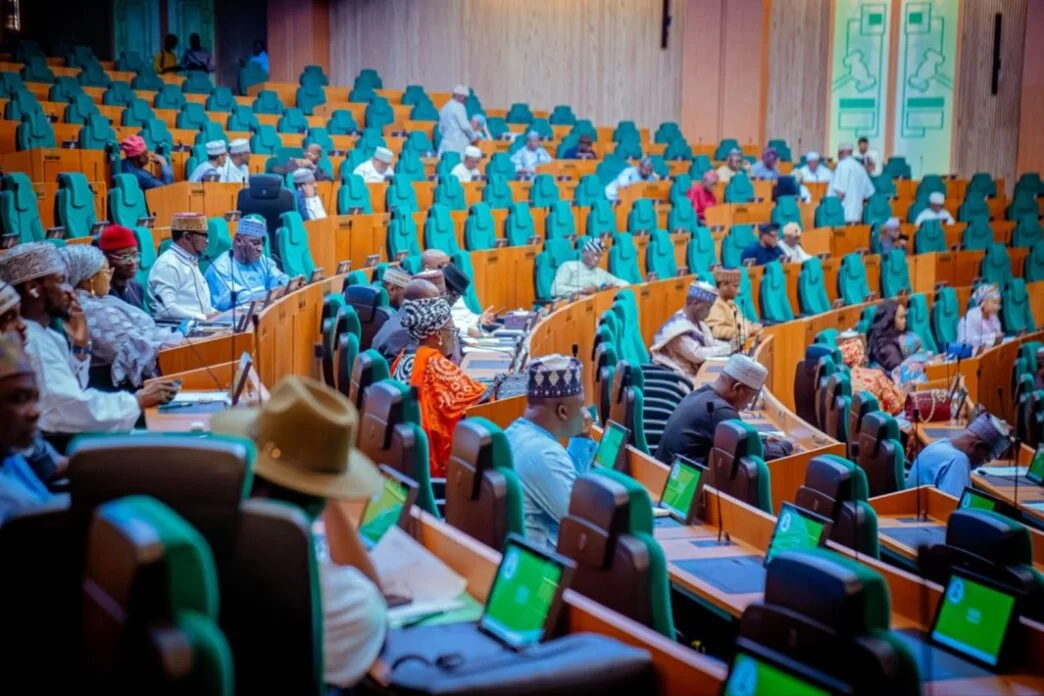
Government-owned agencies, commissions, and corporations that fail to submit their annual audited financial statements to the Office of the Auditor-General for the Federation could soon be denied budgetary allocations, following a new constitutional amendment proposed by the House of Representatives. The initiative seeks to strengthen fiscal oversight and enforce accountability rules that many Ministries, Departments, and Agencies (MDAs) have routinely ignored. For years, delays or non-submission of audited accounts have hampered the Auditor-General’s work and limited the ability of the National Assembly’s Public Accounts Committees to scrutinise public spending and address infractions. Under current law, MDAs are required to submit audited accounts, but there is no defined timeframe. This gap has allowed some agencies to operate for multiple fiscal years without audited statements, creating gaps in audit reports and weakening legislative oversight. Public Accounts Committees in both chambers have repeatedly noted that the absence of current audited accounts makes it difficult to track spending, verify compliance with appropriations, or follow up on previous audit queries. In response, the House of Representatives has proposed a constitutional amendment to enforce compliance and introduce clear sanctions. The proposal, adopted by the House Committee on Constitution Review led by Deputy Speaker Dr. Benjamin Kalu, mandates that all government statutory institutions, including MDAs, submit annual financial statements to the Auditor-General within a specified period. Lawmakers are expected to vote on the amendment when the National Assembly resumes from recess in January 2026. Clause two of the amendment introduces a new Section 85 (8–11), which states: “All government statutory corporations, commissions, authorities, and agencies, including all persons and bodies established by an Act of the National Assembly, shall submit an audited financial statement of all transactions to the Auditor-General of the Federation within 90 to 180 days of the new financial year.The audited financial statement must include detailed information on the body’s dealings. Failure to comply shall result in the National Assembly withholding approval of the entity’s budget for the following year.” Subsection 11 further directs: “The Auditor-General shall submit the names of any non-compliant government entities to the National Assembly for immediate exclusion from the succeeding year’s budget.” If passed and signed into law, the amendment would be among the strongest accountability measures in Nigeria’s public finance system, directly linking access to public funds with compliance with audit requirements. Lawmakers believe the threat of budgetary exclusion will push agencies, commissions, and corporations to prioritise timely audits, enhancing legislative oversight and public accountability.

TEC-digital-transformation-success-depends-on-good-governance.jpeg

4min3950
Africa has been urged to move beyond short-term digital initiatives and integrate technology into governance systems that can withstand political changes and funding cycles. Adeniyi David Adebote, founder and CEO of Nnnew Network, noted that Africa is rich in ideas, talent, and reform initiatives but lacks institutions designed to work cohesively over the long term. “For decades, Africa has produced innovative pilots and reforms,” Adebote said. “Yet too many exist as standalone solutions. They function briefly and disappear when funding ends or leadership changes.” Across the continent, governments, civic organisations, technologists, and development partners have launched numerous initiatives aimed at improving elections, healthcare, public finance, and service delivery. While many achieve initial successes, Adebote argued their impact often fades because they are not embedded in durable institutional frameworks. “The challenge isn’t innovation—it’s institutional design. We keep building projects when what we truly need are systems.” He explained that many public systems in Africa operate in silos, with weak connections between policy, technology, and long-term governance structures. Electoral reforms often function separately from civic data systems, legislative processes remain largely detached from digital infrastructure, and health records are piloted without clear pathways to national interoperability. “What you see is fragmentation everywhere,” he said. “Agencies address related problems without shared architecture, standards, or institutional memory.” This fragmentation, he added, erodes public trust and makes scaling reforms difficult. Even well-intentioned initiatives often fail to outlive the administrations that introduced them because they were never part of a broader institutional network. “Innovation that isn’t connected is fragile. If it depends on one champion, one donor, or one political moment, it won’t last.” Through Nnnew Network, Adebote promotes an approach focused on networked institutions rather than isolated organisations. These institutions are defined less by physical structures and more by how information flows, decisions persist, and systems interact across political cycles. “We need institutions that link policy to technology, data to accountability, and reforms to long-term governance,” he said. “That connectivity gives systems resilience.” Technology, he emphasised, only serves this vision when treated as civic infrastructure rather than a set of standalone tools. “Digital transformation in governance isn’t about deploying software,” Adebote said. “It’s about embedding technology in legislative workflows, public records, accountability mechanisms, and secure processes that can endure leadership changes.” With Africa’s young population, rapid digital adoption, and growing demand for transparency, Adebote said the continent is at a defining moment. “The choices we make now will shape public trust for decades. If we continue building disconnected solutions, we will repeat the same failures.” He added that Africa’s next major progress will come not from isolated innovation, but from connected systems designed to last.  

cbnn.webp

4min6280
The Central Bank of Nigeria (CBN) has warned that the ongoing recapitalisation of the banking sector could heighten concentration risk in Nigeria’s capital market, potentially crowding out non-bank issuers, despite current bullish trends in equities. The caution appears in the CBN’s Macroeconomic Outlook for Nigeria, 2026: Consolidating Macroeconomic Stability Amid Global Uncertainty, which highlights emerging vulnerabilities across the financial system. According to the report, while recapitalisation is essential for strengthening banks’ balance sheets and boosting resilience, it may disproportionately attract investor attention to the banking sector. “Despite bullish momentum, the capital market could face higher concentration risk from banks, as ongoing recapitalisation may trigger investor fatigue and limit opportunities for other issuers,” the CBN noted. The apex bank explained that increased capital-raising by deposit money banks could reduce funding availability for corporates outside the financial sector, especially while banks dominate equity issuance during this period. While improvements in capital adequacy and liquidity ratios provide buffers for banks, the CBN warned that these gains remain sensitive to adverse macroeconomic developments. “Rising credit losses or foreign exchange illiquidity could erode capital reserves, breach prudential thresholds, and strain liquidity coverage,” the report stated, adding that such scenarios could disrupt financial intermediation and weaken market confidence. It also highlighted rising non-performing loans as a medium-to-high risk, warning that declining asset quality could hurt earnings and increase systemic vulnerabilities. Exchange rate volatility was also flagged as a key risk, with the CBN noting that a sharp naira depreciation, though unlikely, could negatively impact banks’ balance sheets and liquidity, expand monetary aggregates, and intensify inflationary pressures. Beyond financial concerns, the report emphasised cybersecurity risks, noting that the high interconnectedness of the financial system could allow cyberattacks to trigger data breaches, compromise confidential information, and undermine public confidence. On the fiscal side, the CBN cautioned that Nigeria’s 2026 budget remains vulnerable to oil price and production shocks, given that oil revenue is projected to account for over 57 per cent of total government revenue. Non-oil revenue prospects, it noted, depend on effective implementation of the Nigeria Tax Act, 2025, but weak compliance, low awareness, and administrative gaps could undermine collections. The CBN concluded that sustaining macroeconomic stability amid global uncertainty will require coordinated policy measures to manage financial sector risks, strengthen public finance management, and ensure balanced capital market development beyond the banking sector.  

aptechh.jpg

4min7250
Aptech Computer Education Nigeria has introduced a new all-in-one artificial intelligence career programme designed to equip learners with job-ready technology skills, structured internship opportunities and clear pathways to international degrees. The programme, called ADSE AI, integrates AI-driven training, hands-on projects and mentorship, while offering eligible participants access to a structured, paid internship scheme. It also provides defined academic progression routes to overseas degree programmes, positioning the initiative as a complete classroom-to-career pathway. In a statement issued on Tuesday, the company explained that AI is embedded throughout the learning process, enabling students to acquire, apply and showcase skills through real-world projects and portfolio development. The curriculum blends future-focused content with practical delivery across Aptech centres nationwide. Aptech said qualified learners can advance to degree programmes through partnerships with institutions such as Middlesex University and Bangor University in the United Kingdom, Lincoln University College in Malaysia, NCC Education in the UK, and ISM Germany. These pathways allow students to move from advanced diploma levels to internationally recognised qualifications. The ADSE AI curriculum is powered by generative AI and focuses on applying artificial intelligence to real-world workflows, including AI-enabled programming, prompt design, model-assisted coding and responsible AI use. Training covers Python, automation, data pipelines, visualisation and cloud fundamentals using AI-enabled tools aligned with modern industry standards. The programme combines technical training, internship exposure and academic progression in an outcome-driven structure that features defined modules, capstone projects and continuous assessments mapped to entry-level and growth roles. Skills acquired align with careers in software development, data operations, cloud support and digital product execution. Core learning areas include AI-integrated programming, data analytics and visualisation, cloud foundations and modern software engineering practices enhanced by AI tools. Learners can also select electives such as full-stack development, .NET, Oracle, networking and ethical hacking, artificial intelligence and machine learning, data science and the Internet of Things. Aptech noted that internship placements will be arranged through partner channels and will depend on eligibility, performance and availability, with a focus on transparency and compliance. Commenting on the launch, Executive Vice President, International Business at Aptech Limited, Kallol Mukherjee, said the programme reflects the company’s strong emphasis on employability. He said the initiative brings generative AI into the core of Aptech’s established ADSE pathway, adds structured internship opportunities for eligible students, and opens access to international degree routes to help learners build careers faster. The programme is targeted at school leavers, graduates and working professionals seeking to transition into software, data or cloud roles, as well as entrepreneurs and creators looking to use AI for rapid prototyping and product development. Training will be delivered through Aptech’s nationwide network of centres, including Lagos, Abuja and other major cities, with mentoring, counselling and peer collaboration integrated into the learning model. Admissions for the ADSE AI programme are now open across Aptech centres in Nigeria.  

air.webp

4min5300
The Federal Airports Authority of Nigeria (FAAN) has highlighted a growing imbalance in the country’s aviation sector, with domestic air travel continuing to decline while international passenger traffic maintains steady growth. Data released by FAAN on Tuesday shows that passenger movements on local routes have dropped to their lowest level in three years, reflecting increasing difficulties faced by domestic airlines. Industry operators have repeatedly cited the burden of multiple taxes throughout 2024 and 2025 as a major challenge, a situation that has driven up the cost of domestic flights significantly. While local carriers struggle, international airlines are recording higher passenger volumes, supported by strong demand for foreign travel. With limited local capacity, international operators continue to benefit from Nigeria’s growing appetite for overseas trips. FAAN figures indicate that domestic passenger traffic fell to 12.54 million in 2024, down from 14.52 million in 2022, marking a sharp contraction in what was once the backbone of the nation’s aviation industry. The decline has been steady. Domestic passenger numbers dropped from 14,519,565 in 2022 to 13,409,701 in 2023, a fall of 7.6 per cent, before declining further to 12,543,153 in 2024, representing a 6.4 per cent year-on-year decrease. Overall, the domestic aviation market has shrunk by 13.6 per cent since 2022, losing nearly two million passengers over three years. In contrast, international travel has continued to expand. Passenger numbers on international routes rose from 3,752,746 in 2022 to 4,070,833 in 2023, an increase of 8.4 per cent. Growth persisted in 2024, with traffic reaching 4,334,665 passengers, a further rise of 6.4 per cent. Between 2022 and 2024, international air travel grew by 15.5 per cent, adding more than 580,000 passengers during the period. Analysts attribute the increase to sustained demand from higher-income travellers, rising migration, expanding cross-border trade, and Nigeria’s deeper integration into global travel networks. While the growth in international traffic supports airport revenues and global connectivity, the continued decline in domestic travel raises serious concerns for local airlines that depend heavily on intra-national routes. Aviation stakeholders warn that without meaningful policy reforms and cost reductions, more Nigerians may continue to opt for road travel over flying. A retired pilot, Mohammed Badamosi, said the downward trend could persist if domestic airlines fail to improve passenger experience. He questioned the appeal of air travel when frequent delays and cancellations make road transport more reliable. Badamosi noted that high fares discourage travellers, recalling a recent road trip from Benin to Agbo, where the cost was nearly the same as travelling by road between Lagos and Benin. He argued that it is unreasonable for passengers to pay expensive airfares only to still incur additional road travel costs. He added that in more developed countries, tourism and travel are packaged to be more attractive, often combining transport and accommodation to enhance value. According to him, domestic airlines must prioritise reliability, respect passengers, adhere to schedules, and reduce disruptions if they hope to win back travellers.

seplatee.png

3min7100
Seplat Energy Plc has disclosed that its founding shareholder, Etablissements Maurel & Prom S.A. (M&P), has fully divested its stake in the company. The divestment involved the sale of 120,400,000 ordinary shares, which were acquired by Heirs Energies Limited and Heirs Holdings Limited. Heirs Energies purchased 86,639,377 shares, while Heirs Holdings acquired 33,760,623 shares. As a result of the transaction, M&P no longer holds any shares in Seplat Energy, and the Heirs group now jointly owns 20.07 per cent of the company’s issued share capital. In a notification to the company, Seplat Energy confirmed that M&P had sold its entire shareholding, marking a complete exit by one of its original investors. M&P played a key role in Seplat Energy’s early development, supporting its growth into one of Nigeria’s leading independent energy companies. Seplat Energy expressed appreciation for M&P’s contributions over the years and wished the firm success in its future pursuits. The company also welcomed Heirs Energies Limited and Heirs Holdings Limited as new shareholders, noting that the Heirs group is expected to contribute strategically to the achievement of Seplat Energy’s long-term goals. Commenting on the development in a filing with the Nigerian Exchange Limited, the Chief Financial Officer, Eleanor Adaralegbe, acknowledged M&P’s impact on the company’s growth and expressed optimism about the new partnership with the Heirs group as Seplat Energy continues its ambition of becoming a leading African energy company. Details of the transaction have been formally submitted to the relevant regulatory authorities through the TR-1 Standard Form for Notification of Major Holdings

KIDS-1280x720.jpg

2min6070
Health experts have stressed that a child’s body size alone is not a reliable indicator of healthy growth, cautioning parents against equating chubbiness with good nutrition. They explained that while weight and height are important, proper child development depends on a combination of factors, including balanced nutrition, physical activity, and regular health monitoring. Experts warned that focusing solely on a child’s size can mask nutritional deficiencies or early signs of health issues. According to specialists, overemphasis on weight can lead to overfeeding, which increases the risk of obesity, diabetes, and other non-communicable diseases. They encouraged parents to pay attention to overall well-being, including energy levels, immunity, and growth milestones, rather than relying only on visual assessment. A nutritionist advised, “Parents should ensure children receive a variety of nutrients from fruits, vegetables, proteins, and whole grains. Regular check-ups and growth tracking are more reliable than simply judging by body size.” Experts also highlighted the importance of physical activity and mental well-being in a child’s growth, noting that a healthy child is active, energetic, and developing skills appropriate for their age. In conclusion, specialists urged parents to adopt a holistic approach to child health, combining proper diet, exercise, medical care, and regular monitoring to ensure balanced and sustainable growth.  

EFCC-2-768x432-1.jpeg

2min7190
CIG Motors Co. Ltd has terminated the appointment of its Executive Director, Jubril Arogundade, following allegations of financial misappropriation and abuse of authority. The company confirmed that the matter has been formally referred to the Economic and Financial Crimes Commission (EFCC) for further investigation. In a statement on Sunday, CIG Motors said the decision followed a period of suspension and a “comprehensive internal review” into Arogundade’s conduct. “The findings of the investigation revealed behaviour that fell significantly below the company’s governance, compliance, and ethical standards,” the company said. “In view of the seriousness of the issues uncovered, management approved the immediate termination of his appointment.” CIG Motors added that aspects of the probe related to financial misconduct have been escalated to law enforcement authorities. “Matters connected to financial impropriety have been formally referred to the EFCC. The company is cooperating fully with the authorities as the investigation progresses through the appropriate legal and regulatory channels,” it said. The company emphasised that the action reflects its zero-tolerance policy on financial misconduct and abuse of authority, particularly at senior management levels. “Safeguarding institutional integrity and protecting stakeholder interests remain central to our operations,” it stated. Sources said the internal review examined several transactions and management decisions that allegedly breached internal controls. While specific details were not disclosed, the company noted that the investigation was thorough and guided by its governance framework. Arogundade, for his part, stated that he is not afraid of any investigation and is willing to cooperate fully with lawful inquiries, even though he has not yet been formally contacted by the EFCC.

DOCTORR.jpeg

3min8220
Medical professionals have urged Nigerians to prioritise preventive healthcare in 2026, warning that rising living costs and new tax policies could make accessing medical services more expensive and challenging. They described the year as one of multiple taxation, advising citizens to adopt healthy lifestyles, including balanced diets, regular exercise, and moderation in salt and food consumption. Physicians also stressed the importance of early detection, cautioning against waiting until illnesses become severe, as this can increase both health risks and financial strain. The new Nigeria Tax Act (NTA), 2025, which took effect on January 1, is expected to impact the cost of healthcare services. While individuals earning below N800,000 annually are exempted, medical practitioners warn that hospitals and health facilities already burdened by multiple taxes could see service prices rise. With only about 20 million Nigerians enrolled in the National Health Insurance Scheme, more than 180 million people pay out-of-pocket for healthcare, leading to unequal access. Dr. Benjamin Olowojebutu, National First Vice-President of the Nigerian Medical Association, emphasised that preventive healthcare is critical. He urged adults over 40 to undergo age-specific screenings, including prostate checks for men and mammograms and cervical cancer screenings for women, while also monitoring blood pressure and sugar levels. Public health physician Dr. Tuyi Mebawondu highlighted the need for Nigerians to know their health numbers, maintain proper nutrition, stay hydrated, and engage in regular physical activity, even with limited resources. He also advised citizens to adhere to prescribed medications, avoid self-medication, and seek verified medical information rather than relying on unverified sources. Both doctors stressed that despite economic pressures, maintaining health must remain a top priority in the New Year, with prevention being cheaper and safer than treatment.