Author: Lifestyle & Wellness Desk

asu.jpeg

3min7780
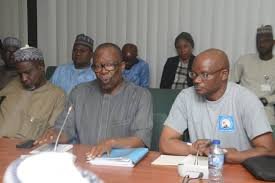
The Academic Staff Union of Universities (ASUU) has invoked a no-pay-no-work policy against the Federal Government over the persistent delay in the payment of lecturers’ salaries. ASUU National President, Prof Chris Piwuna, disclosed the union’s stance in an interview with our correspondent in Abuja on Friday, accusing the government of deliberately frustrating its members following their exit from the Integrated Payroll and Personnel Information System (IPPIS). The Federal Government had earlier removed university academic and non-academic staff from the controversial IPPIS platform, which ASUU and other unions had long criticised for inefficiencies and irregularities. However, Prof Piwuna lamented that since leaving IPPIS, lecturers have faced consistent salary delays. “Since the departure from IPPIS, the salaries of lecturers have consistently been delayed. We don’t get paid the way other workers are paid. It is either we are paid 10 days into a new month. With the economic situation in the country, it has not been easy for our members,” he said. He added, “Look at June — we have not been paid. Our members cannot even celebrate Sallah properly. We have now resolved that since the government wants to delay our salaries, we can’t continue to teach. We want to teach, but we can’t teach without our salaries. We have decided to invoke the no-pay-no-work policy.” According to Piwuna, ASUU branches nationwide have begun adopting the policy, with lecturers boycotting classes until their salaries are paid. Non-academic staff have also voiced their frustrations. Speaking on behalf of the Joint Action Committee of the Senior Staff Association of Nigerian Universities (SSANU) and the Non-Academic Staff Union of Universities and Allied Institutions (NASU), National President Mohammed Ibrahim criticised the government’s continued delays. “Last month, we wrote several letters asking why our salaries were not released. No explanation was given,” Ibrahim said. “University workers are simply treated like second-class citizens. We wrote to the Accountant General of the Federation and copied the Ministers of Education and Labour. The Labour Ministry responded, saying they had contacted the Minister of Education, but clearly, nothing has changed this month either.” As the standoff continues, university students may face further disruptions in academic activities, compounding the challenges already faced by Nigeria’s higher education sector.

grad.jpeg

4min7080
In a country where financial hardship has long stood between young Nigerians and their dreams of higher education, the Nigerian Education Loan Fund (NELFUND) is charting a new path. For generations of students from low-income backgrounds, tertiary education often remained an unattainable goal. Today, that narrative is changing — and fast. Since its official launch on May 24, 2024, NELFUND has emerged as one of the most ambitious student financing programmes in Nigeria’s history, delivering immediate and measurable results. As of June 1, 2025, the Fund’s student loan portal had recorded 610,508 registrations, with 567,798 successful applications — an impressive 93% success rate that reflects both efficiency and public trust in the platform. The momentum continues to build. On June 1 alone, the portal recorded 912 new registrations and 1,615 new successful applications — a 177% surge in application success compared to the previous day. These figures underscore growing confidence in the Fund’s operations and its vital role in shaping students’ academic futures. So far, NELFUND has disbursed N56.8 billion. Of this, N30.1 billion has been allocated to tuition payments across institutions, while N26.6 billion has reached students directly as upkeep allowances — a crucial support for many grappling with daily living costs. To date, 298,124 students across 198 tertiary institutions have benefited from the programme. To consolidate these gains and drive future growth, NELFUND’s Managing Director and CEO, Mr. Akintunde Sawyerr, is engaging stakeholders nationwide. In recent weeks, he held strategic meetings with Senator Opeyemi Bamidele and former Gombe State Governor, Senator Hassan Ibrahim Dankwambo, to explore expanded access to student financing and strengthened support structures for Nigeria’s tertiary institutions. NELFUND’s impact has not gone unnoticed. Sawyerr was recently honoured by the Law Students Association of Nigeria (LAWSAN), Nasarawa State University Chapter, which presented him with the “Trailblazer in Educational Equity and Funding” award during its Annual Law Dinner in Keffi, Nasarawa State. The award, received on his behalf by Mr. Saifullah Bello, recognised Sawyerr’s visionary leadership and the Fund’s commitment to transparency, fairness, and integrity. “Mr. Sawyerr has become a beacon of hope, not only for law students but for young Nigerians nationwide,” the organisers said. “He is setting a new standard in student funding and championing the educational advancement of the nation’s youth.” Receiving the award, Mr. Bello reaffirmed NELFUND’s mission to ensure fairness, accessibility, and long-term impact for all Nigerian students. Also speaking at the event, the Vice-Chancellor of Nasarawa State University, Prof. Saadatu Liman, praised President Bola Ahmed Tinubu for initiating the student loan scheme. She described NELFUND as more than a financial platform — a true “tool for personal advancement and national growth.” The story of NELFUND is no longer just about numbers or policy shifts. It marks a paradigm shift in how Nigeria supports its future leaders. By promoting equity, reducing dropout rates, and making higher education accessible to all deserving youths, the Fund is setting a powerful precedent: that education in Nigeria should be a right, not a privilege.

justice.jpeg

2min10010
Abuja — Former Chief Justice of Nigeria (CJN), Mohammed Uwais, has passed away at the age of 88. His death was confirmed early Friday by the Attorney General and Commissioner for Justice of Ondo State, Dr Kayode Ajulo. Justice Uwais served as Nigeria’s Chief Justice from 1995 until his retirement in 2006, leaving behind a lasting legacy of judicial reform and leadership. Following his retirement from the bench, he was appointed by the late President Umaru Musa Yar’Adua to chair the Presidential Electoral Reform Committee, which brought together notable Nigerians including Bishop Matthew Hassan Kukah and human rights lawyer Dr Olisa Agbakoba, SAN. Born on June 12, 1936, in Zaria, Kaduna State, Justice Uwais embarked on an illustrious legal career. He was called to the Bar at the Middle Temple in London in 1963, quickly gaining recognition for his deep commitment to justice and the rule of law. Throughout his distinguished career, Justice Uwais held several prominent positions both within and beyond the judiciary. As CJN, he championed far-reaching reforms aimed at enhancing the administration of justice in Nigeria. He was also a key figure in the establishment of the National Judicial Council (NJC), a body that has since played a vital role in upholding judicial independence and integrity across the country. Justice Uwais leaves behind a remarkable legacy of service, integrity, and dedication to the Nigerian judiciary.

nig.jpeg

4min5450
Moscow – History will be made on Friday evening as Russia and Nigeria face off for the first time at senior level. The two nations will meet at Moscow’s iconic Luzhniki Stadium in what promises to be an intriguing international friendly, with both sides seeking to test their form under very different circumstances. For Russia, the match is part of an ongoing effort to stay sharp on the global stage after being sidelined from official competitions since early 2022, following their suspension over the Ukraine conflict. In the absence of competitive fixtures, the Russian national team has relied on a steady flow of friendlies — mainly against non-European opponents — to maintain fitness and cohesion. Their last outing in March ended in a commanding 5-0 victory over Zambia, extending their unbeaten streak to eight games. Remarkably, the Russians have scored 45 goals without conceding during this run, though many of these matches have been one-sided affairs. Friday’s encounter with Nigeria, however, is expected to offer a more serious test. Nigeria head to Moscow in buoyant spirits, having extended their unbeaten run to six matches across all competitions. The Super Eagles recently lifted the Unity Cup after edging Jamaica on penalties, following a 2-2 draw. That triumph came shortly after a hard-fought 2-1 victory over long-time rivals Ghana, as Eric Chelle’s side builds momentum ahead of crucial World Cup qualifiers. For Nigeria, Friday’s friendly serves as a valuable opportunity to fine-tune tactics and assess squad depth ahead of September’s decisive qualifying fixtures. Currently sitting fourth in their group with seven points from six games, the Super Eagles trail group leaders South Africa by six points. Upcoming doubleheaders against Rwanda and South Africa, followed by matches against Lesotho and Benin Republic, leave little room for error in their World Cup pursuit. Russia will field a largely unchanged squad from their victory over Zambia. Paris Saint-Germain’s UEFA Champions League-winning goalkeeper Matvey Safonov is expected to start between the posts, while striker Nikolay Komlichenko will once again lead the attack. Nigeria, by contrast, have been forced into a number of changes. First-choice goalkeeper Stanley Nwabali withdrew for family reasons, opening the door for Udinese’s Maduka Okoye to reclaim his spot. Defensively, the Super Eagles will be without right-back Ola Aina and influential midfielder Wilfred Ndidi. Attacking options are also limited, with Kelechi Iheanacho and Samuel Chukwueze unavailable due to family commitments. However, the squad has received a timely boost with the arrival of captain William Troost-Ekong and Fenerbahçe full-back Bright Osayi-Samuel, both joining the team in Moscow earlier this week. As both teams take to the pitch, fans can expect a competitive clash that offers more than just exhibition value — it will be a meaningful test of tactics, resilience, and national pride for both sides.

pet.jpeg

3min6080
In response to intensifying competition in Nigeria’s downstream petroleum sector, six major depot operators have slashed the prices of Premium Motor Spirit (PMS), commonly known as petrol. The depots — Emadeb, First Royal, MENJ, Aiteo, Pinnacle, and Hyde — made the adjustments on Tuesday, with reductions ranging between ₦1 and ₦76 per litre. Emadeb cut its price from ₦903 to ₦827 per litre First Royal reduced its price from ₦828 to ₦826 per litre MENJ dropped its price to ₦826 from ₦827 Aiteo adjusted from ₦826 to ₦825 Pinnacle brought its rate down from ₦856 to ₦850 Hyde trimmed its price slightly from ₦869 to ₦868 According to data from Petroleumprice.ng, the trend of declining depot prices is expected to continue in the coming weeks, as global crude oil prices — a key cost determinant — remain relatively low, hovering around $65 per barrel. An industry source, who requested anonymity, noted that the current reductions align depot prices with Dangote Refinery’s gantry price of ₦825 per litre. “This may prompt the refinery to announce another price cut soon,” the source added. Commenting on the development, Dr. Billy Gillis-Harry, National President of the Petroleum Products Retail Outlets Owners Association of Nigeria (PETROAN), explained that the depot owners had imported substantial volumes of petrol and needed to revise prices to remain competitive. “Without adjusting their prices downward, it would have been difficult to sell in the local market,” he said. “This move is a strategic response to market dynamics. While we anticipate further reductions, excessive competition could destabilize the sector. What we need is healthy, sustainable competition that benefits both consumers and the industry.” Meanwhile, Dangote Petroleum Refinery & Petrochemicals reaffirmed its commitment to price stability despite fluctuations in the international crude oil market. In a statement by Group Chief Branding and Communications Officer, Anthony Chiejina, the company said it remains focused on easing the burden on Nigerian consumers by maintaining consistent pricing.

gra.jpeg

3min6570
Dr. Vincent Paul, a senior lecturer in the Department of Entrepreneurship Studies at Nasarawa State University, Keffi, has advised unemployed graduates across Nigeria to focus on acquiring practical skills as a means to address the growing challenge of unemployment. Speaking on Wednesday in Lafia during the inauguration of the university’s National Executive Council of its Alumni Association and the launch of a Trust Fund for Legacy Projects, Dr. Paul stressed that graduates must move beyond the search for white-collar jobs and take ownership of their economic future. He encouraged young Nigerians to actively develop their talents and vocational abilities, noting that self-employment through skill acquisition remains one of the most viable solutions in today’s job-scarce environment. “Rather than waiting endlessly for limited job openings, graduates should learn a skill that can help them start small businesses and generate income,” he said. “Many have become employers of labour simply by developing and applying their skills.” Dr. Paul also urged political leaders to support youth empowerment by frequently organizing skill acquisition and entrepreneurship training programmes. He said such initiatives would not only promote self-reliance and financial independence among young people but also contribute positively to national development. Turning his attention to the newly inaugurated Alumni executives, he called on them to implement sustainable initiatives that could drive growth within the association and support underprivileged members. He emphasized the importance of using the newly launched trust fund to finance legacy projects, boost entrepreneurial ventures, and ensure smooth leadership succession within the alumni network. “To achieve any meaningful impact, we need a solid financial foundation,” Dr. Paul said. “Our collective mission as NSUK alumni is to preserve our legacy, empower future generations, and establish lasting frameworks that reach beyond geographical boundaries.” In his remarks, the newly elected National President of the Alumni Association, Mr. Nuhu Egya, expressed appreciation to members for the trust placed in him. He pledged to work diligently to elevate the association and deliver on its mandate.

ak.jpeg

3min25770
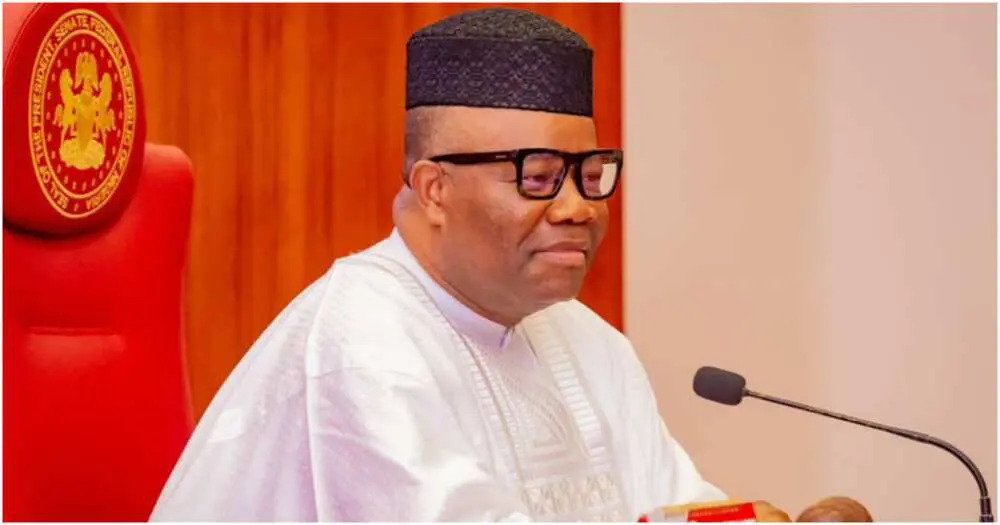
Senate President Godswill Akpabio has explained that the National Assembly’s approval of President Bola Tinubu’s tax reform bills was driven by a commitment to national development, despite strong regional and political opposition. In a statement released by his media aide, Eseme Eyiboh, on Wednesday, Akpabio said the bills were passed after extensive negotiations, consultations with key stakeholders, and open deliberations aimed at strengthening Nigeria’s fiscal framework. The legislative package includes the Joint Revenue Board (Establishment) Bill, Nigeria Revenue Service (Establishment) Bill, Nigeria Tax Administration Bill, and the Nigeria Tax Bill — all key components of President Tinubu’s broader economic reform plan under the Renewed Hope agenda. First submitted in November 2024, the bills were adopted by the Senate last week following months of robust debate. “These bills form the foundation of the president’s economic transformation efforts,” Akpabio stated. “Once signed into law, they will boost government revenue and modernize our tax system to ensure fairness and efficiency.” Akpabio acknowledged that initial proposals, such as allowing tax-generating states to retain 60% of Value Added Tax (VAT) revenues, drew strong opposition — particularly from northern lawmakers concerned about potential economic disadvantages for their regions. A compromise was later reached: the retention rate was reduced to 30%, and the term “derivation” was replaced with “place of consumption” to accommodate concerns and achieve consensus. The bills also encountered resistance from some state governors and divisions within the National Assembly. However, Akpabio praised the collaborative spirit that eventually emerged. He singled out House of Representatives Speaker Tajudeen Abbas for his efforts in rallying support, especially among younger legislators, and commended the state governors who eventually backed the revised proposals. “The governors’ willingness to reconsider and support the changes helped ease regional tensions and secure broader support,” Akpabio noted. He further emphasized that the legislative process was transparent and inclusive, involving public hearings and active stakeholder engagement. The approved bills are now awaiting President Tinubu’s assent. “With two years remaining in this administration, this achievement represents a major stride forward,” Akpabio said. “It’s important to acknowledge those who worked to make it happen.”

trump.jpeg

3min8010
Former U.S. President Donald Trump has signed a new presidential proclamation imposing travel restrictions on nationals from 19 countries, citing national security threats and deficiencies in identity verification processes. Under the new directive, citizens from 12 countries will face full travel bans to the United States. These countries include: Afghanistan, Myanmar (Burma), Chad, Republic of the Congo, Equatorial Guinea, Eritrea, Haiti, Iran, Libya, Somalia, Sudan, and Yemen. An additional seven countries — Burundi, Cuba, Laos, Sierra Leone, Togo, Turkmenistan, and Venezuela — will be subject to partial restrictions. According to the White House, exemptions apply to U.S. lawful permanent residents, individuals with valid visas, select visa categories, and those whose entry aligns with U.S. national interests. The proclamation, which takes effect at 12:01 a.m. on June 9, follows a recent antisemitic attack in Boulder, Colorado. A White House official confirmed that although the travel restrictions were already under consideration, the violent incident accelerated the decision. White House Deputy Press Secretary Abigail Jackson said the restrictions were “commonsense measures targeting countries with inadequate security vetting, high visa overstay rates, or poor information-sharing practices.” She emphasized that the list is dynamic and subject to updates as new threats emerge globally. In a video message released Wednesday, Trump reiterated his administration’s focus on protecting the U.S. from foreign actors intending harm. “We will not allow people to enter our country who wish to do us harm and nothing will stop us from keeping America safe,” he stated. This move echoes policies from Trump’s first term, when a travel ban on several Muslim-majority countries was implemented and later reversed by President Joe Biden in 2021. The latest ban has drawn swift criticism from advocacy groups and affected nations. Humanitarian organizations warn that the restrictions could endanger people fleeing conflict and persecution. “This is a strategic move, not a response to an immediate threat,” said Shawn Vandiver, founder of the AfghanEvac coalition, which supports Afghans evacuated during the U.S. withdrawal. He warned that the policy disproportionately affects families and individuals seeking legal entry. Venezuelan officials also pushed back, with Minister Diosdado Cabello suggesting that visiting the U.S. poses risks even for non-Venezuelans. Meanwhile, international NGO Oxfam condemned the proclamation as “a chilling return to policies of fear, discrimination, and division.” Oxfam America President Abby Maxman stated that the measure could deny refuge to people in dire need. “This policy will keep families in harm’s way, turning them away from safety,” she said.

article005-1280x744.png

5min34400
We are living in the age of Artificial Intelligence. From smart assistants in our homes to AI systems diagnosing diseases and driving innovation across industries, it’s clear that AI is no longer a luxury or a buzzword, it is the future happening now. Companies around the world are racing to release cutting-edge AI models, while automation is transforming the way we live, work, and learn. Yet, despite all this progress, many computer science students are still stuck in the past. Their curriculums, unchanged for years, fail to reflect the digital transformation happening outside the classroom. They graduate into a fast-evolving tech world—but without the foundational knowledge of AI, data science, or machine learning. Instead of stepping into jobs ready, many are forced to take extra courses or self-train just to catch up. That should not be the case. The Industry Has Moved On; Education Hasn’t Today’s tech employers need more than just basic programming or theoretical computer science. They need talent that understands real-world technologies: tools like neural networks, natural language processing, and AI model deployment. But in many institutions, these crucial topics are either missing or barely skimmed. Students spend years learning languages and systems that are no longer widely used, while groundbreaking innovations go unmentioned. This disconnect isn’t just inconvenient—it’s unfair. It puts students at a disadvantage, wasting time and potential. Meanwhile, Others Are Moving Ahead China offers a compelling example. The country has made deliberate efforts to integrate AI-focused courses into its education system from the ground up. Students are being introduced early to AI, robotics, and data-driven thinking. The result? A generation of graduates who are ready not just to work with technology but to shape its future. China’s approach is strategic. It understands that to lead tomorrow, you must train for tomorrow—today. So, What Are We Waiting For? The world is changing, and education must change with it. This is not a challenge just for public universities or government policymakers. Private schools must also rise to the occasion. Now is the time to revise outdated curriculums, introduce AI literacy early, and make space for emerging technologies in our classrooms. This doesn’t mean discarding the fundamentals of computer science. it means updating them with relevance, direction, and purpose. Let’s stop graduating students who are lost at the finish line. Let’s equip them with not just knowledge, but career clarity. This Is a Call to Action If we truly want to prepare our youth for the future, we must stop seeing AI education as optional. Curriculums must reflect the realities of the workforce. Governments must invest in infrastructure, teacher training, and forward-thinking policies. Private schools must ensure they are not just offering education, but offering value. Give students the best that money and effort can provide. Because when we invest in knowledge, we invest in our collective future. The Bottom Line AI is here. It’s not coming, it has already arrived. And if we want to keep pace, we must act now. This is the time to modernize our computer science curriculums, empower our students, and embrace the technologies that are shaping the world. The cost of inaction is far greater than the price of change. Let’s teach for tomorrow, today.

tt.jpg

7min8220
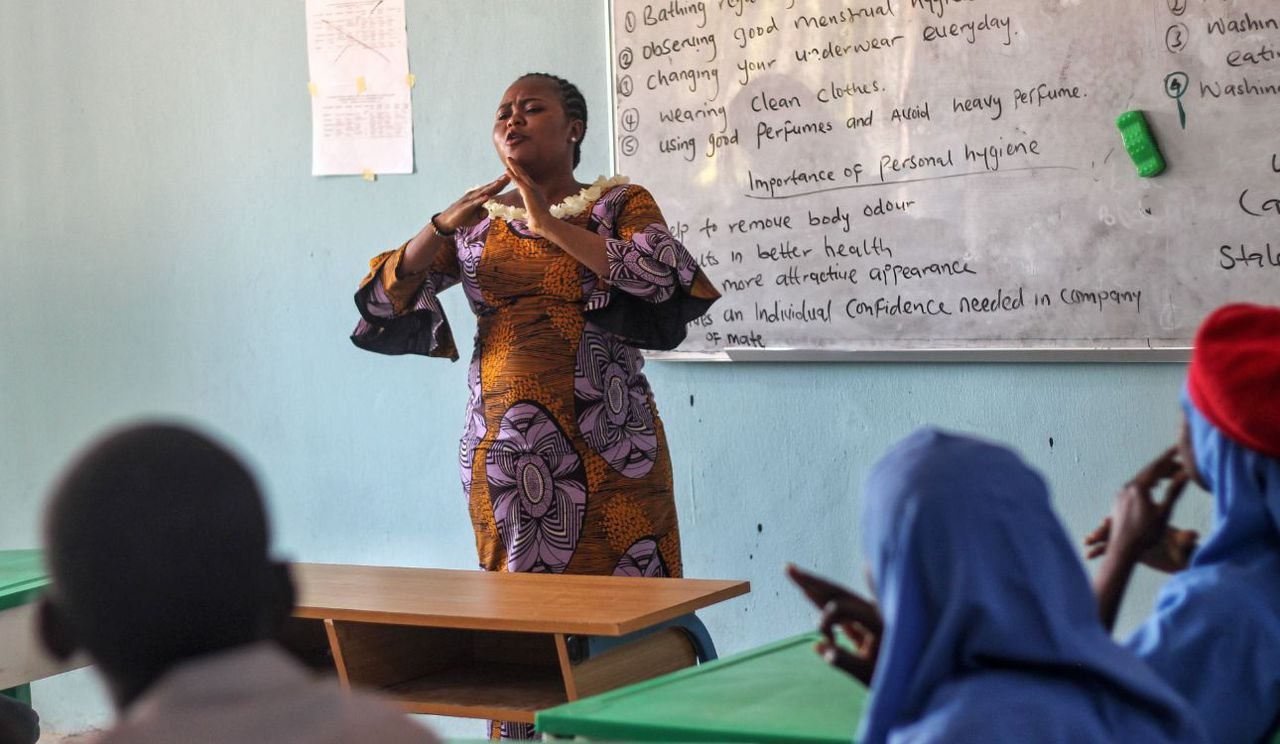
Teaching is often described as the noblest profession, yet in Nigeria, it is also one of the most challenging. Teachers are the backbone of society, molding young minds and shaping the future. But what happens when the builders of tomorrow are overworked, underpaid, and unappreciated? The reality for many Nigerian teachers is a daily struggle with financial instability, overcrowded classrooms, lack of resources, and emotional burnout.   Despite these challenges, they continue to show up, driven by passion and a deep sense of responsibility. However, maintaining a positive outlook in the face of adversity is no easy feat. This article explores the mental toll teaching takes, real-life experiences of Nigerian educators, and practical ways to remain resilient, including the lessons from Keith Harrell’s Attitude Is Everything. The Harsh Reality of Teaching in Nigeria For many Nigerian teachers, their salaries barely cover basic living expenses. The pay often comes late, sometimes after months of waiting forcing them to take on extra jobs or rely on family support. Meanwhile, classrooms are filled beyond capacity, making effective teaching difficult. A single teacher might be responsible for over 50 students, struggling to provide personalized attention with limited resources.   Mrs. Adebayo, a primary school teacher in Lagos, shares her experience:    “Some days, I spend my personal money to buy chalk and exercise books for my students. Parents cannot afford them, and the school has no funds. It is painful because, at the end of the month, my salary is barely enough for my own family.” Beyond the financial strain, teachers also face social pressures. Many are expected to devote themselves entirely to their pupils while still being present for their families. This creates an emotional conflict, spending more time with students than with their own children, yet receiving little appreciation from both society and the government.   The Mental Toll: When Passion Turns to Exhaustion  Over time, the constant struggle can lead to burnout, frustration, and even depression. When you give your all and receive little in return, the temptation to give up is strong. Some teachers, unable to cope, have left the profession altogether in search of better opportunities.   Research shows that teacher burnout affects not just the educator but also the students. When a teacher is emotionally drained, they may become less patient, less innovative, and less engaged in the classroom. This, in turn, affects the quality of education.   So how can teachers continue to give their best when everything seems against them?  Cultivating a Positive Mindset: Lessons from Attitude Is Everything Keith Harrell’s Attitude Is Everything emphasizes the power of perspective. He argues that external circumstances are often beyond our control, but our response to them makes all the difference. This philosophy is crucial for Nigerian teachers who face daily challenges.   Here are three key takeaways from Harrell’s book that can help teachers remain positive despite the odds:   Change Your Thoughts, Change Your Life Harrell stresses that our thoughts shape our reality. Teachers must train their minds to focus on the impact they are making rather than the obstacles they face. Every day in the classroom is a chance to inspire, even if the conditions are tough.   Find Purpose in Your Work Teaching is not just a job, it’s a calling. Remembering why you started can reignite passion and motivation. When teachers see themselves as builders of the future, their struggles become stepping stones rather than roadblocks.   Surround Yourself with Positivity   Having a support system is crucial. Whether it’s forming teacher support groups, attending professional development programs, or simply engaging with positive-minded colleagues, surrounding yourself with encouragement can make a difference.   Practical Strategies for Staying Motivated  Beyond mindset, there are practical ways teachers can maintain resilience and avoid burnout:   Set Small, Achievable Goals: Instead of focusing on the overwhelming challenges, break tasks into smaller victories. Celebrate every student’s improvement, no matter how minor.  Practice Gratitude: Keeping a journal of daily wins; like a student finally grasping a difficult concept, can help shift focus from struggles to successes. Innovate Despite Limited Resources: Teachers like Mrs. Adebayo have adopted creative strategies such as peer teaching, where stronger students help weaker ones, reducing the burden on the teacher while improving overall learning. Prioritize Self-Care: Teaching is demanding, but burnout is avoidable. Taking breaks, engaging in hobbies, and ensuring a proper work-life balance are essential for mental well-being. Final Thoughts: Teachers as Silent Heroes Nigerian teachers may not receive the recognition they deserve, but their impact is undeniable. Every doctor, engineer, artist, and leader once sat in a classroom under the guidance of a teacher. While the challenges are real, so is the power of resilience.   By maintaining a positive outlook, embracing personal growth, and finding joy in small victories, teachers can continue shaping the future one lesson at a time.   So, to every Nigerian teacher reading this: You are seen, you are valued, and your work matters more than you know. Keep going.