

 Lifestyle & Wellness Desk
Delayed Salaries: ASUU Adopts No-Pay-No-Work Policy Against FG
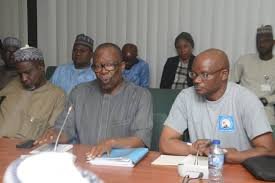
The Academic Staff Union of Universities (ASUU) has invoked a no-pay-no-work policy against the Federal Government over the persistent delay in the payment of lecturers’ salaries.
ASUU National President, Prof Chris Piwuna, disclosed the union’s stance in an interview with our correspondent in Abuja on Friday, accusing the government of deliberately frustrating its members following their exit from the Integrated Payroll and Personnel Information System (IPPIS).
The Federal Government had earlier removed university academic and non-academic staff from the controversial IPPIS platform, which ASUU and other unions had long criticised for inefficiencies and irregularities.
However, Prof Piwuna lamented that since leaving IPPIS, lecturers have faced consistent salary delays.
“Since the departure from IPPIS, the salaries of lecturers have consistently been delayed. We don’t get paid the way other workers are paid. It is either we are paid 10 days into a new month. With the economic situation in the country, it has not been easy for our members,” he said.
He added, “Look at June — we have not been paid. Our members cannot even celebrate Sallah properly. We have now resolved that since the government wants to delay our salaries, we can’t continue to teach. We want to teach, but we can’t teach without our salaries. We have decided to invoke the no-pay-no-work policy.”
According to Piwuna, ASUU branches nationwide have begun adopting the policy, with lecturers boycotting classes until their salaries are paid.
Non-academic staff have also voiced their frustrations. Speaking on behalf of the Joint Action Committee of the Senior Staff Association of Nigerian Universities (SSANU) and the Non-Academic Staff Union of Universities and Allied Institutions (NASU), National President Mohammed Ibrahim criticised the government’s continued delays.
“Last month, we wrote several letters asking why our salaries were not released. No explanation was given,” Ibrahim said. “University workers are simply treated like second-class citizens. We wrote to the Accountant General of the Federation and copied the Ministers of Education and Labour. The Labour Ministry responded, saying they had contacted the Minister of Education, but clearly, nothing has changed this month either.”
As the standoff continues, university students may face further disruptions in academic activities, compounding the challenges already faced by Nigeria’s higher education sector.

