Blog - Edupreneur Select

Bring to the table win-win survival strategies to ensure proactive domination. At the end of the day, going forward, a new normal that has evolved from generation.
ad-1.jpg

5min3570
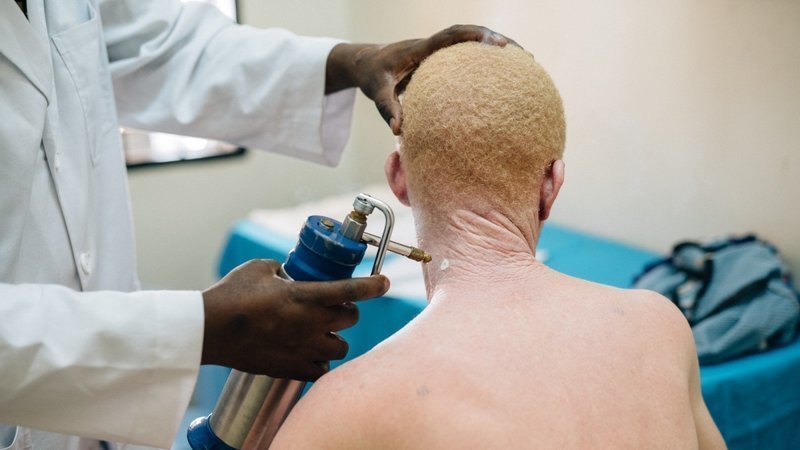
The Abia State Disability Commission has unveiled plans to distribute free sunscreen lotions to persons with albinism across the state as part of its efforts to enhance their health, reduce the risk of skin cancer, and promote social inclusion. Chairman of the Commission, Mr. David Anyaele, disclosed this during a one-day medical sensitisation programme organised by the Albinism Association of Nigeria (AAN), Abia State Chapter, at the School for the Blind, Afara, Umuahia. Themed “Meeting the Needs of Persons with Albinism through the Medical Model,” the event addressed the unique health and social challenges faced by persons with albinism (PWAs). Anyaele noted that the sunscreen initiative aligns with Governor Alex Otti’s broader commitment to improving the welfare of Persons with Disabilities (PWDs) in Abia State. Each participant, he said, would receive four packs of sunscreen lotion to protect their skin from harmful ultraviolet rays. “The commission will provide four packs of sunscreen lotion to each participant to help prevent sun-related skin damage and reduce the risk of cancer,” Anyaele said. “The AAN chairman will communicate a suitable date for the distribution, and transportation support will be provided for members attending the event.” He encouraged persons with albinism to take active steps in raising awareness about their condition and not rely solely on government interventions. Anyaele highlighted that prolonged exposure to sunlight often leads to skin cancer, vision problems, and reduced participation in education and daily life. He also acknowledged the economic and social barriers faced by many PWAs due to discrimination and limited employment opportunities. According to him, the Otti administration has trained all 17 Local Government Chairmen, Permanent Secretaries, and officials across Ministries, Departments, and Agencies on disability inclusion, the Abia State Disability Law, and disability budgeting. The Commission is also collaborating with health and education officers across the 17 LGAs to strengthen understanding of disability issues, with Ms. Ijeoma Okoronkwo representing the albinism cluster on the board. Anyaele further stated that the Commission has extended financial support to all disability clusters, including the AAN, to help them commemorate international disability awareness events. He commended the AAN for its leadership in organising the sensitisation programme and stressed the importance of continuous education to dispel myths and misconceptions about albinism. While decrying the ongoing stigma and discrimination faced by PWAs, Anyaele referenced incidents in some African countries, such as Tanzania, where individuals with albinism have been targeted in ritual-related attacks. He noted that in Nigeria, they continue to experience prejudice, bullying, and exclusion. The initiative, he said, demonstrates Abia State’s commitment to disability inclusion and public health. It highlights the importance of collaborative governance and advocacy in addressing the medical and social challenges faced by persons with albinism, while promoting equality, dignity, and access to care. Anyaele concluded by urging PWAs to take the lead in promoting self-awareness, advocating for their rights, and partnering with government and civil society to foster inclusion and protection.

Tech & Tools Desk22 October 2025
ac-1.jpg

3min14650
Women for Women International has announced the appointment of Thelma Ekiyor as its new Global Chief Executive Officer. Ekiyor, a seasoned leader in international development and women’s empowerment, brings over 25 years of experience in philanthropy, social entrepreneurship, and cross-sector collaboration. In a statement, WfWI Board Chair Nunu Ntshingila commended the appointment, noting, “Among a shortlist of outstanding candidates, Thelma Ekiyor’s expertise, passion, and leadership stood out. Her unwavering commitment to empowering women and helping them transform their lives and communities was evident.” Ekiyor succeeds Marie Clarke, who served as Acting CEO for nine months, steering the organisation through a period of transition. Her appointment comes amid significant global shifts in the development sector, with expectations that her extensive background working with governments, civil society, the private sector, and impact investors will strengthen WfWI’s mission and broaden its global impact. “Her leadership will be instrumental as Women for Women International embarks on its next phase,” Ntshingila added. Throughout her career, Ekiyor has held several pioneering positions. She has chaired the Nigeria Office for Philanthropy and Impact Investing, co-founded Afrigrants—Nigeria’s largest women-led accelerator for micro-businesses—and contributed to the TY Danjuma Foundation and the West African Civil Society Institute in Ghana. She has also served on the International Advisory Board of the Global Centre on Responsibility to Protect and co-founded Women in Philanthropy & Impact, a global network promoting African women in leadership. Expressing her excitement about the new role, Ekiyor said, “I am deeply passionate about investing in women and creating opportunities that advance social good. Women for Women International’s mission to empower women survivors of conflict and women-led enterprises aligns closely with my values. I look forward to contributing to a future where every woman realises her power and potential.”

James Obasi22 October 2025
ab.jpeg

4min3050
The House of Representatives has resolved to intervene in the ongoing dispute between the Petroleum and Natural Gas Senior Staff Association of Nigeria (PENGASSAN) and the Dangote Refinery, which recently disrupted the distribution of petroleum products across the country. The decision followed the consideration and adoption of a motion of urgent public importance co-sponsored by lawmakers Alhassan Doguwa (Kano) and Abdussamad Dasuki (Sokoto) during Tuesday’s plenary session. In the motion titled “We need to protect private investment from adversarial unionism,” the lawmakers highlighted the critical role of the Dangote Refinery, describing it as the largest privately owned petroleum refinery in Africa. The industrial action by PENGASSAN, which began on September 29, 2025, halted operations at the $20 billion refinery and caused a decline in Nigeria’s crude oil production, reportedly leading to a loss of about 200,000 barrels daily over a three-day period. The strike also intensified the nationwide fuel shortage, resulting in long queues at filling stations and hardship for millions of Nigerians. Presenting the motion, Doguwa, who represents the Doguwa/Tudun Wada Federal Constituency of Kano State, emphasized the importance of safeguarding the Dangote Refinery, citing its potential to enhance energy security, reduce import dependency, generate jobs, and conserve foreign exchange. He pointed out that the refinery operates within a Free Trade Zone under the Nigeria Export Processing Zones Authority (NEPZA), which, according to Section 18(5) of the NEPZA Act, provides that employment matters within such zones are governed by the Authority’s regulations rather than general labour laws. Doguwa warned that union activities that disregard these legal provisions could create a hostile environment for investors and threaten future private investments. He stated, “If strategic private investments continue to face unlawful disruptions through adversarial unionism, Nigeria risks losing key economic assets and eroding investor confidence crucial for national growth.” Contributing to the debate, Ahmad Jaha, who represents Chibok/Damboa/Gwoza Federal Constituency, cautioned the House to act with prudence, noting that an immediate probe might not be appropriate at this stage. Following deliberations, the House resolved to facilitate peace talks between PENGASSAN and the Dangote Refinery in the national interest. Additionally, it urged the Federal Ministries of Labour and Employment, Industry, Trade and Investment, and Justice to jointly create and implement a national framework to protect strategic private investments from unlawful union disruptions. The House also directed the Ministry of Justice and NEPZA to ensure full enforcement of Section 18(5) of the NEPZA Act across all Free Zone operations in the country.

Tech & Tools Desk21 October 2025
aaad.jpg

4min5840
Nigeria’s leading hygiene brand, Dettol, has reaffirmed its dedication to advancing hand hygiene and public health as it joined forces with the Federal Ministry of Water Resources and Sanitation, The Wellbeing Foundation Africa, and Kiddies ‘n’ Brands, a Reckitt Catalyst beneficiary, to commemorate the 2025 Global Handwashing Day. The event, held on October 15 in Abuja with the theme “Be a Hero, One Handwash at a Time,” emphasized the power of individual responsibility in driving collective change through handwashing—one of the most effective ways to prevent diseases and promote healthy living. The gathering brought together key government representatives, development partners, and media professionals to raise nationwide awareness on hand hygiene. It featured practical demonstrations and renewed commitments from stakeholders to strengthen hygiene education across communities. Cassandra Uzo-Ogbugh, Head of External Communications and Partnerships, Reckitt Sub-Saharan Africa, noted that Dettol’s long-standing advocacy for hand hygiene stems from the belief that “clean hands save lives.” She added that through consistent collaboration with federal and state agencies, the brand continues to champion hygiene education that empowers communities and enhances public health. Minister of Water Resources and Sanitation, Prof. Joseph Utsev, commended Dettol and its partners for their unwavering contribution to Nigeria’s hygiene and sanitation goals. He stressed the importance of sustained advocacy and public-private partnerships to make handwashing a daily habit among Nigerians. Beyond Abuja, Dettol’s partners extended the Global Handwashing Day celebrations to Lagos and Kwara States. In Lagos, The Wellbeing Foundation Africa and Kiddies ‘n’ Brands led school and community sensitization programmes in Ijora and Alimosho, where pupils and caregivers participated in engaging demonstrations highlighting the importance of regular handwashing in achieving Sustainable Development Goals 3 and 6. In Kwara, the Wellbeing Foundation Africa continued its Hygiene Quest programme, focusing on educating schoolchildren and families about proper hand hygiene practices. As part of its broader commitment to public health, Dettol continues to drive impactful initiatives such as Clean Naija and the Reckitt Catalyst Initiatives, which have empowered millions of Nigerians through hygiene education and supported innovative social enterprises in the WASH (Water, Sanitation, and Hygiene) sector. Through these initiatives, Dettol reinforces the message that small, consistent actions—like washing hands—can have a life-saving impact. Together with government and development partners, Reckitt remains committed to building a healthier Nigeria where everyone can truly be a “hygiene hero.”

bm.jpg

3min4050
The Plant Treatment Oasis Association of Nigeria, comprising professional biochemists, has urged the Federal Government to formally integrate herbal and alternative medicine into the national healthcare system to enhance public health and well-being. Speaking after the association’s 2025 conference in Abuja, its president, Olayemi Ikotun, emphasized that Nigeria could harness the vast medicinal potential of natural plant-based supplements, which have proven effective in treating various health conditions with minimal or no side effects. Ikotun noted that the association has conducted extensive research and developed natural medicinal products that have shown positive results in managing ailments such as fibroids, piles, and other chronic diseases. “We, as biochemistry practitioners, possess the capacity to address many of our nation’s healthcare needs. Our members have created highly potent and safe natural supplements from raw plant materials—effective alternatives without the harmful effects of synthetic drugs,” he said. He lamented the continued marginalization of traditional and alternative medicine despite its deep roots in Nigerian culture, stressing that formal government recognition would strengthen healthcare delivery across the country. Ikotun further explained that older generations thrived on herbal remedies that modern science can now refine through biochemistry and improved production techniques. He also called for stronger government policies to regulate, research, and incorporate herbal medicine into the broader health framework, adding that these remedies are affordable, accessible, and safe. The association’s conference, themed “Advancement of Natural Plant Supplement in Nigeria,” also featured the induction of new members and renewed commitment to research and innovation in natural medicine. Participants reaffirmed their dedication to providing scientifically supported and culturally relevant healthcare solutions rooted in Nigeria’s rich biodiversity.

bl.jpg

6min3340
Stakeholders in Nigeria’s healthcare and education sectors have voiced growing concern over the decline in professional ethics, discipline, and moral values among young nurses, urging a return to the core principles that define nursing as a noble and compassionate profession. Speaking at the second induction ceremony for Bachelor of Nursing Science graduates of Trinity University, Yaba, Lagos, the Acting Registrar of the Nursing and Midwifery Council of Nigeria (NMCN), Alhaji Ndagi Alhassan, emphasized the need for renewed commitment to professionalism, discipline, and accountability among practitioners. Addressing the inductees, Alhassan underscored the importance of maintaining a professional image and conduct to earn patients’ trust and uphold the dignity of the nursing profession. “Nursing is not merely a career—it is a calling built on compassion, responsibility, and self-respect. Nurses must always reflect these noble values in their appearance, behaviour, and service. Today’s induction is both a celebration and a reminder that nurses are held to the highest moral and ethical standards,” he said. The ceremony marked the induction of 35 graduates into the nursing profession and featured goodwill messages from healthcare leaders, government representatives, and academics who all emphasized the importance of ethical integrity in nursing practice. Vice-Chancellor of Trinity University, Professor Clement Kolawole, reaffirmed the institution’s dedication to producing graduates who combine academic excellence with moral uprightness. He noted that Trinity University’s nursing programme has gained national recognition for its holistic approach that integrates clinical competence, intellectual development, and moral training. “As a faith-based institution, we understand that technical knowledge alone does not make a great nurse. At Trinity, we intentionally nurture purpose, discipline, and compassion. Our goal is to produce not just nurses, but leaders and changemakers who will transform the healthcare sector,” he said. He urged the newly inducted nurses to uphold professional ethics, serve humanity with empathy, and continue learning in an evolving healthcare landscape that values innovation and integrity. Delivering the keynote lecture titled “Transitioning from Student to Professional Nurse,” Vice-Chancellor of Achievers University and renowned nurse educator, Professor Omolola Irinloye, highlighted the rapid evolution of the nursing profession, with new global frameworks and standards introduced in recent years. She advised the graduates to embrace change with courage and adaptability, noting that success in nursing requires more than academic qualifications. According to her, “The key pillars for professional growth are seizing opportunities, building strong networks, and maintaining ties with your alma mater. Nigerian nurses are respected globally, and it is your duty to uphold that trust.” She added, “There are now more opportunities than ever—specialisations, leadership roles, global placements, and digital health innovations. But to benefit from them, you must stay proactive and engaged.” Also speaking, Commissioner IV at the Lagos State Health Service Commission, Dr. Ololade Fadipe, urged the graduates to embrace Jean Watson’s Theory of Human Caring, which emphasizes compassion, respect, and a healing presence. She cautioned that technical expertise alone is not enough, stressing the importance of empathy, teamwork, and continuous self-improvement. Similarly, Acting Dean of the Faculty of Nursing, Dr. Faosat Animashaun, described the induction as a transition from academic learning to professional responsibility. She reminded the new nurses that integrity and accountability remain the foundation of their calling. “Use your licence with pride and responsibility. Every patient you encounter deserves respect and care,” she advised. In his welcome address, Trinity University Registrar, Mr. David Olubukola Oyejide, said the institution is proud to be contributing to Nigeria’s pool of qualified healthcare professionals. He noted that the university’s partnerships with hospitals and medical centres have helped students acquire both theoretical and hands-on experience. He commended the Nursing and Midwifery Council of Nigeria for maintaining high professional standards and noted that the induction of the second cohort of graduates reflects Trinity University’s steady progress in advancing health education and national development. “These graduates are not only equipped to deliver quality healthcare but also to lead, advocate, and make a lasting impact in their communities,” he said.

Tech & Tools Desk21 October 2025
bk.webp

5min6130
As children grow, proper nutrition plays a vital role in supporting brain development and cognitive function. A diet rich in essential nutrients provides the energy and building blocks needed for a healthy brain. Foods fortified with Docosahexaenoic Acid (DHA) — an omega-3 fatty acid — have been shown to significantly enhance early brain development, particularly in children between the ages of two and six, helping them reach their full potential. Health experts explain that DHA is a key structural component of brain, eye, and nerve cells, making it essential for optimal growth and function during early childhood, a period when the brain and nervous system are rapidly developing. According to specialists, DHA accounts for about 97% of the omega-3 fatty acids in the brain and supports the formation of brain cells, improving cognitive skills such as learning, memory, and concentration. Studies show that by age one, a child’s brain has reached about 72% of its adult size, and by age five, about 90%, highlighting how critical these early years are for brain growth. Research also suggests that children who consume more DHA tend to perform better in mental skill tests and exhibit sharper cognitive abilities. A Consultant Paediatric Haematologist and Oncologist at the Lagos University Teaching Hospital, Prof. Edamisan Temiye, emphasized that DHA-rich foods are essential for brain development and overall intelligence. “DHA is crucial for the brain’s development and maturation. The nerves are surrounded by fats rich in DHA, which help transmit information faster. This nutrient makes growing children sharper and more intelligent,” he explained. Beyond brain function, DHA also supports eye health, as it is found in high concentrations in the retina. Experts note that it promotes healthy vision and proper eye development in children, and may even reduce the frequency of vision-related issues. Major dietary sources of DHA include fatty fish such as salmon, mackerel, and sardines, as well as algae-based supplements and fortified foods like milk, yogurt, and baby formulas. Breast milk naturally contains DHA, making it an excellent source for infants. “The DHA in breast milk is sufficient for infants, which is why exclusive breastfeeding for the first six months is strongly recommended,” Prof. Temiye added. To ensure an adequate supply of DHA, nursing mothers are encouraged to include DHA-rich foods in their diet, and in some cases, doctors may recommend supplements. Many manufacturers of infant formulas now fortify their products with DHA to match the natural levels found in breast milk. Parents are, however, advised to consult their paediatricians before choosing a formula to ensure it meets their child’s nutritional needs. In some instances, paediatricians may recommend DHA supplements, especially for children with dietary restrictions or low intake of DHA-rich foods. Experts advise parents to regularly include DHA-rich foods in their children’s diets and follow professional guidance to support brain growth, improve cognitive performance, and give their children the best start in life.  

James Obasi21 October 2025
bh.png

4min2950
The Nigeria Labour Congress (NLC) and its affiliate unions in the education sector have given the Federal Government a four-week ultimatum to resolve all outstanding issues affecting the sector, warning that failure to act will result in a nationwide industrial action. The NLC and the unions also announced a “no pay, no work” policy in response to the government’s “no work, no pay” stance following the ongoing two-week warning strike by the Academic Staff Union of Universities (ASUU). The unions involved include ASUU, the Senior Staff Association of Nigerian Universities (SSANU), Non-Academic Staff Union of Educational and Associated Institutions (NASU), National Association of Academic Technologists (NAAT), Academic Staff Union of Polytechnics (ASUP), Senior Staff Association of Nigerian Polytechnics (SSANIP), Academic Staff Union of Research Institutions (ASURI), and the College of Education Staff Union (COESU), among others. Speaking after a joint meeting in Abuja, NLC President Joe Ajaero said the unions had agreed to act collectively to end the government’s persistent disregard for agreements and neglect of the education sector. “The NLC, after extensive discussions with unions in the tertiary education sector, has resolved to work together to find lasting solutions to the challenges that have plagued the sector for years,” Ajaero stated. He explained that the unions would create a framework for implementing existing agreements, ensuring sustainable funding for education in line with UNESCO’s 25–26% budgetary recommendation, and reviewing wage structures and allowances for academic and non-academic staff. Ajaero also criticized government officials who attend negotiation meetings without the authority to make binding commitments. “No union will again attend meetings with representatives who lack the mandate to reach agreements. We won’t continue to negotiate only for the government to renege afterward,” he said. He announced that a coordinated team would soon begin a national campaign focused on education reform and accountability. “We have given the Federal Government four weeks to conclude all negotiations in this sector. Talks may have started with ASUU, but the problems go beyond one union. If, after four weeks, no progress is made, the NLC will convene to decide on a nationwide action involving all workers and unions,” he warned. Rejecting the government’s “no work, no pay” policy, Ajaero declared, “From now on, it will be no pay, no work. You can’t instigate an action and then benefit from it. Most strikes in this country are caused by the government’s failure to honor agreements. Those who create the problem should face the consequences.” With this firm stance, the NLC and its education affiliates appear ready for a major confrontation with the Federal Government if urgent steps are not taken to resolve the ongoing crisis in the nation’s education sector.

bgg.webp

2min4470
Nottingham Forest have named Sean Dyche as their new head coach on a contract running until 2027, the Premier League club confirmed on Tuesday. The 54-year-old former Burnley and Everton manager replaces Ange Postecoglou, who was dismissed on Saturday after just 40 days in charge at the City Ground. Dyche, who began his career at Forest under legendary manager Brian Clough, becomes the club’s third manager this season and his first role since leaving Everton earlier this year. “A respected and experienced Premier League manager, Dyche brings the perfect blend of character, tactical knowledge, and proven success to guide the club through its next chapter,” the club said in a statement. Dyche’s first match in charge will be Thursday’s Europa League fixture at home against Porto. Postecoglou’s departure came shortly after Saturday’s 3-0 defeat to Chelsea, making him the shortest-serving permanent manager in Premier League history. Forest owner Evangelos Marinakis ended the Australian’s tenure after the team failed to secure a win in their opening eight league games. Postecoglou had been appointed following the sacking of Nuno Espirito Santo in September, who left after a breakdown in his relationship with the club owner. Currently, Forest sit in the Premier League relegation zone with just five points from eight matches, despite over £100 million ($134 million) being invested in the squad during the summer transfer window.

aaaaaaaaa-1.jpg

3min6020
Nigeria’s Net Domestic Credit (NDC) declined by 12.8% year-on-year in August 2025, standing at ₦98.97 trillion, according to the latest money and credit statistics from the Central Bank of Nigeria (CBN). In August 2025, bank credit to the government was ₦23.133 trillion, while credit to the private sector reached ₦75.843 trillion, bringing total NDC to ₦98.97 trillion. In comparison, during the same period in 2024, credit to the government was ₦39.391 trillion, and private sector credit was ₦74.072 trillion, resulting in a total NDC of ₦113.463 trillion. On a monthly trend, NDC was ₦102.406 trillion in January 2025 and grew slightly by 0.9% to ₦103.369 trillion in February. However, in March, it dropped sharply by 34% to ₦68.177 trillion. In the second quarter of 2025, NDC rose by 49.6% to ₦102.002 trillion in April, declined by 1.03% to ₦100.955 trillion in May, and further dropped by 3.13% to ₦97.787 trillion in June. Although data for July was unavailable, August recorded a slight increase of 1.2%. Dr. Muda Yusuf, CEO of the Centre for the Promotion of Private Enterprise (CPPE), welcomed the Monetary Policy Committee’s (MPC) decision to lower the Monetary Policy Rate (MPR), describing it as a “timely and necessary intervention.” He noted that the combination of a reduced MPR and lower Cash Reserve Ratio (CRR) would enhance banks’ lending capacity, ease borrowing costs, support business growth, and stimulate job creation. However, he cautioned that monetary policy alone would not suffice, stressing that “fiscal authorities must prioritise infrastructure development, strengthen regulatory institutions, and maintain fiscal discipline to promote macroeconomic stability and investor confidence.” Also commenting, David Adonri, Executive Vice Chairman at HighCap Securities Limited, warned that the persistent decline in credit could hinder business financing amid inflationary pressures, foreign exchange challenges, and weak consumer demand. He added that Nigeria’s move aligns with a broader trend across Africa, as several central banks begin to ease monetary policy in response to moderating inflation. Recently, Ghana cut its policy rate by 350 basis points to 21.5%, while Kenya lowered its benchmark rate to 9.5% in mid-August. Despite this, Nigeria’s MPR remains among the highest on the continent, reflecting ongoing inflationary concerns.