Blog - Edupreneur Select

Bring to the table win-win survival strategies to ensure proactive domination. At the end of the day, going forward, a new normal that has evolved from generation.
Ifeanyi Enukorah9 February 2026

53.png

4min9030
In the traditional hierarchy of education, the “Great Man” or “Heroic Leader” theory has long dominated. We’ve been taught to look to a single Principal or Head of School as the sole architect of a school’s destiny. But in an era defined by increasing complexity, rapid digital transformation, and heightening student needs, the weight of a school is simply too heavy for one pair of shoulders. To build truly resilient, high-performing schools, we must shift from leadership as a position to leadership as a practice. This is the essence of Shared Leadership. What is Shared Leadership? Shared leadership (often referred to as distributed leadership) is not simply “delegating tasks” to lighten the Principal’s load. It is a strategic cultural shift where leadership is fluid and based on expertise rather than title. It is the collaborative effort of staff, teachers, and administrators to take ownership of the school’s vision and instructional outcomes. Why It Matters: The Value Proposition When leadership is shared, the school moves from a model of “compliance” to a model of “commitment.” The benefits are measurable and transformative: Increased Instructional Quality: Teachers are the closest to the “engine room” of learning. When they are empowered to lead professional learning communities (PLCs), pedagogical innovation flourishes. Reduced Leader Burnout: By distributing the cognitive and emotional load, school heads can focus on high-level strategy and culture rather than being bogged down in every micro-decision. Enhanced Retention: Educators stay where they feel valued. Shared leadership provides a career pathway for “teacher-leaders” who want to make an impact without leaving the classroom. Organizational Agility: Schools with distributed networks respond faster to crises. Information flows more freely, and solutions are generated by those closest to the problem. Case Studies in Excellence The Turnaround Model: Western High A struggling urban secondary school faced declining test scores and high staff turnover. The new principal implemented a “Leadership Cabinet” comprising department heads and veteran teachers. They were given autonomy over their own budgets and professional development schedules. The Result: Within two years, teacher turnover dropped by 40%, and student literacy rates improved by 15% because the “owners” of the curriculum were the ones driving the change. The Innovation Hub: St. Jude’s Primary St. Jude’s moved away from traditional staff meetings toward “Innovation Circles.” Any staff member could propose a pilot project (e.g., a new blended learning model) and lead a small team to implement it. The Result: The school became a regional leader in EdTech. The Principal acted more as a “Coach-in-Chief,” facilitating resources while the faculty drove the school’s competitive edge. Moving Forward: The First Step Shared leadership does not mean the Principal becomes less important; it means they become more impactful. Your role shifts from being the “knower of all things” to the “architect of talent.” The most successful schools of the next decade will be those that realize the smartest person in the room is not a person at all—it is the room itself. Ifeanyi Enukorah, PhD ifeanyienukorah@gmail.com

ab.webp

3min6960
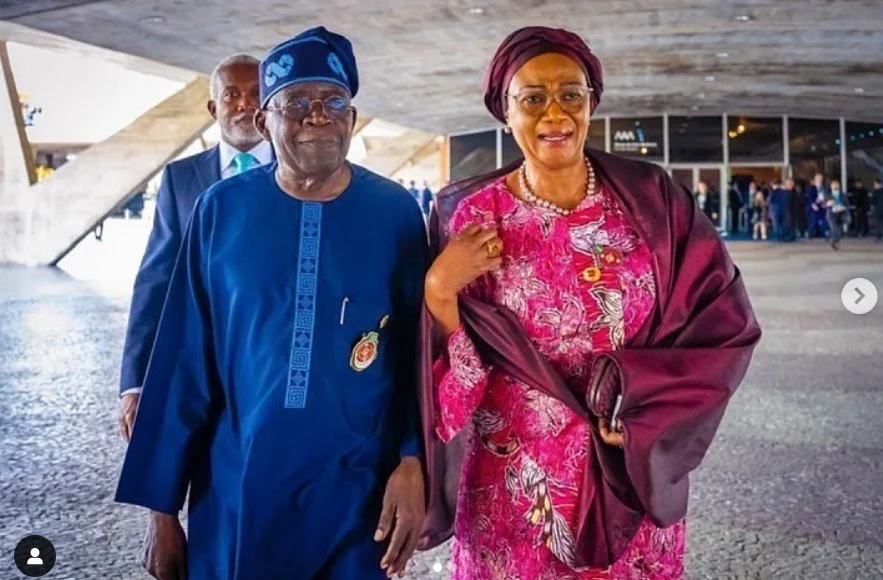
President Bola Tinubu is scheduled to undertake a two-day state visit to the United Kingdom from March 18 to 19, 2026, following an official invitation from King Charles III. The visit was confirmed on Sunday through a post on the official X account of the British royal family, which stated that Tinubu and his wife, Oluremi Tinubu, will be formally hosted by King Charles and Queen Camilla at Windsor Castle. “The President of the Federal Republic of Nigeria, Mr Bola Ahmed Tinubu, accompanied by the First Lady, Mrs Oluremi Tinubu, has accepted an invitation from His Majesty the King to pay a state visit to the United Kingdom from Wednesday, 18th March, to Thursday, 19th March, 2026. The King and Queen will host the state visit at Windsor Castle,” the statement read. The Special Adviser to the President on Information and Strategy, Bayo Onanuga, highlighted that this will be the first state visit by a Nigerian leader to the UK in 37 years. He said, “First state visit of a Nigerian leader to the UK in 37 years confirmed. President Tinubu and First Lady Remi Tinubu to be hosted by King Charles and Queen Camilla from 18th March to 19th March, 2026.” The last Nigerian head of state to undertake a state visit to the UK was former Military President General Ibrahim Babangida in 1989, who was hosted by the late Queen Elizabeth II for four days. During that visit, Gen Babangida conferred Nigeria’s highest national honour, the Grand Commander of the Federal Republic, on the late monarch. Previous Nigerian leaders, including Gen Yakubu Gowon and President Shehu Shagari, also conducted state visits to the UK and were hosted by Queen Elizabeth II. State visits are often described as instruments of soft-power diplomacy, combining ceremonial hospitality with efforts to strengthen international relations. Tinubu and King Charles, who both assumed office in May 2023, have met on several occasions prior to the planned visit. In November 2023, the Nigerian president met the monarch in Dubai, United Arab Emirates, ahead of the 28th United Nations Climate Change Conference (COP28), calling the engagement an important step toward deepening bilateral relations. In September 2024, King Charles also received Tinubu at Buckingham Palace during a private meeting.

ab-1.avif

3min3610
Tech entrepreneur and SpaceX founder Elon Musk has revealed that the company has redirected its main efforts toward building what he described as a “self-growing city” on the Moon, a target he believes could be achieved within the next decade. Musk made the announcement on Monday in a post shared on his X account. He explained that lunar missions allow for much faster progress than expeditions to Mars, largely due to shorter travel times and more frequent launch opportunities. According to Musk, missions to the Moon can be launched approximately every 10 days and take about two days to reach their destination. In contrast, journeys to Mars are only possible when the planets align every 26 months and typically require around six months of travel. “For those who may not be aware, SpaceX has already shifted its focus to building a self-growing city on the Moon, which we could potentially accomplish in under 10 years,” Musk wrote. “A similar effort on Mars would take more than 20 years.” He added that the company’s long-term objective remains unchanged: to expand human life and consciousness beyond Earth. Musk identified planetary alignment as a key logistical limitation affecting Mars missions. He noted that the ability to launch frequently to the Moon allows SpaceX to test, refine, and scale its technologies more rapidly. Despite the change in priority, Musk said SpaceX has not abandoned its plans for Mars. He stated that efforts to establish a settlement on the Red Planet could begin within the next five to seven years, although he emphasised that safeguarding humanity’s future makes lunar development the more immediate focus. SpaceX’s ambitious timelines for Mars exploration have long been met with scepticism, as Musk has revised his projections several times over the years. In 2016, he suggested humans could reach Mars by 2024, following an earlier estimate in 2011 that placed the timeline at between 10 and 20 years. The renewed emphasis on the Moon aligns with broader changes in US space policy. Under an executive order issued late last year, President Donald Trump reaffirmed plans for the United States to return astronauts to the Moon by 2028 through NASA’s Artemis programme, in which SpaceX plays a significant role as a contractor. The directive marked a shift from earlier ambitions to send astronauts to Mars within a single presidential term. NASA currently aims to land astronauts on the Moon’s surface in mid-2027 as part of the Artemis III mission, though the schedule has been delayed multiple times. Industry analysts caution that further setbacks are possible, citing the incomplete lunar lander being developed by SpaceX.

ab-1280x720.jpg

2min7120
Senegalese police have announced the arrest of 14 individuals and the dismantling of a paedophile network operating across Senegal and France. According to a police statement, all those arrested are Senegalese nationals and are alleged to have belonged to a transnational criminal organisation that had been active since 2017. The suspects face accusations including organised paedophilia, pimping, rape of minors under the age of 15, sodomy, and the deliberate transmission of HIV/AIDS. Investigators allege that the group repeatedly coerced boys into engaging in unprotected sexual acts with men, most of whom were reportedly HIV-positive, and recorded the abuse. Police said four of the suspects acted under the direction of a French national who was arrested in France in April 2025. The arrangement allegedly involved financial transfers in exchange for carrying out the crimes. The suspects were brought before a judge on Friday following coordinated searches conducted in several districts of Dakar as well as in Kaolack, a city located about 200 kilometres southeast of the capital. In a statement released on Sunday, police said the raids led to the seizure of items believed to be connected to the alleged offences. The Criminal Investigations Division described the operation as a major breakthrough against a cross-border organised crime network with members primarily based in Senegal and France. Authorities said the operation was carried out in close cooperation with French law enforcement, including the involvement of a delegation of French officers. Police have vowed to continue efforts to identify and dismantle similar criminal networks and have provided a toll-free hotline for members of the public to report relevant information.

ab-1280x855.avif

5min5450
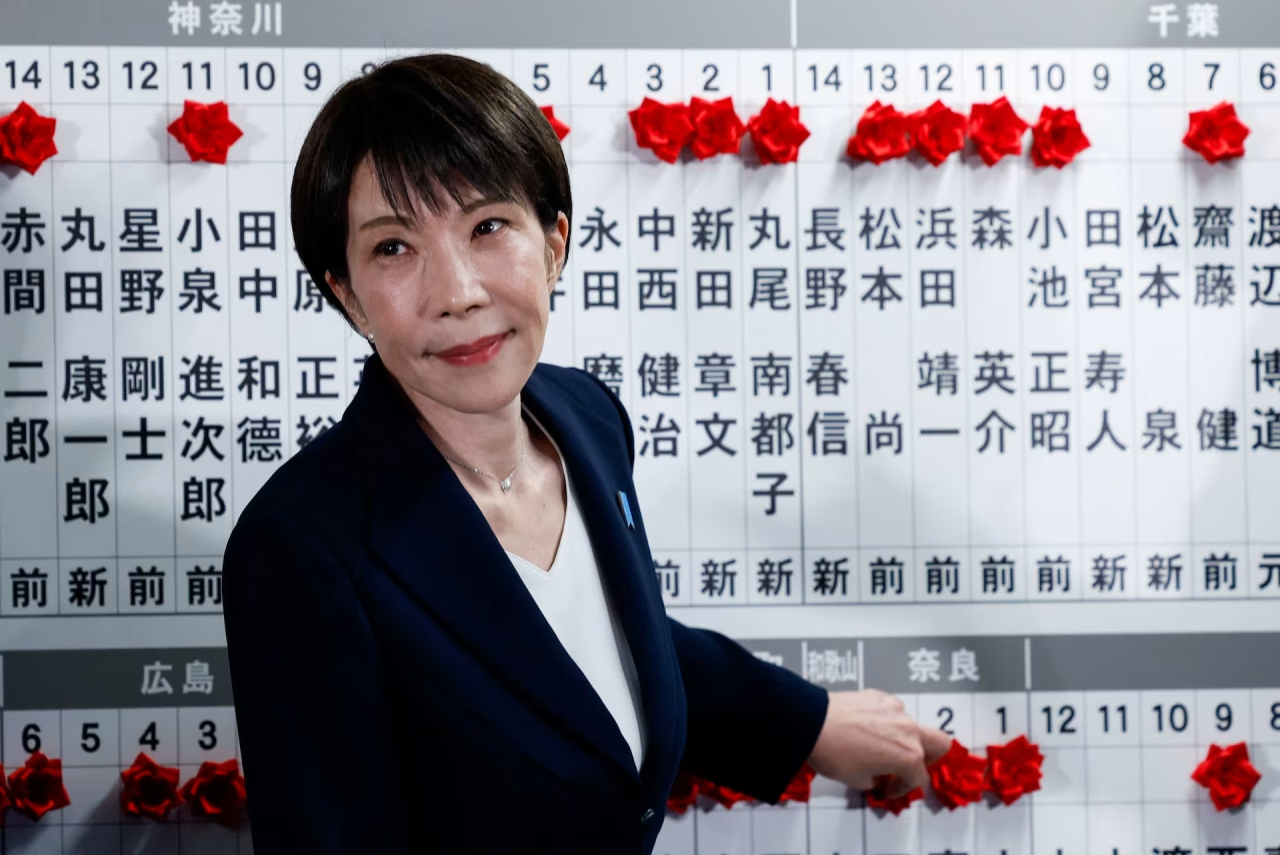
Japanese equities climbed to a record high on Monday following a decisive election victory by Prime Minister Sanae Takaichi’s Liberal Democratic Party (LDP). In Sunday’s poll, the LDP won 316 of the 465 seats in the lower house, marking the first time since 1947 that a single party has secured a two-thirds majority under Japan’s current parliamentary system. Its coalition partner, the Japan Innovation Party, captured an additional 36 seats, bringing the alliance’s total to 352. The landslide result represents a significant political win for Takaichi, who now faces the task of reviving Japan’s sluggish economy and addressing mounting cost-of-living pressures. Markets reacted swiftly to the outcome. The Nikkei 225 index surged more than 5 percent in early trading on Monday, briefly surpassing the 57,000 mark for the first time. Although it later pared some gains, the index closed up 3.9 percent at a record 56,363.94. The LDP’s commanding mandate is expected to allow Takaichi to push forward her pro-business agenda with minimal resistance from opposition parties. Speaking to reporters on Sunday, she said her government would pursue a “responsible yet aggressive” fiscal approach and confirmed that there would be no cabinet reshuffle, noting that the current team was appointed less than four months ago. Japan’s first female prime minister called the snap election shortly after taking office in October. Her victory contrasts sharply with the tenure of her two immediate predecessors, during which the LDP lost its parliamentary majority, faced corruption allegations, and struggled to manage rising living costs. Market analysts believe Takaichi’s policies could provide momentum for the Japanese economy. Investment analyst Yuka Marosek said measures such as stimulus spending, tax adjustments and deregulation could further strengthen an already positive market trend. Chris Scicluna, head of research at Daiwa Capital Markets Europe, noted that equity investors have long backed Takaichi’s economic vision. He said confidence is driven by her commitment to end austerity, increase investment to support growth, and prioritise strategic sectors including defence and artificial intelligence. However, Scicluna added that investors in Japanese government bonds and the yen remain cautious, citing concerns over how the government plans to finance increased spending given Japan’s substantial public debt. Japan’s historically low inflation has made households particularly sensitive to recent increases in living costs. During the election, voters told reporters they were concerned about rising prices for food and housing. The economy also continues to face structural challenges from an ageing population, a shrinking workforce and growing social welfare expenses. Takaichi has pledged to cut taxes and stimulate growth through higher public spending, though critics warn that without clear funding sources, such policies could heighten risks in an already fragile economic environment. As her party’s victory became clear, Takaichi said the government carried a heavy responsibility to deliver on its campaign promises. The LDP had lost its majority under former prime minister Shigeru Ishiba, and Takaichi relied heavily on her personal appeal to restore the party’s dominance. She has strengthened support among conservative voters by revisiting long-standing priorities such as constitutional revision and the promotion of traditional values, while also resonating with younger voters in an unusually personal way. International reaction followed swiftly. US President Donald Trump congratulated Takaichi on her victory, describing it as an “honor” to have endorsed her ahead of the election and pledging continued support for Japan. Her early tenure has already drawn attention abroad. Just a week after assuming office, Takaichi hosted Trump during a visit to Japan, marking her first major diplomatic engagement and underscoring her intent to strengthen ties with key allies.

Tech & Tools Desk9 February 2026
Tax-illustration-1.webp

3min5740
Nigeria’s new tax laws have moved beyond speculation and debate. They are now fully in effect and firmly established. President Bola Tinubu deserves recognition for undertaking a difficult but necessary reform of a tax system that for years placed excessive pressure on salary earners while allowing inefficiencies and abuses to persist. At a moment when tough decisions were required to stabilise the economy and shield the most vulnerable, the administration chose structural reform over political convenience. That choice, now reflected in real outcomes, is increasingly proving to be timely and people-centred. From the outset, however, the tax reforms were met with sustained misinformation. Opposition figures and social media commentators, many lacking a sound grasp of tax policy, spread fear to score political points. Nigerians were warned that their earnings would shrink, that take-home pay would fall, and that workers would be burdened with heavier taxes. PAYE was portrayed as a fresh penalty rather than a restructured system designed to offer relief. These claims gained traction not because they were accurate, but because anxiety often spreads faster than facts online. Now, reality is beginning to replace speculation. As January salary payments were received, Nigerians started sharing their own experiences—personal accounts rather than official assurances. Many salary earners reported that despite adjustments to gross income, their net pay increased. PAYE deductions fell. Overall tax payments declined. From verified social media accounts to private messages expressing appreciation to those who clarified the reforms early, the pattern has become clear: a significant number of workers are paying less tax, not more. As several analysts have pointed out, many Nigerians were never at risk of being adversely affected. The new tax framework is intentionally designed to protect low- and middle-income earners and to promote equity. Gradually, the uproar is subsiding, and the figures are telling a story very different from the narrative initially circulated. Beyond the immediate relief being felt, the reforms represent a broader commitment to long-term nation-building. They aim to establish a fairer, more transparent, and sustainable tax system one that strengthens public finances, supports development, and lays a stronger foundation for a more stable and prosperous Nigeria.

ab.png

2min7470
The Government of Ghana has recalled its High Commissioner to Nigeria, Mohammed Ahmed, amid allegations connecting him to electoral misconduct during a party primary election in Ghana. The decision, directed by President John Mahama, was communicated in a presidential statement released on Saturday. The recall took immediate effect, with the Ministry of Foreign Affairs tasked with handling all required diplomatic and administrative procedures. The action follows claims of voter inducement and vote-buying during the National Democratic Congress (NDC) parliamentary primary in the Ayawaso East Constituency. At the time of the election, Ahmed was serving as Ghana’s envoy to Nigeria and was also a candidate in the contest. Reports from the primary alleged that items including television sets and food supplies were distributed to delegates, which critics described as inducements. Ahmed has denied any wrongdoing, stating that the items were acts of goodwill and not meant to influence voters. In explaining the recall, the Presidency said the decision was taken to uphold the ethical standards expected of public officials and to prevent any perception of impropriety. The government also pointed to concerns over a potential violation of Ghana’s Code of Conduct for political appointees, which regulates the political involvement of serving officials. The Ayawaso East primary was conducted to select the NDC’s candidate for a parliamentary by-election following the death of the sitting Member of Parliament. Ahmed emerged as the winner, securing the highest number of votes among the contestants. Meanwhile, the NDC has announced the launch of an internal investigation into allegations of inducement and other irregularities linked to the primary. Party officials said the inquiry is intended to safeguard the credibility and integrity of the party’s internal democratic processes.

Ifeanyi Enukorah8 February 2026
National-Online-Safety.png

1min6730
How confident are you when it comes to online safeguarding? To mark National Online Safety Day (Tuesday, 10th February), Safeguarding Scenarios is offering a free national survey to explore our attitudes and confidence in keeping children safe online. Pause. Reflect. Act. This isn’t a test with a “right” or “wrong” answer. Instead, it’s a 2-minute real-life scenario designed to help you pause and reflect on the complexities of the digital world. [Click here to take the scenario] 👉 https://safeguardingscenarios.com/national-online-safety-day-scenario/ Important Dates National Online Safety Day: Tuesday, 10th February Closing Date: Midnight, Tuesday, 17th February 2026 Whether you are an educator, a parent, or a student, your perspective helps build a clearer picture of digital safety today. Please take two minutes to participate and share the link with your colleagues and networks. For more information on these scenarios, visit www.safeguardingscenarios.com

aa-10.jpg

3min4370
Operatives of the National Drug Law Enforcement Agency (NDLEA) have arrested a 62-year-old Lagos-based businessman, Nwabueze Izueke, at the Mallam Aminu Kano International Airport, Kano State, for attempting to traffic cocaine to China. Izueke was intercepted during the outward clearance of passengers travelling to China via Addis Ababa on Ethiopian Airlines flight ET940 on Saturday, January 31, 2026. A statement issued on Sunday by the NDLEA spokesperson, Femi Babafemi, said the suspect was subjected to a body scan, which confirmed that he had ingested illicit drugs. While placed under observation, Izueke reportedly excreted 95 jumbo-sized pellets of cocaine in seven batches. The drugs, classified as Class A substances, weighed a total of 1.589 kilogrammes. According to Babafemi, the suspect, who claimed to be involved in clothing and auto spare parts business in Lagos, admitted that he resorted to drug trafficking to raise funds to complete a house he is building in his village, Iwollo, in Enugu State. The arrest, Babafemi said, was part of a series of nationwide NDLEA operations that led to multiple seizures and arrests across several states. In Abuja, NDLEA operatives recovered 627.7 kilogrammes of skunk, a strain of cannabis, from a makeshift warehouse at Fums Plaza, Kubwa. Attempts to smuggle methamphetamine concealed in MP3 speakers from Enugu to Abuja and Kaduna were also foiled, leading to the arrest of four suspects. A follow-up operation in Zuba, FCT, resulted in the arrest of one suspect, Ebube Okeke, while three others Evans Ugwu, Mohammed Eze Arinze and Friday Michael were arrested in Kaduna when they attempted to collect another consignment. In Taraba State, NDLEA officers intercepted methamphetamine concealed in packs of yoghurt, while in Oyo State, several arrests were recorded, including that of a drug kingpin operating a facility producing synthetic cannabis. Babafemi added that large quantities of tramadol, skunk and other illicit drugs were also seized during operations in Kwara, Imo, Ondo, Lagos and Enugu states. In Ibadan, a suspect, Adeniyi Adeola, also known as Prince, was arrested with thousands of ampoules of pentazocine injection and capsules of tramadol, while another suspected drug kingpin, Jimoh Nurudeen, was arrested alongside an accomplice at Badeku, where a synthetic cannabis production facility was uncovered. In Imo State, a couple was arrested with 203 kilogrammes of skunk, while NDLEA operatives in Ondo State recovered 420 kilogrammes of the same substance concealed in a bush at Ikun Akoko.

aa-3.webp

3min6560
A teacher from Yobe State, Gambo Lawan, has been named Best Teacher in the North-East at the 2026 National Teachers Award Ceremony organised by the Federal Ministry of Education. Lawan, who teaches at Yerimaram Government Day Junior Secondary School in Potiskum, was announced as the regional winner at an event held at the Presidential Villa, Abuja. She received a N25 million cash prize at the ceremony, which recognised teachers for exceptional excellence, dedication and innovation in classroom practice, placing her among the top award recipients nationwide. Officials of the Yobe State Universal Basic Education Board (YSUBEB) described the selection process as rigorous, transparent and strictly merit-based, with strong emphasis on professionalism, classroom innovation and measurable learning outcomes. Speaking exclusively to our correspondent on Sunday, Lawan attributed her success to years of dedication and passion for teaching. “I am deeply grateful to God for this recognition. It is the result of hard work, patience, consistency and love for the profession. This award has motivated me to do even more for my students,” she said. She admitted that the announcement came as a surprise, describing the moment as overwhelming. “I did not expect it, but I trusted that God’s will would prevail. This is a great honour, not just for me, but for Yobe State and my school,” she added. Lawan noted that the award had further strengthened her commitment to the education sector. “This recognition places a greater responsibility on me. I am determined to work harder, mentor younger teachers and continue to instil knowledge, values and discipline in my students,” she said. Reacting to the achievement, the Executive Chairman of YSUBEB, Umaru Hassan-Babayo, said Lawan’s emergence had projected Yobe State positively at the national level. “Her success highlights Yobe State’s growing prominence as a key stakeholder in western education. It reflects the investments being made in education and human capital development across the state,” he said, adding that the award validates the state government’s commitment to supporting teachers and improving learning outcomes in public schools. In addition to the N25 million cash prize, Lawan also received a tertiary education scholarship in recognition of her outstanding performance. The honour comes months after three Yobe State students Nafisa Abdullahi, Rukayya Muhammad-Fema and Hadiza Kashim-Kalli emerged winners at the 2025 TeenEagle Global Finals in London, where they excelled in spelling bee contests, writing challenges and knowledge quizzes.