Blog - Edupreneur Select

Bring to the table win-win survival strategies to ensure proactive domination. At the end of the day, going forward, a new normal that has evolved from generation.
FairMoneyY.jpg

4min7410
The Managing Director of FairMoney Microfinance Bank, Henry Obiekea, has stated that collaboration between banks and fintechs is crucial to deepening financial inclusion and advancing the Federal Government’s $1tn economic growth target. In a thought leadership article released on Monday, Obiekea highlighted that combining the financial strength of traditional banks with the agility of fintechs can bring more Nigerians into the formal financial system. He said, “Nigeria is at a defining point in 2026. Following years of bold macroeconomic reforms, including foreign exchange unification and structural adjustments, the country is moving from stabilisation to expansion. With the Central Bank restoring confidence in the naira and foreign reserves reaching a five-year high of over $45bn, the next phase of growth depends on how effectively Nigerians can engage with the formal financial sector. “Technology-driven banking is central to this transition. Commercial banks provide balance sheet strength, regulatory depth, and long-term capital essential for national development. Yet, in a nation of over 220 million people, physical access alone cannot deliver financial inclusion at scale.” Obiekea emphasised the role of mobile-first and digital financial services in bridging the inclusion gap: “Licensed microfinance banks and other regulated digital institutions extend banking beyond physical branches, bringing millions into the formal economy. Achieving the $1tn GDP target requires efficient capital flow. In the first quarter of 2025, Nigeria recorded over N295tn in electronic payment transactions. Secure and fast financial infrastructure supports commerce, strengthens trade, and boosts productivity.” He also highlighted the impact of technology on Micro, Small, and Medium Enterprises (MSMEs): “Using alternative data responsibly allows small-ticket working capital loans to reach businesses that need them, building a pipeline of enterprises that can mature into larger corporate clients. Digital financial services also enhance public revenue mobilisation through transparent transactions and expanded tax collection, supporting fiscal sustainability.” Obiekea commended the Central Bank of Nigeria’s Open Banking framework, set for phased rollout in 2026, noting that it provides consistent regulatory oversight while enabling secure data sharing, allowing customers’ financial histories to move seamlessly across institutions. “At FairMoney Microfinance Bank, we see this as a social contract. NDIC insurance and clear dispute resolution mechanisms give customers the confidence to participate actively in the economy. The future of Nigerian banking lies in structural harmony: traditional banks bring depth and stability, while fintechs provide reach, speed, and accessibility. Together, they transform financial access into economic resilience, ensuring every Nigerian can contribute to our shared $1tn future,” he concluded.

DISABILITY.webp

3min7120
Nigerian-born tech innovator Hanu Agbodjie has donated AI-powered smart glasses to hearing-impaired Nigerians, demonstrating his commitment to leveraging technology for social inclusion and expanding access to opportunities for persons with disabilities. The first recipients of the initiative are Joylyn Oge Jacobson, a Lagos-based video production assistant and content creator, and Sodiq Olopade, a student at Bayero University, Kano. They received the devices in Lagos, alongside their families. The smart glasses are designed to assist people with hearing impairments by capturing spoken conversations and surrounding sounds within a 270-degree range. The AI technology transcribes speech in real time, displaying readable text directly on the lenses. This enables users to follow conversations without relying on sign language interpreters or lip-reading. The glasses feature an ergonomic, lightweight design for comfortable all-day use, operate via Bluetooth, and connect to a mobile app that allows users to customise settings and receive software updates. Agbodjie described the initiative as more than a donation of devices, saying it represents the potential of technology to transform lives: “Today shows what’s possible when technology meets purpose. AI offers an unprecedented opportunity to create a world where disability does not define limits. Technology can restore dignity, independence, and access to possibilities. This future begins with Joylyn and Sodiq.” For Joylyn, who works behind the scenes in the creative industry, hearing difficulties have made everyday interactions challenging. “I miss out on instructions, jokes, and simple conversations. These glasses allow me to see conversations as they happen, changing how I work, interact, and feel confident. I’m so happy,” she said. Sodiq said the device has had a transformative effect on his academic and social life. “Hearing challenges affect lectures, discussions, and friendships. These glasses help me follow conversations without embarrassment or dependence on others. Communication has become much easier,” he said. Family members praised the impact, noting the emotional and social challenges often associated with hearing impairment. Christiana, Joylyn’s cousin, said: “We’ve watched Joylyn struggle quietly for years. This is more than a device; it restores her freedom and confidence.” Medical professionals also endorsed the innovation. Dr. James Nnowaluem, who coordinated the outreach, called the AI-powered glasses a major advancement in assistive technology. “Hearing loss affects mental health, productivity, and social connection. This device bridges communication gaps in real time and greatly improves quality of life,” he said.  

Tech & Tools Desk13 January 2026
5-STATEE.jpg

4min5480
Fifteen states plan to spend over N10tn on infrastructure in 2026, marking a major fiscal effort to improve roads, schools, hospitals, and public utilities, according to an analysis of their budgets. The states, including Lagos, Akwa Ibom, Enugu, Anambra, Kano, Imo, Yobe, Ebonyi, Oyo, Kaduna, Ekiti, Osun, Ondo, Edo, and Plateau, have collectively earmarked N10.7tn for capital expenditure this year. Governors presented their budgets to state legislatures between November 2025 and January 2026, with approvals already signed. The focus on capital spending aims to strengthen human capital, enhance public services, and stimulate regional economies, though results will depend on how efficiently funds are deployed. Nigeria continues to face significant infrastructure deficits, estimated at about $100bn annually and projected to reach $878bn by 2040, according to credit rating agency Augusto & Co. Ebonyi State leads in prioritising infrastructure, allocating N749.49bn, or 84.7 per cent of its N884.87bn total budget. Imo State follows with N1.2tn, 83.4 per cent of its N1.44tn budget, for capital projects. Enugu State set aside N1.29tn, or 80 per cent of its N1.62tn budget, for roads, schools, and hospitals. Anambra plans N595.3bn (77.7 per cent of N766bn), and Akwa Ibom allocated N1.16tn (73.7 per cent of N1.584tn) to similar projects. Most states remain heavily dependent on federally shared revenue, as internally generated revenue is limited. Funding for capital projects will largely rely on a mix of loans, bond issuances, grants, capital receipts, and public–private partnerships. Analysts note that leveraging these alternative sources is essential to ensure infrastructure spending results in tangible improvements. Northern state Yobe will devote N291.9bn (56.6 per cent of N515.53bn), while Oyo State in the South-West plans N505bn (56.6 per cent of N892bn) for capital projects. Osun State set aside N388.38bn (55 per cent of N705bn), and Ekiti State will invest N193.7bn (46.6 per cent of N415.57bn). Lagos State, despite having the largest total budget of N4.237tn, will allocate N1.23tn (29.2 per cent) for capital projects, reflecting a balanced approach between recurrent spending and development. Kaduna State earmarked N698.9bn (70.9 per cent of N985.9bn), with education taking a quarter of the allocation. Edo State plans N637bn (67.8 per cent of N939.85bn), Kano N934.6bn (63.3 per cent of N1.477tn), Plateau N501.09bn (61.3 per cent of N817.51bn), and Ondo N303.58bn (57.9 per cent of N524.41bn) for infrastructure. Economists emphasise the need for states to focus on areas of comparative advantage such as agriculture, manufacturing, tourism, logistics, and services. Dr Ayodeji Ebo, Managing Director of Optimus by Afrinvest, noted that attracting investment requires reliable infrastructure, predictable regulation, accessible land, and stable tax policies. He added that stronger public-private partnerships and regional collaboration can unlock capital and efficiency, reducing dependence on borrowing. “Long-term fiscal sustainability will depend not on higher transfers or more debt, but on productive local economies, broader tax bases, disciplined spending, and strategic collaboration,” Dr Ebo said.

James Obasi13 January 2026
PENSIONNN.jpg

2min6840
The 2026 Appropriation Bill allocates N1.38tn for pensions, gratuities, and retirement benefits across Federal Government agencies, security services, parastatals, and universities. Under the breakdown, the Office of the Head of Civil Service is set to receive N94.54bn for civilian pensions, covering gratuities, running costs, and unfunded liabilities, with civil service pensions alone accounting for N60.34bn. Arrears from the 2024 pension adjustments are estimated at N30.58bn. Military pensions and gratuities have been earmarked N486.04bn, including provisions for expected retirees (N130.38bn), pensions and gratuities (N237.25bn), death benefits (N98.53bn), and administrative expenses. Additional allocations cover medical retirees and arrears from January 2019 to December 2021. Security agencies are also included, with the Department of State Security allocated N28.61bn, the Nigeria Intelligence Agency N23.54bn, police pensions N18.53bn, and the Customs, Immigration and Prisons Pension Office N18.41bn. Parastatals and universities are set to share N207.81bn, while the National Pension Commission will receive N427.04bn for gratuities, pension protection, and consequential adjustments. Other provisions include benefits for former heads of service, retired professors, EFCC retirees, and group life assurance across all MDAs, bringing service-wide votes to a total of N2.19tn. These pension allocations represent a major component of the 2026 budget, underscoring the federal government’s commitment to meeting obligations to retirees and addressing arrears and unfunded liabilities.

NERCCC.webp

7min7060
Electricity distribution companies nationwide billed customers a total of N255.19bn for power supplied in October 2025 but recovered only N210.92bn, resulting in substantial losses from unbilled energy and unpaid bills that continue to weigh on the power sector’s liquidity. The figures were contained in the latest commercial performance factsheet issued by the Nigerian Electricity Regulatory Commission. According to the report, the 11 distribution companies received electricity valued at N303.85bn from the national grid in October, an 8.73 per cent increase from September. However, the value of energy billed declined by 5.65 per cent to N255.19bn, indicating that not all power received was converted into billable revenue. This created a shortfall of N48.66bn, representing electricity delivered but not billed to customers during the month. Consequently, industry-wide billing efficiency fell to 83.99 per cent, down 2.45 percentage points from September, meaning more than 16 per cent of energy supplied to DisCos was not captured in customer bills. Despite the drop in billing efficiency, revenue collection improved. Total collections rose by 7.48 per cent month-on-month to N210.92bn, pushing collection efficiency up to 82.66 per cent from 81.26 per cent in September. The commission noted that cases where collection efficiency exceeded 100 per cent were largely driven by the recovery of outstanding debts from previous months. Nevertheless, significant revenue gaps persisted. Of the N255.19bn billed in October, DisCos failed to collect N44.27bn, adding to losses from unbilled energy. Combined, these weaknesses resulted in a recovery efficiency of 82.49 per cent, reflecting the proportion of allowed revenue actually realised by operators. NERC’s data showed that while the allowed average tariff for the month stood at N116.25 per kilowatt-hour, the actual average collection dropped to about N95.85/kWh, a 1.23 per cent decline from September. This growing disparity between approved tariffs and realised revenue continues to strain cash flows across the electricity value chain, affecting remittances to the Nigerian Bulk Electricity Trading Plc and other market participants. Performance varied widely among the DisCos. Ikeja Electricity Distribution Company recorded the strongest results, billing N41.26bn out of N43.72bn worth of energy received, for a billing efficiency of 94.36 per cent. It collected N42.11bn, surpassing its billings and lifting collection efficiency to 102.07 per cent, while recovery efficiency reached 108.17 per cent. Eko DisCo also ranked among the top performers, despite a slight decline in billing efficiency to 95.71 per cent after billing N40.29bn of the N42.10bn received. It collected N37.67bn, translating to a collection efficiency of 93.50 per cent and a recovery efficiency of 101.65 per cent. Abuja DisCo received electricity valued at N46.32bn but billed N38.93bn, resulting in a billing efficiency of 84.05 per cent, a sharp drop from the previous month. It collected N34.39bn, posting a collection efficiency of 88.35 per cent, with recovery efficiency at 88.30 per cent. Port Harcourt DisCo billed 80.32 per cent of the energy it received, slightly below September’s level, but improved its collection efficiency to 87.07 per cent, lifting recovery efficiency to 82.97 per cent. Several northern DisCos continued to record weak commercial performance. Jos DisCo posted the poorest results, collecting just N5.26bn out of N13.50bn billed, leaving collection efficiency at 38.98 per cent and recovery efficiency at 42.28 per cent, despite a marginal improvement in billing. Kaduna DisCo improved its billing efficiency to 84.62 per cent but collected only 43.03 per cent of billed revenue, with recovery efficiency at 43.70 per cent. Enugu DisCo saw a decline in billing performance, billing N20.95bn out of N26.11bn received for a billing efficiency of 80.23 per cent. Collection efficiency improved to 80.74 per cent, although recovery efficiency slipped to 77.67 per cent. Ibadan DisCo recorded one of the strongest gains in collections. While billing efficiency edged down to 73.51 per cent, collection efficiency jumped to 84.49 per cent, with N22.56bn recovered. Recovery efficiency rose to 74.16 per cent. Benin, Yola, and Kano DisCos remained in the mid-range for recovery performance. Benin DisCo billed N19.84bn out of N30.38bn received, leaving billing efficiency at 65.32 per cent, while recovery efficiency stood at 65.16 per cent. Kano DisCo achieved a high billing efficiency of 98.05 per cent but collected only 58.67 per cent of its billings, resulting in a recovery efficiency of 68.65 per cent. Yola DisCo recorded billing efficiency of 66.03 per cent and collection efficiency of 69.35 per cent. The October results come amid ongoing regulatory and structural reforms aimed at strengthening the financial sustainability of Nigeria’s power sector. NERC has repeatedly emphasised the need for improved metering, reduced energy theft, and stricter enforcement of commercial performance benchmarks. Despite recent tariff adjustments and reforms under the amended Electricity Act, the data indicate that persistent challenges in energy accounting, customer enumeration, and revenue protection continue to drain billions of naira from the sector each month, raising concerns about the long-term stability of the electricity market.

shipping.jpg

5min6920
Maritime agents on Monday shut down operations at the Apapa office of Mediterranean Shipping Company following a recent increase in freight charges, warning that the move would worsen inflationary pressures in an already fragile economy. The action was carried out by agents operating across the maritime sector, including members of the African Association of Professional Freight Forwarders and Logistics of Nigeria and the Association of Nigeria Licensed Customs Agents, Western Zone. The agents gathered in large numbers at the shipping company’s office, insisting that operations remain suspended from 6 a.m. on Tuesday until the charges are reversed to previous levels. According to the protesting agents, the rising accumulation of port-related fees is steadily driving up import costs, with the final burden expected to fall on consumers. Speaking after the shutdown, the National President of the African Association of Professional Freight Forwarders and Logistics of Nigeria, Frank Ogunojemite, blamed the Nigerian Shippers’ Council for what he described as a failure to adequately regulate the sector. He warned that the council’s office could also be shut if the issue remains unresolved. Ogunojemite said agents had already written to the Presidency and alleged compromises within the regulatory framework, adding that further actions would be considered after consultations. He stressed that unchecked increases across the industry were fuelling inflation and placing unnecessary strain on businesses and consumers. Meanwhile, the Sea Empowerment Research Centre described the ongoing industrial actions as a reflection of deeper structural problems within Nigeria’s port cost system. In a position paper signed by its Head of Research, Eugene Nweke, the group acknowledged that concerns over arbitrary and excessive tariff increases were valid but cautioned that protest methods should align with global best practices in industrial relations. Nweke, a former president of the National Association of Government Approved Freight Forwarders, argued that the industry’s core challenge lies in weak regulation and poor stakeholder engagement. He called for intelligent advocacy, stronger regulatory accountability, and institutional reforms rather than disruptive shutdowns. Also reacting, the Ports and Terminal Multiservice Chapter Chairman of the National Association of Government Approved Freight Forwarders, Thomas Alor, criticised the freight hike and faulted the timing of a proposed stakeholders’ meeting, which he said was scheduled during the holiday period when most participants were unavailable. He insisted that shipping companies must clearly justify any increase through proper consultation. A source familiar with developments within the freight forwarding community also raised concerns over what was described as poor container refund policies, alleging prolonged delays and operational bottlenecks. The source questioned the basis for higher charges amid unresolved refund issues and said the matter would be escalated to the Nigerian Shippers’ Council. The Western Zone Coordinator of the Association of Nigeria Licensed Customs Agents, Femi Anifowose, warned that unchecked shipping charges and persistent port inefficiencies were undermining trade facilitation and intensifying inflation in Nigeria’s import-dependent economy. He also accused shipping firms of failing to demonstrate adequate social responsibility despite benefiting significantly from the country’s trade activities. In response, a source at the Nigerian Shippers’ Council said discussions were ongoing and assured that stakeholders would be engaged soon to address the concerns. On his part, the MSC Africa Regional Controller for Finance and Administration, Jesse Chege, said the freight increase had been under discussion with the Nigerian Shippers’ Council for about two years. He explained that rising operating costs informed the decision and noted that the revised charges received regulatory approval in December 2025.

trump1-1-1280x853.avif

2min5120
U.S. and UK financial stocks retreated on Monday after President Donald Trump called for a 10 per cent cap on credit card interest rates, a proposal that could pressure a major source of bank revenue. Shares of leading U.S. banks moved lower, with JPMorgan Chase down 2.5 per cent, Bank of America falling 1.6 per cent, Citigroup sliding 3.7 per cent, and Wells Fargo easing 1.5 per cent. In the UK, Barclays dropped 2.2 per cent, touching its lowest level in nearly a month. Consumer finance firms recorded steeper losses. Synchrony Financial, Bread Financial, and Capital One declined between 8 per cent and 11 per cent, while American Express fell 3.8 per cent. Payment companies Visa and Mastercard also slipped by 1.8 per cent each. Analysts cautioned that the proposal, which suggests implementing the cap from 20 January, faces significant legal and legislative hurdles. They noted that any interest rate limit would likely require Congressional approval and could be challenged if pursued through executive action. Market participants also warned that a cap on credit card rates could prompt banks to tighten lending standards, reduce credit limits, or close accounts for higher-risk borrowers, potentially pushing consumers toward alternative and more expensive lending options. Data from the Federal Reserve shows that average U.S. credit card interest rates stood at 20.97 per cent in November. Attention is now turning to upcoming earnings reports, as major U.S. banks begin releasing fourth-quarter results this week. JPMorgan is set to report first, followed by Bank of America, Citigroup, and Wells Fargo in the coming days.

Tech & Tools Desk13 January 2026
bank.jpg

7min5630
Three bank mergers are expected early this year as financial institutions race to meet the Central Bank of Nigeria’s revised minimum capital requirements ahead of the 31 March 2026 recapitalisation deadline. This outlook was presented by rating firm DataPro in its 2026 Banking Sector Prospects in Nigeria, which also outlined key risks facing the industry. By the end of 2025, most tier-1 banks had already met the new capital threshold, with several others announcing compliance at the start of the new year. This has intensified regulatory and market pressure on smaller lenders to strengthen their balance sheets. Providing insight into the sector’s 2026 outlook, DataPro’s Enterprise Risk Management analyst, Idris Shittu, noted that while major banks are largely compliant, tier-2 institutions face mounting pressure. He explained that three major mergers are likely by early 2026 as banks scramble to meet the recapitalisation deadline. According to him, the regulatory push has triggered heightened merger and acquisition activity, but it also introduces significant risks. These include post-merger integration challenges such as aligning IT systems, blending organisational cultures, and managing the transfer of non-performing loans—issues that could strain newly merged entities, particularly smaller banks. He added that the tight deadline has prompted intense internal strategy sessions focused on deal execution and risk management. Shittu further stated that the banking sector will confront three major threats in the new year, requiring increased agility and operational resilience. These include tighter regulation, with a high Cash Reserve Ratio continuing to constrain liquidity; capital pressure from recapitalisation-driven consolidation, which raises execution and integration risks; and rapid technological disruption from fintech innovation, pushing traditional banks to accelerate digital transformation to remain competitive. He projected that banks would continue to prioritise fee-based income over conventional lending due to the 45 per cent Cash Reserve Ratio for commercial banks, which effectively locks up nearly half of deposit funds and limits liquidity. On fintech competition, Shittu observed that technology is reshaping Nigeria’s banking landscape, with players such as Moniepoint and Opay rapidly gaining market share, particularly among SMEs and retail customers. In response, he said 2026 could mark a shift as banks evolve beyond traditional services into lifestyle-focused “super-apps.” These platforms aim to integrate services such as travel bookings, food delivery, and other everyday needs into banking applications to boost customer engagement and retention. However, he warned that legacy systems and slow IT procurement processes could hinder traditional banks, potentially accelerating the migration of younger customers to more agile fintech platforms. To stay competitive, banks may pursue fintech acquisitions or create independent digital subsidiaries capable of operating with greater speed and flexibility. Looking ahead, Shittu forecast a reduction in the number of banks by the end of 2026 as consolidation deepens. While this could produce a stronger and more resilient banking system capable of supporting larger transactions and Nigeria’s long-term economic ambitions, he cautioned that integration risks remain substantial. Drawing lessons from previous consolidation efforts, particularly in 2005, he highlighted the dangers of IT failures and cultural conflicts, especially when conservative tier-1 banks merge with more aggressive tier-2 institutions. Such combinations, he said, could result in decision-making bottlenecks and operational disruptions. He stressed that successful consolidation will depend on thorough due diligence, careful assessment of asset quality and cultural compatibility, and robust post-merger integration planning. Meanwhile, professional services firm PwC expressed a more optimistic view of the sector, identifying finance as a key driver of economic growth in 2026 in its Nigeria Economic Outlook – January 2026. PwC noted that regulatory initiatives such as recapitalisation requirements and evolving fintech frameworks are attracting institutional interest. It added that secondary listings by major banks on international exchanges reflect growing cross-border investor confidence. The firm projected that strong demand for innovative financial products, credit expansion, and improved risk management—alongside expected capital market growth to N262tn, driven by potential listings from Dangote Refinery and NNPC—would enhance liquidity and sustain investor interest across banking, fintech, and insurance. On technology, PwC observed that banks and fintechs accelerated the adoption of artificial intelligence and blockchain in 2025 to personalise services, automate risk management, and strengthen fraud detection. Major lenders deployed AI-powered chatbots and analytics to improve efficiency, while the insurance sector embraced insurtech through collaboration between regulators and fintech firms. PwC expects this momentum to continue in 2026, supported by strong investment inflows, a growing pool of tech talent, and expanding embedded finance solutions.

James Obasi13 January 2026
NGX12.webp

4min9510
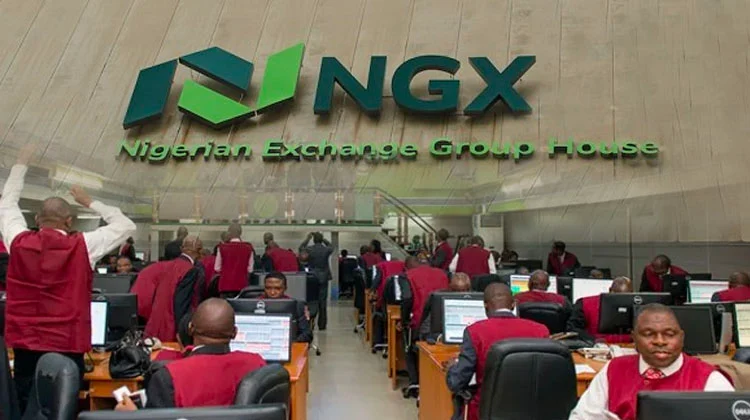
The Nigerian Exchange Limited kicked off the new trading week on a positive footing on Monday, as strong demand for key stocks pushed total market capitalisation up by N745bn, signalling improved investor confidence in the equities market. At the close of the session, market capitalisation rose to N104.52tn from N103.78tn in the previous trading day. The All-Share Index also gained 946.61 points, representing a 0.58 per cent increase, to settle at 163,244.69 points, up from 162,298.08 points. Trading activity showed notable improvement, with investors exchanging 1.15 billion shares valued at N19.21bn across 59,326 deals. This reflected an 84 per cent jump in trading volume, a four per cent increase in turnover, and a 35 per cent rise in deal count compared with the preceding session. Market breadth was largely positive, as 128 listed equities were active during the session. Forty-nine stocks recorded gains, while twenty closed lower, indicating a broadly bullish market sentiment. E-Tranzact International led the gainers, rising by 10 per cent to close at N16.50. Red Star Express also appreciated by 10 per cent to N11.55, while McNichols climbed 10 per cent to N6.05. UPDC advanced by 10 per cent to N5.50, RT Briscoe gained 10 per cent to close at N3.96, and Deap Capital Management and Trust added 10 per cent to end the day at N3.30 per share. On the losing side, Champion Breweries posted the steepest decline, shedding 8.51 per cent to close at N15.05. Eunisell Interlinked followed with an 8.01 per cent drop to N156.20, while Ikeja Hotel fell by eight per cent to N36.80. Guinea Insurance declined by 7.30 per cent to N1.27, Omatek Ventures slipped by 3.12 per cent to N1.24, and Lasaco Assurance eased by 2.99 per cent to close at N2.60 per share. In terms of volume, Sovereign Trust Insurance led trading activity with over 307 million shares exchanged. Fidelity Bank followed with about 158 million shares, while Linkage Assurance and Mutual Benefits Assurance also ranked among the most actively traded stocks. By value, Fidelity Bank topped the chart with trades worth N3.14bn. Aradel Holdings, Zenith Bank, Eunisell Interlinked and Sovereign Trust Insurance also recorded substantial value transactions, boosting overall market liquidity. Market analysts attributed the positive performance to renewed bargain hunting in select equities, particularly within the banking and insurance sectors, alongside stronger investor confidence driven by the market’s sustained position above the N100tn capitalisation level. They added that continued buying interest, supported by expectations of full-year corporate earnings and ongoing portfolio adjustments by investors, could sustain the upward trend in the near term, although periods of profit-taking may still occur. The strong opening to the week further underscores the NGX’s resilience, with market capitalisation firmly above N104tn, highlighting sustained strength in Nigeria’s equities market despite ongoing macroeconomic pressures.

oil02.jpg

4min4130
The competition in Nigeria’s petroleum sector has intensified, with some retail outlets now selling Premium Motor Spirit (PMS) below the N739 per litre recommended by Dangote Petroleum Refinery. Since the Dangote refinery reduced petrol pump prices from around N900 to N739 in December, many importers and depot owners have reported losses. To remain competitive, several operators have had to sell petrol at rates below their landing costs. A weekend survey showed that some filling stations now offer PMS at lower prices than MRS Oil, the primary partner supporting the Dangote price cut. NIPCO sold PMS at N738 per litre, SAO stations at N735, and Akiavic at N737, while an AP station in Mowe, Ogun State, dropped prices to N736 per litre. Filling stations in the same area closely monitor competitors’ pricing to avoid losing customers. Motorists are flocking to the outlets offering the cheapest rates, leaving higher-priced stations struggling. According to the Major Energies Marketers Association of Nigeria, the average landing cost of petrol is N762.38 per litre, while Dangote’s ex-gantry price is N699. Despite this, importers adjusted pump prices to remain competitive with Dangote-backed MRS. Operators stressed that the price reductions are a market strategy to maintain market share, not a reflection of whether imported petrol is cheaper. “This is about strategy, not a war against any marketer or refinery,” an operator said on condition of anonymity. The Dangote refinery shocked depot owners in December by cutting the gantry price from N828 to N699 per litre. The Group President, Aliko Dangote, had warned marketers against maintaining higher pump prices and directed MRS stations to sell at N739 per litre. The Independent Petroleum Marketers Association of Nigeria (IPMAN) noted that competition is now driven by pricing. Marketers who fail to adjust risk losing customers, while those keeping up with competitive pricing protect their capital from mounting bank interest. Many filling stations are now selling petrol below N800 per litre as the price war continues. Dangote Refinery stated that it began supplying PMS to marketers in October 2025 with an offtake volume of 600 million litres, which rose to 900 million litres in November and 1.5 billion litres in December. The refinery reduced minimum purchase volumes and introduced a 10-day credit facility to enhance liquidity, support small and medium operators, and boost domestic product usage. The refinery also clarified that the spike in petrol imports in November was due to import licensing approvals exceeding domestic demand and not related to its production capacity. It reaffirmed its commitment to reliable supply, competitive pricing, and collaboration with regulators to strengthen Nigeria’s downstream petroleum market.