Blog - Edupreneur Select

Bring to the table win-win survival strategies to ensure proactive domination. At the end of the day, going forward, a new normal that has evolved from generation.
Tech & Tools Desk12 January 2026
rail-way.jpg

7min7300
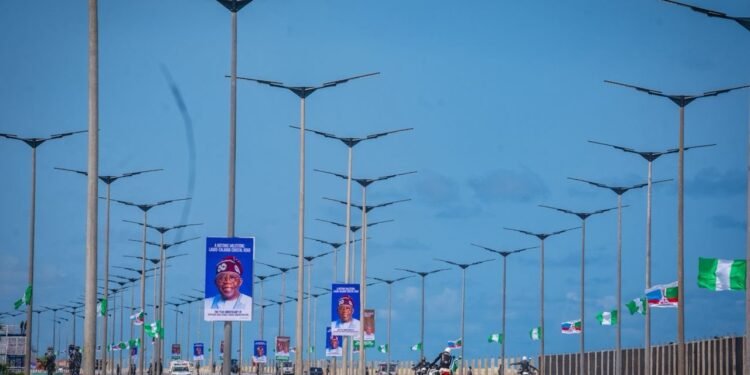
The Federal Government has addressed public concerns over the seeming absence of railway tracks along some sections of the Lagos–Calabar Coastal Highway, explaining that the rail line remains a core part of the project but cannot be accommodated in certain built-up areas due to limited land space. The explanation comes amid public discussions triggered by recent videos of the project, which is estimated at about N4bn per kilometre. The footage showed stretches of the 700-kilometre highway where no rail track was visible within the median, particularly around the Lekki Deep Seaport axis in Lagos. Construction of the Lagos–Calabar Coastal Highway began in 2024 and is one of the Federal Government’s major infrastructure initiatives designed to enhance connectivity, trade, and tourism along Nigeria’s southern coastline. Earlier, the Minister of Works, David Umahi, had stated that the highway’s design includes a railway line running through the median to support multi-modal transportation. He noted that rail infrastructure forms part of the coastal highway and other legacy projects, adding that construction of the rail component for the section would commence in 2025. However, videos shared by urban development commentators on social media raised questions about apparent inconsistencies in the road’s layout. Observations showed that from Chainage Zero at Eko Atlantic to Chainage Nine around the Jakande area—covering Victoria Island and parts of the Lekki corridor—as well as Section Two and areas under construction from the Calabar end, the highway appears to lack a central rail corridor, with parallel carriageways and no wide median. Responding to these concerns, the Federal Controller of Works in Lagos State, Olufemi Dare, explained that the absence of rail space in some sections was intentional and based on physical and environmental constraints. According to Dare, the railway component is fully embedded in the project design but could not be implemented along the initial stretch of the Lagos alignment because of dense development and limited available land. He explained that from Chainage Zero at Eko Atlantic to Chainage Nine around Jakande, there is insufficient land to accommodate both the road and a rail line. The corridor passing through Victoria Island and parts of Lekki is heavily developed, leaving room only for the highway itself. As a result, the first nine kilometres of the route do not include space for railway tracks, despite the rail component being part of the overall design. Dare emphasised that the constraint is strictly due to land availability and not an omission from the project plan. He added that from Chainage Nine onward, adequate space has been provided for the railway line, which will run through the median for the remainder of the highway. A railway station is also planned around that area. According to him, a 20-metre-wide gap has been deliberately created between the carriageways beyond Jakande to allow for the installation of rail infrastructure, where land availability is no longer a challenge. Dare stressed that the Lagos alignment’s first nine kilometres are the only section without rail provision, noting that from Chainage Nine to the end of the highway, the design includes railway tracks running through the centre. Commenting on similar observations at the Calabar end of the project, Dare said he could not provide details, as his oversight is limited to the Lagos section. The Lagos–Calabar Coastal Highway is designed to pass through several states along Nigeria’s Atlantic coast, linking Lagos to Cross River State. While the project has generated optimism over its economic and regional development potential, it has also attracted scrutiny regarding cost, environmental impact, and engineering design. The route starts from Victoria Island near Eko Atlantic City and runs through the Lekki Coastal Road, Lekki Free Trade Zone, and Dangote Refinery, extending through Ogun, Ondo, Delta, and Edo states before terminating in Calabar, Cross River State. The highway’s design features 10 lanes, with rail lines positioned within the central corridor of the main carriageways, and includes 11-inch-thick concrete pavement reinforced with 20-millimetre steel. The entire project is expected to be completed within eight years, with multiple sections constructed simultaneously once approvals and procurement processes are finalised. Completed portions will be opened in phases and subjected to tolling, supporting infrastructure expansion and regional economic growth. In December 2025, the Federal Government temporarily opened the 47.47-kilometre Section One, Phase One of the highway and announced that $1.26bn in funding had been secured for the execution of Section Two of the project’s first phase.

James Obasi12 January 2026
urban.jpg

5min4810
Nigeria’s REIT market, while still developing, is attracting growing investor interest as rapid urban growth and population expansion fuel demand for income-producing real estate, according to a report by Knight Frank Real Estate. The report noted that Real Estate Investment Trusts have become a major investment instrument worldwide, offering investors exposure to property markets without the complexities of direct ownership. Across Africa, REITs are gradually gaining traction, supported by increasing urbanisation, demographic growth, and the need for diversified investment options. It explained that although Africa’s REIT market remains relatively small compared to global benchmarks, this gap presents both obstacles and significant growth opportunities. The global REIT market is estimated at about $4 trillion, with the United States accounting for nearly 80 per cent, or roughly $3.2 trillion. Africa represents only a small share of this total, with South Africa leading the continent at over $20 billion in market capitalisation. Despite its size, the African REIT market has recorded steady growth over the past decade, driven largely by South Africa, Nigeria, and Kenya. Nigeria’s REIT sector was described as still emerging but highly promising, given the country’s large population and fast-paced urbanisation. The report revealed that South Africa currently dominates the African REIT landscape with a market capitalisation of about $8.5 billion, followed by Nigeria and Kenya at approximately $600 million and $300 million, respectively, despite having introduced regulatory frameworks around the same period. Other countries, including Ghana, Morocco, and Egypt, have enacted REIT legislation and are exploring the market, although they are yet to launch fully operational REITs. The report highlighted that Ghana, Morocco, and Egypt are increasingly viewing REITs as tools for real estate development and foreign investment attraction. For instance, Ghana’s Affordable Housing REIT is designed to help address the nation’s housing shortage, while Morocco and Egypt are positioning REITs to draw international capital. Emerging trends across African REIT markets include growing interest in niche segments such as student accommodation, healthcare facilities, and affordable housing. Examples include Kenya’s Acorn Student Accommodation REIT, which has successfully leveraged rising demand for student housing in urban centres. Sustainability and green building practices are also gaining prominence, as environmentally responsible properties that meet environmental, social, and governance standards are attracting more investors due to lower long-term costs and improved returns. The report further pointed to the increasing adoption of technology in property management, with proptech solutions such as smart building systems and digital management platforms being incorporated to improve efficiency and tenant experience. Cross-border investment is another developing trend, as African REITs seek portfolio diversification and risk mitigation. South African REITs such as Growthpoint and Redefine have already expanded into other African markets and parts of Europe. For investors aiming to tap into Africa’s REIT potential, the report identified several promising focus areas, including affordable housing, which is in high demand due to rapid urbanisation and the expansion of the middle class. It also projected rising demand for offices, retail centres, and industrial properties as African economies grow. Additionally, niche sectors such as student housing, healthcare facilities, and logistics hubs were highlighted as less crowded markets with the potential for higher returns. REITs that emphasise sustainability and green development are expected to attract stronger investor interest over time, as ESG-aligned assets continue to gain global relevance. Overall, the report concluded that although the African REIT market is still at an early stage, it holds substantial growth potential. South Africa, Nigeria, and Kenya remain key drivers, while emerging markets such as Ghana and Egypt are showing increasing promise. Trends around niche assets, sustainability, technology adoption, and regional expansion are expected to shape the future of African REITs, offering diverse opportunities for investors.  

NGX12.webp

3min13010
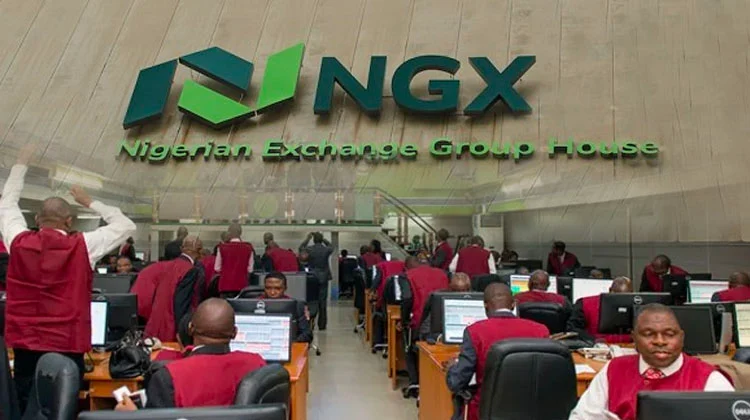
Nigerian equities ended Thursday’s trading session on a positive note, with the total market capitalisation of the Nigerian Exchange Limited rising by N138bn, reflecting modest investor optimism despite mixed sectoral performance. At the close, total market capitalisation increased to N102.82tn from N102.68tn in the previous session, marking a gain of N138bn. The All-Share Index added 214.80 points, or 0.13 per cent, to close at 160,806.56 points, up from 160,591.76 points recorded on Wednesday. Market activity showed moderation, with 645.02 million shares valued at N16.42bn traded across 44,380 deals. This represented a 19 per cent decline in turnover and a 10 per cent drop in the number of deals compared with the prior session, signalling cautious participation by investors. Market breadth was negative, as 41 stocks fell against 32 gainers, indicating profit-taking in several counters despite the slight improvement in headline indices. Among the top gainers, Neimeth International Pharmaceuticals led with a 10.00 per cent increase to close at N7.70 per share, followed by May & Baker Nigeria, up 9.85 per cent to N26.20; E-Tranzact International, up 9.64 per cent to N13.65; and Multiverse Mining and Exploration, which rose 9.51 per cent to N21.30. On the losers’ chart, International Energy Insurance fell 9.90 per cent to N2.73 per share, Associated Bus Company dropped 9.88 per cent to N4.47, Austin Laz & Company lost 9.84 per cent to close at N4.58, while Conoil declined 9.72 per cent to N169.00. In terms of trading volume, Chams recorded the highest activity with 60.46 million shares exchanged, followed by Linkage Assurance with 54.11 million shares, Tantalizers with 44.96 million shares, and Access Holdings with 35.52 million shares. Zenith Bank led by value, with N1.51bn worth of shares traded, followed by Seplat Energy at N1.20bn, Unilever Nigeria at N1.20bn, and Guaranty Trust Holding Company at N1.01bn. Analysts noted that the modest gain in market capitalisation reflects selective bargain hunting, as investors remain cautious ahead of corporate earnings reports and in light of evolving macroeconomic conditions.

James Obasi9 January 2026
mtn-office.png

5min6210
A Federal High Court in Lagos has dismissed a N1bn lawsuit brought against MTN Nigeria Communications Plc by Walls and Gates Ltd and its Managing Director, Okechukwu Udeichi, over alleged copyright infringement, breach of confidentiality, and trademark violations linked to MTN’s 20th anniversary promotion. Delivering judgment on Tuesday, Justice Ayokunle Faji held that the plaintiffs failed to demonstrate any legally protectable rights in their “20 for 20” proposal, describing the case as frivolous, speculative, and vexatious. The court dismissed the suit in full and awarded N3m in legal costs against the plaintiffs. The plaintiffs had filed the suit under Case No. FHC/L/CS/1935/2021, claiming that MTN used their “20 for 20” proposal, submitted on 17 September 2019, without consent. They argued that MTN’s anniversary promotion, which involved giving away 20 sport utility vehicles to subscribers, derived from their proposal, constituting copyright, confidentiality, and trademark violations. They sought N1bn in damages or, alternatively, an order for MTN to remit 50% of the revenue generated from the promotion. MTN denied the allegations, maintaining that the proposal was an unsolicited idea that imposed no contractual or confidential obligations. The company stated that its anniversary campaign was independently developed and that the plaintiffs’ submission was a general business concept not protected under Nigerian copyright law. MTN also contended that the plaintiffs lacked a registered trademark and could not show access to or copying of any protected work. In his ruling, Justice Faji noted that the plaintiffs admitted during oral submissions that they could not substantiate the trademark infringement claim, leaving only allegations of copyright and breach of confidentiality for consideration. Regarding confidentiality, the court found that no confidential relationship existed. The judge noted that the plaintiffs had submitted the proposal to the Nigerian Copyright Commission and relied on it for a trademark application before sharing it with MTN, placing it in the public domain. Additionally, the plaintiffs circulated the document to other organizations, nullifying any claim of confidentiality. The court held that MTN had no obligation to act on an unsolicited proposal without a contractual or fiduciary relationship or a non-disclosure agreement. On copyright, the court emphasized that Nigerian law protects original expressions, not ideas or business concepts. Justice Faji ruled that the plaintiffs’ proposal, described as a “20 for 20 Millennium Promotion,” was merely an idea for rewarding customers and lacked the originality required for copyright protection. The use of the phrase “MTN 20th Anniversary” by MTN was deemed a natural description of an event, not a work derived from the plaintiffs. The court also cited evidence that similar anniversary reward concepts had been used by MTN affiliates internationally before the plaintiffs’ proposal. Justice Faji described the suit as an attempt to coerce a commercial relationship with MTN and criticised the plaintiffs for leveraging MTN’s trademark without authorization to support a billion-naira claim. He highlighted that the case wasted judicial resources. While affirming the right to access the courts, the judge stressed that this right applies only to claims with prima facie merit. Consequently, the court awarded N3m in costs to MTN and ordered the plaintiffs to pay the amount.

crude-oil.jpeg

2min7460
Oil prices rebounded on Thursday, rising around 2 per cent after two days of losses, as investors weighed developments in Venezuela and concerns over supplies from Russia, Iraq, and Iran. Brent crude climbed $1.21, or 2 per cent, to $61.17 per barrel, while U.S. West Texas Intermediate gained $1.02, or 1.8 per cent, to $57.01 per barrel. The recent drop in prices came amid expectations of increased supply after U.S. President Donald Trump indicated that Venezuela would provide up to 50 million barrels of crude to the United States. Under the arrangement, Venezuelan authorities agreed to export oil valued at approximately $2 billion to the U.S., which briefly pushed Brent below $60 per barrel. Tensions have escalated as the U.S. seized two Venezuela-linked oil tankers in the Atlantic, one flying the Russian flag, in a move aimed at controlling oil flows in the Americas. Analysts note that oil prices are now recovering toward levels last seen before these disruptions. Meanwhile, the U.S. Senate began voting on a resolution to restrict further military action in Venezuela without congressional approval. Energy officials have also highlighted the need to balance commercial interests between the U.S. and China in Venezuela, while U.S. oil companies such as Chevron, ConocoPhillips, and ExxonMobil are expected to expand operations in the country. Additionally, a Russia-bound oil tanker in the Black Sea was reportedly targeted by a drone attack, forcing it to seek assistance from the Turkish Coast Guard and alter its course. No injuries or environmental damage were reported.

air.webp

4min3840
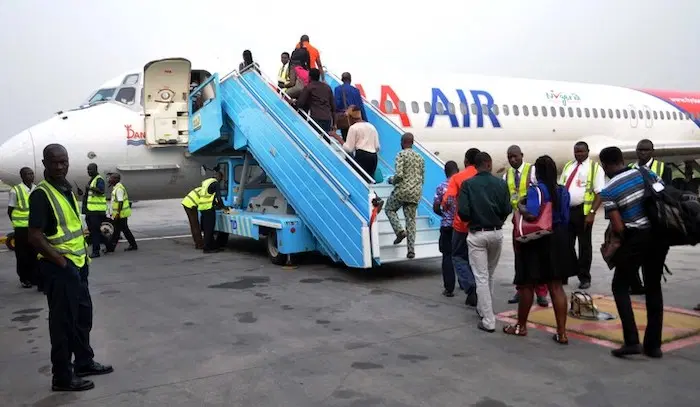
The Nigerian Civil Aviation Authority (NCAA) has announced plans to impose stricter sanctions on domestic airlines over recurrent flight delays and poor passenger handling, warning that persistent inefficiencies in the sector will no longer be tolerated. The announcement came on Thursday via the official X handle of the NCAA’s Director of Public Affairs and Consumer Protection, Michael Achimugu, who said: “We will be pushing for stiffer penalties against domestic airlines for chronic delays. We have protected operators, supported them, and explained their positions because it is the right thing to do. While most disruptions are not caused by the airlines, recent events justify heavier consequences where inefficiencies are repeated.” Achimugu highlighted that the level of support provided by the current administration and aviation authorities should lead to improved service delivery. “When an industry is supported as it has been by President Bola Tinubu, the Minister of Aviation, Festus Keyamo, SAN, the DGCA, Capt. Chris Najomo, and our Consumer Protection Department, the least expectation is that significant improvements will be reflected in flight operations and related areas,” he said. Acknowledging the challenges in the operating environment, Achimugu stressed that certain lapses can no longer be excused. “We understand the difficult environment airlines navigate, but some failures are inexcusable,” he said, citing persistent communication gaps with passengers during delays and cancellations as a key concern. “These lapses have escalated tensions at airports. Failure to manage passenger information effectively and poor handling have caused the majority of conflicts at our terminals,” he added, pointing to international examples, including a recent $2 million fine imposed on JetBlue in the United States for repeated delays. He also indicated that regulations may be updated to address emerging challenges. “Regulations will evolve as new issues emerge to ensure the industry continues to operate effectively,” Achimugu said. Reassuring both passengers and operators, he affirmed that the NCAA remains committed to fairness and accountability. “The NCAA is dedicated to protecting the rights of all stakeholders. Reviews are underway to strengthen the Authority’s ability to enforce compliance for both passengers and operators.” The announcement comes amid growing complaints from air travellers over flight disruptions. Between July and September 2025, domestic airlines operated 17,731 flights, up from 15,989 in the same period in 2024, while total cancellations fell to 80 from 251 a year earlier. However, operational challenges persisted. In April 2025, Air Peace temporarily suspended operations after a strike by Nigeria Meteorological Agency staff, stranding passengers at major airports. In May, Max Air faced complaints over multiple delays in Kaduna and Kano, with flights rescheduled late into the night and passengers left without clear updates. In June, United Nigeria Airlines drew backlash after a Lagos-to-Abuja flight was delayed for more than 10 hours, with many passengers reporting a lack of communication from the airline.

UBA-United-Bank-for-Africa.jpg

4min6060
The United Bank for Africa (UBA) has become the latest Nigerian lender to meet the Central Bank of Nigeria’s (CBN) new minimum capital requirement for banks with international authorisation, as its share capital surpasses N500 billion. The milestone was reached following the conclusion of UBA’s N157.83 billion rights issue, announced on Wednesday. According to UBA’s Interim Unaudited Consolidated Financial Statements for the period ended 30 September 2025, filed with the Nigerian Exchange Limited (NGX), the bank’s share capital of N20.52 billion combined with a share premium of N329.56 billion brought total equity to N350.08 billion. The proceeds from the rights issue lifted UBA comfortably above the regulatory minimum. The CBN had earlier set the minimum capital base for commercial banks with international authorisation at N500 billion, while banks with national authorisation require N200 billion and regional banks N50 billion. Merchant banks are required to maintain N50 billion, and non-interest banks with national and regional authorisation must hold N20 billion and N10 billion, respectively. UBA’s rights offer, which opened in July 2025 and closed in September, recorded a subscription rate of 113 per cent, according to Vetiva Advisory Services (Lead Issuing House) and joint issuing houses United Capital and CardinalStone. The bank offered 3,156,869,665 ordinary shares of 50 kobo each at N50 per share. The rights issue raised N157.84 billion through the allotment of all offered shares. Initial applications totaled 4,134,747,690 shares worth N206.74 billion from 6,404 acceptances, but strategic adjustments and scale-downs by major shareholders brought the final allotment to full subscription. Of the applicants, 6,293 shareholders accepted their full allotments, while 106 opted for partial acceptance. A single large-scale application accounted for N123.85 billion, or 78.46 per cent of the total raised. Invalid applications during processing amounted to about N28.43 billion. The Securities and Exchange Commission (SEC) has approved the basis of allotment. Under the guidance of the issuing houses, PAC Registrars and Investor Services Limited will return surplus subscription funds to investors by Tuesday, 13 January 2026, while allotted shares will be credited to the Central Securities Clearing System (CSCS) accounts of successful applicants by Friday, 16 January 2026. The rights issue was structured on a ratio of one new share for every 13 existing shares held as of the qualification date of 16 July 2025. Since the recapitalisation process began in April 2024, the CBN governor, Olayemi Cardoso, disclosed that 16 banks have met the new minimum capital requirement, while 27 banks have tapped the market for additional funds as of November 2025. The apex bank outlined three options for banks to strengthen their capital base: injection of fresh equity through private placements, rights issues, or public offers; mergers and acquisitions; or upgrades/downgrades of licence authorisation. The CBN clarified that only paid-up capital and share premium will count toward meeting the new requirement, with Additional Tier 1 Capital ineligible for this purpose.

Tech & Tools Desk9 January 2026
Crude-Oil-1.jpg

3min4390
The Nigerian Upstream Petroleum Regulatory Commission (NUPRC) and the Nigerian Midstream and Downstream Petroleum Regulatory Authority (NMDPRA) have renewed their commitment to enhance regulatory efficiency and attract investments in Nigeria’s oil and gas sector, marking a new phase of collaboration between the two agencies. A statement from Eniola Akinkuotu, Head of Media and Strategic Communication at NUPRC, confirmed that the renewed cooperation was formalised during a meeting at the Commission’s corporate headquarters in Abuja on Thursday, January 8, 2026. During the meeting, both agencies agreed to work more closely, appointing representatives to address regulatory bottlenecks across the upstream, midstream, and downstream segments of the sector. The partnership aims to promote investor confidence, streamline processes, and support overall industry growth. “The Nigerian Upstream Petroleum Regulatory Commission and the Nigerian Midstream and Downstream Regulatory Authority have taken significant steps to improve regulatory efficiency and encourage investment in Nigeria’s oil and gas sector,” the statement said. To institutionalise the collaboration, NUPRC and NMDPRA agreed to hold quarterly meetings, which will strengthen communication, resolve challenges promptly, and align regulatory approaches across the oil and gas value chain. Speaking at the meeting, NUPRC Chief Executive Oritsemeyiwa Eyesan highlighted the importance of synergy between the two agencies. “Whether upstream, midstream, or downstream, we are enablers for the industry, which is the heartbeat of the nation’s economy. We are committed to ensuring proper functioning and growth, and that requires working together. Sometimes the lines between upstream, midstream, and downstream overlap, and cooperation is essential to prevent challenges. This meeting is the beginning of many more engagements,” she said. Mrs. Eyesan also invited NMDPRA Chief Executive Saidu Aliyu Mohammed to the pre-bid conference for the ongoing licensing round at Eko Hotels and Suites, Lagos, on January 14, 2026. The round, offering 50 oil and gas blocks, is expected to attract substantial domestic and foreign investment while bolstering Nigeria’s hydrocarbon reserves. Responding, Mr. Mohammed emphasised the importance of harmonious collaboration, noting that any differences between the agencies should be resolved internally and amicably. “We must strengthen the relationship between these sister agencies,” he said. The renewed partnership demonstrates both agencies’ commitment to boosting regulatory efficiency, enhancing investor confidence, and driving sustainable growth in Nigeria’s oil and gas sector, promising tangible economic benefits for the nation. Both leaders were appointed by President Bola Tinubu in December 2025, following the resignations of their predecessors, NUPRC’s Gbenga Komolafe and NMDPRA’s Farouk Ahmed.  

James Obasi9 January 2026
TAX.jpg

4min9910
As Nigeria rolls out its new tax laws, North Central states are moving swiftly to domesticate the reforms, with Jigawa, Plateau, Kogi, Nasarawa, and Kwara taking steps to strengthen their revenue systems. According to statements from the Joint Revenue Board (JRB), these initiatives, backed by recently enacted legislation and executive approvals, aim to boost internally generated revenue, enhance financial autonomy, and create a transparent, predictable, and business-friendly tax environment, in line with the national tax reform agenda of President Bola Ahmed Tinubu. Jigawa State has joined the reform drive following the passage of the Harmonised Taxes and Levies Bill by its House of Assembly. The JRB described the legislation as a milestone in modernising the state’s revenue administration. The bill, awaiting the governor’s assent, seeks to streamline tax processes, eliminate multiple taxation, remove roadblocks for tax collection, leverage technology to improve transparency, plug revenue leakages, and clarify taxpayers’ obligations. These measures are expected to boost compliance, attract investors, and support economic development. The board also commended the collaboration between the state government, legislature, and the Jigawa State Internal Revenue Service. In Plateau State, Governor Caleb Mutfwang signed the Plateau State Harmonised Taxes and Levies (Approved List for Collection) Law on December 31, 2025. Officials said the law provides a coordinated framework for tax and levy collection, eliminating duplication, reducing revenue leakages, and supporting funding for critical infrastructure and social services. Nasarawa State has also modernised its fiscal framework. Governor Abdullahi A. Sule assented to the Nasarawa State Revenue Administration Law 2025 and the Harmonised Taxes and Levies Law 2025, establishing a unified system for tax and non-tax revenue collection. The reforms aim to tackle fragmented revenue practices, multiple taxation, and inconsistent enforcement while enhancing transparency, curbing arbitrary collections, restoring public confidence, and promoting economic activity, particularly among small and medium-sized enterprises. Kogi State joined the reform effort on January 1, 2026, when Governor Ahmed Usman Ododo approved the Kogi State Internal Revenue Service (Establishment) Law 2025 and the Kogi State Taxes and Levies (Approved List for Collection) Law 2025. These laws strengthen the legal and institutional framework for revenue administration and align state practices with national standards. While details were not provided for Kwara State, it is among the North Central states moving to implement the reforms, reflecting the region’s shared commitment to modernising revenue administration. Analysts said the new laws mark a shift from outdated, fragmented collection methods to a harmonised, technology-driven, and citizen-focused system. Key provisions include consolidating sub-national taxes into nine approved categories, removing roadblocks for collection, and improving fairness, efficiency, and predictability. The reforms are expected to reduce illegal and arbitrary collections, enhance transparency, and create a stable operating environment for businesses, with SMEs likely to benefit significantly. Observers note that the growing legislative momentum across North Central states signals a new era in fiscal governance, with sub-national governments positioning themselves to generate sustainable revenue while supporting economic growth.  

Bola-Ahmed-Tinubu-e1653653706419.jpg

5min5230
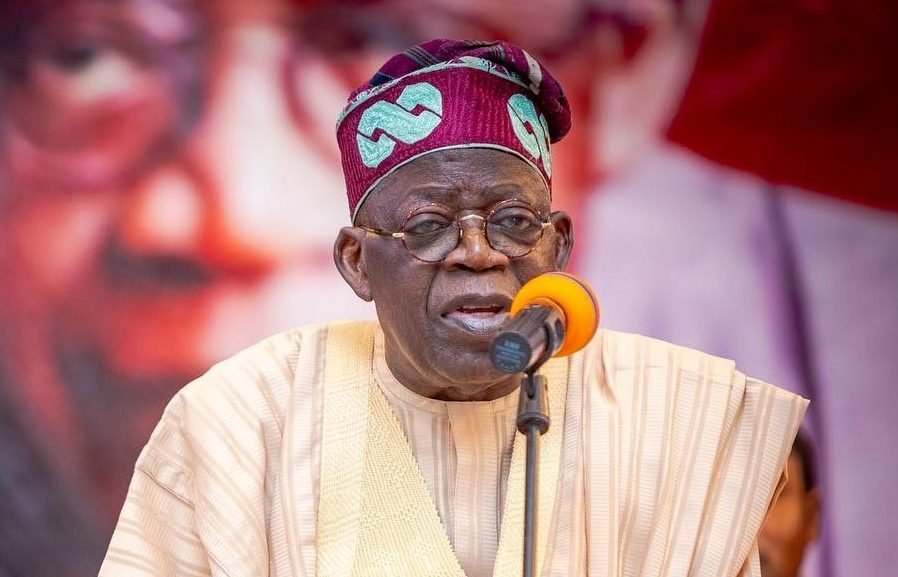
President Bola Tinubu has commended corporate organisations, investors, and stakeholders in Nigeria’s capital market for their roles in pushing the Nigerian Exchange (NGX) beyond the historic N100 trillion market capitalisation mark, describing the milestone as evidence of a “new economic reality” for the country. In a statement issued by his Special Adviser on Information and Strategy, Bayo Onanuga, the President said the achievement should inspire greater participation in Nigeria’s money and capital markets, urging citizens to channel more investments into the domestic economy. According to Tinubu, the crossing of the N100 trillion threshold signals renewed confidence and economic rejuvenation, positioning Nigeria as an increasingly attractive investment destination. He highlighted the strong performance of the NGX in 2025, noting that the All-Share Index recorded a 51.19 per cent return, significantly higher than the 37.65 per cent gain in 2024. The President said the performance ranked among the best globally, outperforming major indices such as the S&P 500, FTSE 100, and several emerging-market benchmarks within the BRICS+ group. The President stated that Nigeria has moved beyond being a marginal frontier market, describing the stock exchange as a reflection of the broader economy and a key indicator of investor confidence and economic health. He also drew attention to the performance of listed companies across multiple sectors, including industrial manufacturing, banking, and technology. Tinubu said firms that have strengthened local supply chains and embraced innovation are demonstrating Nigeria’s capacity to generate sustainable investment returns. According to the President, the NGX milestone forms part of a wider economic recovery driven by reforms introduced by his administration. He said these measures have improved monetary stability, curbed inflationary pressures, and strengthened the naira. Tinubu noted that inflation has been on a steady decline following earlier reform-related challenges, attributing the trend to monetary tightening, the elimination of distortionary financing practices, and increased investment in agriculture. He said inflation has fallen from a 24-month high of 34.8 per cent in December 2024 to 14.45 per cent in November 2025, with projections pointing to single-digit inflation before the end of the year. The President also cited improvements in Nigeria’s external position, stating that the country recorded a $16 billion current account surplus in 2024, with projections showing a rise to $18.81 billion in 2026. He added that foreign reserves have surpassed $45 billion, strengthening the Central Bank’s capacity to support currency stability and reduce volatility in the foreign exchange market. Beyond the capital market, Tinubu highlighted progress in infrastructure, healthcare, and education, including the expansion of rail networks, completion of major road projects, port revitalisation, improved medical facilities, reduced medical tourism costs, and increased access to education financing through the Nigeria Education Loan Fund. He concluded by calling on Nigerians to take an active role in the country’s economic transformation, stressing that nation-building requires collective effort, discipline, and long-term commitment. The President reaffirmed his administration’s resolve to sustain reforms and deepen transparency, equity, and growth, noting that the N100 trillion market capitalisation milestone sends a strong signal of Nigeria’s economic resilience and productivity to the global investment community.