Blog - Edupreneur Select

Bring to the table win-win survival strategies to ensure proactive domination. At the end of the day, going forward, a new normal that has evolved from generation.
Tech & Tools Desk18 December 2025
APM-TERMINALS-2.webp

4min1340
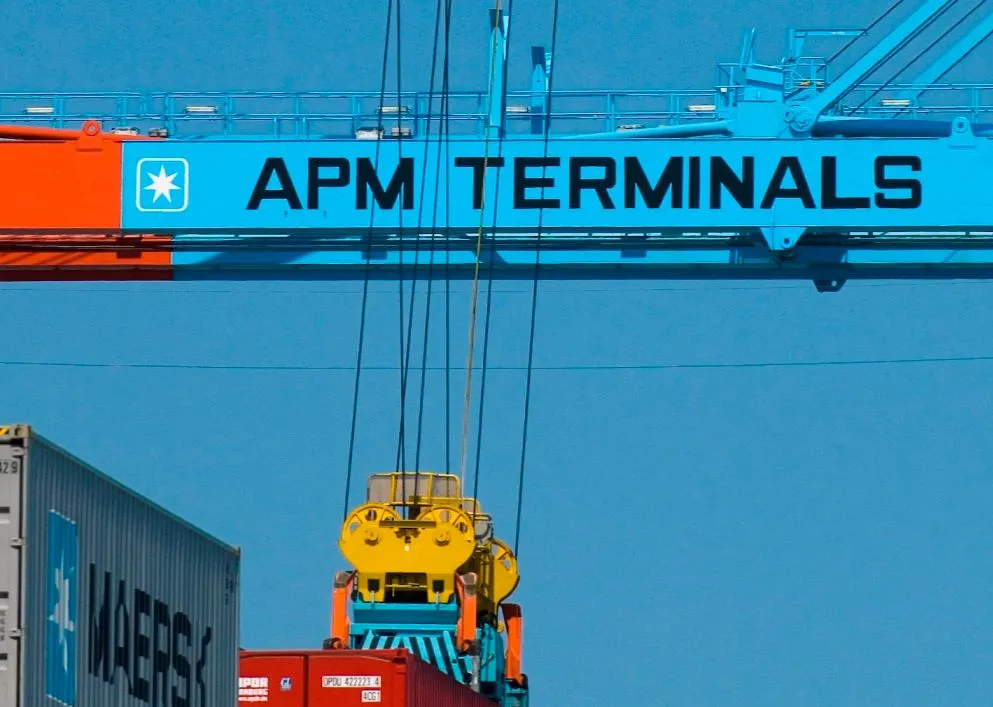
APM Terminals has entered into an exclusive lease agreement with Barging Marine Solutions Ltd, extending to September 2031, to scale up services in and around Apapa, reinforcing its long-term commitment to supporting Nigeria’s trade and logistics sector. In a statement issued on Tuesday, APM Terminals said the partnership is designed to deepen collaboration between both companies, boost capacity, and strengthen landside and barge connectivity for the benefit of customers and shipping lines. Chief Executive Officer of APM Terminals, Keith Svendsen, said the agreement reflects confidence in the Nigerian market, which recorded strong growth throughout 2025. He noted that the company believes in the market’s long-term potential and is taking deliberate steps to unlock further value at the terminal, while positioning for future investments and modernisation in Lagos. Svendsen added that Barging Marine Solutions has built a resilient business, and the collaboration would allow both parties to harness shared synergies. Also commenting, Chief Executive Officer of Barging Marine Solutions Ltd, Karim Said, said the agreement builds on an already strong working relationship and would deliver improved logistics solutions for APM Terminals’ customers and shipping lines by combining BMS’s barging and terminal capabilities to provide additional capacity and dependable service. Managing Director of APM Terminals Nigeria, Frederik Klinke, said enhanced barge operations and BMS’s leadership in inland container depots would improve reliability, speed, and coordination across the supply chain, resulting in a smoother and more efficient customer experience. APM Terminals operates facilities in Apapa, Kano, and Onne, handling about half of Nigeria’s containerised trade and supporting over 10,000 direct and indirect jobs nationwide. The company recently completed a $115m upgrade and expansion at the West African Container Terminal, underscoring its commitment to delivering safe, efficient, and cost-effective logistics solutions. It also signalled readiness to invest further in Nigeria to improve multimodal transport options, quayside efficiency, and overall customer support. As part of a global network of more than 60 terminals, APM Terminals connects key trade routes worldwide and serves all major shipping lines. Barging Marine Solutions Ltd, which has operated in Nigeria since 2019, provides barging and terminal services across Lagos. Its operations include waterside terminals in Abule Oshun and Agbara, as well as inland container depots in Abule Oshun offering bonded terminal and clearing services for Apapa and Tin Can cargo. The company’s barge fleet moves containers across Lagos waterways, helping to reduce road congestion in Apapa and lower logistics costs. Under the agreement, Barging Marine Solutions will operate services for APM Terminals, while both firms will jointly develop value-added solutions for customers. The partnership covers two waterfront and inland container facilities, alongside barge services that provide an alternative to road haulage, easing pressure on trucking routes and contributing to reduced traffic congestion and more efficient cargo movement.

James Obasi18 December 2025
Sachet-alcohol_1_900x506.png

4min2600
The Nigeria Employers’ Consultative Association has urged the Federal Government to rely on evidence-based approaches in addressing public health issues linked to the production and sale of sachet alcoholic beverages, cautioning that poorly structured regulations could push the trade into the informal sector and fuel the spread of illicit products. In a statement, NECA praised the Federal Government for suspending enforcement actions on the proposed ban of sachet alcohol and 200ml PET bottle products. The association’s Director-General, Adewale Oyerinde, acknowledged concerns about underage drinking and public health, but stressed that policy responses must strike a balance between health goals and economic realities. “We recognise the importance of tackling public health concerns, particularly those affecting children and young people. However, solutions must be evidence-based and carefully designed to avoid driving legitimate businesses into unregulated spaces or encouraging the proliferation of illicit products,” Oyerinde said. He noted that the decision to halt enforcement pending consultations and the release of a final policy directive respected resolutions of the National Assembly and helped restore regulatory certainty. Oyerinde also welcomed clarification from the Office of the Secretary to the Government of the Federation (OSGF) that any enforcement action by the National Agency for Food and Drug Administration and Control or other agencies without proper clearance is invalid and should be ignored by the public. Highlighting the potential economic impact of the proposed ban, Oyerinde explained that the sachet and PET segment represents a substantial share of the estimated N800 billion invested in the alcoholic beverage industry, supporting thousands of direct and indirect jobs across manufacturing, packaging, logistics, wholesale, and retail. He warned that sudden policy shifts could intensify job losses at a time when unemployment remains high and business costs are rising. “In an economy already under pressure from unemployment and escalating operating costs, abrupt measures that threaten jobs and legitimate investments would be counterproductive,” he said. He added that NECA looked forward to more extensive consultations to safeguard jobs, livelihoods, and lawful investments while ensuring that public health objectives are achieved in a sustainable manner. NECA’s position followed a directive from the OSGF suspending all enforcement actions related to the proposed sachet alcohol ban until further notice. The suspension came after a letter from the House of Representatives Committee on Food and Drug Administration and Control concerning the planned enforcement by NAFDAC. In a statement issued on Monday by the Special Adviser on Public Affairs to the OSGF, Terrence Kuanum, the office said the correspondence dated November 13, 2025, and signed by the committee’s deputy chairman, Uchenna Okonkwo, was still under review. According to the OSGF, the issue is being considered in line with its statutory role as coordinator of government policy. It directed that all actions, decisions, or enforcement measures connected to the proposed ban be suspended until consultations are concluded and a final directive is issued. The office further clarified that any enforcement carried out by NAFDAC or other agencies without its approval has no effect and should be disregarded. The OSGF assured Nigerians that legislative resolutions, economic implications, public health concerns, and the broader national interest are being carefully examined, and that the public will be informed once a final decision is made.  

NGX.webp

3min1960
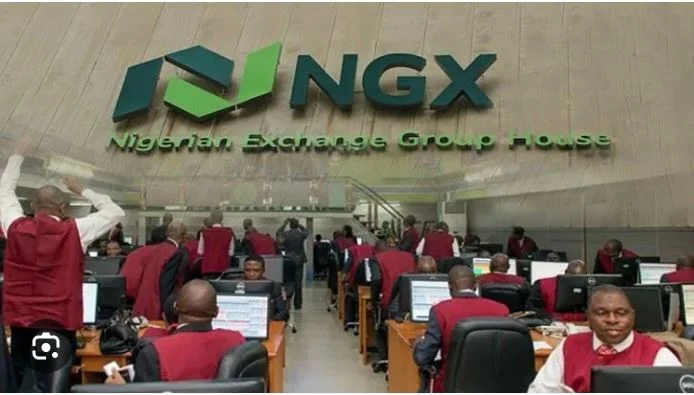
The Nigerian Stock Exchange (NSE) added N13 billion at the close of trading on Tuesday, buoyed by strong performances in consumer and industrial sectors. Market capitalisation now stands at N95.3 trillion. The All-Share Index rose by 21.23 points to 149,459.11, marking a one-week gain of 1.71 per cent, a four-week gain of 3.08 per cent, and a year-to-date increase of 45.21 per cent. Other advancing indices included the Insurance Index, up 0.36 per cent; the Consumer Goods Index, up 0.21 per cent; and the Pension Index, up 0.07 per cent. A total of 912,582,020 shares changed hands in 23,678 deals, representing a market value of N20.2 billion. Compared with Monday’s session, trading volume rose by 65 per cent, turnover increased by 52 per cent, while the number of deals fell by 18 per cent. Of the 129 listed equities traded, 31 stocks recorded gains while 26 posted losses. Leading the gainers was Aluminium Extrusion Industries with a 10 per cent rise, closing at N9.35 per share. Guinness Nigeria followed with a 9.98 per cent increase to N263.40, MeCure Industries gained 9.95 per cent to N45.85, and Multiverse Mining and Exploration rose 9.95 per cent to N12.15. Other notable gainers included Sovren Insurance, up 9.89 per cent to N4.11, and Sunu Assur, up 7.96 per cent to N4.34. On the losing side, Haldane McCall led with a 9.93 per cent drop to N3.72, followed by LivingTrust Mortgage Bank down 9.09 per cent to N3.50; Veritas Kapital Assurance down 9.09 per cent to N1.60; Linkage Assurance down 5.71 per cent to N1.65; and Champion Breweries down 5.63 per cent to N13.40. Access Holdings recorded the highest trading volume of 385,834,219 shares, followed by Sterling Bank (85,488,191), FCMB Group (75,689,568), First HoldCo (51,923,443), and AIICO (36,690,774). Access Holdings also led in value at N7.72 billion, followed by First HoldCo (N1.83 billion), GTCO (N1.50 billion), Zenith Bank (N0.92 billion), and MTN (N0.80 billion). On Monday, the NSE had posted a modest gain of about N3 billion as investors adopted a cautious approach amid mixed sectoral sentiment.

mandilas-group-limited.jpg

3min1720
Mandilas Group has reiterated its dedication to the development of the Nigerian economy as it celebrated its 75th anniversary with a Christmas concert, jointly organised with the Musical Society of Nigeria (MUSON) at the MUSON Centre in Lagos. At the event, Mrs. Ola Ayo-Adeloye, Executive Vice Chairman of Mandilas Trust Co. Ltd, highlighted the company’s positive impact on Nigeria over the past seven and a half decades, noting that Mandilas continues to embody the resilience, diversity, and ambition that define the Nigerian dream. The 2025 MUSON–Mandilas Christmas Concert featured performances by the MUSON Choir and Orchestra, alongside the Mandilas Choir. Ayo-Adeloye described the event as a symbolic celebration of Mandilas Group’s 75 years of operation, calling it a deeply meaningful milestone. “Seventy-five years is no small achievement. Many companies have not survived this environment for that long. It speaks to the resilience and commitment of Mandilas to Nigeria. We are a Nigerian company, and we aim to excel. Our dedication to Nigeria has always been evident, and the Nigerian market has supported us tremendously,” she said, emphasising that customer loyalty remains central to the company’s identity. Reflecting on the company’s growth, Ayo-Adeloye likened Mandilas to “fine wine,” noting that public expectations have increased alongside the company. “Without our customers, we would not be here. At 75, we are reaffirming our commitment to all our customers and to Nigeria. We will continue this journey for the next 75 years and beyond. Our reliability is proven — even during COVID, we maintained all salaries and did not lay off staff. People value job security, and we have consistently supported our employees,” she added. Ayo-Adeloye also emphasised Mandilas’ broader mission as a family- and community-focused organisation, committed to running a profitable business sustainably and with positive societal impact. “Yes, we conduct business, but we do so with a good heart,” she said. The concert was attended by dignitaries including Mandilas Group’s Group Managing Director, Mr. Vlassis Liakouris, his wife Rebecca, director Gregory Ezeokafor, Mrs. Ayo-Adeloye, and MUSON’s Director of Music and Conductor, Emeka Nwokedi, among others.

seapport.jpg

3min3650
The Lekki Deep Seaport has reported reaching nearly half of its designed operational capacity, with consistent month-on-month growth in container throughput since September. Mr. Wang Qiang, Managing Director and CEO of Lekki Port LFTZ Enterprise Limited, shared the update during an end-of-year media briefing at the port on Tuesday. Wang noted that the port is now operating at close to 50 percent capacity, reflecting growing confidence from shipping lines and cargo owners in Nigeria’s first deep seaport. “We already reached almost 50 per cent of our port capacity now,” he said, highlighting a steady increase in the number of twenty-foot equivalent units handled each month. He emphasised that efficient multimodal connectivity is crucial for sustaining and accelerating growth. Barge operations, in particular, have become a key evacuation channel. Wang also pointed to the ongoing Lagos–Calabar Coastal Road project, which is expected to ease congestion and improve access to the port. Rail connectivity remains a priority, especially given the scale of industrial activity developing in the Lekki corridor. “With the level of industrial activities in this region, we expect the train option to be provided,” he added. While reiterating that Lekki Port is a fully automated terminal, Wang acknowledged that delays may still occur until all stakeholders, including government agencies, fully align with end-to-end digital processes. Customs procedures, such as physical cargo examinations, need full digitalisation to significantly reduce cargo dwell times. “We must work closely with customers and all operations for automation to yield results,” he said. He further explained that integration between the customs system, the terminal operating system, and customers is already part of a scheduled implementation plan. “For automation to work efficiently, all players—customers, government, and stakeholders—must be ready. Only then can we have a fantastic system,” Wang added. Improved connectivity, he noted, could allow the port to effectively double its capacity through performance optimisation without expanding its physical footprint. Located in Ibeju-Lekki, Lagos State, within the Lagos Free Zone, the Lekki Deep Seaport is Nigeria’s first deep-sea port and one of West Africa’s largest maritime infrastructure projects. The media tour included visits to the customs examination area, scanners, and shipside operations.

Tech & Tools Desk17 December 2025
LUNOo.png

3min1930
Luno, the Africa-founded global cryptocurrency platform, has partnered with AltSchool Africa, an accredited online learning provider, to deliver fully funded crypto education to 15,000 Nigerians. The programme, titled “Demystifying Crypto for Africans”, is described as the continent’s largest crypto education initiative. Ayotunde Alabi, CEO of Luno Nigeria, said the initiative is a timely boost for Africa’s rapidly growing digital finance sector. “As crypto adoption accelerates, literacy must grow alongside it so individuals can participate safely and meaningfully,” he said. “Our partnership with AltSchool Africa ensures Nigerians can engage confidently in the digital economy, turning perceived risks into real economic opportunities.” AltSchool Africa co-founder and CEO, Adewale Yusuf, described the programme as an investment in financial empowerment. “This initiative equips Nigerians with the knowledge and tools to understand and apply cryptocurrency confidently in practical, life-changing ways,” he said. “It’s more than a course—it’s a step toward a digitally literate and economically empowered population.” The beginner-focused course will be delivered in three cohorts of 5,000 learners each. Cohort one begins in March 2026, following applications from January to February, with subsequent cohorts scheduled for July and November. Participants must be Nigerian residents aged 18 or above and have, or create, a Luno account before enrolling. The curriculum spans five core modules, designed to be completed within three to four weeks, with learners gaining up to one year of access to all materials. This includes video lessons, quizzes, case studies, and practical exercises using wallets, exchanges, stablecoins, and blockchain research tools such as CoinGecko and Etherscan. Successful participants will receive an AltSchool Africa Certificate of Completion. Web3 expert Abdulsamad Tiamiyu, leading the programme, emphasized that the initiative combines theory with practical experience to help learners confidently use cryptocurrency for saving, remittances, global trading, and entrepreneurship. With about one-third of Nigeria’s population already engaged with digital assets, the programme aims to close knowledge gaps and promote safer participation in crypto markets. Through structured education and practical guidance, the Luno–AltSchool Africa partnership seeks to foster a responsible, well-informed digital economy.

James Obasi17 December 2025
Tinted-glasss.jpg

4min3380
The Nigerian Bar Association (NBA) and the Nigerian Police Force (NPF) are at odds over the police’s recent notice indicating plans to resume enforcement of the suspended tinted glass permit policy from January 2, 2026. The NBA has urged President Bola Tinubu to call the Inspector General of Police (IGP), Kayode Egbetokun, to order, describing the planned action as a challenge to the authority of the courts. In contrast, the police stated that no court has restrained them from enforcing the tinted glass permit, and that enforcement will continue unless a court directs otherwise. A Federal High Court in Warri had on October 7 issued an interim injunction stopping the IGP and the NPF from implementing the policy, following a motion by John Aikpokpo-Martins, who argued the policy was unlawful and burdensome. Another related case is pending before a Federal High Court in Abuja. In a statement, NBA President Mazi Afam Osigwe, SAN, said the IGP has a constitutional obligation to respect the judicial process. NBA-SPIDEL had filed Suit No: FHC/ABJ/CS/1821/2025 in September 2025, challenging the legality of the tinted glass permit policy. The NBA argued that the policy is unconstitutional, illegal, and extortionate, claiming it undermines citizens’ rights, adds unnecessary financial burdens, and encourages corruption. The association highlighted that modern vehicles imported into Nigeria often come with factory-fitted tinted glass, yet the policy imposes additional levies payable into a private bank account rather than the Treasury Single Account. The NBA also noted that the policy nullifies existing permits without legal basis. The NBA cited a Warri court order from October 3, which directed parties to maintain the status quo in a related suit, effectively restraining the police from enforcing the policy. The association questioned why the police announced on Monday that enforcement would resume in January 2026. The police, through Force PRO Benjamin Hundeyin, said the policy had never been restrained by any court. He added that the temporary suspension was meant to allow citizens more time to regularise their tinted glass registrations, but criminal elements have exploited the delay. Hundeyin cited a case in Edo State where a tinted Lexus SUV refused to stop for police, resulting in the death of a police inspector. He insisted that enforcement will continue until a court rules otherwise and that the NPF’s legal department will handle any potential lawsuit from the NBA regarding contempt of court. The disagreement highlights ongoing tension between the NBA’s legal challenges and the NPF’s security concerns over tinted glass vehicles.

oil-blockage-1280x853.avif

5min1670
Equities mostly rose on Wednesday, despite U.S. jobs data doing little to increase expectations for an interest rate cut next month. Oil prices surged following President Donald Trump’s announcement of a blockade on “sanctioned” Venezuelan tankers. Federal Reserve officials have signalled that borrowing costs are unlikely to be lowered for a fourth consecutive meeting, keeping market sentiment subdued amid concerns over tech valuations and AI spending. Investors had awaited delayed non-farm payroll reports, which showed November’s unemployment rate rising to a four-year high of 4.6 percent, reinforcing signs of a slowing U.S. labour market. Analysts noted that a 105,000-job decline in October was influenced by the extended government shutdown, while November’s 64,000-job increase slightly exceeded expectations. Overall, the data had minimal impact on rate-cut predictions, with markets pricing in roughly a 20 percent chance of a move next month. National Australia Bank senior economist Taylor Nugent said the higher unemployment rate highlights the Fed’s ongoing labour market concerns but is unlikely to prompt immediate easing. “It would take another significant jump in unemployment to alter expectations for a January cut,” he added. Wall Street investors largely shrugged at the data, as concerns grow that the tech-led rally of the past two years may have overextended and that AI investments might not yield immediate returns. Asian markets were mixed on Wednesday. Tokyo, Hong Kong, Shanghai, Seoul, Manila, Bangkok, and Jakarta posted gains, while Sydney, Singapore, Taipei, Mumbai, and Wellington fell. In Europe, London rose after data showed UK inflation slowed more than expected in November, with Paris and Frankfurt also making modest gains. Oil prices jumped over one percent after Trump declared on Truth Social that he was “ordering a total and complete blockade of all sanctioned oil tankers going into, and out of, Venezuela.” The move escalates U.S. pressure on Caracas, following months of military buildup in the Caribbean aimed at combating drug trafficking, and is viewed as an attempt to challenge Venezuelan President Nicolas Maduro. The surge partially offset Tuesday’s 2.7 percent losses after the U.S. indicated progress toward a potential end to the Ukraine war, which could ease sanctions on Russian oil and raise oversupply concerns. In currency markets, the yen strengthened against the dollar ahead of an expected Bank of Japan interest rate hike to a 30-year high. The Indian rupee rose 1 percent following central bank intervention after hitting a record low against the dollar, improving to 89.9662 from over 91 earlier in the day. In corporate news, Chinese chipmaker MetaX Integrated Circuits Shanghai soared more than 550 percent on its debut, raising $585.8 million in its IPO. Semiconductor firm Moore Threads also rose over 500 percent earlier in the month after its $1.1 billion IPO. In contrast, shares of Hong Kong’s largest licensed cryptocurrency exchange, HashKey, fell around two percent on their first day, raising $205 million. Key Market Figures: Tokyo – Nikkei 225: +0.3% at 49,512.28 Hong Kong – Hang Seng: +0.9% at 25,468.78 Shanghai – Composite: +1.2% at 3,870.28 London – FTSE 100: +0.8% at 9,759.85 Dollar/Yen:50 (down from 154.80) Euro/Dollar: $1.1712 (down from $1.1747) Pound/Dollar: $1.3324 (down from $1.3422) Euro/Pound:92 pence (up from 87.52) WTI Crude: +1.6% at $56.13 per barrel Brent Crude: +1.5% at $59.81 per barrel New York – Dow: -0.6% at 48,114.26

detain-sodier.jpg

3min2140
The House of Representatives on Tuesday agreed to engage senior officials from the Ministries of Defence and Foreign Affairs over the detention of a Nigerian military aircraft and its crew in Burkina Faso. The resolution followed the adoption of a motion of urgent public importance sponsored by Ekiti lawmaker Rufus Ojuawo. Lawmakers urged the Federal Government, under President Bola Tinubu, to leverage regional and continental platforms such as the Economic Community of West African States (ECOWAS) and the African Union to promote cooperation and secure the prompt release of the aircraft and detained personnel. They also called on the Office of the National Security Adviser to lead interagency coordination, ensuring that national security concerns are properly addressed without escalating tensions. In addition, the House advised the government to issue accurate public briefings where necessary to curb misinformation, while safeguarding sensitive diplomatic and security processes. The aircraft involved, a Nigerian Air Force C-130, was reportedly en route to Portugal for routine and mandatory depot maintenance when it made a precautionary landing in Burkina Faso on December 8, 2025. The House noted that the flight was properly documented and carried out in line with international aviation regulations, including provisions allowing diversions for safety reasons. According to lawmakers, the landing was strictly a safety measure and complied with established aviation procedures. They stressed that the aircraft was not on an operational assignment and was not involved in intelligence, surveillance, or reconnaissance activities. The House expressed concern over the continued detention of both the aircraft and the military personnel onboard. Following the motion’s adoption, it directed its Committees on Foreign Affairs, Defence, Nigerian Air Force, and National Security to engage the Ministry of Defence and relevant security agencies, address all outstanding issues surrounding the incident, and submit a report to the House within two weeks.

trump-restriction-of-nigeria-1.webp

6min1440
President Donald Trump on Tuesday signed a new proclamation tightening entry into the United States for nationals of countries considered high-risk due to what the administration described as “persistent and serious shortcomings in screening, vetting, and information-sharing” that pose threats to U.S. national security and public safety. Nigeria is among 15 additional countries newly placed under partial travel restrictions. Details of the decision were released in a White House fact sheet titled “President Donald J. Trump Further Restricts and Limits the Entry of Foreign Nationals to Protect the Security of the United States,” dated December 16, 2025. Trump had earlier, on October 31, designated Nigeria a “country of particular concern,” citing allegations of widespread violence against Christians. Explaining Nigeria’s inclusion, U.S. authorities said extremist groups such as Boko Haram and the Islamic State operate freely in parts of the country, creating major challenges for effective screening and vetting. According to U.S. overstay data, Nigeria recorded a 5.56 percent overstay rate for B-1/B-2 visas and an 11.90 percent overstay rate for F, M, and J visas. The White House described the move as a data-driven effort to bolster national security through what it called “common-sense restrictions.” The proclamation maintains full entry restrictions on nationals of the original 12 countries listed under Proclamation 10949: Afghanistan, Burma, Chad, Republic of the Congo, Equatorial Guinea, Eritrea, Haiti, Iran, Libya, Somalia, Sudan, and Yemen. It also imposes full restrictions on five additional countries—Burkina Faso, Mali, Niger, South Sudan, and Syria—as well as on individuals traveling with Palestinian Authority–issued documents. Laos and Sierra Leone, previously under partial limits, are now subject to full restrictions. Partial restrictions remain in place for nationals of Burundi, Cuba, Togo, and Venezuela. In addition, partial entry limitations now apply to 15 more countries: Angola, Antigua and Barbuda, Benin, Côte d’Ivoire, Dominica, Gabon, The Gambia, Malawi, Mauritania, Nigeria, Senegal, Tanzania, Tonga, Zambia, and Zimbabwe. The fact sheet clarifies that exemptions exist for lawful permanent residents, current visa holders, certain visa classes such as diplomats and athletes, and individuals whose entry aligns with U.S. national interests. The document further notes that some family-based immigrant visa exemptions linked to “demonstrated fraud risks” have been tightened, though waivers may still be granted on a case-by-case basis. According to the White House, the proclamation is intended to prevent the entry of individuals for whom the United States lacks sufficient information to properly assess risk, encourage cooperation from foreign governments, enforce immigration laws, and support broader foreign policy, counterterrorism, and national security goals. Trump was quoted as saying it is the president’s responsibility to ensure that those entering the country do not pose a danger to Americans. The administration said the decision followed consultations with cabinet officials and assessments conducted under Executive Order 14161, Proclamation 10949, and country-specific security evaluations. Trump, the statement added, concluded that further restrictions were necessary to protect U.S. security and public safety. The fact sheet explains that the measures are tailored to each country’s circumstances, citing issues such as corruption, unreliable civil and criminal records, weak birth registration systems, refusal to share law enforcement data, abuse of citizenship-by-investment programmes, high visa overstay rates, failure to accept deported nationals, and the presence of terrorist or criminal networks. The White House framed the action as part of Trump’s broader security agenda, reaffirming his commitment to stricter travel controls and border enforcement. It also referenced a previous Supreme Court ruling that upheld similar measures as being within presidential authority and grounded in legitimate security objectives. Finally, the fact sheet noted that Turkmenistan has made progress in cooperating with U.S. authorities, leading to the lifting of restrictions on nonimmigrant visas for its nationals, while immigrant entry from the country remains suspended.