Blog - Edupreneur Select

Bring to the table win-win survival strategies to ensure proactive domination. At the end of the day, going forward, a new normal that has evolved from generation.
James Obasi28 November 2025
trump-2.jpg

2min2460
The Trump administration announced on Thursday that it will review the immigration status of all permanent residents, or “Green Card” holders, from Afghanistan and 18 other countries following the attack on National Guard troops in Washington, D.C. U.S. officials identified the suspect in Wednesday’s shooting as a 29-year-old Afghan national who had previously worked alongside American forces in Afghanistan. According to AfghanEvac, an organisation supporting Afghans resettled in the U.S. after the Taliban takeover in 2021, the individual was granted asylum earlier this year, not permanent residency. “I have directed a full-scale, rigorous review of every Green Card issued to nationals from every country of concern,” said Joseph Edlow, director of U.S. Citizenship and Immigration Services (USCIS), on X. The review follows a June executive order from President Trump that classified 19 countries as “of Identified Concern.” The executive order previously restricted entry for nearly all nationals from 12 countries, including Afghanistan. The full list of these countries is: Afghanistan Myanmar Chad Congo-Brazzaville Equatorial Guinea Eritrea Haiti Iran Libya Somalia Sudan Yemen A partial travel ban also applies to seven additional countries, though certain temporary work visas remain allowed. These countries are Burundi, Cuba, Laos, Sierra Leone, Togo, Turkmenistan, and Venezuela.

Doctors-1.jpeg

4min1970
The Federal Ministry of Health has stated that Nigeria’s health sector is experiencing unprecedented growth. According to the ministry, this momentum is driven by major developments across the sector, including international collaborations, technological advancements, and strong private-sector participation. In a statement released on Thursday, the ministry said: “Nigeria’s health sector is witnessing remarkable progress, underpinned by groundbreaking international agreements, technological innovations, and renewed private-sector support that reinforce President Bola Ahmed Tinubu’s vision for a resilient, modern, and globally competitive healthcare system.” As part of this drive, Nigeria recently signed a landmark Memorandum of Understanding with Barbados Pharmaceutical Inc., aimed at boosting local drug production and enhancing regional health security through the Healthcare Value Chain initiative. The agreement focuses on essential medicine manufacturing, regulatory alignment with NAFDAC, and plans to establish a Barbados-linked biomedical hub. Coordinating Health Minister Prof. Muhammad Pate described the partnership as a shared commitment between Nigeria and Barbados to address critical gaps in national and regional health security. Barbados’ Health Minister Dr. Jerome Walcott called it “a defining moment for the Global South.” Prof. Pate also commended President Tinubu and Barbados’ Prime Minister Mia Mottley for their political will, noting that Nigeria’s expanding pharmaceutical capacity and strengthened regulatory framework position the country as a rising leader in continental healthcare. In another milestone, the NNPC/Renaissance Joint Venture donated $300,000 to maintain cancer radiotherapy services at the National Hospital, Abuja, ensuring the uninterrupted operation of its LINAC machine. Since its donation in 2019, the facility has treated over 2,000 patients, reduced radiotherapy costs by 80%, cut treatment time from 12 minutes to two, and provided subsidised care to more than 700 indigent patients. Speaking on behalf of NNPC-NUIMS, Nkechi Anaedobe cited Chief Upstream Investment Officer Engr. Oluwaseyi Omotowa, who emphasised that “sustaining such advanced technology requires consistent funding and proactive maintenance.” The funding will ensure timely servicing, faster repairs, compliance with international standards, and accurate calibration for life-saving treatments, supporting the Federal Government’s efforts to expand accessible cancer care nationwide. Nigeria has also entered the era of robotic-assisted surgery with the unveiling of its first Robotic Surgery Platform, developed by Nisa Medical Group in collaboration with Robomed Global and Nigerian experts in the diaspora. Prof. Pate highlighted that the platform allows for “greater precision, smaller incisions, and quicker recovery,” complementing government reforms such as the expansion of health insurance to 50 million Nigerians. Dr. Ibrahim Wada, founder of Nisa, noted that robotic surgery represents the global standard, offering unmatched accuracy and safety compared with traditional procedures, and positioning Nigeria to advance medical tourism and next-generation clinical care. The ministry stated that these initiatives demonstrate a health sector “moving with purpose,” where global partnerships, innovative technology, and private-sector investments are driving comprehensive reforms. Officials added that the progress “signals a sector on the rise—innovating, expanding, and building the systems required to meet Nigerians’ health needs while contributing to continental health security.”

poly.webp

3min3880
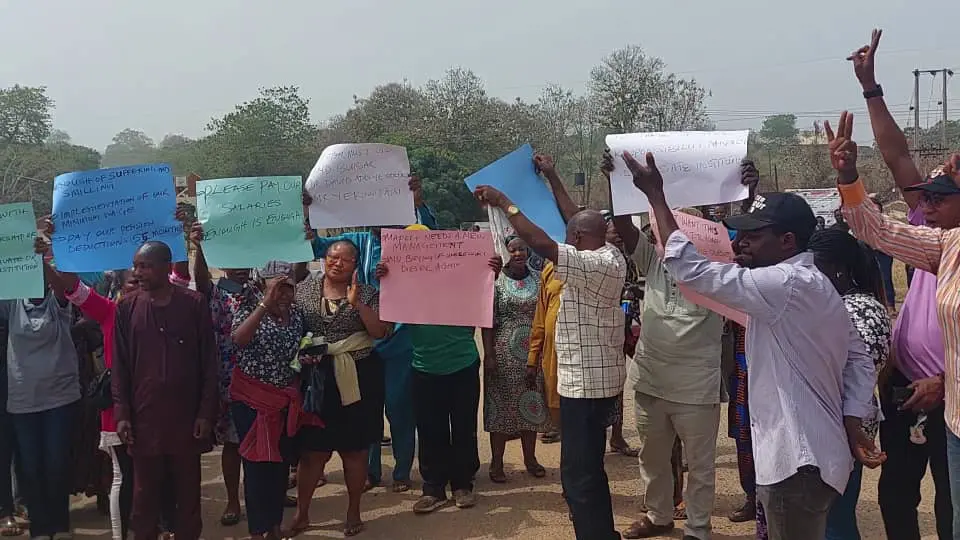
The Senior Staff Association of Nigeria Polytechnics (SSANIP) has raised strong concerns over the government’s failure to settle outstanding promotion arrears owed to polytechnic workers nationwide. The union also expressed worry about rising insecurity, economic hardship, and continued threats to workers’ welfare. Speaking at the 78th General Executive Council Meeting of the association held at the Comrade Olaitan Oyerinde Hall, Labour House, Abuja, on Thursday, SSANIP National President, Philip Ogunsipe, criticised the prolonged delay in the release of new Schemes and Conditions of Service for the polytechnic sector, as well as the slow pace in renegotiating the 2010 Agreement despite multiple assurances from officials. He further lamented the non-disbursement of the 2023 NEEDS Assessment Funds intended for infrastructure development in polytechnics, describing it as a setback to educational growth. Ogunsipe condemned the National Board for Technical Education’s unilateral submission of the reviewed Schemes of Service to the Federal Ministry of Education, calling it a breach of established procedures and a violation of trust between government and labour unions. He noted that outstanding payments owed to staff include promotion arrears, 25%/35% salary review arrears, wage award arrears, and the incomplete implementation of the new national minimum wage. The SSANIP President appealed directly to President Bola Tinubu to intervene and ensure that the concerns of non-academic polytechnic staff are urgently addressed, warning that prolonged neglect could trigger industrial action. SSANIP National Secretary, Nura Gaya, also urged the Federal Government to act promptly on issues affecting non-teaching personnel, while encouraging workers to remain steadfast and committed to duty. Similarly, the National Trustee, Godwin Ikhide, advised members to maintain productivity and called for unity among labour unions as they push for improved working conditions. The association reaffirmed its commitment to advocating better welfare, timely policy implementation, and fair treatment for polytechnic staff across the country.

A-Federal-High-Court-in-Abuja.jpg

4min1120
The National Industrial Court of Nigeria, Abuja division, on Thursday ordered the Central Bank of Nigeria to pay a fine of N620,000 for delaying proceedings in the cases filed by 62 former employees contesting their dismissal. Justice Osatohanmwen Obaseki-Osaghae delivered the ruling after counsel to the ex-staff members, Ola Olanipekun (SAN), raised concerns that the bank’s late filing of a fresh application resulted in an avoidable adjournment on a day fixed for substantial hearing. The 62 disengaged workers, who have filed separate but related suits, are asking the court to overturn the termination letters issued to them on May 23, 2024 under a directive titled “Re-Organisation.” They argue that their sack violated the CBN Act 2007 and internal HR policies, making it unlawful. The claimants seek reinstatement, payment of withheld salaries and entitlements, and complete nullification of the termination. Their lawyer has also filed processes seeking the consolidation of the suits, which previously encountered procedural delays. In 2024, the President of the NICN, Justice Benedict Kanyip, withdrew from the matter after discovering that a member of the CBN’s legal team from D.D. Dodo & Co. is related to him by marriage. Many of the affected workers previously served in the bank’s dissolved Economic Intelligence Unit and maintain that they were unfairly removed despite the unit’s major contributions. Among the unit’s recorded achievements were investigations into the P&ID $11bn arbitration crisis, recovery of N3.18bn hidden by a bank agent, and probes into gaming companies engaged in large-scale, unauthorised FX repatriation. The claimants insist their termination was punitive, arbitrary and intended to dismantle a unit credited with critical intelligence outcomes. During Thursday’s session, Olanipekun said both sides were ready to move forward with the originating summons and the CBN’s outstanding preliminary objection until the bank introduced a fresh motion, filed on November 26 and served that same morning. The new application sought to convert the suit from an originating summons to a writ of summons on the argument that facts were disputed. He urged the court to disregard the motion, describing it as a calculated attempt to stall progress. Olanipekun requested costs of N10,000 for each of the 62 claimants, amounting to N620,000. In response, counsel to the CBN, Wilson Inam (SAN), confirmed filing the motion and apologised for the late service. He maintained that the changes sought were necessary due to factual conflicts requiring a different mode of trial. Justice Obaseki-Osaghae upheld the argument of the applicants, noting that the bank’s fresh filing disrupted the day’s scheduled proceedings. She granted the cost request and ordered that the payment be made before the next sitting.  

Tech & Tools Desk28 November 2025
Hiv-Screening-1280x731.jpg

4min3720
The Lagos State Government has disclosed that an estimated 160,000 residents are currently living with the Human Immunodeficiency Virus (HIV). The figure was announced by the Lagos State AIDS Control Agency during its 2025 World AIDS Day press briefing held on Thursday. Presenting the state’s progress report in Alausa, Ikeja, the Chief Executive Officer of LSACA, Dr. Folakemi Animashaun, stated that the data reflects estimates recorded between January and September 2025. “As of January to September 2025, Lagos State currently has an estimated 160,000 residents living with HIV, of whom 147,466 individuals are enrolled in antiretroviral treatment,” she said. Animashaun praised Governor Babajide Sanwo-Olu for his support, saying it has strengthened health systems and community structures to improve HIV prevention, testing, and treatment. She explained that this year’s theme, “Overcoming Disruptions: Sustaining Nigeria’s HIV Response,” reflects challenges experienced in the state, particularly after the Stop Work Order issued by the United States Government, which disrupted HIV intervention programmes at community level. According to Animashaun, the directive significantly slowed down testing and counselling services. “These pauses in community-based activities reduced access to testing, counselling, and psychosocial support,” she noted, adding that vulnerable groups were the most affected. During the reporting period, the state conducted 222,415 HIV tests — only 28.9 per cent of last year’s total — illustrating the extent of the disruption. She stressed that the drop in testing underscores the need for continuous engagement, early testing, and strong community-driven support. Despite the challenges, she commended community organisations for their resilience and swift intervention. “Their dedication helped Lagos recover lost ground,” she said. She further revealed that the ongoing Statewide Community HIV Testing Campaign, which began on November 18, has screened 9,943 individuals, yielding a 2.0 per cent positivity rate, with all identified cases immediately linked to care. She also highlighted strong participation by women, particularly in Ikorodu, Badagry, Ojo, and Mushin, adding that cases were recorded across several local government areas, confirming that HIV remains a pressing public health concern. Animashaun outlined activities planned for the World AIDS Day observance, including a Jumat service, novelty football match, church outreach, awareness walk, and a stakeholder symposium, alongside intensified anti-stigma campaigns.

James Obasi28 November 2025
senatorss.jpg

4min4630
Justice Daniel Osiagor of the Federal High Court in Lagos has declared that the Federal Government, the 36 states, and the Federal Capital Territory are legally bound to provide free, compulsory, and universal basic education to every Nigerian child at the primary and junior secondary levels. The decision, delivered on October 9, 2025, followed a suit instituted by human rights lawyer, Femi Falana (SAN), and Hauwa Mustapha, filed in their personal capacity and on behalf of the Alliance on Surviving COVID-19 and Beyond. The Federal Government, the states, and the FCT were listed as respondents. According to the certified judgment, Justice Osiagor held that Section 11(2) of the Universal Basic Education Act places a statutory duty on the respondents to ensure access to free and compulsory basic education within their respective jurisdictions. He noted that any state opting into the scheme must contribute 50 per cent counterpart funding before accessing the Universal Basic Education Fund. However, he clarified that failure to draw from the federal grant does not constitute an offence, describing Section 11(2) as directory and conditional rather than mandatory. The court also considered whether the applicants had the legal standing to file the action. Justice Osiagor adopted a broad interpretation, ruling that public interest matters relating to fundamental social rights do not require strict proof of personal harm. He noted that the applicants raised genuine concerns over children’s educational rights and provided evidence of unused federal education funds. On this basis, he affirmed that they had sufficient interest and legal standing to sue. On the enforceability of the right to free and compulsory basic education, the court dismissed the respondents’ position that such rights are non-justiciable under Chapter II of the Constitution. Justice Osiagor held that the Universal Basic Education Act transformed the right from a directive principle to an enforceable statutory entitlement. He emphasized that once legislation imposes obligations, those obligations become actionable under the law, referencing comparative legal principles and Nigeria’s constitutional history. In conclusion, the court held that Sections 2(1) and 11(2) of the UBE Act impose legally binding duties on the Federal Government, state governments, and the FCT to guarantee free basic education for Nigerian children. While it ruled that states cannot be forced to access the N68bn Universal Basic Education Fund or pay the required 50 per cent counterpart contribution, it affirmed that they remain obligated to provide basic education. The first and second issues were decided in favour of the applicants, while the court held on the third issue that failure to access the fund does not amount to illegality.

guinea-1280x839.jpg

5min3170
The Federal Government has strongly condemned the military takeover in Guinea-Bissau, describing it as a serious threat to democracy and regional stability. In a statement on Thursday, Ministry of Foreign Affairs spokesperson Kimiebi Ebienfa said the government received news of the development “with profound dismay and deep concern,” noting that it constitutes “an unconstitutional change of government in the Republic of Guinea-Bissau.” The statement emphasised that Nigeria “condemns this act of military insurrection, which undermines democratic progress, constitutional order, and stability in Guinea-Bissau and across West Africa.” It also highlighted that the coup “violates the fundamental principles of the ECOWAS Protocol on Democracy and Good Governance, which rejects the assumption of power by unconstitutional means.” Nigeria expressed solidarity with the people of Guinea-Bissau, calling for “the immediate and unconditional restoration of constitutional order, the safety of all detained individuals, and full respect for democratic institutions.” The government also urged Guinea-Bissau authorities to ensure the protection of foreign election observers remaining in the country. “The Nigerian Government calls on the authorities in Guinea-Bissau to guarantee the safety of all election observers still on official assignment,” the statement read. It further appealed for restraint, peaceful dialogue, and respect for the will of the people as expressed through the ballot. Warning that the perpetrators would face consequences, Nigeria stated: “Those responsible for this act will be held accountable for threatening to plunge the nation into chaos and reverse the hard-won gains of its democracy.” The government reaffirmed its commitment to working with regional and international partners to restore stability. “As a key member of ECOWAS and the African Union, Nigeria will collaborate with partners to ensure a swift return to constitutional governance in Guinea-Bissau. We remain committed to promoting democracy, peace, and stability across Africa,” the statement added. Meanwhile, election observers from the African Union and ECOWAS also condemned the military announcement of a coup, describing it as an attempt to derail the democratic process. The crisis erupted on Wednesday when military officers declared “total control” of Guinea-Bissau, closed borders, and suspended elections just three days after general elections were held. Heavy gunfire was reported near the presidential palace, and armed personnel blocked access roads. General Denis N’Canha, head of the presidential military office, announced that a command “composed of all branches of the armed forces was taking over the leadership of the country until further notice,” with soldiers stationed nearby. Incumbent President Umaro Embalo, a frontrunner in the elections, was reported to be inside a building behind military headquarters with key officials. Embalo confirmed over the phone to France24 that he had been deposed. Both Embalo and opposition candidate Fernando Dias had claimed victory, with provisional results expected Thursday. The military cited alleged plots involving “national drug lords” and weapons to alter the constitutional order. The armed forces also suspended media broadcasts, imposed a curfew, and halted all electoral activities. The National Electoral Commission reported being attacked by unidentified gunmen. Over 6,700 security personnel, including members of the ECOWAS Stabilisation Force, had been deployed for the elections, which followed years of political tension. The 2025 polls excluded the PAIGC party and its leader, Domingos Simoes Pereira, over late submissions, a move criticised by the opposition. Critics note that President Embalo has governed by decree since dissolving the opposition-led legislature in 2023, and some argue that his term officially ended on February 27.

gggguuunnnn.jpeg

5min12830
By Henry Umoru, Omeiza Ajayi, Boluwaji Obahopo & Luminous Jannamike A vigilante group in Aiyetoro Kiri, Kabba Bunu Local Government Area, Kogi State, successfully prevented a bandit attack on Kiri High School yesterday, ensuring that students were not abducted. The incident follows recent abductions of 25 schoolgirls from Government Comprehensive Secondary School, Maga, in Kebbi State—who have since been released—and over 300 students from St Mary’s Catholic School in Niger State. Northern CAN Chairman, Rev. John Hayab, revealed that the father of three abducted pupils in Niger died from a heart attack due to the trauma. Consequently, the national Christian Association of Nigeria called on the federal government to act decisively to protect citizens amid the rising wave of attacks. Vigilante Response Members of the Kiri Vigilante Group reportedly acted swiftly to confront the attackers, rescuing all students from potential abduction. Community sources confirmed that no student remained in captivity following the coordinated response. However, the operation resulted in the deaths of one vigilante and one local Hausa resident. Zaccheus Dare Michael, Chairman of Kabba Bunu LGA, confirmed the attack, stating that bandits were resisted and repelled by security teams. In a statement released through his Chief Press Secretary, Omofa John, Michael emphasized that operations by joint security forces and local vigilantes are ongoing to maintain safety and restore confidence in the area. Impact on Families Rev. Hayab highlighted the severe emotional toll on families affected by abductions in Kebbi, Kwara, and Niger. He described the death of Mr. Anthony, whose three children were kidnapped in Niger, as a tragic consequence of the trauma families endure. Hayab stressed that families demand immediate action from security agencies to prevent further harm. Calls for Government Action Northern CAN urged the federal government to implement urgent, decisive measures to safeguard citizens nationwide. Archbishop Daniel Okoh, addressing the 32nd Triennial General Assembly of the Christian Council of Nigeria in Abuja, emphasized that the protection of lives and property is a constitutional and moral obligation that requires swift and uncompromising action. FCT School Closure Controversy Separately, FCT Minister Nyesom Wike condemned officials responsible for an unauthorised circular ordering school closures in Abuja, describing the action as irresponsible and capable of spreading panic. Wike affirmed that no threat justified shutting schools and announced disciplinary measures against those involved. Security agencies remain fully deployed to ensure the safety of students. Senate and House React In the Senate, lawmakers engaged in heated debates over the deteriorating security situation, warning that public confidence in government was at risk. Senator Asiru Yisa (Kwara South) proposed creating a Joint Task Force along the Kwara–Kogi corridor, a known escape route for bandits. Other senators called for immediate reforms and sought international collaboration to address the crisis. The House of Representatives condemned government negotiations with kidnappers, warning that such actions would encourage further violence. Representatives from all six geopolitical zones described engagement with criminal networks as a betrayal of national security and called for firm, decisive protection measures. Atiku Abubakar’s Statement Former Vice President Atiku Abubakar criticized the federal government’s approach to recent abductions, describing the release of kidnapped victims as a reminder that bandits now operate with impunity. He called on authorities to act decisively against criminals rather than relying on negotiations, warning that the current strategy undermines public trust and national security.

senatorss.jpg

6min5860
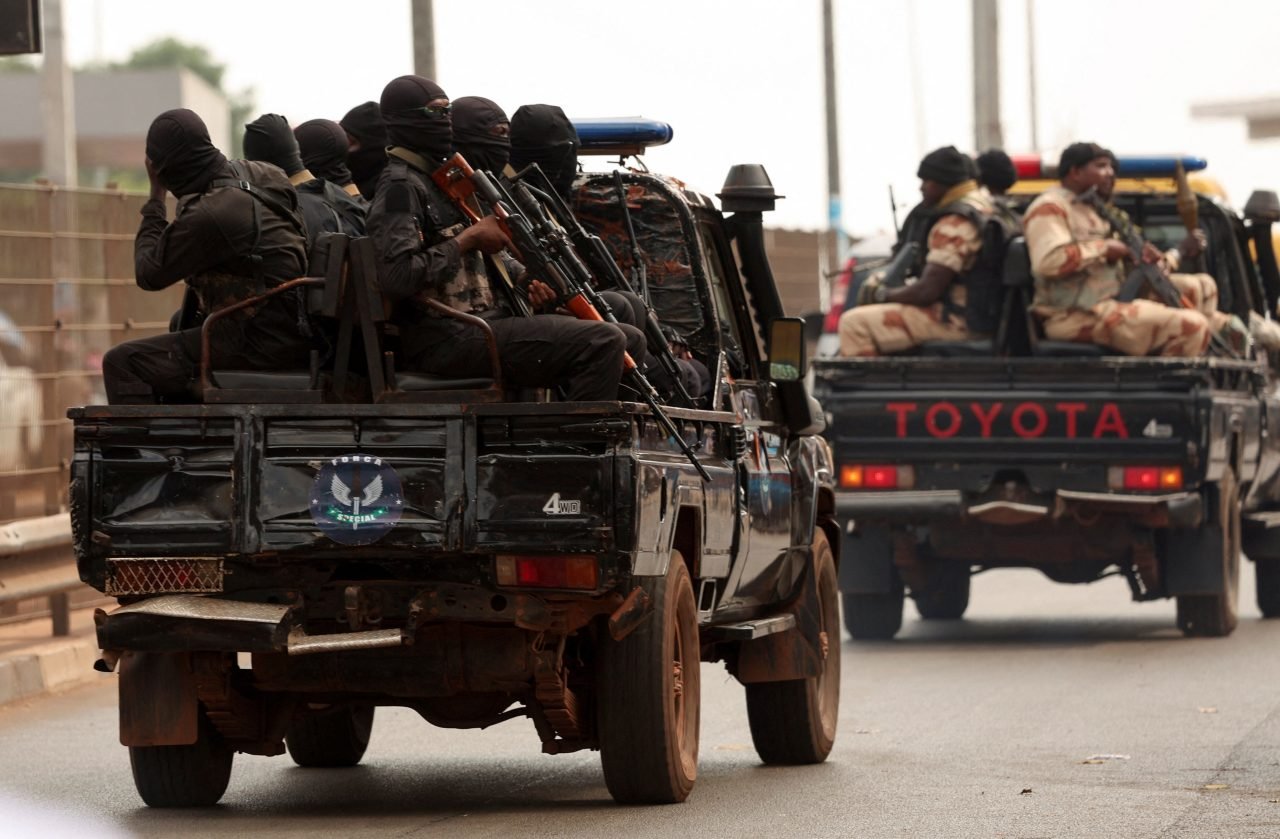
The Senate on Wednesday took a strong stance against Nigeria’s escalating insecurity, declaring kidnapping a form of terrorism and recommending the death penalty for offenders, with no option for fines or judicial reduction of sentences. The resolution followed hours of intense debate triggered by the November 18 attack on Christ Apostolic Church in Eruku, Ekiti Local Government Area of Kwara State, where gunmen killed two worshippers and abducted 38 others. Although all victims were later rescued in joint operations involving the army, police, DSS agents, and local vigilantes, lawmakers warned that the incident exposed the southward spread of insurgent activity and the fragile state of rural security. The decisions stemmed from a motion by Senator Yisa Ashiru (Kwara South) titled “Urgent Need to Address Escalating Insecurity in Kwara, Kebbi, and Niger States and Strengthen National Security Frameworks.” The motion sparked discussions on attacks targeting schools, places of worship, highways, and communities. Senators noted that repeated school abductions had forced closures across Kebbi, Niger, five LGAs in Kwara, and all 47 Federal Unity Colleges. Senator Issa Jibrin (Kogi East) highlighted Nigeria’s critical security manpower deficit, noting that total personnel in the military, police, and paramilitary services “do not total one million,” compared to Egypt’s 1.5 million. He called for urgent equipment upgrades, improved intelligence coordination, and a reserve force to support overstretched troops. Other senators raised concerns over the encroachment of banditry toward Osun through Ekiti-linked communities, areas recently affected by the killings of a retired Army General and a traditional ruler. Lawmakers also blamed poor road networks, which allow criminals to escape easily, urging the Federal Ministry of Works to immediately begin reconstruction of the Idofian–Omu-Aran–Eruku–Egbe–Kabba corridor. Given the rise in brutality and ransom-driven networks, senators resolved that kidnapping constitutes terrorism and must attract the severest punishment. “Capital punishment must apply,” several lawmakers insisted, adding that judges should not have the discretion to reduce sentences for convicted kidnappers. The Senate further urged President Bola Tinubu to enhance the nation’s security architecture. Senator Ali Ndume cautioned that such language should be interpreted carefully, following the recent confirmation of service chiefs. The chamber clarified that its focus is on improving coordination, technology, intelligence, and rapid deployment. In a rare move, the Senate dissolved its Committee on National Security and Intelligence and its Committee on Air Force, directing all other security-related committees to submit written oversight reports and brief the chamber behind closed doors within one week. Lawmakers also moved to strengthen federally supported vigilante groups and called for a review of firearms laws to allow controlled arming of responsible citizens. Earlier, the Senate had adopted a separate motion by Senator Ashiru commending President Tinubu and security agencies for the rescue of abducted victims in Kwara and Niger, while also calling for the creation of a Joint Task Force along the Kwara–Kogi corridor, a known bandit escape route. Debates intensified as senators discussed the abduction of schoolchildren in Kebbi, mass kidnappings in Niger, and the Eruku church attack. Ashiru expressed deep concern over reports that soldiers withdrew from the Kebbi school hours before a bandit attack. Deputy Senate President Barau Jibrin urged Nigeria to seek international collaboration to address the crisis. Senate Leader Opeyemi Bamidele stressed the need for internal reforms, noting gaps in reporting and accountability from security agencies. Senator Enyinnaya Abaribe rejected attempts to blame previous administrations, emphasizing that the current government must take responsibility for recent security lapses. Senate President Godswill Akpabio raised alarms over intelligence breaches, citing incidents where critical information about security personnel had been compromised. Tempers flared when Senator Seriake Dickson accused the majority caucus of downplaying the security situation, prompting protests from APC senators. Senator Adams Oshiomhole defended President Tinubu and demanded an investigation into troop withdrawals, a call the Senate adopted, while renewing its push for the death penalty for kidnappers and highlighting inconsistencies in terrorism sentencing.

Tech & Tools Desk27 November 2025
Gunmen.jpg

5min2660
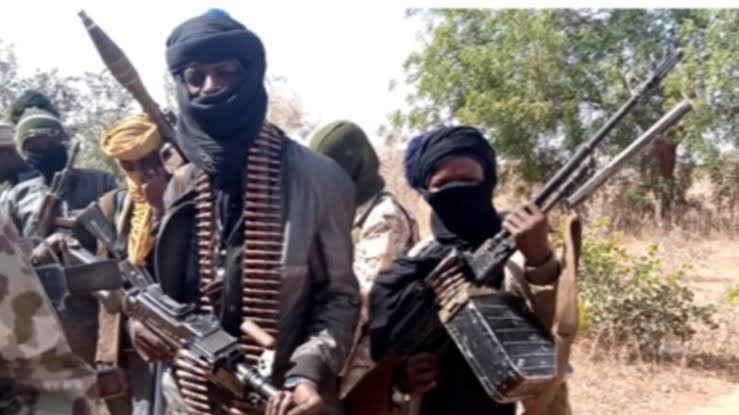
Former National Chairman of the All Progressives Congress and ex-Governor of Kano State, Dr. Abdullahi Ganduje, has condemned the recent bandit attacks in Shanono and Tsanyawa Local Government Areas, which left three people dead and several women and children abducted. In a statement on Wednesday issued by his former Chief of Staff and ex-Commissioner for Information, Muhammad Garba, Ganduje described the attacks as “tragic, painful, and deeply distressing,” warning that the raids represent “a direct assault on communal peace and social stability.” He extended condolences to the bereaved families and affected communities, emphasizing that the trauma caused by the incidents requires urgent support and coordinated intervention from all stakeholders. Ganduje called on the Kano State Government to implement proactive, intelligence-driven, and community-based security strategies, cautioning that the situation “is assuming a worrisome proportion that cannot be ignored.” He urged the government to draw on security models used during his administration (2015–2023), including strengthened vigilance groups, community policing, intelligence sharing, close coordination among security agencies, and development-focused crime prevention initiatives. He noted that such measures had previously helped curb rural banditry, deter urban crime, and maintain relative stability in the state during his tenure. Ganduje also praised the governments of Niger, Kwara, Kebbi, and other states for their “effective and decisive handling” of similar security challenges, commending their swift response and strong community engagement. He acknowledged President Bola Tinubu’s commitment to modernising the armed forces and strengthening the national security framework, describing current initiatives as demonstrating “strong political will and clear determination to secure the country.” He urged residents of the affected areas to remain calm but vigilant and to cooperate with security agencies by providing timely information. “Addressing insecurity requires collective responsibility and synergy among citizens, traditional institutions, government authorities, and security agencies,” the statement added. Ganduje reassured the people of Shanono and Tsanyawa that leaders remain committed to supporting security efforts in their communities. Meanwhile, the Commissioner of Police in Ekiti State, Joseph Eribo, announced on Wednesday that the command had intensified security across the state, particularly at border towns, schools, places of worship, key infrastructure, and known black spots. This followed a viral social media video in which a man—suspected to be a bandit—claimed an impending attack on Ekiti State University and Bamidele Olumilua University of Education, Science and Technology, Ikere Ekiti. However, the Police Public Relations Officer, SP Sunday Abutu, clarified that investigations revealed the video was Artificial Intelligence–generated and designed to create panic. Abutu urged residents to disregard the “fabricated rumour,” continue law-abiding behaviour, and promptly report any suspicious activity to the police through emergency contact numbers. On Tuesday, EKSU management had also assured students and staff that the campus remains secure and that security agencies and the university’s security unit are on high alert. Additionally, the Alawe of Ilawe Ekiti, Oba Adebanji Alabi, dismissed claims on social media of a bandit attack on a farmstead in his community, confirming that no such incident occurred. He noted that security agents and local vigilantes at entry and exit points remain fully operational and urged residents to carry on with daily activities without fear.