Blog - Edupreneur Select

Bring to the table win-win survival strategies to ensure proactive domination. At the end of the day, going forward, a new normal that has evolved from generation.
meeting.jpg

3min3080
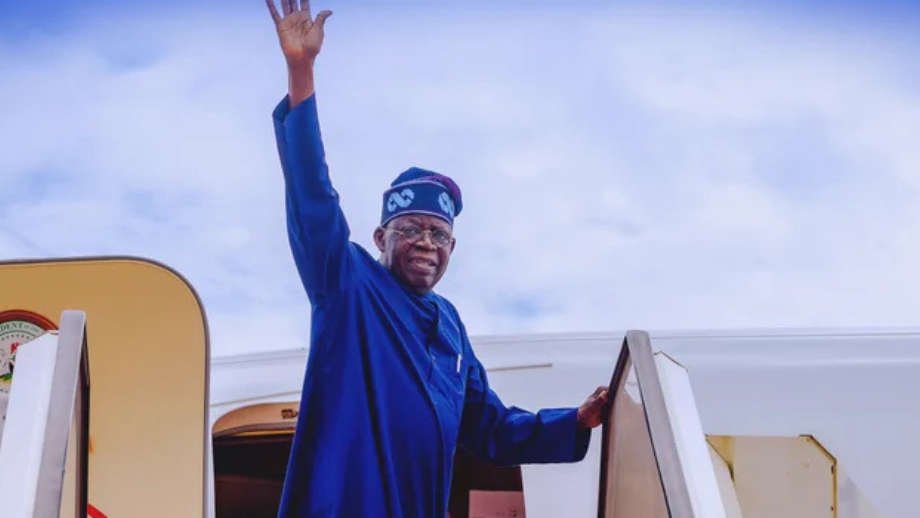
President Bola Tinubu will leave Abuja on Wednesday for a two-nation visit to South Africa and Angola. His first destination is Johannesburg, where he will attend the 20th G20 Leaders Summit. Following the summit, he will travel to Luanda, Angola, for the AU-EU Summit. President Cyril Ramaphosa of South Africa, who currently chairs the G20, extended the invitation to President Tinubu. Earlier, during Brazil’s 2024 G20 Presidency, President Luiz Inacio Lula da Silva had also invited him to participate in Rio de Janeiro. The G20 Summit, scheduled from Saturday, November 22 to Sunday, November 23 at the Johannesburg Expo Centre, will bring together leaders from the world’s top 20 economies, the European Union, the African Union, and major financial institutions. Under the theme “Solidarity, Equality, Sustainability,” the two-day summit will feature three plenary sessions focused on inclusive and sustainable growth, trade and financing for development, disaster risk reduction, climate change, energy transitions, food systems, critical minerals, decent work, and artificial intelligence. President Tinubu is expected to hold bilateral meetings to advance the Renewed Hope Agenda and discuss issues of regional and global peace, security, and development. After the G20 Summit, the President will join African Union and European Union leaders for the 7th AU-EU Summit in Luanda, Angola, from November 24 to 25. The meeting will convene young leaders, innovators, and civil society organisations to explore shared challenges and provide recommendations on climate action, inclusive development, infrastructure, the digital economy, creative industries, manufacturing, and agribusiness. President Tinubu will be accompanied by key officials, including Foreign Affairs Minister Yusuf Tuggar, Finance and Coordinating Minister Wale Edun, Solid Minerals Minister Dele Alake, Trade and Investment Minister Jumoke Oduwole, and Director-General of the National Intelligence Agency, Ambassador Mohammed Mohammed. He will return to Nigeria after the conclusion of both summits.

health-j.webp

3min3140
The President of the Pharmaceutical Society of Nigeria (PSN), Pharm. Ayuba Ibrahim Tanko, has sounded the alarm over the paralysis of federal health institutions, describing the ongoing JOHESU/AHPA strike as “a national health emergency that cannot be allowed to persist.” Tanko spoke during a courtesy visit to the Secretary to the Government of the Federation (SGF), Senator George Akume, where he led a delegation of PSN leaders and past presidents. “All 73 Federal Health Institutions are shut down,” Tanko said, expressing concern that the four-day strike has crippled the nation’s health system. He warned that the shutdown of hospitals and related facilities is having a debilitating effect on healthcare delivery. The strike, which began on November 15 after a 15-day ultimatum expired, involves members of JOHESU/AHPA who constitute roughly 85 per cent of Nigeria’s health workforce. Tanko explained that the industrial action is over a 12-year demand for adjustments to CONHESS salaries, similar to previous adjustments made for CONMESS in 2014, 2017, and 2018. “This dispute has sparked national strikes in 2015, 2017, 2018, 2020, 2022, 2023, 2024, and now 2025. Such repeated disruptions are unacceptable,” he said. Tanko also reminded the SGF that the National Salaries and Wages Commission recommended the outstanding CONHESS adjustments in 2022, a report that has since been with the Budget Office. “It is time for decisive action,” he said, commending recent progress by the Coordinating Minister of the Economy and urging that momentum be maintained. The PSN President offered the Society’s support in mediation efforts, stating: “We stand ready to assist the Federal Government in resolving this impasse quickly.” Tanko further highlighted the PSN’s preparations for its Centenary Celebration on March 26, 2027, marking 100 years since its founding in 1927. Planned activities include health outreaches, public enlightenment campaigns, a series of lectures, high-level policy engagements, and initiatives to expand Good Pharmacy Practice nationwide. He also announced a ₦5 billion Endowment Levy to advance pharmacy education and research, reinforcing the Society’s commitment to global standards and national development. Tanko emphasised the SGF’s key role in the centenary celebrations and reaffirmed the PSN’s willingness to collaborate fully with the government. He concluded by urging swift action to address the crisis threatening the country’s healthcare sector.

Tinubu-Shettimas.webp

4min1990
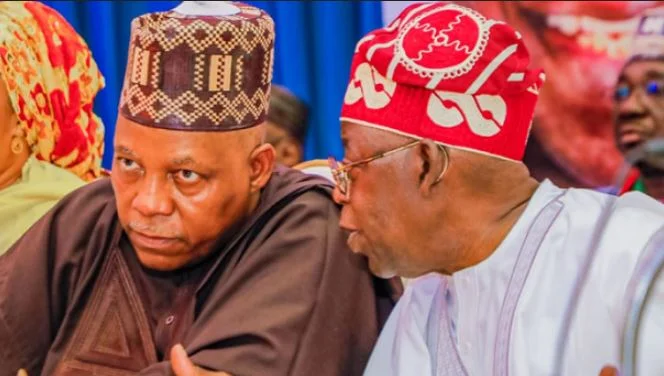
President Bola Tinubu has directed Vice President Kashim Shettima to visit Kebbi State to console the state government and reassure parents and guardians of kidnapped schoolgirls that efforts are underway to secure their swift release. He also extended condolences to the military over the deaths of soldiers, including Brigadier General Musa Uba, who lost his life fighting insurgents in Borno State. The wife of the slain Vice Principal of Government Girls Comprehensive Senior Secondary School, Maga, Kebbi State, Amina Hassan, recounted how her daughter escaped during Monday night’s attack that led to the abduction of 25 schoolgirls. Meanwhile, the Chief of Army Staff (COAS), Lt General Waidi Shaibu, has instructed troops of Operation FANSAN YANMA to intensify the search-and-rescue operation and leave no stone unturned. The Senate, in response, called for the urgent release of the students and urged President Tinubu to recruit at least 100,000 additional military personnel to address rising security challenges and Nigeria’s growing population. US lawmaker Riley Moore condemned the abduction, while UNICEF called for stronger protections for children. President Tinubu, fully briefed by the military on both the abduction and Brigadier General Uba’s death, expressed sadness over the incident and commended Governor Mohammed Nasir Idris for efforts to prevent the attack. He urged communities to provide intelligence to aid security forces in safeguarding schools and neighborhoods. Mrs. Hassan detailed how bandits broke into their home around 3:30 a.m., killed her husband, and tried to abduct her daughter, who escaped into the bush, narrowly avoiding capture. The COAS, during a visit to Kebbi, directed troops to intensify day and night operations, leveraging intelligence to conduct missions aimed at rescuing the abducted girls. He also engaged local vigilantes and hunters, stressing their role in providing intelligence and aiding the military’s operations. The Senate called on President Tinubu to immediately recruit additional military personnel and set up an ad hoc committee to investigate the Safe School Programme, including funding and past failures. Senate leaders stressed the need for collective action, clear accountability, and better coordination among security agencies. The First Lady, Senator Oluremi Tinubu, condemned the abduction and prayed for the swift release of the students and peaceful repose for the slain Vice Principal. The National Association of Nigerian Students (NANS) also demanded urgent action to rescue the abducted girls, highlighting that the incident occurred on International Students’ Day, casting a shadow over planned celebrations. NANS called on the government to prevent recurring attacks on schools and recalled past tragedies, including the Chibok and Dapchi kidnappings, emphasizing the urgent need for enhanced security in educational institutions.  

Tech & Tools Desk19 November 2025
ukkk-1280x720.avif

3min2140
Prominent youth organisations in the South-East, including the South East Youth Assembly and the Ohanaeze Ndigbo Worldwide Youth Wing, have called on former United States President Donald Trump to collaborate with his Nigerian counterpart, Bola Tinubu, in tackling the nation’s security challenges instead of threatening military intervention. The appeal was made by Ugochukwu Nwachukwu, convener of the South East Youth Assembly, and Mazi Chika Adiele, National Publicity Secretary of the Ohanaeze Ndigbo Worldwide Youth Wing, during a press conference in Awka, Anambra State, on Monday. The statement follows Trump’s designation of Nigeria as a “Country of Particular Concern” and his accompanying warning of potential military action over alleged large-scale persecution and killings of Christians. In a joint press statement, Nwachukwu and Adiele emphasised that Nigeria requires strategic international military cooperation alongside President Tinubu, rather than threats, to effectively combat extremist groups. The statement reads in part: “As the world focuses on Nigeria following its designation by the former US President as a ‘Country of Particular Concern,’ we acknowledge the security threats posed by extremist groups. After consultations with eminent leaders and stakeholders, we recognise the unwavering commitment of President Tinubu, as Commander-in-Chief of the Armed Forces, in addressing these crises and other socio-economic challenges.” The youth groups stressed that Nigerian citizens deserve peace, stability, and the protection of fundamental democratic principles such as freedom, equity, and justice. They further pledged: To stand in solidarity with Nigeria’s sovereignty and President Tinubu. To request an urgent closed-door meeting with the National Security Advisor, Alhaji Nuhu Ribadu, to share strategic intelligence in support of national security. To call for a comprehensive overhaul of the country’s security architecture in line with international standards. To urge South-East youths to remain calm, vigilant, and committed to national unity. The organisations concluded that collaboration and strategic alliances are the most effective path to eliminating violent elements and ensuring lasting peace in the country.

James Obasi19 November 2025
newgate-university-minna-matriculation-NUM.webp

4min5970
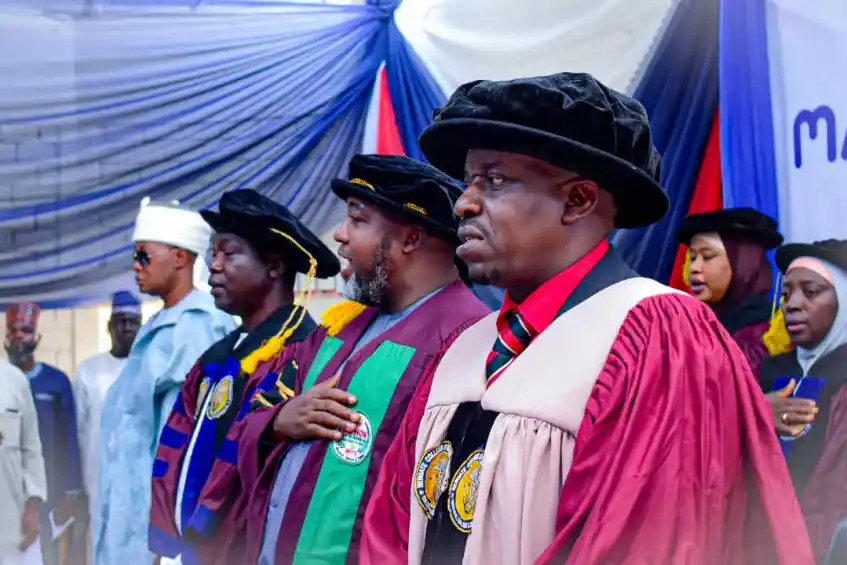
The Vice-Chancellor of the Federal University of Medicine and Medical Sciences, Abeokuta, Prof. Fatiu Arogundade, has appealed to well-meaning individuals and corporate bodies to support the growth of the newly established institution, which began operations only five months ago. Arogundade noted that running a university requires enormous funding and cannot be left solely to the government. He commended President Bola Tinubu for creating specialised medical universities across the six geopolitical zones, saying the initiative will help boost the country’s healthcare workforce and reduce the impact of the Japa trend by producing more qualified health professionals annually. He made the appeal during a briefing to announce the university’s first matriculation ceremony scheduled for Thursday. The VC explained that the school was approved to admit 1,000 students after resource verification, and that over 850 pioneer students admitted through JAMB will participate in the ceremony. The institution currently offers programmes in Nursing Science, Medicine, Biology, Microbiology, Biochemistry, Pharmacy and Medical Laboratory Science, among others. While the university operates temporarily within the Federal University of Agriculture, Abeokuta campus, preparations are underway to relocate to its permanent 170-hectare site at Ajibayo town, which is still under construction. Arogundade also revealed that regulatory bodies — including the National Universities Commission, Medical and Dental Council of Nigeria, Nursing and Midwifery Council of Nigeria, and the Pharmacy Council of Nigeria — have mandated that the permanent site must reach a reasonable level of development in the coming months for the institution to secure accreditation for its eight faculties within the next two years. He acknowledged the support received so far from the federal and state governments, as well as prominent indigenes, but stressed that much more is required to ensure rapid development. According to him, “The Federal Government cannot shoulder the full cost of providing all the facilities needed for a specialised university. We welcome endowments, donations and equipment, which may be named after donors if desired.” He added that hostel development will be carried out through a public-private partnership to be advertised soon. Arogundade reiterated the university’s commitment to producing healthcare professionals who combine knowledge, empathy and innovation, and emphasised that every programme and partnership aligns with the institution’s mission to provide transformative medical education. He expressed gratitude to President Tinubu, the Ogun State Government, the Vice-Chancellor of FUNAAB, Prof. Olusola Kehinde, and the Alake of Egbaland, Oba Adedotun Gbadebo, for their support, while urging continued collaboration from all stakeholders to help the university achieve its vision. He also highlighted the wider challenges facing government-owned universities, including chronic underfunding, inadequate facilities and high student-to-lecturer ratios, which often trigger industrial actions as unions push for improved investment in tertiary education.

Bola-Tinubu66.png

7min2270
To accelerate progress toward Universal Health Coverage, the Lagos State Government on Tuesday launched the Lagos Private Health Partnership (LPHP), a new framework designed to strengthen health financing and significantly increase health insurance enrolment across the state. The LPHP aims to eliminate distrust, price manipulation, and opaque practices within the health insurance space by creating a unified, transparent public–private collaboration model that guarantees fair access to quality healthcare for all residents. Representing Governor Babajide Sanwo-Olu at the launch, the Secretary to the State Government, Barrister Abimbola Salu-Hundeyin, described the initiative as a major milestone toward building a resilient, future-ready health financing system capable of protecting families from overwhelming medical costs. Held at the Civic Centre in Victoria Island, the event brought together senior government officials, regulatory bodies, private insurers, development partners, and financial institutions, all reiterating their support for sustainable health financing and universal access. Sanwo-Olu explained that the LPHP was developed after Lagos domesticated the National Health Insurance Authority Act 2022 through an Executive Order issued in July 2024, which made health insurance mandatory for all residents and established enforcement structures. He added that a dedicated Technical Working Group produced guidelines and the LPHP framework to ensure private-sector participation aligns with state policy, risk-pooling objectives, and digital accountability standards. According to him, the reform will strengthen the private health sector—which currently delivers over 70 percent of health services in Lagos—by providing a clear model that balances service quality, equity, and financial viability. The governor also announced that Lagos has adopted a population-based insurance enrolment model for private-sector employees to broaden risk distribution and improve access to affordable plans. In his remarks, Commissioner for Health, Prof. Akin Abayomi, said the LPHP marks a decisive shift away from years of fragmented and inefficient private health insurance operations marked by unhealthy price wars, access restrictions, and declining public confidence. He stated that the new system was deliberately created to restore fairness, transparency, quality, and long-term sustainability through a cooperative purchasing platform. Abayomi noted that despite Lagos’ population of more than 25 million and its economic strength, the state still suffers from inadequate health financing, low insurance penetration, and rising medical tourism. He described the LPHP as the state’s strongest tool to reverse these trends and improve overall health outcomes. He explained that the LPHP will operate through a robust digital marketplace that manages enrolment, provider selection, fund flow, claims, reporting, and monitoring with strict compliance mechanisms. He said the model will shift competition from price-cutting to value-based service delivery, with quality assurance overseen by HEFAMAA. The commissioner emphasised that full enforcement of mandatory health insurance will begin after a six-month awareness campaign, in line with the governor’s directive to expand risk-pooling, cross-subsidisation, and financial protection for households. He announced that the LPHP will also introduce a state-managed risk equalisation and solidarity fund, mandating private insurers to contribute 13 percent of premiums to support vulnerable groups, emergency care, and universal health coverage goals. Abayomi projected that Lagos could inject over ₦400 billion annually into the health system if 20 million residents enrol at an average premium of ₦20,000 per year. Chairman of the Lagos State Health Management Agency, Dr. Adebayo Adedewe, commended the initiative, calling it a credible solution to the longstanding challenges in the state’s health insurance landscape. He described the launch as a defining moment for health financing reforms in Lagos. The National Adviser on Health Insurance for the Healthcare Providers Association of Nigeria, Dr. Jimi Arigbabuwo, said the LPHP marks a major shift in recognising and integrating private-sector providers, who deliver most healthcare services in the country. He urged the government to ensure fair provider compensation to maintain sustainability and reduce outbound medical tourism. Managing Director/CEO of Sterling Bank Plc, Mr. Abubakar Suleiman, highlighted that the bank’s interest aligns with its HEART agenda, noting that meaningful healthcare financing is impossible without structural reform. He pledged continued financial and digital infrastructure support for LPHP and commended Lagos for creating a unified model driven by transparency, technology, and value-based healthcare. Other stakeholders described the LPHP as one of Nigeria’s most comprehensive health financing reforms, emphasising its potential to serve as a national model. They noted that its success will rely on sustained collaboration, consistent public education, and strong policy enforcement. The event concluded with a call for residents, private employers, civil society groups, insurers, and healthcare providers to support the state’s mission of delivering affordable, technology-driven, and dignified healthcare to all Lagos residents.


asuu-strike.jpg

4min2650
The Benin Zone of the Academic Staff Union of Universities (ASUU) has rejected the Federal Government’s proposed salary increase for university lecturers, describing it as insignificant—especially as lecturers have gone 15 years without any meaningful salary review. Zonal Coordinator, Prof. Monday Igbafen, said the proposed adjustment falls far short of what is needed to address the worsening brain drain in the university system. He faulted the Federal Government for what he described as a persistent reluctance to fully resolve outstanding issues, urging the government to conclude the renegotiation of the 2009 FGN/ASUU agreement and address other unresolved demands. ASUU had previously embarked on a two-week warning strike to press for issues such as full implementation of the 2009 agreement, payment of promotion arrears since 2017, release of withheld deductions, and disbursement of the N50bn revitalisation fund meant for universities. The strike was suspended after government officials promised to present concrete proposals. Rejecting the new wage proposal, Igbafen said, “The salary and conditions of service remain a major concern requiring decisive action. What the government has offered is only a drop in the ocean and cannot reverse the current wave of brain drain plaguing the university system. The back-and-forth approach to negotiations must end.” He noted that lecturers’ salaries have remained largely stagnant since 2009, when the exchange rate was N120 to the dollar. “It is troubling that a professor today earns less than $400 monthly. Keeping lecturers on the same salary structure for over 15 years without a meaningful review is unfair, unacceptable, and fuels unrest and mass exit from the system,” he added. Igbafen accused some government officials, including the Minister of Education, of undermining negotiations through misrepresentation of key issues such as promotion arrears and withheld deductions, which he described as basic entitlements. He said these partial payments were being wrongly presented to the public as substantial progress. He warned that the government’s “half-truths” could lead to further crisis in the sector and urged authorities to resolve all outstanding issues within the remaining one-month window to avoid a total shutdown. “Our government must recognise that investment in education is critical to national development. Excuses about lack of funds or global economic challenges are no longer acceptable,” he said. He also pointed out that government revenues have risen significantly in recent years. “Revenue for 2024 reached N5.81 trillion, a rise of over 62 per cent. The Federal Government alone received N4.65 trillion this year, representing more than 70 per cent growth,” he added.

skynews-scotland-ferry_6282029.jpg

3min2590
The Lagos State Government has reaffirmed its dedication to making the state’s waterways safer as it moves forward with plans to introduce 78 electric ferries under the Omi Eko Project. The state also revealed plans to install modern concrete floating pontoons at various jetties to enhance passenger safety during boarding. The announcement was made in a statement by the Commissioner for Waterfront Infrastructure Development, Dayo Bush Alebiosu. Alebiosu explained that the project, set to run from 2024 to 2030, will deliver 78 high-capacity electric ferries, dredge and open up 15 waterways routes, upgrade 25 terminals, and deploy digital ticketing to improve travel efficiency. “This goes beyond building infrastructure; it represents a complete transformation of how Lagos residents travel, work, and stay connected,” he said. “Our goal is to create a safe, sustainable, and globally competitive water transport system that complements our roads and rail network.” He noted that the new concrete floating pontoons — designed to act as stable and adaptable docking platforms — are already being installed at Agboyi Ketu in Kosofe LGA, Ijegun Egba in Amuwo Odofin, and Bayeku/Ikorodu in Ikorodu LGA. More installations are planned for Ebute Ero (Lagos Island), Ijede (Ikorodu), Apa (Badagry), Mile 2 (Amuwo Odofin), Mowo (Ojo LGA), and several other key locations. “These pontoons are built from solid concrete units that float while resisting wave pressure, offering far greater stability,” he explained. According to him, the innovation will help eliminate the fear many passengers experience when boarding boats on unstable platforms. “The pontoons provide a firm, level surface that feels almost like stepping onto solid land,” he added. Alebiosu further stated that the modular nature of the pontoons makes them useful as temporary bridges during periods of flooding or erosion. He also confirmed that the pontoon upgrades form part of the €410 million Omi Eko Project launched to modernise Lagos’ water transport system. The initiative aims to reduce traffic congestion, boost commuter safety, cut carbon emissions through electric ferries, and strengthen the state’s resilience against rising sea levels. Funding for the project comes from the French Development Agency, the European Investment Bank, and the European Union.

Tech & Tools Desk19 November 2025
tinubu-and-kanu.jpg

4min3600
A coalition of 44 members of the House of Representatives, drawn from both the North and South, has appealed to President Bola Tinubu to pursue a political solution to the ongoing detention of the leader of the Indigenous People of Biafra (IPOB), Nnamdi Kanu. The lawmakers, operating under the banner of Concerned Federal Lawmakers for National Unity, sent a two-page letter and formal resolution to the President, urging him to use his constitutional authority to halt Kanu’s prosecution and open the door to a broader national conversation aimed at restoring peace in the South-East. They argued that deepening political engagement—rather than prolonged legal battles—offers the best chance of addressing rising insecurity and long-standing grievances in the region. The group specifically requested that the President direct the Attorney-General of the Federation to discontinue the Federal Government’s case against Kanu. The letter was endorsed by Ikenga Ugochinyere, Obi Aguocha, Murphy Osaro, Peter Akpanke, Mudashiru Lukman, Paul Nnamechi, Dominic Okafor, Afam Ogene, Emeka Chinedu, Chimaobi Sam, Mascot Ikwechegh, Donatus Matthew, Ibe Osonwa, Okey-Joe Onuakalusi and several others. In their message, the lawmakers stated: “Mr President, after a strategic closed-door meeting and broad consultations cutting across political and ethnic lines, we present this resolution concerning the continued detention of Mazi Nnamdi Kanu. Driven by the urgent need for national healing and reconciliation—and considering previous government negotiations with militants and other agitator groups, as well as the increasing insecurity in the South-East since 2015, which worsened from 2021—we believe the time has come for a decisive political approach. “We also note various domestic court rulings and international tribunal decisions calling for his release. With rising nationwide support for ending his prosecution, we respectfully ask that Your Excellency instruct the Attorney-General of the Federation to withdraw the charges against him and initiate an inclusive political dialogue to deliver a fair and lasting solution.” The lawmakers expressed confidence that the President would give their request thoughtful consideration and reaffirmed their commitment to supporting efforts aimed at strengthening national unity and stability. Nnamdi Kanu was first arrested in October 2015 on charges including treasonable felony. Granted bail in 2017, he later left the country after a military operation at his residence in Abia State—a development IPOB described as an attempt on his life. From abroad, he continued broadcasting messages advocating for a Biafran state. In June 2021, he was intercepted in Kenya and returned to Nigeria to resume his trial. His re-arrest fueled heightened agitation in the South-East, leading to weekly sit-at-home directives and increased violence linked to IPOB activities. Kanu’s long-running trial is now approaching conclusion, with the Federal High Court in Abuja scheduled to deliver judgment on Thursday, February 20, 2025, after he declined to open his defence.

James Obasi19 November 2025
UNICEF_ForEveryChild_White_Vertical_RGB_ENG-e1527338866957.jpg

3min3270
UNICEF has called on the Federal Government to secure the immediate release of the 25 schoolgirls abducted in Kebbi State and to fully enforce the Safe Schools Declaration, which Nigeria endorsed in 2015. The appeal follows Monday’s attack on a Government Girls School in the Maga community of Danko-Wasagu Local Government Area, where armed men killed the vice-principal and kidnapped several students, heightening concerns over continued assaults on educational institutions in the Northwest. In a statement issued by UNICEF Nigeria’s Communication Specialist, Sussan Akila, the agency denounced the attack. “UNICEF strongly condemns the reported assault on a Government Girls School in the Maga community of Kebbi State, which led to the tragic death of the vice-principal and the abduction of 25 students. This heartbreaking incident underscores the urgent need to protect children, schools, and the educators who support their learning,” Akila said. She expressed sympathy for those affected. “We stand with the community during this painful moment. Our heartfelt condolences go to the families who lost loved ones, and we wish those injured a full recovery.” UNICEF also renewed its call for the swift and safe return of the abducted children and emphasised the importance of safeguarding learning environments. According to Akila, “Students, education facilities, and school personnel must be protected from all forms of attack under international law, and those responsible must face justice under both national and international standards.” She reminded authorities of Nigeria’s commitment under the Safe Schools Declaration, which outlines measures to keep schools safe and maintain their civilian nature even in conflict situations. UNICEF noted that it continues to work with government officials and communities to strengthen protection systems and ensure secure learning spaces. “These structures must be reinforced to prevent future tragedies. No child should ever be endangered while trying to get an education,” the statement added. The Safe Schools Declaration is a global commitment endorsed by 121 countries to protect students, teachers, and educational institutions from the impacts of armed conflict. Nigeria has been a signatory since May 2015. In 2021, the House of Representatives announced plans to review concerns over the implementation of the Safe School Initiative, including funds allocated for key projects such as the rehabilitation of Government Secondary School, Chibok, where more than 200 students were abducted by Boko Haram. That same year, the then Senate President, Ahmad Lawan, remarked that the Federal Government’s Safe School Initiative had been poorly executed.