Blog - Edupreneur Select

Bring to the table win-win survival strategies to ensure proactive domination. At the end of the day, going forward, a new normal that has evolved from generation.
aa-2.jpeg

4min9220
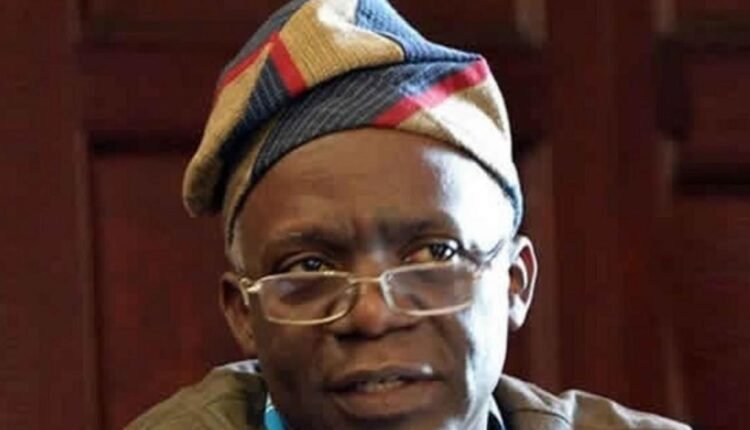
Human rights lawyer and Senior Advocate of Nigeria (SAN), Femi Falana, has condemned the recent wave of demolitions in Lagos and Abuja, describing the actions as unconstitutional, illegal, and a blatant violation of citizens’ rights to property. Speaking on The Morning Show on Arise News, Falana said neither governors nor ministers have the constitutional authority to unilaterally order the demolition of buildings, regardless of alleged infractions. “Under our constitutional arrangement, no governor or minister has the power to wake up one morning and order that someone’s house be demolished. Due process must be followed statutory notices must be issued, complaints heard, and a competent tribunal or court must decide before any demolition takes place,” he said. Falana cited Section 43 of the 1999 Constitution, which guarantees every Nigerian the right to acquire and own property anywhere in the country, and Article 14 of the African Charter on Human and Peoples’ Rights, which reinforces this protection. “The provisions of Chapter Four of the Constitution are sacrosanct. They cannot be breached under any guise not even by ministers or governors claiming to restore order,” he stated. The senior advocate condemned the ongoing demolitions in the Federal Capital Territory ordered by FCT Minister Nyesom Wike and the midnight demolition of parts of Oworonshoki in Lagos, describing both as “acts of executive lawlessness.” He alleged that in Abuja, the legally established Urban and Regional Planning Tribunal had been bypassed, while in Lagos, a valid court order restraining the demolition was ignored. “Our law firm obtained an order from the High Court stopping the demolition in Oworonshoki. The order was served on the government, yet, in the dead of night, bulldozers moved in. That is a clear case of contempt of court,” Falana said. He vowed that affected residents would seek justice, recalling previous court rulings where victims of unlawful demolitions were awarded compensation. “In Abuja, the court recently awarded ₦200 million against the FCT for illegal demolition. In Lagos, ₦3.5 billion was awarded for the Makoko demolitions. The victims will get justice again,” he added. Lamenting the current state of governance, Falana said some civilian officials have become more reckless than military rulers. “Even under the military, the courts insisted that due process must be followed. What we are seeing now is worse. You cannot demolish people’s homes while they are asleep, tear-gas their houses, and claim to be enforcing the law. We are not in Gaza,” he declared. Falana also reacted to the recent controversy surrounding the Presidential Committee on Prerogative of Mercy, chaired by the Attorney-General of the Federation, describing the inclusion of ineligible names in the presidential pardon list as a “national embarrassment.” “Those who recommended unqualified persons for pardon should face sanctions. It is not enough to quietly withdraw the names. The Attorney-General owes the nation an apology for this colossal embarrassment,” he said. Despite doubts about enforcement, Falana reaffirmed his commitment to pursuing justice through the courts. “Whenever victims of injustice come to us, we do not turn them away. We will ensure justice is done, even if the heavens fall. Nobody is above the law in this country,” he vowed.

Tech & Tools Desk1 November 2025
aa-1.jpeg

5min3460
The United Nations has reaffirmed that achieving gender equality is essential to building and sustaining global peace, as it marks 25 years of the Women, Peace and Security (WPS) Agenda, established under Security Council Resolution 1325. “The resolution was a real game-changer,” said Laura Flores, Americas Division Director at the UN Department of Political and Peacebuilding Affairs (DPPA), in an interview with UN News. “People finally began to recognize that women are not just victims of conflict they are key to resolving it.” A statement published on the UN website on October 31, 2025, highlighted the ongoing importance of the agenda, which seeks to ensure that women’s voices are included in peace negotiations and post-conflict recovery efforts. “It’s about making sure women have a seat at the table when peace is being negotiated, and that their voices shape the future of security and stability,” Flores added. According to the latest UN Secretary-General’s Report on Women, Peace and Security, nearly 700 million women lived within 50 kilometres of deadly conflict zones in the past year. The report also noted an 87 per cent increase in sexual violence over the last two years, while nine out of ten peace processes excluded women as negotiators. Despite these challenges, Flores said there are signs of progress, particularly in the Americas. “The region recorded the highest average of women in parliament globally, with Caribbean countries averaging 41 per cent, South America 31.9 per cent, and Central America 30.8 per cent,” she said. She cited Mexico, Chile, and Colombia as examples of nations adopting foreign policies that prioritize gender equality in diplomacy, peacebuilding, and development. “These policies are still new and require strong coordination and political support to fully take root, but they are promising steps forward,” she noted. The UN continues to support countries in implementing the WPS Agenda through a range of initiatives. In Chile, it assisted a presidential commission tackling the root causes of conflict affecting Indigenous communities, focusing on challenges faced by Mapuche women. In Colombia, the DPPA helped draft the country’s first national action plan aligned with Resolution 1325, while in Haiti, the department collaborates with UN Women to support survivors of gender-based violence. However, Flores described the rates of gender-based violence across the region as “alarmingly high,” noting that at least 11 women are killed daily in Latin America. She also warned of rising political violence and online harassment targeting women leaders. “The region has momentum, but it needs protection, investment, and political will to keep moving forward,” she stressed. Flores also underscored the resilience and leadership of Indigenous women in promoting peace and democracy. Among them is Otilia Lux de Cotí, an Indigenous leader and the only Maya K’iche’ woman to have served as a minister in Guatemala’s government. “I am the daughter of Guatemala’s war,” Lux said, recalling the country’s 36-year civil conflict that claimed more than 200,000 lives. Since the 1996 peace accord, she has worked to document violence against women and Indigenous Peoples. Flores noted that Indigenous women played a crucial role during Guatemala’s 2023 elections, when the peaceful transfer of power was under threat. “Indigenous communities took to the streets, raising varas traditional staffs symbolising ancestral authority in defence of their votes,” she said. Lux described the movement as a product of deep community dialogue. “The decision to act was not spontaneous; it followed long discussions and consultations within our communities,” she explained. “We call this process Yacataj in K’iche’ a collective awakening of consciousness. Raising our ancestral symbols was not just protest; it was an act of democratic participation.” As the UN commemorates 25 years of the WPS Agenda, Flores said the courage and leadership of women like Lux exemplify the spirit of Resolution 1325. “The women of the region are proving that achieving peace means refusing to stay silent,” she said.

James Obasi1 November 2025
aa-1280x855.jpeg

4min1690
Former Vice President, Prof. Yemi Osinbajo, has called on policymakers and human resource professionals to ensure that technology and data are deployed to empower people rather than control them. He emphasized the need for ethical responsibility in managing the rapid transformation of today’s workplace. Osinbajo made the call at the closing ceremony of the 57th International Conference and Exhibition of the Chartered Institute of Personnel Management of Nigeria (CIPM) held in Abuja. The statement was issued on Saturday by the President and Chairman of CIPM’s Governing Council, Ahmed Gobir. “Data should serve as a tool of empowerment, not control,” Osinbajo said. “Artificial intelligence has transformed every aspect of our world. The future of work is already here, shaped by digital innovation and our youthful population. We must continue to reskill and upskill to seize the opportunities ahead.” Commending CIPM for its role in regulating people management in Nigeria, the former vice president noted that the institute had become a vital voice in promoting both innovation and ethics in the workplace. His remarks come amid a global debate on the ethical implications of artificial intelligence, automation, and data-driven management. While digital tools boost efficiency, experts warn that they could also lead to job losses, privacy violations, and workplace surveillance if misused. Osinbajo urged HR leaders to champion ethical standards and establish clear policies guiding the responsible use of AI and data. “The ethical and responsible use of technology is critical. HR must take the lead in creating guidelines to regulate AI,” he said, also advocating for labour laws that reflect modern work realities. Highlighting the human side of business, he called on employers to prioritise mental health, empathy, and inclusion as key drivers of productivity. “Employee well-being and mental health must be a priority. A culture of empathy and inclusion sustains productivity,” he noted. “The future of work will not be defined by technology alone, but by how we integrate human values into its use. People, not technology, will shape the new world of work,” Osinbajo concluded. He added, “Nigeria’s future will not be written by technology, but by people empowered to use it with wisdom, empathy, and vision.” CIPM President Ahmed Gobir, in his remarks, urged participants to apply the lessons from the conference in their workplaces. “Translate the insights you’ve gained into tangible results,” he said, adding that the theme, ‘Reimagining the New World of Work’, underscored the need for HR professionals to remain agile and forward-thinking in an evolving digital landscape. Founded in 1968, the Chartered Institute of Personnel Management of Nigeria is the country’s foremost professional body for human resource management. Its annual conference is the largest gathering of HR practitioners in West Africa, bringing together experts from the public and private sectors to explore trends in leadership, workforce development, and technology-driven transformation.

Fuel-Subsidy-2.jpg

3min2730
Chairman of the Presidential Committee on Fiscal Policy and Tax Reforms, Mr. Taiwo Oyedele, has clarified that the proposed 5% fuel surcharge will not be implemented until key economic indicators improve — specifically, a stronger naira or a drop in global crude oil prices. Speaking at the Haulage and Logistics Magazine Conference & Exhibition in Lagos on Thursday, Oyedele explained that although the policy is well-intentioned and aimed at funding road maintenance, introducing it now would place additional pressure on Nigerians already facing economic hardship. He noted that the fuel surcharge was first introduced during the administration of former President Olusegun Obasanjo to allocate part of fuel revenue for road repairs — with 40% designated for federal roads and 60% for state and local government roads. “It’s a brilliant idea and is already operational in over 150 countries,” he said, pointing out that most of Nigeria’s 200,000 kilometres of roads remain in poor condition. Oyedele further revealed that while the Federal Roads Maintenance Agency (FERMA) had requested approval to begin collecting the levy following fuel subsidy removal, the committee declined. “We said no — implementing such a tax now would be insensitive,” he stressed. He added that although the surcharge has been included in the draft tax law, it will only take effect upon a formal order from the Minister of Finance. “The right time would be when the naira gains strength or crude prices decline so that the surcharge doesn’t increase pump prices,” he explained. The tax reform chairman also assured stakeholders that ongoing fiscal reforms would bring substantial relief to the haulage and logistics sector by eliminating multiple taxation, reducing operating costs, and improving transparency. “We are not introducing new taxes; we’re eliminating redundant ones that burden transporters and inflate prices,” he said. According to him, under the new framework, small transport and logistics businesses with annual revenue below ₦100 million will be exempted from company income tax, while qualified operators will enjoy VAT refunds and other incentives. Oyedele concluded that the reforms aim to simplify Nigeria’s complex tax structure and ensure fair, transparent distribution of revenue across all tiers of government.

Woman-des-of-Lassa-fever-in-Benue-1.jpg

4min1760
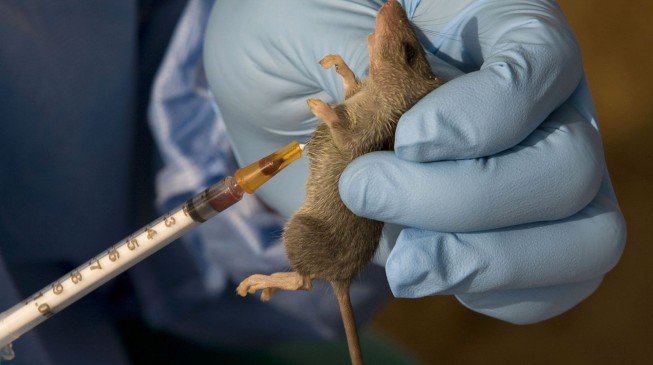
The Benue State Government has ordered the immediate closure of a private hospital and mortuary in Okpokwu Local Government Area following the death of a 54-year-old woman who tested positive for Lassa fever. The Commissioner for Health and Human Resources, Dr. Paul Ogwuche, announced the decision in Makurdi on Thursday, explaining that it was part of emergency containment measures to prevent further infections and allow for complete decontamination of the facility. He revealed that all hospital staff and individuals who had direct or indirect contact with the deceased have been identified and placed under medical surveillance. According to Ogwuche, the woman, a resident of Ogbadibo LGA, passed away on Sunday at the Benue State University Teaching Hospital, Makurdi, where test results confirmed Lassa fever. Her body was later taken to a private morgue in Ugbokolo, Okpokwu LGA. However, the containment team faced resistance when some irate youths from the deceased’s community forcefully retrieved the corpse during burial preparations. “As part of the initial response, I personally led a team of health officials and security personnel to the two LGAs to ensure public safety, containment, and order,” Ogwuche said. He added that after intensive dialogue with the family, community leaders, and youth groups, the body was retrieved and buried safely in Orokam (Ogbadibo LGA) by the State Safe Burial Team, in accordance with WHO and NCDC guidelines. The commissioner confirmed that the body was interred on Wednesday under strict supervision, while the affected hospital and morgue remain sealed pending disinfection and further investigation. “All community and facility contacts have been traced, and health education sessions have been conducted in Ogbadibo and Okpokwu LGAs to promote hygiene, awareness, and calm,” Ogwuche stated, emphasizing that public health safety remains the government’s top priority. He commended the cooperation of local government chairmen, traditional rulers, and security agencies, warning that the government would not condone actions that threaten public safety. Ogwuche urged residents to avoid handling corpses of individuals who die from suspected infectious diseases and to report any cases of prolonged fever or unexplained bleeding to the nearest health facility. Lassa fever has continued to pose a public health challenge in Benue State. As of September 2025, the State Epidemiologist, Dr. Asema Msuega, reported 243 suspected cases and 13 deaths, including that of a health worker, with 18 confirmed through laboratory testing. Five of the deaths were from confirmed cases, while eight were classified as probable, involving individuals who died before samples could be collected.

impeac-hment.jpeg

3min1430
Bayelsa State Deputy Governor, Lawrence Ewhrudjakpo, has instituted legal action against the Bayelsa State House of Assembly at the Federal High Court in Abuja over an alleged plot to impeach him. In the suit marked FHC/ABJ/CS/221/2025, Ewhrudjakpo claimed that lawmakers were being pressured to remove him from office because he declined to defect from the Peoples Democratic Party (PDP), the party under which he and Governor Douye Diri were elected. While Governor Diri recently resigned from the PDP, the deputy governor has remained with the party. Represented by his counsel, Reuben Egwuaba, Ewhrudjakpo alleged that some local government chairpersons, including Alice Tange of Sagbama LGA, were also facing threats of removal for refusing to leave the PDP. He is seeking several interim orders, including one restraining the state Assembly from initiating or carrying out any impeachment proceedings against him for maintaining his membership in the PDP. According to him, any such action would violate Sections 188(5–9, 11) and 36(1) of the 1999 Constitution (as amended). Ewhrudjakpo further asked the court to restrain the Assembly from recognising or dealing with any member of the All Progressives Congress (APC) as the deputy governor of Bayelsa State. He also sought an order preventing the Inspector-General of Police, the Director-General of the Department of State Services, and the Bayelsa State Attorney-General from withdrawing his security protection pending the determination of his motion on notice. After considering the ex parte motion on October 27, Justice Emeka Nwite ordered all defendants to appear before the court to explain why the interim orders requested should not be granted. The defendants in the case include the Bayelsa State House of Assembly, its Speaker, the Inspector-General of Police, the Director-General of the DSS, the Bayelsa State Attorney-General, the State Chief Judge, and the Clerk of the Assembly. Justice Nwite ruled that the interests of justice would be best served by allowing the defendants to appear and show cause before any interim reliefs are considered. The case was adjourned to November 13 for the defendants to present their arguments, after which the court will proceed to hear the substantive motion.

Tech & Tools Desk31 October 2025
healthcare-.jpg

5min1330
Health experts have raised serious concerns that the continued migration of medical professionals, widely known as the “Japa” phenomenon, is pushing Nigeria’s already fragile healthcare system toward collapse. The warning was issued during the 10th Olikoye Ransome-Kuti Memorial Lecture, organised by the IFEMED Journal Club under the Obafemi Awolowo University Medical Students’ Association, held on Thursday at the university’s Ile-Ife campus. Themed around tackling the mass exodus of healthcare workers, the event attracted notable figures, including the Coordinating Minister of Health and Social Welfare, Ali Muhammed (represented by the Chief Medical Director of the Obafemi Awolowo University Teaching Hospital, John Okeniyi), and former Elizade University Vice-Chancellor, Prof. Kayode Ijadunola, who delivered the keynote address. Speaking on behalf of the minister, Okeniyi said the Japa wave undermines the vision of the late Prof. Olikoye Ransome-Kuti, who championed accessible and high-quality healthcare for all Nigerians. He, however, expressed optimism about the emerging “reverse Japa” trend, noting that some professionals are beginning to return home as ongoing reforms take effect. Chairman of the event, Prof. Roger Makanjuola, described Ransome-Kuti as a man of unmatched integrity who left an indelible legacy of transparency and service. He urged Nigerians to safeguard the health sector the late professor helped to strengthen. Delivering his keynote address, Ijadunola criticised what he called the government’s “tokenistic” approach to addressing the worsening brain drain among health professionals. “Any nation that trivialises the migration of its critical workforce and adopts token measures as a response is essentially sabotaging itself,” he stated. Citing disturbing data, he noted that Nigeria currently has only 1.83 skilled health workers per 1,000 citizens—less than half of the World Health Organisation’s recommended benchmark of 4.45. Out of the country’s 55,000 licensed doctors, about 17,000 are said to have left for opportunities abroad. He traced the root of the crisis to long-standing neglect, recalling that as far back as 1988, a presidential committee under General Ibrahim Babangida was set up to address brain drain triggered by poor working conditions and infrastructure. To stem the tide, Ijadunola called for transparent governance, merit-based promotions, better pay, and structured opportunities for Nigerian professionals abroad to contribute to the local health system. “Rebuilding the sector requires stronger institutions, accountability, and a renewed commitment to good governance,” he said. The lecture also featured the presentation of awards for the 6th National Olikoye Ransome-Kuti Memorial Essay Competition themed “Global Health Workforce Migration and Its Impact on the Nigerian Health Sector.” From over 200 entries, Yusuf Zabairub of Ahmadu Bello University emerged the winner, followed by Buhari Ahmad of the University of Ilorin in second place, and Abubakar Daniel Bade of the University of Maiduguri in third. Meanwhile, the Nigerian Association of Resident Doctors has declared a nationwide indefinite strike beginning November 1, following the expiration of its 30-day ultimatum to the Federal Government. NARD President, Dr. Muhammad Suleiman, disclosed that the government owes doctors and other health workers across the country an estimated ₦38 billion in unpaid allowances. He added that resident doctors have already begun ward handovers in preparation for the industrial action.

James Obasi31 October 2025
Unicef.png

3min4890
The United Nations Children’s Fund (UNICEF), in partnership with the Federal Ministry of Information and National Orientation, has called on journalists to uphold ethical standards when reporting issues related to children, emphasizing the need to protect their rights, dignity, and well-being. The reminder came during a two-day capacity-building workshop on ethical journalism and child rights reporting, organised by the Child Rights Information Bureau of the ministry in collaboration with UNICEF. The training, held at Kakanfo Hotel in Ibadan, Oyo State, brought together over 30 journalists, editors, and correspondents from across the country to strengthen advocacy for child protection and the full implementation of the Child Rights Act. Stakeholders cautioned against publishing stories that could expose children to harm, stigma, or exploitation, particularly in light of the growing challenges of insecurity, violence, hunger, malnutrition, child labour, and abuse in Nigeria. They noted that any report that portrays a child negatively or as a victim could cause more damage than protection. UNICEF Lagos Field Office Chief, Celine Lafoucriere, in her keynote address titled “Why Ethical Reporting of Children Matters in Nigeria,” highlighted that children’s vulnerability makes ethical reporting an urgent priority. She noted, “Children are not miniature adults. Ethical reporting is not just a professional standard; it is a moral responsibility. It ensures that every child is seen, heard, and protected with dignity.” Lafoucriere urged journalists to become champions of responsible storytelling, adding that the media’s role goes beyond informing — it also shapes perceptions and influences how society treats its most vulnerable members. In his welcome remarks, the Permanent Secretary of the Federal Ministry of Information and National Orientation, Ogbodo Nnam, represented by Temitoye Falayi, Head of the Child Rights Information Bureau, said the training aims to foster a media culture that protects children’s identities, amplifies their voices responsibly, and prioritizes their best interests. “The media holds great power — the power to inform, inspire, and hold leaders accountable. But with that power comes an equally great responsibility: to report with sensitivity, integrity, and respect for human dignity,” Nnam said. Experts including Dr. Jide Johnson of the Nigerian Institute of Journalism, communication specialists Dr. Lekan Sote and Dr. Geoffrey Njoku, and Prof. Charles Obot of the University of Uyo, emphasized that journalists must understand both national and international child protection laws. They stressed that every report involving children must uphold the principle of “do no harm” and promote their safety, growth, and rights above all else.  

VERVE-LIFE-245-1-1024x683-1.jpg

3min6890
Africa’s leading payment card brand, Verve, has announced that the grand finale of VerveLife 8.0, the continent’s biggest fitness and lifestyle festival, will take place on November 1, 2025, at the Eko Convention Centre, Victoria Island, Lagos. After hosting a series of lively satellite events in Nigeria, Uganda, and Kenya, the Lagos finale will serve as the ultimate celebration of this year’s edition — a day filled with fitness, music, fun, and positive energy, uniting thousands of fitness enthusiasts, wellness advocates, and lifestyle lovers from across Africa. According to Tomi Ogunlesi, Divisional Head, Brands, Communications, Content, and CSR at Interswitch Group, VerveLife has grown over the past eight years into a pan-African platform for community, wellness, and empowerment. With the theme “Elev8”, the 2025 edition encourages participants to push boundaries, embrace vitality, and live brighter — reflecting Verve’s mission to promote holistic health and happiness. “VerveLife is more than just a fitness event; it’s a lifestyle movement that celebrates energy, resilience, and unity,” Ogunlesi said. “Through VerveLife 8.0, we’re not only elevating fitness but creating experiences that connect people across the continent.” The event will kick off at 7:00 a.m. with VerveLife’s signaturey high-energy fitness part, featuring top African trainers, dance instructors, and wellness experts. Attendees can also enjoy obstacle course challenges, lifestyle and nutrition classes, wellness talks, breakout sessions, and even a kiddies’ corner for families. The excitement continues into the night with the VerveLife 8.0 After Party at 7:00 p.m., featuring electrifying performances from leading African artists and DJs — promising an unforgettable celebration of music, movement, and community. VerveLife 8.0 is powered by Verve in collaboration with partners such as Google Play, Interswitch, Quickteller, Hygeia HMO, Carloha Chery, Reelfruit, Pocari Sweat, Amstel Malta, and Africa Sport Network, ensuring a premium experience for all participants. Registration is now open at myverveworld.com/life, and participants can follow @Vervelife_ and @Vervecard on social media for event updates, fitness inspiration, and behind-the-scenes highlights.

fg.webp

5min4600
The 10th edition of the BudgIT State of States Report has revealed that more than 30 states in Nigeria depend heavily on revenue allocations from the Federation Account Allocation Committee (FAAC), resulting in mounting fiscal pressures across the federation. Titled “A Decade of Subnational Fiscal Analysis: Growth, Decline, and Middling Performance,” the report was presented in Abuja on Tuesday and marks ten years of BudgIT’s assessment of state-level fiscal performance in Nigeria. BudgIT, a leading civic-tech organisation that promotes fiscal transparency and accountability, highlighted that only a few states — including Lagos, Ogun, and Enugu — generate a significant portion of their revenue internally. “At least 30 states, excluding Lagos, Ogun, and Enugu, rely on FAAC for over 60% of their recurrent revenue,” a BudgIT executive said during an interview. “In total, 31 states depend on FAAC for at least 80% of their current revenue, which underscores the fiscal vulnerability of most states.” While Lagos remains an outlier with a strong internally generated revenue (IGR) base, Enugu and Ogun were also praised for their impressive revenue growth. Fifteen states reportedly improved their IGR by over 50%, with Enugu leading the way, while two states — including Kebbi — recorded negative growth. The report noted that the share of IGR in total recurrent revenue dropped from 25.27% in 2023 to 20.27% in 2024, showing increased dependence on federal transfers. It further stated that in 2023, six states needed more than five times their IGR to cover operating costs, but by 2024, the number had risen to 14. Only a few states were identified as effectively managing this dependency challenge. Enugu now tops the chart with a 146.68% IGR-to-operating-expense ratio, followed by Lagos at 120.87%, while most others remain heavily reliant on FAAC inflows. On the debt front, the report offered some optimism. Between 2023 and 2024, 31 states reduced their domestic debt by at least N10 billion, with Lagos, Cross River, and Delta each cutting over N100 billion. This contributed to a total decline of over N2 trillion in subnational domestic debt. Similarly, foreign debt dropped by more than $200 million within the same period, with Lagos, Enugu, and Gombe recording the largest reductions. Despite these gains, Lagos still holds the highest foreign debt at $1.17 billion, accounting for over a quarter of all subnational external debt, followed by Kaduna, Edo, Cross River, and Ogun. On expenditure priorities, the report observed a positive shift toward capital projects, noting that total capital spending surpassed recurrent expenditure by roughly N1 trillion. Abia State led this improvement, dedicating 77.05% of its total expenditure to capital development. In all, 24 states allocated at least half of their budgets to capital investments. However, six states — Bauchi, Ekiti, Delta, Benue, Oyo, and Ogun — still spend over 60% of their budgets on personnel and overhead costs. Reflecting on the findings, BudgIT’s Group Head of Research, Vahyala Kwaga, stressed the need for deeper fiscal reforms. “Over the past decade, the State of States report has become Nigeria’s most reliable subnational fiscal analysis,” Kwaga said. “This 10th edition not only captures growth and imbalance but also emphasizes the urgent need for structural reform.” He added that fiscal sustainability will require states to “look inward, strengthen their revenue systems, cut waste, and prioritise investments in infrastructure and human development that create long-term value.”