Blog - Edupreneur Select

Bring to the table win-win survival strategies to ensure proactive domination. At the end of the day, going forward, a new normal that has evolved from generation.
Imo-State.jpg

4min5210
Traditional leaders in Oguta, located in the Oguta Local Government Area of Imo State, have officially abolished the long-standing outcaste (Ohu) system, marking a major step toward ending discrimination and social stigma in the community. The Ohu and Osu caste practices, which had for generations classified certain families as inferior and barred them from marrying or holding traditional titles, had caused deep divisions and resentment among residents. Announcing the historic decision on Sunday, Chief Nduka Oduenyi, the Ogana (spokesman/assistant) to the traditional ruler of Oguta, Eze Nnani Eze-Eyiche, said the move followed the relentless efforts of the Oguta Ohu Eradication Dialogue Group (OOEDG), a coalition of prominent indigenes of the community. According to Oduenyi, the abolition was the result of sustained advocacy, dialogue, and collaboration among community leaders, professionals, religious figures, and traditional title holders. He declared, “The Ohu caste system — long seen as discriminatory and demeaning — no longer exists in Oguta. This marks a new era of unity and equality for our people. For years, this practice divided families, created stigma, and denied people their dignity.” He further explained that the abolition now allows all sons and daughters of Oguta to intermarry freely, without fear of discrimination or exclusion. Chief Mike Ogbonna, chairman of the OOEDG, expressed joy at the landmark development, noting that the effort involved both those in the diaspora and at home. He said, “This victory took years of persistence. The outcaste system has broken hearts, caused suicides, and denied people basic rights. As enlightened citizens, we knew it had no place in this century. Ending it is one of the greatest achievements for our generation.” A Catholic priest and member of the group, Prof. Lawrence Okwuosa, praised the decision, stating that the proclamation had finally brought equality to every indigene of Oguta. “With this declaration, all forms of caste distinction are gone. Every Oguta son and daughter is now free, equal before God and man, and fully integrated into community life,” he said. Prof. Okwuosa also urged other traditional rulers across Igboland to emulate Oguta’s example and end similar caste systems that have perpetuated division for generations. The public declaration was witnessed by representatives of the Catholic Archbishop of Owerri, Lucius Ugorji; the Anglican Bishop of Oguta Diocese, Bishop Chijoke Otti; various religious leaders; traditional title holders; and distinguished indigenes from within and outside the country.

NDLEA-2.jpg

5min1930
The National Drug Law Enforcement Agency (NDLEA) has announced the arrest of a Lagos-based music artist, Godspower George Osahenrumwen, popularly known as Steady Boy, for allegedly attempting to collect a shipment of illicit drugs smuggled from the United States on behalf of his manager in the Lekki area of Lagos. The agency also uncovered an illegal drug production laboratory located in the Ajao Estate area of the state. NDLEA spokesperson, Femi Babafemi, disclosed this in a statement issued on Sunday. According to the statement, Steady Boy was apprehended after operatives intercepted a large consignment of Loud (a potent strain of cannabis) hidden inside three cartons of bathtubs at the import section of the Murtala Muhammed International Airport, Lagos. The shipment had arrived from the United States via a DHL flight on Tuesday. “The 20-year-old artist was arrested at Bougain Villa, Primewater Gardens 2, Freedom Way, Lekki, Lagos, when he appeared to take delivery of 140 bags of Loud weighing 77.20kg on behalf of a syndicate that includes his manager, Zion Osazee Omigie, also known as Zee Money, who is currently on the run,” the statement said. Babafemi explained that after months of surveillance linked to an earlier interception of a batch of Colos (Colorado), NDLEA operatives uncovered a secret laboratory where the drug was being produced in large quantities. The suspected owner of the facility was arrested. From the laboratory, officers recovered “freshly processed Colos weighing 16.2kg, 1.7kg of ADB-CHMNACA Cannabinol, 4.5kg of Potassium Carbonate, and 91 litres of Dibromobutane.” In a separate operation in Mushin, Lagos, NDLEA operatives raided the residence of a 28-year-old drug dealer, Afeez Salisu, also known as Malu, where they seized 16 blocks of Ghana Loud and designer sachets and bottles of Colorado weighing 16.4kg. Across other states, the NDLEA made several major interceptions: In Kaduna, officers stopped a consignment of 84,710 capsules of Tramadol on the Abuja–Jos highway and later arrested the intended recipient, Musa Abdulkarim, in Bauchi. Another suspect, Hamza Musa, was caught transporting 32,946 bottles of Akuskura, a new psychoactive substance, from Lagos to Kaduna. Three men — Seun Olaniyi, Rauf Asogba, and Ayinla Adeniyi — were arrested in Abeokuta, Ogun State, with 1,779kg of skunk after being tracked from Benin Republic. In Bauchi, one Jamilu Mustapha was arrested, while in Kwara, over 532,000 pills of Tramadol and Exol-5 were seized from three suspects. Edo State officers intercepted two vehicles carrying 1,455kg of skunk, and in Ondo, 2,829kg of the same substance was recovered from locations in Ogbese and Akure. In Badagry, Lagos, 76.5 litres of skuchies were recovered, while in Taraba, officers seized 30,370 pills of Tramadol and 177 grammes of methamphetamine from two couriers heading to Adamawa. Commending NDLEA officers for their continued efforts, the agency’s Chairman and Chief Executive, Brig. Gen. Mohamed Buba Marwa (Retd.), vowed that the NDLEA would persist in dismantling drug syndicates across the country. He reaffirmed the agency’s commitment to sustaining its nationwide operations against drug trafficking, which have already led to thousands of arrests, convictions, and significant drug seizures in recent years.

fg.webp

4min1300
The Federal Ministry of Health and Social Welfare has condemned the abduction of Dr. Tochukwu Mbanugo, a consultant neurosurgeon with the Nnamdi Azikiwe University Teaching Hospital (NAUTH), Anambra State, who was kidnapped by gunmen shortly after performing a life-saving brain surgery. Dr. Mbanugo was reportedly attacked around Omatha Junction, Uruagu, Nnewi, on Thursday, October 30, while returning home after completing multiple complex surgical procedures. The incident has sparked outrage within the medical community, with the Nigeria Medical Association (NMA), Anambra State branch, threatening to embark on a strike if the doctor is not released within 72 hours. In a statement signed by the Minister of State for Health, Dr. Iziaq Salako, the ministry described the abduction as a grave assault on the nation’s health security and the well-being of its citizens. “Earlier that day, Dr. Mbanugo had carried out several critical neurosurgical operations, including the removal of a complex brain tumour. His abduction occurred just as he was returning home after dedicating his day to saving lives,” Salako said. He added that the abductors later contacted the doctor’s colleagues through his phone. Salako expressed deep concern over the incident, noting that Nigeria’s already limited number of neurosurgeons makes the loss or endangerment of any specialist a national crisis. “Nigeria has fewer than 150 practising neurosurgeons serving over 220 million people — a far cry from the WHO’s recommendation of one neurosurgeon per 100,000 population. This makes every specialist doctor invaluable,” he stated. He further stressed that the government “strongly condemns all forms of violence against healthcare workers,” describing them as national assets who deserve protection and respect. According to the minister, security agencies, including the Anambra State Police Command, Department of State Services, and the Anti-Kidnapping Squad, have been mobilised and are working with NAUTH management, the NMA, and other stakeholders to ensure Dr. Mbanugo’s safe release. “The Federal Government calls on the Anambra State Government and all relevant security agencies to intensify efforts toward locating Dr. Mbanugo and securing his immediate and unconditional release,” Salako urged. He extended sympathy to the victim’s family, colleagues, and the medical community, reaffirming the government’s commitment to improving the safety and welfare of health professionals across the country.

Tech & Tools Desk3 November 2025
gombe.png

4min5620
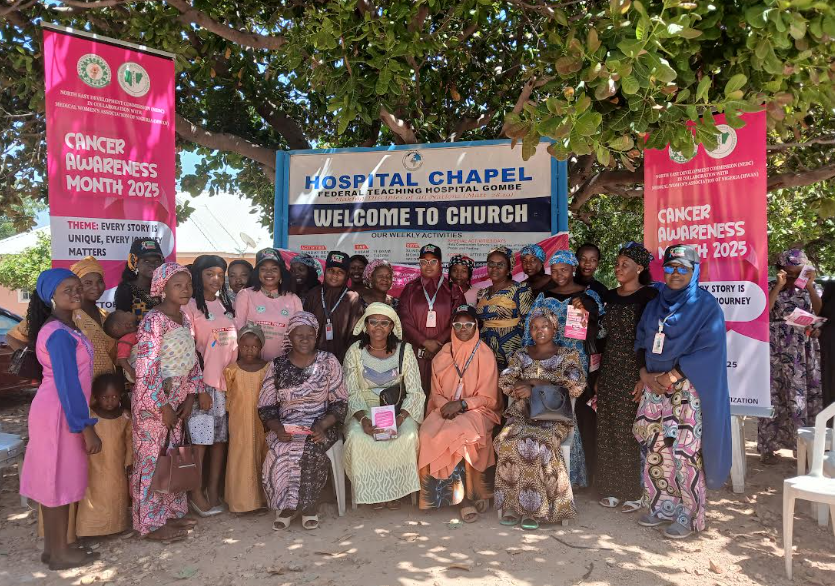
The North-East Development Commission, in partnership with the Medical Women’s Association of Nigeria (MWAN), Gombe State Chapter, has expressed concern over the rising cases of cancer, particularly cervical and breast cancer, among women in the region. During an awareness event held at the Chapel of the Federal Teaching Hospital, Gombe, on Sunday, Dr. Fatima Bakari, Registrar in the Department of Obstetrics and Gynaecology, said the initiative was part of activities marking the 2025 Cancer Awareness Month, themed “Every Story is Unique, Every Journey Matters.” She announced that the association would organise a road walk and free cancer screening exercise for Gombe residents on Wednesday. “We are here to create awareness about breast and cervical cancer. These diseases remain leading causes of death among women of reproductive age, and our aim is to help women understand the importance of early detection. The earlier a cancer is discovered, the higher the chances of successful treatment,” Bakari said. She explained that the outreach at the hospital chapel was part of a broader strategy to reach women and young girls in different community spaces. “We take our campaign to chapels, mosques, markets, and schools to reach as many people as possible. Every woman who is sexually active should get screened every three years,” she advised. According to her, awareness programs are key to ensuring women become more conscious of their health and know that screening services are accessible. “We want women to understand that there is hope—cancer can be cured if detected early,” she added. Bakari also encouraged safe sexual practices and timely screening, explaining that cervical cancer can be prevented through vaccination. “The vaccine is free for children between the ages of 9 and 14 in public health facilities. For those older than 14, it can still be obtained privately,” she noted. Highlighting the symptoms, she said, “For breast cancer, any swelling, no matter how small, should not be ignored. Self-examination should be done monthly, and any suspicious change should be reported immediately.” Another speaker, Dr. Aishatu Musa from the same department, urged parents to ensure their children benefit from the free vaccination campaign. “Our children should be vaccinated. It’s free, and Wednesday’s screening is also free. Everyone should take advantage of it,” she said. A participant, Barrister Martha Daniel, commended MWAN for the initiative, describing it as enlightening. “We’re grateful for this awareness campaign. Many people mix spirituality with myths when it comes to health, but today, we’ve been able to understand that both science and faith have their place when properly applied,” she said. The World Health Organisation reports that breast and cervical cancers are among the most common cancers affecting women globally, with sub-Saharan Africa recording some of the highest incidence and mortality rates.

James Obasi3 November 2025
trump.jpg

4min2410
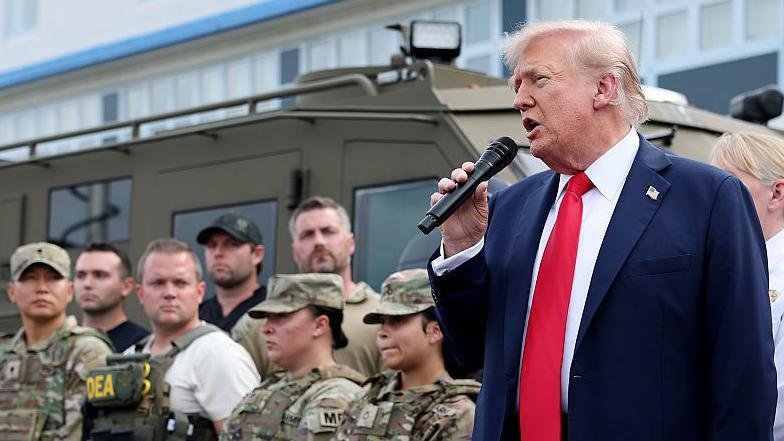
Senior Advocates of Nigeria have condemned the threat by United States President Donald Trump to deploy American troops to Nigeria over alleged killings of Christians, describing such a move as a violation of Nigeria’s sovereignty and international law. Trump had on Friday designated Nigeria a “Country of Particular Concern” over alleged Christian genocide, warning that the U.S. might send troops to eliminate Islamic extremists responsible for the attacks. “If the Nigerian Government continues to allow the killing of Christians, the U.S.A. will immediately stop all aid and assistance to Nigeria and may very well go into that now disgraced country, ‘guns-a-blazing,’ to completely wipe out the Islamic terrorists who are committing these horrible atrocities,” Trump said on Saturday, November 1. Reacting to the development, constitutional lawyer Prof. Itse Sagay (SAN) stated that any foreign military intervention without Nigeria’s consent would be an act of aggression. “They can only intervene with our government’s approval. Otherwise, it will constitute a serious breach of international law,” he said. Another senior advocate, Adedayo Adedeji (SAN), affirmed that under international law, every nation retains full independence and territorial integrity. “Each state has the right to exercise full authority within its borders, free from foreign interference,” he explained. He added that while cooperation in fighting terrorism was acceptable, any unilateral military action by the U.S. would be unlawful. “The United States cannot simply invade Nigeria to address alleged cases of Christian genocide. Counterterrorism should be pursued through legitimate collaboration, not force,” Adedeji said. Adedeji also dismissed reports of a “Christian genocide,” noting, “Contrary to the circulating claims, I don’t believe there’s any Christian genocide in Nigeria.” Chief Mike Ahamba (SAN) described the killings as worrisome and called on the Federal Government to act swiftly to prevent external interference. “If the government fails to address it, stronger nations may take advantage of the situation. However, any foreign involvement must be by invitation; otherwise, it would be considered an invasion,” he warned. In his remarks, Lagos-based lawyer Jiti Ogunye described Trump’s statement as hypocritical and inconsistent with his “America First” policy. “Here’s a president who wants to isolate America from global affairs, yet suddenly takes interest in Nigeria. What exactly is his motive?” Ogunye asked. He suggested that the move could be driven by economic and strategic interests rather than humanitarian reasons. “It wouldn’t be surprising if such an intervention ended up targeting Nigeria’s oil, lithium, and gold as payment for ‘protection,’” he noted. Ogunye urged the Tinubu administration to prioritize internal security reforms, particularly in conflict-prone areas like Benue and Plateau States. “The government must tackle these crises head-on. The era of open grazing and territorial encroachment should be over,” he said, emphasizing that respect for state boundaries and the adoption of ranching would help resolve persistent conflicts.

aa-1.jpg

2min4530
President Bola Tinubu is set to meet with his U.S. counterpart, Donald Trump, in the coming days to discuss allegations of a “Christian genocide” in Nigeria, according to the Presidency. In a statement on Friday, Daniel Bwala, Special Adviser to the President on Policy Communication, confirmed the planned meeting, saying both leaders share a commitment to combating insurgency and terrorism. “Presidents Bola Tinubu and Donald Trump have a shared interest in fighting insurgency and all forms of terrorism against humanity,” Bwala said. He explained that the meeting could be held either at the State House in Abuja or at the White House in Washington, depending on diplomatic and scheduling arrangements. The announcement comes after Trump recently accused the Nigerian government of failing to prevent attacks on Christians remarks that have sparked strong reactions both within Nigeria and internationally. Trump also warned that the United States could cut aid or consider military action if the alleged persecution continues. Bwala, however, defended the Nigerian government’s record, stressing that the Tinubu administration has intensified efforts to tackle insecurity nationwide. “President Trump supported Nigeria by authorizing arms sales to help in the fight against terrorism. President Tinubu has made effective use of that support, and the results are evident,” he said. Addressing ongoing debates about whether terrorist attacks in Nigeria specifically target Christians, Bwala said any differences in perception would be clarified during the talks. “If there are differences over whether terrorists in Nigeria target only Christians or people of all faiths, such matters will be discussed and resolved when both leaders meet,” he added. Trump’s renewed focus on Nigeria follows mounting pressure from U.S. lawmakers, including Riley Moore, who accused the Nigerian government of tolerating “systematic persecution and slaughter of Christians” and urged Washington to restore Nigeria’s designation as a Country of Particular Concern (CPC).

aa-4.jpeg

3min2610
The Nigeria Social Insurance Trust Fund (NSITF) says its investment strategy is guided by prudence, transparency, and a preference for low-risk ventures that protect workers’ contributions. Managing Director of the Fund, Mr. Oluwaseun Faleye, stated this in an interview with the News Agency of Nigeria (NAN) on Sunday in Abuja. He explained that the NSITF, which administers the Employees’ Compensation Scheme (ECS), ensures that employees receive social insurance benefits for work-related injuries, diseases, disabilities, or death. Funded by employer contributions, the scheme also promotes workplace safety and welfare. Faleye noted that the Fund prioritises security over profit, investing mainly in government-backed instruments such as treasury bills and bonds. “The law permits NSITF to invest only in safe securities to protect contributors’ money. Our investment appetite is strictly low-risk prudence comes before profit in all our decisions,” he said. He added that although the Fund had previously invested in real estate, recent focus has been on safer, low-risk portfolios to ensure sustainability. Faleye emphasised that all investment decisions are subject to rigorous internal review and board approval to ensure accountability and transparency. “Every investment proposal goes through due process. These funds are meant to compensate workers in the event of accidents, so we handle them with utmost care,” he said. According to him, the NSITF also prioritises prompt payment of claims, workplace safety advocacy, and strengthening social protection for Nigerian workers. He explained that under the Employees’ Compensation Act (ECA) 2010, employers are mandated to contribute one per cent of their total payroll to the Fund. “The one per cent contribution is sufficient if all employers comply. The goal is not to increase the rate but to widen coverage,” Faleye said. He expressed optimism that all workers in both the public and private sectors would eventually be covered under the ECS, and commended President Bola Tinubu’s administration for ensuring full compliance for treasury-funded federal workers. “When workers know their welfare is protected, they’re motivated to perform better that’s the true essence of social protection,” he added. Faleye said the Fund plans to explore a data-driven model in the future to adjust contribution rates based on industry risk levels while maintaining its focus on safeguarding Nigerian workers’ welfare. (NAN)

Tech & Tools Desk2 November 2025
aa-1280x720.jpg

1min3490
President Donald Trump has warned that the United States could take “strong” measures against Nigeria if attacks on Christians continue. In a post on his social media account, Trump said the U.S. could stop all aid and “may very well go into that now disgraced country, ‘guns-a-blazing,’ to completely wipe out the Islamic Terrorists who are committing these horrible atrocities.” He added that he was “instructing our Department of War to prepare for possible action,” and warned that any U.S. strike would be “fast, vicious, and sweet.” The post concluded with an urgent call for the Nigerian government to act quickly. The message came a day after the United States added Nigeria to a watch list of countries of particular concern for religious freedom.

James Obasi2 November 2025
aa.webp

5min2010
As Lagos continues to grapple with environmental challenges linked to its rapid urbanisation, residents across the state have voiced growing concern over worsening air quality caused by indiscriminate waste burning, vehicular emissions, and poor sanitation practices. In interviews with the News Agency of Nigeria (NAN) on Sunday, residents from Ikorodu, Shasha, Oshodi, Alagbado, and other parts of the metropolis lamented the choking fumes that now hang over many communities, posing serious threats to public health and the environment. Mrs. Itunu Dada, a civil servant in Ikorodu, attributed the poor air quality in her area to rampant waste burning. “Instead of engaging PSP operators, many residents prefer to burn their refuse. The smoke causes cough and chest irritation. Around the markets, refuse piles emit offensive odours it’s terrible,” she said. She urged the Lagos State Government to shut down unsanitary markets and strengthen waste collection systems. “Those evacuating waste from drains often leave it for weeks before removal. When it rains, the waste flows back into the gutters. The government should set up a task force to monitor illegal dumping and burning,” she added. In Shasha, Alimosho Local Government Area, a teacher, Mrs. Stella Lawrence, said air pollution has become a daily struggle for residents. “Many commercial vehicles are not roadworthy and emit thick fumes. Frequent power outages also force people to rely on generators. The government should phase out unfit vehicles, ensure regular waste evacuation, and improve power supply to reduce pollution,” she said. Similarly, Miss Chioma Ndukwe, a communications professional living in Okota, described Oshodi as one of the worst-hit areas. “When you walk through Oshodi Market, it’s difficult to breathe. Industrial emissions, traffic fumes, and waste burning create a choking environment,” she said, urging authorities to provide public toilets, enforce vehicle emission tests, and regulate industrial discharges. In Lekki, businessman Mr. Bruno Ajede noted that while parts of the area remain relatively clean, congestion in Ajah and nearby markets still fuels pollution. “Vehicle fumes are the major problem. Air pollution can trigger asthma and other respiratory illnesses,” he said. Mr. Ajibola Ajayi, a marketer in Alagbado, blamed the situation on weak regulation. “Many vehicles here emit heavy smoke because there’s little or no enforcement,” he said. Speaking on the issue, Mr. Friday Oku, President of the Association of Wastepickers of Lagos, said Nigeria’s dependence on fossil fuels is worsening environmental and health hazards. “Fossil fuel use is damaging both our health and the planet. That’s why we advocate renewable energy and cleaner alternatives,” he said. Oku criticised inconsistent government policies, citing the recent ban on waste pickers using carts known locally as “cart pushers” as counterproductive. “Banning cart pushers while replacing them with more polluting tricycles shows a lack of policy direction,” he argued. He added that private groups are promoting renewable energy and Compressed Natural Gas (CNG), but government actions often contradict climate goals. “We need to move away from fossil fuels. The solution lies in renewable energy and behavioural change,” he stressed. Experts warn that prolonged exposure to polluted air increases the risk of respiratory infections, heart disease, and lung cancer. Meanwhile, the Lagos State Government says it remains committed to improving air quality through its Blue and Green Economy Initiative and Air Quality Monitoring Network, which deploys mobile sensors across the city to track emissions and enforce compliance. Despite these efforts, residents and environmental advocates insist that Lagos will not achieve clean air until waste burning stops and environmental laws are effectively enforced. (NAN)

aa-3.jpeg

2min1920
The Joint Admissions and Matriculation Board (JAMB) has identified a total of 2,658 admissions conducted during the 2024/2025 academic session as illegal. According to data from the board’s institutional analysis obtained on Friday in Abuja, the flagged admissions were traced to 17 universities, polytechnics, and colleges of education across the country. This comes as public universities concluded their admission processes for the 2025/2026 academic session on Friday. The breakdown of affected institutions shows that Abubakar Tafawa Balewa University accounted for 1,847 illegal admissions, followed by Osun State University with 492, Abubakar Tafari Ali Polytechnic with 148, and the Federal College of Animal and Health Production with 66. Others include the University of Calabar (28), College of Education, Oro (12), Michael and Cecilia Ibru University (12), Redeemer’s University (five), Pan-Atlantic University (five), Nigerian Army College of Education (two), Kwara State Polytechnic (one), and Best Solution Polytechnic (one), among others. JAMB classifies any admission processed outside its Central Admissions Processing System (CAPS) as illegal. The board has repeatedly warned institutions and candidates against conducting or accepting admissions outside the CAPS platform. At the 2025 Policy Meeting on Admissions, the Minister of Education, Dr. Tunji Alausa, cautioned that institutions involved in such illegal admissions would face severe sanctions, including the withdrawal of accreditation and disciplinary action against culpable officials. Introduced in 2017, the CAPS system was designed to promote transparency, fairness, and merit-based admissions. It allows candidates to monitor their admission status, accept or reject offers, and verify authenticity directly through the platform. JAMB has also warned that students who accept admissions outside CAPS risk being ineligible for the National Youth Service Corps (NYSC) programme.