Blog - Edupreneur Select

Bring to the table win-win survival strategies to ensure proactive domination. At the end of the day, going forward, a new normal that has evolved from generation.
Gboyega-Oyetola.jpg

4min1650
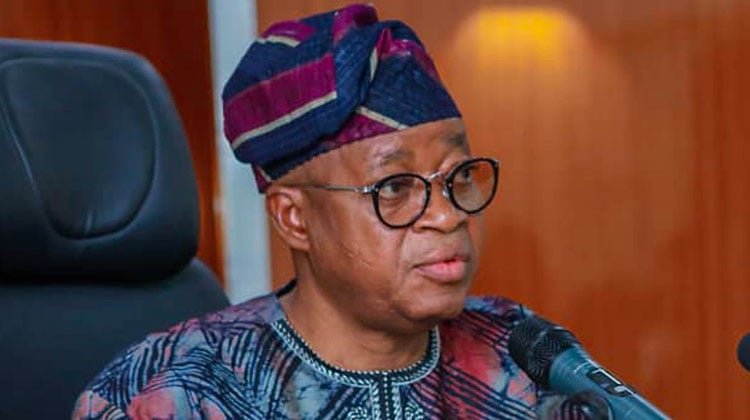
The Minister of Marine and Blue Economy, Adegboyega Oyetola, has hailed the Lagos–Calabar Coastal Highway as a game-changing national project that will serve as an “economic artery connecting opportunity, innovation, and prosperity” along Nigeria’s coastline. Speaking at the South-West Citizen-Government Engagement Summit in Akure, Ondo State, Oyetola urged regional leaders to leverage the vast economic opportunities the multi-billion-naira highway presents by investing in complementary tourism and infrastructure projects. In a statement by his media aide, Dr. Bolaji Akinola, the minister noted that the Lagos–Calabar Coastal Highway is not just a transport link but a major driver of trade, investment, and sustainable regional development. “The Lagos–Calabar Coastal Highway is an economic artery that connects opportunity, innovation, and prosperity,” Oyetola said. “I call on leaders across the South-West to complement this visionary project by developing tourism infrastructure, coastal resorts, and cultural heritage attractions to fully harness the benefits of this new coastal route.” He explained that the 700km expressway — which starts from Victoria Island in Lagos and passes through Ogun, Ondo, Delta, and Akwa Ibom before ending in Calabar — will strengthen the connection between coastal communities and inland markets. The project’s first phase, spanning 47.47km in Lagos, commenced in 2024. Oyetola highlighted that the initiative will enhance coastal tourism, hospitality, and small-scale enterprises while opening new economic corridors to drive inclusive growth. He said the South-West region stands to gain significantly through job creation, increased investments, and the promotion of its cultural and natural assets. Commending President Bola Tinubu for what he described as visionary leadership, Oyetola also lauded the administration’s success in expanding Nigeria’s continental shelf by 16,300 square kilometres, extending the country’s maritime boundary by about 20 nautical miles in some areas. He described the expansion as a major achievement that strengthens Nigeria’s maritime sovereignty and opens new frontiers for offshore investments, marine research, and renewable ocean energy. “This maritime expansion provides the South-West with new opportunities for deep-sea exploration, marine innovation, and blue biotechnology,” he said. “It will attract private sector participation in logistics, shipbuilding, and marine technology — vital elements for long-term regional prosperity.” The minister further called for stronger collaboration between the Federal Government and South-West states to advance port modernisation, maritime safety, fisheries, and non-oil export growth — all key pillars of Nigeria’s blue economy agenda. Expressing concern over increasing waterway accidents, Oyetola urged coastal states to phase out wooden boats and enforce the use of life jackets for passengers and operators. He noted that replacing wooden vessels with fibre-reinforced boats would boost safety, support environmental sustainability, and create jobs for local craftsmen. Oyetola expressed optimism that with innovation and coordinated leadership, the South-West could emerge as a continental model for maritime efficiency and sustainability. “This is our time to build a vibrant blue economy that creates jobs, attracts investment, and celebrates our cultural and natural heritage,” he said. “If we use this opportunity wisely, the sea will not divide us — it will unite and enrich us.” Once completed, the Lagos–Calabar Coastal Highway is expected to transform transportation across Nigeria’s southern corridor, linking key commercial centres and unlocking the full potential of the nation’s blue economy.  
Doherty.png

3min1370
A Lagos State governorship aspirant under the Peoples Democratic Party (PDP), Mr. Funso Doherty, has urged the National Assembly to launch an investigation into the recently approved 15% import duty on Premium Motor Spirit (PMS), commonly known as petrol. He cautioned that implementing the policy could deepen the economic hardship already confronting millions of Nigerians. In an open letter to Senate President Godswill Akpabio, Doherty described the new import duty as “fundamental and ill-timed,” questioning both the reasoning behind the decision and the transparency of the process that led to its approval. Reports indicate that President Bola Tinubu approved the levy following a proposal from the Chairman of the Federal Inland Revenue Service (FIRS), now known as the Nigeria Revenue Service. The FIRS chairman reportedly argued that the duty was intended to support local fuel producers and help them achieve cost recovery rather than serve as a revenue source for the government. Doherty, however, disagreed with this justification. He pointed out that major domestic producers, including the Dangote Refinery, already enjoy fiscal incentives such as tax waivers and holidays due to their location within export processing zones. He argued that imposing additional import tariffs would unfairly shift the burden to consumers. “I call on the National Assembly to investigate the circumstances and processes surrounding the introduction of this import duty,” Doherty stated. “In doing so, it would be appropriate to invite the NMDPRA, the Federal Ministry of Trade and Investment, and key industry stakeholders to evaluate whether placing this extra cost on Nigerians at this time is justifiable. The investigation should be transparent and open to the public to maintain accountability.” He further warned that the new duty could increase the pump price of petrol by as much as ₦100 per litre, potentially fueling inflation and worsening living conditions for many citizens. “Petrol pricing policies have far-reaching consequences for Nigerians,” Doherty said. “Many households are already under severe financial pressure, and any further price hike would be devastating.”

Cooking-Gas-Scarcity.jpg

5min2140
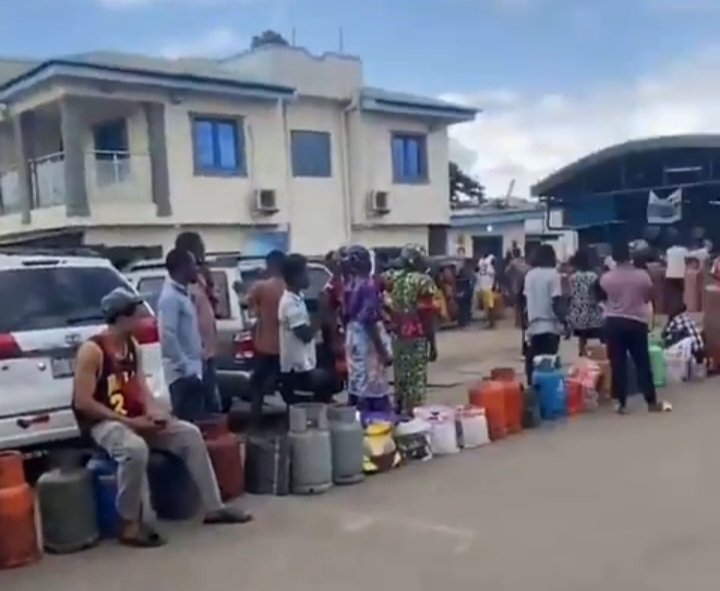
Nigeria may be heading toward another round of cooking gas shortages as retailers raise concerns over dwindling supplies of Liquefied Petroleum Gas (LPG). The warning comes just weeks after consumers began recovering from the previous scarcity that sent prices soaring across the country. According to retailers, the Dangote Petroleum Refinery has become the sole major supplier of LPG to the domestic market, sparking fears that any disruption in its operations could trigger a fresh nationwide shortfall. In Abeokuta, Ogun State, a retailer identified as Adesola expressed worry about the unstable supply situation. “There’s no significant improvement in LPG availability. We’re uncertain about what could happen in the coming days,” he said. Across various regions, cooking gas prices currently range between ₦1,200 and ₦1,500 per kilogram, depending on location — up from around ₦900/kg before the recent industrial dispute between the Dangote Refinery and the Petroleum and Natural Gas Senior Staff Association of Nigeria disrupted production. Ayobami Olarinoye, National Chairman of the Liquefied Petroleum Gas Retailers branch of the Nigeria Union of Petroleum and Natural Gas Workers, confirmed that Dangote’s current output alone cannot meet national demand. “As of now, only the Dangote Refinery is supplying the market,” he said. “Although we appreciate the refinery’s effort to push out gas, production levels are not sufficient to cover local consumption.” Olarinoye added that most depots have exhausted their stock, widening the supply gap and discouraging other marketers from importing gas due to pricing inconsistencies between Dangote’s supply and middlemen rates. “There’s an urgent need to bridge the price gap preventing other players from importing products so the market can stabilise,” he noted. He recalled that LPG prices dropped slightly in October after the resolution of the PENGASSAN strike — from ₦2,000/kg to about ₦1,400/kg — but have since failed to return to pre-crisis levels below ₦1,000/kg. Olarinoye warned that prices could rise again if the Dangote Refinery temporarily halts operations for maintenance. “If production stops, even briefly, prices could surge again,” he said. Data from Petroleumprice.ng showed that as of Monday, Dangote’s LPG price rose to ₦955/kg, compared with ₦920/kg offered by 11PLC and Navgas. Officials from the Dangote Refinery denied claims of overpricing, maintaining that retail prices are outside the company’s control. “Marketers buy LPG from us at ₦715,000 per metric tonne — about ₦715/kg,” an official stated anonymously. “We don’t fix retail prices; that’s under the Petroleum Industry Act and the Nigerian Midstream and Downstream Petroleum Regulatory Authority.” Last month, Olarinoye revealed that Dangote sold LPG to off-takers at ₦15.8 million per 20,000 metric tonnes, while resellers charged between ₦18.4 million and ₦18.5 million — a margin that ultimately burdens consumers. In response to the ongoing situation, the Minister of State for Petroleum Resources (Gas), Ekperikpe Ekpo, has pledged to clamp down on marketers hoarding gas or inflating prices unfairly. Analysts have warned that Nigeria’s reliance on a single domestic supplier poses a major risk to energy security. Without diversifying the LPG supply base and encouraging more investors, they cautioned, periodic shortages could persist — further straining households and small businesses. For now, consumers remain on edge as tight supply conditions and price uncertainty continue to dominate the market, with many watching closely for the next move from the Dangote Refinery.

Tech & Tools Desk4 November 2025
trump-1.jpg

5min4110
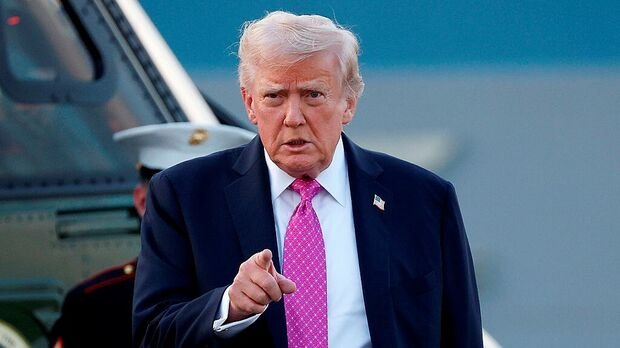
Nigeria’s financial markets opened November 2025 on a negative note as both the naira and equities weakened sharply following remarks by U.S. President Donald Trump, who threatened possible military action against Nigeria over alleged cases of religious persecution. According to data from the Central Bank of Nigeria, the naira, which had earlier reached a 2025 high of ₦1,421.73/$, fell to ₦1,436.34/$ on Monday — a 1.03% decline representing a ₦14.61 loss in one day. At the parallel market, the exchange rate further slipped to ₦1,455/$ amid heightened investor anxiety and increased forex demand. The drop followed a tense weekend after Trump, in a post on his Truth Social platform, described Nigeria as a “country of particular concern” and directed the U.S. Department of War to prepare for “possible action” if alleged attacks on Christians persisted. His comments, which referred to what he called a “Christian genocide” in Nigeria, stirred global debate and raised fears over potential diplomatic and economic fallout for Africa’s largest economy. The statement quickly reverberated across Nigeria’s financial sector. At the Nigerian Exchange Limited, bearish sentiment returned as the All-Share Index fell by 0.25% to close at 153,739.11 points, cutting year-to-date gains to 49.37%. Market capitalisation dropped by ₦245.88 billion to ₦97.58 trillion. The decline was driven mainly by losses in Aradel Holdings (-9.21%) and Access Corporation (-3.07%). Overall investor mood remained subdued, with 38 stocks declining against 19 gainers. Union Dicon topped the gainers’ list (+9.93%), while Honeywell Flour Mills led the losers (-10.00%). Trading activity slowed significantly, with total volume and value traded falling by 87.94% and 44.64%, respectively, to 627.5 million units valued at ₦25 billion. United Bank for Africa led the trading session with 136.8 million units (21.8% of total volume) worth ₦5.5 billion (22.2% of total value). Sector performance was mixed — Oil & Gas (-3.94%), Commodities (-1.85%), Insurance (-1.48%), and Banking (-0.22%) all recorded losses, while Consumer Goods gained 0.49%. The Industrial sector closed unchanged. In the bond market, Cowry Assets Management reported a dip in investor appetite for Nigeria’s Eurobonds, with average yields rising by five basis points to 7.70%. The firm attributed this to global risk aversion, macroeconomic uncertainty, and geopolitical tension. Bloomberg data also showed Nigeria’s dollar-denominated bonds as the worst performers among emerging markets, with the 2047 maturity dropping 0.6 cents to 88.26 cents on the dollar before trimming some losses later in the day. Despite the sharp downturn, some analysts believe the effect may be temporary. Tilewa Adebajo, CEO of CFG Advisory, noted that “the market’s reaction appears to be a short-term shock,” adding that recent improvements, such as Nigeria’s removal from the FATF Grey List, still point to long-term economic strength. However, Dr. Musa Yusuf, CEO of the Centre for the Promotion of Private Enterprise, warned that Trump’s remarks could severely damage investor confidence. “The U.S. President’s threat of military intervention is unnecessary and economically harmful,” he said. “Such statements raise risk perception, unsettle investors, and undermine confidence in Nigeria’s economy.” Yusuf stressed that Nigeria should continue to strengthen internal security and governance, while ensuring that engagement with foreign powers remains “collaborative, not coercive.” He cautioned that unilateral military action “would destabilise the economy, threaten regional peace, and worsen humanitarian challenges,” urging diplomacy and mutual respect for sovereignty instead. Analysts say that sustained market stability will depend on Nigeria’s diplomatic response, clarity on U.S. policy, and consistent macroeconomic management from the Federal Government and the Central Bank.

James Obasi4 November 2025
Nigerian-Ports-Authority-NPA-797x598-1.jpeg

2min1950
The Nigerian Ports Authority (NPA) has announced that a total of 17 vessels are expected to arrive at the Apapa and Tin-Can Island ports in Lagos between November 3 and 7. According to the NPA’s daily publication, Shipping Position, 13 of these vessels are carrying petroleum products, including crude oil, diesel, aviation fuel, gasoline, gas oil, and petrol. The remaining four are laden with various containerized goods. The report also indicated that six vessels have already arrived at the ports and are awaiting berthing to discharge general cargo, petrol, containers, and bulk urea. Meanwhile, 16 vessels are currently at the ports unloading general cargo, bulk wheat, fresh fish, bulk gas, containers, and petrol. Similarly, 14 ships are expected to berth at the Lekki Port within the same period, bringing in crude oil, aviation fuel, diesel, gas oil, petrol, and containers. The NPA added that nine ships are already at Lekki Port, waiting to discharge crude oil, gasoline, bulk urea, petrol, and gas oil

cooking-gas-outlet.jpg

3min3940
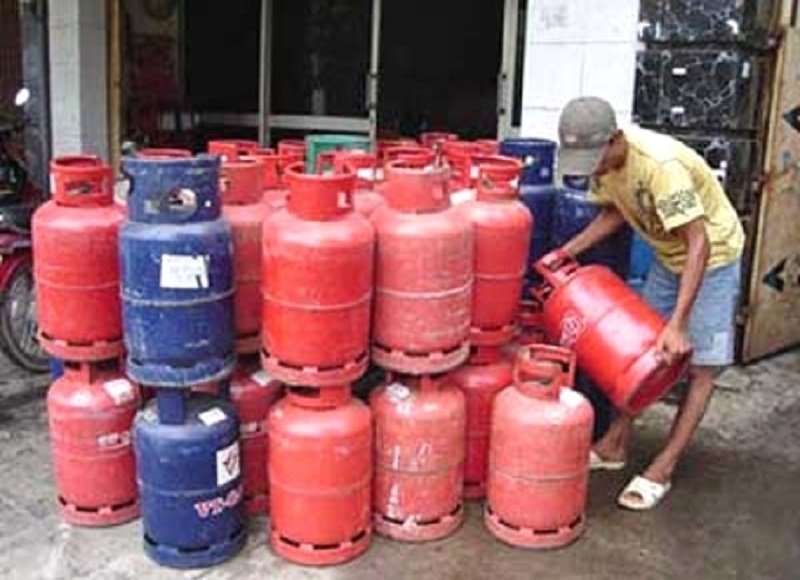
The price of Liquefied Petroleum Gas (LPG), popularly known as cooking gas, has remained high despite marketers’ earlier assurances that it would drop to between ₦950 and ₦1,000 per kilogram. A market survey across several gas stations in Lagos on Sunday showed prices ranging from ₦1,200 to ₦1,400 per kilogram. At Gasland in Igando, Ikotun, and Mac Rich Gas Plant in Cele-Okota, the price stood at ₦1,200 per kg, while other outlets sold for ₦1,300 and ₦1,400 depending on location. Operators, who preferred not to be named, said, “Last month, we sold at ₦900 to ₦950 per kg. Now, we retail at ₦1,200 per kg. That’s the current reality in the country. We can only hope prices drop in the coming weeks.” Findings also revealed that retailers purchasing in bulk quantities of 150 to 200 kilograms pay about ₦1,104 per kg. In a phone interview, the outgoing President of the Nigerian Association of Liquefied Petroleum Gas Marketers (NALPGAM), Mr. Olatunbosun Oladapo, attributed the sustained price hike to a backlog of unsupplied products, maintenance challenges, and refinery logistics. However, he expressed confidence that stability would return soon. He explained that the entry of Seplat Energy’s gas supply into the market, along with increased output from the Dangote Refinery and other ongoing gas infrastructure projects, would ease supply pressures and help stabilise prices across the country. Speaking at the Association’s 38th Annual General Meeting (AGM), Oladapo noted that Nigeria’s LPG consumption had grown from 900,000 metric tonnes in 2021 to 2 million metric tonnes in 2025. “About four years ago, national LPG consumption stood between 900,000 and 1 million metric tonnes. Today, it has doubled to 2 million metric tonnes. By the first quarter of next year, we expect it to hit 3 million metric tonnes per annum,” he said. He credited the growth to increased private investment, collaboration with government agencies, and greater public acceptance of gas as a household energy source. With continued policy support and industry participation, Oladapo expressed optimism that the association’s long-term target of achieving 6 million metric tonnes annually is within reach under the Federal Government’s Decade of Gas initiative.

Nestoil-.jpeg

2min5690
Police have sealed the corporate headquarters of Nestoil Limited in Lagos after the company was placed under receivership by a group of lenders over a reported $1 billion debt. A Federal High Court in Lagos, on October 22, 2025, issued a Mareva injunction authorising First Trustees and its subsidiary, FBNQuest Merchant Bank, to take control of Nestoil’s assets. Presiding Judge D. I. Dipeolu granted the order against Nestoil Limited, its affiliate Neconde Energy Limited, and the company’s principal promoters, Ernest Azudialu-Obiejesi and Nnenna Obiejesi. The financial institutions were empowered to seize the defendants’ assets pending the substantive hearing in November 2025. The court also restricted dealings in funds amounting to $1,012,608,386.91 and ₦430,014,064,380.77 — the total indebtedness as of September 30, 2025. Additional debts personally guaranteed by Azudialu-Obiejesi include more than ₦366.8 billion, $61.2 million, $152 million, and ₦10.4 billion. Responding to the development, the Nestoil Group said the issue concerns a commercial dispute currently before the court and is being handled through appropriate legal and regulatory processes. “The Group continues to work closely with relevant authorities and financial partners to resolve outstanding issues transparently and responsibly. Constructive discussions are underway, and we remain confident in reaching a fair and lasting resolution,” the company stated. It further assured that Nestoil remains fully operational across all business lines, with projects in oil, gas, power, and infrastructure continuing without disruption. The company added that proactive steps have been taken to protect its workforce, sustain operations, and meet obligations to clients and partners.

Gas-Nigeria.webp

5min4260
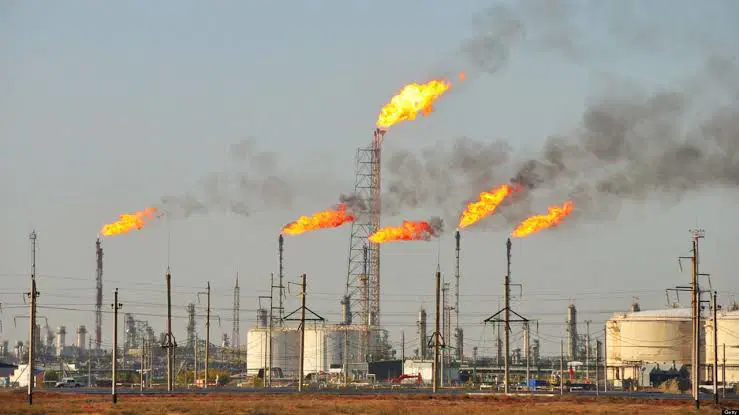
Nigeria’s plan to power homes and industries using its vast gas reserves is facing serious challenges as gas flaring rises amid worsening electricity shortages. Recent data from the Nigerian Upstream Petroleum Regulatory Commission (NUPRC) revealed that gas flaring rose by 10 percent in September 2025, reaching 16.679 million standard cubic feet (mmscf), compared to 15.057 mmscf in August. This represents 8.72 percent of the country’s total gas output for the month, up from 6.87 percent in the previous month. On a yearly basis, gas flaring increased by 7 percent, with a nine-month cumulative total of 150,028.86 mmscf—valued at about $451 million—enough to generate 10–50 megawatts of power. The situation highlights the widening gap between gas supply and power generation. Despite producing over 190,000 mmscf of gas monthly, much of it is wasted due to poor infrastructure, inadequate processing facilities, and disruptions in crude oil production. Falling crude output has further reduced the supply of associated gas, worsening the problem. Oil production dropped from 1.71 million barrels per day (bpd) in July to 1.63 million and 1.58 million bpd in August and September 2025, respectively. Power generation companies (GenCos) have stated they can produce up to 8,000MW if gas is adequately supplied, but the transmission grid struggles to transmit more than 5,000MW due to limited gas availability. “We are not a priority. With consistent payment and regular gas supply, we can easily increase generation to 8,000MW,” said Dr. Joy Ogali, CEO of the Association of Power Generation Companies (APGC). Many industries, faced with unreliable power supply, have resorted to self-generation using private gas plants. Major firms such as Dangote Group, NNPC Limited, Chevron, TotalEnergies, Guinness Nigeria, and MTN now rely on independent power sources, a move analysts say increases production costs and undermines competitiveness. The Lagos Chamber of Commerce and Industry (LCCI) warned that the decline in gas output poses economic risks. Its Director-General, Dr. Chinyere Almona, linked the drop to vandalism, equipment downtime, and supply disruptions, adding that “Nigeria’s transition to cleaner, gas-based energy is being threatened.” She urged the government to strengthen investment in pipelines, processing plants, and pricing frameworks to attract investors. Despite these challenges, the federal government has maintained its commitment to the “Decade of Gas” initiative, launched in 2021 to turn Nigeria into a gas-driven economy by 2030. The plan targets large-scale investments in pipelines, LNG facilities, and processing plants to reduce flaring and expand gas-to-power projects. NUPRC reported that since the Petroleum Industry Act (PIA) took effect, more than 25 non-associated gas field development plans have attracted over $4.9 billion in investments, unlocking about 9,790 billion standard cubic feet (bscf) in reserves. However, gas flaring remains high, suggesting that new investments have yet to yield significant improvements in utilisation. The Commission highlighted that past petroleum contracts prioritised oil over gas, discouraging investment in gas development. New agreements—such as the revised Production Sharing Contract (PSC) between NNPC Limited and TotalEnergies—now include improved profit-sharing and cost recovery terms aimed at promoting gas monetisation for domestic power generation, industrial use, and exports. According to the NUPRC, these new PSCs represent a shift in Nigeria’s energy policy, designed to make gas development commercially attractive and to support the nation’s long-term energy security and industrial growth.

Tech & Tools Desk3 November 2025
Alonso-Builds-a-New-Look-Real-Madrid-Ahead-of-Liverpool-Reunion.jpg

4min1800
Real Madrid manager Xabi Alonso returns to Anfield on Tuesday to face his former club Liverpool in the Champions League, following a near-perfect start to his tenure in Spain. While Liverpool have struggled with only two wins in their last eight matches, Alonso’s Madrid side are in superb form, steadily improving each week under his leadership. The 15-time European champions defeated Barcelona in El Clasico last weekend and are eager to showcase their dominance once again against Arne Slot’s Liverpool. Their only loss this season came in a 5-2 derby defeat to Atletico Madrid — a setback they have since grown stronger from. Many Liverpool supporters had hoped Alonso would succeed Jurgen Klopp when the German announced his departure at the end of the 2023/24 season. Known for his elegance and intelligence on the ball, Alonso orchestrated Liverpool’s midfield from 2004 to 2009, helping the Reds win the 2005 Champions League and FA Cup before moving to Real Madrid. After extending his stay at Bayer Leverkusen for another season, Alonso eventually took over from Carlo Ancelotti at Madrid following a trophyless campaign. His impact has been immediate — Madrid have won 13 of their 14 games this season. Under Alonso, Madrid press higher and defend with far greater discipline. “To win trophies, you must defend well and keep clean sheets,” he said after Madrid secured their seventh shutout in a 4-0 victory over Valencia. Spanish media have described his Madrid as a side that now “dominates and suffocates opponents,” marking a clear shift from the sluggish displays of the previous season. Alonso has also displayed tactical flexibility, adjusting formations and game plans frequently — a contrast to Ancelotti’s predictable style. Opting to train in Madrid before traveling to England, Alonso explained, “We prefer to work at home, in our own space, without 200 cameras on us.” He has revitalised key players, though not without challenges. Vinicius Junior’s frustration after being substituted during El Clasico led to a brief controversy, but the Brazilian later apologised. Meanwhile, Kylian Mbappe has been in stunning form, scoring 18 goals this season and adding defensive intensity to his play. Jude Bellingham has also flourished, scoring crucial goals against Barcelona, Juventus, and Valencia. After managing his recovery from shoulder surgery carefully, Alonso has positioned the Englishman as a driving force in midfield. Turkish youngster Arda Guler is likewise being moulded into a future replacement for Toni Kroos and Luka Modric. As Alonso steps back into Anfield, he aims to prove his Real Madrid side are not just rebuilding — they are ready to compete for Europe’s biggest prizes once again.

James Obasi3 November 2025
baby-food.jpg

4min2220
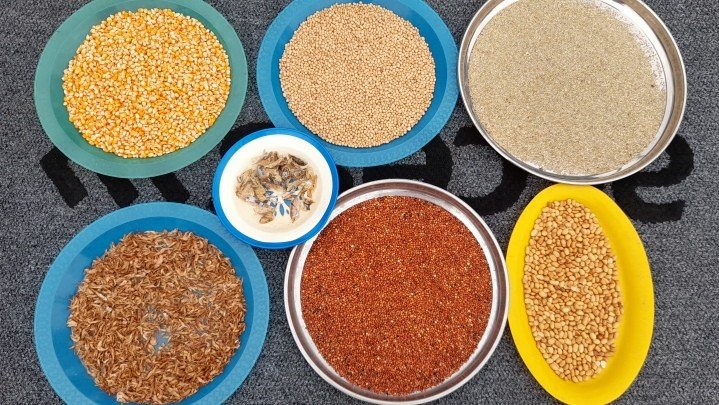
In the early and late 1960s, many Nigerian mothers proudly nourished their babies with locally made cereals, often after a year of exclusive breastfeeding. However, with the rise of modernisation and Western influence—particularly through television—feeding habits began to change. Gradually, nursing mothers turned to processed, factory-made baby foods. By the early 2000s, the trend had worsened, as many working mothers abandoned breastfeeding altogether. Despite continuous warnings from medical experts and the World Health Organization, the dependence on commercial baby food persisted. But with the current economic hardship, many families are being forced to return to traditional feeding practices. The soaring prices of baby food—now ranging between ₦20,000 and ₦50,000 per tin depending on the brand—have made such products unaffordable for most low- and middle-income households. Investigations reveal that many mothers are now embracing homemade baby meals such as mashed potatoes, rice, bananas, pap (corn meal), purees, semolina, and even soft versions of local dishes like amala and ewedu. Mrs. Doris Erabor, a factory worker and nursing mother, shared her experience: “I started making semolina paste with milk and salt for my four-month-old baby. Baby food became too expensive, and I couldn’t risk switching to unfamiliar brands. At first, I tried pap, but it didn’t satisfy him. A friend suggested semovita and milk—it worked perfectly, and my baby is now seven months old.” For many families, the cost of raising a baby in Nigeria has become overwhelming. Delivery bills, baby clothing, diapers, and food expenses have all skyrocketed, erasing the once-promoted six months of exclusive breastfeeding. Many mothers now juggle multiple jobs or side businesses just to stay afloat. Mrs. Grace Osunde, a teacher and mother of twins, also recounted her struggle: “My breast milk didn’t flow at all, so we started with baby milk from day one. In one week, the twins finished two cans, and the cost became unbearable. I began mashing rice with milk and banana to make a puree. I also tried a mix of guinea corn, soybeans, and crayfish, but the babies didn’t like it. Now, I plan to introduce ewedu and amala gradually.” For some, even finding an affordable local alternative has been challenging.Mrs. Ramat Yusuf, a trader, said: “My baby is four months old, and I can’t afford baby food. I tried several options, but she rejected most of them. I now make semolina paste with banana. I breastfeed her when I’m home, but I often have to leave her with a friend so I can hawk my goods. It’s tough, but we’re surviving.” As economic conditions worsen, more Nigerian mothers are returning to traditional, home-prepared baby foods—reconnecting with age-old feeding practices out of both necessity and resilience.