Category: Refined Living

house-of-rep.png

4min3790
The House of Representatives Public Accounts Committee (PAC) has pledged to address the long-standing backlog of federal audit reports, committing to secure and review the 2023, 2024, and 2025 reports from the Office of the Auditor-General for the Federation. Chairman Bamidele Salam made the announcement during a weekend retreat in Ghana attended by PAC members, staff, and key stakeholders. He noted that when the current panel assumed office in 2023, the most recent audit report available was from 2019, highlighting a significant accountability gap. “Through sustained engagement with the Auditor-General and Accountant-General, we have obtained the 2020, 2021, and 2022 reports. While this marks progress, it still falls short of expectations, as we are already in 2026,” Salam said. The committee plans to convene a high-level stakeholders’ meeting immediately after the retreat, involving the Auditor-General, Accountant-General, Financial Reporting Council, and other relevant institutions, to establish a clear timeline for clearing the outstanding reports. Salam expressed optimism that significant progress would be made before the end of the year, particularly regarding the 2023–2025 audits. He described the retreat as a key platform for stock-taking, performance evaluation, and strategic planning, allowing the committee to set clear objectives and metrics for the 2026 legislative year. Delays in audit submissions have long hindered PAC’s oversight role, limiting its ability to examine government accounts, probe financial irregularities, and hold Ministries, Departments, and Agencies (MDAs) accountable. Such delays reduce the deterrent effect of legislative scrutiny and undermine fiscal discipline and transparency. Deputy Chairman Jeremiah Umaru emphasised PAC’s role in revenue recovery and curbing financial leakages. “Financial leakages within the system remain alarming. This retreat strengthens our capacity to engage stakeholders and ensure our oversight delivers tangible outcomes,” he said. Clerk of the committee, Ogunsanya Titus, described the retreat as a strategic move to enhance PAC’s effectiveness. “Thorough preparation yields better results than hasty action. The retreat allowed us to review past performance, assess challenges, and plan a clearer path forward,” he said. PAC consultant Dr Samuel Ibrahim added that the training sessions were designed to boost both technical skills and soft skills, including stakeholder engagement, critical for effective oversight and collaborative problem-solving. The committee’s renewed focus signals a determined effort to reinforce fiscal accountability and ensure that government agencies properly account for public funds.

Tax-illustration-1.webp

3min3180
A heated verbal exchange erupted on Sunday between Senator Ali Ndume (Borno South) and the Deputy Spokesman of the House of Representatives, Philip Agbese, over alleged inconsistencies in recently passed tax legislation. Agbese accused Ndume of being mischievous in claiming the tax laws were altered, while Ndume fired back, calling Agbese “disrespectful” and “too junior,” noting he was old enough to be Agbese’s father. The dispute began after Ndume raised concerns that the version of the tax laws signed by President Bola Tinubu differed from what the National Assembly had passed. In a television interview last week, Ndume suggested that certain provisions had been changed during harmonisation and gazetting. Responding on Sunday in Abuja, Agbese dismissed the claims as “sheer mischief,” insisting that all legislative procedures had been properly followed. He stressed that the House had already set up a committee to investigate concerns around the tax legislation and warned that unverified claims could undermine public trust. Ndume described Agbese’s remarks as “unfortunate” and called on House leadership to rein in the deputy spokesman. Speaking to journalists, he said, “Agbese is too junior to challenge me on this matter. The issue is under review by the Betara-led committee, which alone has the authority to determine if there are any differences between the parliamentary version and the gazetted copy.” The senator maintained that his concerns were procedural, not personal. He explained, “I carefully reviewed the votes and proceedings, clause by clause. If the harmonised version says ‘this shall be’ and the gazetted copy says ‘this will be,’ these are two different things subject to interpretation.” Ndume also suggested that Agbese’s comments were driven by personal motives to gain favour with House leadership, adding that the deputy spokesman had only embarrassed himself and the institution. Agbese, however, reiterated that the focus on alleged falsification was misplaced and that the committee’s work would clarify the matter. “It is sheer mischief to suggest the tax laws were falsified. Lawmaking must be based on facts and due process,” he said. The controversy first emerged late last year when Ndume and House member Abdussamad Dasuki raised concerns about discrepancies between versions circulated during plenary sessions and those sent for presidential assent. Both called for independent verification to ensure legislative integrity. The ongoing investigation is expected to determine whether differences arose during harmonisation, transmission, or gazetting of the legislation.

tinubu-and-Daniel-Bwala-.webp

3min4400
A pro-Wike political faction, the Rivers Restoration Movement (RRM), has urged President Bola Tinubu to remove his media aide, Daniel Bwala, over what it described as an “unwarranted” verbal attack on the Federal Capital Territory Minister, Nyesom Wike. The RRM, together with 40 affiliated groups in Rivers State, accused Bwala—Special Adviser to the President on Media and Policy Communications—of undermining the Presidency with his remarks on the Rivers political crisis. In a statement issued on Sunday in Port Harcourt and signed by Johnson Georgewill and Sarima Akpata, Director-General and Secretary of the RRM, respectively, the group alleged that Bwala still maintained loyalty to his former principal, Alhaji Atiku Abubakar, despite serving in Tinubu’s administration. “As a group, we are not surprised by this recent public embarrassment by a supposed spokesman of the President on the Rivers State political matter, because we know Mr. Daniel Bwala as someone who speaks from both sides of his mouth,” the statement read. The group questioned Bwala’s role during the 2023 general election, pointing out that Rivers was the only state in the South-South and South-East won by President Tinubu. They also claimed that Bwala targeted Wike due to the minister’s influence in Atiku’s 2023 defeat. “Mr. Bwala appears to be on a mission to undermine the FCT minister, as Atiku’s loss in 2023 was significantly influenced by Minister Wike,” the statement said. The RRM further criticised Bwala for commenting on Rivers politics despite not being involved in the agreements between Governor Siminalayi Fubara and Wike following the lifting of emergency rule in the state. “It is disappointing that Bwala, who has no political weight in Nigeria, would publicly denigrate the FCT minister and discredit his achievements, which ultimately impacts the President’s image,” the group added. The RRM reaffirmed Wike’s leadership in Rivers State politics and his role as head of President Tinubu’s “Renewed Hope” structure in the state, warning Bwala to avoid involvement in Rivers affairs. “RRM therefore calls on President Tinubu to dismiss Mr. Daniel Bwala for misrepresenting the Presidency on issues concerning Rivers State, which the President has already addressed through agreements,” the statement concluded. The group also rejected claims that Bwala sympathised with Atiku and vowed to rally support for President Tinubu ahead of the 2027 elections in Rivers State, the South-South, and beyond.

Tech & Tools Desk2 February 2026
Doctors-strike.jpg

5min7480
The ongoing industrial action by the Joint Health Sector Unions (JOHESU) has entered its third month, severely disrupting services in government-owned hospitals nationwide. Patients have been left stranded, with many forced to seek care in private facilities. Critical departments such as hospital pharmacies, laboratories, and support services have been largely inactive, significantly affecting healthcare delivery. While federal health institutions have been most affected, state-owned hospitals in Ekiti and Benue have largely remained operational, easing the pressure on patients. In some state facilities, including the Benue State University Teaching Hospital, resident doctors, nurses, and midwives have also embarked on separate strikes over unpaid salaries, pension disputes, and poor infrastructure. At the Federal Teaching Hospital, Ido Ekiti, doctors and nurses continued to work, but other health staff stayed away. Ayodeji Ogunrinu, former JOHESU chairman at FETHI and current Chairman of the Nigeria Union of Allied Health Professionals, Ekiti State Council, described the strike as unfortunate, noting that it deprives both patients and hospital staff of essential medical services. He emphasized that all hospital personnel, from cleaners to health assistants, play vital roles in service delivery. Ogunrinu lamented that FETHI now resembled a “ghost town,” with no water, electricity, drugs, or functional laboratories. Ogunrinu urged the Federal Government to implement the 2018 circular from the Ministry of Labour regarding adjustments to the Consolidated Health Salary Scale (CONHESS) for JOHESU members, which forms the basis of the ongoing strike. In contrast, JOHESU members at Ekiti State University Teaching Hospital (EKSUTH), Ado Ekiti, have continued working as a mark of respect for Governor Biodun Oyebanji. Adewale Adeosun, acting JOHESU chairman at the facility, said patient turnout had increased as federal hospitals remained largely inactive. Oluwafemi Ajoloko, JOHESU State Chairman, expressed hope that the federal government would approve the requested CONHESS adjustment within one to two weeks. He noted that while federal health workers remain on strike, staff at state hospitals and primary healthcare centres have maintained services, but with increased workload. At Obafemi Awolowo University Teaching Hospital (OAUTHC), Ile-Ife, services have been scaled down, affecting medical training and postponing surgeries. JOHESU chairman Abdullateef Adeyeni reported that the facility had lost up to N1.5 billion in internally generated revenue over three months due to the strike, criticizing perceived inaction by the Coordinating Minister of Health. Similarly, hospitals in Ondo State, including the University of Medical Sciences Teaching Hospital, Akure, have seen reduced patient turnout. Offices of JOHESU staff, pharmacies, and laboratories remain closed, pushing patients toward private facilities. Dr. Olumuyiwa Alonge, chairman of the Nigerian Medical Association (NMA) in the state, confirmed that the strike has hindered smooth hospital operations, as roles like laboratory work and pharmacy services are essential for full functionality. At Lagos State University Teaching Hospital, Ikeja, pharmacies and laboratories are largely non-functional, forcing patients to purchase medicines from private pharmacies. Dr. Gbolahan Adenuga, chairman of the resident doctors’ association, said the workload has shifted to local staff and interns, creating delays. While JOHESU members in Benue State are not on strike, service has been partially affected due to ongoing industrial actions by resident doctors, nurses, and midwives at the State University Teaching Hospital, Makurdi. Issues include salary arrears, pension disputes, manpower shortages, delayed promotions, and poor infrastructure. Commissioner for Health in Benue, Dr. Paul Ogwuche, confirmed that the government has been addressing key concerns and anticipates that affected unions will resume work soon. He said an agreement is close to being signed, which will restore full healthcare services. The prolonged strike highlights the urgent need for government intervention to resolve payment, pension, and infrastructural issues to restore normalcy in public hospitals.

Ifunanya Okafor2 February 2026
Tinubu-1.webp

4min6090
The Road Transport Employers Association of Nigeria (RTEAN) has officially endorsed President Bola Tinubu for the 2027 presidential election, pledging to mobilise support across all 774 local government areas and deliver at least five million votes for his re-election. RTEAN President Musa Maitakobi made the announcement on Sunday in Abuja while hosting a delegation of the All Progressives Congress Jagaban Squad. During the visit, he was formally installed as Life Patron of the group. Maitakobi highlighted RTEAN’s nationwide network and strong membership as key factors enabling the association to play a decisive role in the 2027 polls. “RTEAN chairmen in every state are fully committed to ensuring victory for the APC. Once the campaign officially begins, our mobilisation efforts will intensify,” he said. As part of the association’s support, Maitakobi announced the donation of a fully branded bus to the Jagaban Squad to enhance its visibility and mobility within the Federal Capital Territory. The bus will display the group’s insignia alongside photographs of President Tinubu and will serve as a mobile platform for the Abuja coordinator to showcase activities. He added that discussions are ongoing with APC stakeholders to secure additional buses to strengthen nationwide mobilisation ahead of the general election. Describing RTEAN as one of the country’s most organised political support structures, Maitakobi noted that the association has functional leadership in all local government areas and over five million registered members. Plans are also underway to convene a national convention to publicly reaffirm RTEAN’s political direction and continued support for President Tinubu. Recalling RTEAN’s early endorsement of Tinubu ahead of the 2023 presidential election, Maitakobi said members actively participated in campaign rallies across the country, including in Jos, Kano, Ogun, and Jigawa. He revealed that his loyalty to the APC came at personal cost, including the demolition of his house in his home state. Looking forward to 2027, Maitakobi assured that the association’s mobilisation efforts would surpass previous elections. “By the grace of God, our focus is now on 2027. Compared to the past, our efforts this time will be doubled and multiplied,” he said. Maitakobi also praised the Tinubu administration for initiatives in the transport sector, particularly the rollout of Compressed Natural Gas (CNG) vehicles and filling stations, which have benefited transport unions, including RTEAN, and other labour centres. He expressed optimism about the establishment of a dedicated Transport Bank to support operators, similar to the Bank of Industry and the Bank of Agriculture. In his remarks, APC Jagaban Squad National Coordinator Adekunle Alebiosu thanked RTEAN for its support, describing the association as a formidable organisation capable of significantly boosting grassroots mobilisation ahead of the 2027 elections. “RTEAN is a formidable organisation with a strong nationwide structure. Its support will greatly enhance grassroots mobilisation for the APC in the 2027 presidential election,” Alebiosu said.

Nigeria-seeks-USD-60-billion-to-grow-oil-and-gas-sector.jpg

9min3500
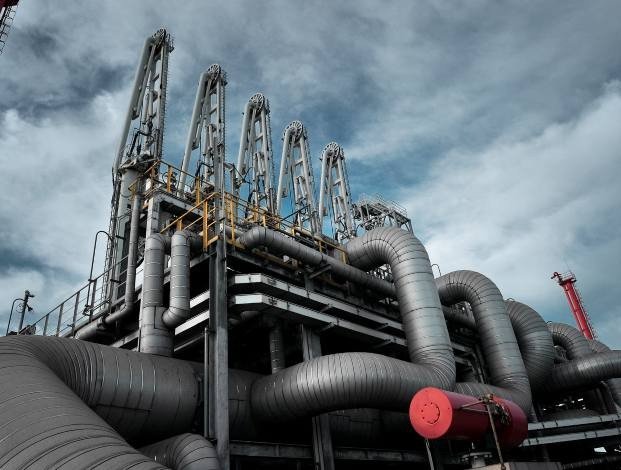
Nigeria is moving to fast-track gas-led industrial growth with plans to execute more than 60 high-priority gas demand projects over the next decade, according to the Nigerian National Petroleum Company Limited’s Gas Master Plan 2026. The plan shows that 30 priority projects are expected to be delivered within the next three years, forming the foundation of near-term gas expansion, while another 30 projects are scheduled to come onstream over the following ten years. Together, the projects are designed to significantly boost domestic gas utilisation and expand export capacity. Classified under Category A (near-term) and Category B (medium-term), the projects are projected to deliver a combined 13,960 million standard cubic feet per day (mmscf/d), supporting Nigeria’s industrial growth, domestic energy needs and export ambitions. The Gas Master Plan 2026 serves as a strategic roadmap aimed at converting Nigeria’s vast natural gas resources into economic growth, improved energy security and industrial development. It was formally unveiled on January 30, 2026, at the NNPC Towers in Abuja, marking a shift from policy planning to commercially focused and disciplined execution. The plan aligns with the Federal Government’s Decade of Gas Initiative and reforms introduced under the Petroleum Industry Act. Building on the original 2008 Gas Master Plan, which faced implementation and infrastructure challenges, the 2026 version prioritises increased gas production, expanded infrastructure and stronger market linkages across LNG, power generation, industrial offtakers, pipelines and compressed natural gas. It targets national production levels above 10 billion cubic feet per day by 2027 and 12 billion cubic feet per day by 2030, while unlocking over $60bn in new investments. At the launch, the Minister of State for Petroleum Resources (Gas), Rt. Hon. Ekperikpe Ekpo, described the plan as a deliberate move from policy formulation to implementation, driven by commercial viability and sector-wide coordination. He said the initiative reflects a broader effort to translate Nigeria’s gas potential into tangible economic outcomes, stressing that the challenge has always been execution rather than resource availability. Officials and industry stakeholders at the event described the plan as a major milestone in Nigeria’s energy transition, aimed at delivering reliable domestic supply, strengthening export capacity and generating broad socio-economic benefits. The plan outlines targets to raise commercialised gas production to 75 per cent by 2027 and 80 per cent by 2030, eliminate routine gas flaring, and meet presidential production goals of 10 Bcf/d by 2027 and 12 Bcf/d by 2030. An analysis of the document indicates that near-term gas demand under Category A projects is estimated at 8,110 mmscf/d. This demand will be driven by a mix of LNG, power, industrial, pipeline and CNG projects. LNG projects account for the largest share, led by OKLNG at 1,800 mmscf/d and NLNG Trains 7 and 8 at 1,350 mmscf/d, alongside UTM, NNPC-Chevron LNG and several modular LNG developments expected to commence operations within three years. The power sector is projected to consume about 470 mmscf/d through projects such as GIPP Phase I, Kano IPP, Abuja IPP and Okpai II. Gas-based industries, including fertiliser and chemical plants such as Brass Fertiliser, NSIA-OCP and Blackrose, are expected to require more than 700 mmscf/d. Smaller, fast-deploying CNG projects across Abuja, Kaduna, Kano and Imo are projected to absorb about 45 mmscf/d, providing quick domestic demand activation. The largest single demand driver, however, is the African Atlantic Gas Pipeline Phase 1 expansion, expected to transport 3,000 mmscf/d within three years, strengthening regional gas trade and domestic utilisation. For the medium term, Category B projects are expected to require about 5,850 mmscf/d and include LNG, power, gas-based industries, industrial parks and pipeline developments. Key projects include Golar Mark II LNG, the Trans-Saharan Gas Pipeline, and multiple fertiliser and methanol plants in Abuja, Kano and Kaduna. LNG developments such as Golar Mark II, Transoceanic, ACE and Kora together account for more than 2,000 mmscf/d, with many targeted for completion within three years. The power sector is projected to absorb 100 mmscf/d through the MBH Alero and Ikorodu IPPs, while large-scale fertiliser and methanol plants, including Dangote Fertiliser and Indorama, are expected to drive gas demand in the industrial sector. Industrial parks in Golden Bridge and Awka are also expected to deepen domestic gas usage. The Trans-Saharan Gas Pipeline, with an estimated demand of 2,000 mmscf/d, stands out as the largest Category B project, positioning Nigeria for expanded regional gas exports. Combined, Category A and B projects target nearly 14,000 mmscf/d of gas demand across LNG, power, industrial parks, CNG and pipelines, aligning supply planning with industrialisation, electricity growth and export expansion. Nigeria holds about 210 trillion cubic feet of proven gas reserves—the largest in Africa and among the top ten globally—yet current production stands at roughly 7.5 Bcf/d, with only about 60 per cent commercialised. Key supply hubs such as Gbaran, Utorogu, Assa North, Escravos and Anyala have been mapped to demand centres, supported by pipelines including AKK, ELPS-Lekki and GTS-4. Planned investments in infill drilling, facility upgrades and midstream infrastructure are expected to unlock additional capacity. With more than 60 major projects planned or underway, Nigeria is positioning itself to unlock its gas potential, expand manufacturing, improve electricity access and strengthen its role in the global gas market. However, economist and Dairy Hills Co-founder and Chief Executive Officer, Kelvin Emmanuel, has cautioned that government control of gas pricing and output could undermine these ambitions by discouraging private investment. Speaking in an interview on Sunday, he argued that regulated gas prices have distorted the domestic market and reduced incentives to invest in pipelines, processing facilities and offshore evacuation infrastructure. According to Emmanuel, about 45 per cent of gas supplied to the domestic market is sold at regulated prices rather than under a willing-buyer, willing-seller framework, effectively creating a subsidy regime that limits commercial returns. He noted that Nigeria’s gas reserves are heavily weighted toward non-associated gas, which requires significant investment to develop. He explained that much of the associated gas produced is either trapped, reinjected or flared, while developing deep offshore gas requires costly pipeline infrastructure and central processing


2026_grammys.webp

4min3580
Nigeria recorded no wins at the 2026 Grammy Awards despite multiple nominations in major music categories, while an ongoing strike by health workers has caused major disruptions across public hospitals nationwide. In governance and sports, the Presidency spent N34bn on foreign exchange for official travels over the last two years, Super Eagles striker Victor Osimhen reached the 200-goal milestone in his career, and Nigerian women footballers impressed in leagues abroad. Meanwhile, South Africa is set to replace Morocco as host of the 2026 Women’s Africa Cup of Nations, and Defence Minister, General Christopher Musa, revealed he was among those targeted in a recently foiled coup plot. Here are the top stories this morning: 1. Grammys 2026: Nigeria leaves without an award, Tyla wins againNigerian artistes including Burna Boy, Davido, Omah Lay, Ayra Starr and Wizkid failed to secure competitive awards at the 2026 Grammy Awards despite strong nominations. South African singer Tyla won Best African Music Performance for Push 2 Start, marking her second win in the category. Late Afrobeat legend Fela Anikulapo-Kuti was honoured with a Lifetime Achievement Award. 2. Health workers’ strike cripples public hospitalsThe ongoing industrial action by health workers in federal institutions has severely affected service delivery, forcing many public hospitals to operate at limited capacity. Patients have struggled to access care, with laboratory, pharmacy and diagnostic services disrupted in several teaching hospitals. 3. Presidency spends N34bn on forex for official travelsOver the past two years, the Presidency expended N34bn on foreign exchange for official international travels. The spending reflects the rising cost of overseas engagements by the President and other government officials. 4. Osimhen reaches 200 career goals as Nigerian women excel abroadVictor Osimhen hit the 200-goal mark in his professional career, underlining his status as one of Nigeria’s most prolific forwards. At the same time, Nigerian women footballers continued to shine in various international leagues and competitions. 5. South Africa to host 2026 WAFCONSouth Africa is expected to take over as host of the 2026 Women’s Africa Cup of Nations following Morocco’s withdrawal, ensuring continued preparations for the continental tournament. 6. Failed coup plot: Defence minister says he was a targetDefence Minister, General Christopher Musa, disclosed that he was marked for arrest or assassination in a recently uncovered coup plot. He said the plotters intended to detain him and would have killed him if he resisted, but he reaffirmed confidence in Nigeria’s democratic stability.

BANDICT-3.webp

4min3770
Terrorists have once again attacked Niger State, killing one person, abducting five others, and setting fire to a church building and a police station in Agwarra Local Government Area. During the attack, the assailants reportedly razed the United Missionary Church of Africa in Agwarra and also torched the local police station. The church was said to have been set ablaze around 6 a.m., after which the attackers moved to Sokonba village, which borders Kabe, a community that was recently targeted. The attackers allegedly looted food items and other valuables before killing an elderly woman in Kabe town and abducting five individuals. Speaking on Sunday, the son of the late Emir, Murtala Dantoro, said the repeated attacks had transformed previously peaceful communities into areas marked by fear and uncertainty. According to him, innocent lives are being lost, farmers are abandoning their farmlands, economic activities have stalled, and families are fleeing their homes in search of safety. He described the attacks as persistent and escalating, blaming the situation on the absence of a permanent and well-equipped military presence in Agwarra. He appealed to both the state and federal governments to intervene urgently, warning that the continued security vacuum had emboldened criminals to operate with little resistance, worsening the humanitarian and economic crisis in the area. He added that Agwarra, a strategic part of Niger State, had suffered multiple attacks in recent times, noting that continued neglect posed serious risks to residents and neighbouring communities. Also reacting, the Catholic Bishop of Kontagora Diocese and Chairman of the Christian Association of Nigeria in Niger State, Most Rev. Bulus Yohanna, urged the Federal Government, the Nigerian Army, and other security agencies to establish a permanent military formation in Agwarra. He said a stationed military presence was essential to deter criminal activity, restore confidence among residents, enable displaced persons to return home, and allow farmers to safely resume farming. He stressed that peace and security were fundamental to development, warning that without decisive action, meaningful progress would remain impossible. The bishop expressed concern over the deteriorating security situation, noting that armed groups now move freely without challenge, while the rule of law has weakened across Borgu and surrounding areas. He warned that continued attacks risk turning the once-peaceful Borgu Emirate into a haven for terrorists. Meanwhile, the spokesperson for the Niger State Police Command, Wasiu Abiodun, confirmed the attack, stating that police operatives engaged the attackers, who reportedly used suspected dynamite to set the police station on fire. According to him, the incident occurred in the early hours of February 1, 2026, when armed men invaded Agwarra and attacked the police station. He said the attackers overpowered officers on duty, burned part of the station, later moved to the church, and abducted about five persons whose identities are yet to be confirmed. He added that security monitoring in the area is ongoing. The attack comes just over two months after terrorists abducted 315 pupils from a school in Papiri, Niger State.

Tech & Tools Desk2 February 2026
Sanwo.png

3min7020
Governor Babajide Sanwo-Olu has said Lagos State is prepared to collaborate with the World Bank Group across key sectors including energy, agriculture, tourism and human capital development. He stated that the state was open to deeper partnerships and investment opportunities aimed at improving infrastructure and enhancing the standard of living for residents. Sanwo-Olu made this known on Sunday at Lagos House, Marina, while hosting a World Bank delegation led by the Managing Director for Operations, Ms Anna Bjerde. The delegation also included the International Finance Corporation (IFC) Regional Vice President for Africa, Mr Ethiopia Tafara. The governor reaffirmed Lagos’ commitment to reforms that attract international support, noting that the state was ready to meet the requirements for expanded World Bank assistance. “Lagos is prepared to do more to attract investments and partnerships that will deliver real benefits to our people. We welcome collaborations that strengthen infrastructure and drive inclusive growth,” he said. Sanwo-Olu highlighted the progress recorded under the THEMES+ agenda, explaining that its implementation had produced tangible benefits for millions of residents. He revealed that Lagos moved from 29th to first place in the national Ease of Doing Business ranking within four years. “We achieved this by doubling our performance in critical areas through deliberate reforms and improved efficiency,” he added. Earlier, Ms Bjerde said the World Bank Group was eager to deepen engagement with Lagos because of its strategic role and reform-focused approach. She described the state as a key stakeholder, pointing to the stability created by recent economic and policy reforms. According to her, the initiatives being implemented in Lagos reflect solutions that can be applied nationally, while policy consistency in Nigeria has improved predictability for investors. Bjerde commended the state for cutting down bureaucratic hurdles and strengthening the Ease of Doing Business environment. She disclosed that the World Bank planned a five-year country review to evaluate progress at both national and subnational levels, including Lagos. She added that the institution was ready to build on Lagos’ capacity to boost private sector financing across critical sectors.

Ifunanya Okafor2 February 2026
trucck.jpeg

3min4640
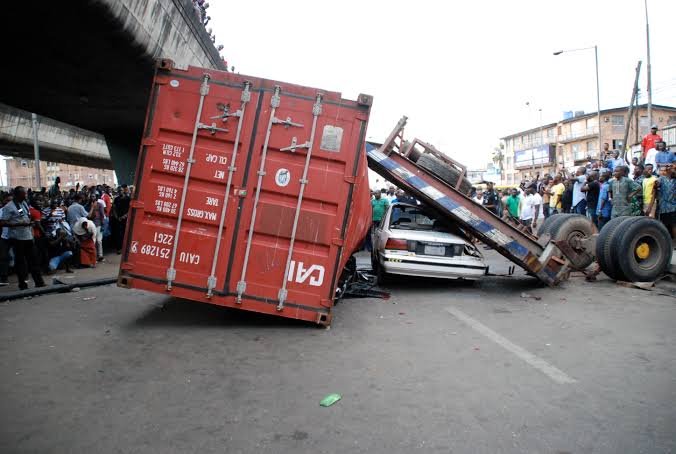
The Lagos State Government has cautioned operators of articulated vehicles, tankers and trucks to adhere strictly to traffic regulations and prescribed speed limits. The warning was issued on Sunday in Lagos by the Special Adviser to Governor Babajide Sanwo-Olu on Transportation, Mr Sola Giwa, following a crash involving a speeding heavy-duty truck transporting Compressed Natural Gas and a privately owned vehicle. The accident occurred at the crest of Apakun Bridge, inward Oshodi. Giwa said preliminary security findings showed that the truck, with registration number EKY 120 YK, was travelling at excessive speed, contrary to traffic safety rules, before colliding with a moving silver Toyota Corolla bearing registration number EKY 289 HM. He noted that the impact caused severe traffic disruption and posed a serious threat to lives and property in the area. During the incident, two pedestrians were hit, while the driver of the Toyota Corolla sustained critical injuries. According to Giwa, officers of the Lagos State Traffic Management Authority promptly responded to the scene, rescuing and extricating the injured victims from the wreckage. The injured pedestrians and driver were immediately taken to a nearby medical facility, where they are currently receiving intensive medical care. He added that personnel from the Ajao Estate Police Division were deployed to provide security during the rescue and evacuation operations, preventing further incidents and ensuring a smooth emergency response. Given the highly combustible nature of the truck’s cargo, operatives of the Rapid Response Squad and the Lagos State Fire and Rescue Service were also deployed to the scene as a precautionary measure. Giwa condemned the rising cases of road accidents linked to excessive speeding, particularly among drivers of trucks, tankers and other articulated vehicles, describing such behaviour as reckless, negligent and contrary to the state government’s goal of ensuring a safe, orderly and well-regulated transport system.