Category: Refined Living

Tech & Tools Desk30 December 2025
aa-8.jpeg

4min5990
A Senior Advocate of Nigeria, Mr. Yakubu Philemon, has urged Nigerians to remain calm and open-minded as the country moves toward 2026, particularly regarding the ongoing tax law reforms. Philemon made the call on Sunday at a dinner organised by Christian lawyers under the Christian Lawyers Fellowship of Nigeria (CLASFON), Gombe Branch. The annual gathering is held to give thanks for divine guidance throughout the year and to strengthen fellowship among members of the legal profession. Encouraging participants to support the federal government’s tax reform initiative, Philemon noted that new policies often face initial challenges and resistance. He stressed the importance of allowing the reforms to take effect in order to identify areas that may require further improvement. According to him, the new tax law is designed not only to increase revenue but also to promote accountability among citizens, which in turn strengthens accountability in leadership. He urged Nigerians to embrace the reforms and assess their impact on national development. At the event, a gubernatorial aspirant, Victor Laima, expressed concern over what he described as persistent social injustice in the system. He called on believers to take an active role in governance and nation-building. Laima said that various sectors in Gombe State, including the judiciary, traditional institutions, and the civil service, have experienced forms of injustice, particularly in appointments and promotions. He explained that his decision to seek public office was driven by a desire to promote justice and serve all citizens fairly, adding that true democratic dividends can only be achieved where justice prevails. The gathering brought together legal practitioners, faith leaders, and political stakeholders, highlighting CLASFON’s growing influence in promoting ethical legal practice, access to justice, and national development through faith-based engagement. Earlier, the Chairperson of CLASFON Gombe Branch, Pastor Mrs. Elizabeth Okotie, described the end-of-year dinner as a longstanding tradition that allows members to reflect, give thanks, and renew their commitment to service. She also encouraged young lawyers to join the fellowship, dismissing claims that participation is a waste of time. According to her, CLASFON provides valuable mentorship and professional networking opportunities that are often difficult to access elsewhere. Okotie further disclosed that the fellowship has consistently carried out humanitarian and justice-oriented outreach programmes, including prison visits and free legal advisory services, although activities were limited during the year due to constraints. She expressed optimism that more people would be reached in the coming year. Philemon, who was later honoured with an award by the fellowship, commended CLASFON for recognising his contributions and described the organisation as one that promotes integrity and professionalism in legal practice. He noted that the recognition would further motivate him to advance access to justice, especially for those who cannot afford legal services. He also encouraged lawyers nationwide to actively participate in the fellowship, stressing that involvement contributes to both personal and professional growth. According to him, CLASFON offers teachings that support moral values, career development, and a principled approach to legal practice.

James Obasi30 December 2025
aa-28.jpeg

3min5400
The Nigerian Association of Resident Doctors (NARD) has warned that Nigeria may soon experience another nationwide disruption of medical services due to the Federal Government’s failure to implement a previously signed Memorandum of Understanding (MoU). In an urgent appeal addressed to senior medical professionals and respected elders, the association cautioned that the country is approaching a total and indefinite nationwide strike. According to NARD, repeated deadlines for implementing the MoU have been ignored by the Federal Ministry of Health and the Federal Government. The association had earlier suspended an indefinite strike on November 29 after 29 days of industrial action, following the signing of the MoU, which committed the government to address NARD’s demands within four weeks. However, more than a month later, no tangible progress has been made. NARD expressed deep concern over the situation, describing it as a breakdown of trust and good faith in government professional relations. The association noted that resident doctors, who form the backbone of service delivery in Nigeria’s tertiary hospitals, are overworked, overstretched, and increasingly demoralised. The doctors explained that after suspending an initial warning strike, they issued a two-week ultimatum that passed without any meaningful response. This was followed by a 30-day extension as a goodwill gesture, and later an additional seven-day extension none of which elicited action from the government. This sequence of delays ultimately led to the commencement of an earlier nationwide strike, which was suspended only after the MoU was signed with clear timelines. Despite these efforts, NARD stated that there has been no visible or substantive implementation of the agreement, even after the expiration of the agreed timeframe. The association stressed that resident doctors should not be blamed if industrial action resumes, having consistently shown patience, restraint, and commitment to dialogue. NARD warned that failure to honour the MoU could result in a complete shutdown of hospital services, potentially affecting millions of patients nationwide. The association emphasized that repeated neglect of agreed commitments sends a dangerous signal that sacrifice, professionalism, and dialogue are no longer valued. In its appeal, NARD called on respected medical elders to intervene, noting that their moral authority and influence could compel swift government action. The association urged immediate and visible steps to implement the MoU, stating that timely intervention could avert another healthcare crisis, restore confidence, and protect the integrity of the medical profession. As of the time of this warning, the Federal Ministry of Health and Social Welfare had not issued any official response.

aa-27.jpeg

4min4040
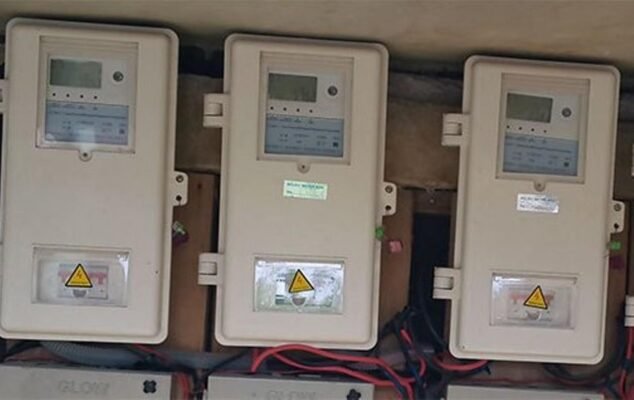
Electricity distribution companies (DisCos) have begun the nationwide rollout of prepaid electricity meters at no cost to customers, with current deployments largely targeting Band A and some Band B consumers. The exercise follows recent remarks by the Chairman of the Nigerian Electricity Regulatory Commission (NERC), Musiliu Oseni, who disclosed that between 600,000 and 700,000 meters are currently available in the country. Speaking at the 4th NESI Stakeholders Meeting in Abuja, Oseni urged DisCos to accelerate deployment and improve public awareness, noting that the Federal Government has already made significant investments in meter procurement. NERC’s Commissioner for Corporate Services, Nathan Shatti, also raised concerns over the pace of metering and refund performance under the Meter Asset Provider (MAP) scheme. He pointed to low compliance levels in some franchise areas, particularly Abuja and Kano, and stressed that customers should not be billed for meters where installation capacity is lacking. Shatti further disclosed that more than 350,000 meters are yet to be migrated to the new Standard Transfer Specification (STS), calling for immediate data cleanup. Industry checks confirm that meter distribution is ongoing across several DisCo franchise areas. The Chief Executive Officer of the Association of Nigerian Electricity Distributors (ANED), Sunday Oduntan, confirmed that meters are being installed nationwide at no cost to customers. He explained, however, that while the meters were procured through government intervention, DisCos are expected to repay the cost over a 10-year period. Oduntan clarified that the free meters are separate from the MAP programme, under which customers who previously paid for meters are entitled to refunds, usually credited over time through energy vending. He emphasised the need for better customer education to prevent misunderstandings around billing and refunds. According to NERC’s latest metering factsheet, Nigeria added 187,765 newly metered customers between September and October 2025, raising the national metering rate from 55.37 per cent to 56.07 per cent. During the period, the number of active electricity customers increased to 12.07 million, while metered customers rose to 6.77 million. Despite the gains, over 5.3 million customers remain on estimated billing. Ikeja Electric recorded the highest metering rate at 85.59 per cent, followed by Eko Electric (84.75 per cent) and Abuja Electric (75.82 per cent). In contrast, Yola, Jos, Kaduna, and Kano DisCos remained below the 35 per cent mark. Aba Power recorded the most significant improvement, increasing its metering rate by more than eight percentage points in one month. To further accelerate deployment, NERC approved the disbursement of ₦28 billion in October for the second phase (Tranche B) of the Meter Acquisition Fund (MAF). The funds are designated for metering all outstanding unmetered Band A customers and reducing the metering gap among Band B customers, under the Presidential Metering Initiative. The commission directed DisCos to adhere to strict procurement and installation timelines, with all meters funded under Tranche B to be installed by December 31, 2025. NERC stated that the initiative is aimed at improving service delivery, reducing energy losses, and addressing the long-standing metering deficit, which remains one of the sector’s key challenges.

aa-26.jpeg

3min8280
According to him, the airlines acknowledged that they do not remit the levels of taxes being claimed. He said he could not make sense of the figures being circulated but maintained that, given the support domestic carriers have received from President Bola Ahmed Tinubu, the Minister of Aviation, Festus Keyamo, and the Director General of Civil Aviation, Capt. Chris Najomo, there was no justification for repeatedly blaming the government through such claims. This clarification followed remarks by Air Peace Chairman, Allen Onyema, who noted that many return flights on South-East routes operate with very low passenger numbers, even though airlines must still cover the full cost of both legs of the journey. Onyema stated that about 65 to 70 per cent of ticket revenue does not go to airlines but is absorbed by levies, taxes, and other charges, describing airlines as bearing a disproportionate burden within the industry. He emphasized that high fares are driven by operational realities rather than exploitation, adding that ticket prices fluctuate based on demand and booking time, with cheaper options available for early purchases. He also observed that Nigeria’s domestic airfares remain comparatively low by global standards. Achimugu challenged allegations of profiteering, pointing out that there had been no recent increases in taxes or jet fuel prices. He described it as contradictory to claim that Nigerians enjoy some of the lowest domestic airfares worldwide while also defending the sharp rise in ticket prices during December, despite the absence of new cost pressures. He questioned why fares rose to as much as ₦500,000 for short flights if taxes were supposedly responsible for prices in the ₦150,000–₦200,000 range, noting that those taxes had not changed. In conclusion, he attributed the December spike in airfares to basic market dynamics, stressing that the increase affects only certain high-demand routes. He noted that similar seasonal price surges occur across other sectors, including road transport, accommodation, and food, and argued that these trends are driven by demand rather than government policy.

Tech & Tools Desk29 December 2025
aa-25.jpeg

3min8920
A notorious drug trafficker, Nwobodo Basil, previously convicted in 2023 for trafficking 30.10kg of methamphetamine, has been rearrested by operatives of the National Drug Law Enforcement Agency (NDLEA). His latest arrest followed the interception of 75 parcels of cocaine weighing 1.50 kilogrammes, concealed in factory-sealed sachets of cold-water starch and destined for the United Kingdom. The seizure was made at the export shed of the Murtala Muhammed International Airport, Ikeja, Lagos. Three cargo agents Jubrin Firdausi Hassana, Kuku Daniel Oluwasegun, and Igwe Chioma Jane—were apprehended on Saturday, December 20, 2025, while attempting to export the illicit consignment. Further investigations identified 37-year-old Nwobodo Chidiebere Basil as the mastermind behind the operation. He was subsequently arrested on Sunday, December 21, at a relaxation centre in Ikeja. NDLEA records revealed that Nwobodo had earlier been arrested in May 2023 for attempting to export 30.10kg of methamphetamine concealed in powdered custard containers to London. He was arraigned before the Federal High Court under charge number FHC/L/337C/2023, convicted, and sentenced to five years’ imprisonment with an option of a ₦7,000,000 fine and one month of community service, effective December 4, 2023. After paying the fine, he returned to drug trafficking activities. In a separate operation in Gombe State, NDLEA operatives arrested a 65-year-old driver, Sada’u Mohammed, along the Gombe–Biu highway while he was conveying 300 ampoules of pentazocine injections, 27,900 tramadol pills, and other opioids en route to Biu in Borno State. Meanwhile, a 47-year-old businessman, Ignatius Egbochie, also known as Brown, was arrested in Lagos in connection with an earlier seizure of 56 parcels of loud cannabis weighing 26kg at the Tincan Seaport. The drugs were intercepted on December 10 during a joint container examination by NDLEA, Customs, and other security agencies. A follow-up operation on December 19 led to his arrest in Apapa. Between December 21 and 25, 2025, NDLEA operatives conducted multiple operations across Ekiti, Edo, Cross River, Abuja, Lagos, and Taraba states, resulting in the destruction of cannabis warehouses, the seizure of large quantities of illicit drugs, and the arrest of several suspects. In Ekiti State, operatives set ablaze warehouses in Ara Forest, Ara-Ekiti, on Monday, December 22, destroying large quantities of skunk cannabis and recovering 638 kilogrammes of the substance. On the same day, 1,205 blocks of compressed cannabis sativa weighing 883.1kg were recovered from three Toyota Camry vehicles intercepted along the Igara–Auchi Road in Edo State. In Cross River State, raids conducted on Sunday, December 21, in the Agoi-Ibami community of Yakurr Local Government Area led to the arrest of three suspects and the seizure of significant quantities of skunk cannabis. The suspects were identified as Freedom Jonah Akpama, 27, with 671kg; David Itam David, 30, with 89kg; and Nelson Arikpo Osam, 26, with 148kg.

James Obasi29 December 2025
aa-24-1280x824.jpeg

4min2760
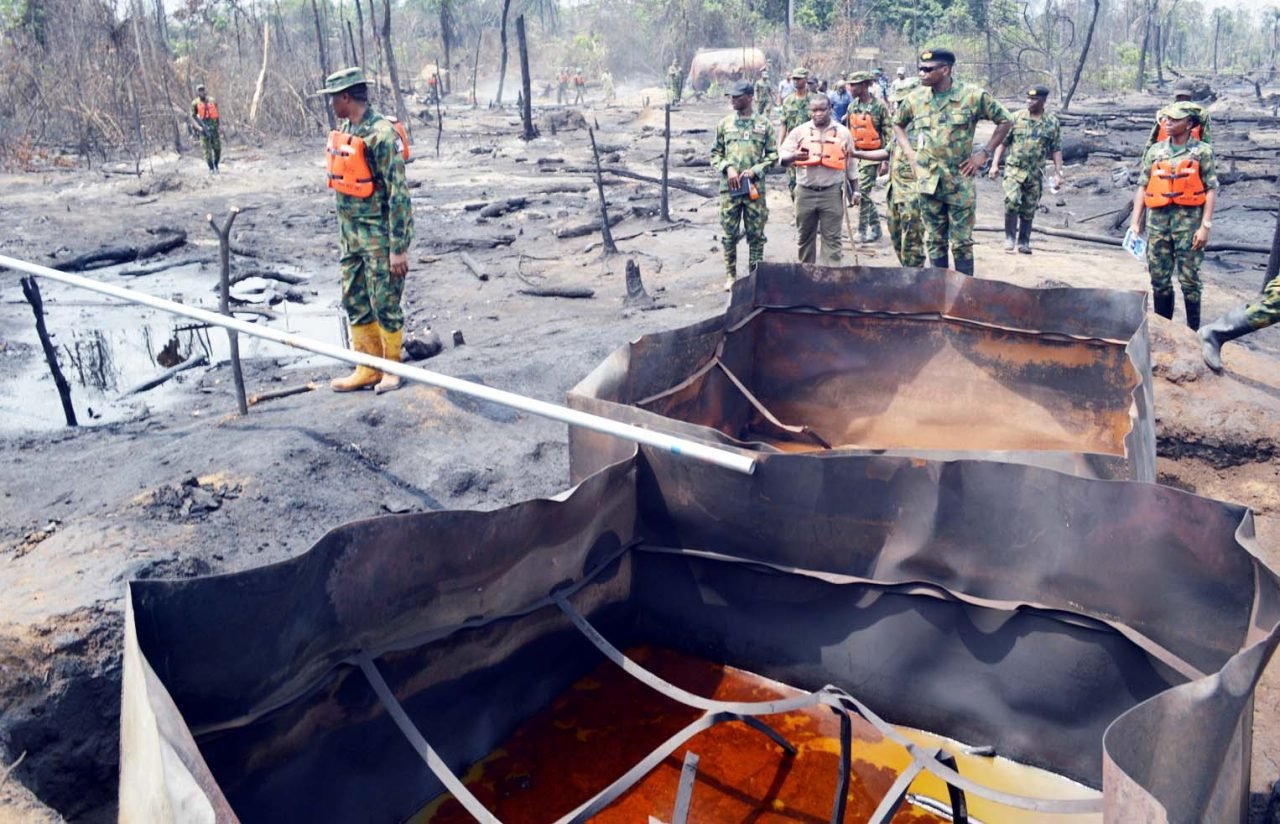
The Nigerian Army has arrested 19 suspected oil thieves, dismantled 22 illegal refining sites, and recovered more than 180,000 litres of stolen petroleum products valued at approximately ₦150 million across the Niger Delta. The operations were carried out by troops of the 6 Division of the Nigerian Army in collaboration with other security agencies over a nearly one-month period spanning four states in the region. In a statement issued in Port Harcourt on Monday, the Acting Deputy Director of Army Public Relations, 6 Division, Lt. Col. Jonah Danjuma, said the coordinated operations targeted oil theft, pipeline vandalism, and related criminal activities. He emphasized that troops would continue to dominate the operational environment and deny criminal elements freedom of action. According to the statement, the operations were conducted between November 23 and December 28, 2025, resulting in the arrest of 19 suspects, the destruction of 22 illegal refining hubs, and the recovery of over 180,000 litres of stolen products. Providing details, Danjuma said an illegal refining site was deactivated at Siebu Creek in Ogbienbiri, Southern Ijaw Local Government Area of Bayelsa State, where a reservoir containing more than 75,000 litres of stolen crude oil and a pumping machine were recovered. In Biseni, Yenagoa Local Government Area, several illegal sites were dismantled, leading to the recovery of over 17,000 litres of stolen products. At Okarki waterside in Ogbia Local Government Area, troops intercepted a large boat concealed along the riverbank, loaded with 37 sacks containing 2,775 litres of stolen crude. In Rivers State, troops uncovered 350 sacks holding more than 10,500 litres of stolen crude in Ogale Community, Eleme Local Government Area. Further operations in Ahoada West and Abua/Odual Local Government Areas led to the destruction of multiple illegal refining sites, the tracing of a nine-kilometre hose connected to four large refining ovens, and the recovery of several reservoirs and dugout pits stocked with thousands of litres of crude oil. Danjuma also disclosed that troops foiled an attempt to sabotage a pipeline in Gbonga Forest, Bonny Island Local Government Area, where various equipment used for illegal bunkering was recovered. Additional seizures were made in Okrika, Ikwerre, and Alakiri areas of Rivers State, with over 6,000 litres of condensates recovered. In Delta State, troops intercepted a truck along the Asaba–Benin Expressway while it was discharging about 45,000 litres of diverted petroleum products into a pit. Two suspects were also arrested during separate operations in Sapele Local Government Area, where 104 sacks containing over 2,600 litres of stolen crude were recovered. Patrols around Otorogu Gas Plant in Ughelli South Local Government Area led to the interception of two vehicles conveying 1,475 litres of illegally refined condensates, resulting in two additional arrests. In Akwa Ibom State, troops discovered a stockpile of illegally refined Automotive Gas Oil at a warehouse in Ikot Ntuen Village, Abak Local Government Area, where 20 jerry cans filled with stolen products were recovered. Commending the troops, the General Officer Commanding, 6 Division, Maj. Gen. Emmanuel Emekah, praised their professionalism and urged them to sustain the momentum against economic saboteurs. He also called on residents of the Niger Delta to continue supporting security efforts to protect critical national infrastructure in the region.

aa-8.jpeg

2min4210
Manufacturers have expressed optimism about the proposed tax reforms, saying they expect significant relief from what they described as multiple nuisance taxes imposed by sub-national authorities. According to industry leaders, the reforms are expected to end the persistent harassment of businesses through official and unofficial levies, allowing companies to operate more freely and efficiently. They noted that the changes would eliminate roadblocks and other disruptions associated with tax collection, adding that the broader economy would benefit from a more orderly and predictable tax environment. Manufacturers said they are looking forward to the implementation of the new tax laws from January 1, 2026, stressing that they actively participated in stakeholder consultations and believe the framework is well designed to support both small-scale and large businesses. It was further explained that the reforms would provide substantial relief for small businesses, particularly those with annual turnovers below ₦100 million, which would be exempted from company income tax, value-added tax and withholding tax. This, they said, would ease the burden on struggling enterprises and encourage growth. The reduction in company income tax was also described as a step that would align Nigeria with global best practices, create room for business reinvestment and improve the country’s attractiveness to investors. In addition, low-income earners are expected to be fully exempt from tax, while middle-income earners would benefit from lower liabilities due to enhanced reliefs. Manufacturers also welcomed the planned introduction of a tax ombuds, describing it as a major safeguard for taxpayers. They said the office would offer protection against arbitrary tax practices and provide a fair channel for dispute resolution. Overall, they expressed confidence that the reforms would not leave any category of earners worse off, noting that even higher-income earners would benefit indirectly through improved business performance under the new tax regime.

aa-14.webp

3min2520
About 2,725 mobile subscribers left T2 between August and October 2025, despite the company’s rebrand from 9mobile, according to recent Mobile Number Portability data released by the Nigerian Communications Commission (NCC). The data shows that 1,111 subscribers exited the network in August, 724 in September, and 890 in October 2025. Within the same three-month period, only 61 subscribers joined T2, resulting in a net loss of 2,664 customers. These figures indicate that the rebrand has yet to slow the rate at which customers are leaving the operator. In October alone, 890 users departed T2, compared with 289 from Airtel, 193 from Globacom, and 225 from MTN. Out of the 1,597 subscribers who switched networks that month, T2 accounted for more than half of all exits. This pattern has remained consistent throughout 2025. Outgoing porting which tracks subscribers who switch networks while keeping their phone numbers shows T2 recording significantly higher losses than its competitors from the beginning of the year. The year began with particularly heavy losses: 6,716 subscribers left in January, followed by 3,817 in February, 1,992 in March, 5,042 in April, 3,863 in May, and 3,372 in June. Although the pace slowed in the second half of the year, departures remained notable, with 646 exits in July, 1,111 in August, 724 in September, and 890 in October. Incoming subscriber data reflects a similar trend. In October 2025, only 26 subscribers switched to T2, compared with 937 who joined MTN, 357 who moved to Airtel, and 277 to Globacom. September and August recorded just 20 and 15 incoming subscribers respectively, continuing a pattern observed since January. MTN, by contrast, consistently attracted the highest number of new subscribers throughout the year. Overall, between January and October 2025, a total of 28,173 subscribers ported out of T2, while only 87 joined the network. This highlights ongoing customer dissatisfaction despite the introduction of a new brand identity. Mobile Number Portability allows users to change service providers without changing their phone numbers, and the NCC’s monthly reports are widely regarded as a key indicator of consumer sentiment in the telecommunications sector. T2’s rebrand followed its acquisition in 2023 by Lighthouse Telecoms as part of a broader recovery strategy built around stabilisation, modernisation, transformation, and growth. Since then, the company has restructured its leadership, reconstituted its board, and entered into a national roaming agreement with MTN Nigeria to improve coverage and service quality. Despite these measures and regulatory approvals supporting infrastructure sharing and spectrum leasing, NCC data shows that T2 continued to lead the industry in outgoing subscriber porting throughout 2025, suggesting that the network’s challenges extend beyond branding changes alone.

Tech & Tools Desk28 December 2025
aa-23.jpeg

6min9260
Several Nigerian states have proposed ambitious 2026 budgets that reveal heavy dependence on federal allocations, loans, and other non-recurring revenue sources, raising concerns about long-term fiscal sustainability. In Abia State, Governor Alex Otti presented a ₦1.016 trillion budget, with ₦811.8 billion (80 percent) allocated to capital projects and ₦204.4 billion (20 percent) for recurrent expenditure. The state expects ₦83.2 billion from FAAC allocations, ₦67.1 billion from VAT, ₦26.5 billion from grants and aid, and ₦168 billion from other federal revenue channels, bringing total projected revenue to ₦607.2 billion. This leaves a deficit of ₦409 billion, representing about 40 percent of the budget. While internally generated revenue is expected to cover recurrent spending, capital projects will rely largely on federal inflows, grants, and borrowing. Financial analysts warn that such dependence poses risks to fiscal stability. They note that federal transfers and borrowing are volatile and largely outside state control, leaving budgets exposed to external shocks. Over time, this reliance may also discourage innovation and the development of sustainable local revenue sources. Ogun State shows a similar pattern with its ₦1.669 trillion budget. Internally generated revenue is projected at ₦509.88 billion, while federal transfers are expected to contribute ₦554.81 billion. An additional ₦518.9 billion is projected from capital receipts, including loans and grants. Although the budget appears balanced, more than 30 percent of the funding comes from non-recurring sources. Enugu State’s ₦1.62 trillion budget represents a 66.5 percent increase over the previous year. Capital expenditure accounts for ₦1.296 trillion (80 percent), with recurrent spending at ₦321.3 billion (20 percent). Revenue projections include ₦870 billion from internally generated revenue, ₦387 billion from federal allocations, and ₦329 billion from loans and grants. Analysts estimate that about 20 percent of the planned spending depends on non-recurring funds. Osun State approved a ₦723.45 billion budget, supported by ₦421.25 billion in recurrent revenue, ₦286.01 billion in capital receipts, and an opening balance of ₦16.19 billion. While projected inflows match the budget size, execution depends significantly on the successful mobilisation of capital receipts, which are not guaranteed. Delta State’s ₦1.664 trillion budget allocates ₦1.165 trillion (70 percent) to capital expenditure and ₦499 billion (30 percent) to recurrent spending. The state expects ₦720 billion from statutory allocations and mineral derivation, and ₦250 billion from internally generated revenue. Despite anticipated improvements in revenue collection, the budget remains heavily tied to federal and oil-related inflows. Sokoto State’s ₦758.7 billion budget relies on ₦389.3 billion from FAAC, ₦74.5 billion from internally generated revenue, and ₦233.8 billion from grants and development funds. With internally generated revenue contributing less than 10 percent of total projections, the state remains highly dependent on federal transfers and donor support. Fiscal experts argue that states’ heavy reliance on FAAC allocations creates structural challenges for the federation. They recommend incentive-based mechanisms that reward states for improving their internally generated revenue, warning that without such measures, dependence on federal inflows will persist. Despite record FAAC distributions, improved living standards have not consistently followed, highlighting inefficiencies in fund utilisation. Edo State’s ₦939.85 billion budget draws from multiple sources, including ₦160 billion from internally generated revenue, ₦480 billion from FAAC, ₦153 billion from grants and capital receipts, and ₦146 billion from public-private partnerships. However, the budget remains vulnerable to delays or underperformance of external funding sources. Bayelsa State plans to spend ₦1.01 trillion, with projected revenue including statutory allocations, VAT, derivation funds, other FAAC inflows, loans, grants, and ₦85.9 billion from internally generated revenue. Less than 10 percent of total revenue is expected from local sources, underscoring strong dependence on oil-related federal transfers. Gombe State’s ₦535.7 billion budget allocates ₦371.44 billion to capital projects and ₦164.25 billion to recurrent spending. The budget depends heavily on capital receipts and carryover balances to fund major projects. Kwara State’s ₦644.004 billion budget is built on assumptions tied to national economic indicators, including oil prices, production levels, exchange rates, and GDP growth. This makes the state’s fiscal performance highly sensitive to federal revenue flows and macroeconomic conditions. Experts stress that states must develop their comparative advantages in sectors such as agriculture, manufacturing, tourism, logistics, and services. Sustainable growth, they argue, requires stronger local economies, broader tax bases, disciplined spending, and effective public-private partnerships, rather than increased borrowing or reliance on federal transfers. Overall, analysts observe that only a few states have budgets closely aligned with guaranteed revenue. Most states continue to project spending levels far above their internally generated revenue, depending on allocations, loans, grants, and donor funding. While total projected revenue nationwide could reach ₦35 trillion, any shortfalls are likely to affect capital projects, as recurrent obligations must be met first. Maintaining fiscal discipline and adhering strictly to the budget cycle remain critical for effective execution.

James Obasi28 December 2025
aa-22.jpeg

3min2860
The shutdown of the Port Harcourt Refining Company for maintenance has now entered its seventh month, with operations yet to resume. The refinery was initially scheduled to be taken offline for one month, but more than seven months later, it has not restarted fuel production. The Port Harcourt refinery had been declared operational in November 2024 after years of inactivity. At the time, it was announced that the 60,000-barrel-per-day facility had resumed operations following extensive rehabilitation and upgrades, and was running at about 70 per cent of its installed capacity. The refinery was expected to prioritise the production of diesel and low-pour fuel oil, with daily outputs projected at 1.5 million litres and 2.1 million litres, respectively. Plans also indicated that the refinery would produce straight-run gasoline blended into 1.4 million litres of premium motor spirit daily, alongside 900,000 litres of kerosene and additional volumes of fuel oil. It was further projected that about 200 trucks of petrol would be supplied to the domestic market each day. However, about six months after the widely publicised completion of rehabilitation and resumption of operations, the facility was shut down once again. A similar situation occurred at the Warri Refining and Petrochemical Company, which was declared operational in December but closed roughly a month later. Upon assuming office, the new leadership of the national oil company reviewed the condition of the Port Harcourt refinery and concluded that it was operating at a significant loss. It was disclosed that the refinery had been losing between $300 million and $500 million monthly, with less than 40 per cent of the crude supplied being effectively processed. The decision to suspend operations was described as a measure to halt further losses while options for making the refinery commercially viable were explored. Meanwhile, the Petroleum Products Retail Outlets Owners Association of Nigeria has renewed calls for the privatisation of the country’s four state-owned refineries, urging the Federal Government to complete the process transparently by the first quarter of 2026. The association argued that privatisation would reduce the financial burden on the government, improve efficiency, attract private investment and technical expertise, and align the refining sector with global standards. Despite these calls, the sale of the refineries has previously been ruled out by the national oil company’s leadership, which maintains that ongoing technical and commercial reviews are aimed at repositioning the plants as sustainable, revenue-generating assets capable of meeting domestic fuel demand and operating in line with international best practices.