

 Ifunanya Okafor
China Executes 11 Members of Myanmar-Based Scam Syndicate
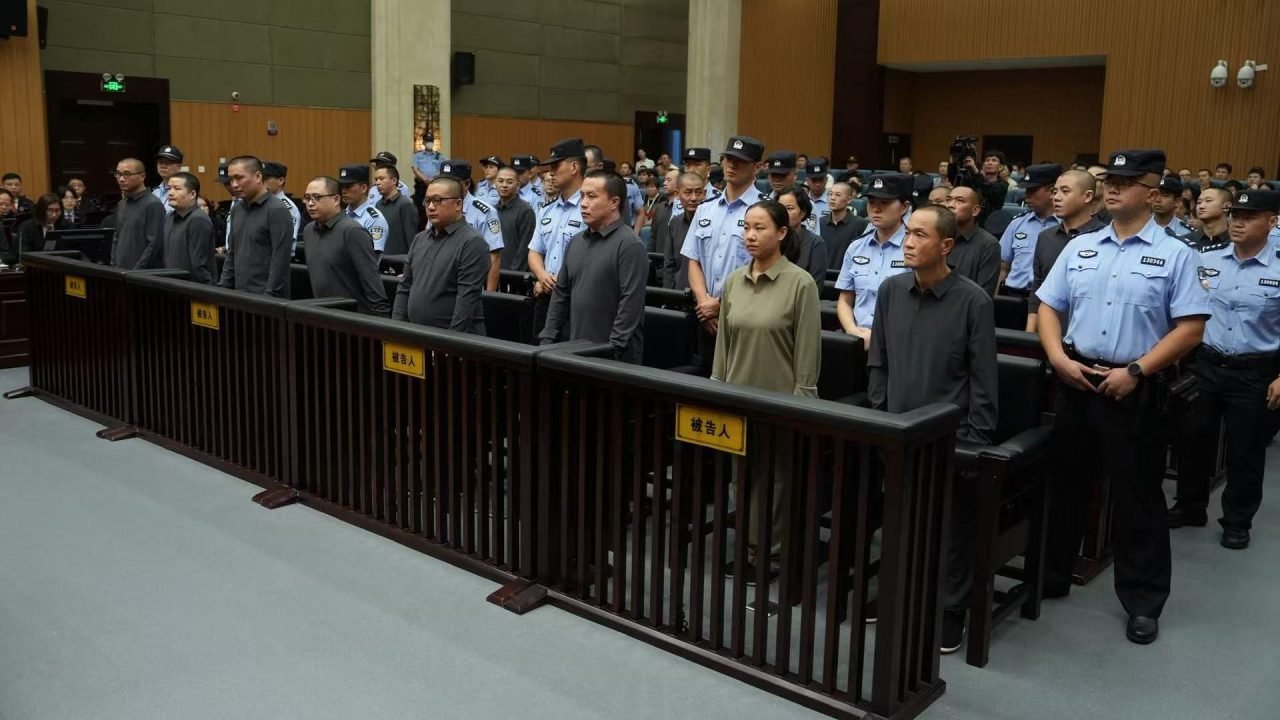
China has executed 11 members of a notorious mafia clan that ran scam centres in Myanmar near its north-eastern border, according to state media.
The Ming family members were sentenced in September by a court in Zhejiang province for crimes including homicide, illegal detention, fraud, and operating gambling dens.
The clan was among several that transformed the once-impoverished town of Laukkaing into a hub of casinos, red-light districts, and online scam operations. Their empire collapsed in 2023 when ethnic militias, who had seized control of Laukkaing during a conflict with Myanmar’s army, detained the gang and handed them over to Chinese authorities. The executions serve as a warning to other potential scammers. However, the scam operations have since shifted to Myanmar’s border with Thailand, as well as Cambodia and Laos, where China has less influence.
The UN estimates that hundreds of thousands of people have been trafficked to work in online scams in Myanmar and across Southeast Asia. Many victims and perpetrators are Chinese, with billions of dollars lost to these schemes.
Beijing, frustrated by the Myanmar military’s failure to curb the scam industry—which it likely benefited from—supported an offensive by an ethnic insurgent alliance in Shan State in late 2023. The alliance captured large territories and overran Laukkaing, a key border town.
The 11 executed members of the Ming family are the first of the Myanmar-based scam bosses to face capital punishment in China. Others are expected to follow: five members of the Bai family received death sentences in November, and trials are ongoing for defendants from the Wei and Liu families.
The Ming trial was held behind closed doors, though more than 160 people attended the sentencing last year, including victims’ relatives. Between 2015 and 2023, their operations reportedly generated over 10 billion yuan ($1.4 billion), according to China’s Supreme Court, which rejected their appeals in November. The court said their crimes led to the deaths of 14 Chinese citizens and injuries to many others.
More than 20 additional Ming family members received prison sentences ranging from five years to life. Ming Xuechang, the family patriarch, died by suicide in 2023 while attempting to evade arrest, according to Myanmar’s military.
Chinese state media have broadcast confessions from the arrested members to demonstrate the authorities’ determination to dismantle scam networks.
The Mings were among a handful of dominant families that rose to power in Laukkaing in the early 2000s after the town’s former warlord was ousted by a military operation led by Min Aung Hlaing, who later became Myanmar’s military ruler following the 2021 coup.
Ming Xuechang ran one of the most infamous scam centres, Crouching Tiger Villa. Initially, these families relied on gambling and prostitution for income but later expanded into online fraud, using kidnapped individuals forced to work the scams.
Reports from former victims describe a culture of violence inside the sprawling, heavily guarded compounds, with routine beatings and torture.

