

 Lifestyle & Wellness Desk
Western Leaders Push for Stronger Ties with China Amid Uncertainty Over US Tariffs.
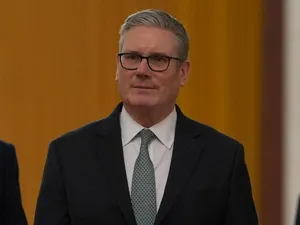
Britain’s Prime Minister, Keir Starmer, has become the latest Western leader to move toward warmer trade relations with China, a shift analysts attribute to pressure from US tariffs and uncertainty surrounding Donald Trump’s unpredictable policy approach.
Starmer’s visit to Beijing this week, aimed at promoting what he described as “pragmatic” cooperation, follows similar outreach by leaders of Canada, Ireland, France and Finland. For many of them, it was their first trip to China in years, as they seek to reset ties with the world’s second-largest economy.
According to Hosuk Lee-Makiyama, director of the European Centre for International Political Economy, there is intense competition among European leaders to secure meetings with Chinese President Xi Jinping. He said the push is driven by rivalry to attract investment and gain market access ahead of anticipated China–US summits scheduled for February and April.
China is not the only option Western countries are exploring. On Tuesday, India and the European Union announced a major trade agreement after two decades of negotiations, reflecting efforts to diversify trade partnerships amid a strained global environment. Vietnam and the EU also pledged on Thursday to deepen cooperation in trade, technology and security.
However, Lee-Makiyama noted that emerging markets such as India, Vietnam and South American economies are too small to absorb the export volumes of Europe’s highly trade-dependent economies. As a result, he said, European countries are effectively compelled to engage China, despite ongoing concerns about its human rights record and allegations of economic coercion.
He added that global economic growth is largely driven by the United States and China, pointing out that the US is showing little sign of opening up its markets. Trump’s aggressive and unpredictable tariff policies, analysts argue, have raised doubts about the reliability of the United States as a long-term trading partner.
William Alan Reinsch of the Washington-based Centre for Strategic and International Studies said Trump’s trade approach has contributed to the renewed momentum behind deals such as the EU–India free trade agreement, suggesting that US policies may have inadvertently pushed negotiations over the line after years of delay.
During his meeting with Xi on Thursday, Starmer said it was “vital” for Britain to strengthen its relationship with China, a view echoed by the Chinese leader, who stressed the importance of closer ties amid growing geopolitical uncertainty.
Britain and China previously enjoyed what was described as a “Golden Era” in their relations about a decade ago, but ties worsened after Beijing imposed a national security law on Hong Kong in 2020. Despite this, China remains the UK’s third-largest trading partner, and Starmer’s government is keen to stimulate economic growth.
The European Union is also seeking closer engagement with China but remains concerned about the significant trade imbalance, with a deficit exceeding $350 billion in China’s favour. Irish Prime Minister Micheál Martin advocated for open trade during talks with Xi in early January, while French President Emmanuel Macron criticised the imbalance during his visit to Beijing in December.
China and India are likewise adjusting to the impact of US tariffs aimed at boosting American manufacturing. Speaking at the World Economic Forum this month, Chinese Vice Premier He Lifeng criticised protectionist policies, warning against a global order where powerful nations act solely in their own interests.
In some cases, US trade pressure has intensified. Trump has threatened additional tariffs, including a proposed 100 per cent levy on Canadian goods if Ottawa deepens trade ties with Beijing.
Canadian Prime Minister Mark Carney, during a visit to China this month, announced what he described as a new strategic partnership and a preliminary trade agreement to reduce tariffs. Under the deal, China is expected to cut tariffs on Canadian canola products to about 15 per cent from the current 84 per cent, while Canada would import 49,000 Chinese electric vehicles at a preferential tariff rate.
Vina Nadjibulla, vice-president of research and strategy at APF Canada, said Carney’s visit signalled a new approach by Ottawa in navigating a more fragmented and uncertain global landscape. However, she cautioned that the move could be misread as a weakening of Canada’s stance on national and economic security concerns linked to China.
Reinsch predicted that the growing number of trade agreements excluding the United States could leave it at a disadvantage over time, noting that the deals themselves remain conventional. He said negotiations focused on lowering tariffs and reducing non-tariff barriers reflect long-standing global trade practices rather than a radical shift in approach.

