
Category: Refined Living

Tinubu-1.webp

7min3870
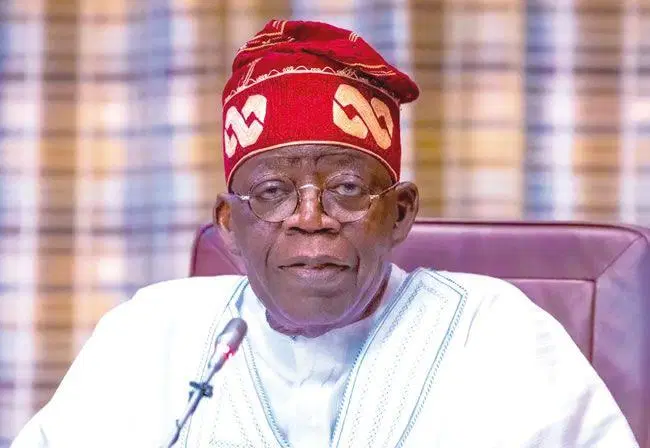
President Bola Tinubu on Tuesday said Nigeria is prepared to work closely with African countries, global partners, and the private sector to provide cleaner, affordable, inclusive, and more secure energy solutions. He described energy as the unseen force that holds the modern world together, shapes balance among nations, stabilises economies, and sustains societies. The President made the remarks while declaring open the 9th Nigeria International Energy Summit at the State House Banquet Hall in Abuja. The event drew heads of delegations and senior government officials from different parts of the world, alongside leaders of international energy bodies, executives of global and indigenous energy companies, development finance institutions, and representatives of host communities. Represented at the summit by Vice President Kashim Shettima, Tinubu said that while energy remains central to peace, prosperity, and global stability, Nigeria is placing strong emphasis on harnessing its vast natural gas reserves as a transition fuel and expanding its renewable energy capacity. He said energy must serve as a unifying force that stabilises economies, secures the future, powers industries, lights homes, drives innovation, and builds trust between government, investors, and citizens. According to him, Nigeria is ready to collaborate with Africa, international partners, and the private sector to deliver energy that is secure, affordable, cleaner, and inclusive. Tinubu recalled that when his administration took office in 2023, the energy sector, though rich in potential, was burdened by inefficiencies, uncertainty, and years of underinvestment. He noted that his government moved swiftly, guided by the understanding that energy should not be viewed merely as an economic commodity but as a catalyst for national security, industrial growth, social inclusion, and regional cooperation. He reaffirmed his administration’s commitment to building an energy system anchored on reliability, transparency, sustainability, and shared prosperity. As part of efforts to revitalise the sector, he said the government sustained and deepened the implementation of the Petroleum Industry Act, strengthening regulatory institutions, clarifying roles, and boosting investor confidence. The President said Nigeria’s upstream sector recorded a notable rebound under his administration, with rig counts rising from eight in 2021 to 69 by late 2025, reflecting renewed exploration and drilling activity. He added that the sector secured over $8bn in Final Investment Decisions, including major offshore gas projects involving international energy companies. According to him, foreign direct investment in the oil and gas subsector also recovered strongly, supported by regulatory clarity, fiscal reforms, and improved operating conditions. Tinubu further said crude oil theft, which had long undermined production and revenue, declined significantly due to improved security coordination, surveillance, and regulatory enforcement. These measures, he noted, helped restore operational stability and strengthened Nigeria’s reliability in global energy markets. Earlier, Gambian President Adama Barrow said Nigeria’s energy policies have far-reaching implications beyond its borders, stressing that regional solutions and energy security depend on strategic partnerships. Equatorial Guinea’s President, Teodoro Obiang Nguema Mbasogo, urged African countries to move beyond exporting raw materials and focus on local processing to secure better outcomes for future generations. In a statement read on his behalf, Senate President Godswill Akpabio said energy in Africa goes beyond resource extraction, describing it as a pathway to inclusive and sustainable prosperity. He assured that the National Assembly is prepared to support the sector through enabling legislation, noting that a functional energy system strengthens economic resilience.
crude-oil.jpeg

7min3940
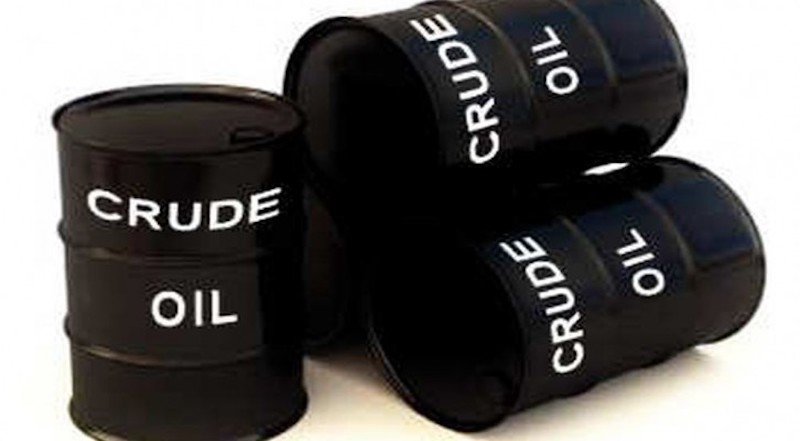
The Minister of State for Petroleum Resources (Oil), Heineken Lokpobiri, has revealed that Nigeria recorded a major investment milestone in 2025 with the approval of 28 new field development plans valued at $18.2bn, carrying an estimated production potential of 1.4 billion barrels of oil. Lokpobiri made the disclosure on Tuesday in Abuja while delivering his ministerial address at the opening of the 9th Nigeria International Energy Summit 2026. He said Nigeria had emerged as Africa’s top destination for oil and gas investments, noting that four of the seven major Final Investment Decisions (FIDs) announced across the continent between 2024 and 2025 were secured by Nigeria. The Nigeria International Energy Summit serves as the Federal Government’s official annual platform for energy policy discussions, investment promotion, and innovation. The 2026 edition is themed “Energy for Peace and Progress: Securing Our Shared Future.” According to the minister, the investment gains were the result of deliberate reforms, improved policy clarity, and stronger governance, which have collectively helped restore investor confidence in the oil and gas sector. He said the renewed capital inflows signal Nigeria’s return to the global energy investment stage after years of stalled projects and declining output, adding that recent fiscal, regulatory, and operational reforms are now delivering tangible results. Lokpobiri said Nigeria’s progress must be viewed within the broader African context, stressing that the continent’s energy fortunes are interconnected. He noted that the country’s ability to attract major investments was driven by sustained policy reforms, improved governance, and an investment climate that allows the free movement of capital. He recalled that when the current administration assumed office, Nigeria’s upstream sector was in decline, characterised by falling production, weak investor confidence, and a lack of major new projects. While acknowledging Nigeria’s vast hydrocarbon resources across deepwater, shallow, and onshore terrains, he emphasised that resource abundance alone was not sufficient. According to him, what now sets Nigeria apart is the legal, regulatory, financial, and structural transformation underway, which has improved clarity, predictability, efficiency, and incentives for investors. He said these changes have repositioned the country as investment-ready, following more than a decade without significant final investment decisions. The minister attributed the turnaround largely to the full implementation of the Petroleum Industry Act, which he said has introduced a stable fiscal regime, clearer licensing processes, stronger regulation, and predictable contract terms. He added that upstream cost pressures were further addressed through the Upstream Petroleum Operations (Cost Efficiency Incentives) Order 2025, which provides tax credits and reduces unit operating costs for producers. Lokpobiri also highlighted the impact of Project One Million Barrels, launched in October 2024, noting that within a year, crude oil production had increased to between 1.7 million and 1.83 million barrels per day—about a 20 per cent rise from previous levels. He said the number of active rigs increased from 14 in 2023 to over 60, reflecting renewed activity and optimisation of idle assets. He further noted the successful completion of long-delayed asset divestments by international oil companies, which transferred onshore and shallow-water assets to Nigerian firms. These divestments, he said, added about 200,000 barrels per day to national output and were concluded in record time under President Bola Tinubu’s administration. However, the minister acknowledged that challenges remain, particularly in the oil and gas services sector. He said structural constraints persist in the engineering, procurement, and construction segment, partly due to a misinterpretation of the Nigerian Oil and Gas Industry Content Development Act. This, he noted, led to the emergence of weak EPC firms while sidelining experienced international contractors and capable indigenous companies. Lokpobiri also drew attention to Africa’s annual $120bn hydrocarbon import bill, describing it as a missed opportunity and calling for stronger support for the African Energy Bank, which is headquartered in Nigeria. He stressed that addressing Africa’s energy challenges requires collective responsibility and decisive action. Meanwhile, the Independent Petroleum Producers Group has called for urgent reforms to sustain growth in Nigeria’s oil and gas sector, including streamlined industry fees, reduced bureaucracy, and improved access to long-term financing. In a keynote address, IPPG Chairman and Aradel Holdings CEO, Adegbite Falade, described the summit as solution-focused and timely, noting that global energy dynamics are being reshaped by conflicts, shifting alliances, and rising energy insecurity. He said Nigeria and the wider African region are not insulated from these pressures. Falade noted that Nigeria’s oil and gas industry has recorded notable progress, with indigenous producers and independents now accounting for more than 50 per cent of national output for the first time. He attributed this to improved pipeline availability, reduced crude losses, and stronger local participation. He stressed the need to create an industry environment where private capital can drive infrastructure development, warning that excessive bureaucracy, high operating costs, and limited access to affordable long-term capital continue to undermine competitiveness. Stakeholders at the summit agreed that Nigeria’s oil and gas sector is on a recovery path, driven by clearer policies, regulatory reforms, and strategic investments. They emphasised that sustained collaboration among government, indigenous operators, and international partners is critical to consolidating gains, expanding domestic energy access, and positioning Nigeria as a regional and global energy hub.

house-of-rep.png

6min7370
Government securities now make up roughly 11 per cent of Nigerian banks’ total assets, highlighting prolonged constraints on credit expansion and a sustained preference for lower-risk sovereign instruments, according to a new banking sector outlook by S&P Global. The ratings agency noted that the growing exposure has increased banks’ sensitivity to sovereign-related shocks. However, it expects this risk to ease gradually as lending to the real economy improves and macroeconomic conditions stabilise. S&P Global added that the close relationship between banks and the sovereign is likely to weaken over time as credit growth gains momentum, fiscal deficits narrow, and overall economic conditions strengthen. According to the firm, banks’ holdings of government securities have risen in recent years due to limited credit extension, accounting for about 11 per cent of total banking assets. While this trend heightens vulnerability to sovereign risks, the agency expects a gradual moderation as lending increasingly targets productive sectors of the economy and fiscal pressures ease. In its Nigerian Banking Outlook for 2026, S&P Global said that despite regulatory challenges, stricter capital requirements, and easing interest rates, Nigerian banks are expected to remain resilient and sustain positive profitability over the medium term. The report projected Nigeria’s real GDP growth to average 3.7 per cent in 2025 and 2026, supported by activity in both the oil and non-oil sectors. Inflation is expected to slow gradually to around 21 per cent in 2026, creating space for further monetary easing following the 50-basis-point interest rate cut implemented in September 2025. Against this backdrop, nominal credit growth is forecast at about 25 per cent, driven mainly by increased lending to the oil and gas, agriculture, and manufacturing sectors. Lending to the oil and gas sector is expected to boost production following measures to curb militancy and crude oil theft, while retail lending is projected to contribute only marginally to overall loan growth due to its relatively small share of banks’ portfolios. Despite the projected growth, the firm said real credit expansion would remain modest, reflecting high inflation and persistent structural constraints. It also highlighted concentration risks in banks’ loan books, noting that about half of loans are denominated in foreign currency, around one-third of total exposures are linked to the oil and gas sector, and roughly half of gross loans are concentrated among the top 20 borrowers. These factors increase vulnerability to sector-specific and single-borrower shocks. Asset quality weakened in 2025 following the removal of regulatory forbearance on oil and gas exposures, with non-performing loans rising to about 7 per cent from 4.9 per cent in 2024 as banks began recognising previously restructured or deferred problem loans. While some banks have written off affected exposures, others are still restructuring them. S&P Global expects non-performing loan ratios to stabilise between 6 per cent and 7 per cent in 2026, assuming oil prices average around $60 per barrel, a level considered adequate to support borrower solvency. Stage-two loans are also projected to remain elevated at between 20 per cent and 22 per cent, reflecting ongoing credit risks in restructured facilities. The firm forecast that bank profitability would ease slightly in 2026 but remain strong by regional standards. Average return on equity is expected to moderate to between 20 per cent and 23 per cent in 2026, down from an estimated 25 per cent in 2025, while return on assets is projected to decline slightly to about 3.0 per cent to 3.1 per cent. Profitability is expected to be supported by still-elevated interest margins, growth in non-interest income, and slightly lower loan loss provisions. Although interest rates are projected to fall, they are expected to remain high relative to peer markets, supporting net interest margins. Non-interest income is also likely to benefit from higher fees and commissions driven by expanding digital payments, retail banking services, and agency banking networks. Meanwhile, data from the Central Bank of Nigeria show that government borrowing from financial market operators rose sharply in 2025 despite elevated interest rates, widening the gap between public- and private-sector access to credit. An analysis of money and credit statistics indicates that credit to the Federal Government exceeded private-sector borrowing by N9.19 trillion in 2025, reflecting heightened fiscal pressures and increased reliance on domestic funding sources. CBN data further show that public-sector credit rose from N25.03 trillion in January 2025 to N34.22 trillion by December, representing a N9.19 trillion increase over the year. This also marked an increase of N5.57 trillion, or nearly 154 per cent, compared with the N3.62 trillion in government credit recorded in 2024.

Tech & Tools Desk4 February 2026
aiiiii-delta.jpg

4min4460
The organisers of The Nigeria Prizes have announced the opening of the 2026 competition cycle, with a focus on artificial intelligence, information and communication technology, poetry, and documentary filmmaking. In a statement released on Sunday, the organisers said the 2026 edition further strengthens The Nigeria Prizes’ standing as Nigeria’s leading platform for celebrating excellence in science, innovation, literature, and the creative arts. The Nigeria Prize for Science and Innovation will once again adopt the theme “Innovations in Information and Communication Technology, Artificial Intelligence, and Digital Technologies for Development”, following a no-award outcome in the 2025 cycle. Speaking on the choice of themes, NLNG’s General Manager, External Relations and Sustainable Development, Sophia Horsfall, said they were informed by rapid global and technological shifts. According to her, the 2026 themes reflect a world increasingly shaped by digital intelligence and creative expression, while reaffirming NLNG’s commitment to ideas and talents capable of delivering meaningful, long-term national impact. Horsfall also noted that the introduction of The Nigeria Prize for Creative Arts underscores NLNG’s belief in creativity as a catalyst for national development. Chairman of the Advisory Board for The Nigeria Prize for Science and Innovation, Professor Barth Nnaji, encouraged scientists and innovators to submit work that offers practical and scalable solutions. He stressed that the prize is rooted in the principle that scientific research must translate into real-world applications, particularly innovations with clear relevance to Nigeria’s development needs. Valued at $100,000, the Science and Innovation Prize is open to scientists and innovators worldwide and seeks digital and AI-driven solutions that can enhance efficiency and decision-making across key sectors of Nigeria’s economy. For the Nigeria Prize for Literature, the 2026 edition will centre on poetry. Nigerian poets at home and in the diaspora are eligible to submit poetry collections published from 2023 onwards. The literature prize is also valued at $100,000. Chairman of the Advisory Board for The Nigeria Prize for Literature and The Nigeria Prize for Creative Arts, Professor Akachi Adimora-Ezeigbo, described the Creative Arts Prize as a major milestone. She said it reflects the belief that excellence cuts across different forms of expression, including written, spoken, and visual storytelling. She added that the poetry focus highlights the genre’s enduring role in social commentary and critical reflection. The Nigeria Prize for Creative Arts will make its debut with a documentary film category themed “Identity”. Valued at $20,000, the prize is open to emerging Nigerian filmmakers aged 18 to 35 and aims to encourage storytelling that explores personal, communal, and cultural identities.

Opay.webp

4min3700
Leading financial services company, OPay, has been crowned Fintech/Digital Bank of the Year 2025 at the prestigious Sun Awards hosted by The Sun Publishing Limited, one of Nigeria’s foremost media organisations. The ceremony took place on January 31, 2026, at Eko Hotels and Suites, Victoria Island, Lagos. The recognition is particularly significant as it marks the debut of the Fintech/Digital Bank category since the awards were established. In a statement released on Tuesday, OPay said the honour acknowledges its contribution to building a dependable, inclusive, and user-friendly digital financial ecosystem that serves millions of Nigerians daily. The award highlights OPay’s all-in-one platform, which combines mobile banking, digital wallets, instant payments, merchant solutions, and lifestyle services. By integrating these offerings, OPay continues to narrow the divide between traditional banking systems and the digital economy, improving access to convenient financial services for individuals and businesses nationwide. For many customers, OPay has grown beyond being just a mobile application, becoming a trusted everyday financial partner. From instant money transfers to empowering small businesses with efficient payment tools, the platform is designed to address real-life financial needs and stimulate economic activity at all levels. Commenting on the achievement, OPay’s COO/CTO, Adekunle Adedotun, described the recognition as encouraging. He noted that the award serves as motivation to further improve innovation and accessibility, adding that OPay remains committed to ensuring financial services reach every corner of the country, regardless of device type, to promote broad financial inclusion. Also speaking, Chief Commercial Officer of OPay, Elizabeth Wang, said the award validates the company’s long-term dedication to Nigeria. She described the recognition as a reflection of the trust placed in OPay by millions of users and reaffirmed the company’s focus on delivering secure, reliable, and inclusive financial solutions that simplify daily life and support business growth. OPay further stated that the award reflects years of sustained investment in secure infrastructure, customer-focused services, and strong local partnerships. The company stressed that trust, reliability, and scalability remain at the heart of its mission to support Nigeria’s expanding digital economy. As the first recipient of The Sun’s Fintech/Digital Bank of the Year award, OPay described the honour as a collective success shared with its users, merchants, and partners across the country. The company reiterated its commitment to advancing financial inclusion and contributing to Nigeria’s long-term digital and economic development. Founded in 2018, OPay aims to expand access to financial services through technology. Its offerings include money transfers, bill payments, card services, airtime and data purchases, and merchant payment solutions. Known for its fast, reliable network and robust security framework, OPay is licensed by the Central Bank of Nigeria and insured by the Nigerian Deposit Insurance Corporation, with coverage equivalent to that of commercial banks.

Electricity-Subsidy-Q1-2024.jpg

4min6990
The Federal Government has announced plans to share electricity subsidy costs with state and local governments from 2026, ending the practice of shouldering the burden alone. Tanimu Yakubu, Director-General of the Budget Office of the Federation, disclosed this on Monday in Abuja during a training workshop for ministries, departments, and agencies on the 2026 post-budget preparation process using the Government Integrated Financial Management Information System Budget Preparation Sub-System. Yakubu said President Bola Tinubu had directed that electricity subsidy costs be made transparent, tracked, and fairly distributed across all tiers of government, warning that the current system creates hidden liabilities and recurring challenges in the power sector. “If we want a stable power sector, we must pay for the choices we make. When tariffs are held below cost, a gap is created. That gap is a subsidy. And a subsidy is a bill,” he explained. He added that from 2026, the Federal Government would no longer treat electricity subsidies as an open-ended responsibility, especially where policy decisions and benefits are shared across governments. The President has instructed that the existing legal framework for the electricity sector be used to ensure subsidy sharing is practical, transparent, and enforceable. “Subsidy costs must be explicit, tracked, and funded to prevent arrears, liquidity crises, or hidden liabilities,” Yakubu said. He emphasized that the policy is intended to align incentives across government, not as a punishment. “When everyone carries a fair share of the cost, there is a greater incentive to support cost-reflective efficiency, protect vulnerable populations, and maintain a power market that functions effectively,” he added. MDAs were directed to reflect subsidy-related costs clearly in their 2026 budget submissions and avoid pushing unfunded liabilities into the electricity market. Yakubu also noted that the 2026 Budget marks a departure from rollover budgeting and fragmented project lists that have weakened execution and accountability. He described the budget as a “single-train” framework designed to consolidate commitments, improve prioritization, strengthen control, and reduce duplication. The President has also directed a review of the Fiscal Responsibility framework to make fiscal rules more dynamic and enforceable, with clearer fiscal anchors, defined escape clauses for genuine shocks, and stronger reporting on contingent liabilities. Yakubu said the 2026 Budget will require that capital projects demonstrate readiness, sequencing, a financing strategy, and measurable outputs, emphasizing that fewer but well-funded projects will deliver greater impact. GIFMIS-BPS will serve as the central tool to restore budget credibility, ensuring transparency and traceability from submission to execution. “The success of the Renewed Hope Agenda is shared. The Budget Office will coordinate and enforce standards, but delivery depends on every MDA. Nigerians expect results. Through a credible 2026 Budget, we must deliver,” he said.

Air_India_.avif

2min3250
Air India has grounded one of its Boeing 787-8 Dreamliner jets after a pilot reported a potential defect in the aircraft’s fuel control switch. The airline said on Monday that it had notified India’s aviation regulator and was addressing the pilot’s concerns on a “priority basis.” “We are in contact with Air India and are supporting their review of this matter,” a Boeing spokesperson said in response to an inquiry. The grounding comes amid the ongoing investigation into a June plane crash involving the same model, which claimed 260 lives. Air India did not provide details on the flight or the specific issue reported by the pilot. Reports indicate the defect was flagged after the aircraft landed in Bengaluru following a flight from London. Last year’s fatal crash occurred less than a minute after take-off from Ahmedabad airport, en route to London. India’s Aircraft Accident Investigation Bureau (AAIB) is still investigating, with a final report expected in the coming months. A preliminary investigation suggested the plane’s engines shut down after the fuel switches moved from ‘run’ to ‘cut off’ shortly after take-off, but the cause of this remained unclear. Following the crash, the US aviation authority stated that fuel control switches in Boeing aircraft are safe. India’s aviation regulator also ordered a review of cockpit fuel switches on Boeing 787 and 737 aircraft operating in the country. Air India confirmed that its inspections had not revealed any issues with the switch mechanism and reiterated this on Monday. “Air India had checked the fuel control switches on all Boeing 787 aircraft in its fleet after a directive from the DGCA and found no problems,” the airline said.

harvard-4-g-1280x720.avif

3min4640
Donald Trump has announced he is seeking $1 billion in damages from Harvard University amid his administration’s ongoing dispute with the institution. The announcement follows reports that the administration had previously sought $200 million in negotiations with the university but later withdrew that demand. Trump referenced the report in a Truth Social post, accusing Harvard of “feeding a lot of nonsense” to the media. Officials from Trump’s administration have claimed that Harvard did not do enough to address antisemitism during pro-Palestinian protests, a charge the university has denied. Harvard has been a frequent target in the White House’s campaign against what it labels “woke” and “radical left” ideologies on American campuses. In April last year, Trump revoked roughly $2 billion in research grants and froze federal funding to Harvard. The university filed a lawsuit, arguing that the government should not dictate what private universities can teach, whom they admit or hire, or which fields of study they pursue. A US federal court later overturned the funding cuts, ruling that the government had violated the university’s free speech rights. The White House pledged to immediately challenge the ruling, maintaining that Harvard remains “ineligible for grants in the future.” Prior to Monday’s announcement, the administration had been in discussions with Harvard about a potential deal to restore the frozen funding. “We are now seeking One Billion Dollars in damages, and want nothing further to do, into the future, with Harvard University,” Trump wrote, accusing the university of “serious and heinous illegalities,” though he did not specify how the law was allegedly broken. Trump has previously threatened to revoke Harvard’s tax-exempt status and seize control of patents resulting from federally funded research. Three other Ivy League schools—Columbia, Penn, and Brown—reached agreements with the administration to protect at-risk funding rather than pursue court battles.

Tech & Tools Desk3 February 2026
DEAL-2.webp

5min4380
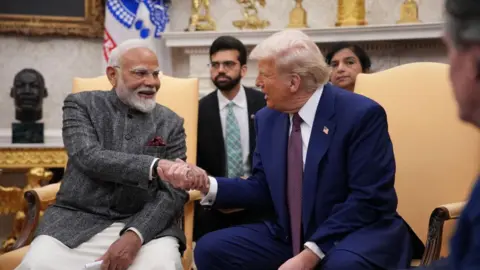
US President Donald Trump’s decision to reduce reciprocal tariffs on Indian goods from 50% to 18% has been welcomed in India, though many details of the agreement remain unclear. Last year, India faced some of the highest US tariffs after Trump increased import duties from 25% to 50%, citing New Delhi’s purchase of discounted Russian oil as supporting Moscow’s war effort in Ukraine. Following a call with Prime Minister Narendra Modi, Trump claimed that Modi had “agreed to stop buying Russian oil, and buy much more from the United States, and potentially Venezuela.” India has not confirmed these claims, but Modi expressed gratitude for the announcement, saying he hoped it would take US-India relations to “unprecedented heights.” The deal marks a thaw after a period of tension caused by Trump’s trade measures, which had hurt key Indian export sectors such as textiles, seafood, and jewellery. The tariffs also pushed India to accelerate other trade agreements and diversify its export markets. Last week, India and the EU finalised a major trade deal that eliminated tariffs on 80–90% of goods, marking Delhi’s ninth free trade agreement in four years. The agreement with the US, however, had previously stalled. The long-awaited announcement has been welcomed by Indian industry. Nilesh Shah, a fund manager, noted that while the full details are yet to be clarified, the reduction “removes a hanging sword over the rupee, equity, and rates market” and could be a “win-win” for both countries. The 18% tariff now aligns India with other Asian peers, such as Vietnam, Thailand, and Bangladesh, which face duties ranging from 19% to 40% on US exports. Analysts say this could enhance India’s appeal as an alternative manufacturing hub to China, citing advantages such as lower labour costs, political stability, and a large domestic market. Textile exporters in India also welcomed the development. The Confederation of Indian Textile Industry said the deal would enable them to compete more effectively in the US, which is the largest market for Indian textile and apparel exports. However, trade experts caution that many questions remain. Ajay Srivastava of the Global Trade and Research Initiative noted that Trump’s statements leave unclear which products are included, the timelines involved, and whether sensitive sectors such as agriculture will face zero tariffs and non-tariff barriers. US Secretary of Agriculture Brooke Rollins said the deal would allow the US to export more farm products to India, helping reduce the $1.3 billion agricultural trade deficit. India, however, has not commented on this aspect, as agriculture employs around half of the country’s population and remains a sensitive issue. Srivastava also warned that claims about India purchasing more than $500 billion of US goods, including energy, technology, and agriculture, should be treated with caution given current US-India trade volumes are under $50 billion. He emphasised that until a formal joint statement or negotiated text is issued, the announcement should be seen as a political signal rather than a completed deal. Nonetheless, the breakthrough after months of stalemate is seen as a positive step, with both governments indicating that further phases and negotiations are expected in the coming months. Geopolitically, the announcement is significant. Over the past year, India had strengthened ties with China and Russia, with leaders displaying solidarity at the Shanghai Co-operation Organisation Summit and Modi meeting Putin to further the “no limits” partnership. Analysts suggest that a renewed engagement with the US could now shift India’s strategic alignment back toward Washington. Shilan Shah of Capital Economics noted that if this rapprochement holds, India is likely to gravitate toward the US bloc, though many in the country still prefer a position of strategic non-alignment.

USS-1280x720.avif

2min3690
A federal judge has temporarily blocked the Trump administration’s attempt to end deportation protections for over 350,000 Haitian immigrants living and working in the US under Temporary Protected Status (TPS). The ruling came just a day before the TPS designation was set to expire. U.S. District Judge Ana Reyes said the Department of Homeland Security’s decision lacked sufficient legal support. She also suggested the move may have been influenced by hostility toward nonwhite immigrants. The administration argued that TPS programs encourage illegal immigration and have been repeatedly extended, but TPS is intended to protect migrants from deportation to countries considered unsafe due to natural disasters, conflict, or other crises. In an 83-page decision, Reyes denied the government’s request to dismiss the lawsuit and allowed the plaintiffs’ request to maintain their deportation protections while the case proceeds in court. The plaintiffs are five Haitian TPS holders. Reyes also cited offensive remarks by Secretary Noem, noting the individuals involved “are not… ‘killers, leeches, or entitlement junkies.’” Haiti was first designated for TPS following the devastating 2010 earthquake, and the status has been extended multiple times, most recently in 2021. The Trump administration has argued that TPS for Haitians has effectively become permanent residency, straying from Congress’ original purpose for the program. The administration has also sought to end most TPS programs, which could affect hundreds of thousands of migrants from countries including Afghanistan, Ethiopia, Honduras, Myanmar, Nepal, South Sudan, Syria, and Venezuela. In addition, deportation protections for roughly 2,500 Somali nationals are set to end on March 17, meaning they will lose their work authorisations and legal status, making them eligible for removal.